Traditional kitchens never go out of style, but that doesn’t mean they have to feel stuck in the past.
The best traditional kitchen designs blend classic charm with modern functionality, creating spaces that feel both timeless and totally fresh.
If you’re planning a full renovation or just looking to refresh your current space, these ideas will help you create a kitchen that’s both beautifully traditional and perfectly suited for today’s lifestyle.
Shaker Cabinets Meet Bold Hardware for an Instant Style Upgrade

Nothing says “I have impeccable taste” quite like pairing classic Shaker cabinets with unexpectedly bold hardware that makes everyone do a double-take.
Shaker-style cabinets have been the gold standard of kitchen design for decades, and there’s a good reason why they’ve stood the test of time.
Their clean lines and simple panel construction create a foundation that works with virtually any design aesthetic, from cozy farmhouse to sleek contemporary.
The magic happens when you ditch the standard brushed nickel pulls for something with serious personality.
Matte black hardware creates dramatic contrast against white or cream cabinets, while brass and copper options add warmth and sophistication that feels both vintage and totally current.
You can even experiment with mixed metals, combining different finishes throughout your kitchen for a curated, collected-over-time look that feels intentional rather than accidental.
The key to nailing this look lies in choosing hardware that’s substantial enough to make a statement without overwhelming the clean simplicity of the Shaker style.
Oversized pulls and knobs work particularly well, especially when you vary the sizes based on the cabinet dimensions.
Upper cabinets might feature smaller knobs while base cabinets sport longer pulls, creating visual hierarchy and improving functionality at the same time.
You can also play with different shapes and textures, mixing smooth round knobs with angular bar pulls or choosing hammered or brushed finishes that catch the light beautifully.
The beauty of this approach is that it allows you to update your kitchen’s entire personality without the expense and hassle of replacing perfectly good cabinets.
Simply swapping out hardware can transform a basic kitchen into something that feels custom and high-end, proving that sometimes the smallest details make the biggest impact.
Farmhouse Sinks Paired with Sleek Quartz Create the Perfect Balance

The farmhouse sink, also known as an apron-front sink, brings instant character and old-world charm to any kitchen with its distinctive exposed front panel and generous basin size.
These sinks were originally designed for practical purposes, allowing farmers’ wives to easily wash large pots and even bathe small children, but today they serve as stunning focal points that anchor the entire kitchen design.
When you pair a traditional farmhouse sink with ultra-modern quartz countertops, you create a perfect marriage of form and function that feels both timeless and totally contemporary.
Quartz countertops offer everything that traditional materials might lack: they’re non-porous, stain-resistant, and require virtually no maintenance, making them ideal for busy modern families.
The smooth, consistent surface of quartz provides a beautiful contrast to the textured, handcrafted appearance of a farmhouse sink, creating visual interest without competing for attention.
You can choose from countless quartz patterns and colors, from pure white Calacatta marble look-alikes to dramatic black surfaces with subtle veining.
The installation process requires careful planning since farmhouse sinks are significantly heavier than standard undermount options and need proper cabinet reinforcement.
Your countertop fabricator will need to create a precise cutout that accommodates the sink’s unique dimensions while ensuring proper support for both the sink and the surrounding quartz surface.
This combination works particularly well in kitchens where you want to maintain traditional charm while embracing modern conveniences and easy maintenance.
The farmhouse sink provides that coveted vintage appeal, while the quartz delivers the durability and beauty that today’s homeowners demand from their kitchen surfaces.
Subway Tiles Get a Modern Twist with Unexpected Layouts

Forget everything you thought you knew about subway tiles because these classic rectangles are getting a major makeover that’ll make your kitchen look like it belongs in a design magazine.
Traditional subway tiles have been gracing kitchen backsplashes since the early 1900s, originally used in New York City’s subway stations for their durability and easy maintenance.
Their timeless 3×6 inch rectangular shape and beveled edges create a clean, classic look that has remained popular for over a century, but modern designers are finding creative ways to reinvent this traditional material.
Instead of the standard horizontal brick pattern, you can arrange subway tiles in herringbone, vertical stack, or even geometric patterns that create stunning visual impact.
Herringbone patterns add sophisticated movement and texture to your backsplash, making the space feel more dynamic and interesting than traditional horizontal layouts.
Vertical stacking creates clean, contemporary lines that can make your ceilings appear higher while maintaining the classic appeal of subway tile.
You can also experiment with different grout colors to dramatically change the overall appearance of your backsplash.
Dark grout against white tiles creates bold contrast and highlights the tile pattern, while matching grout colors create a more seamless, modern appearance.
Colored grout in shades like charcoal gray or navy blue can add unexpected personality while still maintaining the classic subway tile aesthetic.
Size variations offer another way to modernize this traditional material.
Larger format subway tiles in 4×8 or 4×12 inch sizes create a more contemporary feel while maintaining the familiar rectangular shape.
You can even mix different sizes within the same installation, creating custom patterns that feel both traditional and totally unique.
The beauty of these modern subway tile applications lies in their ability to honor the material’s classic heritage while pushing the boundaries of contemporary design.
Exposed Wood Beams Meet Contemporary Pendant Lighting

Nothing transforms a kitchen quite like the dramatic combination of rustic exposed beams overhead paired with sleek, modern pendant lights that seem to float effortlessly in the space.
Exposed wood beams instantly add architectural character and warmth to any kitchen, creating the kind of cozy, lived-in atmosphere that makes everyone want to gather around your island.
These structural elements can be original to your home’s construction or added purely for aesthetic purposes, depending on your ceiling height and structural requirements.
Reclaimed wood beams offer the most authentic traditional character, with their weathered patinas, nail holes, and natural imperfections telling stories of their previous lives in old barns or buildings.
New wood beams can be stained or distressed to achieve a similar aged appearance, or left natural to showcase the wood’s inherent beauty and grain patterns.
The real magic happens when you introduce contemporary pendant lighting that creates beautiful contrast against the rustic wood elements.
Sleek metal pendants in finishes like polished chrome, matte black, or brushed brass provide stunning visual counterpoint to the organic texture of the wood beams.
Glass globe pendants offer another modern option, their clean spherical shapes creating perfect geometric contrast against the linear wood elements.
You can hang pendants at varying heights to create visual interest and accommodate different ceiling heights throughout your kitchen space.
Multiple pendants over a kitchen island create both task lighting and dramatic visual impact, especially when their modern forms are silhouetted against traditional wood beams.
The positioning of your pendant lights requires careful planning to ensure they provide adequate illumination while creating the desired aesthetic effect.
Lights should hang approximately 30-36 inches above your island surface, but this height can be adjusted based on your ceiling height and personal preferences.
This combination works particularly well in kitchens with open floor plans, where the beams help define the kitchen space while the pendant lighting creates intimate zones within the larger area.
Vintage-Inspired Appliances with Smart Technology Inside

Step into the future while looking fabulous with vintage-style appliances that pack all the latest smart technology under their gorgeously retro exteriors.
Today’s appliance manufacturers have mastered the art of creating products that look like they stepped out of a 1950s dream kitchen while delivering performance and features that would make even the most tech-savvy chef jealous.
These appliances offer the perfect solution for homeowners who want the charm of vintage design without sacrificing modern convenience and efficiency.
Retro-style refrigerators come in eye-catching colors like mint green, cherry red, and classic cream, featuring rounded corners and chrome details that scream vintage glamour.
Inside, you’ll find all the modern features you expect: precise temperature controls, energy-efficient LED lighting, adjustable shelves, and even smart connectivity that lets you monitor and control your appliance from your smartphone.
Range designs inspired by vintage models feature classic styling with modern gas or electric cooking technology that delivers precise temperature control and even heating.
Many models include convection ovens, multiple burner configurations, and professional-grade features that serious cooks demand, all wrapped in packaging that looks like it belongs in a Norman Rockwell painting.
Smart technology integration allows these vintage-styled appliances to connect to your home’s WiFi network, enabling remote monitoring and control through dedicated smartphone apps.
You can preheat your oven on your way home from work, receive notifications when your laundry cycle is complete, or even diagnose potential issues before they become major problems.
Energy efficiency ratings on these modern vintage-inspired appliances often exceed those of their purely contemporary counterparts, thanks to advanced insulation, improved compressor technology, and smart power management systems.
The combination of vintage aesthetics with modern performance means you never have to choose between style and substance in your traditional kitchen design.
Color coordination becomes an important element when incorporating vintage-inspired appliances, as these statement pieces often serve as the kitchen’s primary color source and design anchor.
Butcher Block Countertops with Waterfall Edges Create Stunning Drama

Imagine the warm, natural beauty of traditional butcher block flowing seamlessly over your kitchen island’s edge in one continuous, breathtaking waterfall that stops everyone in their tracks.
Butcher block countertops have been a kitchen staple for generations, prized for their warmth, durability, and the way they develop character and patina over time with regular use.
Traditional butcher block surfaces bring organic texture and natural beauty that synthetic materials simply cannot replicate, creating kitchens that feel warm, inviting, and authentically lived-in.
The waterfall edge detail takes this classic material to the next level, creating a continuous flow of wood that extends vertically down the side of your island or peninsula.
This modern design element adds dramatic visual impact while showcasing the beautiful grain patterns and natural characteristics of the wood throughout the entire installation.
Edge grain butcher block offers the most durable surface for heavy food preparation, with the wood fibers oriented vertically to resist cuts and dents from knives and kitchen tools.
End grain surfaces provide even greater durability and self-healing properties, as knife cuts tend to close up naturally rather than leaving permanent marks on the surface.
Professional-grade finishes like food-safe mineral oil or specialized wood conditioners protect the surface while allowing the natural beauty of the wood to shine through.
Regular maintenance involves periodic re-oiling to keep the surface protected and looking its best, but this simple care routine becomes part of the kitchen’s rhythm and adds to its authentic character.
Different wood species offer varying colors and grain patterns, from the light, subtle tones of maple to the rich, dramatic patterns of walnut or cherry.
Mixed-species designs combine different woods in patterns or borders, creating custom surfaces that serve as functional art pieces in your kitchen.
The waterfall edge requires precise measurement and cutting to ensure perfect alignment and grain matching between the horizontal and vertical surfaces.
Professional installation ensures proper support for the extended edge while maintaining the seamless appearance that makes this design detail so striking.
Classic Color Schemes Enhanced with Strategic Bold Accents

Transform your traditional kitchen from pleasant to absolutely spectacular by introducing carefully chosen bold accents that make your classic color scheme sing with personality.
Traditional kitchen color palettes typically revolve around timeless combinations like warm whites with Natural Wood Tones, soft creams paired with sage greens, or classic navy blues anchored by crisp white trim.
These proven combinations create serene, sophisticated foundations that have remained popular for decades because they work beautifully with changing trends and personal style evolution.
The strategic introduction of bold accent colors can energize these classic schemes without overwhelming their inherent sophistication and timeless appeal.
Deep emerald green bar stools can transform a cream and white kitchen into something that feels fresh and current while maintaining its traditional foundation.
Rich burgundy or deep plum accessories bring warmth and depth to neutral schemes, creating cozy gathering spaces that invite conversation and connection.
Vibrant coral or warm terracotta accents can energize cool-toned traditional kitchens, adding warmth and personality through artwork, textiles, or small appliances.
The key to successful accent integration lies in choosing colors that complement rather than compete with your existing palette while adding enough contrast to create visual interest.
Textiles offer an excellent starting point for introducing bold accents, as they can be easily changed seasonally or when you’re ready for a new look.
Window treatments, seat cushions, and decorative towels in bold patterns or colors can dramatically shift your kitchen’s personality without major investment or permanent changes.
Artwork and decorative accessories provide another layer of accent opportunities, allowing you to incorporate bold colors through pieces that reflect your personal interests and style.
Fresh flowers and plants offer natural ways to introduce color accents that change with the seasons and your mood, bringing life and energy to traditional color schemes.
The proportion of accent colors should remain balanced, with bold hues comprising roughly 10-15% of your overall color scheme to maintain harmony while creating impact.
Brass Fixtures Mixed with Contemporary Finishes

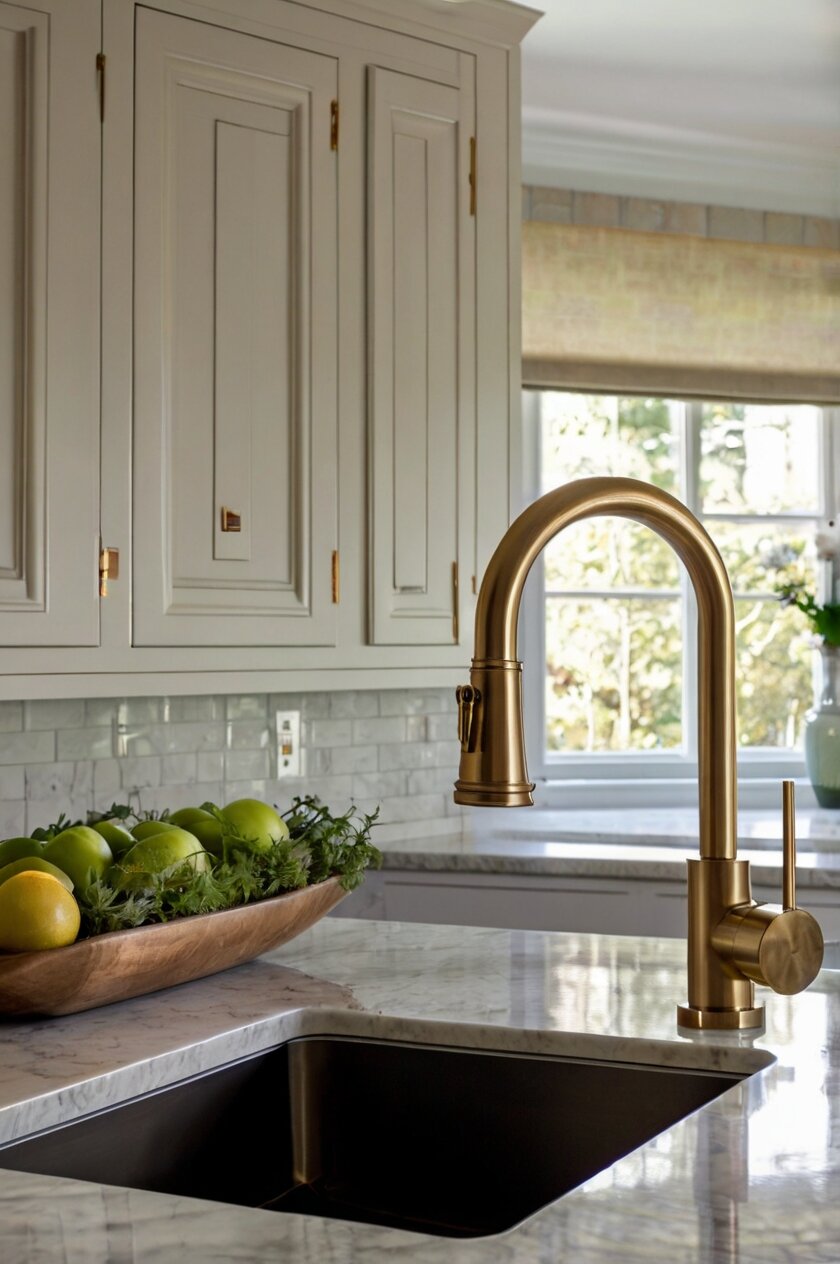
Nothing says “I have sophisticated design sense” quite like the confident mixing of warm brass fixtures with cool contemporary finishes that creates unexpected harmony in your traditional kitchen.
Brass fixtures bring instant warmth and vintage charm to kitchen spaces, evoking the craftsmanship and attention to detail that characterized quality kitchen design in earlier eras.
This classic metal finish has experienced a major resurgence in recent years, as homeowners have moved away from the cooler tones that dominated design trends and embraced the warmth and character that brass provides.
Contemporary finishes like matte black, brushed stainless steel, and polished chrome offer sleek contrast that prevents brass from feeling too precious or overly traditional.
The successful mixing of these different finishes requires understanding the undertones and proportions that create harmony rather than chaos in your design scheme.
Unlacquered brass develops a natural patina over time, adding character and authenticity that enhances the traditional feel of your kitchen while maintaining its connection to contemporary design elements.
Lacquered brass maintains its bright, golden appearance indefinitely, providing consistent color that works well when you want the warmth of brass without the changing patina.
Faucets, cabinet hardware, and light fixtures offer prime opportunities for introducing brass elements that can be balanced with contemporary finishes throughout the space.
Mixed metal schemes work best when one finish serves as the dominant element while others play supporting roles, creating hierarchy and visual balance.
You might choose brass for your primary fixtures like the kitchen faucet and cabinet hardware, then introduce contemporary finishes through appliances, lighting accents, or bar stools.
The warm undertones in brass complement wood elements beautifully, creating cohesive traditional foundations that are enhanced rather than disrupted by contemporary finish additions.
Color temperature coordination ensures that your mixed finishes work harmoniously together, with warm brass tones supporting other warm elements in your design palette.
Professional designers often recommend distributing mixed finishes throughout the space rather than clustering them in one area, creating visual flow and intentional balance.
Open Shelving with Minimalist Styling

Ditch those upper cabinets and embrace the airy, sophisticated look of open shelving styled with careful minimalist precision that makes everything look effortlessly perfect.
Open shelving represents a significant departure from traditional kitchen storage solutions, replacing closed cabinets with exposed storage that showcases your most beautiful dishes, glassware, and accessories.
This design choice requires thoughtful curation and ongoing maintenance, as everything displayed becomes part of your kitchen’s visual composition rather than hidden behind cabinet doors.
Traditional open shelving often featured utilitarian brackets and boards, but modern interpretations emphasize clean lines, quality materials, and sophisticated mounting systems that disappear into the background.
Floating shelves create the most streamlined appearance, with hidden mounting hardware that allows the shelving material to take center stage without visual distractions.
Wood shelving brings warmth and natural texture that complements traditional kitchen elements while maintaining the clean, uncluttered aesthetic that makes open shelving successful.
Metal shelving in finishes like matte black or brushed stainless steel provides contemporary contrast while offering durability and easy maintenance for everyday use.
The minimalist styling approach focuses on displaying fewer items with more intentional spacing, creating breathing room that allows each piece to be appreciated individually.
Color coordination becomes crucial when everything is on display, with dishes, glassware, and accessories chosen for their aesthetic contribution as well as their functional value.
White and neutral-colored pieces create a cohesive, calming appearance that works well with traditional kitchen color schemes while maintaining the clean aesthetic that makes open shelving successful.
Grouping similar items together creates visual organization and makes the shelving feel intentional rather than random, with stacks of dishes, collections of glassware, and arranged accessories each occupying their designated zones.
Height variation adds visual interest while maintaining organization, with taller pieces anchoring the composition and smaller items filling in gaps to create balanced, pleasing arrangements.
Regular editing and rearranging keeps open shelving looking fresh and prevents the accumulation of clutter that can make this storage solution feel chaotic rather than serene.
Traditional Kitchen Islands Enhanced with Modern Functionality

Your kitchen island just got a major upgrade with traditional styling that hides seriously impressive modern features designed to make your life infinitely easier and more organized.
Traditional kitchen islands typically served as simple work surfaces with basic storage underneath, but modern versions pack incredible functionality into designs that maintain classic proportions and styling details.
Multi-level surfaces accommodate different activities simultaneously, with raised breakfast bars for casual dining and lower prep surfaces optimized for comfortable food preparation tasks.
Hidden storage solutions maximize every inch of space while maintaining clean exterior lines, with features like pull-out spice racks, built-in trash and recycling compartments, and dedicated spaces for small appliances.
Integrated charging stations keep your devices powered and accessible without cluttering your workspace, with discreet outlets and USB ports built into the island’s structure.
Wine storage options range from simple bottle racks to temperature-controlled wine refrigerators that preserve your collection while adding sophisticated functionality to your traditional island design.
Specialty storage for items like cutting boards, baking sheets, and kitchen linens keeps everything organized and easily accessible while maintaining the island’s streamlined appearance.
Traditional styling elements like furniture-quality legs, decorative moldings, and panel details disguise the island’s high-tech capabilities while ensuring it feels at home in classic kitchen designs.
Seating integration requires careful planning to ensure comfort and proper proportions, with considerations for leg room, counter overhang, and the relationship between seating height and work surface elevation.
Lighting coordination becomes important when your island serves multiple functions, with task lighting for food preparation areas and ambient lighting for dining and social zones.
Electrical planning must accommodate all the modern features you want to include, from basic outlets for small appliances to specialized connections for wine coolers or warming drawers.
Professional installation ensures that all the modern functionality works seamlessly while maintaining the traditional appearance that makes your island feel like a natural part of your kitchen’s overall design.
The result is an island that looks timelessly elegant while serving as the ultimate modern command center for your busy household.
Traditional kitchens with modern twists offer the perfect solution for homeowners who want timeless elegance without sacrificing contemporary convenience.
These design approaches prove that you don’t have to choose between classic charm and modern functionality – you can absolutely have both in one stunning space that’ll serve your family beautifully for years to come.