
Pick one color and see your room drenched in it: the walls, the ceiling and the trim, each in the sheen the paint makers name for it. Try it on a sample room or a photo of your own. Your photo never leaves your device.
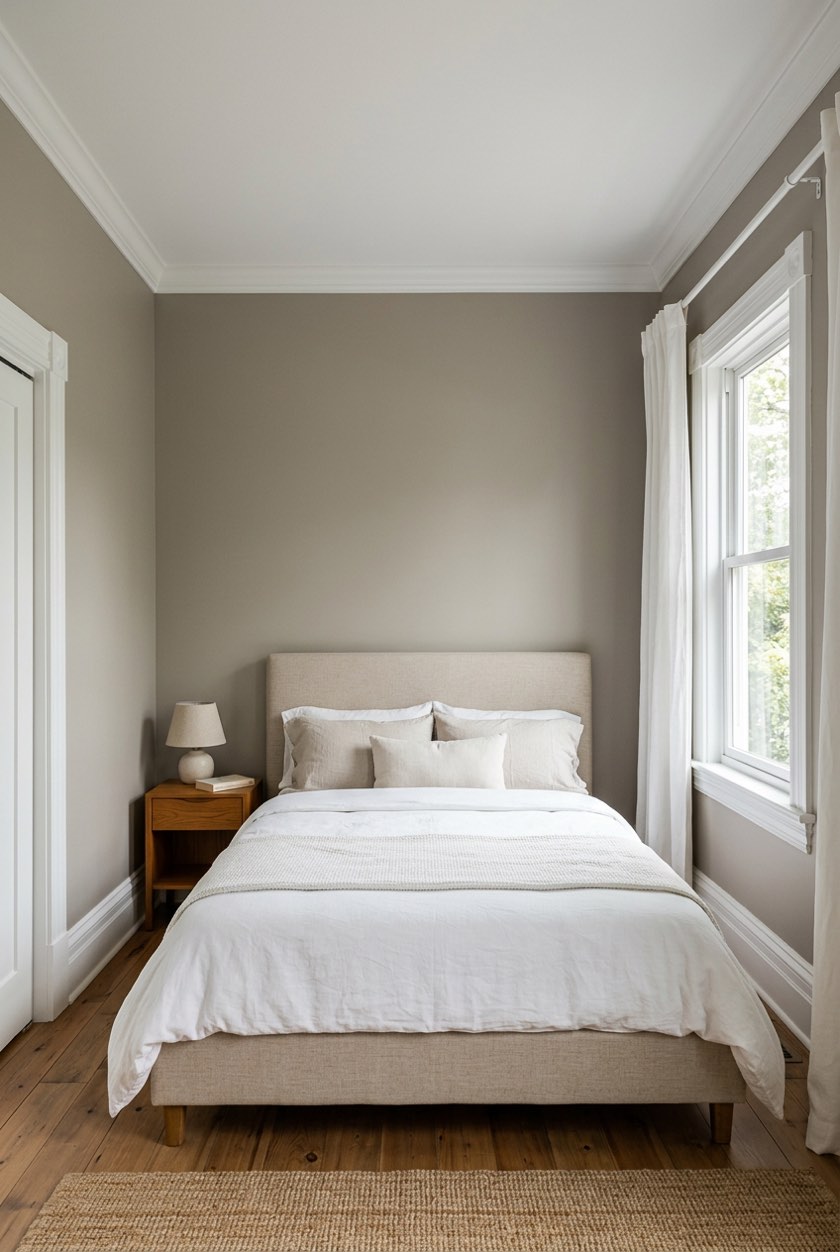
Pick a color to drench the room
1Your room
2Pick your drench color
3Your drench plan
- Walls: MatteOlive #7A7A55 · LRV 19 · named by 2 of 3 paint makers
- Ceiling: FlatOlive · ceiling #7A7B55 · LRV 19 · named by 3 of 3 paint makers
- Trim and doors: Semi-glossOlive · trim #7A7A54 · LRV 19 · named by 3 of 3 paint makers
One color in three sheens: Matte for the walls, Flat for the ceiling, Semi-gloss for the trim and doors.
A dark drench makes a cosy cocoon, best in a room you use in the evening (Farrow & Ball).
4Tap to paint
On a sample room every surface is painted for you. On your own photo, tap Paint it beside the walls, then tap each wall; do the same for the ceiling and the trim. Missed a strip? Tap it too, or use the brush.
Quick answer: color drenching means painting a room’s walls, ceiling and trim all in one color, so no white edges break it up. For each surface, use the sheen the paint makers name for it: matte or eggshell on the walls, flat on the ceiling, semi-gloss on the trim and doors. Or use one multi-surface matte for everything, the way Farrow & Ball sells it. Pick a color above to see a drenched room, or try the tonal version: a lighter ceiling and deeper trim in the same hue.
How to use the color drenching visualizer
- Pick a room. Start with the sample bedroom or home office, or tap Upload or take a photo to use your own room.
- Pick one color. Browse the six color families or type any color code. On a sample room the walls, the ceiling and the trim are all repainted in it at once.
- Choose the same color or tonal. Tonal keeps the hue but makes the ceiling one step lighter and the trim one step deeper, for a softer drench with a little shape to it.
- Choose the finish. Each surface its usual sheen uses what Sherwin-Williams, Benjamin Moore and Behr name for walls in that kind of room, for ceilings and for trim. One finish for everything is a single multi-surface matte.
- On your own photo, paint each surface. Tap Paint it beside the walls, then tap each wall; do the same for the ceiling and the trim. Each one stays its own layer, so you can repaint one without touching the others. Compare shows the before and after.
What the paint makers say about color drenching
Two paint makers publish guides to it, and they agree on what it is. Farrow & Ball: Color drenching simply means painting everything the same shade: the walls, woodwork, ceiling and even radiators or furniture.
Dulux describes it as painting an entire room – including the walls, ceiling, trim and sometimes architectural features – in the same colour or varying tones of the same hue
. That second half is the visualizer’s Tonal setting.
Where they part is the finish. Farrow & Ball recommends one ultra-matt, multi-surface paint for all of it. Dulux suggests using the same colour in different finishes. A matte finish on walls pairs well with an eggshell finish on the ceiling
. The paint makers’ general sheen guides (the same ones the free paint sheen finder reads) put trim and doors in semi-gloss, because woodwork gets knocked and wiped. A tougher sheen on the trim keeps the drench practical.
On light and dark, Farrow & Ball says a light or mid shade can help to make a room feel bigger and airier, by blurring the line where the walls and ceiling meet
, especially in awkward shaped spaces like narrow hallways
, and that Darker tones work wonderfully for color drenching, creating a cosy cocoon of color. This especially suits rooms you use in the evening
.
Which sheen for each surface, room by room
With each surface its usual sheen, the visualizer takes the sheen most paint makers name for walls in that room, for ceilings and for trim (the Paint Sheen Finder’s rules). How many of the three makers name it is in brackets.
| Room | Walls | Ceiling | Trim and doors |
|---|---|---|---|
| Bedroom | Matte (2 of 3) | Flat (3 of 3) | Semi-gloss (3 of 3) |
| Living room | Matte (3 of 3) | Flat (3 of 3) | Semi-gloss (3 of 3) |
| Family room | Eggshell (3 of 3) | Flat (3 of 3) | Semi-gloss (3 of 3) |
| Kids’ room | Eggshell (3 of 3) | Flat (3 of 3) | Semi-gloss (3 of 3) |
| Hallway | Eggshell (3 of 3) | Flat (3 of 3) | Semi-gloss (3 of 3) |
| Kitchen | Satin (3 of 3) | Flat (3 of 3) | Semi-gloss (3 of 3) |
| Bathroom | Satin (3 of 3) | Flat (3 of 3) | Semi-gloss (3 of 3) |
Different sheens of one color look slightly different, because a shinier paint reflects more light. Dulux treats that as part of the effect, so do not expect three sheens to read as one perfectly flat color.
The tonal version
Tonal keeps the hue and moves only its lightness: the ceiling one step lighter, the trim one step deeper. A step here is 10 points of lightness on the CIELAB scale, the visualizer’s own choice: enough to see, small enough to stay one color family. A few examples, with each surface’s LRV (light reflectance value, 0 black to 100 white):
| Drench color | Walls | Ceiling (lighter) | Trim (deeper) |
|---|---|---|---|
| Oat Milk | #E9E0CF · LRV 75 | #FFF8E7 · LRV 94 | #CDC4B3 · LRV 56 |
| Sage | #A9B59B · LRV 44 | #C4D1B6 · LRV 61 | #8E9A81 · LRV 30 |
| Terracotta | #C0704F · LRV 23 | #DE8A67 · LRV 35 | #A35738 · LRV 15 |
| Olive | #7A7A55 · LRV 19 | #94946E · LRV 29 | #61613D · LRV 11 |
| Navy | #2B3A55 · LRV 4 | #43516D · LRV 8 | #14243E · LRV 2 |
Color names here are the visualizer’s own, not a paint brand’s. To buy a near match, take the codes to a paint store’s color match, or find a brand color with the free paint color matcher.
Three worked examples
An olive bedroom. The sample bedroom opens drenched in Olive (LRV 19, a dark color): the walls in matte, the ceiling in flat and the window and door trim in semi-gloss, as one color in three sheens. That is the dark, cocooning kind of drench, made for a room you use in the evening.
A tonal Sage office. Pick the home office, then Sage and Tonal. The walls stay Sage at LRV 44, the ceiling goes up to LRV 61 so the room keeps its height, and the door and window trim drop to LRV 30, which outlines them softly instead of in white.
One finish for everything. Switch the finish to one finish for everything and the plan becomes one color in one multi-surface matte made for walls and woodwork alike. It is the easiest shopping list, with one caveat: check that the can says it is made for woodwork, because ordinary wall matte does not stand up to doors and baseboards.
Common mistakes when color drenching
- Using wall paint on the trim. Baseboards, doors and window sills get kicked, knocked and wiped. A wall matte there scuffs fast; use the trim’s own sheen, or a multi-surface paint made for woodwork.
- Forgetting the ceiling. A drench with a white ceiling is just a painted room. The ceiling is what makes the color wrap around you.
- Underbuying paint. A drench also covers the ceiling and all the woodwork, so it takes more paint than walls alone. Add the ceiling’s area to the walls’ in the free paint calculator.
- Judging a dark drench in daylight only. Farrow & Ball pairs dark drenches with rooms used in the evening. Look at a large sample in the evening light too, with the lamps on.
- Trusting the screen for the final decision. Screens and phone cameras shift colors. Narrow it down here, then paint large samples on two walls and the ceiling before you commit.
Just the walls this time? The room paint visualizer paints any wall on your photo, and the free 2D room planner lays out the furniture to scale.
Plan the room freeRead next
- Color drenching room ideas
- Color drenched bedrooms
- Color drenched living rooms
- Green drenched living rooms
- A color drenched kitchen
- Moody bedroom ideas
Color drenching questions
What is color drenching?
Color drenching is painting a whole room in one color: the walls, the ceiling and the trim, and sometimes the doors, radiators and built-ins too. Farrow & Ball defines it as “painting everything the same shade”. Dulux includes “varying tones of the same hue”, so a tonal version counts as a drench too.
What does a color drenched room look like?
Seamless: with no white trim or ceiling to frame them, the walls seem to wrap around you and the edges of the room soften. Pick a color above and the sample bedroom or office is drenched in it, walls, ceiling and trim at once.
Should the ceiling be the same color as the walls?
In a color drench, yes: the ceiling is part of it. If a full-strength ceiling feels too heavy, the tonal setting makes it one step lighter in the same hue, which keeps the drench and keeps some height.
What sheen should I use for color drenching?
Either the usual sheen for each surface, which for most rooms is matte or eggshell on the walls, flat on the ceiling and semi-gloss on the trim, or one multi-surface matte for everything. Farrow & Ball recommends one finish; Dulux suggests different finishes of one color.
Does color drenching make a room look smaller?
Usually the opposite with a light or mid color: Farrow & Ball says it can make a room feel bigger and airier by blurring where the walls meet the ceiling. A dark drench makes a room feel cosier rather than bigger, which is the point in a bedroom or a den.
Can I see color drenching on my own room?
Yes. Upload a photo of your room, pick a color, then use Paint it for the walls, the ceiling and the trim and tap each one. Your photo never leaves your device: the painting happens in your browser.