
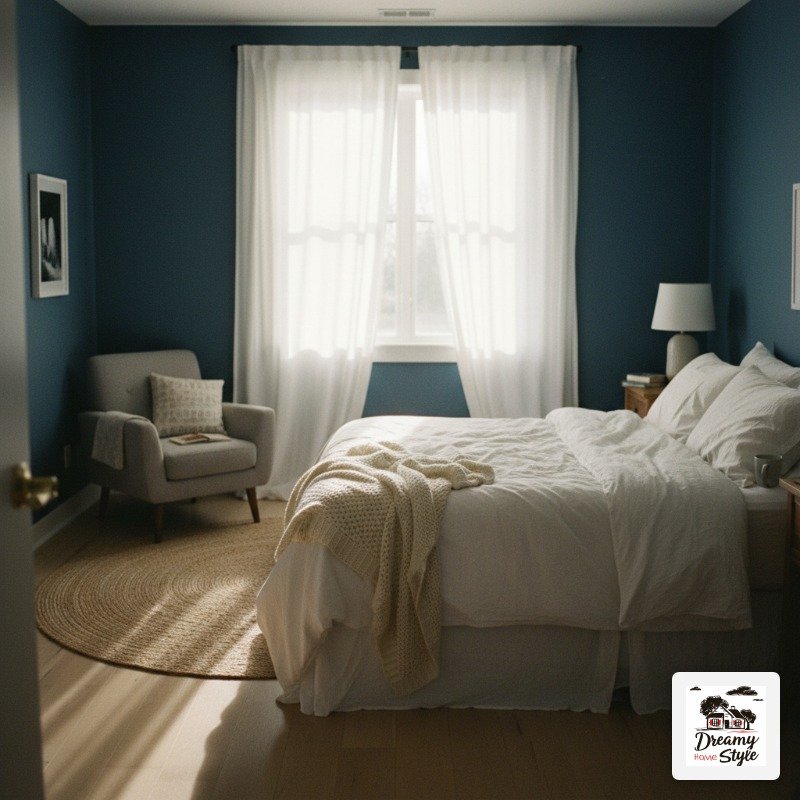

I painted one wall in my master bedroom on a random Tuesday night and honestly didn’t sleep until I saw it in the morning light.
No plan, just a half-full can of Benjamin Moore ‘Hale Navy’ I’d been hoarding for six months and a medium-sized panic spiral.
And when I woke up and stood in the doorway with my coffee?
Biscuit was staring at me like I’d lost my mind.
But the room felt different.
Heavier in a good way.
Like it finally had a backbone.
That’s when I started to believe that yeah, one wall really can do something wild to a bedroom.
Let me tell you what I’ve figured out since that Tuesday.
Why One Wall Hits Different Than Painting the Whole Room
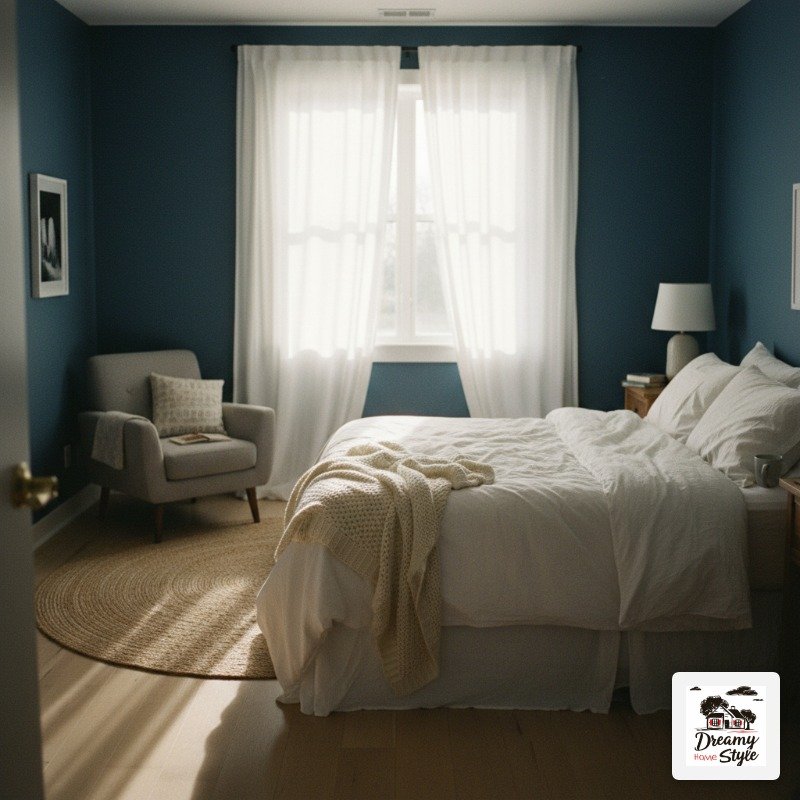
Full room color is a commitment.
I know people do it and love it, but I’ve also watched friends repaint rooms twice in a year because it felt too overwhelming once all four walls were, say, forest green.
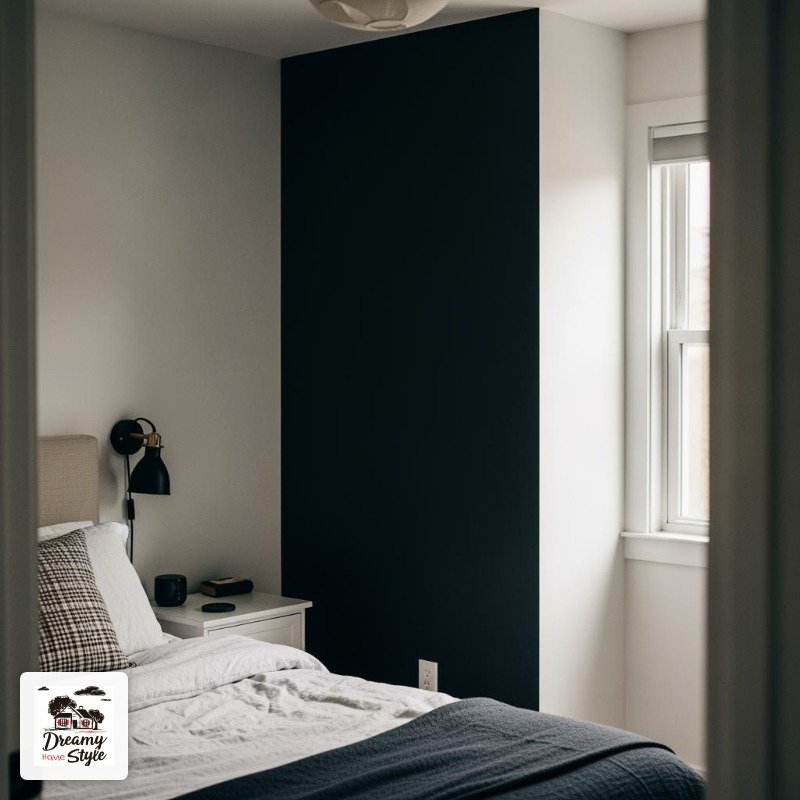
An accent wall gives you the drama without the suffocation.
Your eye goes straight to it, then bounces back to the lighter walls, and suddenly the room feels more dimensional.
More intentional.
I’d been sleeping in a beige box for two years.
Same builder-grade beige.
And one navy wall basically gave me a whole new bedroom for the cost of a quart of paint and a Sunday afternoon.
That math will never not be exciting to me.
It also makes the bed look more anchored.
Like the headboard finally belongs somewhere specific instead of just floating against a wall that has nothing to say.
The Wall You Actually Pick Matters More Than the Color
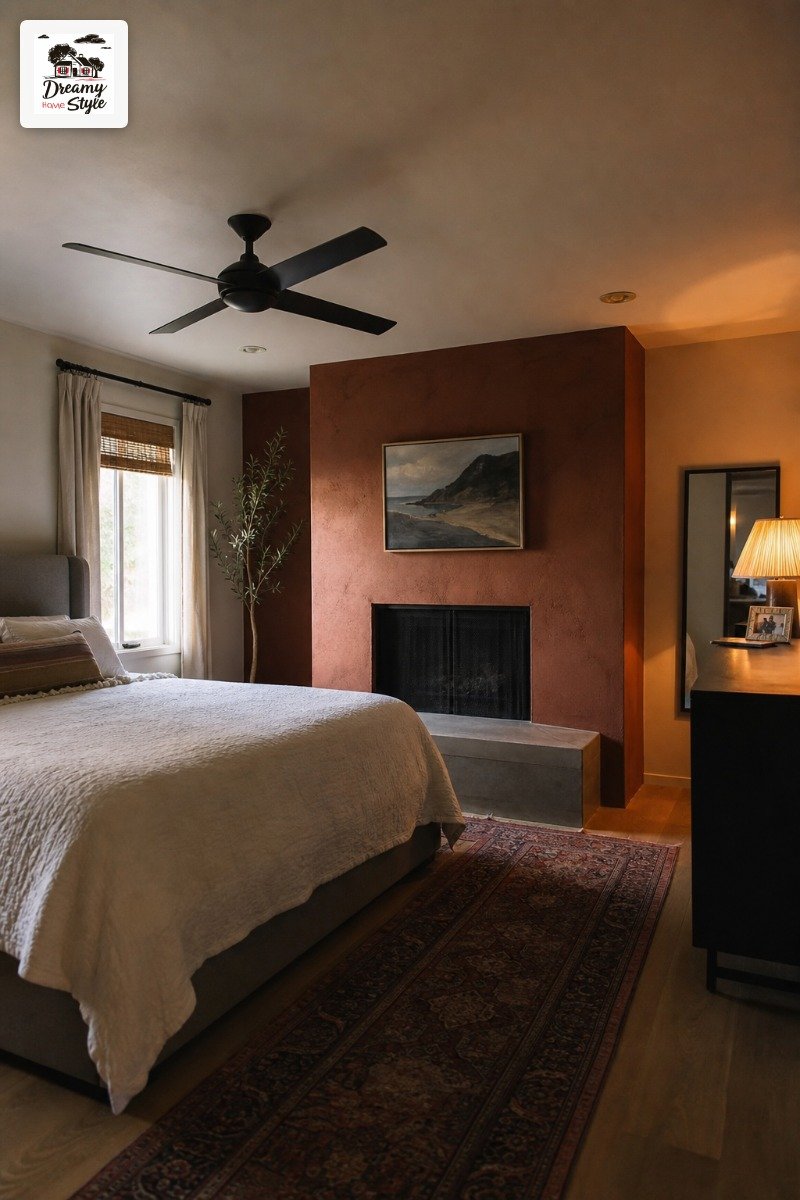
Almost everyone defaults to the wall behind the bed.
And look, it’s the default because it works.
But it’s not the only option and honestly depending on your room layout, it might not even be the best one.
If your bed faces a window wall, doing that wall in a deep color can get muddy because backlight makes everything look darker than it is.
I learned that with a green I tested in my old apartment.
(Never again.)
The fireplace wall, if you have one, is a dreamy candidate.
So is a wall with built-ins or an architectural feature.
Give the color something to work with.
And if your bedroom door opens onto a side wall instead of facing the bed?
That side wall might be what you see first every single time you walk in.
Think about the experience of entering the room, not just lying in it.
My Favorite Paint Colors That Don’t Flake on You Mid-Commitment
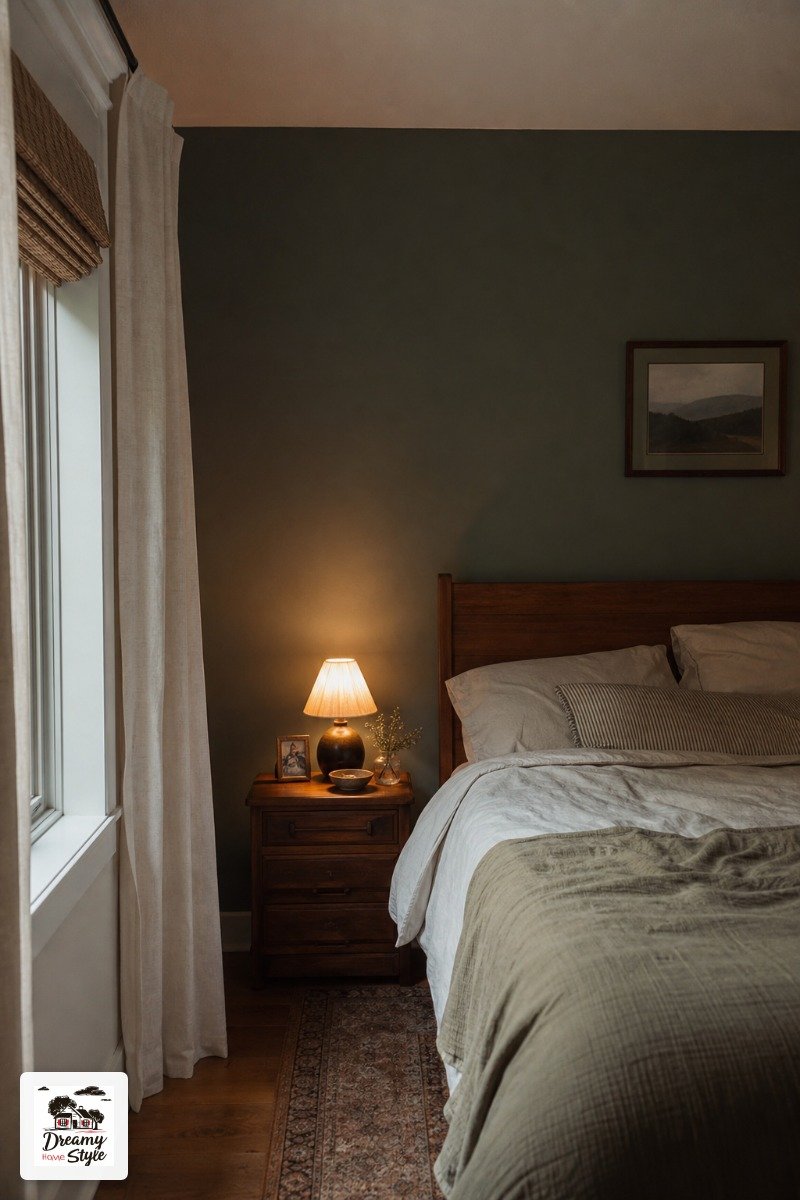
Hale Navy is still my personal gold standard.
It’s moody without being goth.
It plays well with warm wood tones, and it looks almost different colors depending on the light which I’m obsessed with.
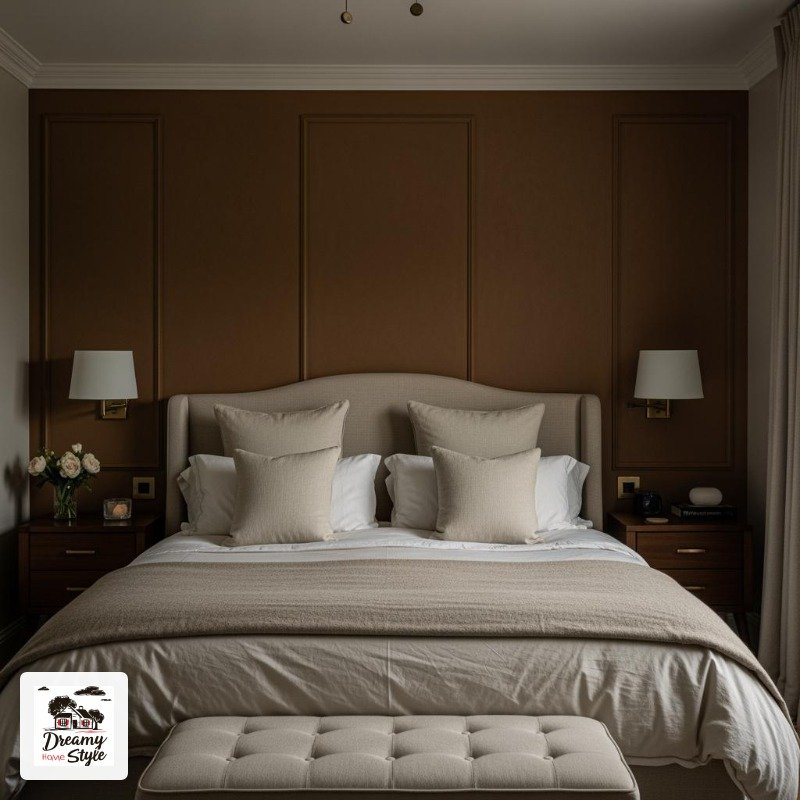
Sherwin-Williams ‘Urbane Bronze’ is having a moment and honestly it deserves it.
It’s a warm greige-brown that reads sophisticated without trying too hard.
Very ‘I definitely didn’t overthink this’ energy.
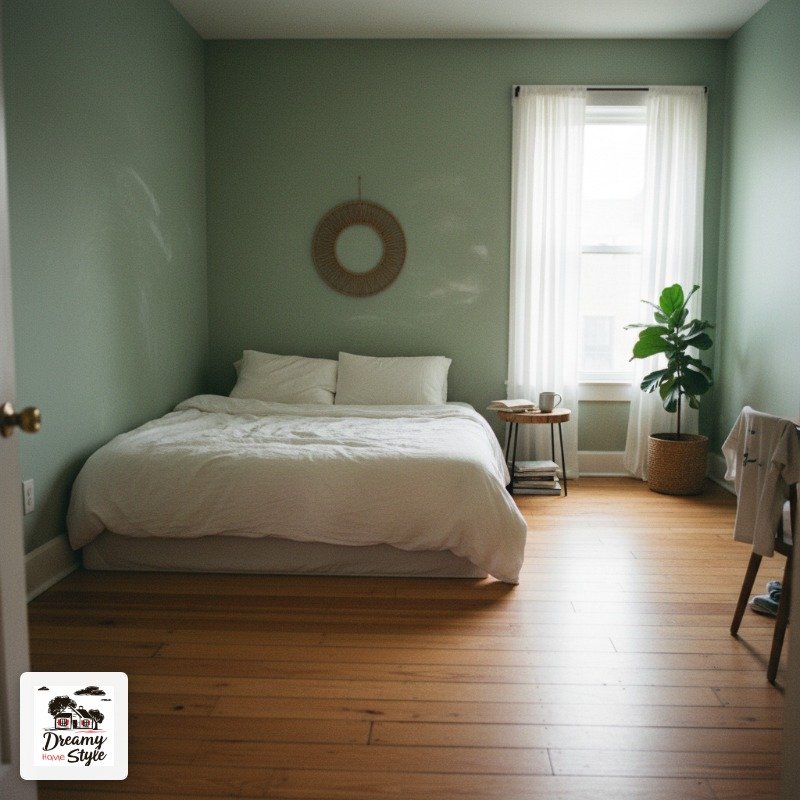
For something softer, Benjamin Moore ‘Newburg Green’ is this deep muted green that feels like a forest at dusk.
Not trendy-sage, more serious than that.
I’ve been eyeing it for the spare bedroom.
What I’d avoid: anything too saturated and warm in a small room.
Bright red, coral, hot orange.
I know they photograph beautifully.
In real life, in a room where you sleep, they can sort of creep into your nervous system.
Also always, always do a big painted sample swatch.
Not a little chip.
A real foot-by-foot swatch on the actual wall.
Let it sit overnight.
I cannot stress this enough.
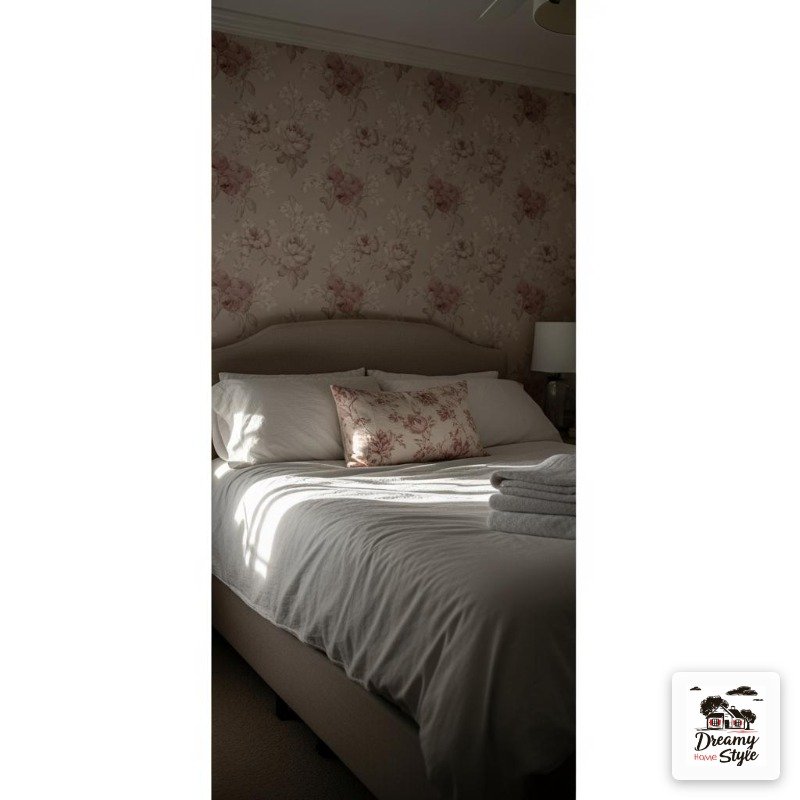
Wallpaper on the Accent Wall Is Not as Scary as You Think
I said what I said.
I put up peel-and-stick wallpaper on my bedroom accent wall last spring and I was ready for disaster.
It went up in about two hours and I only had to redo one strip.
The trick is to go slow on that first panel.
Get it perfectly level and the rest kind of falls into place.
Biscuit supervised from the bed the whole time, which helped zero percent.
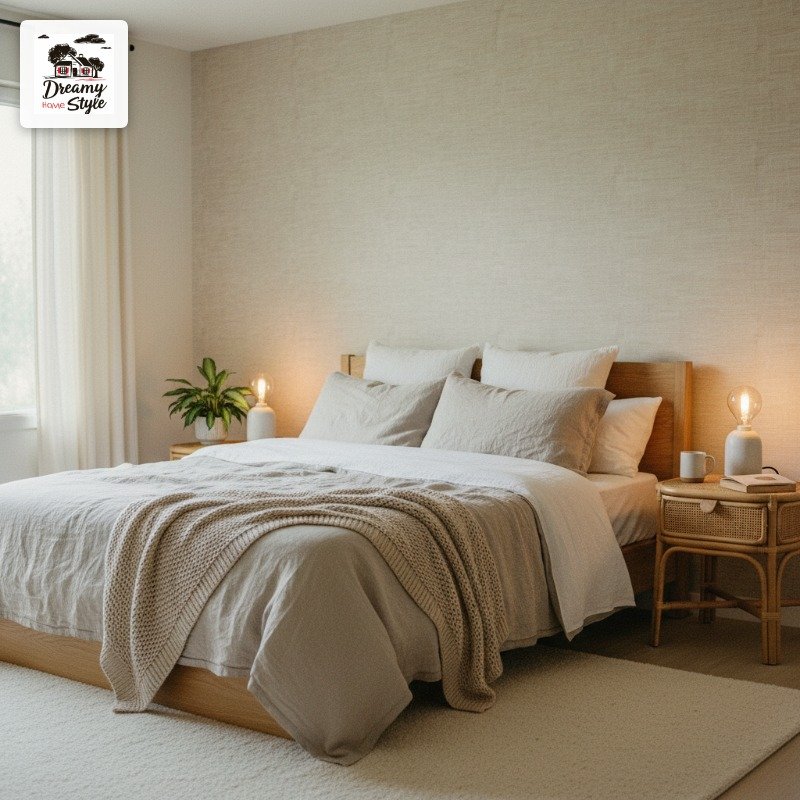
Grasscloth-look peel-and-stick is my recommendation for a bedroom specifically.
It adds texture, it reads expensive, and it’s forgiving if your wall isn’t perfectly smooth (which mine definitely was not).
Permanent wallpaper is incredible too and I don’t want to scare you off it.
But if you’re renting or just not sure you’ll love it in two years, peel-and-stick is genuinely good now.
Not what it was five years ago.
Dark Walls in a Small Bedroom — I’m Saying Do It
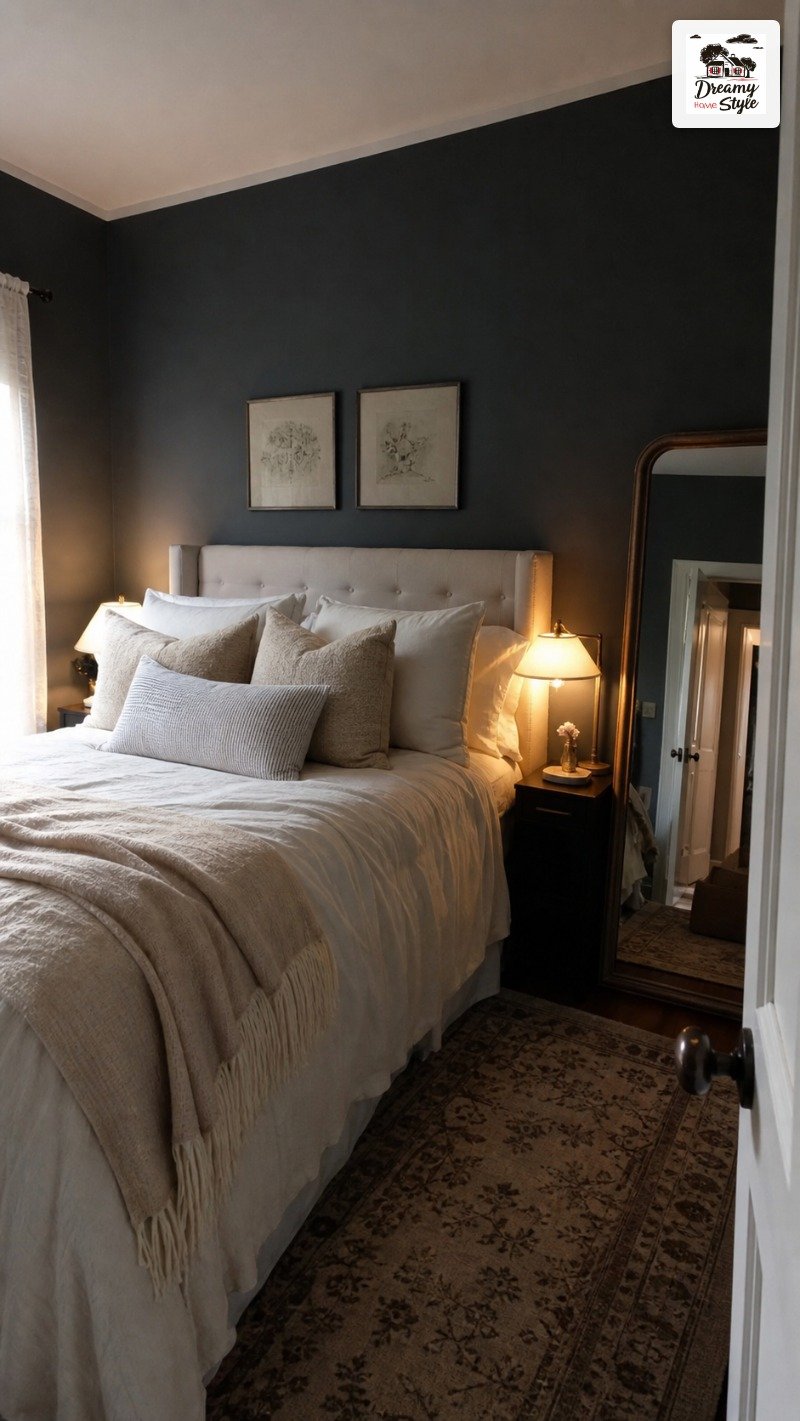
Every single decorating rule says small rooms need light colors.
And I understand where that comes from.
But I’ve been in small rooms with white walls that felt cold and exposed, and I’ve been in tiny rooms with dark accent walls that felt like the best hug.
A dark accent wall in a small bedroom can actually make the room feel more intentional.
More designed.
The boundaries feel cozier instead of cramped.
The rest of the room needs to work with it though.
Light bedding, warm lighting (floor lamps, table lamps, NOT that overhead can light please), maybe a mirror to bounce light around.
My current bedroom is not big.
The navy wall works because everything else in the room is pale and warm.
It’s a balance, not a rule.
Textured Accent Walls and Why I Became Obsessed
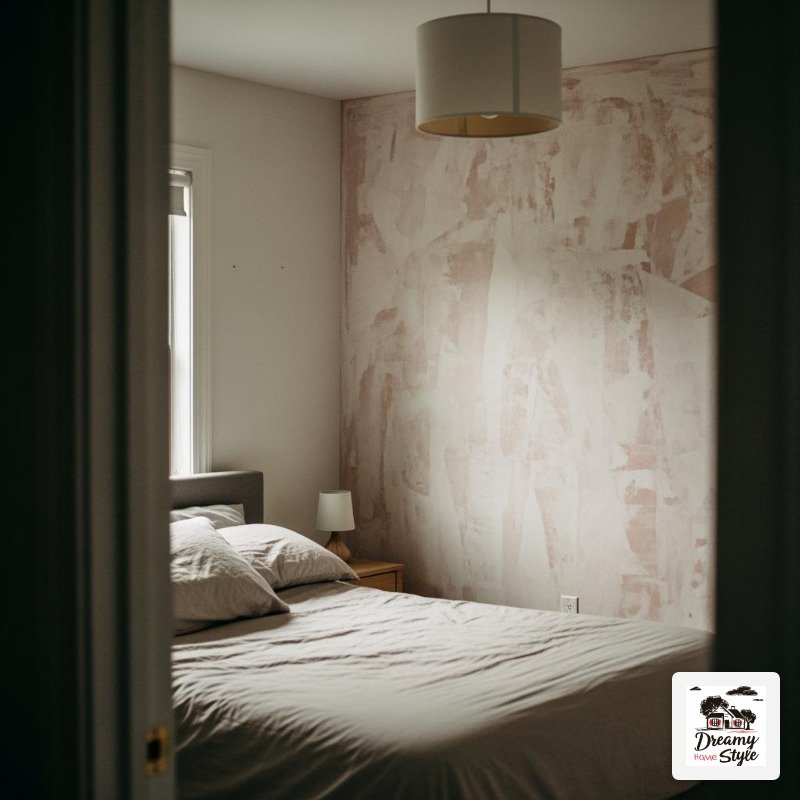
Paint is great.
But texture is where it gets really interesting.
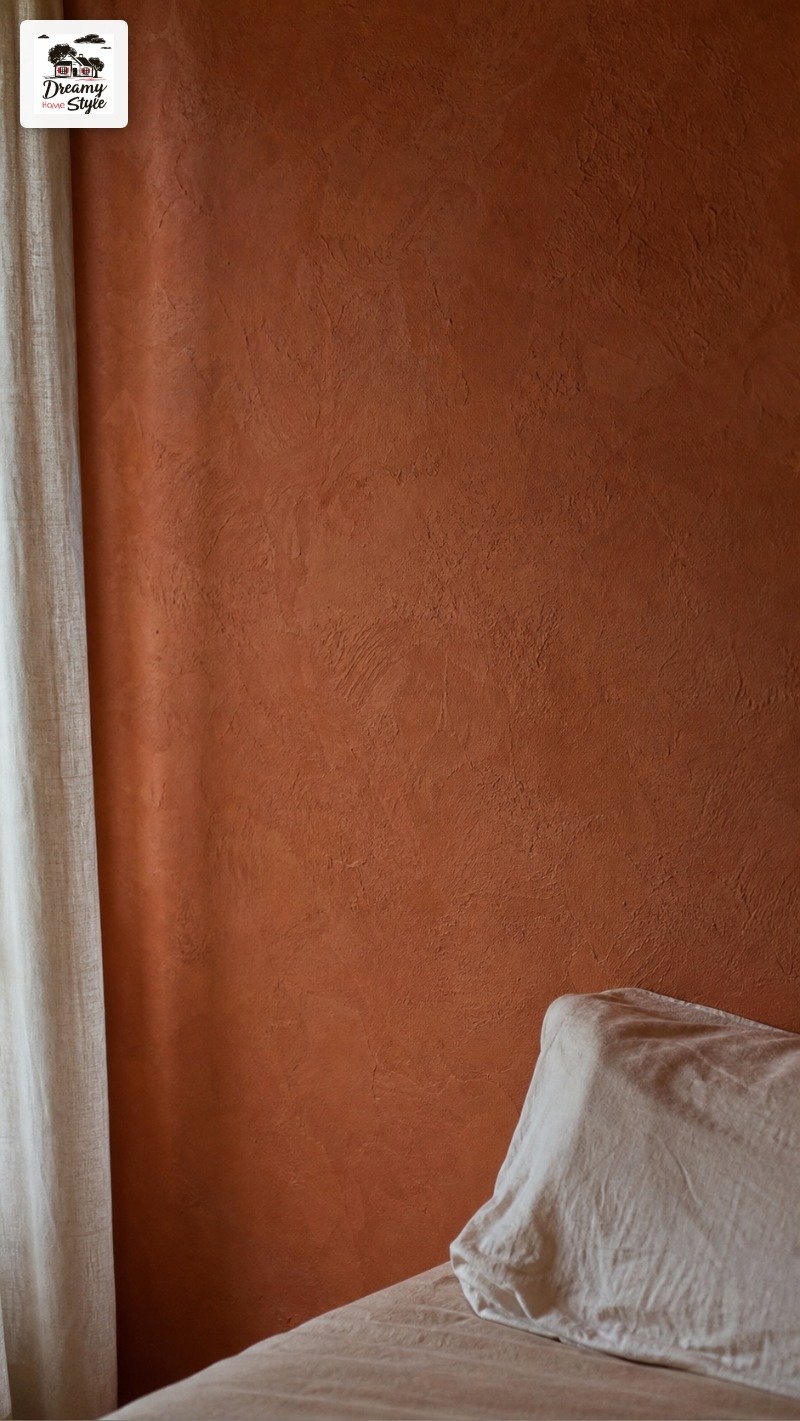
I tried a limewash technique on a small section of a wall before doing the full thing and I was hooked immediately.
Limewash looks like old Italian plaster.
It has depth and variation and every time the light shifts it looks slightly different.
I think about it more than is normal.
You can buy premixed limewash paint from Portola Paints or Roman Clay from Backdrop.
It’s not cheap, but one accent wall doesn’t take a ton of product.
I used less than I expected.
Even a simple DIY plaster effect using joint compound can give you that layered, textural look.
I’ve seen people do it for under thirty dollars in materials and it looks genuinely stunning.
Just takes patience and some practice on a scrap piece of drywall first.
Texture reads so well in photos too, which matters if you ever want to share it.
(I will not pretend that wasn’t a factor for me.)
What to Put on the Accent Wall Once You Have It
Leaving it bare is always an option and sometimes the right one.
A really beautiful paint color or texture can absolutely stand alone.
But if you want to add something, I’d keep it simple.
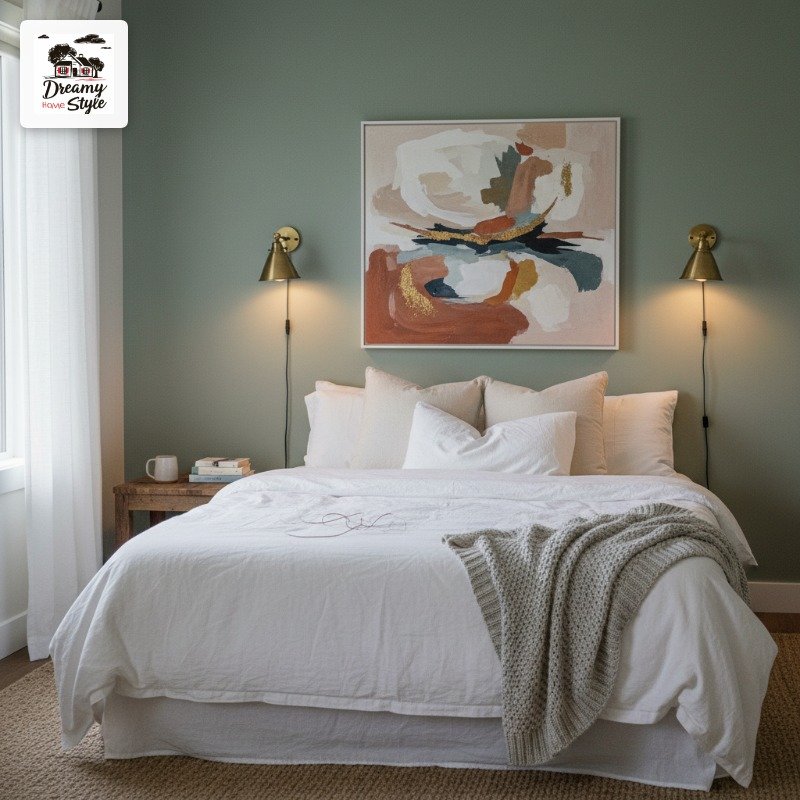
One large piece of art over the bed is almost always better than a gallery wall of six smaller things.
Galleries work, but they’re harder to pull off, and in a bedroom specifically I find them sort of busy.
Sconces flanking the bed are practical and gorgeous.
They free up your nightstand and they add this warm, symmetrical light that makes the whole accent wall look intentional.
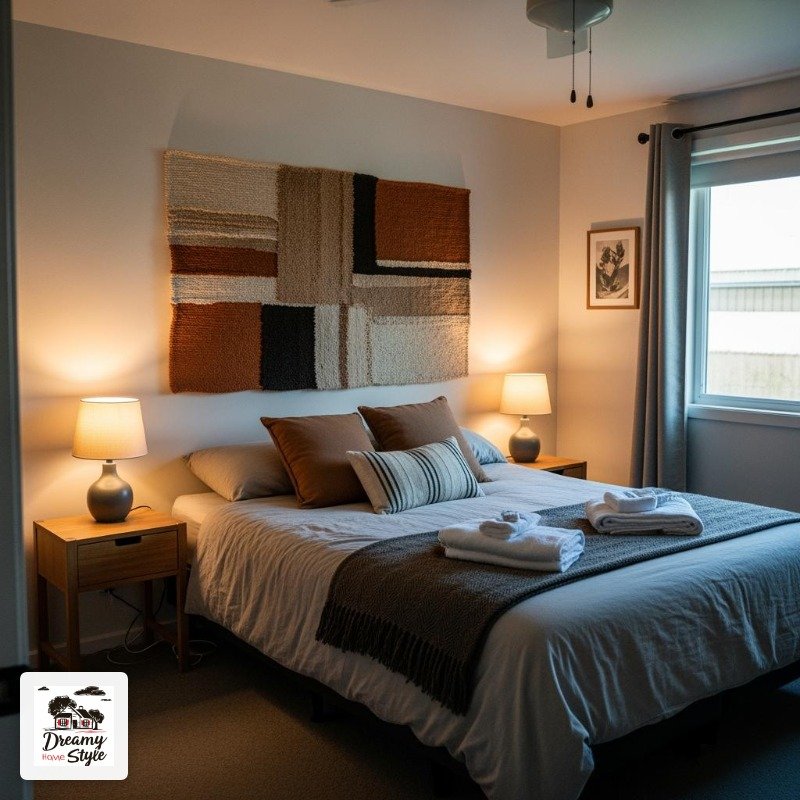
I have a single oversized woven piece above my bed on the navy wall and it’s probably my favorite thing in the house.
Found it at an estate sale for fourteen dollars.
The frame situation cost me more than that.
Lighting Is the Thing Most People Skip and Instantly Regret
I will go to my grave saying overhead lighting is almost always a mistake in a bedroom.
The flush mount on the ceiling is not your friend at nine PM.
It washes everything out and makes the most beautiful accent wall look flat.
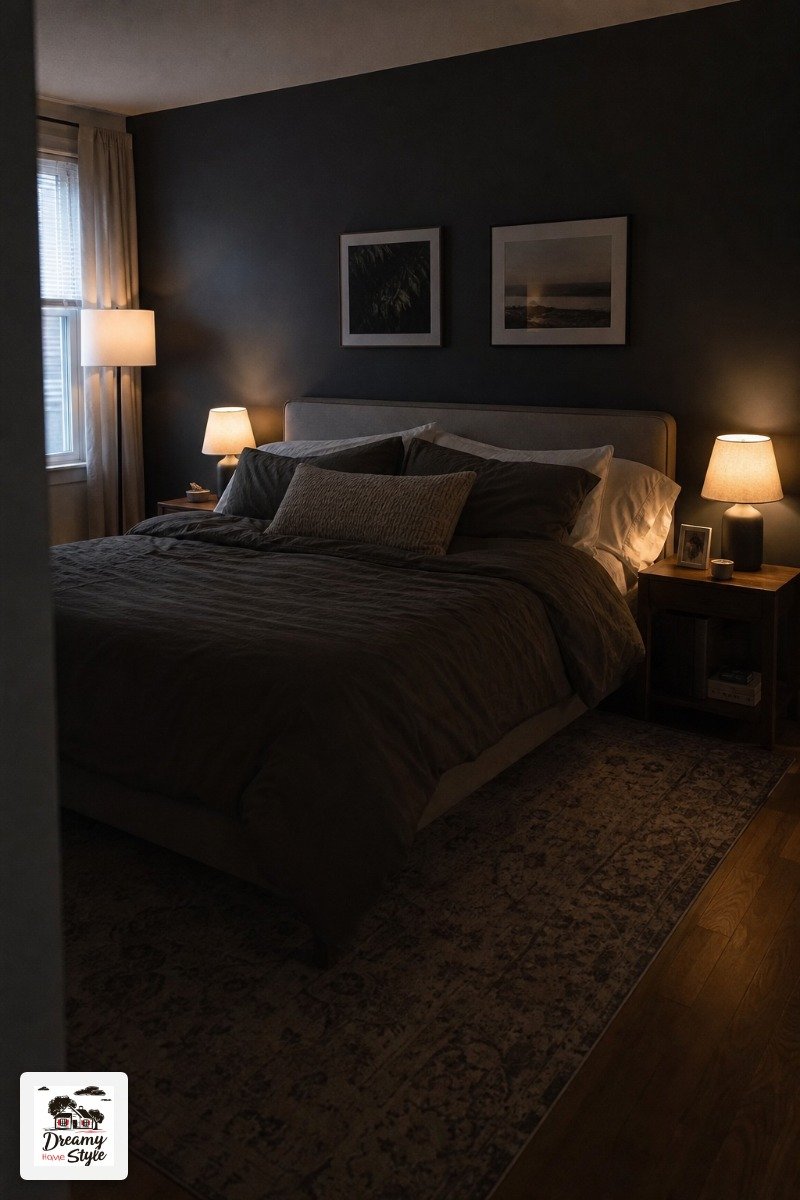
Layer your lighting.
A lamp on each nightstand.
A floor lamp in the corner.
Sconces if you can swing them.
Warm bulbs only.
I’m talking twenty-seven hundred Kelvin.
Nothing daylight-white in a bedroom, not ever.
The difference between a warm bulb and a cool one is the difference between ‘cozy bedroom you want to be in’ and ‘hospital room you just woke up in’.
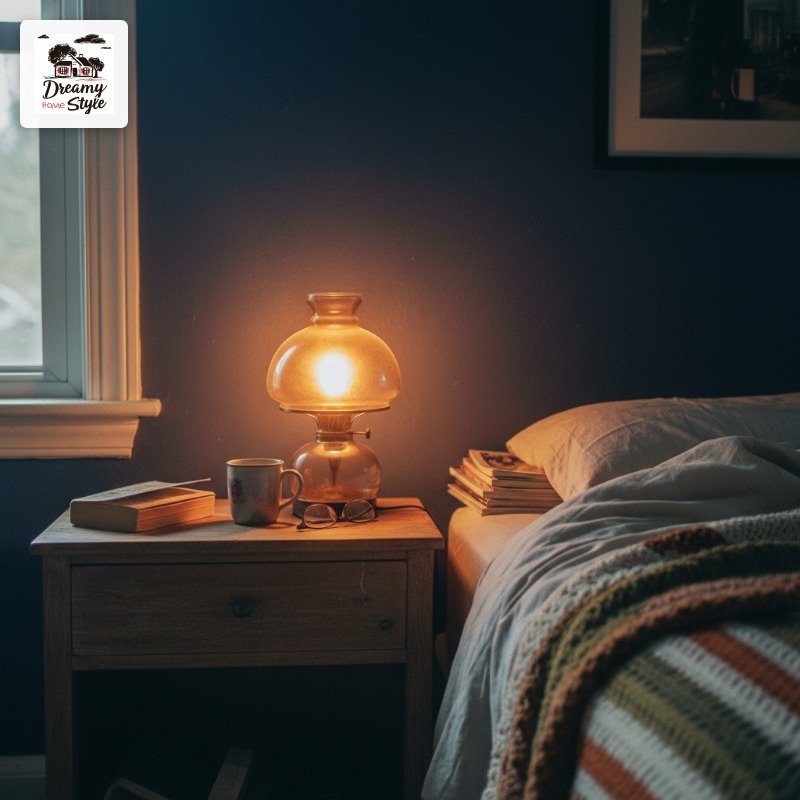
I have a little amber-toned lamp I thrifted for eight dollars on the far side of my bedroom and it’s genuinely one of the best things in the room.
Not pretty.
Kinda ugly.
But the light it throws at night makes the navy wall look like velvet.
Pairing Your Accent Wall With the Right Bedding
This is where it can go sideways fast.
I’ve seen gorgeous accent walls totally undermined by busy, over-patterned bedding fighting for attention.
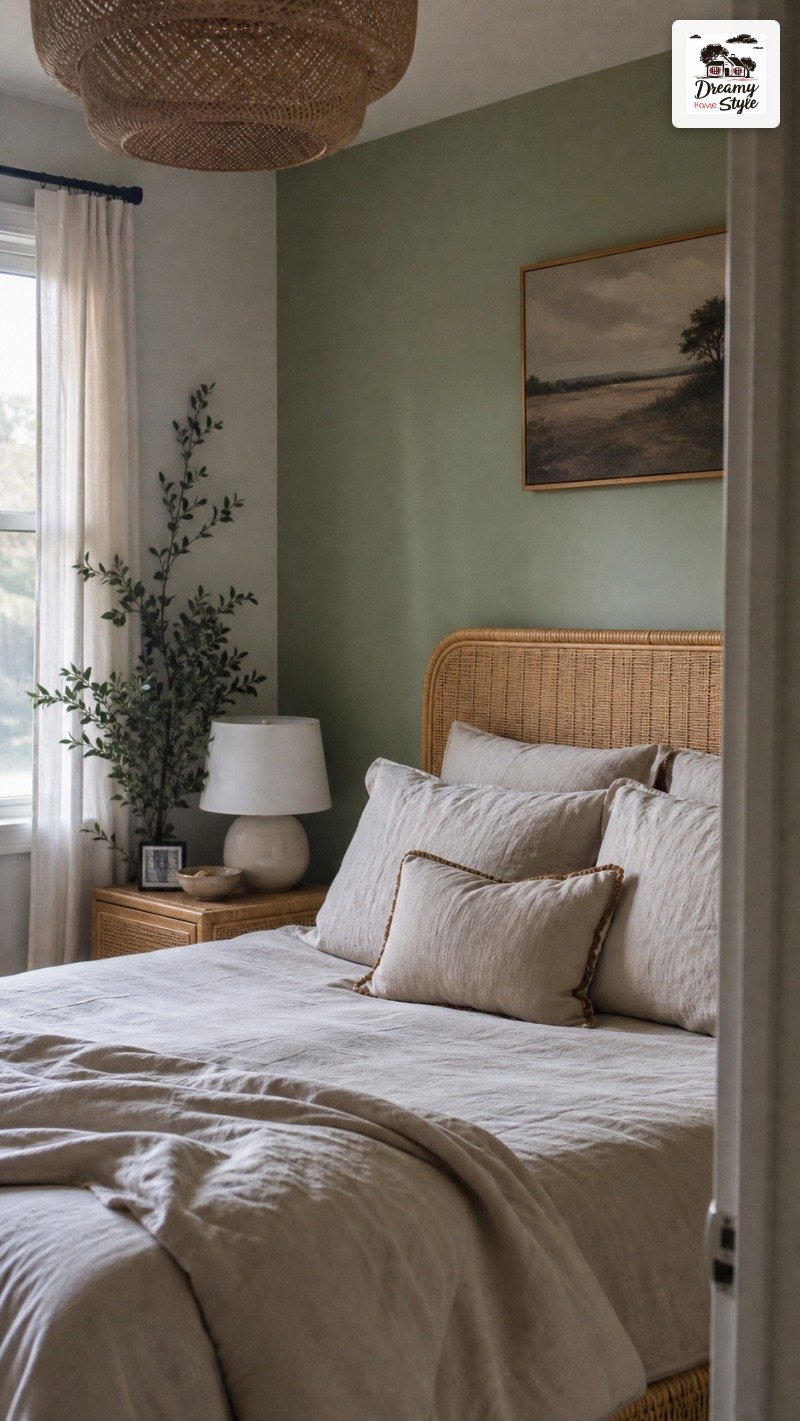
When your wall is the statement, let your bedding play supporting role.
Neutrals, linens, soft whites, warm creams.
They make the wall sing.
That said — if your accent wall is subtle, like a muted sage or a soft blush, you have more room to play with texture and pattern in the bedding.
The balance shifts depending on how loud the wall is.
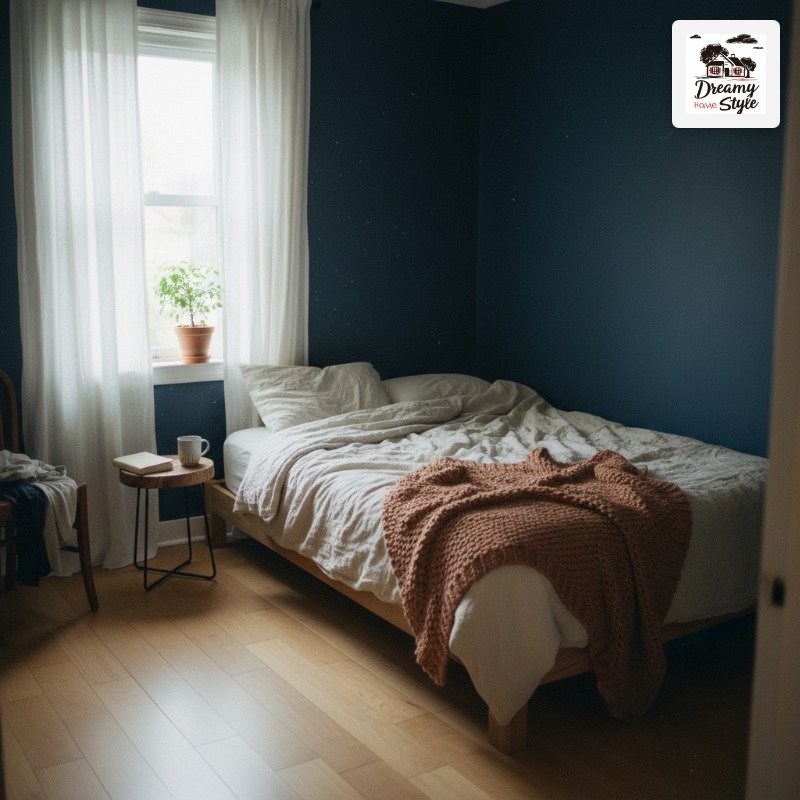
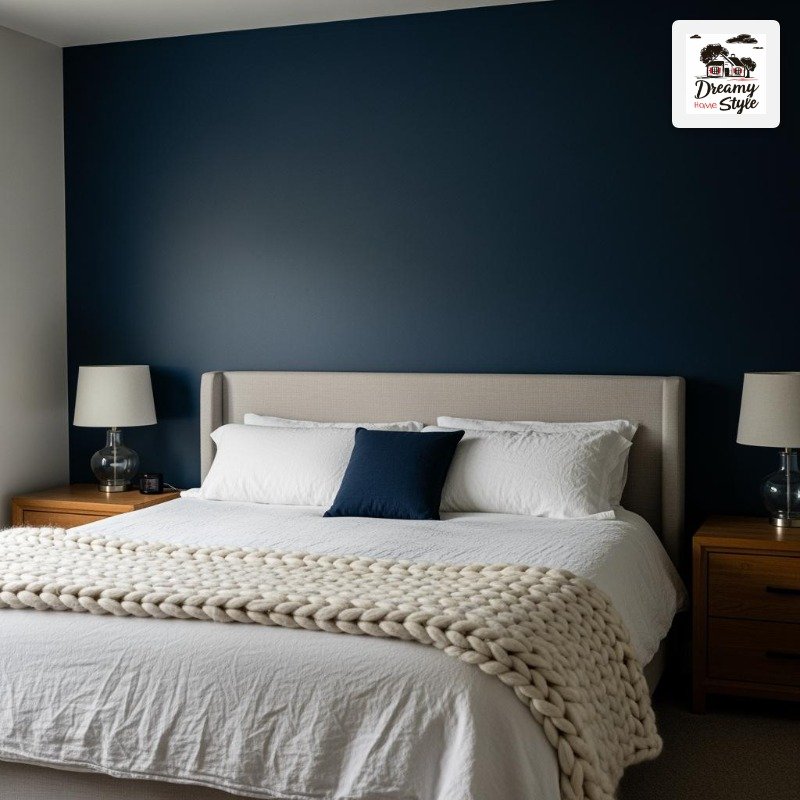
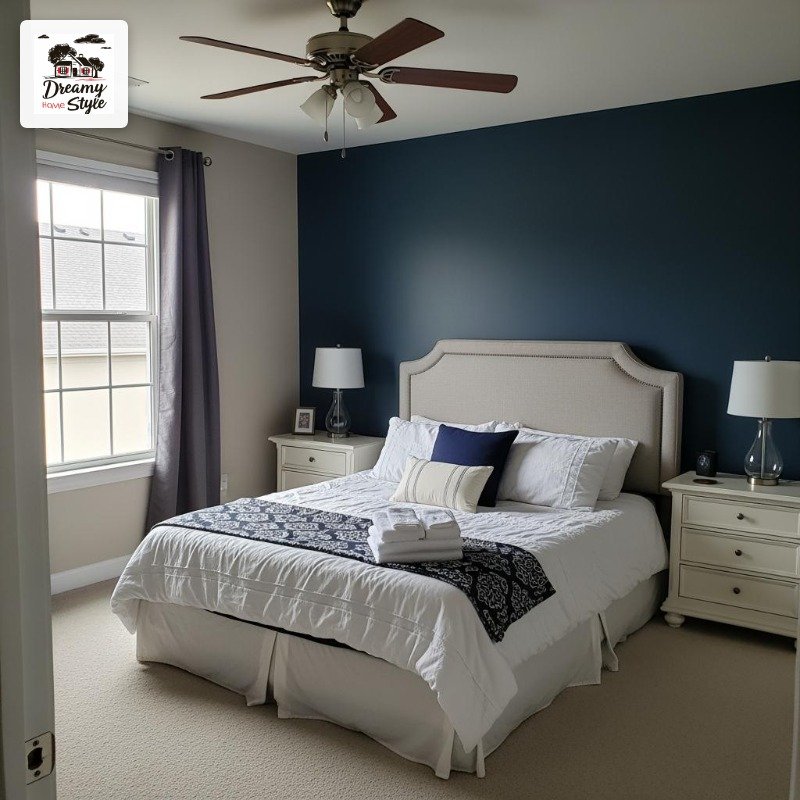
My navy wall gets solid white bedding with a chunky knit throw.
Always.
I’ve tried patterned duvet covers twice.
Both times I took them off within a week.
The simplicity just works better.
Budget Reality — How Much This Actually Costs
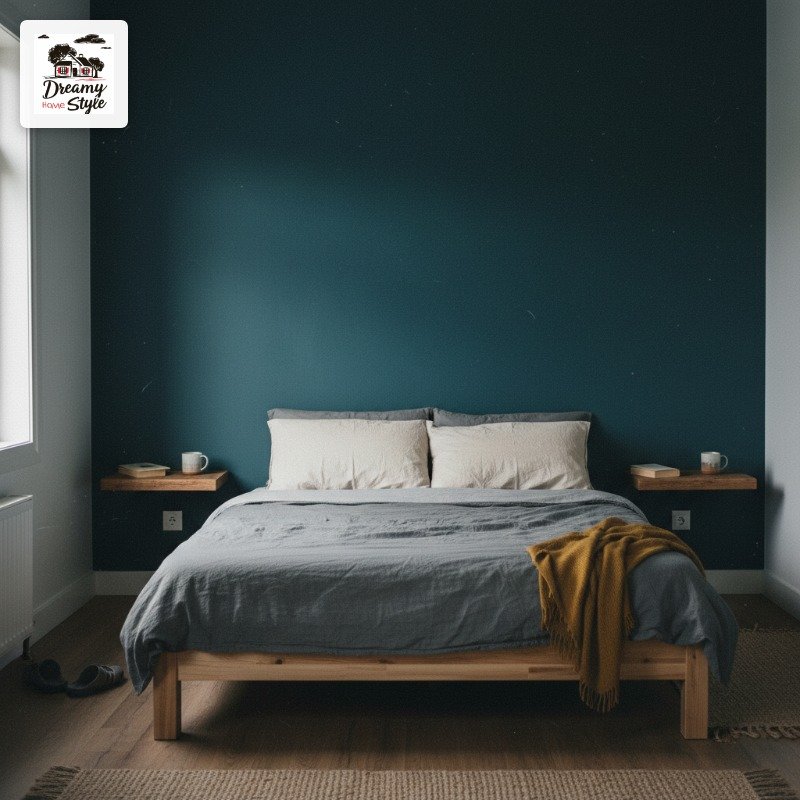
One wall of paint in a standard bedroom is roughly one quart to one full gallon depending on your wall size.
A quality quart of paint runs anywhere from fifteen to forty dollars.
This is genuinely the most affordable room update I know.
Peel-and-stick wallpaper averages about twenty-five to forty-five dollars per roll and most bedroom accent walls need somewhere between four and six rolls.
Still pretty reasonable.
The Roman clay and limewash finishes are more.
Portola Paint Roman Clay is around eighty dollars a gallon.
You likely won’t need a full gallon for one wall, but budget for it anyway.
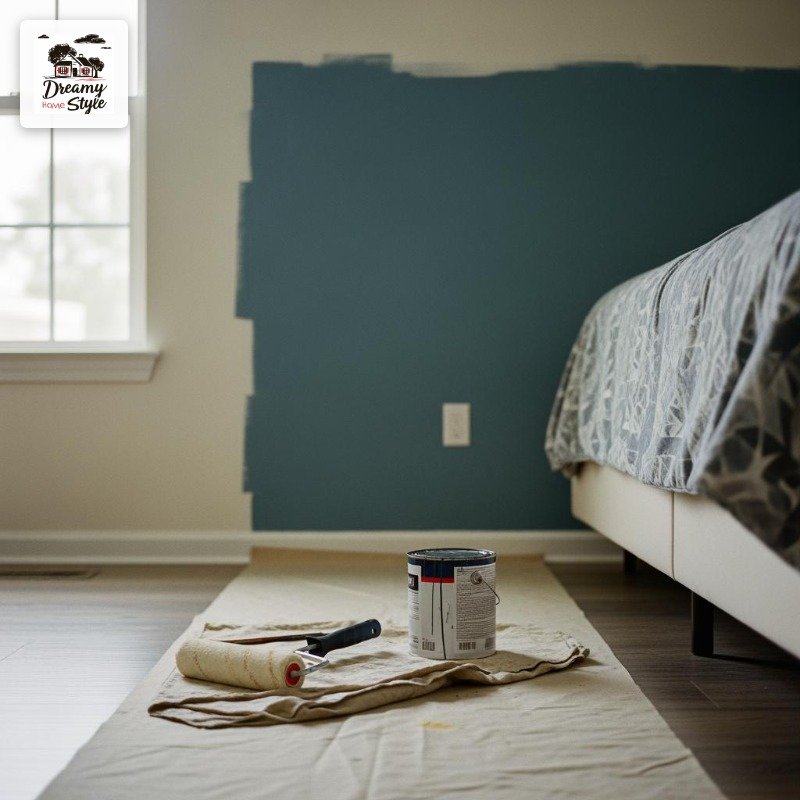
Where it adds up is the stuff around the wall.
New art, new sconces, new bedding.
You don’t need all of it.
But it’s easy to start pulling threads and suddenly you’ve redecorated half the room.
(I say this as someone who has done exactly that.)
The Mistakes I Made So You Don’t Have To
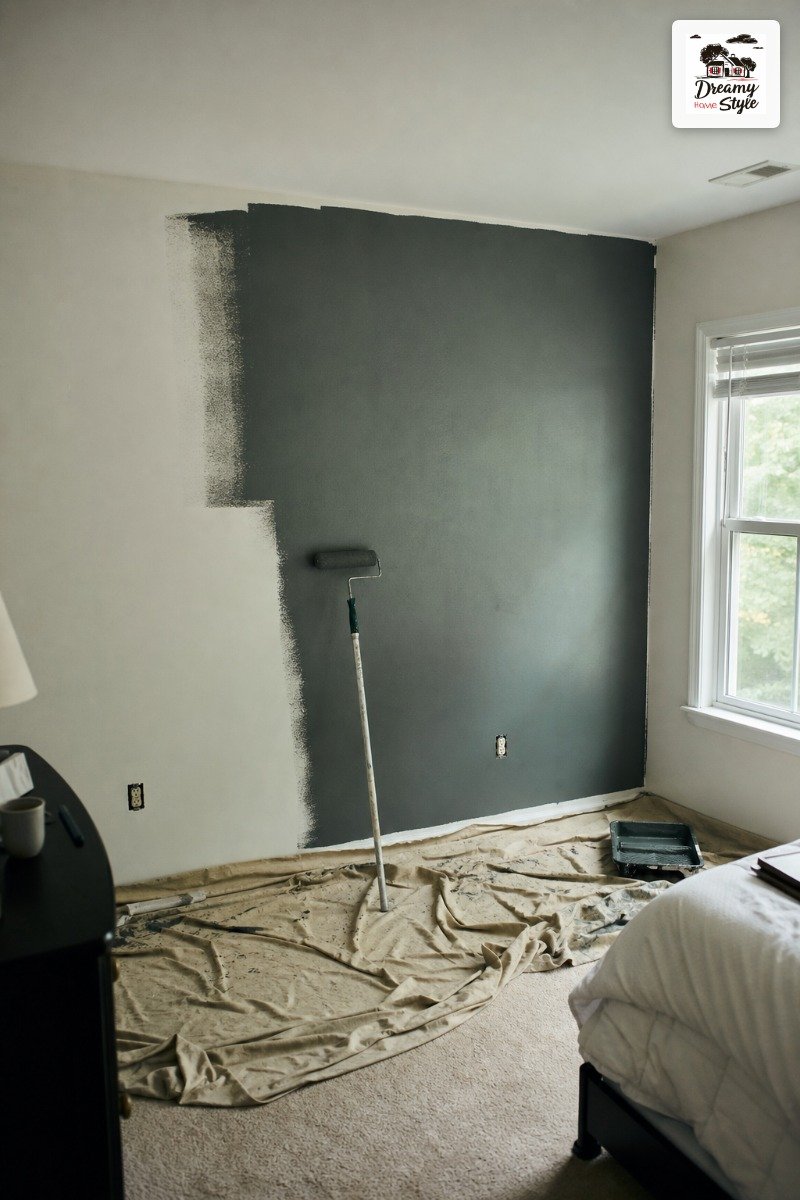
First mistake: painting without priming on a wall that had old paint that wasn’t totally clean.
The color looked patchy for days even after two coats.
I ended up doing three coats total.
Not fun.
Second mistake: choosing a color from a tiny chip under the store’s fluorescent lights and expecting it to look the same in my bedroom.
It won’t.
It never does.
That’s what the big swatch test is for.
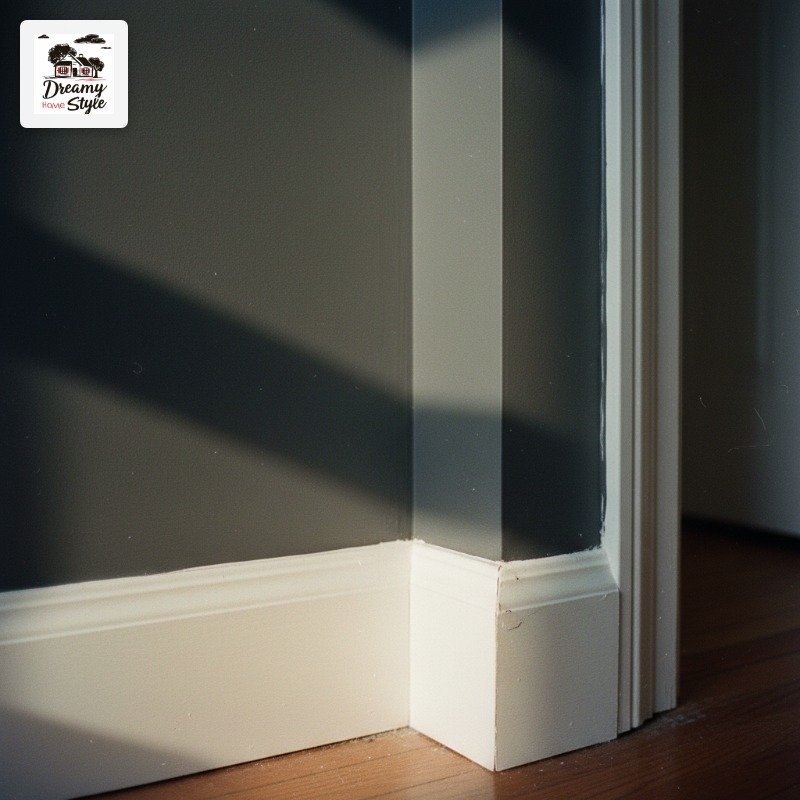
Third mistake: stopping the accent wall paint at the corner and not thinking about the adjoining trim.
If your trim is a different white than your wall paint, they’ll fight.
Paint your trim the same white throughout the room before you start the accent wall.
Fourth mistake, and this was painful: doing the wall and then realizing my curtains fought with it.
I had warm rust curtains and they clashed with my cool navy.
Bought new curtains.
Budget officially exceeded.
Rooms I Keep Coming Back to for Inspiration
I save so many bedroom photos it’s honestly embarrassing.
My phone has multiple folders.
Biscuit has his own folder too but that’s different.
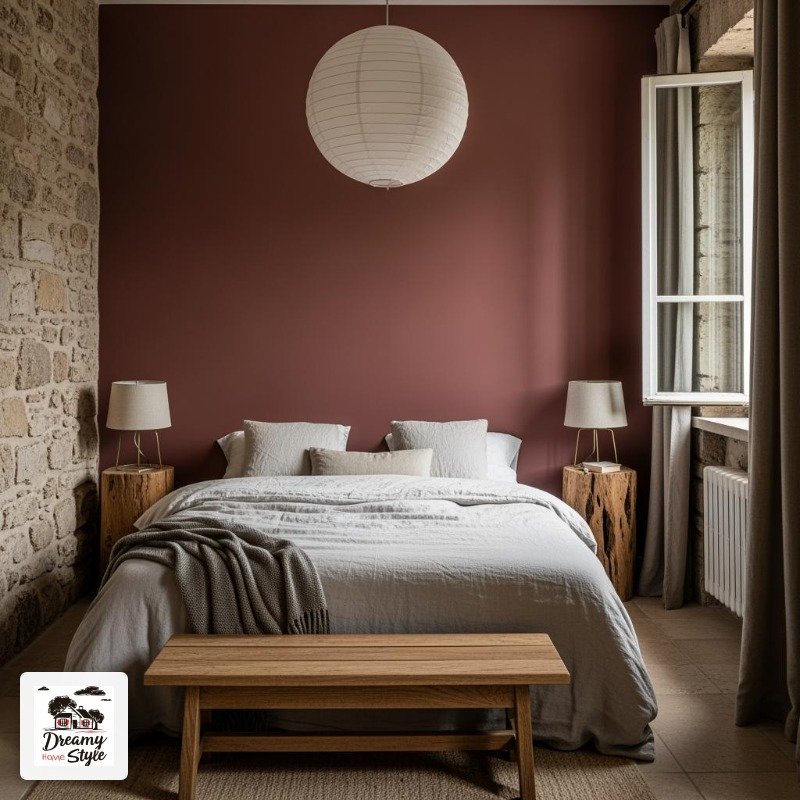
What keeps drawing me in is the combination of a deep, saturated accent wall with really pale, natural materials everywhere else.
Stone, linen, raw wood.
The contrast is just so satisfying.
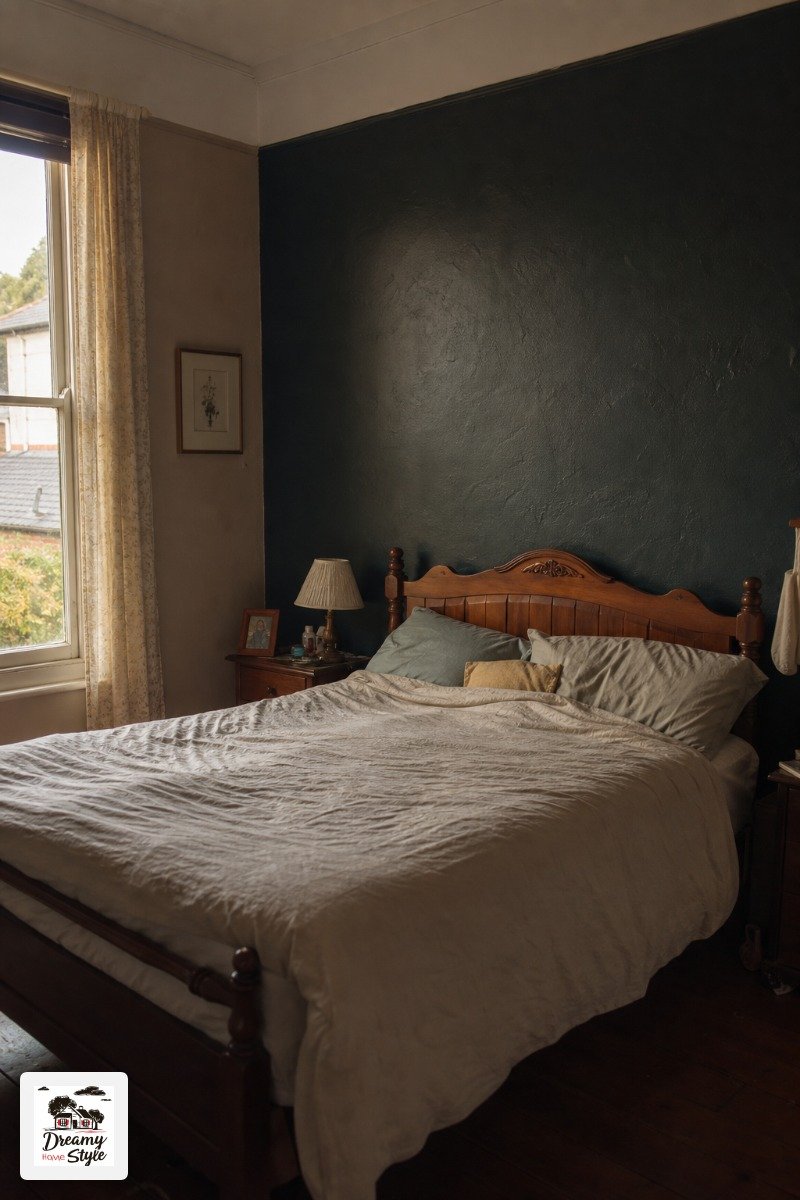
I also love seeing accent walls used in bedrooms with older architecture — exposed brick that’s been limewashed, plaster walls with visible texture, original moldings painted to match the accent wall instead of the trim color.
It feels organic instead of like someone just painted one wall as an afterthought.
Pinterest and Instagram are full of the polished, styled version.
The stuff that actually lives in my head rent-free is the rooms that look a little rough around the edges.
Real houses.
Places that look like someone actually sleeps there.
When an Accent Wall Isn’t the Answer
I want to be honest here because not every room needs this.
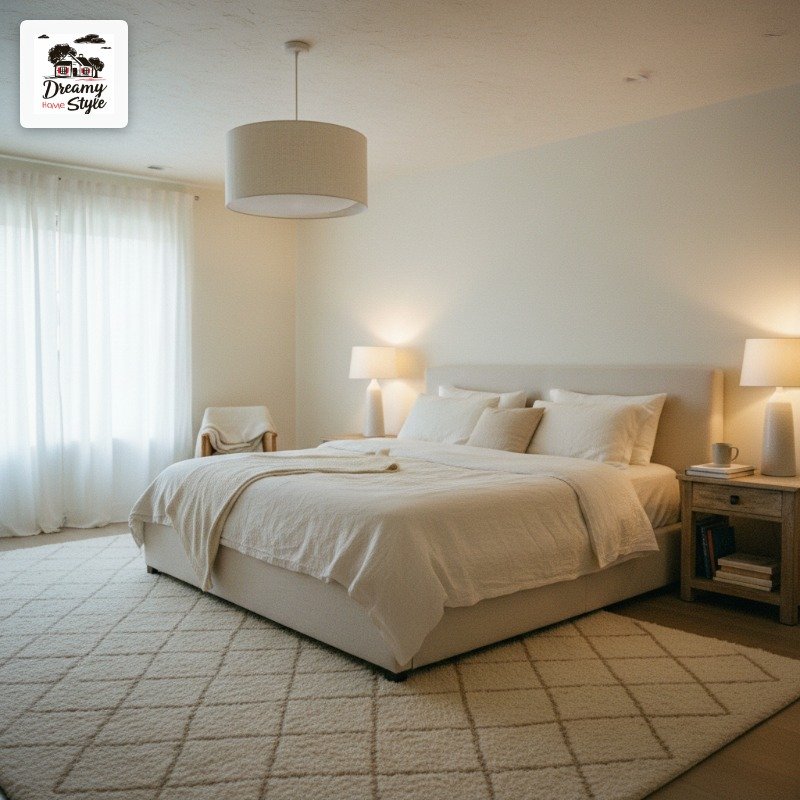
If your bedroom is really architecturally chaotic — lots of angles, a weird window placement, doors on multiple walls — an accent wall can sometimes highlight the awkwardness instead of smooth it over.
In rooms like that, a cohesive all-over color or a really good rug and lighting overhaul might do more.
Also if you have a very low ceiling, a dark accent wall behind the bed can sometimes make it feel lower.
Not always.
But sometimes.
Horizontal elements and mid-tone colors work better in those rooms.
And if you’re planning to sell soon, think about who’s buying in your market.
A bold navy wall will photograph beautifully for a listing, but a really unusual color choice might not.
That’s not a reason to never do it — it’s just worth considering the effort of repainting before you list.
Most of the time though?
Do the wall.
The regret rate is shockingly low.
Related read: Things I Wish I Knew Before I Decorated My First Home — Instant PDF + Kindle download. Secure checkout by Stripe