
Pick your wall color and see the accent wall colors that go with it, painted on one wall of a room: deeper and bolder, lighter, the next color on the wheel, black, or a color from your art. Each shows whether it pops or stays quiet, and the closest Sherwin-Williams, Benjamin Moore and Behr paint. Your photo never leaves your device.
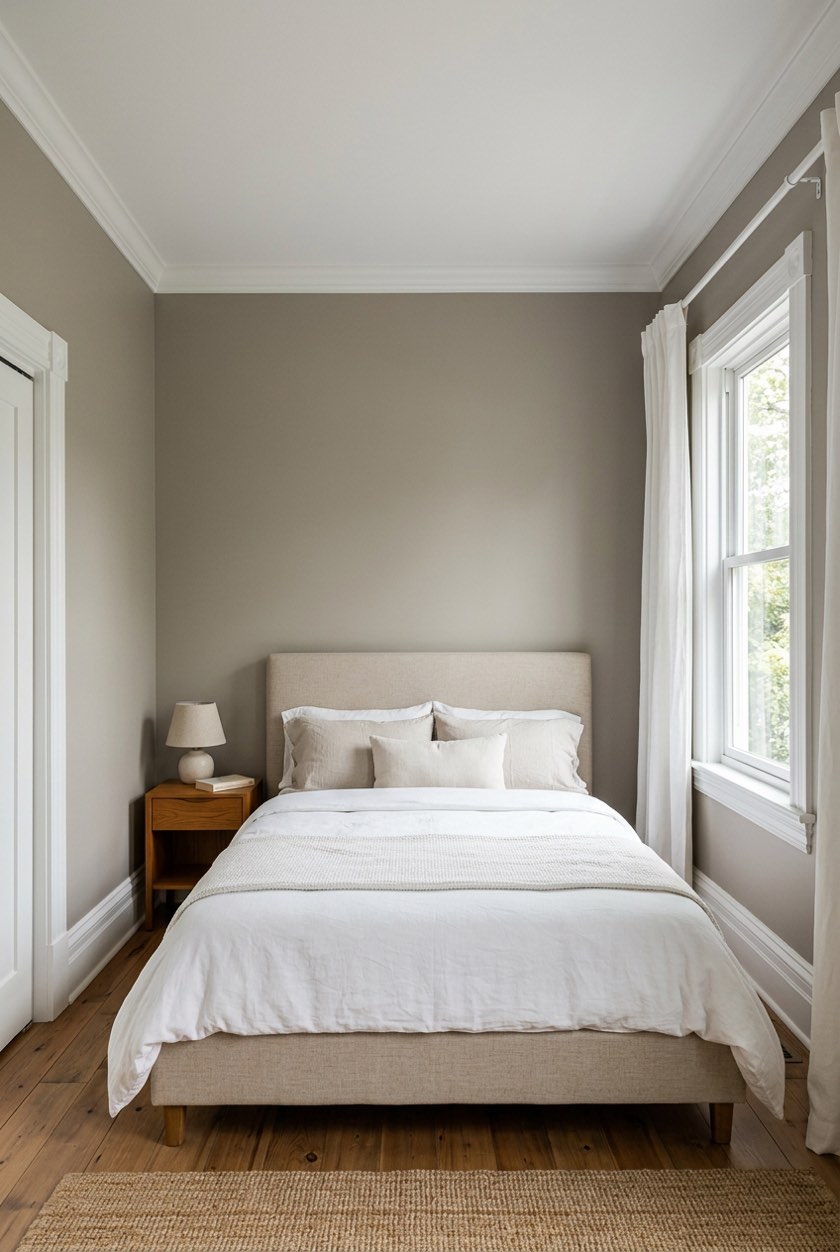
Pick your wall color, then an accent
1Your room
2Pick your wall color
3Pick an accent wall color
Mid-tone walls: accent colors are meant to pop, so go deeper, or take the color next to yours on the wheel.
Closest paints to this accent wall
A screen shows each brand's digital version of a paint: paint a sample board and look at it on that wall morning and evening before you buy. We are not connected to any of these brands.
4Tap to paint
On a sample room the walls and the accent wall are painted for you. On your own photo, tap every wall in your wall color, then pick an accent color and tap the one wall you want to stand out (a wall broken up by furniture may need a tap on each part). If the accent color spills onto the next wall, lower Spread and tap it again; narrow strips are easier with the brush.
Quick answer: an accent wall color usually comes from one of five places. Paint makers suggest a deeper, bolder shade of your wall color when the walls are light, and a lighter one when they are dark. The other three are the color next to yours on the color wheel, black, or a color picked up from your art or fabric. Whether it pops depends on how far its LRV is from the other walls’: more than 30 points pops in any light, under 20 is a quiet, tonal accent. Pick your wall color above to see each one on a room, with the closest real paints.
How to use the accent wall color picker
- Pick your wall color. Tap a swatch, type its color code from a paint chip, or use the color picker. On a sample room the walls repaint at once.
- Tap an accent color. Each shows its LRV, its gap from the other walls and whether it pops in any light, pops only in a bright room, or stays a quiet accent. The two marked try first follow Benjamin Moore’s advice for walls as light or as dark as yours. On a sample room, the wall behind the bed or the desk is repainted in it.
- Pick a color from your art. Use A color from your art or fabric and match it to a painting, a rug or the bedding.
- Read the paints. Under the colors are the closest Sherwin-Williams, Benjamin Moore and Behr paints to the accent you chose.
- Try your own room. Use your photo, tap every wall in your wall color, then pick an accent color and tap the one wall you want to stand out. A wall broken up by furniture may need a tap on each part.
The accent colors, in Benjamin Moore’s words
Every option on the picker comes from Benjamin Moore’s accent-wall guide, “20 Accent Wall Ideas & Inspiration to Add Character to Every Room”:
- Deeper and bolder.
If the walls are light and airy, consider a deeper, bolder color
. Its loft bedroom does it inside one color family:Combine three hues in the same color family to elevate the impact of color in your bedroom
, with Summer Shower 2135-60, Province Blue 2135-40 and Nocturnal Gray 2135-30 from one strip. - Lighter.
For rooms with darker color walls, consider going lighter for an accent wall.
- Its neighbor on the color wheel.
Use analogous colors—colors that sit next to each other on the color wheel—for striking contrast
. - Black.
A black accent wall adds instant style to any room. On the pragmatic side, darker paint colors tend to mask splatter and dirt.
The picker uses its Black Tar 2126-10 (#393A3B in Benjamin Moore’s own palette file). - A color from your art or fabric.
picking up a similar color from a piece of artwork or textile can help tie the room together
. Until you pick one, the picker starts on the guide’s dining-room red, Rosy Apple 2006-30 (#B24D46).
The picker makes the first three from your wall color, and these recipes are ours, not Benjamin Moore’s. “Deeper and bolder” is two steps darker (20 points of CIELAB lightness) in the same hue, with 30% more color. “Lighter” is two steps lighter, with 20% less. “Its neighbor on the color wheel” turns the hue 30° and keeps the lightness. A gray or white wall with barely any color has no neighbor on the wheel, so that option is left out for it.
Light walls, dark walls: which to try first
The picker reads your walls as light, mid or dark by Benjamin Moore’s own Light, Medium and Dark tags. In its color service, every color it tags Dark has a printed LRV of 21.96 or less, and every color it tags Light has 57.09 or more, so those are the edges. For light walls it suggests deeper and bolder, then black. For dark walls it suggests lighter, then a color from your art. For mid-tone walls it suggests deeper, or the color next to yours on the wheel; the guide’s own line is that Accent colors are meant to pop
.
Pops, or stays quiet
LRV is how much light a color reflects, from 0 for black to 100 for a perfect white. How far apart two LRVs must be before one surface stands out from the next is set out in the UK’s building guidance for accessible buildings. Approved Document M, Volume 2, paragraph 0.26:
“the difference in light reflectance value between the two surfaces is greater than 30 points. Where illuminance on surfaces is greater than 200 lux, a difference in light reflectance value should be a minimum of 20 points.”
It is not a decorating rule, but it is a measured answer to “will my accent wall show”, so the picker uses it as a yardstick:
- Over 30 points: pops in any light.
- 20 to 30 points: pops in a bright room. In daylight it reads; on a dull evening it softens.
- Under 20 points: a quiet, tonal accent. The color next door on the wheel is always here: its contrast is in the hue, not the lightness.
Accent wall colors by wall color
The LRV gap between each accent and the other walls, and the two the picker suggests trying first. “Pops” = over 30 points, “bright room” = 20 to 30, “quiet” = under 20; “—” = left out for a wall with barely any color.
| Walls | LRV | Deeper and bolder | Lighter | Black | Try first |
|---|---|---|---|---|---|
| Bright White #F8F8F5 | 94 | 41 · pops | 1 · quiet | 90 · pops | deeper, black |
| Greige #D6CFC4 | 63 | 31 · pops | 30 · bright room | 59 · pops | deeper, black |
| Dove Gray #C9CAC6 | 59 | 30 · bright room | 34 · pops | 55 · pops | deeper, black |
| Pewter #A3A5A1 | 37 | 21 · bright room | 34 · pops | 33 · pops | deeper, lighter |
| Sage #A9B59B | 44 | 24 · bright room | 37 · pops | 40 · pops | deeper, neighbor on the wheel |
| Powder Blue #B9CDD8 | 59 | 29 · bright room | 33 · pops | 55 · pops | deeper, black |
| Warm Sand #DCC7A6 | 59 | 29 · bright room | 32 · pops | 55 · pops | deeper, black |
| Terracotta #C0704F | 23 | 14 · quiet | 26 · bright room | 19 · quiet | deeper, neighbor on the wheel |
| Navy #2B3A55 | 4 | 3 · quiet | 10 · quiet | 0 · quiet | lighter, your art |
| Charcoal #45484A | 6 | 5 · quiet | 13 · quiet | 2 · quiet | lighter, your art |
Color names here are the picker’s own, not a paint brand’s; the picker names the closest brand paints for the accent you choose. On very dark walls every option is a quiet accent by LRV: the contrast there comes from a lighter color or from the hue of your art, not from going darker.
Which wall to make the accent wall
Benjamin Moore: An accent wall showcases a room’s focal point, like a built-in bookcase, fireplace, or art.
In a bedroom that is usually the wall behind the bed, in a living room the wall behind the sofa, the TV or the fireplace, and in a study the wall you face. That is why the two sample rooms paint the wall behind the bed and behind the desk. Its guide adds: select a wall with purpose–your eye will be drawn to it immediately
, and Don’t forget to consider the direction your room faces and the type of natural light it receives
.
Three worked examples
Greige walls in a living room. Greige (LRV 63) is a light wall, so the picker suggests deeper and bolder first: 31 points darker, it pops in any light. Black (59 away) is the dramatic second choice, and it hides the scuffs behind a sofa.
Sage walls in a bedroom. Sage (LRV 44) is mid-tone. Two shades deeper is 24 points away, so it pops in a bright bedroom and softens at night, which suits a room for sleeping. The color next to sage on the wheel, a soft blue-green, is a gap of 0: the change is all in the hue. The bedroom sample opens on this pair.
Navy walls. Navy (LRV 4) is dark, so the picker suggests going lighter, as Benjamin Moore does: two steps lighter is 10 points away, still a quiet, tonal accent. For a wall that really shows on navy, pick a much lighter color from a painting or the bedding with A color from your art or fabric.
Common mistakes with an accent wall
- Picking the wall with the window or the door. A wall cut up by openings has little paint to show. Choose the wall your eye lands on first.
- A color unrelated to anything in the room. Benjamin Moore’s tip is to pick up a color from the artwork or a textile, so the accent wall ties the room together instead of standing alone.
- A deeper accent on walls that are already dark. Two shades darker than navy or charcoal barely shows. Go lighter, as the guide says, or bring in a color from the art.
- Stopping short of the corners. An accent wall reads as a decision when it runs corner to corner and ceiling to baseboard. Cut in cleanly at the corners.
- Judging it from a chip. A whole wall reads darker and stronger than a chip. Paint a large sample board and look at it on that wall in the morning and the evening before you buy.
Painting the whole room? The room paint visualizer paints every wall on your photo, and the color drenching visualizer paints walls, trim and ceiling in one color. Planning the furniture too? The free 2D room planner lays out the room.
Paint the whole roomRead next
- Sage green accent wall behind the bed
- Accent walls in the living room
- Dining room accent wall trends
- Accent wall ideas behind the TV
- Terracotta accent wall ideas for bedrooms
Accent wall color questions
What color should my accent wall be?
Start from your wall color. On light walls, Benjamin Moore suggests a deeper, bolder color; on dark walls, going lighter. Other good choices are the color next to yours on the color wheel, black, or a color picked up from your art or bedding.
Should an accent wall be lighter or darker?
It depends on the other walls. Benjamin Moore: For rooms with darker color walls, consider going lighter for an accent wall. If the walls are light and airy, consider a deeper, bolder color
.
Which wall should be the accent wall?
The focal point: the wall behind the bed, the sofa, the TV or the fireplace, or the one with the art. Benjamin Moore says to select a wall with purpose, one your eye is drawn to immediately.
What are the best accent wall colors?
Benjamin Moore’s guide shows reds such as Rosy Apple 2006-30, rich browns such as Wenge AF-180, greens, blues, pinks and black (Black Tar 2126-10). The best one for your room is the one that relates to your other walls and your furnishings. Try them on a room above.
What are two-tone walls?
Walls in two colors: one wall in a second color (an accent wall), or each wall split in two, a deeper color below and a lighter one above. A shade from the same color family keeps two tones calm; a color from the other side of the wheel makes them bold.
Does a black accent wall work?
On light walls, yes: it pops in any light (about 90 LRV points from a bright white) and, as Benjamin Moore notes, darker colors hide splatter and dirt. On navy or charcoal walls, black barely shows.
Should the accent wall be the same sheen?
Usually yes, the same sheen as the other walls, so only the color changes. A dark accent wall shows touch-ups and roller marks more in a high sheen; the paint sheen finder picks the sheen for each room.
Can I try accent wall colors on my own room?
Yes. Upload a photo, tap the walls in your wall color, then pick an accent color and tap the one wall you want to stand out. Your photo never leaves your device: the painting happens in your browser.