
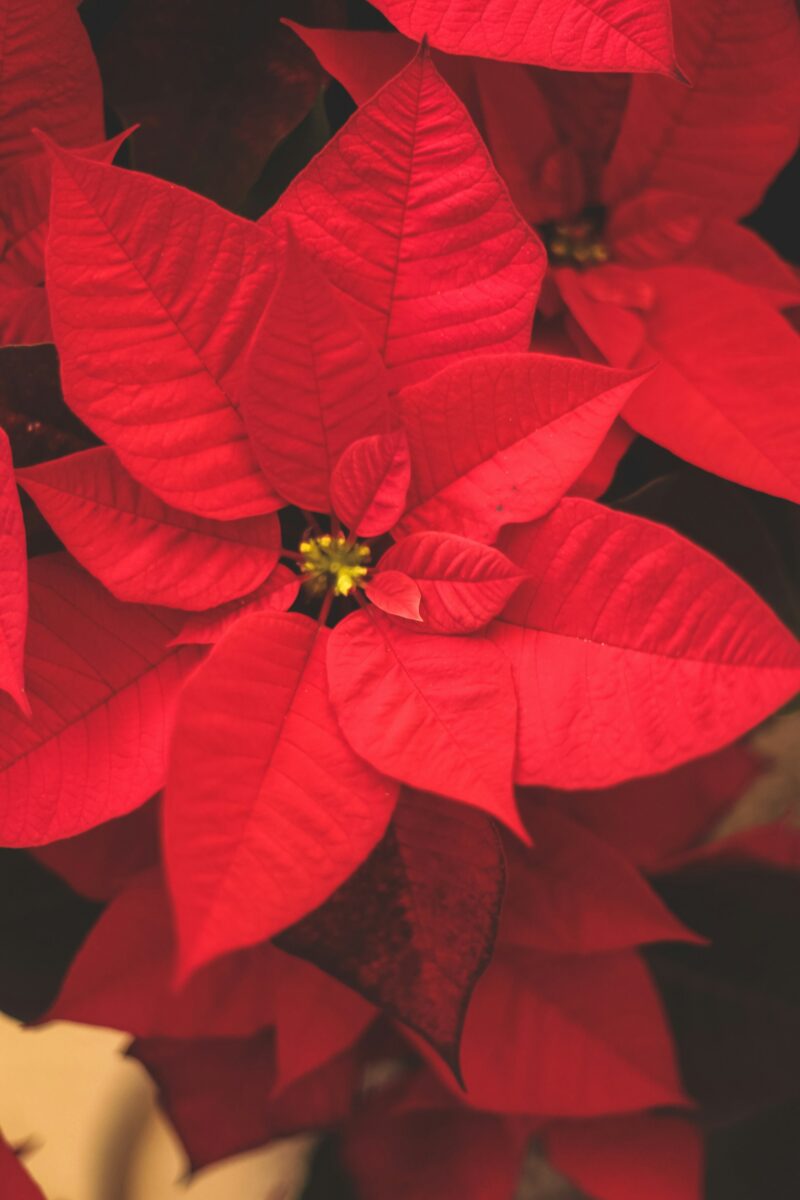

A poinsettia is the cheapest way I know to make a room look finished in December.
One pot on a table, and your living room reads as decorated.
The catch is that it’s also the plant everybody kills by New Year’s.
Honestly, it’s rarely the plant’s fault.
More than 70 million poinsettias get sold in the United States every year, which makes it the most popular flowering plant we buy.
Plenty of them end up dropping their leaves within a couple of weeks.
The good news is that the reasons are boring and fixable: a cold car, a soggy pot, a draft from a door.
Here’s how I’d keep one red and full through the holidays without turning it into a project.
Pick the Fullest Plant, Then Get It Home Warm

Check the plant before you check the price tag.
Look for bracts that are fully colored, with dark green leaves all the way down the stem and nothing drooping.
Turn the pot around, too.
A good one is full and balanced from every side, not a bouquet of three stems leaning left.
Then look at the middle of the bracts.
Those little yellow clusters are the plant’s real flowers, and the ones you want are still closed or barely opening.
The big red part everyone calls the flower is actually a set of modified leaves, called bracts.
The ride home matters more than most people think.
Poinsettias come from Mexico and they hate cold.
Chilling below 50°F can start leaf drop, and a plant left in an unheated car can be injured or killed quickly.
So make this your last stop, get it from the store door to the car fast, and warm the car up first if it’s a freezing day.
If the store wraps it in paper or a sleeve, let them.
Skip the coffee run.
Give It Bright Light, Not Hot Sun

A poinsettia wants at least six hours of bright, indirect light a day.
A window facing south, east or west works best.
Direct sun can fade the bracts, so if the only spot you have gets a hard afternoon beam, hang a sheer curtain between the plant and the glass.
Here’s where decorating gets in the way.
The darkest corner of the room is the prettiest place for a plant on a Pinterest board and the worst place for a live one.
Poor light can cause leaf drop, so give it the window spot now and move it to the dinner table only for the one evening you’re hosting.
Winter daylight is shorter and weaker than the greenhouse your plant grew up in, where the light is strong and the air stays between 65°F and 75°F and humid.
That’s why the window spot matters.
Put the pot where the daylight is, and let lamps handle the mood in the evening.
Water When the Top Inch Feels Dry

Overwatering kills more poinsettias than anything else on this list.
Easy rule: push a finger into the soil, and water only when the top inch feels dry.
Then water it properly, until the extra runs out of the drainage hole, and let it drain.
A plant sitting in a puddle in its saucer is slowly rotting at the roots.
Letting it go dry is just as bad, turns out.
A poinsettia that’s allowed to wilt browns along the edges of its leaves and bracts and can drop leaves outright.
Moderately moist is the target, so think of a wrung-out sponge, not a bone-dry brick and not a swamp.
Now the part that catches people.
Most store plants come wrapped in a bit of decorative foil or plastic, and it holds water like a bowl.
Take the plant out of its cover every time you water it, or poke holes in the bottom of the foil so the extra can drain away.
Skip fertilizer too.
A plant in bloom doesn’t need it.
Keep It Away From Drafts and Cold Glass
Poinsettias like a room that feels comfortable to you.
The sweet spot is a daytime temperature of 60°F to 70°F and the mid-fifties overnight.
Daytime heat above 70°F makes the leaves yellow and fall and the bracts fade early.
Most living rooms sit in that range already.
So the question is where the temperature swings, not what the thermostat says.
Hot air and cold air both cause leaf drop.
That means no spot beside a heat vent, a fireplace, a space heater or an exterior door that opens every time someone comes in with groceries.
And don’t let the leaves touch a cold windowpane.
A window is a great place for light and a terrible place for a leaf that’s pressed against the cold glass.
If your home runs dry in winter, a humidifier helps the plant and you.
Grouping a few plants together on a pebble tray also raises the humidity around them a little.
It’s a budget trick that costs a handful of pebbles and a dish.
Why Poinsettia Leaves Drop
Leaf drop sends a lot of people to the garbage can, but it usually points at one specific mistake.
Temperatures below 50°F, poor light and poor nutrition can all cause it, and so can hot or cold drafts and water that’s too much or too little.
Work backward from when it started.
If the leaves began falling a few days after you brought it home, suspect the trip or a draft.
If the room is warm and the leaves are yellowing, look at the heat.
If the soil stays soggy, the roots can start to rot, and the plant drops leaves because the roots can’t keep up.
If the edges brown and the pot feels light, the plant dried out.
And if the plant sits in a dim spot, check the light.
Fix the cause, then leave it alone.
Moving the pot around every day won’t bring leaves back, and neither will more water.
A steady spot with the right amount of water gives it the best chance to hold the leaves it has.
Choosing the Color and the Pot

Red is still the classic.
It accounts for more than three-quarters of sales, but poinsettias also come in white, pink, peach and yellow, plus marbled and speckled kinds.
One thing worth knowing at the store: some white poinsettias get dyed blue or orange.
They look wild next to a Christmas tree.
Whether that’s a good thing is a matter of taste, and mine says stick with the real colors unless you want a conversation piece.
On a budget, the easiest upgrade isn’t a bigger plant.
It’s the container.
A basket, a ceramic pot or a thrifted planter slipped over the plastic one makes a basic grocery-store plant look like a florist’s.
Just remember the drainage: lift the plant out to water it, and let it drip before it goes back in.
As for placement, think low and bright.
A group of three small pots on an entryway console looks better than one huge plant.
A single pot works on a coffee table, a mantel that gets daylight or the middle of a dining table, and our Christmas table centerpieces are a good place to see how greenery and candles play with it.
If you’re after something other than the usual red, these Christmas flower arrangements go beyond the poinsettia, and amaryllis bulbs are another way to get a bloom into a room for the holidays.
Pets and the Milky Sap

The poinsettia has a bad reputation as a deadly plant, and it’s mostly undeserved.
It isn’t particularly toxic, but some people and pets are sensitive to the milky sap, which can irritate skin and cause a mild rash.
If it touches you, wash with soap and water.
For a dog or cat it’s an irritant, with possible mouth and stomach irritation and sometimes vomiting, but its toxicity is generally overrated.
That’s not a reason to leave it where the cat can reach it.
If your pet chews a leaf and you see drooling or vomiting, call your vet or the ASPCA’s poison control line at (888) 426-4435.
Put the pot on a high shelf or a counter, and you’ve solved it before it starts.
After the Holidays: Keep It or Compost It
You don’t have to keep a poinsettia past January.
Plenty of people treat it like a cut-flower arrangement with roots and compost it when the bracts fade.
That’s a fine choice, and nobody’s judging.
If you’d like to keep it, the schedule is simple.
Around March or April, when the color fades, cut it back to about 8 inches.
Keep it in a sunny window, water it regularly and start feeding it every two to three weeks through spring and summer.
Bringing the color back the next December is possible but demanding, since it needs 14 hours of total darkness every night for eight to ten weeks starting in early October, and the result is unlikely to match a greenhouse plant.
So keep it for the leaves, enjoy whatever color comes back, and buy a fresh one if you want a showstopper.
The short version: buy it full, drive it home warm, give it a bright window, water it only when the top inch is dry and keep it off the heat vent.
Get those right and a grocery-store plant can outlast the Christmas tree.
Put the pot where the light is.
Then leave it alone.