
I used to be embarrassed to open my back door.
My patio was just cracked concrete, one sad plastic chair, and a hose that never got put away.
Meanwhile I was saving photos of these gorgeous outdoor spaces, thinking I’d need thousands of dollars to ever get close.
Turns out, I didn’t.
I spent one weekend, less than two hundred bucks, and a whole lot of thrifted finds, and my patio finally felt like somewhere I wanted to sit.
So if your outdoor space feels more like an afterthought than a retreat, I promise you, this is so doable.
Grab your coffee, let’s get into it.
Give Secondhand Furniture a Little Glow Up

I found my patio chairs at a garage sale for practically nothing.
They were faded, a little wobbly, honestly kindof ugly at first glance.
But underneath all that, the bones were solid, good sturdy metal frames that just needed some love.
So I sanded them down, gave them two coats of spray paint in a soft sage green, and suddenly they looked like something out of a catalog.
That’s the secret nobody tells you, most outdoor furniture is fixable.
A wobbly leg, a rusty frame, a faded cushion, none of that means it’s trash.
A personal tip, look for furniture with good bones and not so much for good looks.
Ugly color and rust are easy fixes.
Broken frames are not, so skip those.
For cushions, I just recovered mine with a cheap outdoor fabric I found on clearance, no sewing machine needed, just fabric glue and patience.
If you want a variation, try a bold color instead of neutral, something like a deep terracotta or navy.
It adds personality without costing a single extra dollar.
The emotional reason this works so well is that it feels like rescuing something.
There’s a little pride in sitting on a chair you brought back to life yourself.
And honestly, that pride makes the whole patio feel more like yours, not just something you bought off a shelf somewhere.
String Lights Change Everything After Dark

I didn’t realize how much lighting mattered until I strung my first set of lights across my patio.
Before that, my evenings out there just sort of ended once the sun went down.
Now, the second those lights flick on, the whole space feels like it’s holding its breath a little, waiting for you to come sit down.
I ran mine along the fence line and looped them back across a simple string I attached to two hooks.
Nothing fancy, no electrician needed, just some cup hooks and an outdoor extension cord.
A tip worth knowing, warm white bulbs feel so much cozier than the bright white ones.
Skip anything that reads more like a parking lot and lean into that golden glow instead.
Another idea, add a few solar lanterns along a pathway or step.
They charge all day and give you this soft flicker every night without ever touching your electric bill.
If you’re renting and can’t drill into anything, look for lights with clip on hooks or removable adhesive.
I did this in my first apartment and it worked beautifully, no damage deposit lost.
The why here is simple but real.
Light changes mood instantly.
A dim, unlit patio feels forgotten.
A softly lit one feels like an invitation, like somewhere you actually want to linger with a glass of wine long after dinner’s done.
An Outdoor Rug Ties the Whole Space Together

My patio felt so unfinished until I threw a rug down, and I mean that literally changed everything.
Concrete alone just reads cold and unfinished, no matter what furniture you put on it.
A rug grounds the whole space, it gives your eye a place to land and suddenly everything feels intentional instead of scattered.
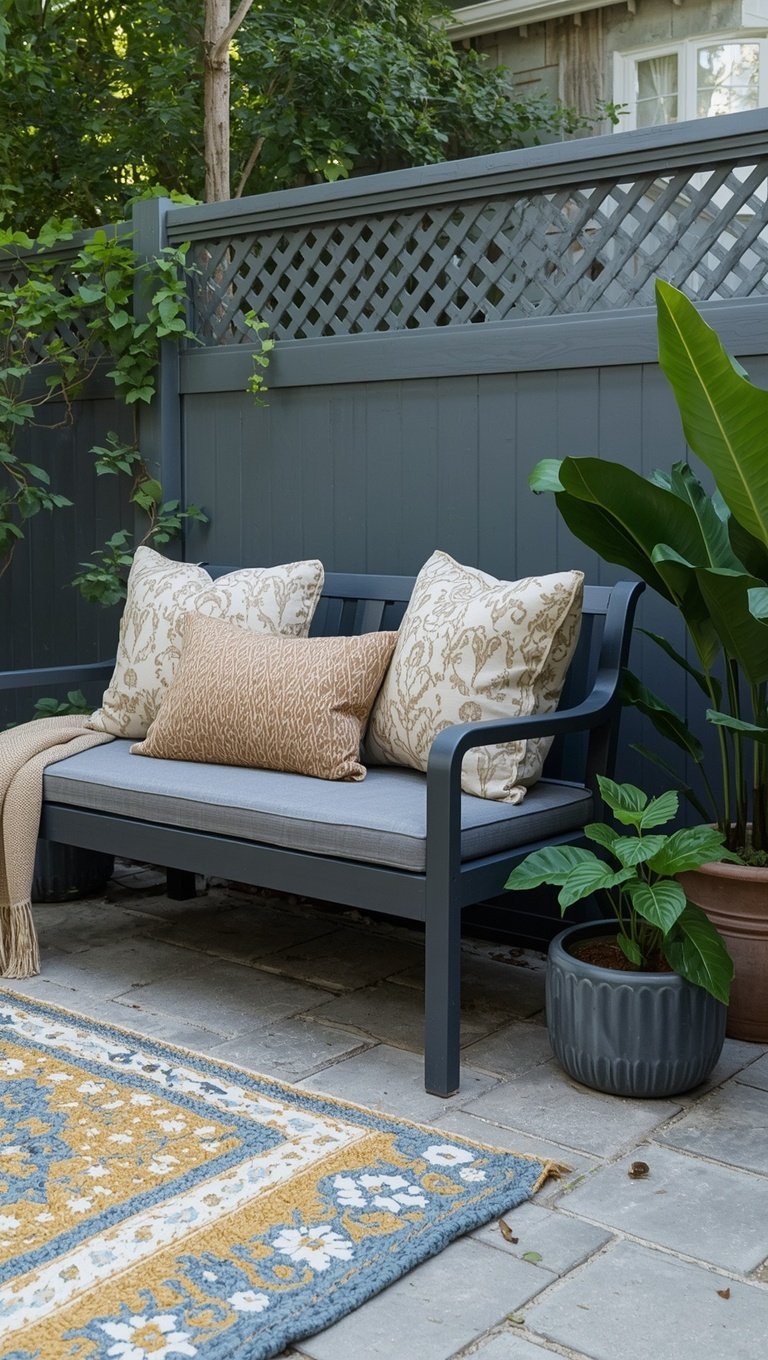
I found mine at a discount home store, a simple geometric pattern in soft blues and creams, for under forty dollars.
It’s not fancy, but it’s outdoor rated so it handles rain and sun without falling apart.
A personal hack, if you can’t find an outdoor rug in your budget, an indoor one works too as long as you bring it in when it rains.
I did that for almost a year before finally splurging on a proper outdoor one.
Another tip, size matters more than pattern here.
Go bigger than you think you need, a rug that’s too small just floats awkwardly under your furniture instead of anchoring it.
If you want a variation, layer a smaller patterned rug over a larger neutral one.
It adds depth and makes the space feel a little more curated, a little more like you actually thought about it.
The emotional pull of a rug is honestly about softness.
Concrete and pavers feel harsh underfoot.
A rug says relax, take your shoes off, stay a while.
And that’s exactly the feeling a good patio should give you the second you step outside.
Thrifted Containers Make the Best Planters

Some of my favorite planters didn’t come from a garden store at all.
I found an old galvanized bucket at a flea market, drilled a few drainage holes in the bottom, and now it’s home to my favorite trailing ivy.
That’s honestly become my whole approach, keep an eye out for anything that could hold dirt and look charming doing it.
An old wash basin, a chipped ceramic pot, even a wooden crate lined with plastic, all of it works.
The imperfections are actually what make it feel special, not a flaw to hide.
A personal tip, drainage is everything, so don’t skip drilling those holes no matter how cute the container is.
Otherwise you’ll end up with root rot and a sad, soggy plant within a few weeks.
Another idea, group odd containers together in threes for a collected, curated look instead of scattered.
I do this on my patio steps, three different heights, three different textures, but they all feel like they belong together.
If you want a variation, paint mismatched containers the same color family to unify them without buying anything new.
I did this with three totally different pots, all in Soft Terracotta Tones, and it instantly looked like a set.
The why behind this one is about resourcefulness feeling beautiful.
There’s something so satisfying about giving a forgotten object new purpose.
And when your plants are thriving in something with a little history, it just makes the whole patio feel warmer, more like a story instead of a showroom.
Pallet Wood Can Become Real Furniture

I know pallet furniture gets a little bit of an eye roll sometimes, but hear me out.
My patio bench started as two free pallets I picked up behind a hardware store.
Sanded down, stained a deep walnut color, and topped with a cushion, nobody guesses it started as shipping material.
That’s the trick with pallet wood, it’s all about the finish.
Raw and unsanded, it looks exactly like what it is.
Sanded smooth and stained well, it looks like something out of a boutique furniture catalog.
A personal tip, wear gloves and take your time sanding, pallet wood can be splintery and rushing it just isn’t worth the trouble.
Another hack, if building isn’t your thing, plenty of local sellers already build simple pallet benches and sell them for way less than retail furniture.
I bought my side table that way, and it still looks brand new two summers later.
If you want a variation, leave the wood a little more rustic and pair it with soft, plush cushions.
The contrast between rough wood and soft fabric feels effortlessly stylish, almost like it was planned that way from the start.
The emotional reason this resonates is honestly about resourcefulness again.
There’s real pride in furniture you built or found for nearly nothing.
It doesn’t feel like a compromise, it feels like a little secret you get to smile about every time someone compliments your patio.
Refresh Your Pillows Instead of Buying New Furniture

This might be the cheapest glow up on this whole list, and it’s the one people notice the most.
I didn’t replace a single piece of furniture on my patio, I just swapped the pillows.
New covers in a fresh color palette completely changed the whole feeling of the space without spending much at all.
I went with a mix of textures, a woven stripe, a solid linen, and one bold patterned accent, all in a similar color family so they’d feel cohesive instead of random.
A personal tip, buy just the covers instead of whole new pillows if your inserts are still in decent shape.
It’s a fraction of the cost and honestly nobody can tell the difference.
Another hack, mix indoor pillows in during dry weeks and just bring them inside before it rains.
I do this constantly, it saves so much money over buying strictly outdoor rated fabric for everything.
If you want a variation, swap your pillow colors seasonally, warm terracottas and mustards in fall, soft blues and whites in summer.
It keeps the space feeling fresh without any big investment twice a year.
The emotional reason this one works so well is instant gratification.
Within an hour, your whole patio feels different, brighter, more considered.
And that fast payoff is honestly so satisfying when you’re working with a tight budget and just want to see results right away.
Paint the Fence or Wall Behind Your Seating

My fence used to be this weathered, graying wood that made the whole patio feel a little tired.
One weekend and one gallon of exterior paint completely transformed it.
I went with a deep charcoal color, and suddenly all my plants and furniture popped against it instead of blending into more gray wood.
That’s honestly the biggest lesson here, your backdrop matters just as much as your furniture.
A tired fence or wall drags everything else down with it, no matter how nice your chairs are.
A personal tip, go darker than you think if you want plants and greenery to stand out.
Light colors show every mark and get dirty looking fast outdoors.
Another idea, if painting a whole fence feels like too much, just paint one accent wall or panel instead.
I’ve seen this done beautifully with a single painted panel behind a small bistro table, and it reads just as intentional.
If you’re renting and can’t paint permanently, look into removable outdoor friendly trellis panels or fabric backdrops instead.
They give you that same visual anchor without touching the actual structure.
The why behind this one is about creating a frame for everything else.
Without a considered backdrop, your whole space feels a little unfinished no matter what else you add.
With one, even mismatched furniture suddenly looks like it belongs together, all thanks to that one grounding color behind it.
Gravel or Pavers Can Redo Your Flooring for Less

My concrete slab was cracked, stained, and honestly kindof depressing before I did anything else on this list.
Instead of a full replacement, which would’ve cost a fortune, I laid a simple bed of pea gravel over part of it.
It’s low cost, forgiving of imperfect ground underneath, and it instantly reads more finished and intentional.
I framed the gravel area with some leftover wood edging I found for cheap, which kept it from spreading everywhere and gave it a clean, defined shape.
A personal tip, ask at your local landscape supply yard about leftover or discounted gravel.
Mine was priced way down simply because it was the tail end of a larger order from someone else.
Another idea, mix in a few flat stepping pavers through the gravel for a path leading to your seating area.
It adds visual interest and makes the whole space feel more like a designed little retreat.
If your budget allows just a little more, interlocking deck tiles are another option.
They snap together right over existing concrete and can be installed in an afternoon without any special tools.
If you want a variation, choose a lighter colored gravel to brighten a shaded patio, or a darker tone for a more grounded, moody feel.
The emotional payoff here is huge for the cost involved.
Flooring sets the whole tone of a space.
And fixing it, even partially, makes everything else you’ve added finally feel like it’s sitting on solid, intentional ground instead of an afterthought.
An Old Ladder Makes a Charming Plant Stand

I found an old wooden ladder at a yard sale, rungs a little uneven, paint chipping in the sweetest way.
Instead of tossing it, I leaned it against my fence and started hanging small potted plants from each rung.
It became one of my favorite features on the whole patio, and it cost me five dollars.
That’s honestly the joy of this kind of styling, taking something with obvious history and giving it a completely new purpose.
A personal tip, look for ladders with character, a little wear only adds to the charm here.
Perfectly new and polished actually looks less interesting in this kind of display.
Another hack, mix plant sizes and pot styles along the rungs instead of matching everything.
It keeps the display feeling collected over time instead of purchased all at once.
If you can’t find a ladder, an old wooden crate stacked sideways works in a similar way, holding smaller pots at varying heights.
I’ve also seen people use a discarded window shutter leaned against a wall for the exact same effect.
If you want a variation, paint the ladder a soft color instead of leaving it natural wood.
I’ve seen a soft dusty blue version that looked absolutely gorgeous against greenery.
The why here is about vertical interest.
Most patios only use ground level space, and that flatness can feel a little boring.
Adding height, even with something as humble as an old ladder, makes the whole space feel layered and so much more visually rich.
A Small Fire Feature Without the Big Price Tag

I always wanted a fire pit, but the built in stone versions felt so far out of reach budget wise.
So I bought a simple portable steel fire bowl instead, and it completely changed how often we actually use our patio at night.
It’s nothing fancy, just a round steel bowl on three legs, but the glow it gives off makes the whole evening feel like an occasion.
A personal tip, check your local fire regulations before buying anything, some areas have rules about open flames even in small bowls.
Another option if that’s a concern, a tabletop version with gel fuel gives a similar cozy flicker without the same restrictions.
I actually started with one of those before upgrading, and it worked beautifully for smaller gatherings.
A hack worth knowing, buy your firewood locally instead of from a big box store.
It’s almost always cheaper and often better quality too.
If you want a variation, surround your fire bowl with a small circle of that leftover gravel from your flooring project.
It defines the space and keeps stray embers away from anything flammable nearby.
The emotional reason this one matters so much is about gathering.
A fire pulls people in, literally and figuratively.
Conversations slow down, phones go away, and suddenly your budget patio becomes the place everyone wants to end their evening, gathered close, a little warm, completely unhurried.
Solar Lanterns Add Ambiance Without an Electric Bill

I collect solar lanterns the way some people collect candles, and I genuinely think they’re one of the most underrated patio additions out there.
Mine sit along my step edges and scattered among the potted plants, soaking up sun all day before glowing softly once it gets dark.
There’s zero wiring, zero extra cost on my electric bill, just quiet little pools of light every single night without any effort at all.
A personal tip, place them somewhere they’ll actually catch direct sun for several hours.
I made the mistake early on of tucking mine under a shaded overhang, and they barely glowed at all by evening.
Another idea, mix lantern heights, some on the ground, some hung from hooks, some sitting on a side table.
It creates this layered glow instead of one flat line of light along the ground.
If you want a variation, look for lanterns with a warm amber glass instead of clear plastic.
The color it casts feels so much cozier and more flattering once the sun goes down.
A hack worth trying, solar string lights work the same way and can wrap around a railing or pergola beam for almost no cost.
I layered mine with the electric string lights I mentioned earlier for an even richer glow.
The why here comes down to effortless ambiance.
You set them once, and they just work, night after night, without another thought or another dollar spent.
And that kind of low maintenance magic is honestly exactly what a budget patio glow up should feel like.
Let a Few Personal Touches Make It Truly Yours

This last piece might be the most important one on the whole list, even though it costs the least.
A small collection of seashells from a trip.
A wind chime that was a gift from my mom.
A little painted stone one of my kids made at school years ago, still sitting on the side table where I can see it every time I step outside.
None of it cost anything close to a designer price tag, and yet it’s the stuff that makes my patio feel unmistakably mine.
A personal tip, resist the urge to fill every corner with store bought decor.
Leave a little room for the sentimental pieces, the found objects, the things with a story attached.
Another idea, rotate a small seasonal touch near your seating, a pumpkin in the fall, a simple vase of fresh cut flowers in the summer.
It keeps the space feeling alive and a little different throughout the year without much effort at all.
If you’re just starting out and don’t have those sentimental pieces yet, that’s completely okay too.
They’ll come naturally the longer you actually spend time out there.
The emotional truth behind this whole list really comes down to this last idea.
A patio doesn’t need a big budget to feel high end.
It just needs a little intention, a few personal touches, and a whole lot of you woven into every corner of it.
Related read: Things I Wish I Knew Before I Decorated My First Home — Instant PDF + Kindle download. Secure checkout by Stripe