
I spent two years with a bare wall across from my bed and just… lived with it.
Told myself I’d figure it out eventually.
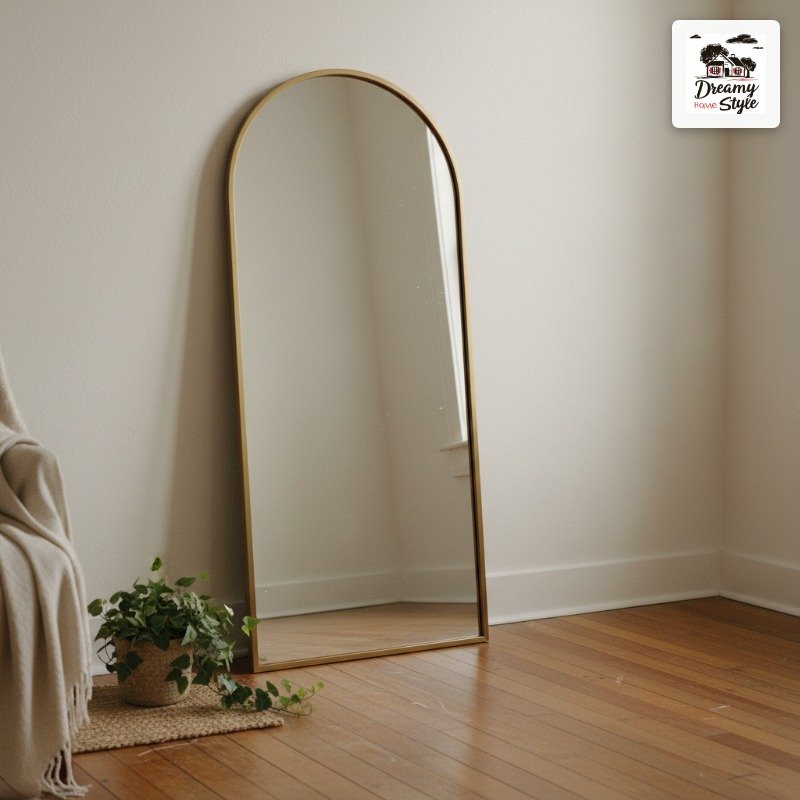
Then I found a chunky arched mirror at Goodwill for $18, leaned it against that wall, and honestly stood there for a solid five minutes just staring at how different the whole room felt.
More light.
More depth.
More like a room a person actually thought about.
Mirrors are one of those things that sound simple until you realize how badly a wrong one can mess up a space.
So here’s everything I’ve learned, mostly by doing it wrong first.
The Leaner Mirror Situation (and Why I’m a Convert)
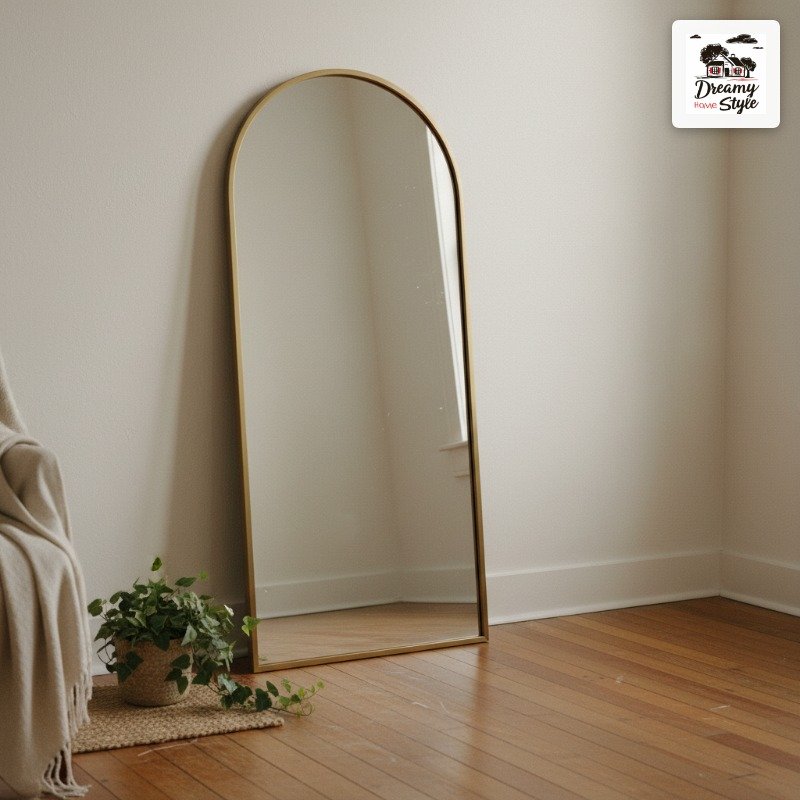
Leaning a big mirror against the wall is genuinely one of the easiest things you can do to a bedroom.
No holes, no measuring, no calling your dad to ask if you need a stud finder.
I’ve had my thrift-store arched leaner in three different spots in my bedroom over the past year.
That’s the thing about leaning mirrors — you can just move them.
Try the corner.
Try next to the dresser.
Try it behind a little plant.
You’ll know when it’s right.
The only real caveat is that leaners can feel casual, and some bedrooms want something more intentional.
If your space is very minimal or modern, a leaner might read as ‘forgot to hang this.’ But in a cozy, layered room?
Perfect.
Go as tall as you can afford.
Full-length is the move.
Anything under five feet starts to feel like a bathroom mirror that got lost.
Over the Dresser: the Classic That Actually Works
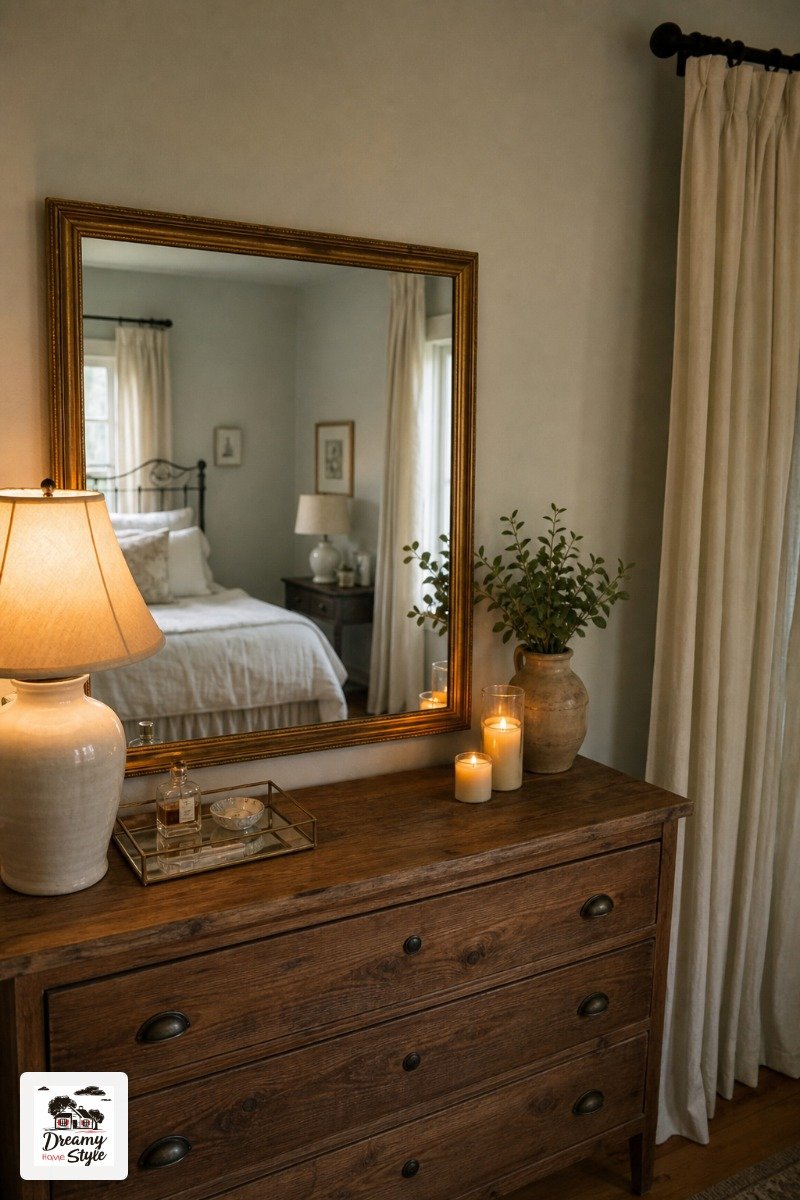
I resisted this for a long time because it felt too expected.
And then I did it and now I understand why everyone does it.
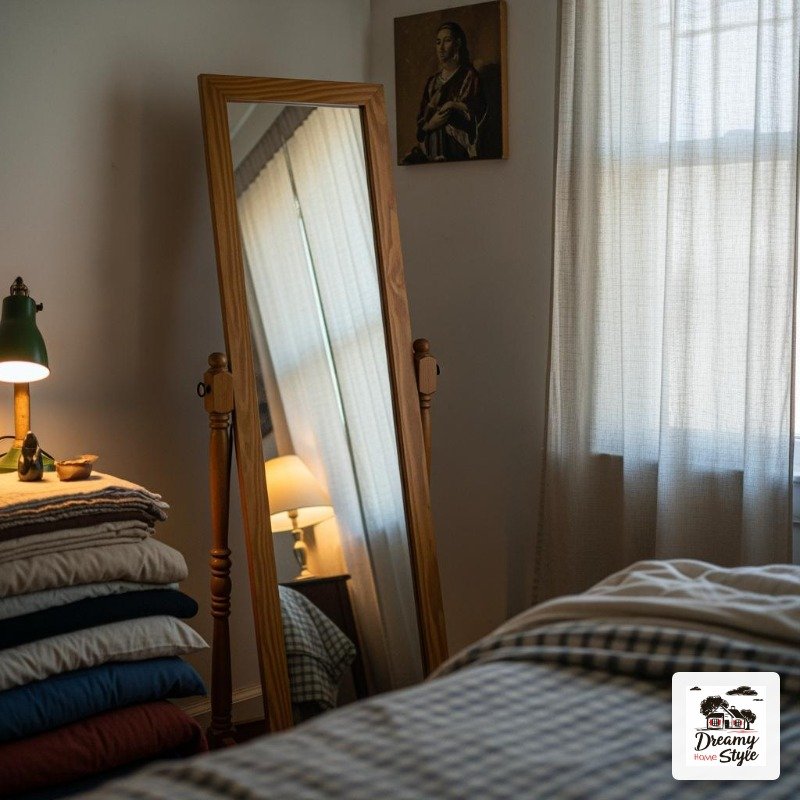
A mirror hung above a dresser does so much work.
It bounces light, it gives you a place to check yourself before leaving the house, and it ties the dresser into the room as an actual vignette instead of just a furniture blob with stuff on it.
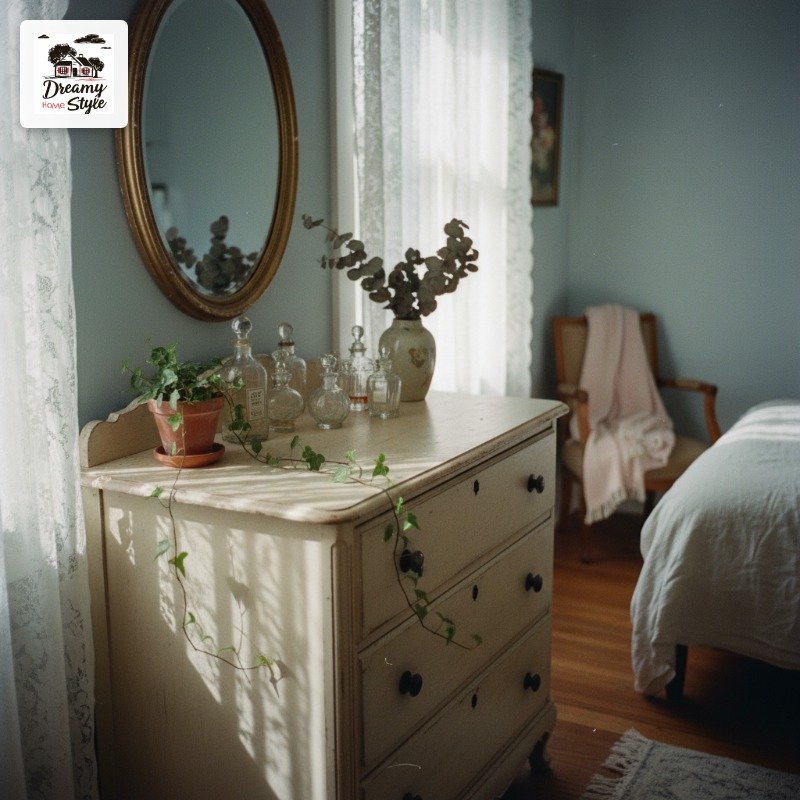
Size matters a lot here.
The mirror should be roughly the same width as the dresser, give or take a few inches.
I hung one that was way too small once (it looked like a postage stamp, I’m not exaggerating) and had to redo the whole thing.
Go for something with a little character in the frame — a thin brass edge, a carved wood detail, anything that makes it feel chosen rather than default.
Arched Mirrors Are Everywhere for a Reason
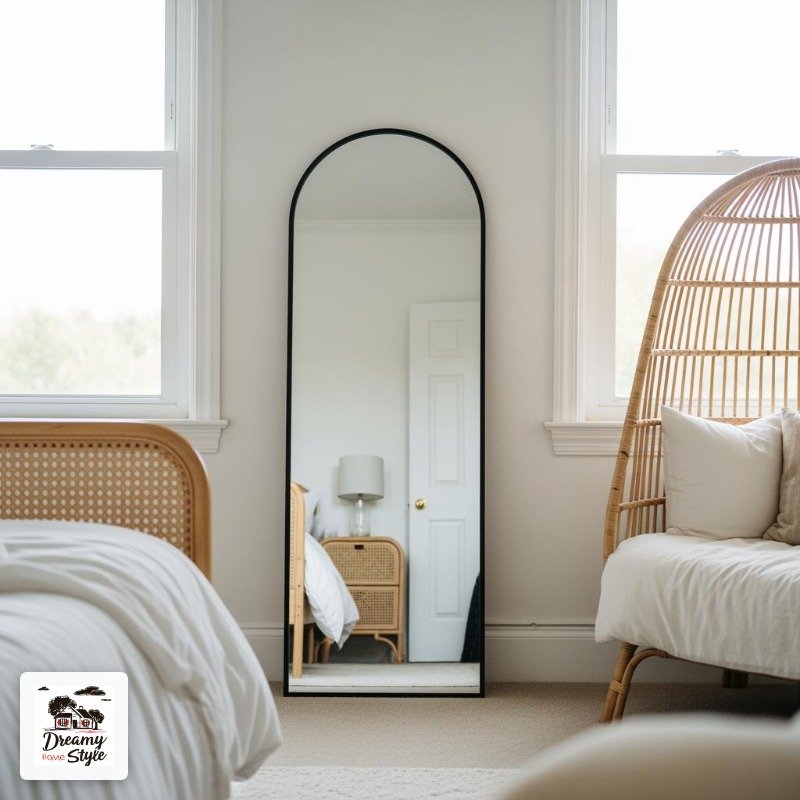
Okay yes, everyone has an arched mirror right now.
But honestly?
There’s a reason trends happen.
They break up the hard lines of furniture and walls in a way that feels almost organic.
I have one in my bedroom and one in my hallway and I’m not even a little sorry about it.
The arch pulls the eye up, which makes ceilings feel higher.
In my older house where the ceilings are only eight feet, that matters.
They work in almost every style — boho, modern, traditional, grandmillennial, whatever your thing is.
That kind of versatility is rare.
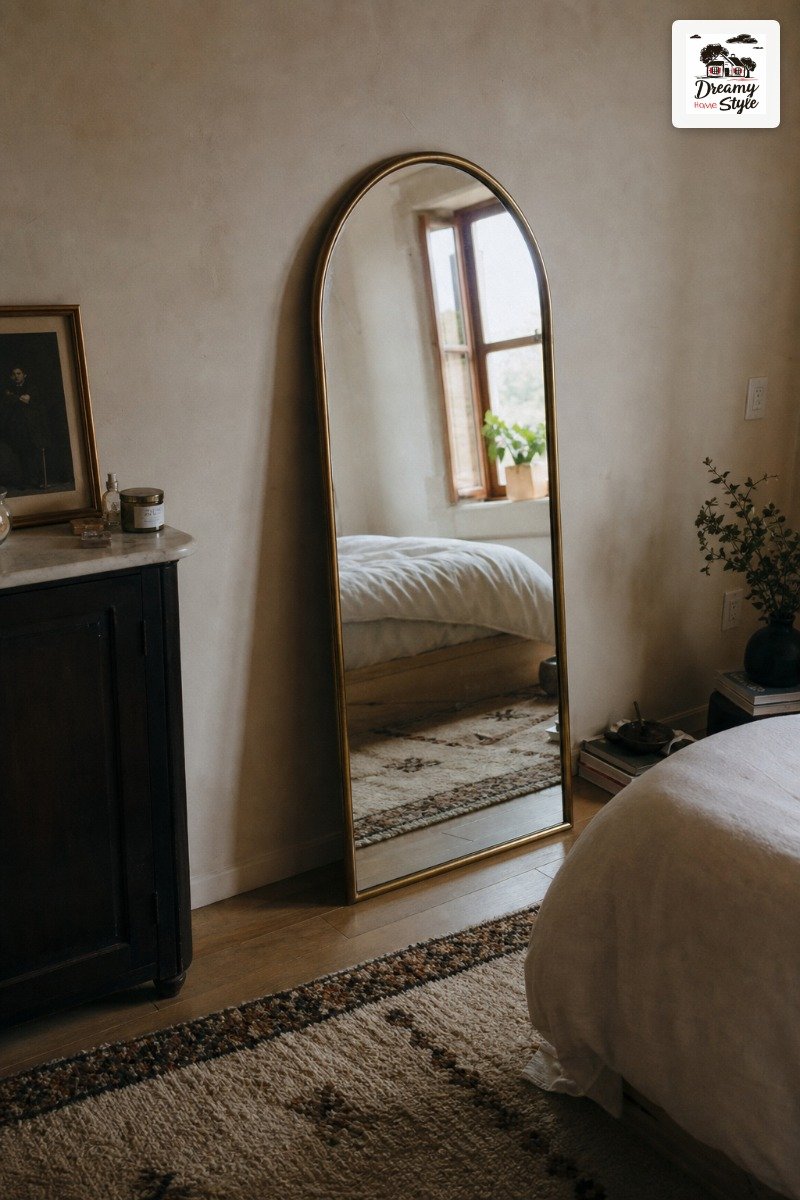
If you’re worried about it feeling too trendy, go for a simple thin frame in a neutral finish.
Black, brass, or natural wood.
Those will stick around.
Mirrors as Art (Yes, Really)
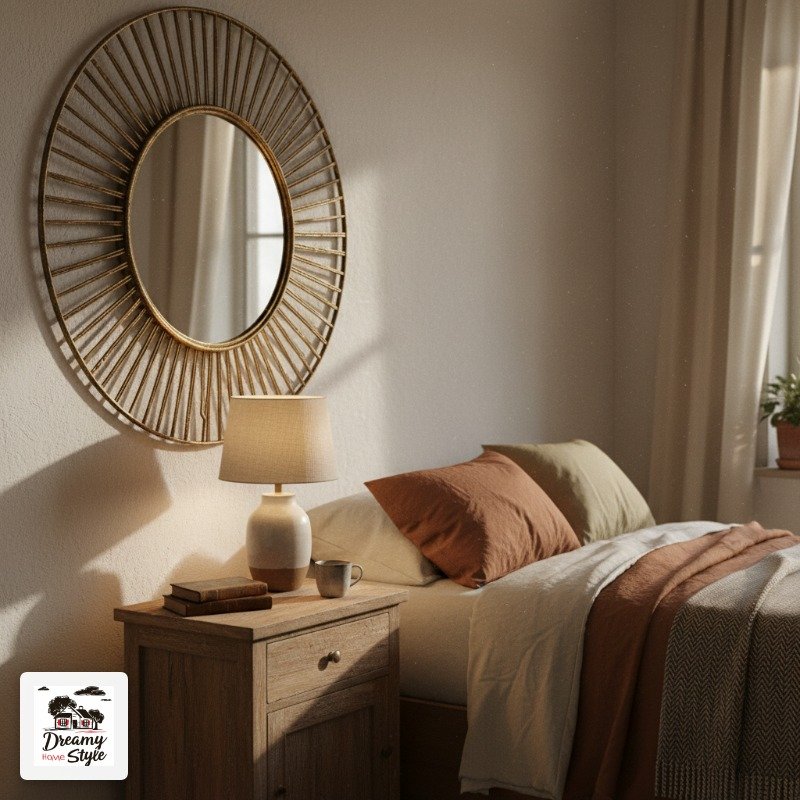
Not every wall needs a print or a canvas.
Sometimes a really good mirror IS the art.
I hung a sunburst mirror above my nightstand once instead of the usual framed print situation and it was so much more interesting.
The spokes cast little light shapes on the wall when the lamp was on.
Biscuit was very confused by them, which was a bonus.
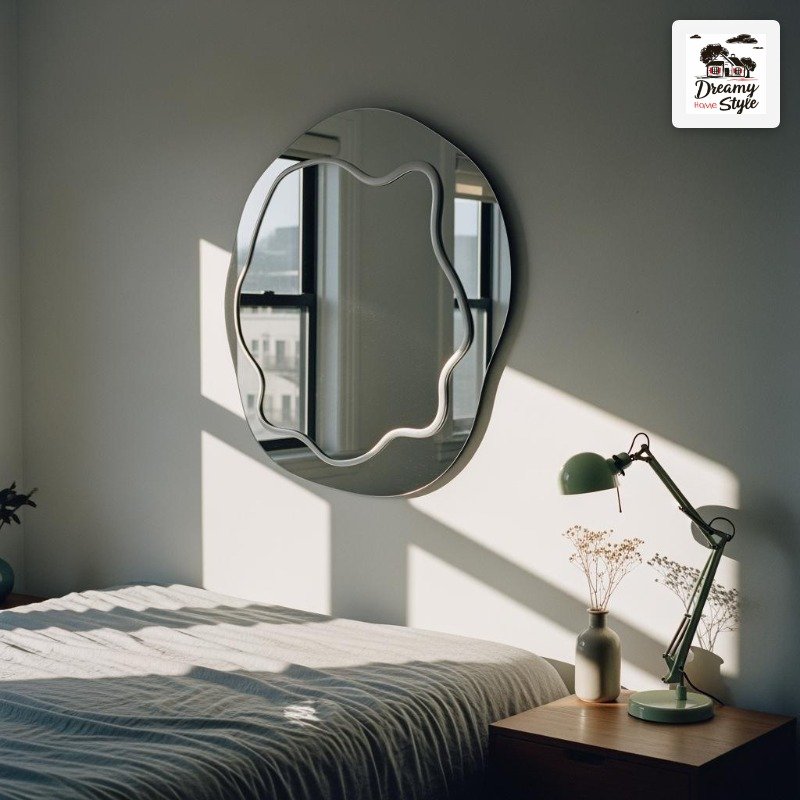
Decorative mirrors — sunburst, starburst, ornate vintage frames, sculptural shapes — work best when you treat them like a focal point.
Give them room.
Don’t crowd them with other stuff.
The one thing I’d warn against is buying a decorative mirror that’s too small.
Anything under about sixteen inches diameter on a wall just disappears.
Go bigger than you think you need to.
The Gallery Wall Mirror Mix
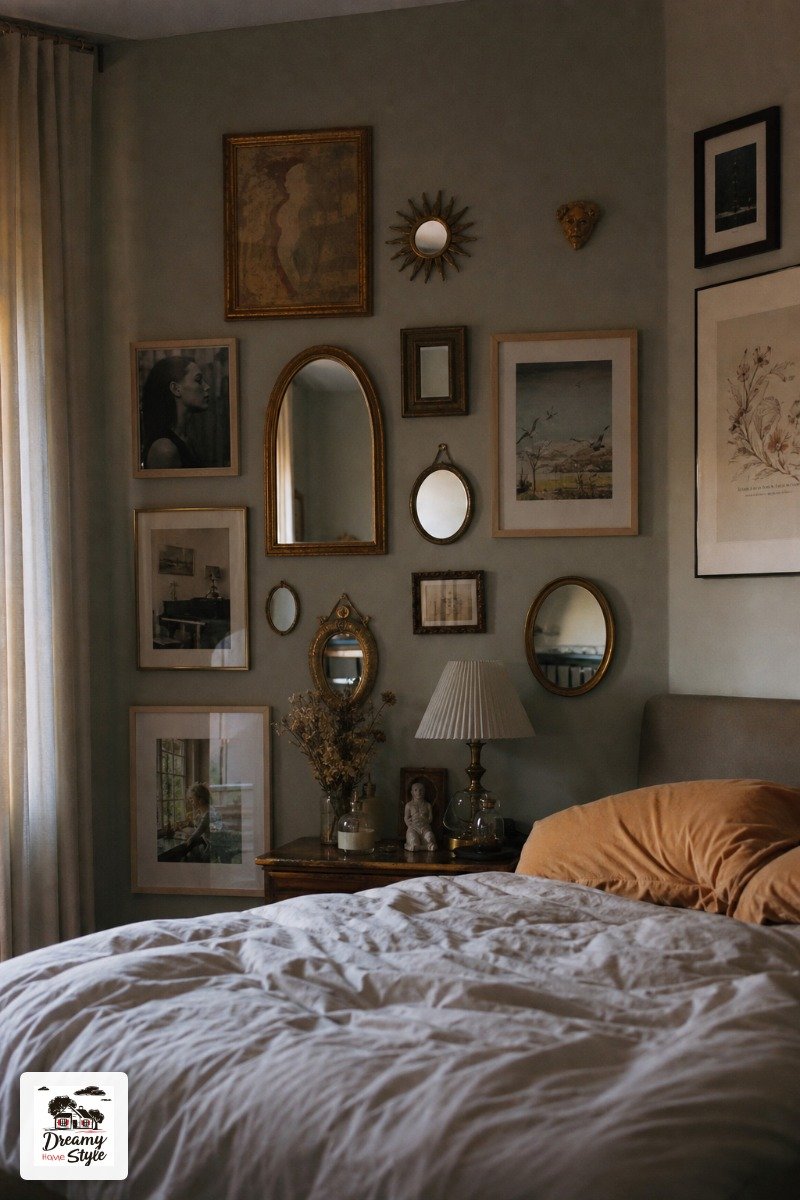 Gallery Wall Mirror Mix
Mixing mirrors into a gallery wall is something I slept on for way too long.
Now it’s one of my favorite tricks.
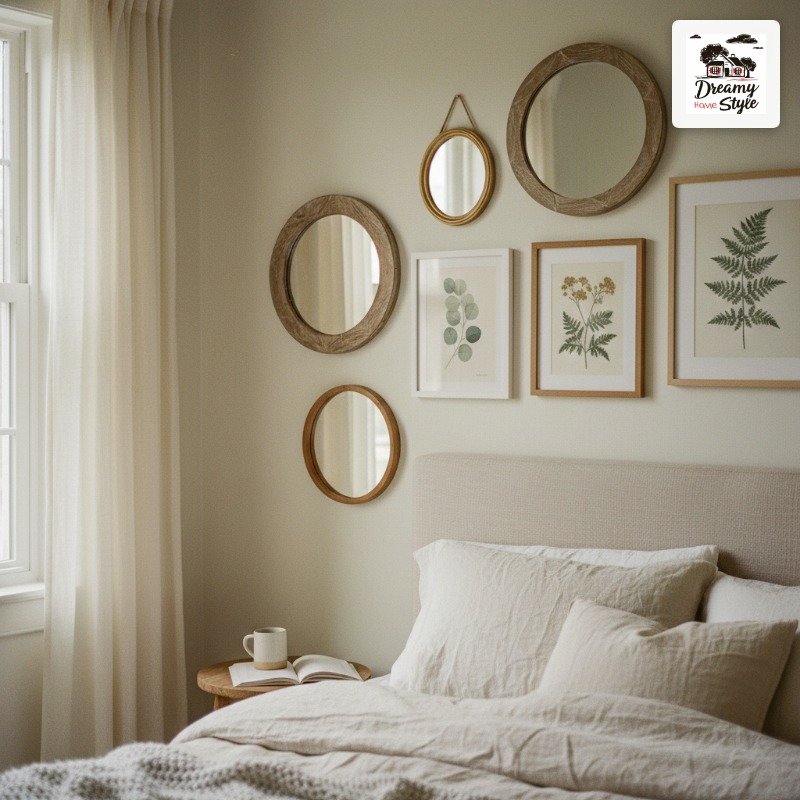
Swap out one or two frames in a gallery arrangement for small mirrors — different shapes, different frame styles — and the whole wall comes alive.
The reflective pieces bounce light around and keep things from feeling flat.
The key (okay I said I wouldn’t say that, but it really is) — the thing that makes it work is staying consistent on one element.
Either all the frames match in finish, or all the shapes are similar.
If everything is different everything, it turns into chaos.
I did this on the wall beside my closet door with three thrifted mirrors and a couple of art prints and it cost me maybe $30 total.
Looks like I planned it from the beginning.
I absolutely did not.
Mirrored Furniture: Where I’ve Changed My Mind
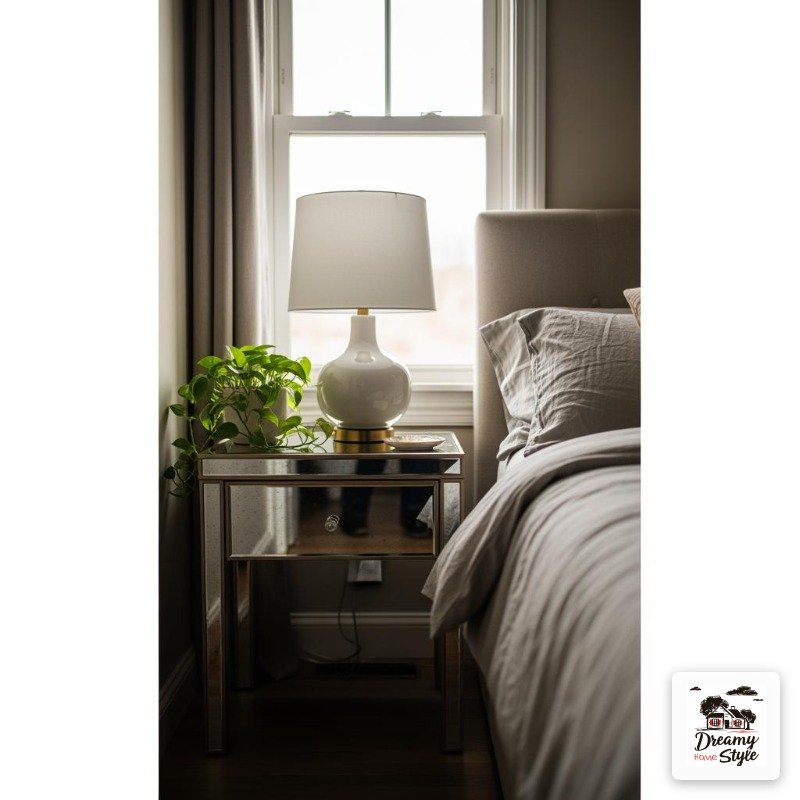 Mirrored Furniture: Where I’ve Changed My Mind
I used to think mirrored furniture was flashy and kind of dated.
Nightstands with mirrored panels, dressers with glass fronts.
Very Vegas-hotel-circa-2009 to me.
And then I put a small mirrored side table in my bedroom because it was $14 at a garage sale and looked delicate, and I sort of fell for it.
In the right context — with soft textures around it, warm lighting, nothing too harsh — mirrored furniture is actually kind of magical.
It disappears into the room and reflects light in the most gentle way.
That said, it shows every fingerprint and every smudge.
Biscuit’s nose has been on that table approximately nine hundred times and I wipe it down constantly.
Just know what you’re signing up for.
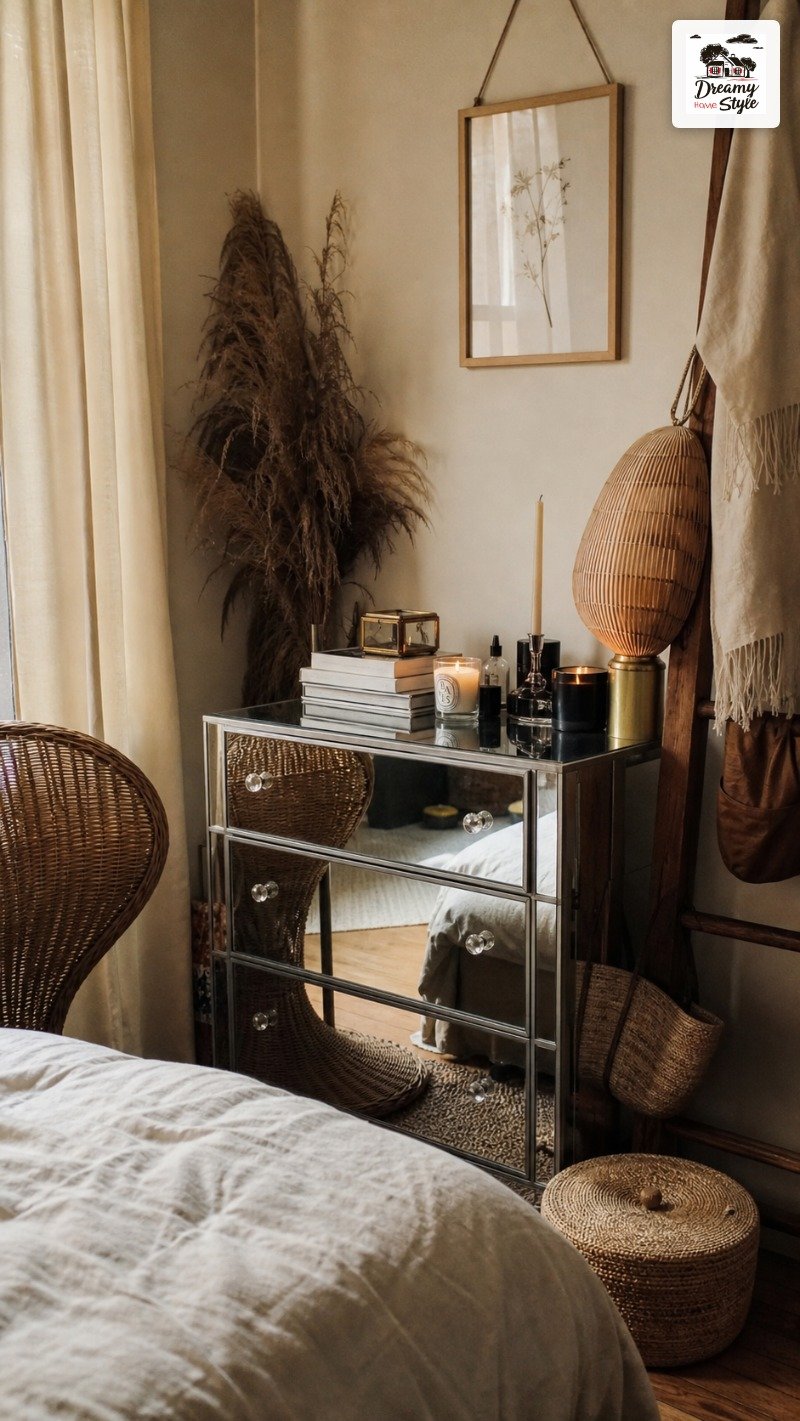
Pair it with matte textures nearby — linen, wood, rattan — so it doesn’t feel cold.
Dark Frames in a Light Room (My Obsession)
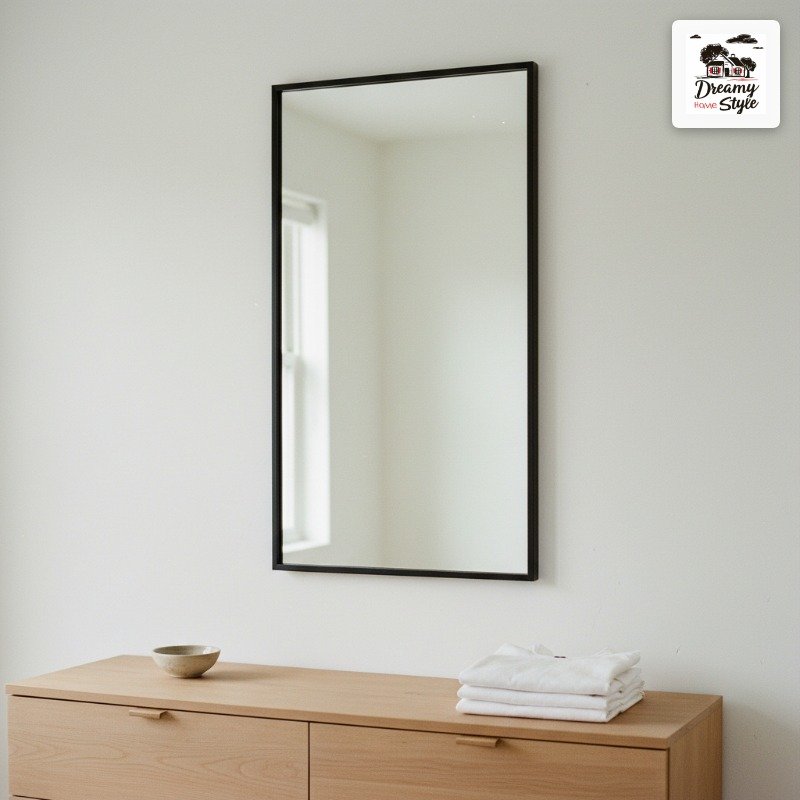
I will stand behind this forever: a dark-framed mirror in an otherwise light, airy bedroom is one of the most satisfying contrasts you can create.
Black frames especially.
Something about the crispness of a matte black frame against white or cream walls just looks so intentional.
It anchors the mirror.
It says ‘I meant to do this.’
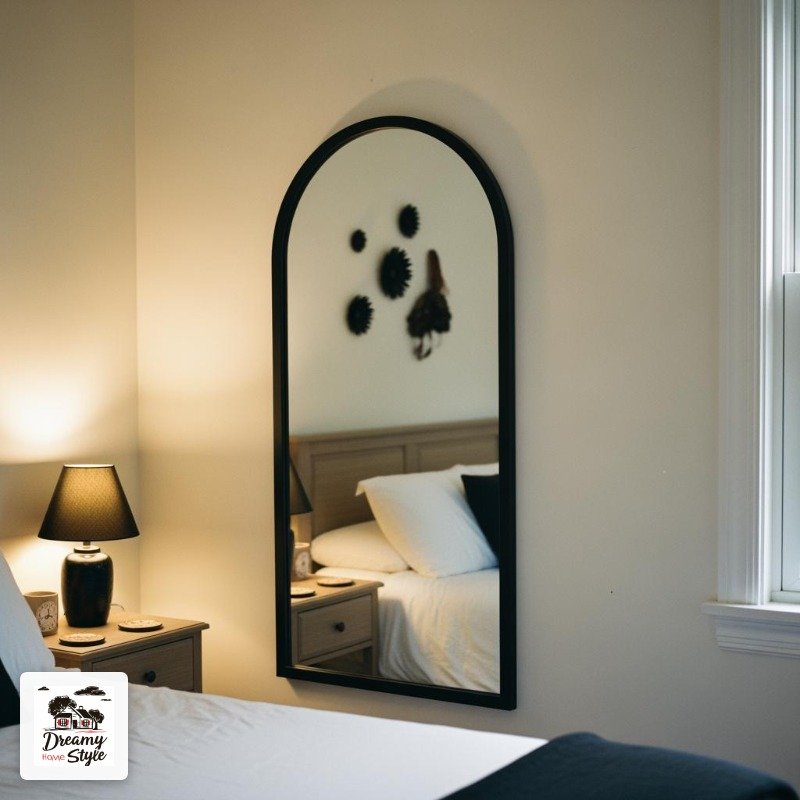
I have a chunky matte black rectangular mirror above my dresser and every time I walk into the room it makes me happy.
Which sounds dramatic but here we are.
This works especially well if you have other black accents in the room — light fixtures, hardware, lamp bases.
Even small echoes of the frame color make the room feel cohesive without being matchy.
Small Bedroom? Here’s the Mirror Logic
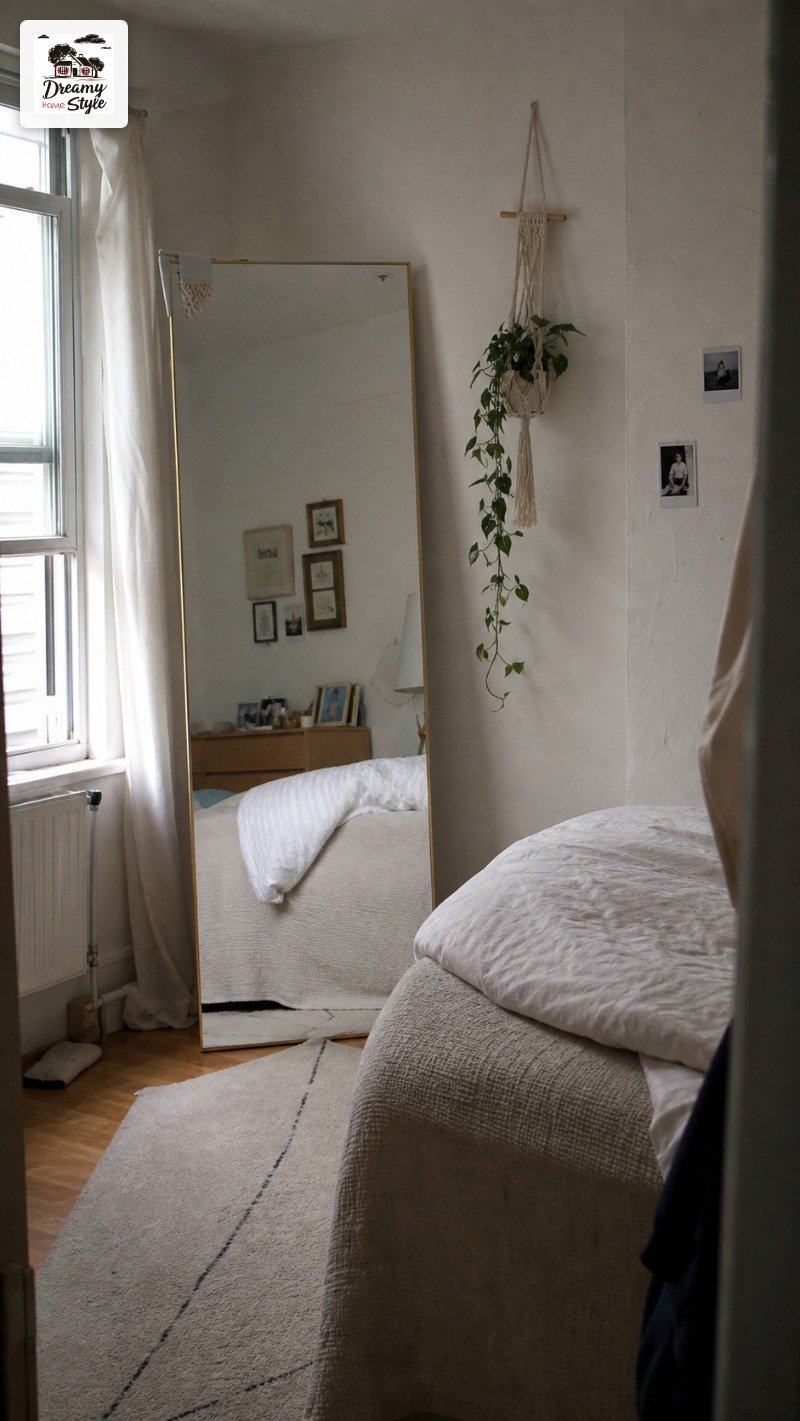
Mirrors in small bedrooms aren’t a trick exactly, but they do work.
Reflection adds depth and bounces light in a way that genuinely makes a space read as larger than it is.
The mistake most people make is going too small.
A tiny mirror in a small room just emphasizes how small everything is.
Go big.
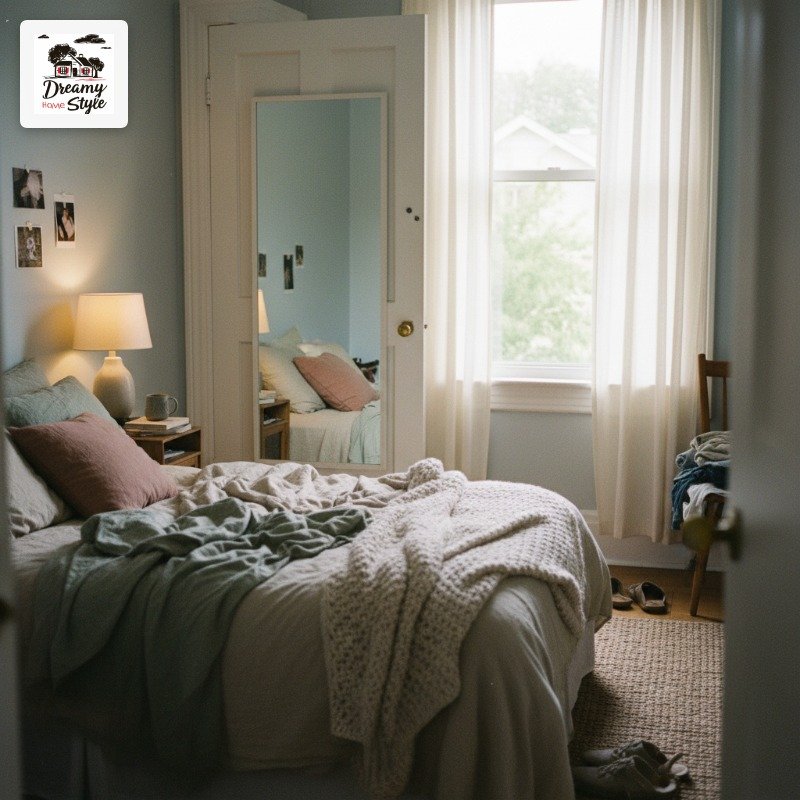
A large leaner or a full-length mirror on the back of a door can open a room up dramatically.
Placement matters too.
Across from a window is ideal — the mirror picks up natural light and throws it back into the room.
I have my big leaner facing my east-facing window and my bedroom is genuinely brighter for it.
Avoid putting mirrors directly across from the bed if that weirds you out at night.
Some people don’t mind it.
I did not love it.
Moved mine to the side wall and slept much better.
Vintage and Thrifted Mirrors: Where to Look
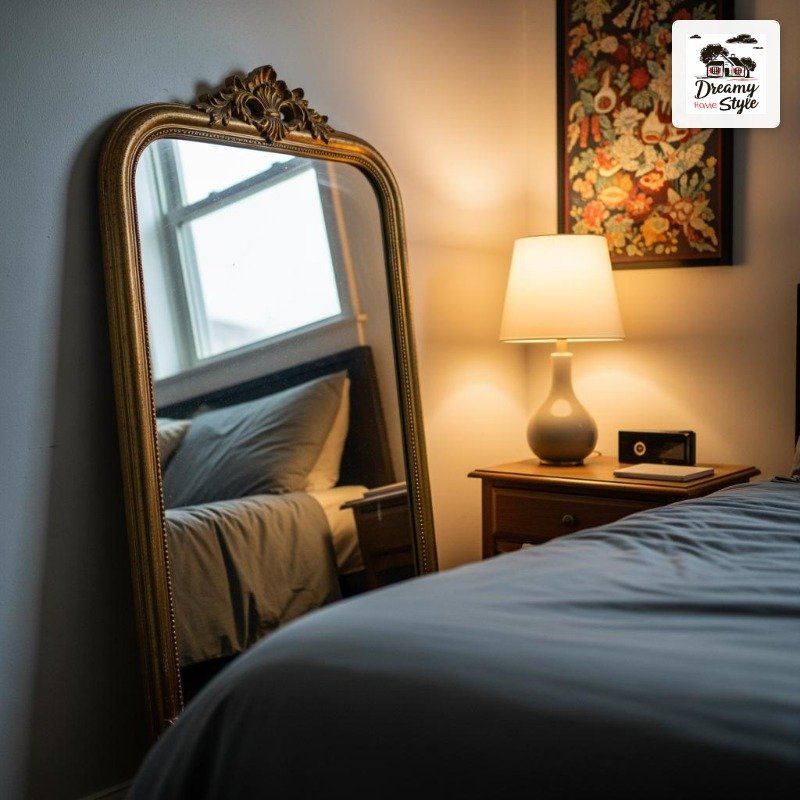
Some of my best mirrors cost under twenty dollars.
I’m not saying that to brag, I’m saying it because the thrift store aisle with the mirrors is genuinely one of the most underrated places on earth.
Old ornate frames with a little tarnish, simple wood frames that just need a coat of paint, beveled glass mirrors with no frame at all — you find all of it if you go regularly.
I go most Saturdays.
Biscuit waits in the car.
Estate sales are even better.
People are often selling large mirrors for almost nothing because they’re awkward to move.
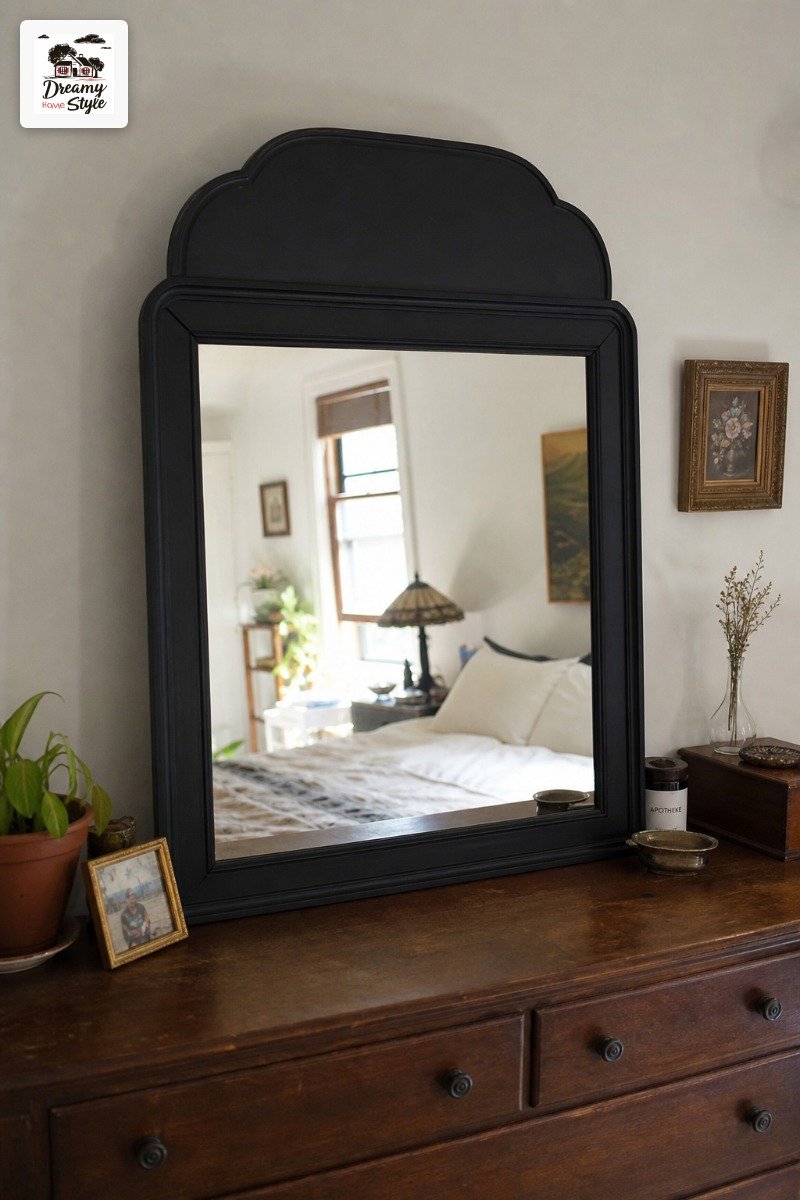
If the frame is ugly but the mirror is good, paint the frame.
Spray paint in a satin gold or flat black takes fifteen minutes and costs five dollars and looks expensive.
I’ve done this at least four times.
Mirror Placement and Lighting: They’re Tied Together
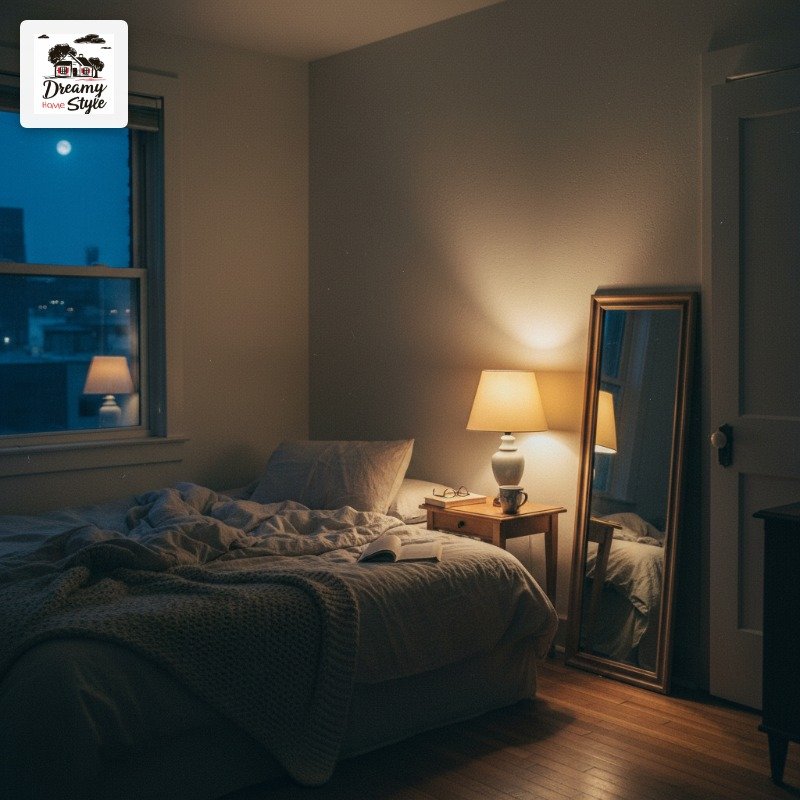
You cannot think about mirrors without thinking about light.
They’re connected.
A mirror in a dark corner does almost nothing.
A mirror near a lamp or window does so much.
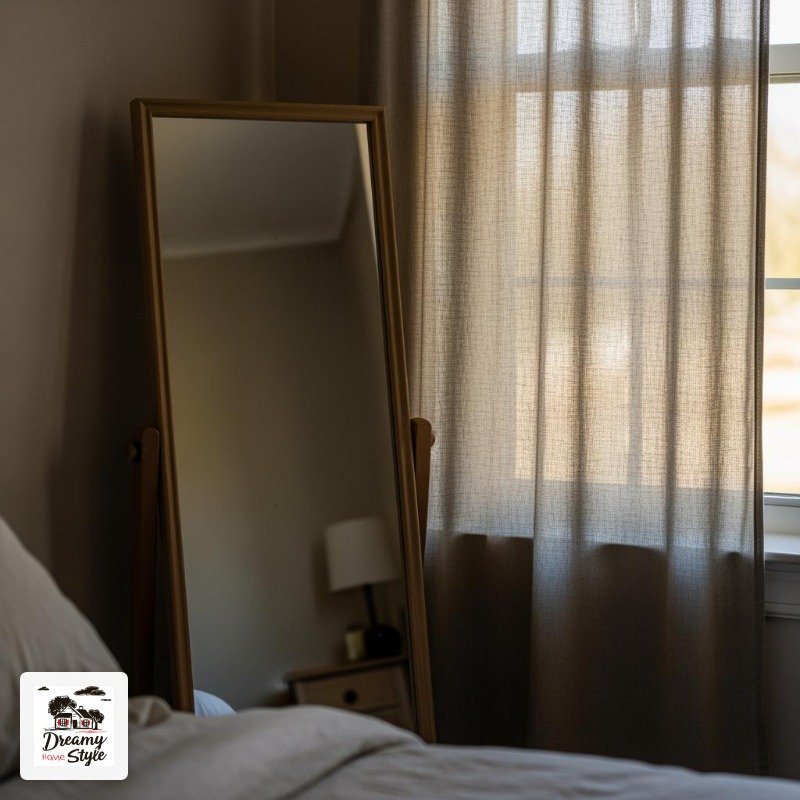
I’m a deeply committed hater of overhead lighting (truly, ceiling fixtures in bedrooms are not it) so I rely on lamps entirely.
Positioning a mirror near a lamp creates this gorgeous warm glow that bounces softly around the room.
It’s the reason my bedroom feels cozy at night instead of just dim.
If you have a window that gets harsh afternoon light, don’t put a mirror directly facing it.
You’ll end up with glare and it actually makes the room feel stark instead of bright.
Experiment with angling a leaner mirror slightly.
Even a few degrees off perfectly vertical changes how it catches the light.
The Behind-the-Door Mirror (Underrated Workhorse)
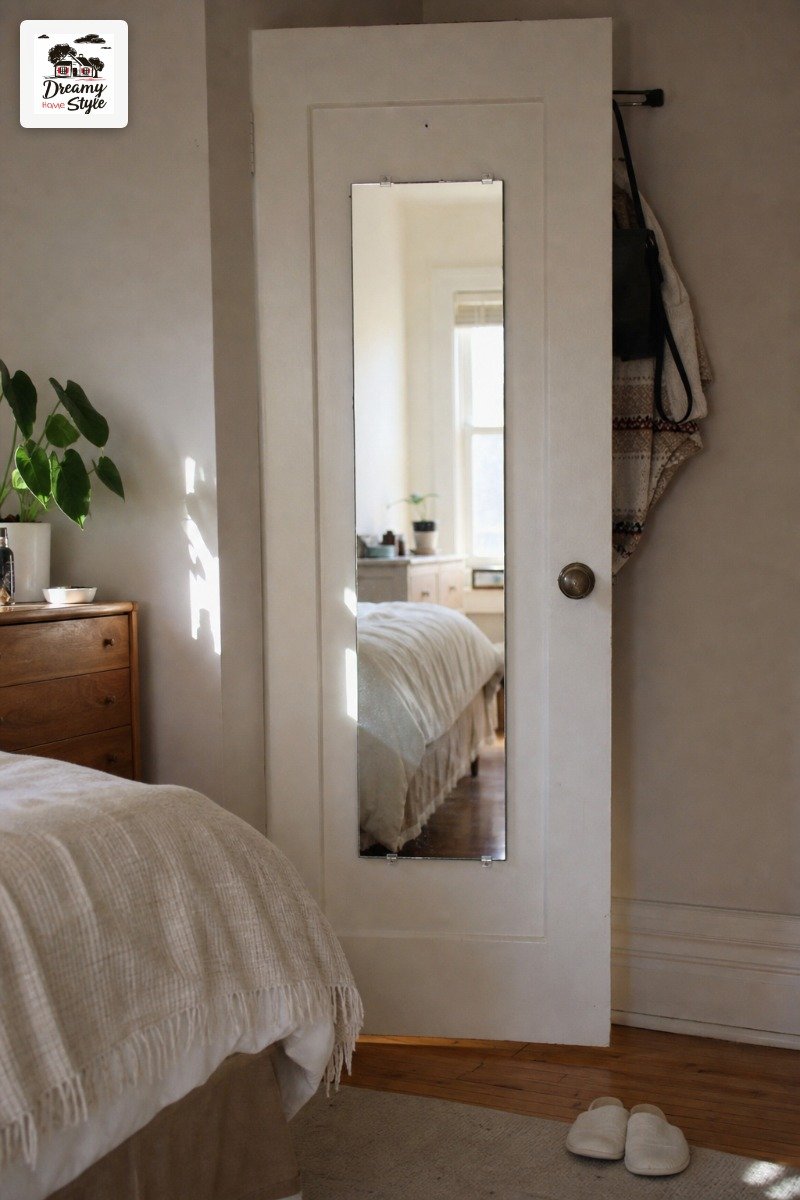
Not glamorous, but genuinely useful.
An over-the-door full-length mirror is one of those things that makes daily life better.
I had one in my first apartment and got rid of it when I moved because I thought I was above it.
Spent a year squinting at myself in a small bathroom mirror before admitting I just needed the full-length door mirror back.
They’re not all ugly.
There are over-door versions with slim frames that look perfectly fine.
Some hang on hooks so you can take them down easily if you want the look to change.
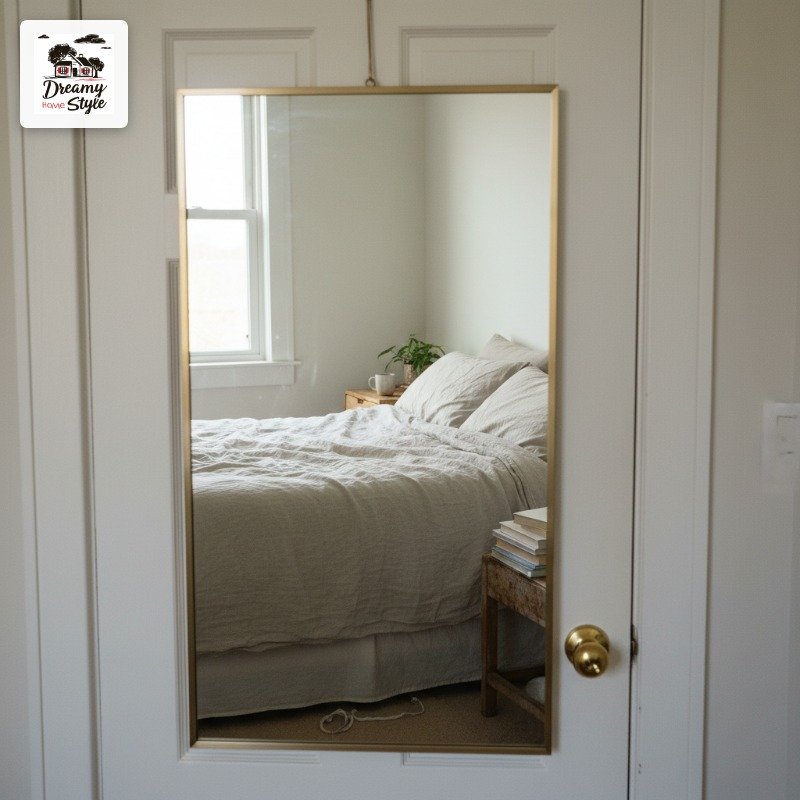
If your bedroom door is hidden — like it swings into a closet or against a wall — this is honestly the ideal solution.
Uses zero floor space and zero wall space.
Round Mirrors and Why They’re So Good in Bedrooms
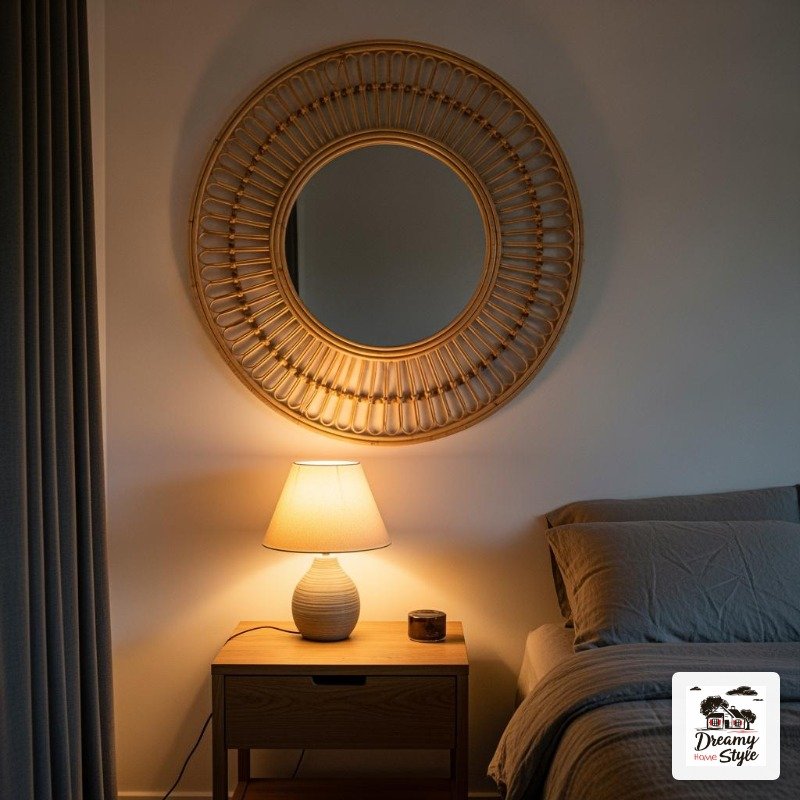
Round mirrors feel softer than rectangular ones.
That sounds like a strange thing to say about a shape, but it’s true — circles have no corners, and in a room that’s already full of rectangular furniture, a round mirror adds something almost calming.
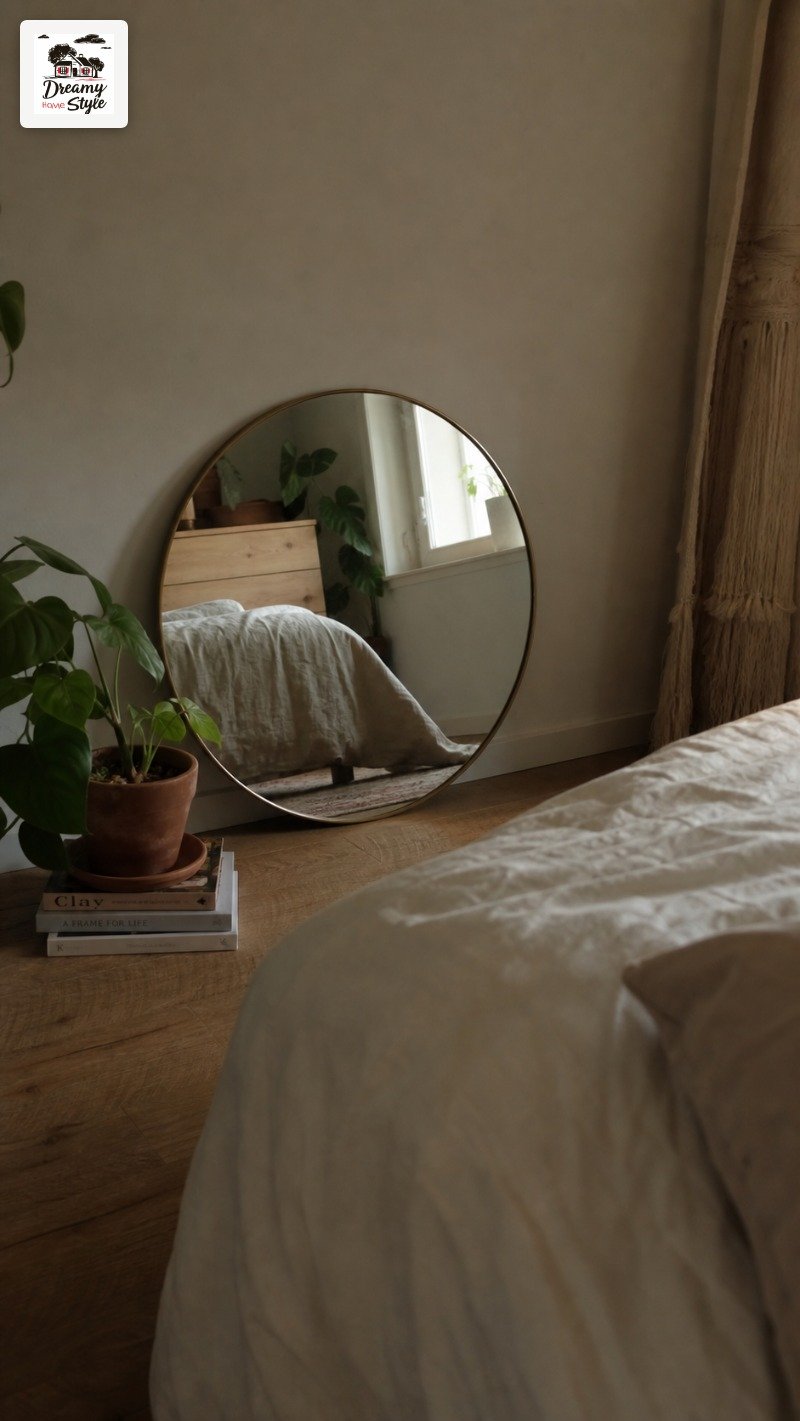
I have a round mirror in my bedroom and literally everyone who comes over comments on it.
It’s not even that special — a simple rattan-wrapped frame I found at HomeGoods for $29.
But the shape makes it feel like a moment.
They work especially well above a nightstand or in a corner grouping.
Hung slightly lower than you’d expect feels intentional rather than like you missed the right height.
One thing: a round mirror alone on a large wall can feel a little lost.
Either go large (at least twenty-four inches) or hang it in a cluster with other things nearby.
Styling What’s Around the Mirror
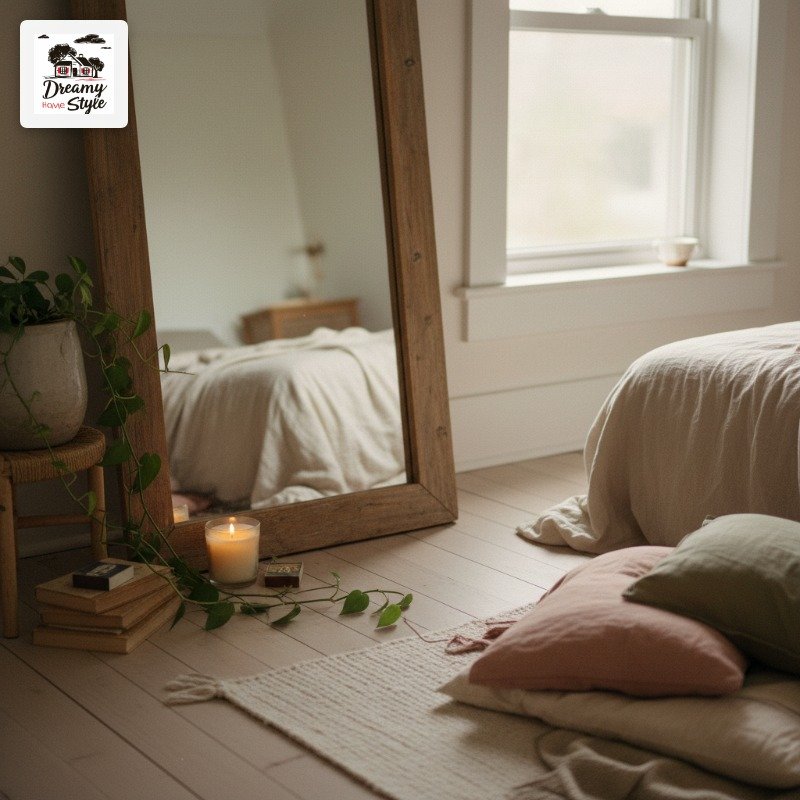
The mirror doesn’t exist alone.
What you put near it matters just as much as the mirror itself.
A leaner on the floor looks better with something small beside it — a plant, a stack of books, a candle on the floor.
It grounds it.
Without that, a leaner can look like you just haven’t hung it yet.
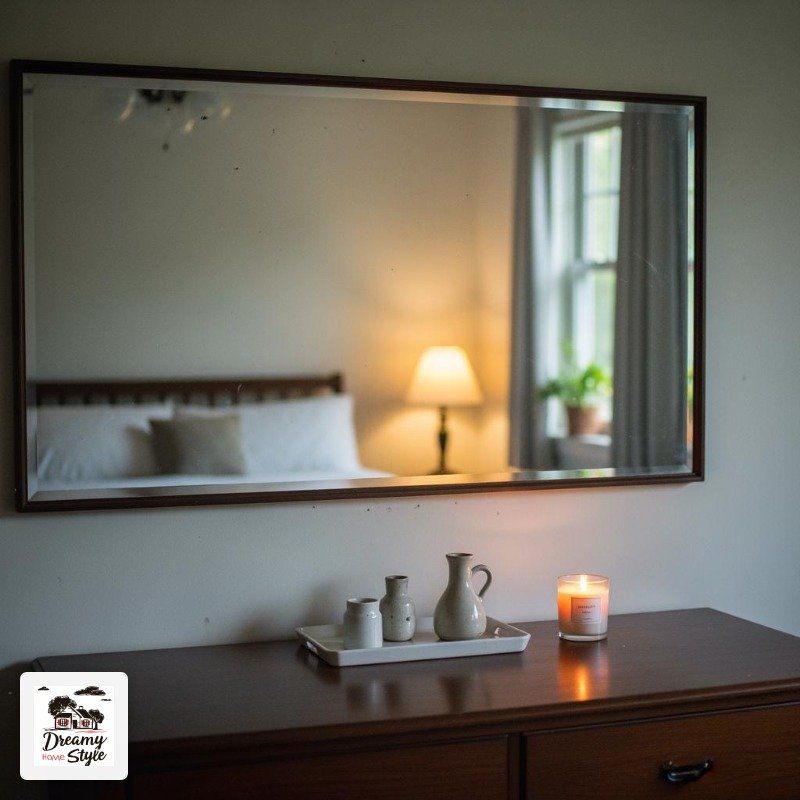
For a mirror above a dresser or nightstand, keep the surface below it edited.
A tray, one or two objects, a small lamp.
The mirror reflects whatever is in front of it, so if the surface is chaotic, the mirror amplifies that chaos.
(I learned this the hard way with a very messy bedside table situation.)
Trailing plants next to a mirror are one of my favorite things.
The reflection doubles the greenery and makes the whole corner feel lush without buying twice as many plants.
Related read: Things I Wish I Knew Before I Decorated My First Home — Instant PDF + Kindle download. Secure checkout by Stripe