
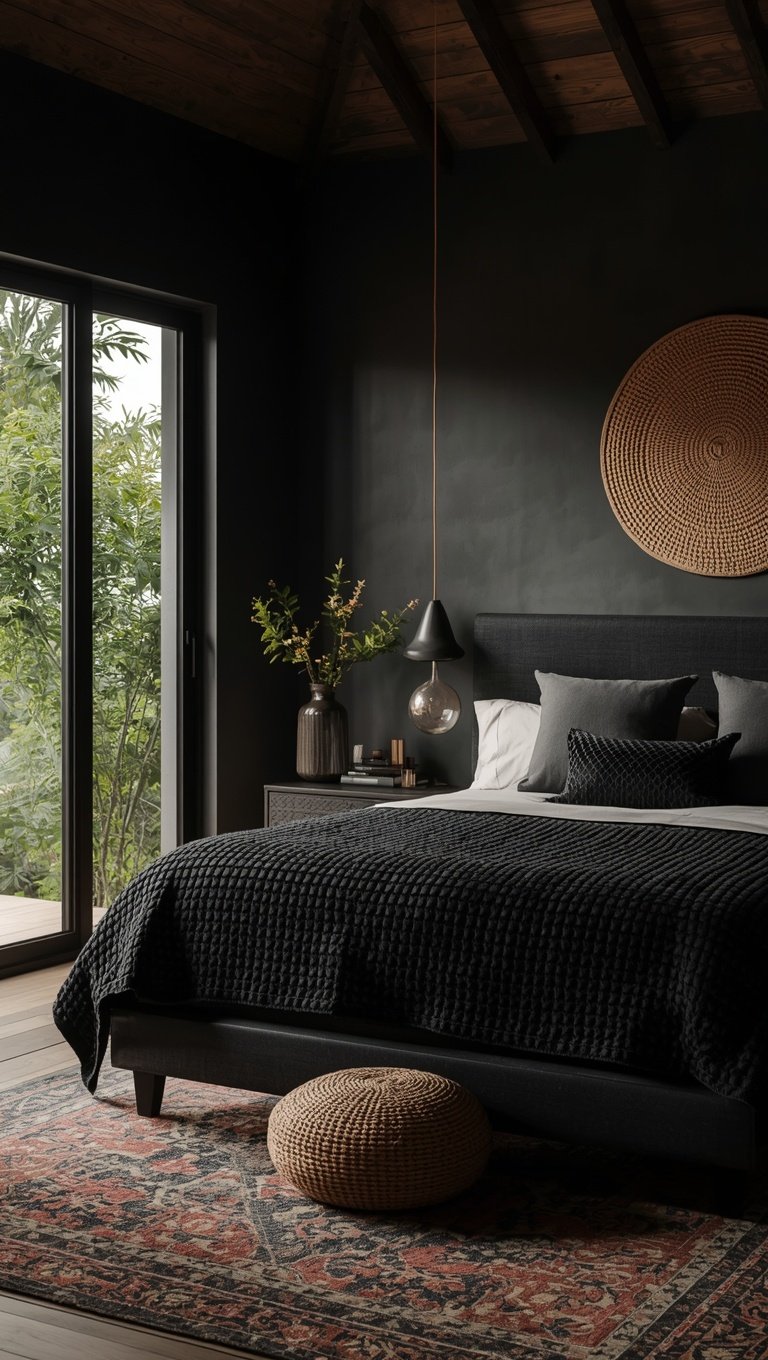

I used to fall asleep with my phone still glowing on my chest.
My bedroom looked “fine,” sure.
But it didn’t feel like anything.
And one night, lying there wide awake at 1am for the third night in a row, I remember thinking, this room is supposed to be my soft place to land, and it’s not landing me anywhere.
So I started treating my bedroom like it was a suite at some quiet little retreat tucked in the mountains.
Not fancy, just intentional.
And honestly, the shift in how I sleep and how I feel walking in that door every night has been kind of wild.
If you’re in that same spot, phone-glow-on-your-chest era, I’ve got you.
These are the exact things I changed, one by one, in my own room.
Layer Your Lighting Like You Mean It

Overhead lighting is, in my opinion, the enemy of a calm bedroom.

It’s harsh, it’s flat, and it basically tells your brain “stay alert.”
The first thing I did in my own space was switch to lamps only, three of them, all on different sides of the room.
I added a small lamp with a warm amber bulb on my nightstand, and I swear it changed the whole mood of the room overnight.
There’s something about warm, low light that just tells your nervous system, hey, we’re safe now, we can relax.
I also added a plug-in dimmer to my dresser lamp because sometimes I want it barely-there glowy, and other times I want just enough to read by.
My tip: go for bulbs labeled “warm white” or “soft white,” never the cool blue-toned ones.
Cool light is great for a kitchen where you’re chopping onions.
It is not great for winding down.
And if you want to go a step further, string lights tucked behind a headboard or along a shelf add this soft, flickering candle-like quality without any fire risk.
Optional variation: if you rent and can’t rewire anything, battery-operated flameless candles on your dresser do almost the same trick.
I’m kind of obsessed with how something so small made my whole room feel like a held breath finally being let out.
Invest in Bedding That Actually Feels Like a Hug

Okay, this one is personal for me.
I went years thinking sheets were just sheets.
Then I finally bought a proper set of linen sheets, and I genuinely gasped a little getting into bed that first night.
They were slightly cool, a little rumpled in that expensive-looking way, and just soft in this lived-in kind of manner.
Linen or a good long-staple cotton breathes so much better than the shiny polyester-blend stuff, and you notice it especially in the summer when you’re not waking up sweaty and tangled.
I also added a weighted blanket to the mix, and this is where the real magic happened for me.
There’s actual research behind why weighted blankets help with anxiety and restlessness, something about deep pressure stimulation calming your nervous system, but honestly, you don’t need the science to feel it.
It just feels like being held.
My tip: layer a lighter linen sheet under a slightly heavier quilted throw so you can adjust depending on the season.
And texture matters more than you’d think, a nubby waffle-weave blanket at the foot of the bed adds this cozy, retreat-y visual layer even when you’re not touching it.
If I could redo one thing sooner in my own home, it would’ve been upgrading my sheets years before I finally did.
Build a Tiny Wind-Down Corner

Every retreat I’ve ever stayed at has this one little nook, a chair, a soft throw, maybe a small table.
And I realized my bedroom never had that.
So I carved out this tiny corner by my window, just a slipper chair I found secondhand and a small round side table.
It’s maybe four feet of space total, but it changed everything about how I use my room in the evening.
Instead of scrolling in bed, I sit in that chair for twenty minutes with tea or a book, and then I get into bed already halfway wound down.
There’s something about having a designated “transition spot” that tells your brain, okay, we’re moving from day-mode into night-mode now.
If you have a small bedroom like my old apartment did, even a floor cushion in the corner with a little draped blanket works.
My tip: keep this spot tech-free, no chargers, no speakers, nothing that pulls you back into scroll mode.
Optional variation: if you don’t have floor space, a small bench at the foot of the bed can double as this transition zone.
Why it works emotionally is simple, you’re giving your brain a physical cue that sleep isn’t happening yet, but rest is starting now.
That distinction sounds small, but it’s honestly been one of the most calming shifts in my whole nightly routine.
Choose a Scent Ritual and Stick With It

Smell hits your brain faster than almost anything else, and I didn’t fully get that until I started my own little scent ritual.
Every night, about thirty minutes before bed, I light a candle or run my diffuser with lavender and cedarwood.
It’s become this Pavlovian thing now, my body genuinely starts relaxing the second I catch that scent.
I rotate between a few, lavender and chamomile on stressful weeks, and something woodsy and warm like sandalwood when I just want cozy.
My tip: keep your “sleep scent” separate from scents you use during the day, so your brain never confuses the two.
I made the mistake early on of using the same candle in my living room and bedroom, and it just didn’t have the same wind-down effect.
Optional variation: a linen spray with lavender misted on your pillow works if you’re nervous about candles or live with pets.
I also keep a small dish of dried lavender buds on my nightstand, just because I love glancing at it before I turn the lamp off.
It’s such a tiny detail, but it makes the whole space feel curated instead of just functional.
Scent is one of those things that feels indulgent but costs almost nothing, and the emotional payoff is honestly huge.
Declutter Your Nightstand Down to the Essentials

I used to have this chaotic little pile on my nightstand, chargers, old receipts, three lip balms, a stack of mail I kept meaning to deal with.
And I never noticed how much low-grade stress that clutter created until I cleared it all off one Sunday.
Now my nightstand has exactly four things, a lamp, a small candle, a glass of water, and whatever book I’m currently reading.
That’s it.
And walking into my room now, my eyes just land somewhere calm instead of skimming over a mess.
My tip: give yourself one small tray or dish for the “stuff,” rings, hair ties, lip balm, so it’s contained instead of scattered.
Visual clutter is mental clutter, that’s not just a cute phrase, it’s genuinely how our brains process a room.
Optional variation: if you need your phone nearby for an alarm, charge it across the room instead of on the nightstand.
This one small change alone cut down how much I scrolled before falling asleep.
Why this works emotionally is that an uncluttered surface just feels like permission to exhale.
It sounds so simple, but it’s one of those changes that costs you nothing and pays you back every single night.
Pick a Palette That Feels Like Quiet

My bedroom used to be this bright white with a few bold accent colors, and it looked fine in photos.
But it never felt restful to actually live in.
So I repainted in this warm, muted greige, somewhere between beige and soft gray, and added earthy terracotta and sage accents through pillows and a throw.
The difference was almost immediate.
Muted, earthy tones just don’t demand anything from your eyes the way bright colors do.
My tip: think about the colors you’d see in a boutique spa, sandy neutrals, soft sage, warm taupe, deep clay.
These tones photograph beautifully too, if that matters to you, but more importantly they just feel settled.
Optional variation: if repainting isn’t in the cards right now, a large area rug or a set of pillow covers in these tones can shift the whole mood without touching your walls.
I also swapped out a bright abstract print I had for a soft, blurry landscape photo, something that felt more like a deep breath than a statement piece.
Why it works is honestly pretty simple, our brains read bright, high-contrast colors as stimulating, and muted tones as safe.
I didn’t expect paint to change my sleep, but it genuinely did.
Handle Noise With Intention

I’m a light sleeper, so this one mattered a lot to me personally.
For years I just dealt with random noise, a neighbor’s dog, traffic, my own upstairs footsteps.
Then I got a small white noise machine, nothing fancy, and it became one of those purchases I wish I’d made years earlier.
There’s something about a steady, consistent sound that masks the random stuff and lets your brain finally stop bracing for the next noise.
My tip: white noise or brown noise tends to work better than nature sounds for actual sleep, ocean waves are lovely but they have too much variation to fully fade into the background.
Optional variation: if you don’t want another gadget, a simple box fan does almost the same job and adds airflow too.
I keep mine on a timer so it runs the full night without me having to think about it.
Why this works emotionally is that unpredictability keeps your nervous system on alert, even in tiny ways you don’t consciously notice.
A steady hum tells your brain there’s nothing new to monitor, so it can finally let go.
I genuinely didn’t believe this would make a difference until I tried it, and now I can’t sleep without it.
Get Serious About Blackout

I resisted blackout curtains for so long because I loved the idea of soft morning light.
But between streetlights at night and my room getting way too bright way too early, my sleep was suffering.
So I finally hung proper blackout curtains, and layered a sheer curtain underneath for daytime softness.
At night, I close both, and the room goes properly, deeply dark.
The quality of my sleep noticeably deepened within about a week.
My tip: look for curtains that extend a few inches past the window frame on each side, this stops light from sneaking in around the edges.
Optional variation: if you’re renting and can’t install a permanent rod, a tension rod works just as well for blackout panels.
I also added a small blackout liner behind my existing curtains instead of replacing them entirely, which saved me some money.
Why darkness matters so much comes down to melatonin, your body produces it in response to darkness, and even small amounts of light can interrupt that process.
It’s not about making your room feel like a cave.
It’s about giving your body the clearest possible signal that it’s actually nighttime.
Keep the Room Cool and Breathable
This one took me embarrassingly long to figure out.

I kept buying heavier and heavier blankets thinking cozy meant warm, and I’d wake up overheated and cranky.
Turns out the sweet spot for sleep is actually a cooler room, somewhere around sixty-five degrees, layered with breathable fabrics instead of one heavy blanket.
So now I keep my room genuinely cool and layer a lightweight quilt with that weighted blanket on top for the pressure without the heat trap.
My tip: swap heavy flannel sheets for breathable linen or percale, even in colder months, and add warmth through blankets instead.
Optional variation: a small fan on low, even in winter, keeps air moving without making the room too cold.
I also started cracking my window slightly most nights, just enough for fresh air circulation.
Why this matters emotionally is subtle, but a stuffy, overheated room keeps you shifting and half-waking all night without you really registering why.
Once I got my temperature dialed in, I stopped waking up at 3am feeling flushed and tangled in blankets.
It’s such an unglamorous fix, but it’s honestly one of the biggest ones on this whole list.
Bring In Something Alive and Something Natural

There’s a reason every retreat photo you’ve ever seen has a plant somewhere in frame.
Natural elements just soften a space in a way that nothing manufactured quite replicates.
I added a big, easy-care snake plant in the corner of my room, and a small eucalyptus bundle hanging near my closet door.
Beyond just looking pretty, there’s something grounding about having something living in the room with you.
My tip: go for low-maintenance plants if you’re not naturally green-thumbed, snake plants and pothos are nearly impossible to kill.
Optional variation: if live plants stress you out, a woven basket, a wood-framed mirror, or a stone dish on your dresser brings in that same organic, natural texture.
I also swapped my metal-framed art for a simple wood frame, and even that small material change added warmth.
Why this works is that natural materials and greenery signal to our brains that we’re somewhere calm and unforced, the way a garden or forest does.
It’s the opposite of the sterile, sharp-edged feeling a lot of bedrooms accidentally have.
My little eucalyptus bundle is genuinely one of my favorite parts of this whole room now, and it cost me about six dollars.
Create a Real Tech-Free Zone

This is the hardest one, and I’ll be honest about that.
I love my phone, and pretending I don’t would be silly.
But I moved my charger to the hallway outside my bedroom, and it changed my nights almost immediately.
No more scrolling until 1am, no more waking up and immediately checking notifications before I’ve even opened my eyes properly.
My tip: buy a cheap old-school alarm clock so you have zero excuse to keep your phone by the bed.
Optional variation: if you truly need your phone nearby for emergencies, at least use a charging dock across the room so you have to physically get up to check it.
I still keep my phone accessible, just not within arm’s reach from under my covers.
Why this works emotionally is that scrolling right before bed keeps your brain in this alert, reactive state, the opposite of what you need for sleep.
And waking up to a notification feed before your feet even hit the floor sets a reactive tone for your whole morning.
This was the change I resisted most and ended up loving most.
My room finally feels like a place to rest instead of a place to consume.
Add a Small Journaling Ritual by Your Bed


I keep a small notebook and pen in the drawer of my nightstand, nothing elaborate.
Some nights I write three lines about my day, some nights I just do a quick brain-dump of tomorrow’s to-do list so it stops looping in my head.
This one small habit has done more for my racing-thoughts-at-bedtime problem than almost anything else on this list.
My tip: keep the notebook somewhere small and visible so it’s an easy habit, not a hunt-for-it chore.
Optional variation: a simple gratitude prompt works too, just three things from the day, nothing fancy or performative.
I also keep a soft little reading light clipped to the notebook so I’m not turning on a bright lamp just to jot something down.
Why this works emotionally is that writing thoughts down gives your brain permission to stop holding onto them.
It’s like setting something down instead of carrying it into your dreams.
Some nights I write a full page, some nights just one sentence, and both feel equally fine.
There’s no pressure attached to it, which honestly is the whole point.
It’s become this quiet, five-minute ritual that bridges my day into my night, and I genuinely look forward to it now.
Related read: Things I Wish I Knew Before I Decorated My First Home — Instant PDF + Kindle download. Secure checkout by Stripe