

I used to think a covered window meant a dark room.
And honestly, that belief cost me a whole winter of gloomy mornings.
My first apartment had these big, bare windows that I adored.
But the glare in the late afternoon was a lot.
So I bought the heaviest shades I could find.
The room went from bright to cave-like in a heartbeat.
I remember standing there with my coffee, kind of heartbroken.
That’s when I started hunting for something softer.
Something that would hush the glare but keep that golden glow.
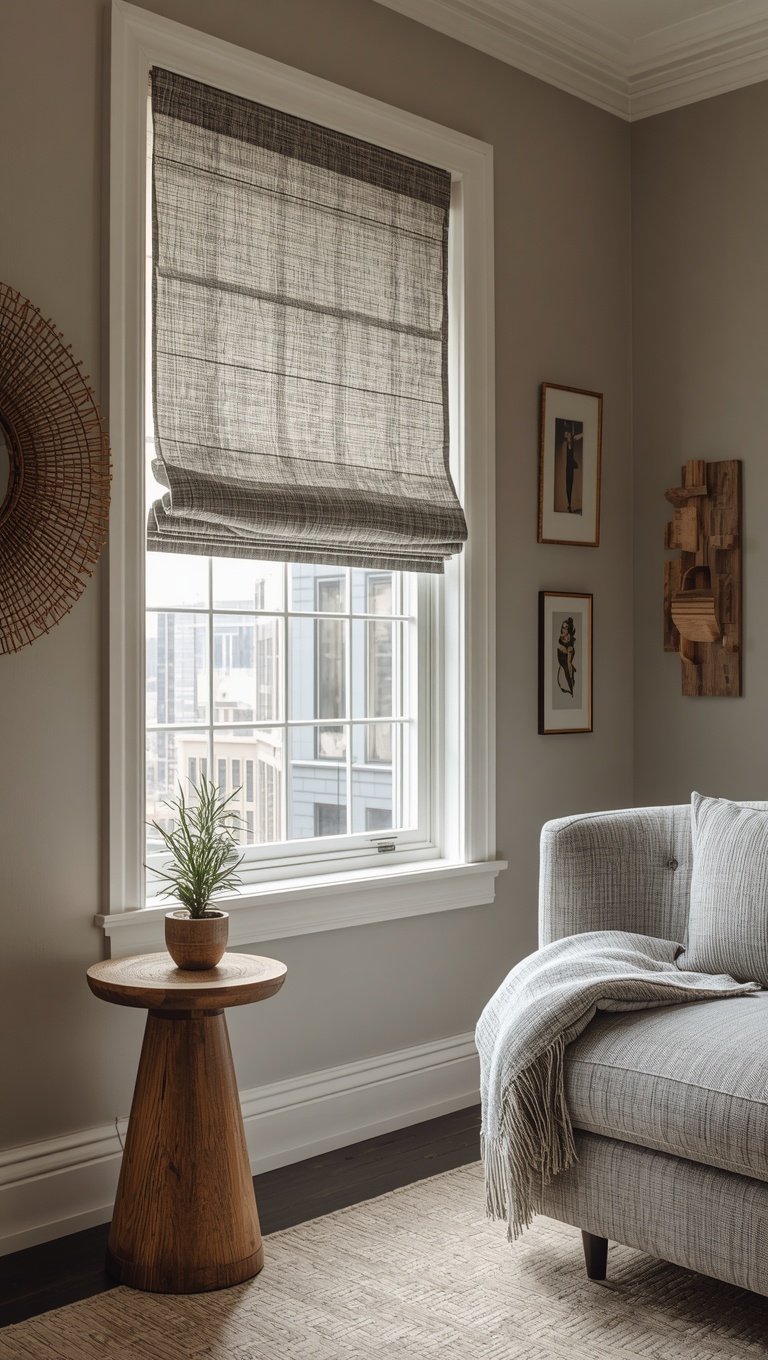
Roman shades turned out to be the answer, and I’m still a little obsessed.
Start With Linen, Always

Linen is where my heart lives.
It has this airy, slightly rumpled texture that makes a window feel relaxed.
When sunlight hits it, the whole fabric glows like warm toast.
I hung a natural linen shade in my kitchen a couple of winters ago.
Every morning since, the light has come through in the softest way.
You can see the weave, those tiny irregular threads.
And that’s what keeps it from feeling stiff or fussy.
If I had to pick a favorite fabric for the rest of my life, this would be it.
Don’t worry about a few wrinkles, either.
They’re part of the charm, you know?
Try a Cotton-Linen Blend

Pure linen can be a little wild sometimes.
It stretches, it creases, it has a mind of its own.
A cotton-linen blend gives you that same pretty texture with a bit more behavior.
I tried one in my hallway because I wanted something that would hang neatly.
It did exactly that.
The folds stayed crisp, but the light still drifted through like a whisper.
I love it for rooms where you want a tidier look.
Think dining rooms or an entryway.
It’s sort of the polished cousin of linen.
And it’s usually easier on the budget, which never hurts.
Look for a Light-Filtering Weave
This is the phrase I now check for every single time.

“Light-filtering” means the fabric diffuses the sun instead of blocking it.
Your room stays bright, but the harsh edges disappear.
I learned this the hard way after buying a “room darkening” shade for my sunroom.
Big mistake.
It felt like someone had turned off a lamp.
When I swapped it for a light-filtering one, the space woke right back up.
You still get privacy during the day, which surprised me.
At night, though, that changes, so keep reading.
I’ll get to that in a bit.
Choose a Relaxed Style Over a Rigid One
Roman shades come in a few shapes, and the shape matters more than you’d think.

A flat style looks sleek and modern.
A relaxed style has soft, gentle folds that dip a little at the bottom.
I’m completely partial to the relaxed one.
It feels cozy, like a blanket for your window.
When I had a small bay window, the relaxed folds made it feel so much more welcoming.
And they catch shadows in the prettiest way as the day moves along.
If your home leans cottage or farmhouse, go relaxed.
If you’re after something crisp and clean, flat is lovely too.
Either way, you really can’t go wrong.
Mount Them Outside the Frame

Here’s a little hack I swear by.
Mount your shade outside the window frame instead of inside it.
When the shade is raised, it covers less of the glass.
That means more sunshine and a bigger, brighter-looking window.
I did this in my bedroom and the difference was kind of shocking.
The window suddenly felt wider and more generous.
It also hides any ugly trim or gaps you might not love.
Just add a couple of inches on each side when you measure.
I jotted my measurements on a sticky note and taped it to the wall so I wouldn’t forget.
Small tip, big payoff.
Hang Them Higher Than You Think

Most people mount their shades right at the top of the window.
I like to go a few inches higher.
It tricks the eye into seeing taller ceilings.
And when the shade is raised, the fabric sits above the glass instead of in front of it.
So you get every last drop of daylight.
In my living room, I hung mine a good bit above the frame.
I’ll never go back.
The whole wall felt lifted, like it could finally breathe.
If you have a low ceiling, this little trick is pure magic.
Trust me on that.
Pick Warm Whites and Oatmeal Tones

Color changes how light feels in a room.
Stark, cool whites can look a little cold when the sun shines through.
Warm whites, creamy ivories, and soft oatmeal shades glow instead.
I’m talking butter-and-honey kind of glow.
My favorite is a muted flax color, somewhere between beige and cream.
It makes the afternoon light look almost golden.
And it plays nicely with just about any wall color I’ve tried.
If you’re nervous about commitment, start neutral.
You can always add personality with pillows or art.
But the window should feel calm.
Add a Whisper of Pattern

I’m a sucker for a subtle stripe.
A thin, tone-on-tone stripe adds interest without shouting.
When the sun comes through, the lines look like soft pencil marks.
I put a faint ticking stripe in my little reading nook.
It makes the corner feel curated, almost like a tiny boutique hotel.
If stripes aren’t your thing, try a small woven check or a gentle herringbone texture.
Just keep the contrast low.
Bold prints can block the light and compete with everything else in the room.
I tried a big floral once and, well, it didn’t last long.
Soft and quiet wins here.
Layer Them Under Curtains

This is how I get the best of both worlds.
I hang a Roman shade right at the glass and add simple curtains on the sides.
The shade handles the glare and the privacy.
The curtains bring softness, movement, and a little drama.
Keep the curtains light, though.
I use a loose cotton in a similar shade, so nothing feels heavy.
When I leave them open, the window looks framed like a picture.
When I close them at night, the room gets that snug, tucked-in feeling.
I love it.
It’s honestly my favorite window look I’ve ever put together.
Go Cordless for a Cleaner Look
Dangling cords bug me, and they’re not safe around kids or pets.

So I switched to cordless shades a while back.
You just lift or lower them by hand, and they stay put.
No tangles, no swinging strings, no fuss.
It also makes the shade look so much calmer and cleaner.
When I babysit my niece, I’m so relieved I made the change.
If you have little ones, I’d call this a must.
Motorized options exist too, if you want to get fancy.
But I’m happy with the simple version.
Easy and safe, that’s my vibe.
Don’t Forget the Kitchen Window
Kitchens need light more than almost any other room.

But they also get steamy, splattery, and a bit messy.
I choose a washable cotton blend for the window over my sink.
It’s held up through a lot of pasta nights and burned toast.
I keep it raised most of the day so the morning sun floods in.
Then I lower it halfway when the afternoon gets too bright.
That halfway spot is my secret.
You get privacy at the bottom and sky at the top.
It makes washing dishes feel almost pleasant, which is saying something.
Add a Liner Only Where You Need It
Here’s where I circle back to nighttime privacy.

In most rooms, I skip the liner completely.
The light stays soft, and the fabric looks beautifully sheer.
But in my bedroom, I added a light-filtering liner.
It blocks just enough to keep things private after dark.
I didn’t want to lose that gentle morning glow, so I avoided a full blackout.
If you’re a light sleeper, though, you could add a blackout layer in just that room.
It’s totally your call.
I like to wake up with the sunrise, so this setup works for me.
You’ll know what feels right for yours.
Related read: Things I Wish I Knew Before I Decorated My First Home — Instant PDF + Kindle download. Secure checkout by Stripe