
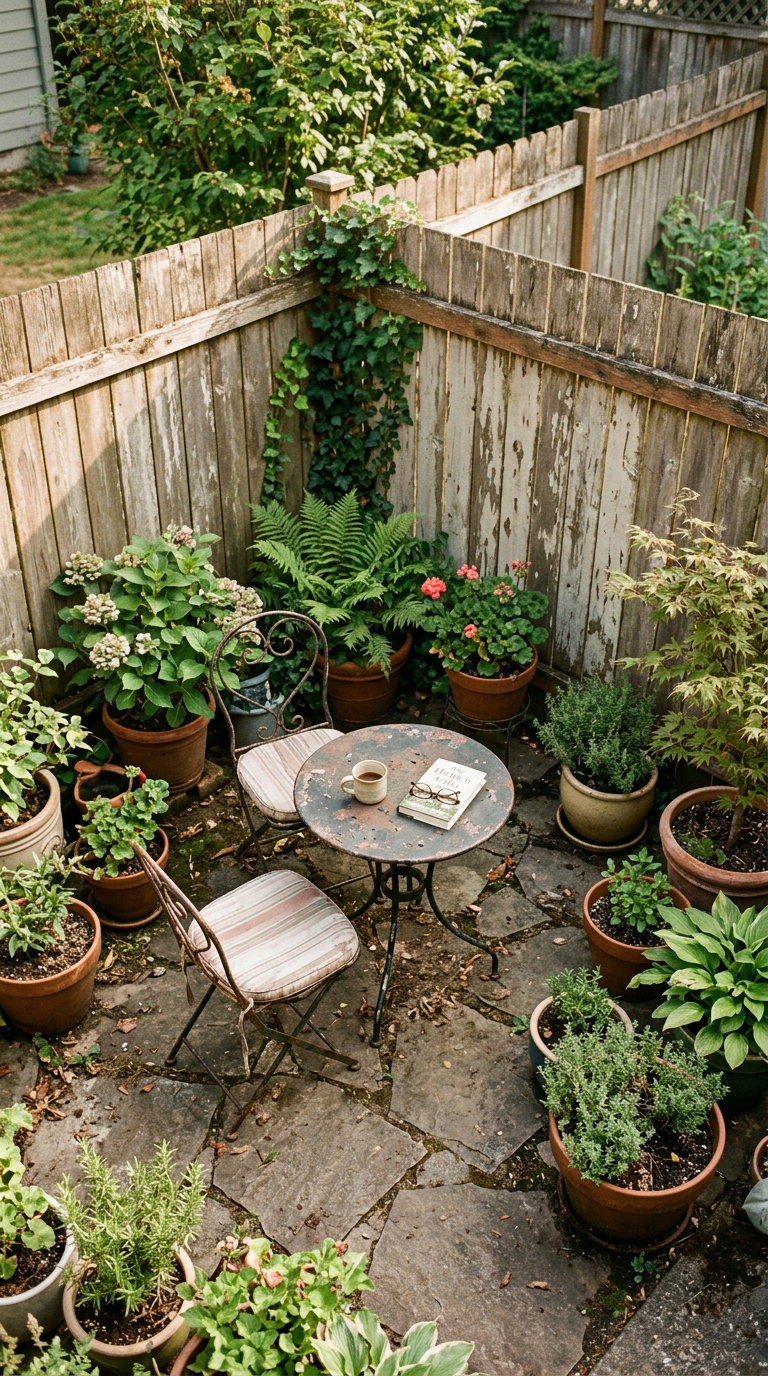

Last summer I dragged a folding table and two mismatched chairs into my tiny backyard, lit a candle, and called it an outdoor dining space.
Biscuit knocked the candle over within four minutes.
The table wobbled every time someone set down a glass.
And honestly, the whole setup looked like a sad yard sale.
I’ve spent the better part of a year actually figuring this out — the stuff nobody tells you before you start hauling furniture through the back door.
So here’s everything I wish someone had sat me down and said over coffee before I wasted time and, okay, a little money.
Size Math Is Different Outside Than Inside
I measured my backyard once.
Wrote down the number, felt confident, bought a table.
It did not fit the way I thought it would fit.
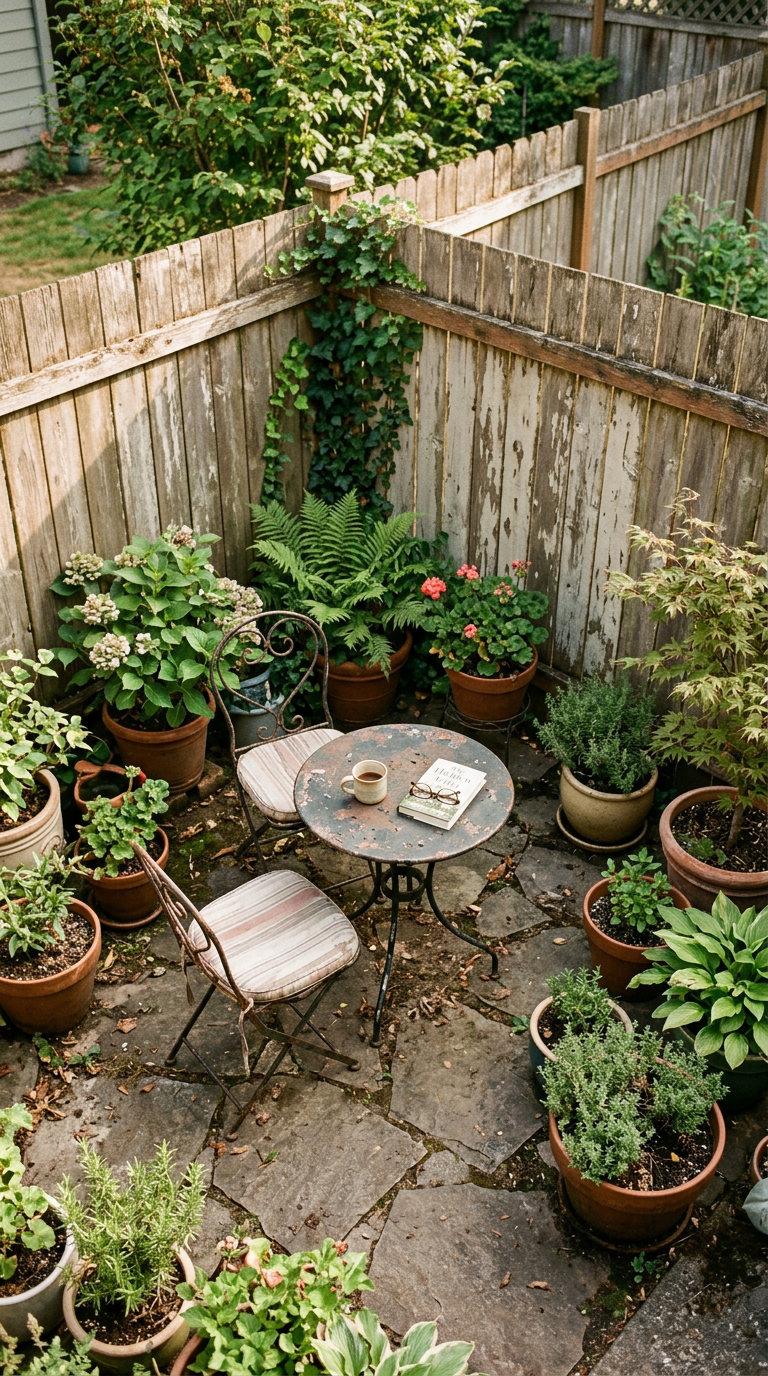
Outside, you need way more breathing room than inside because you’re also navigating around the grill, the dog’s water bowl, the back door, and at least one overgrown shrub you keep meaning to trim.
The rule I finally landed on: whatever size table you think you need, go one size smaller.
Seriously.
A 36-inch round table in a small backyard will feel more comfortable than a 48-inch one that you’re constantly squeezing past.
Also factor in chair pull-out.
I didn’t.
My chairs, when pushed back to stand up, hit the fence.
Every single time.
We started doing this little sideways shuffle just to get up from dinner.
Sketch it out on paper with actual measurements before you buy anything.
I know that sounds obvious.
I didn’t do it.
The Ground Situation Will Make or Break Everything
Nobody warned me about this.
My backyard is a mix of grass, a slightly uneven concrete pad, and one patch of gravel I thought looked charming when I moved in.
Putting a dining table on any of those surfaces has been a different kind of nightmare each time.
Grass looks great in photos.
In real life, chair legs sink in, the table tilts, and someone always spills because the surface isn’t level.
Gravel sounds crunchy and awful every time you adjust your chair.
Concrete is king, honestly, but only if it’s actually level.
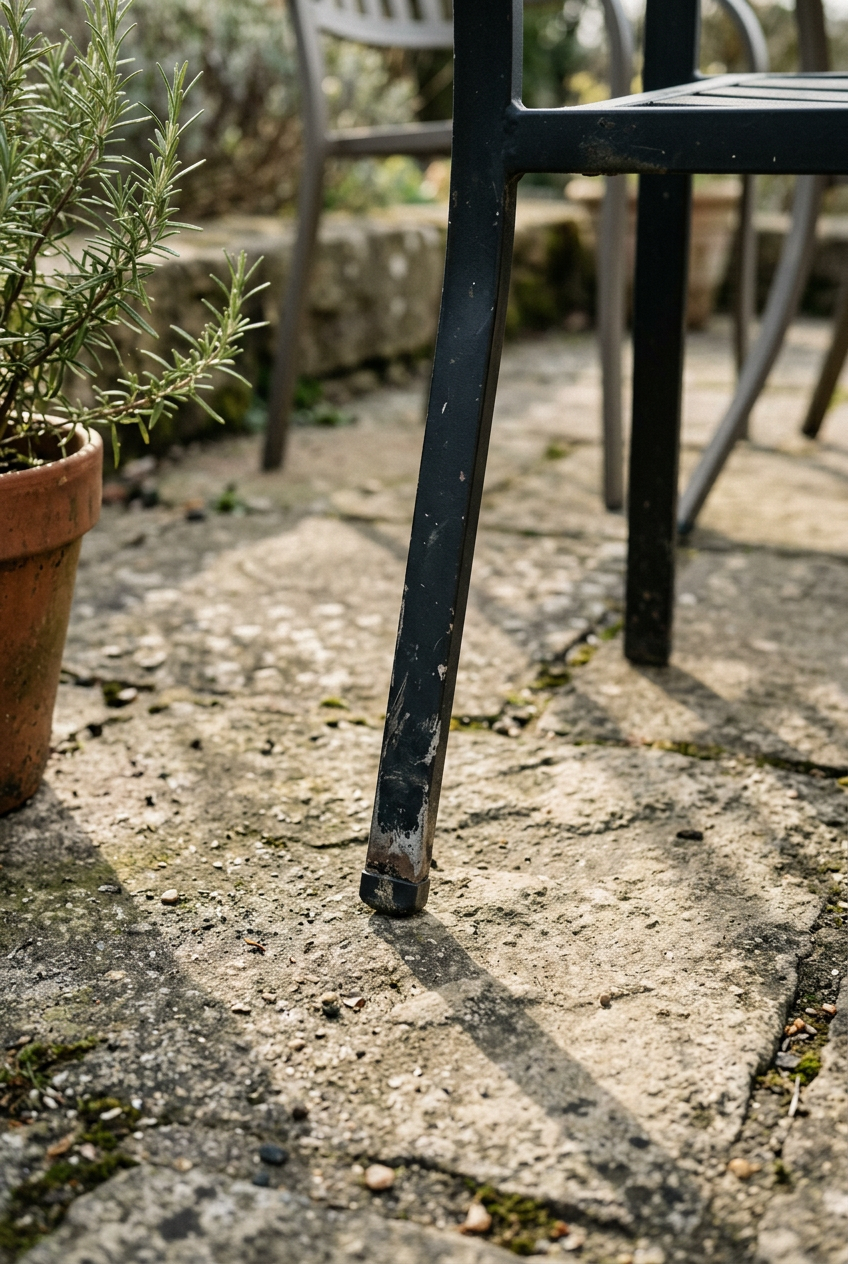
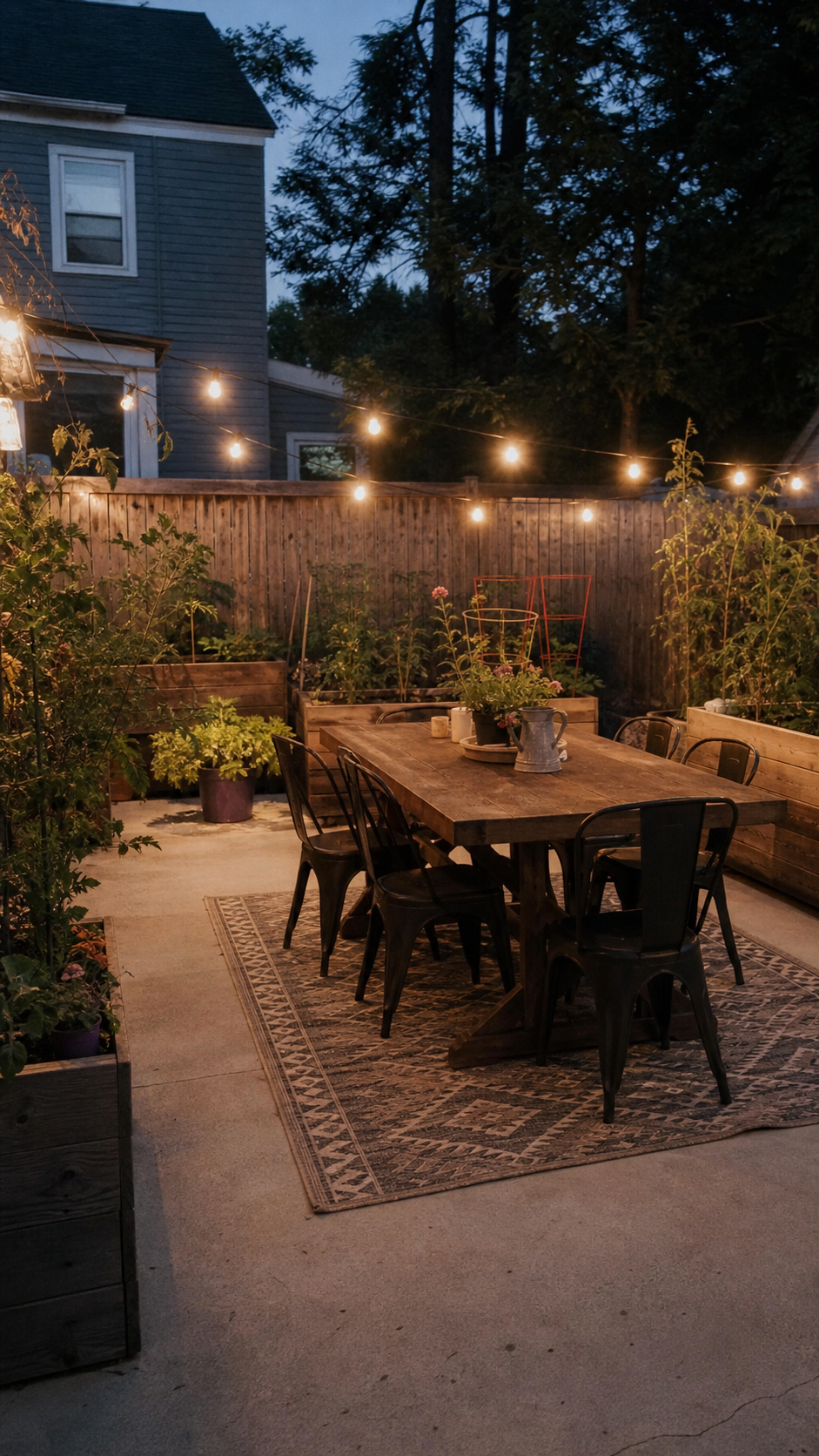
If you don’t have a level surface, a flat outdoor rug can help a little.
But only a little.
I have a jute-look outdoor rug under my table now and it at least keeps the chair legs from sinking into the lawn.
I’m still saving up for a small poured concrete pad.
Someday.
Overhead Lighting Is Non-Negotiable (Yes, Even Outside)
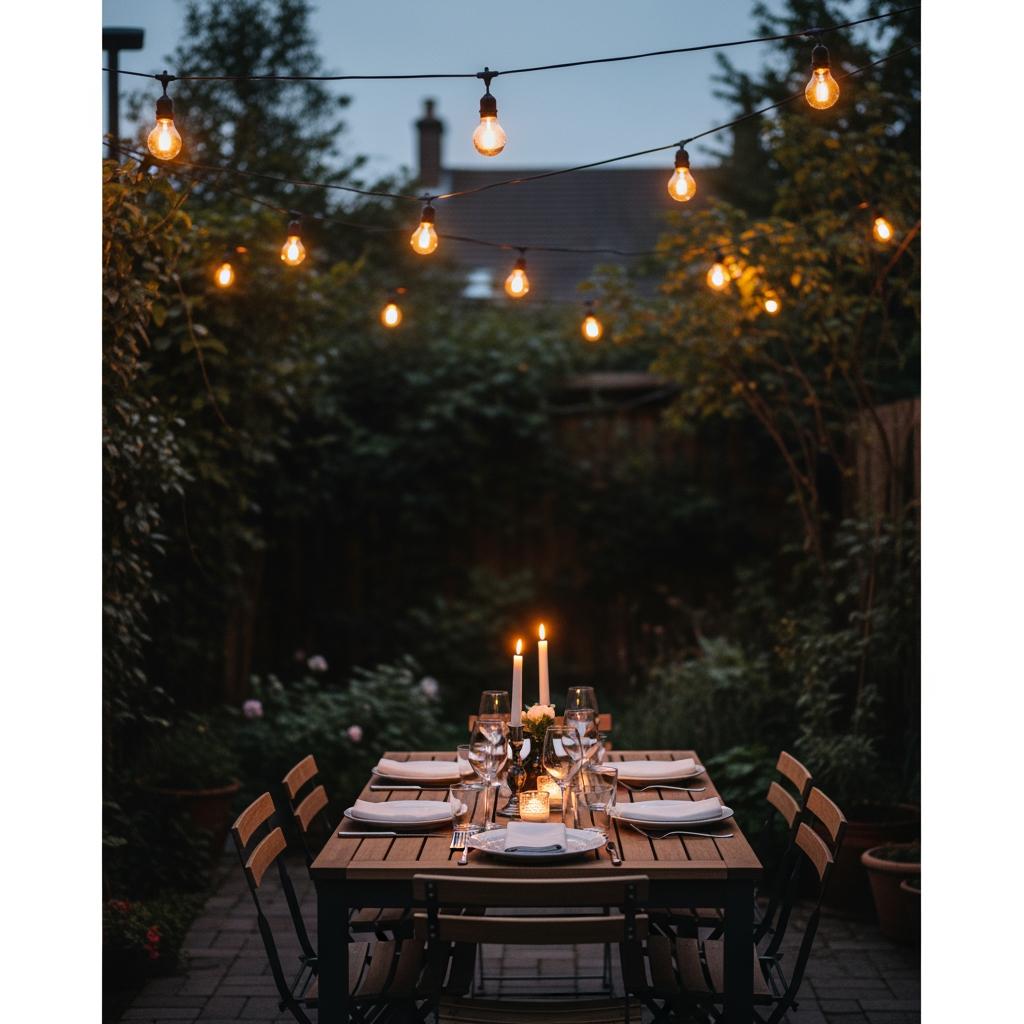
You knew I was going to say something about lighting.
I always do.
But outside it’s even more important because once the sun goes down, you either have gorgeous warm light or you’re eating in the dark.
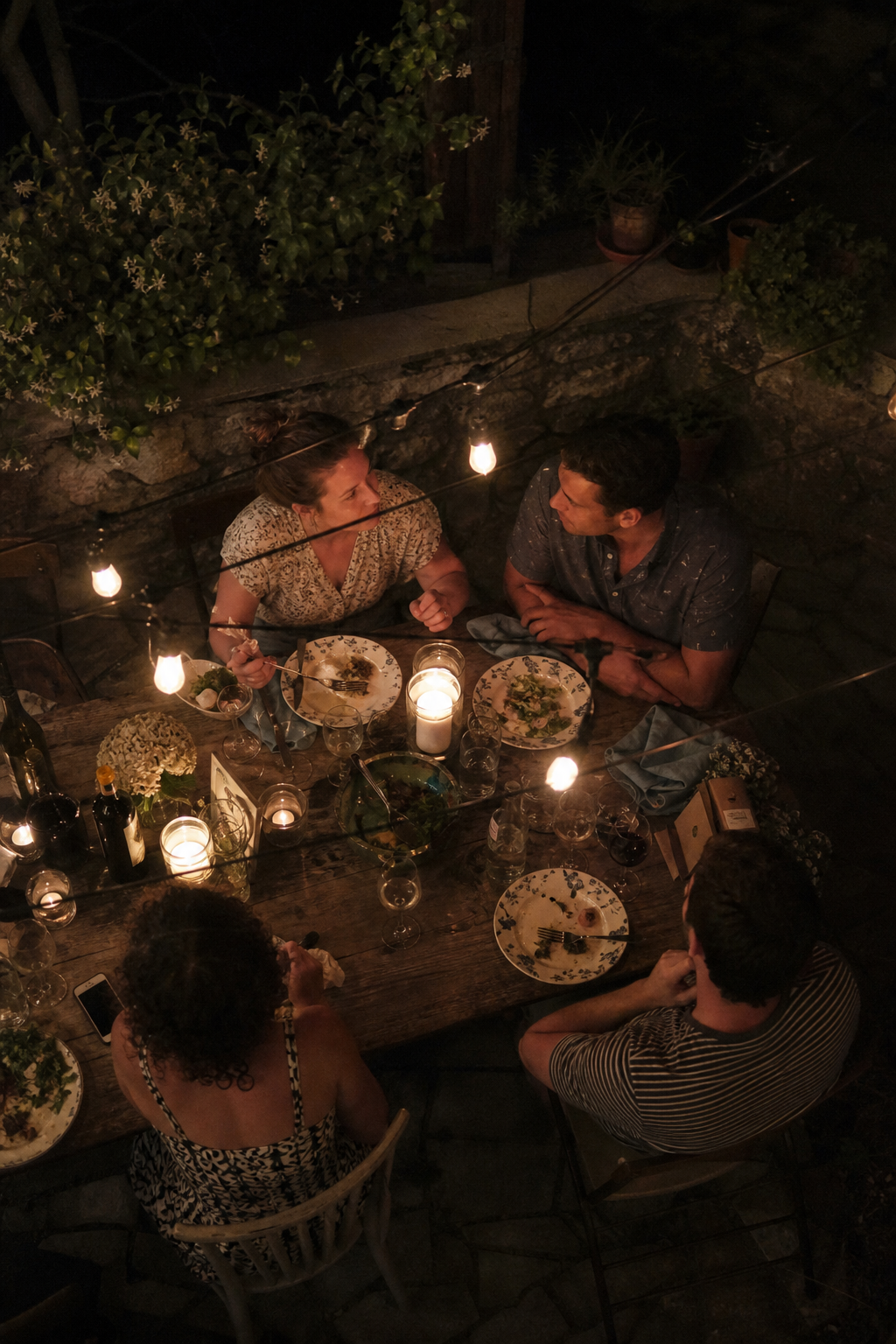
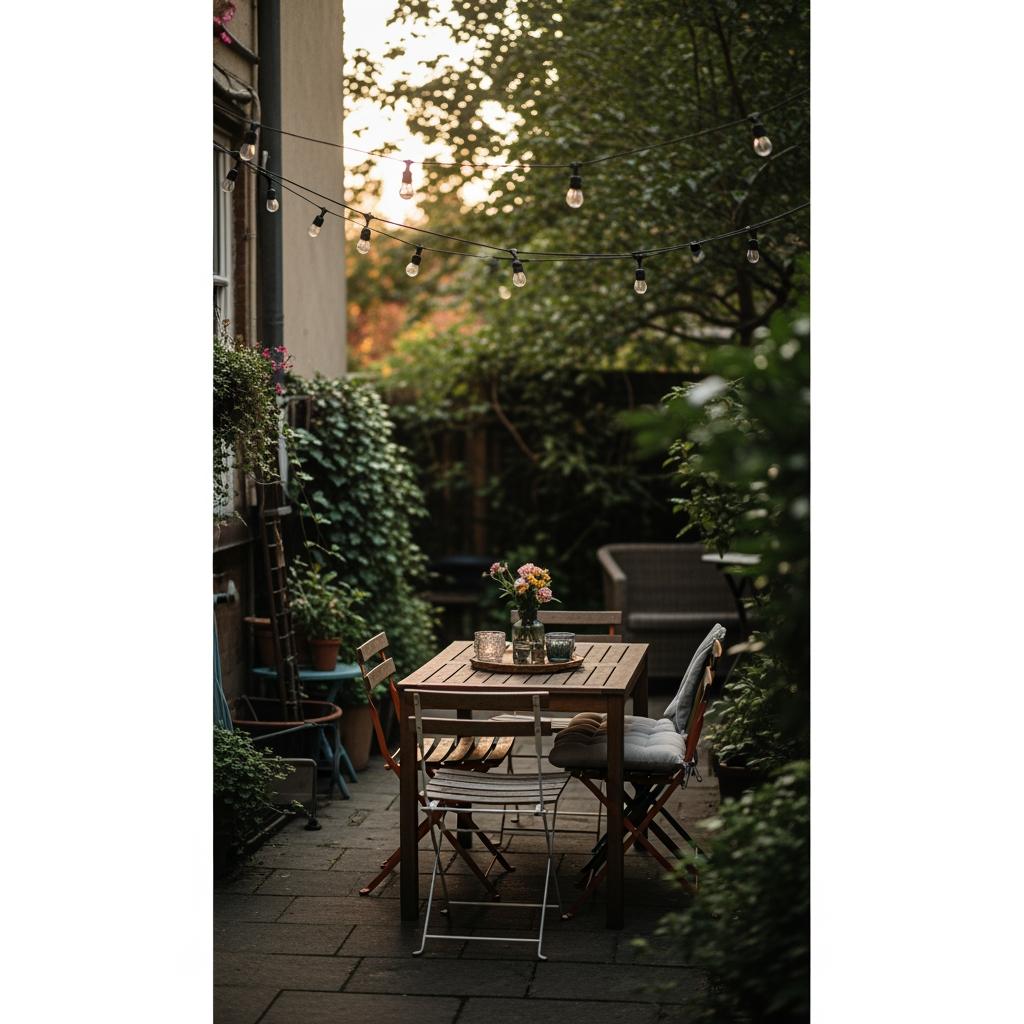
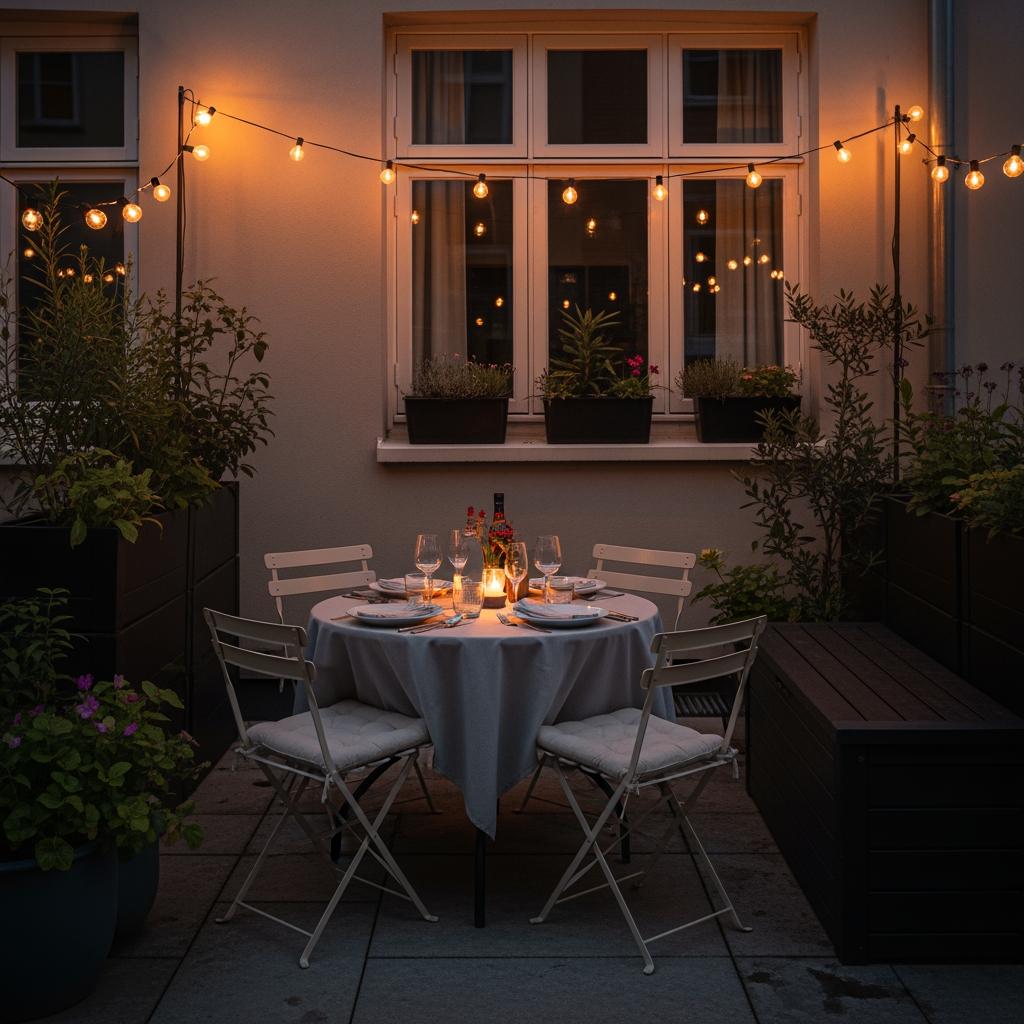
String lights changed my backyard completely.
I’m not exaggerating.
I ran them from the back of my house to a shepherd’s hook I stuck in the garden bed, and that little triangle of warm bulbs made the whole space feel intentional instead of accidental.
Solar string lights are tempting because no extension cord.
But I’ve gone through three sets.
The battery life gets worse every season and by September they’re barely on by 9pm.
Plug-in lights with a heavy-duty outdoor extension cord hidden along the fence are worth the extra effort.
Candles count too, but anchor them.
Learn from Biscuit’s chaos.
Furniture Material Actually Matters (I Picked Wrong the First Time)
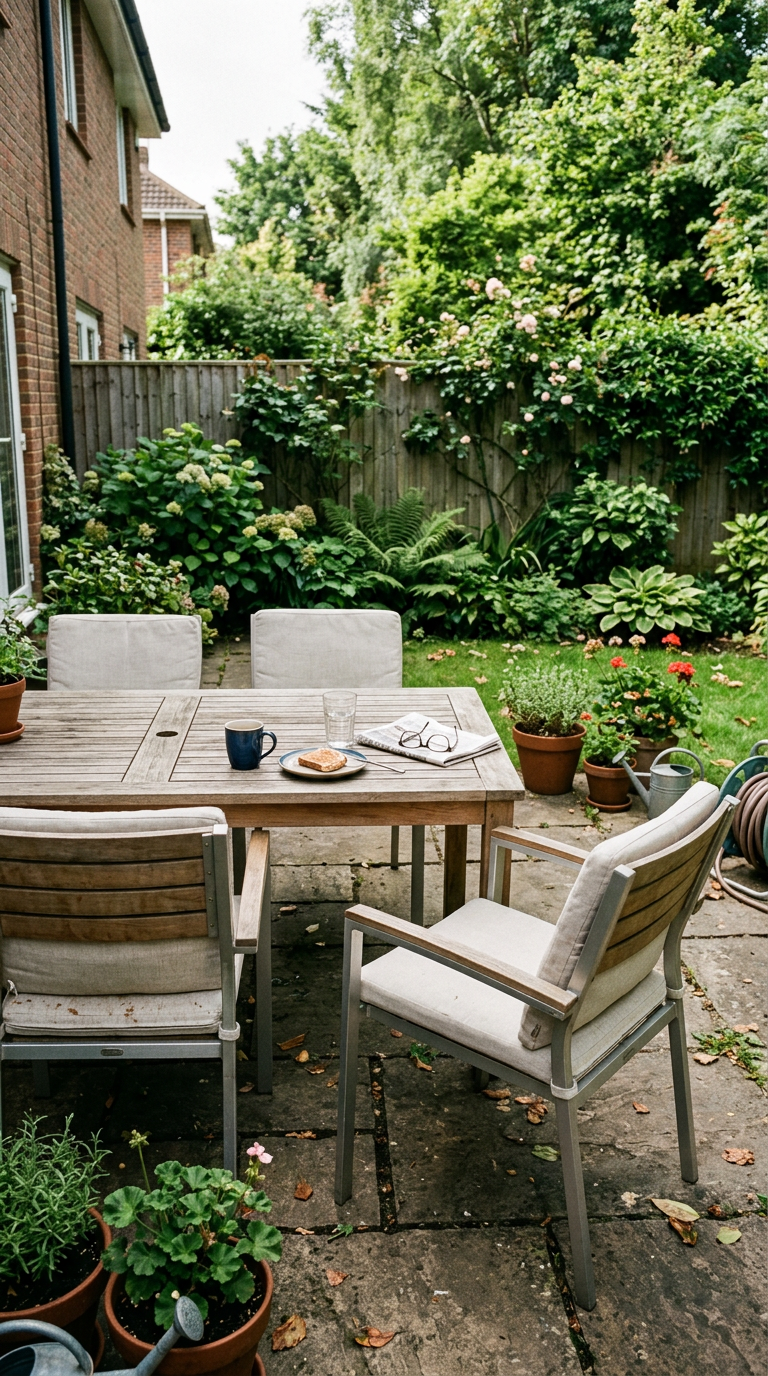
I bought a cute little bistro set from a discount home store.
Metal, powder-coated white, very Pinterest.
Within one season it had rust spots at every weld point and the cushions had soaked up rain and smelled like a wet dog.
No offense to Biscuit.
Teak and aluminum are the two materials I’d go back and choose from the start.
Teak weathers beautifully (it goes silver-grey and honestly looks better every year).
Aluminum doesn’t rust, stays light enough to move around, and wipes clean fast.
Wicker looks amazing but outdoor wicker varies so wildly in quality.
The cheaper stuff starts unraveling in one summer.
If you find a solid resin wicker set from a brand with actual reviews, it can last.
But inspect it carefully.
Whatever you buy, bring the cushions inside.
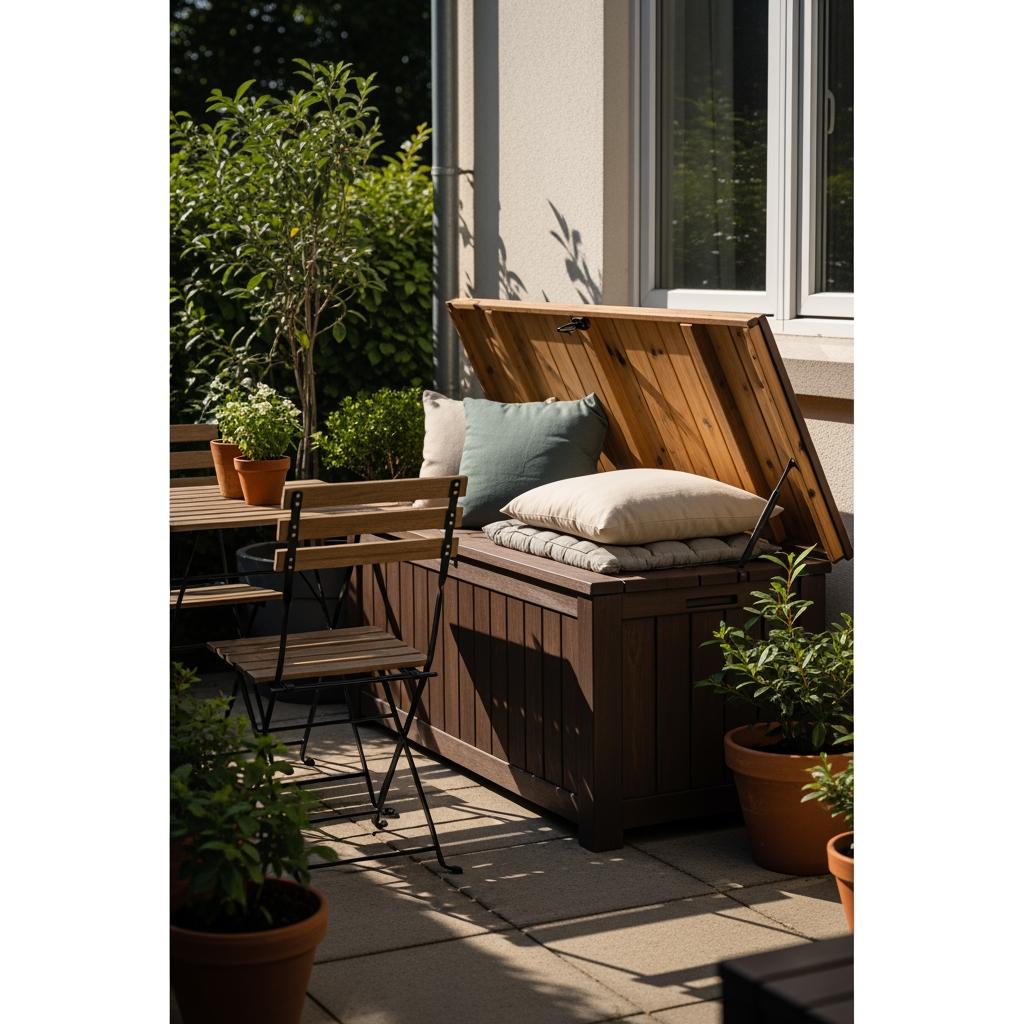
Or get a storage bench that doubles as cushion storage.
I have a cedar storage bench and it’s genuinely one of the best things I own.
Shade Planning Saved My Sanity
My back patio gets direct afternoon sun from about 2pm until sunset.
In July that is not a dining experience.
That is a punishment.
I spent a whole summer just not using the space in the afternoon and wondering why my outdoor dining setup felt pointless.
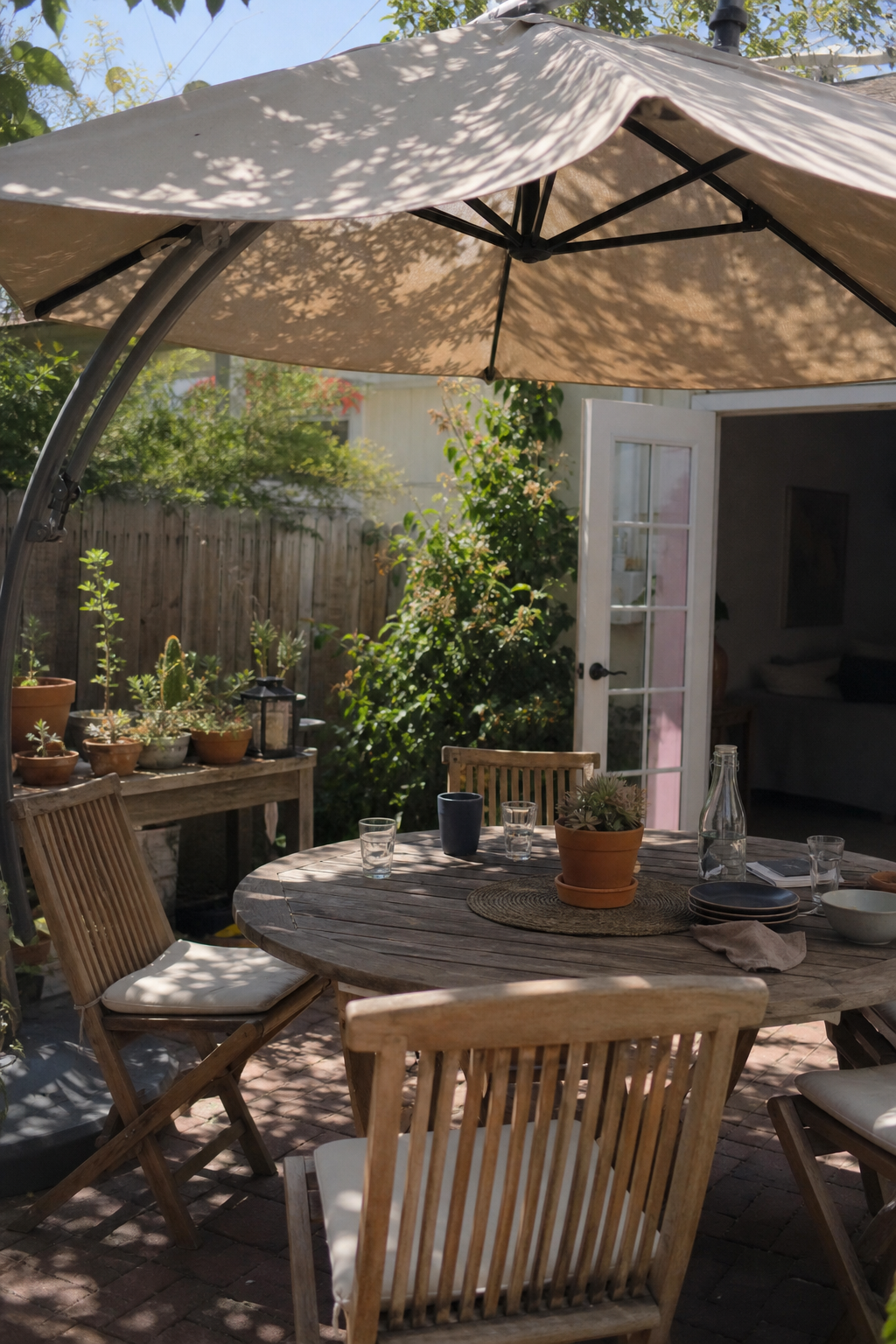
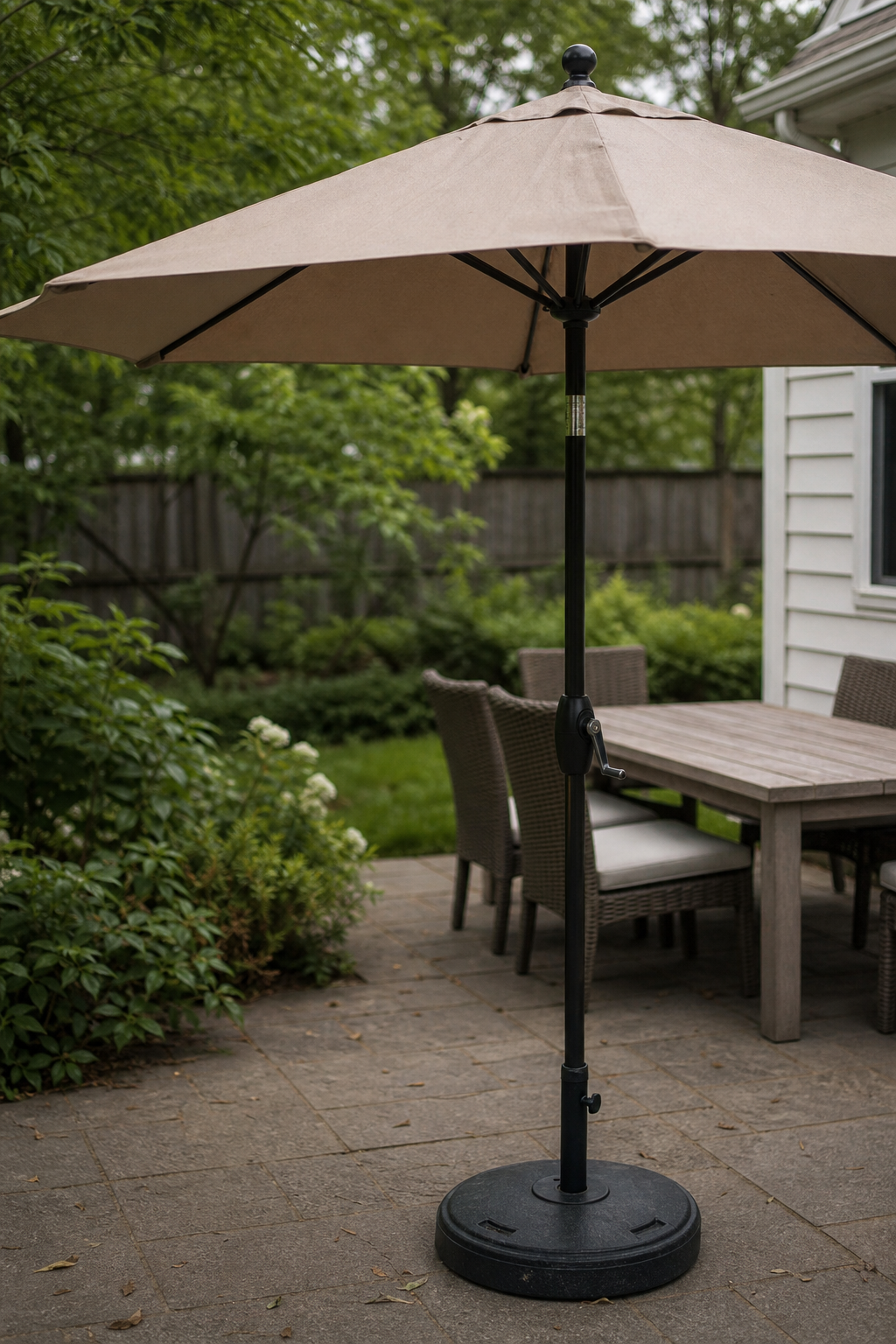
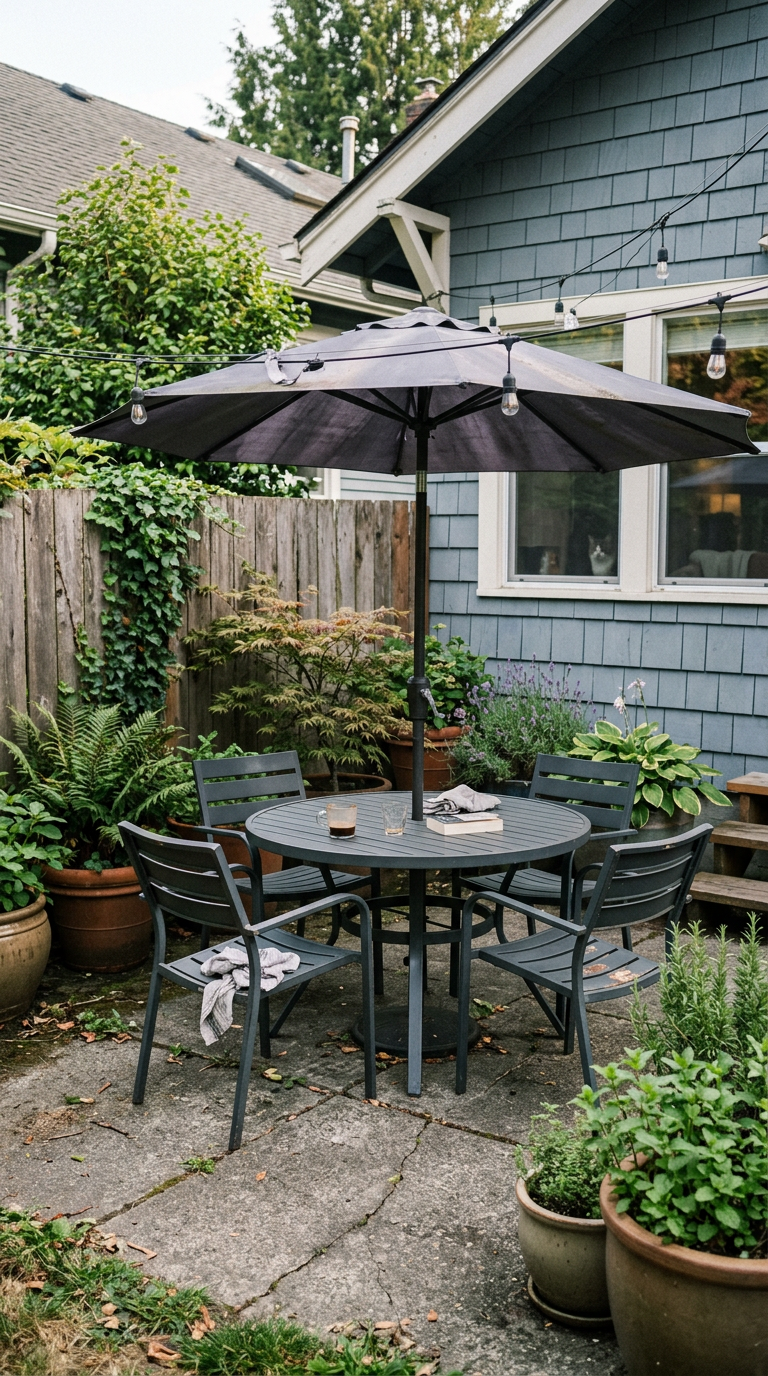
Then I got a nine-foot cantilever umbrella from Costco (around $180) and it genuinely extended how many hours a day I actually wanted to be out there.
Cantilever umbrellas are better than center-pole ones for dining tables because you can position the shade exactly where you need it without the pole being in the way of seats.
I rotate mine through the afternoon as the sun moves.
Takes about ten seconds.
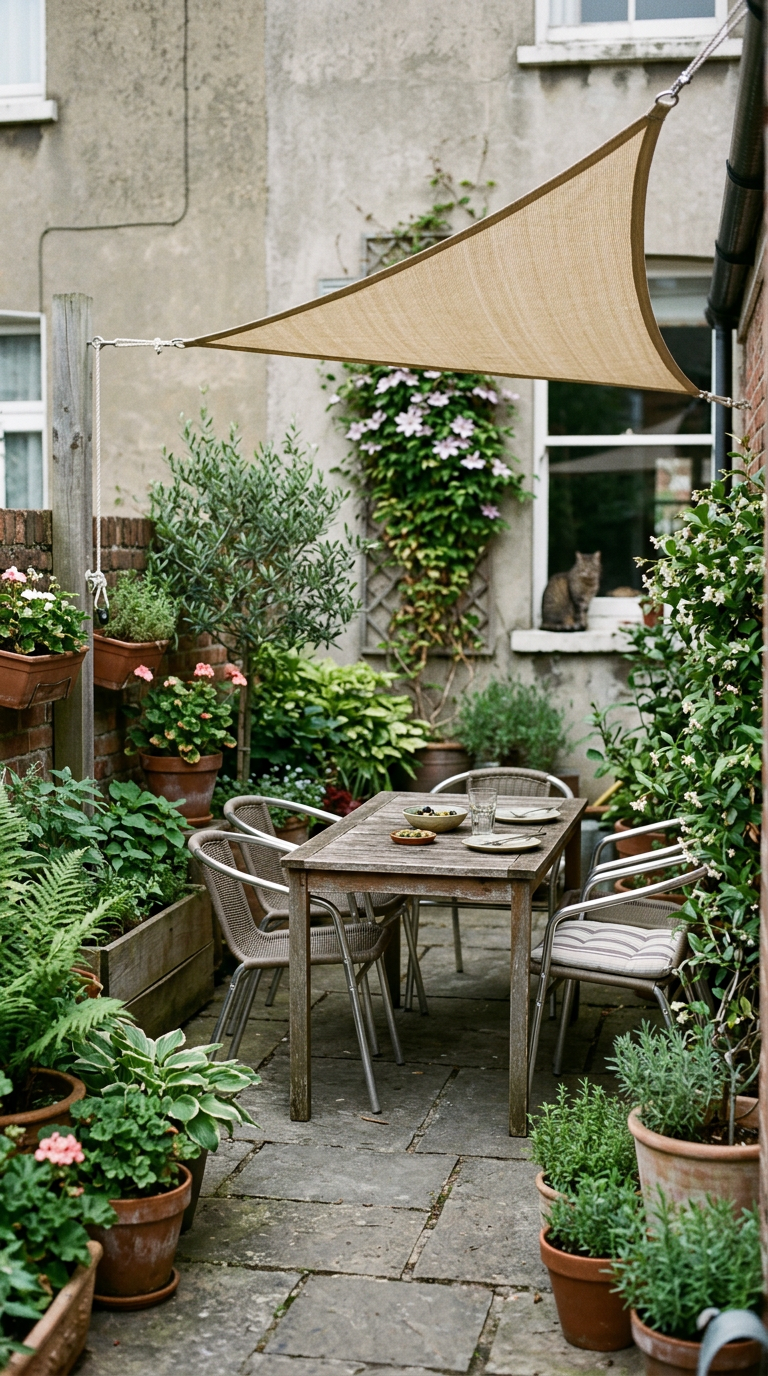
A shade sail is another option and they look really cool stretched between two posts.
Just make sure your anchor points are solid.
Mine pulled a fence post slightly out of the ground.
So.
The Wind Will Try to Ruin Your Table
Everything on my outdoor table has blown off at least once.
Napkins, placemats, a full cup of coffee (devastating).
I live in an area that gets strong afternoon gusts and it took me embarrassingly long to plan around that.
Weighted or clip-on napkin rings are a tiny thing that makes a big difference.
Same with a tablecloth that ties underneath the table.
I have one with elastic corners and I love it more than I reasonably should.
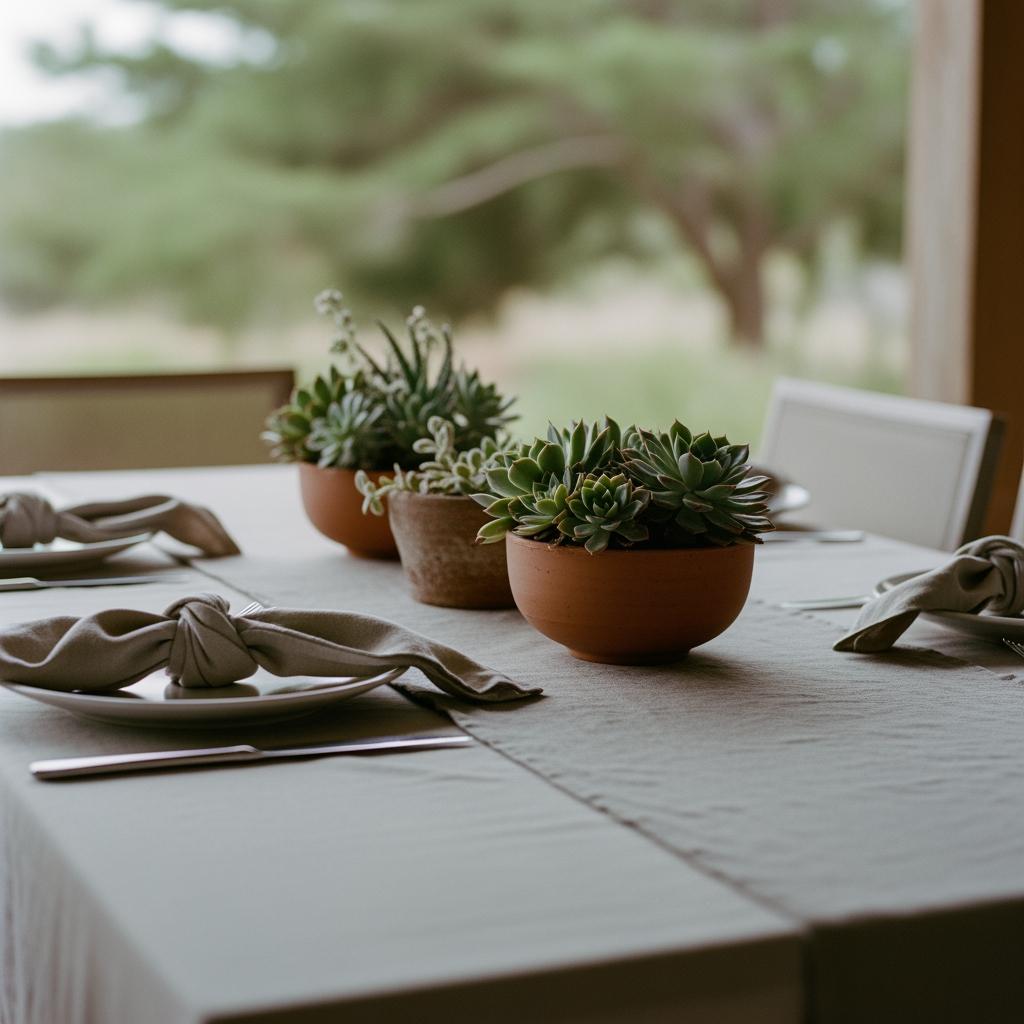
For centerpieces, go low and heavy.
A short terracotta pot with succulents doesn’t blow over.
A tall vase with dried pampas grass absolutely will.
Also secure your umbrella base.
Mine is a 50-pound resin base and during a storm last fall the whole thing still tipped.
I now stake the base with a bungee cord to the fence when storms are coming.
It’s not elegant but it works.
Small Doesn’t Mean Cramped — Scale Everything Together
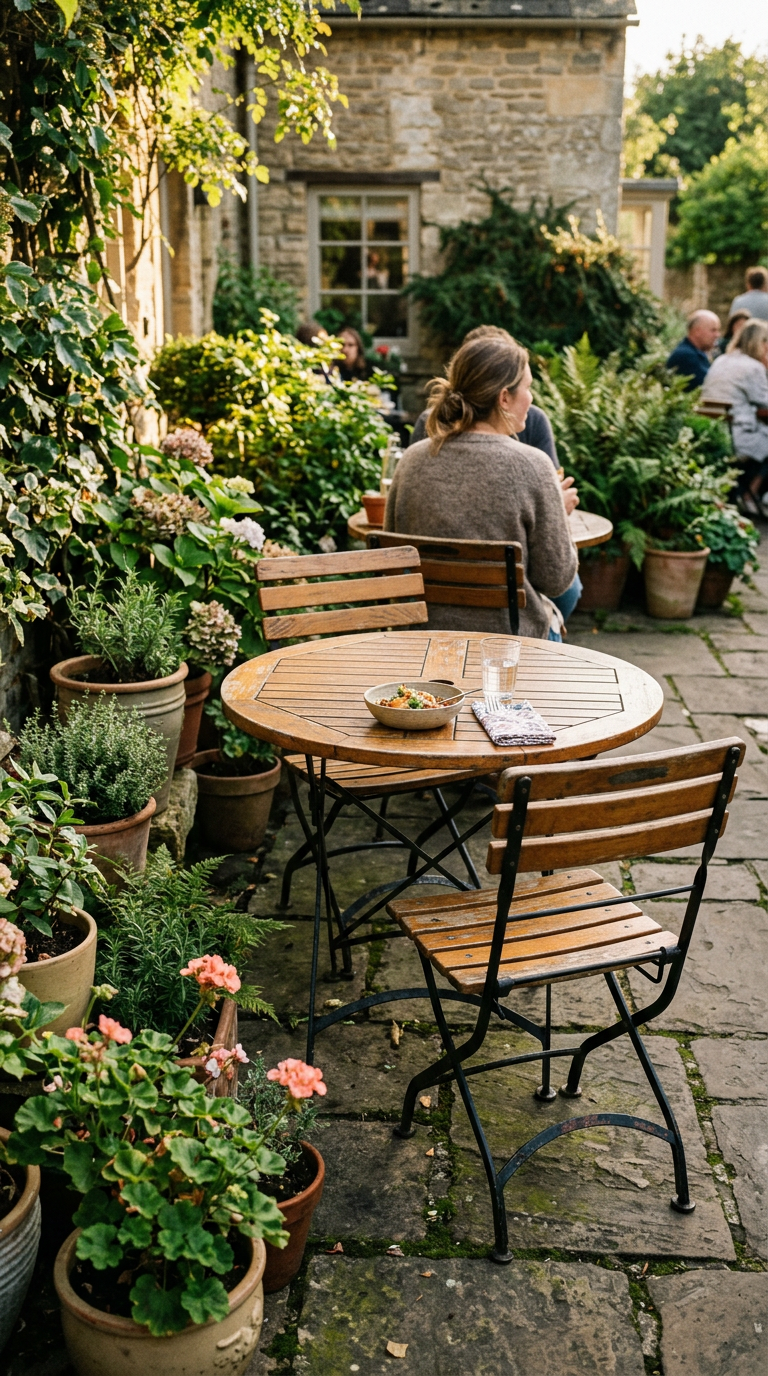
The biggest visual mistake I made early on was mixing a large table with tiny chairs because I found them at different thrift stores.
Nothing looked like it belonged together.
It felt like a kid’s drawing of an outdoor space.
In a small backyard, keeping everything to a consistent visual scale reads as intentional.
Lower chairs with a lower table, or bistro-height everything.
Mixing heights in a tight space makes it feel chaotic.
Color helps too.
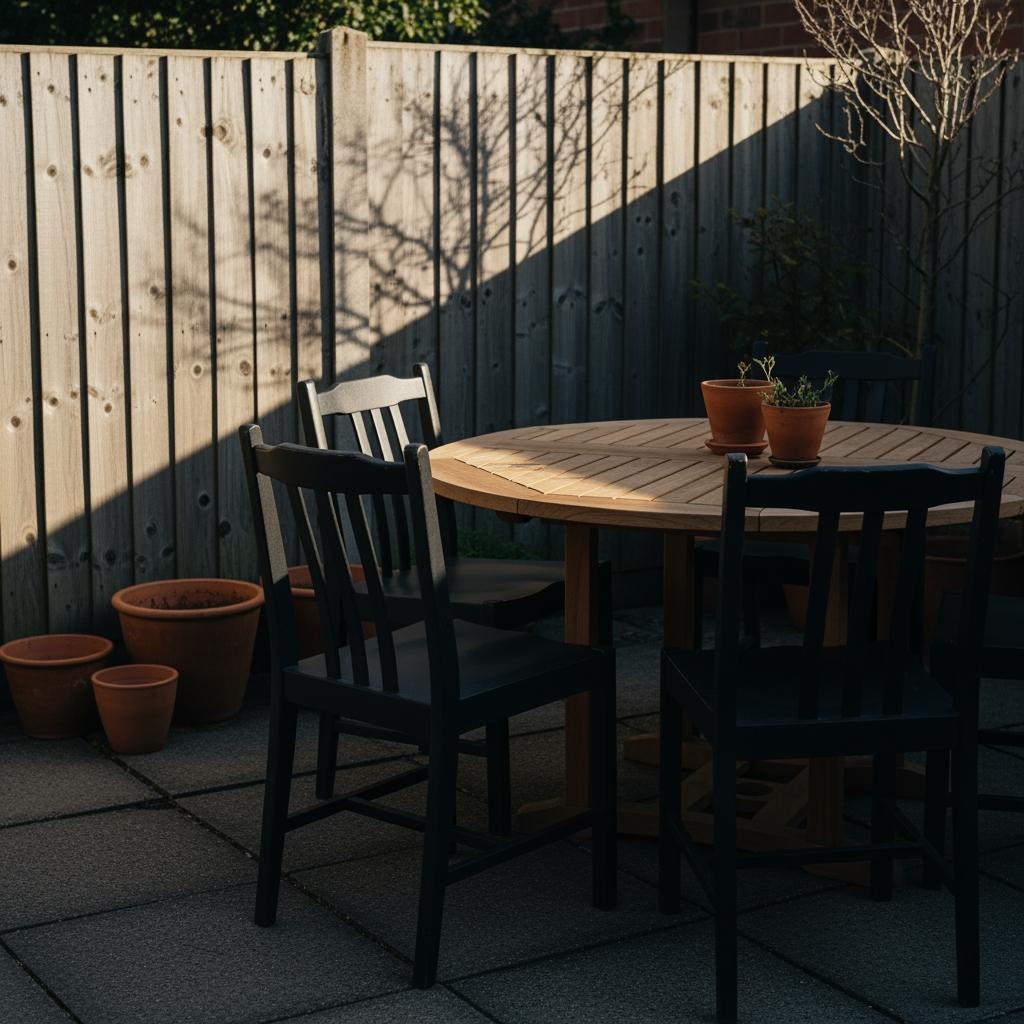
I’m not saying everything needs to match, but having a loose color story (wood tones plus black metal plus one warm accent color) keeps a small space from looking cluttered.
My space is mostly teak-tone wood with black metal legs and a terracotta cushion color.
It’s simple and it actually feels bigger for it.
Thrift stores are great for this, by the way, you just have to be patient and picky.
I’ve found great outdoor chairs at Goodwill.
You might need to spray-paint them but it’s worth it.
Plants Around the Table Change the Whole Feeling
I resisted this for a while because I was convinced I’d kill everything.
I’m not a natural gardener.
But a few well-placed pots around the dining area honestly made it feel like a real room instead of just furniture sitting in the backyard.
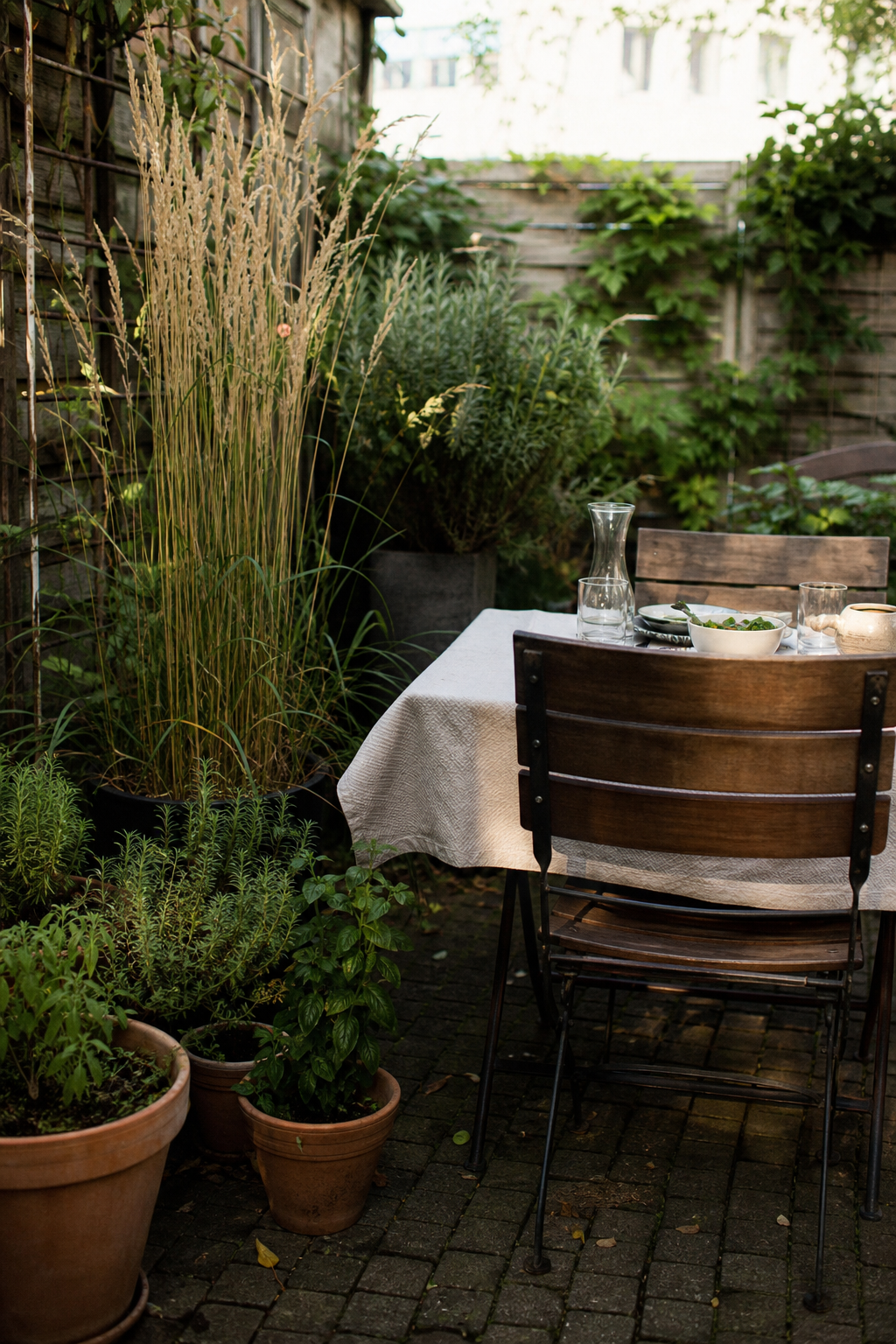
Tall plants or grasses at the corners of the space create a sense of enclosure, which is the secret to why some patios feel cozy and others feel exposed.
I have two big ornamental grasses in black pots flanking one end of my table and they flutter in the breeze and look effortlessly good.
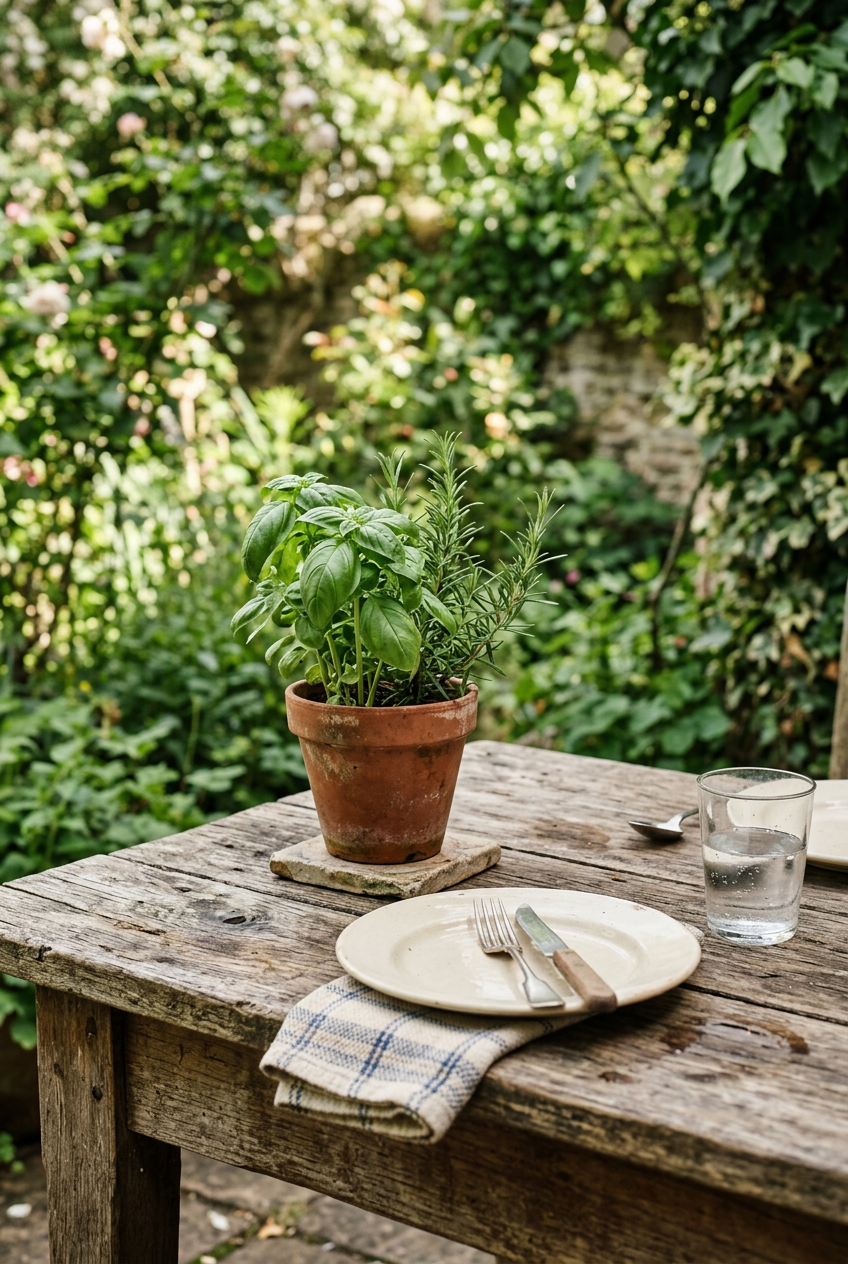
Herbs are practical and pretty.
I keep a pot of basil and one of rosemary on the table itself.
They smell incredible when it’s warm and I actually use them when I’m cooking outside.
Low-maintenance is the goal.
I’m not out here building a botanical garden.
Succulents, ornamental grasses, and herbs — that’s my whole plant situation and it’s plenty.
Outdoor Rugs Are Great Until They’re Not
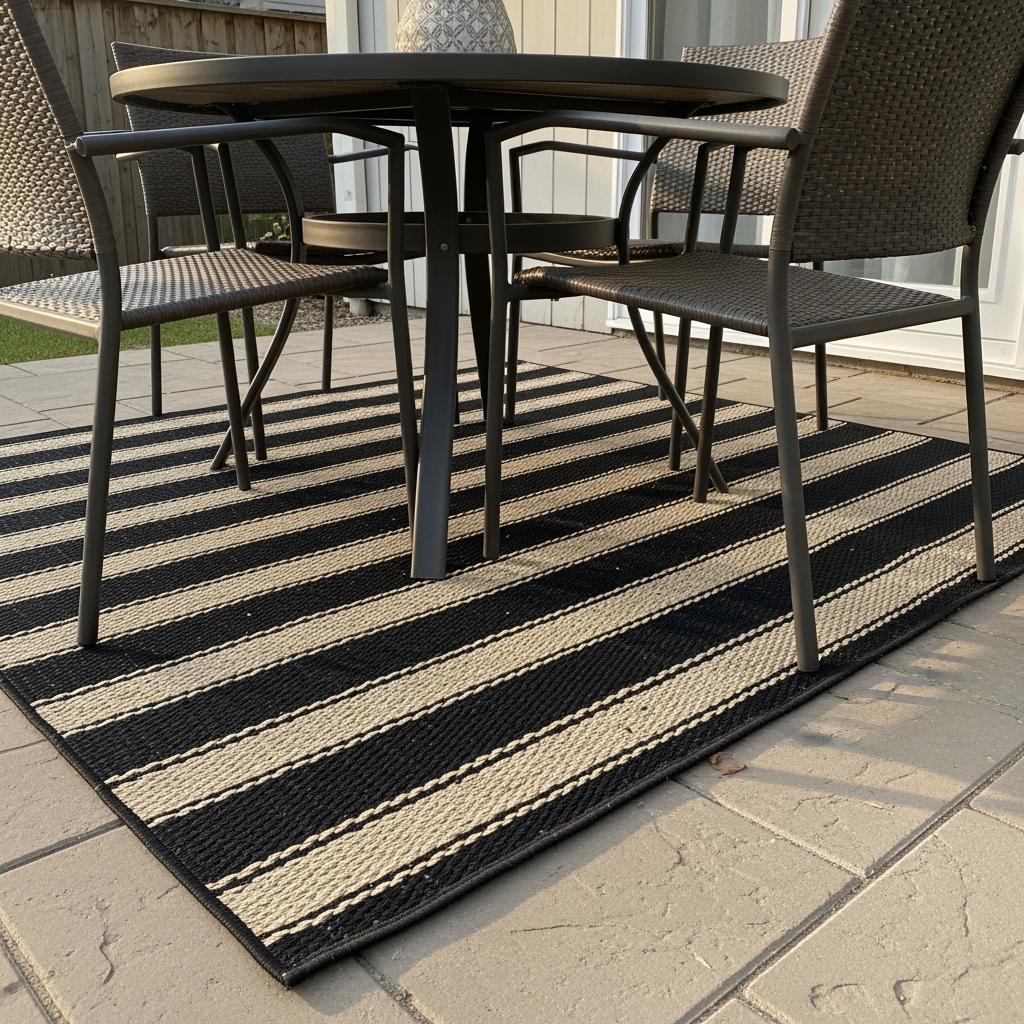
I’m a big fan of outdoor rugs.
They anchor the dining space visually and make the whole setup feel more intentional.
But I’ve made basically every mistake possible with them so let me save you the headache.
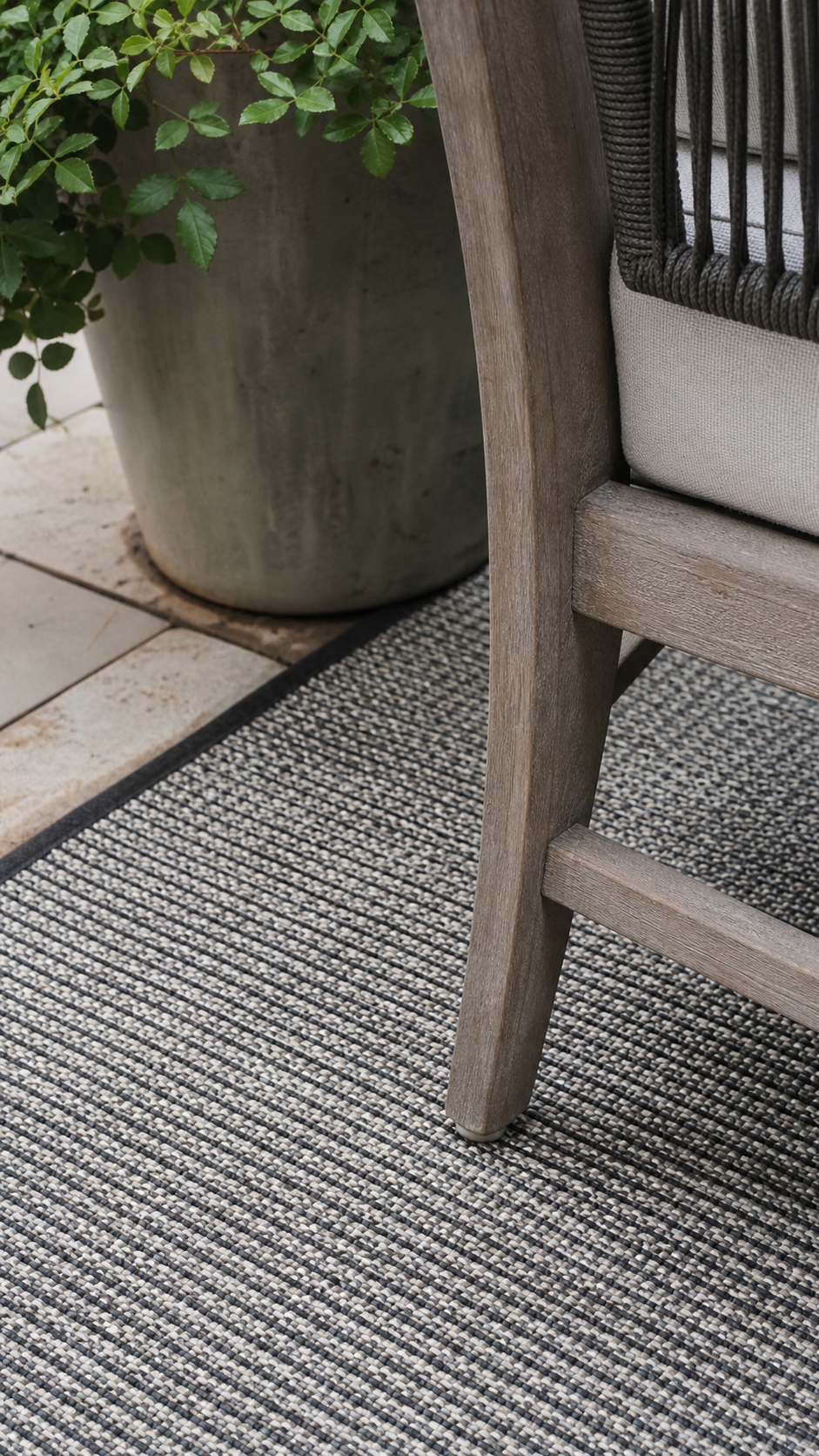
First: get one that’s actually labeled for outdoor use and can handle rain without growing mold.
I bought a rug that said ‘indoor/outdoor’ and it was mostly indoor.
It was disgusting by August.
Second: they trap debris.
Food crumbs, leaves, Biscuit fur.
You’ll need to shake it out regularly.
A flat-weave outdoor rug is much easier to clean than a textured pile one.
I have a flat-weave black-and-natural stripe right now and it’s held up really well.
Third: size up.
Same instinct as indoor rugs — most people go too small.
The front legs of every chair should sit on the rug when people are seated.
If the rug ends at the table legs, it’ll look floated and small.
Bug Situation: Plan for It or Suffer
Summer evenings in my backyard were genuinely lovely once I fixed the lighting and the furniture.
And then mosquitoes found me.
Instantly.
A citronella candle does basically nothing.
I’m sorry.
It’s mostly vibes.
What actually works for me is a plug-in mosquito repellent lamp (I use one near the outlet on my fence) combined with keeping standing water out of every pot saucer after it rains.
If you have a covered patio, an outdoor fan pointed at the table does double duty — keeps you cool and blows bugs away.
I strung an outdoor-rated fan from my pergola overhang last summer and it was a genuinely life-changing decision.
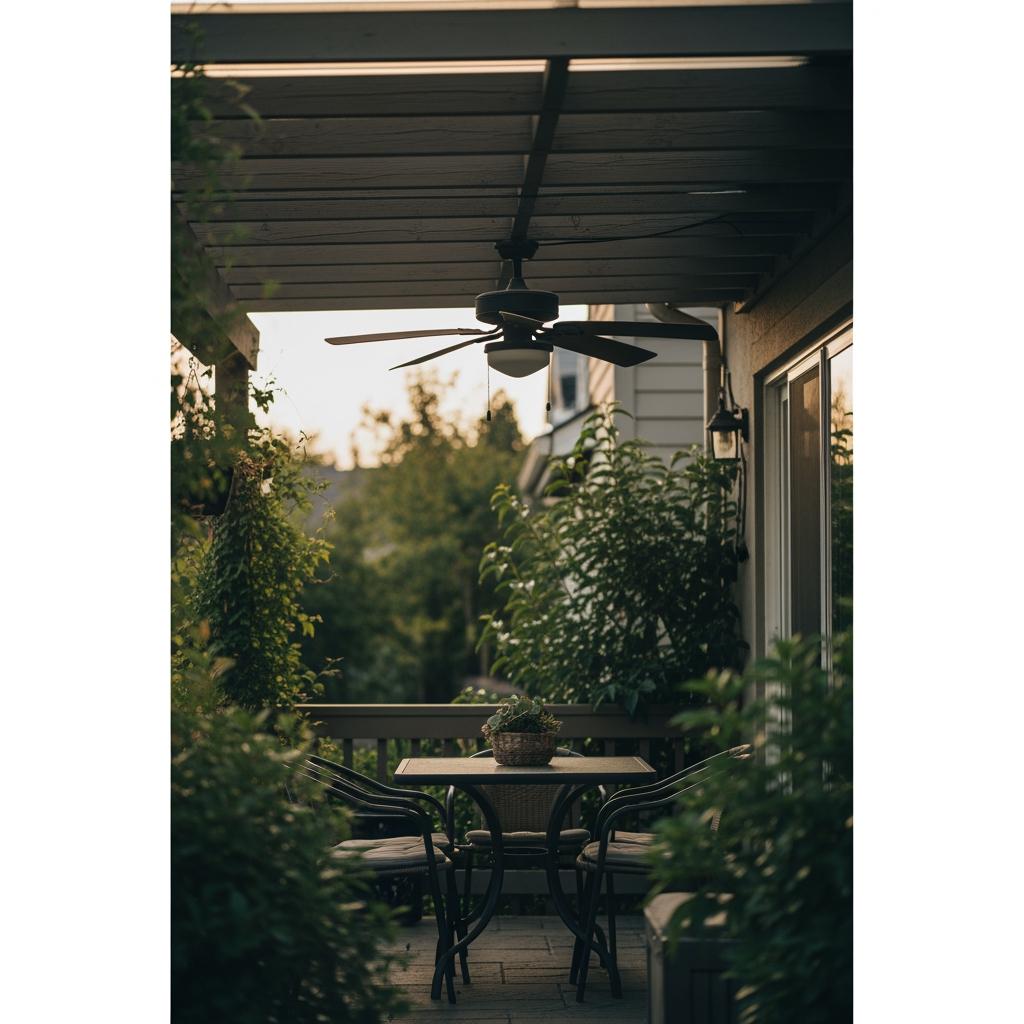
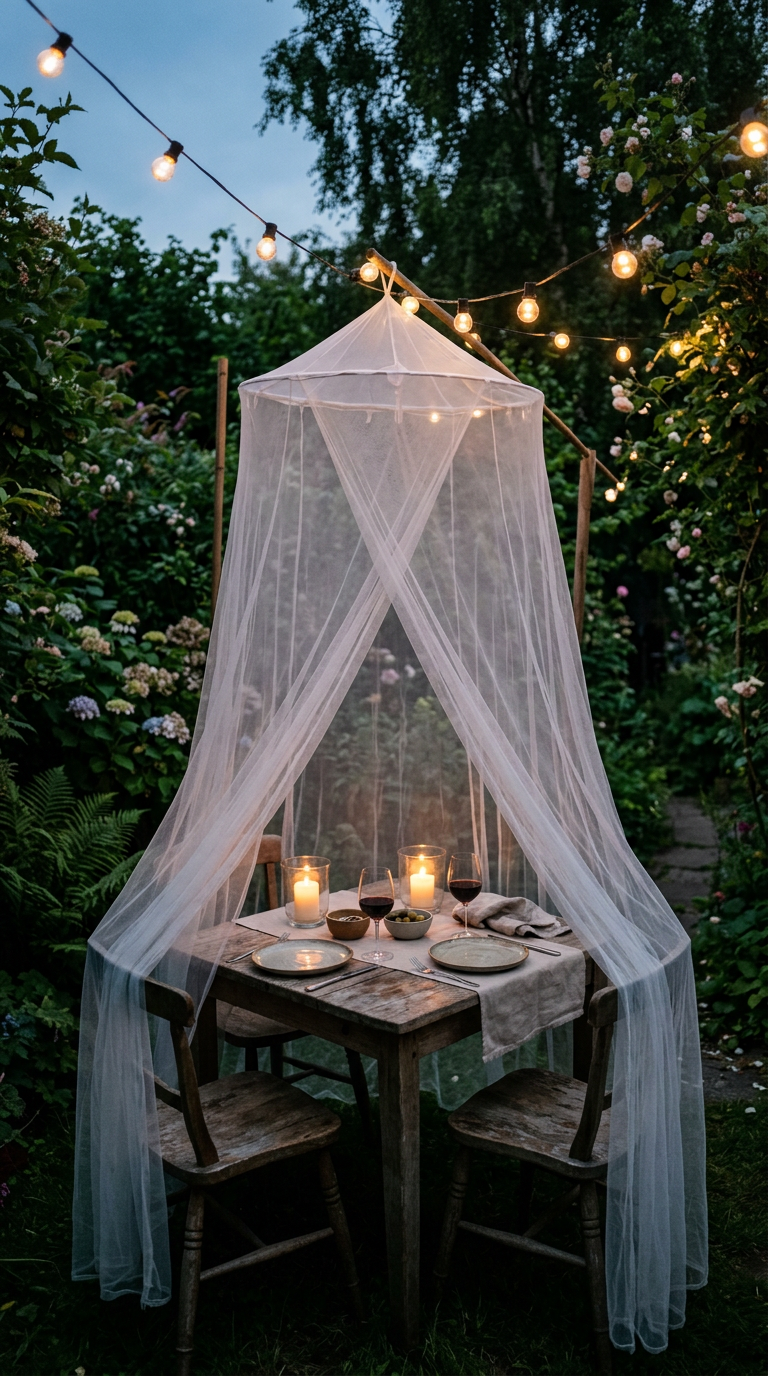
Screens or a mosquito net canopy sounds extreme but honestly for people who really love eating outside, it’s worth considering.
Mine looks like a gauzy little dining tent and people always ask about it.
Storage Is the Part Nobody Plans For
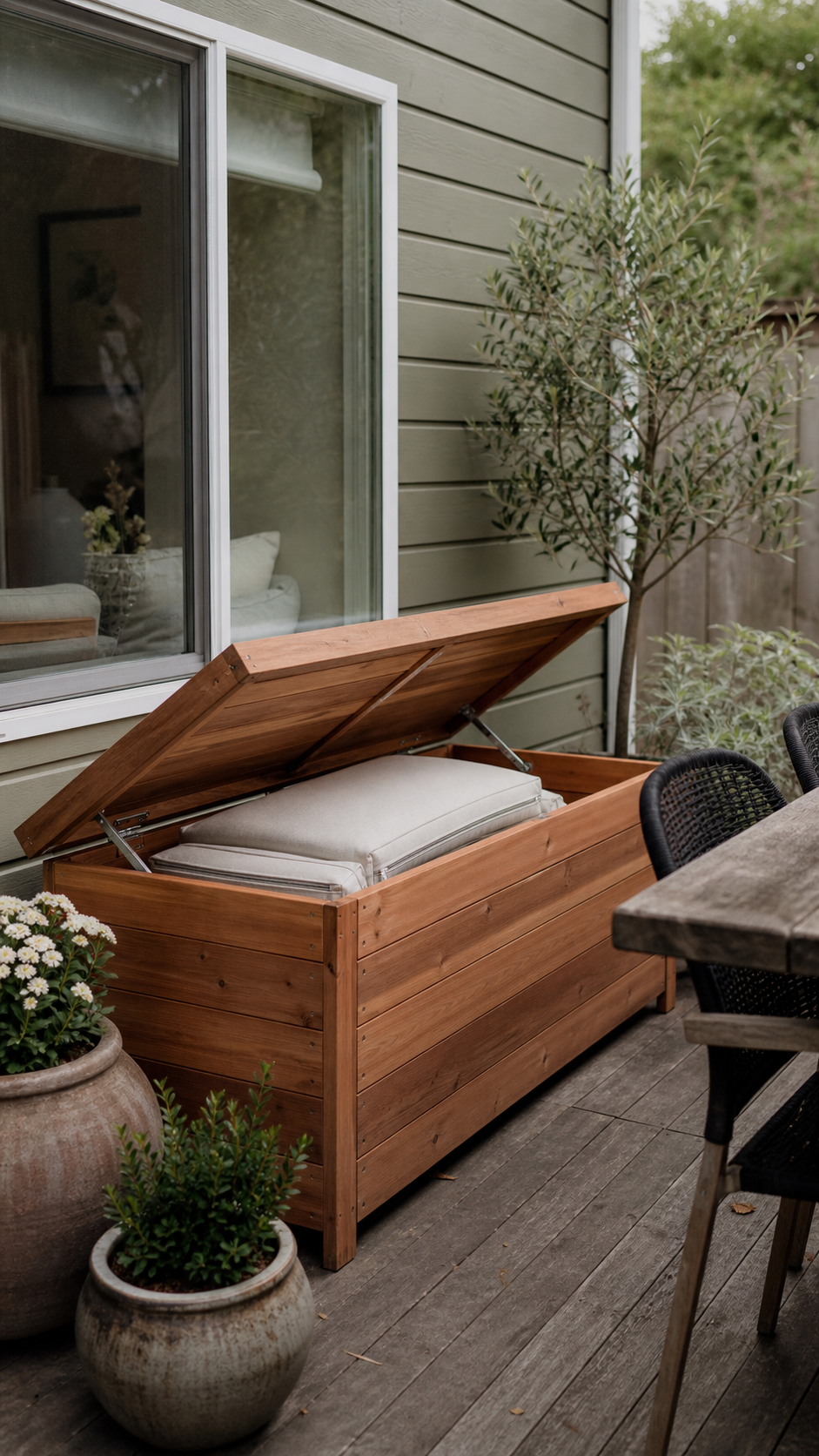
Where do you put the tablecloth when it rains?
The cushions?
The extra folding chair?
Before I figured this out, my back porch was a disaster and half my outdoor stuff got damaged just from being stacked against the wall.
That cedar storage bench I mentioned earlier: I cannot oversell it.
It lives right next to my dining space, holds cushions and the tablecloth and the outdoor rug I rotate seasonally, and looks nice.
Mine is from a mid-range garden center, cost around $160, and it’s been out there for two years with no issues.
A small outdoor cabinet or sideboard can double as serving space during dinner and storage the rest of the time.
I found a weathered teak cabinet at an estate sale for $45 and it’s genuinely one of my favorite things on the patio.
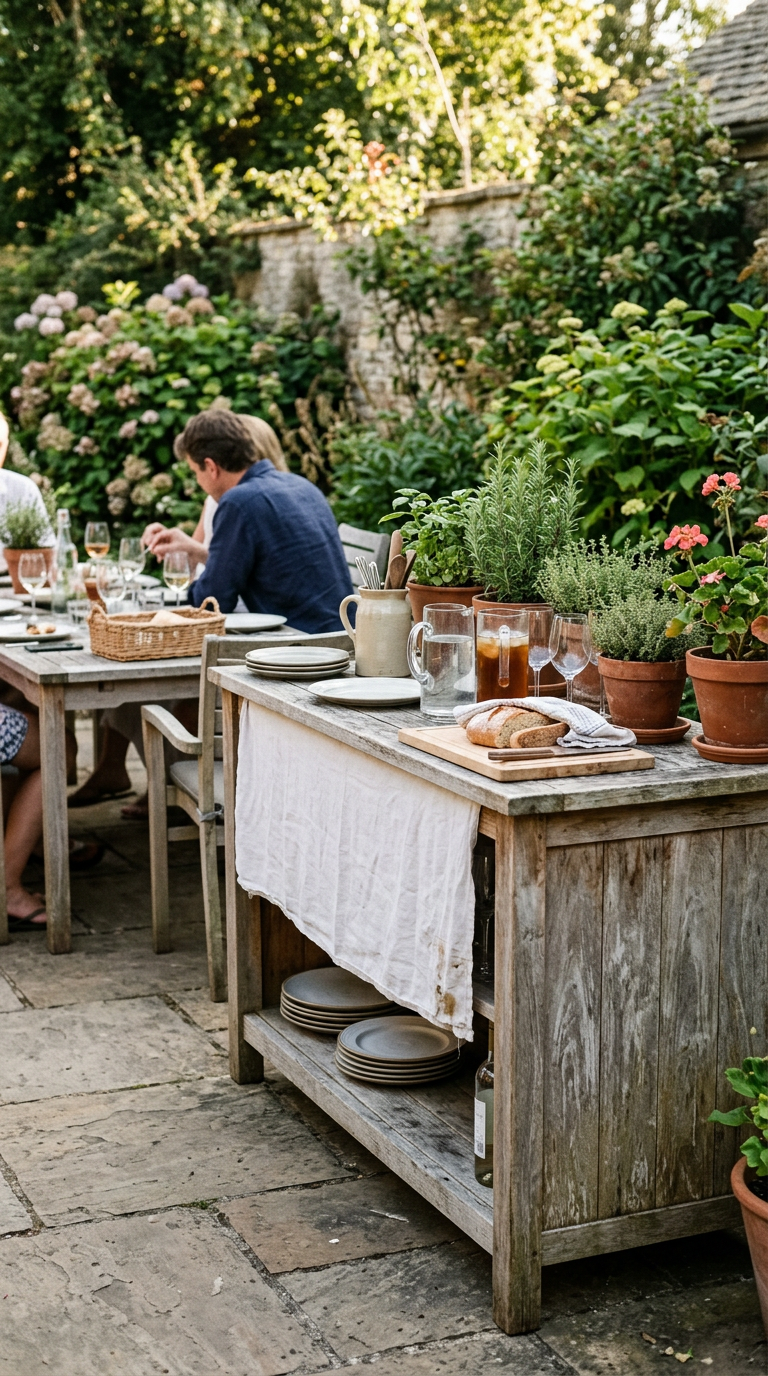
Plan the storage before you buy everything else.
It changes what you buy.
The Little Details That Make It Feel Like a Real Room
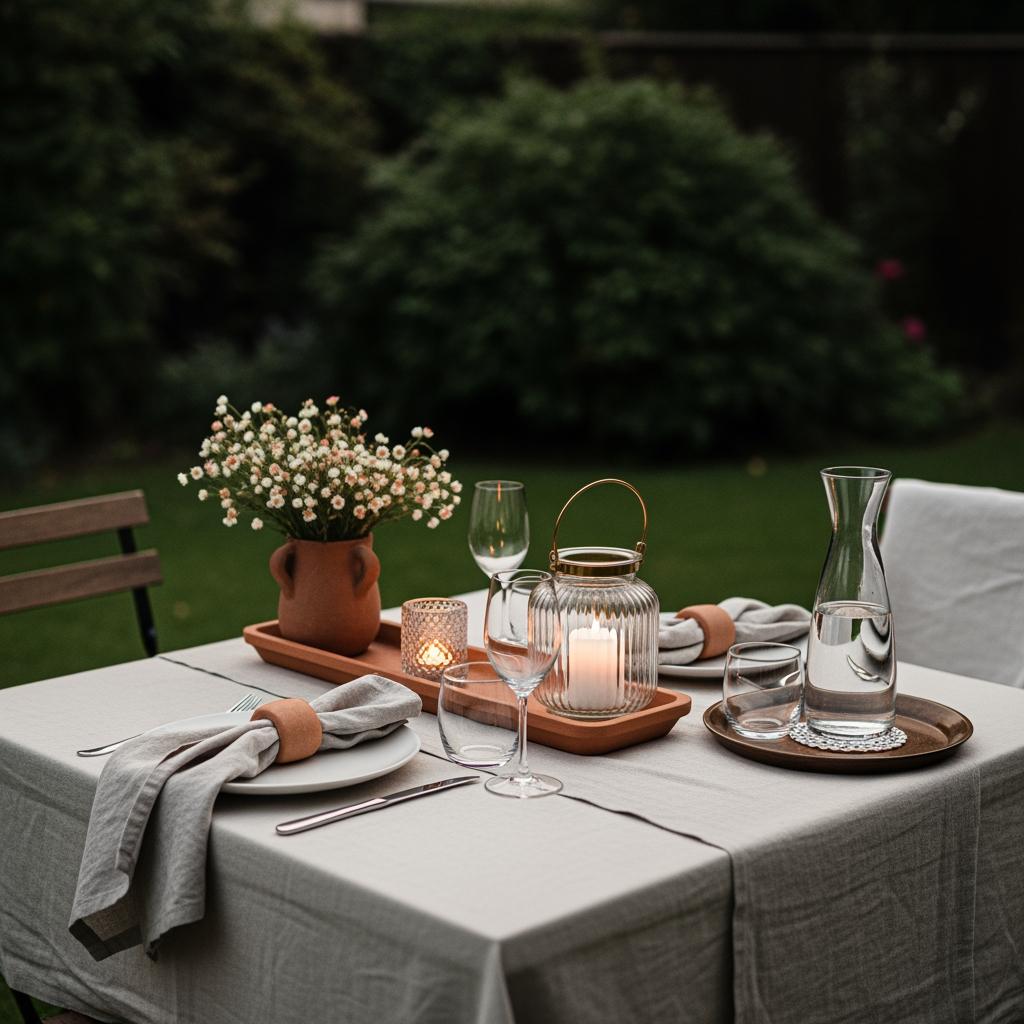
Once the bones are right, the details are where it goes from ‘outdoor furniture’ to ‘outdoor dining room.’ This is my favorite part.
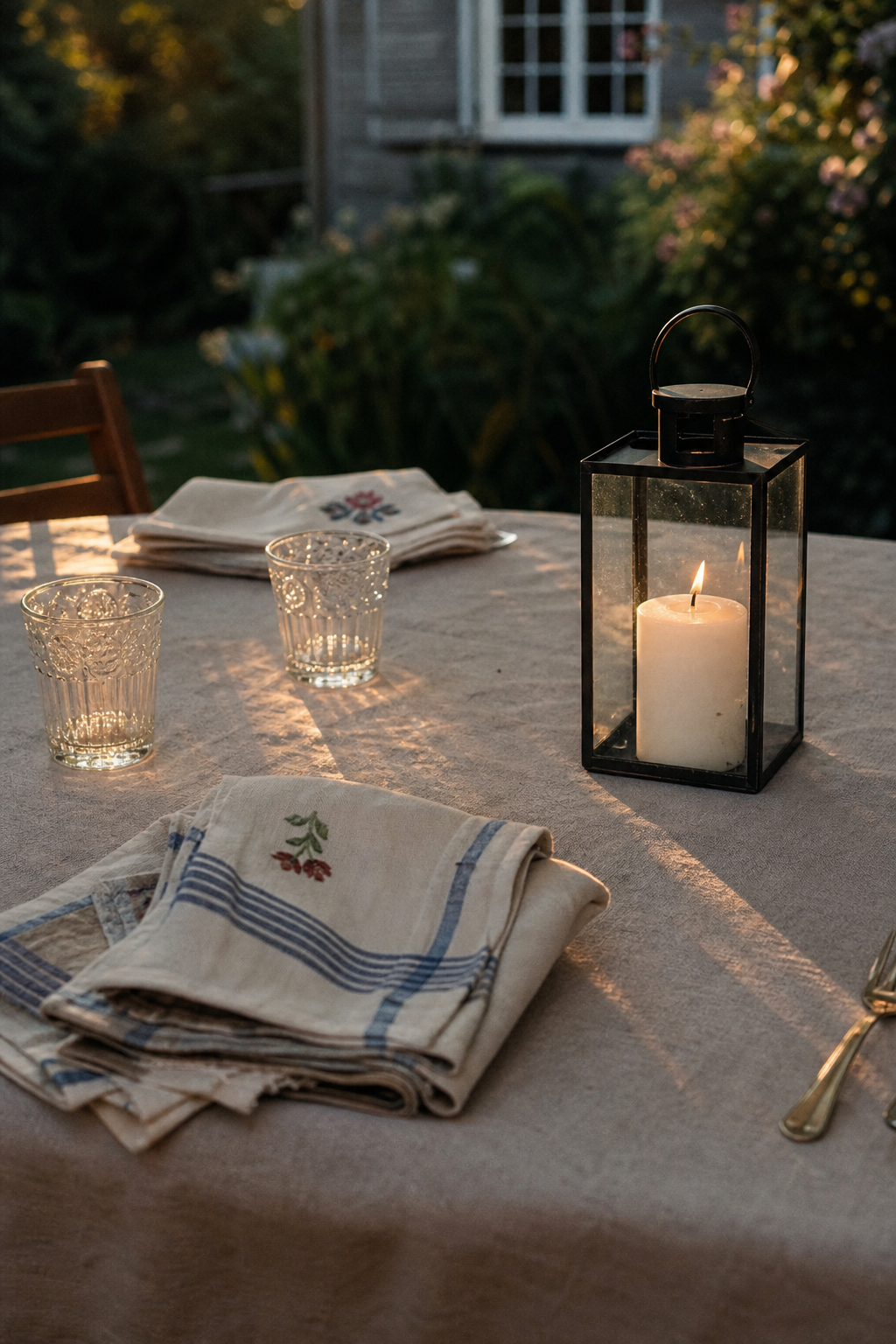
Cloth napkins instead of paper, even outside.
They’re washable, they don’t blow away as easily, and they feel nicer.
I have a stack of old linen napkins from the thrift store that I use exclusively for outdoor dinners.
A small drink station helps so much — even just a tray with a carafe of water, glasses, and a little container of lemon slices.
It means nobody has to run inside constantly.
Tablecloth, a low centerpiece, one candle or lantern, cloth napkins.
That’s all it takes.
Those four things make a humble backyard dinner feel like an actual event.
I’m sort of embarrassingly proud of my outdoor dining setup now.
It took a while to get there.
What I’d Actually Buy If I Were Starting Over
Okay, if someone handed me a fresh small backyard and a reasonable budget, here’s exactly where I’d put the money.
First, a small round aluminum dining table (round is better in tight spaces — no sharp corners catching everyone’s hips).
Then two to four stackable aluminum chairs so I can add seats when friends come without storing a ton of furniture.
A cantilever umbrella with a heavy base.
Done for the main structure.
Then: outdoor string lights on a timer, one outdoor rug in a flat-weave material, a storage bench, and three or four substantial planters.
That’s genuinely it.
Everything else is details you can add slowly.
I spent two years overcomplicating this before I realized the spaces I loved most were just well-proportioned, well-lit, and had somewhere to sit without wobbling.
That’s the whole secret.