
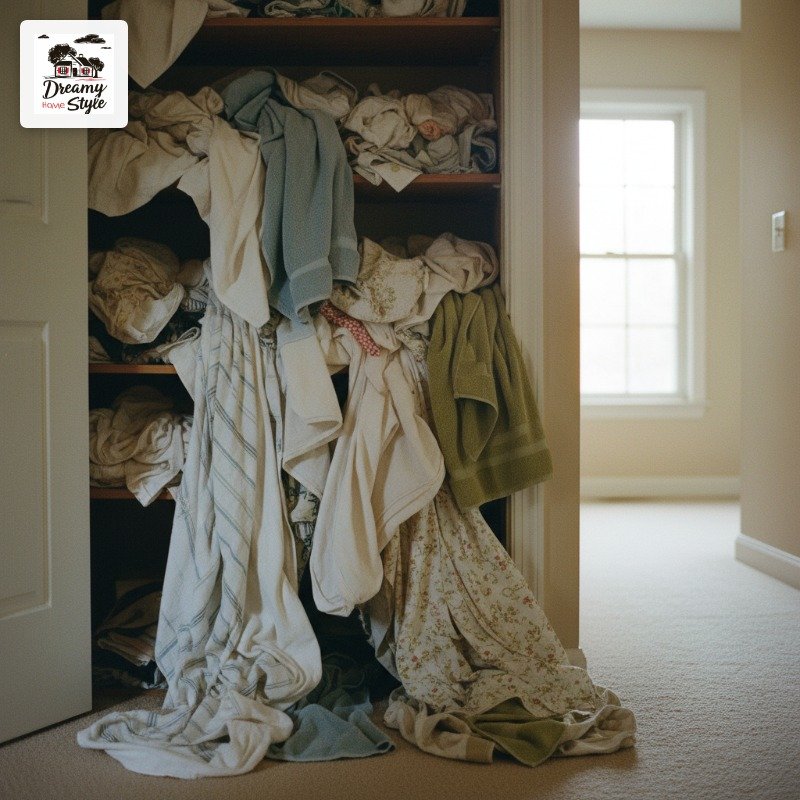

I used to just open the linen closet door, shove whatever I was holding inside as fast as possible, and slam it shut before anything fell out.
I’m not proud of it.
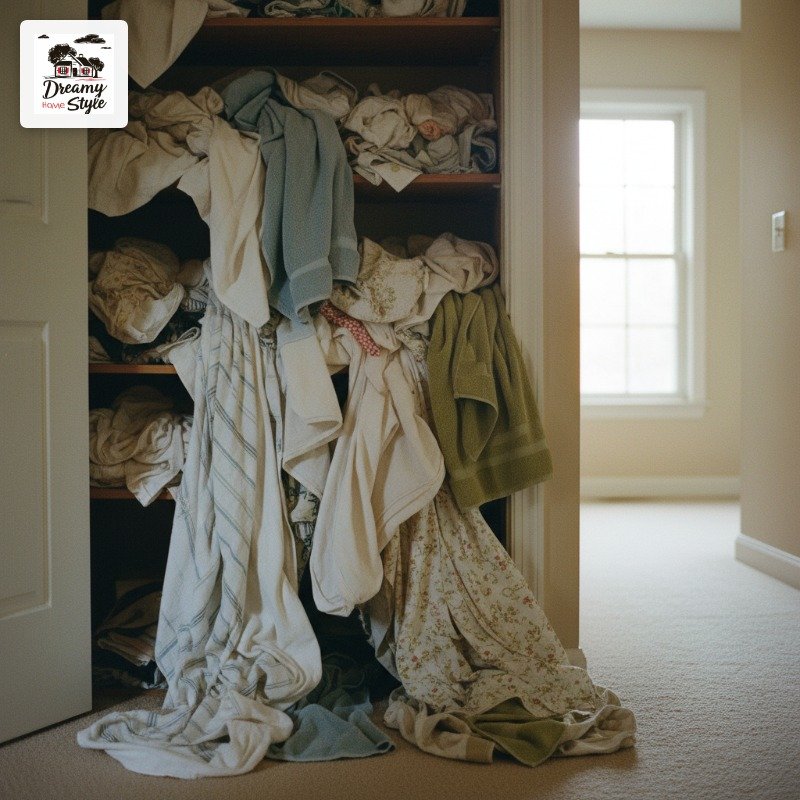
For like two years, that closet was basically a fabric avalanche waiting to happen — fitted sheets balled up into angry little lumps, random throw blankets from who knows when, and at least three sets of pillowcases I forgot I owned.
Biscuit knocked the whole thing open one afternoon chasing a smell and I stood there looking at the disaster and thought, okay.
We’re doing this today.
Why Your Linen Closet Gets Chaotic So Fast
The thing nobody tells you is that linen closets fail at the design level before you even buy a single basket.
The shelves are too deep.
Every time.
Standard linen closet shelves are around 16 inches deep, which sounds reasonable until you realize you can’t actually see what’s behind the first row of stuff.
So things pile up in layers and you forget what’s back there.
I found a set of guest towels I had genuinely mourned as lost.
And because the shelves are deep, we stack things vertically — which is the enemy of sheet organization.
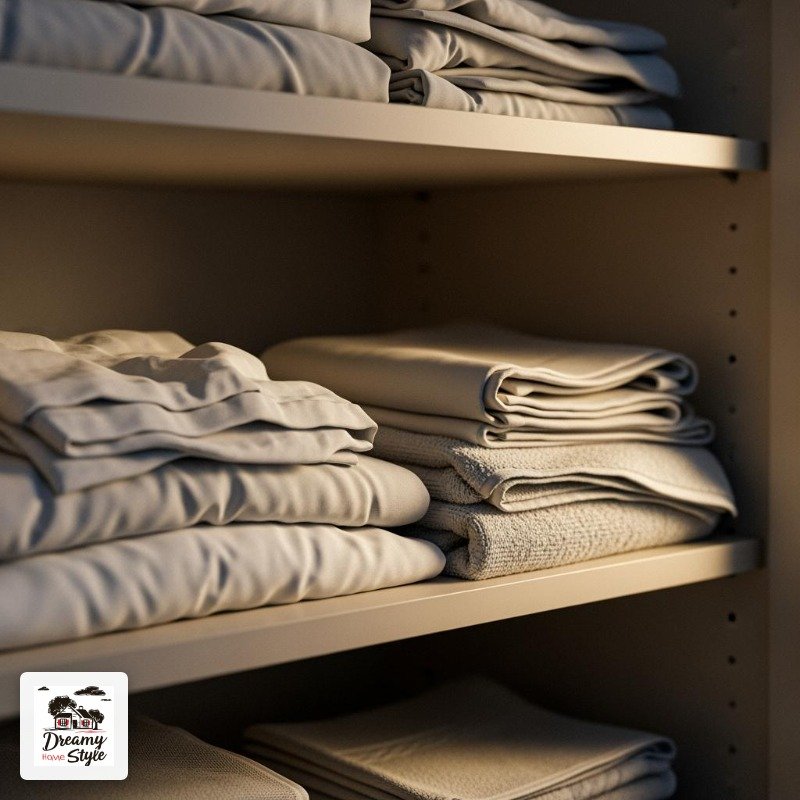
A folded fitted sheet stack collapses the second you pull from the bottom.
Then everything’s a mess again and you just start shoving.
It’s not a willpower problem.
It’s a system problem.
Once I figured that out, I stopped feeling bad about the chaos and started actually fixing it.
The First Thing to Do Is Pull Everything Out
I know.
It sounds terrible.
But you cannot organize around the mess — you have to see what you actually have.
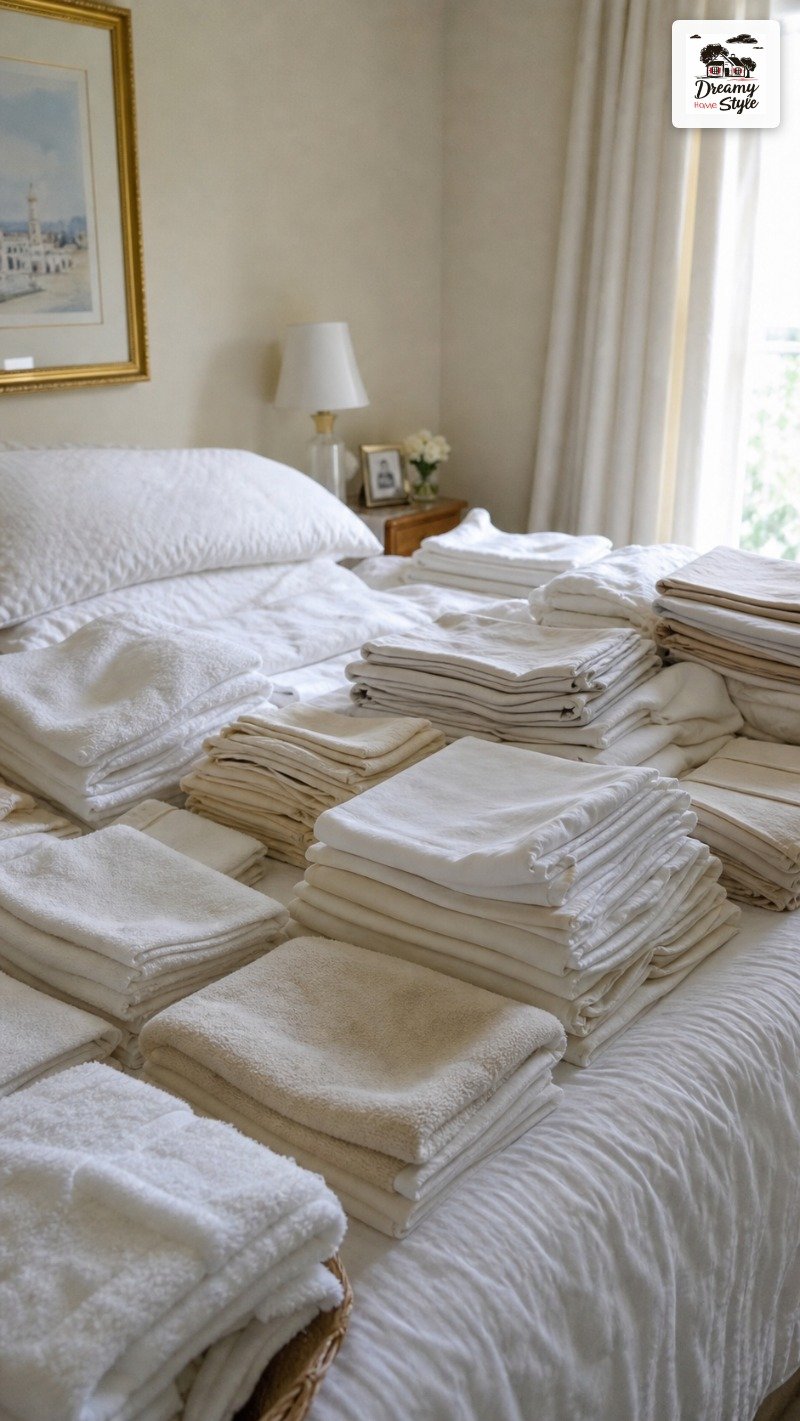
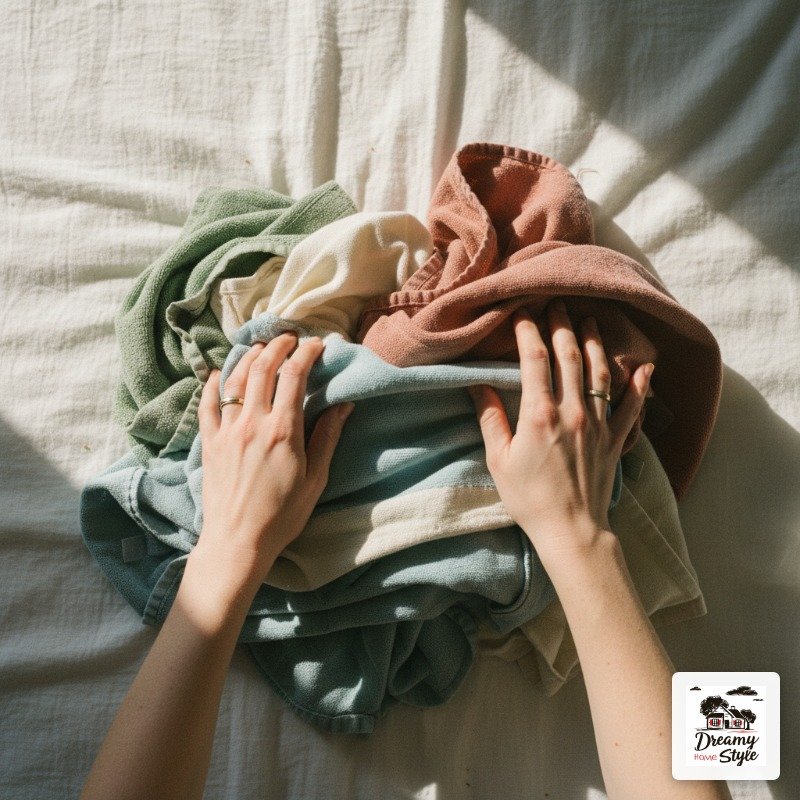
Lay it all on your bed.
Every sheet, every towel, every random tablecloth you bought for a dinner party in a past life.
I had 11 pillowcases and only two sets of pillows.
How does that even happen.
Once it’s all out, do a real cull.
Anything with a stain that’s been there longer than six months — gone.
Towels that are scratchy or thin — gone.
Sheet sets where one piece is missing — honestly, gone.
The goal isn’t to fill your closet back up.
It’s to only return the things you actually use.
Fewer things means the system you build actually stays intact.
The Pillowcase Trick That Changed Everything for Me
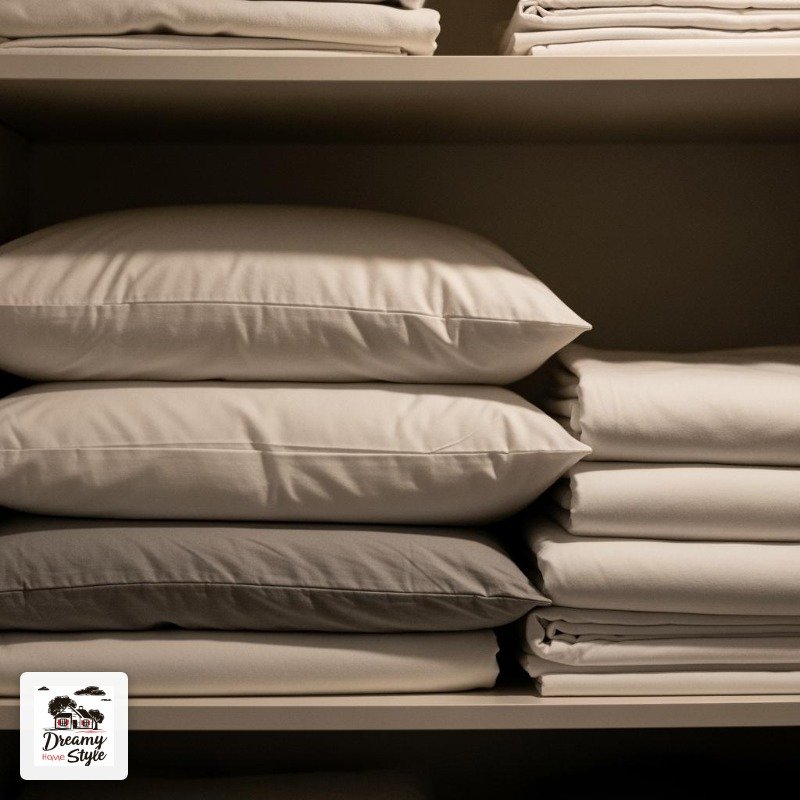
Store each sheet set inside one of its own pillowcases.
I cannot believe this wasn’t something someone put on a poster and handed me at birth.
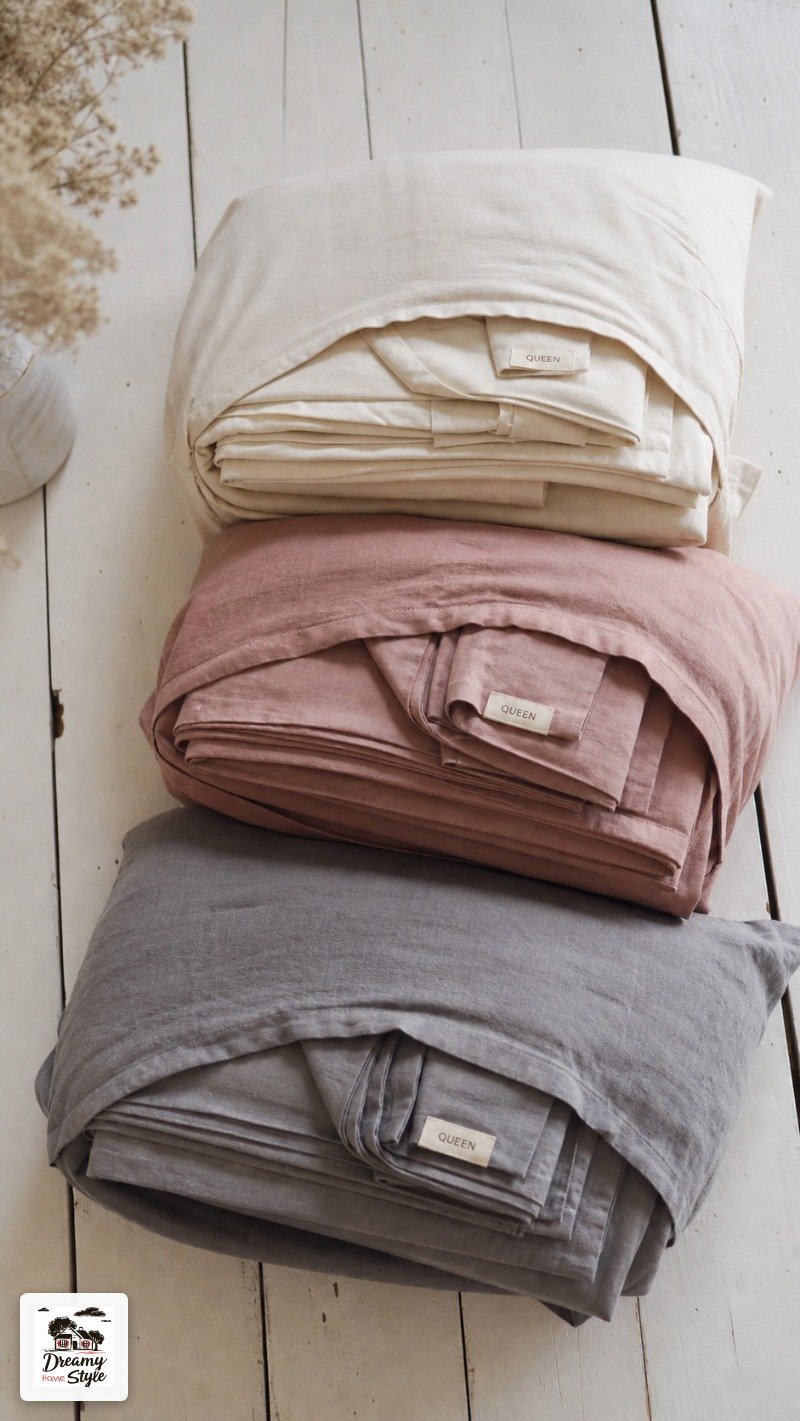
You fold the fitted sheet, the flat sheet, and the second pillowcase, tuck them into the remaining pillowcase, and then you have this neat little packet.
One thing.
Grab one thing and your whole bed is ready.
The first time I tried this I was convinced the fitted sheet bundle was too lumpy to fit.
It’s not.
It takes about thirty seconds once you get the hang of it.
Everything is contained.
Nothing slides around.
No more finding one flat sheet from a queen set and one pillowcase from a twin set tangled together like they’re in a relationship.
Shelf Depth Is the Enemy — Here’s How to Fight It
You don’t need to renovate.
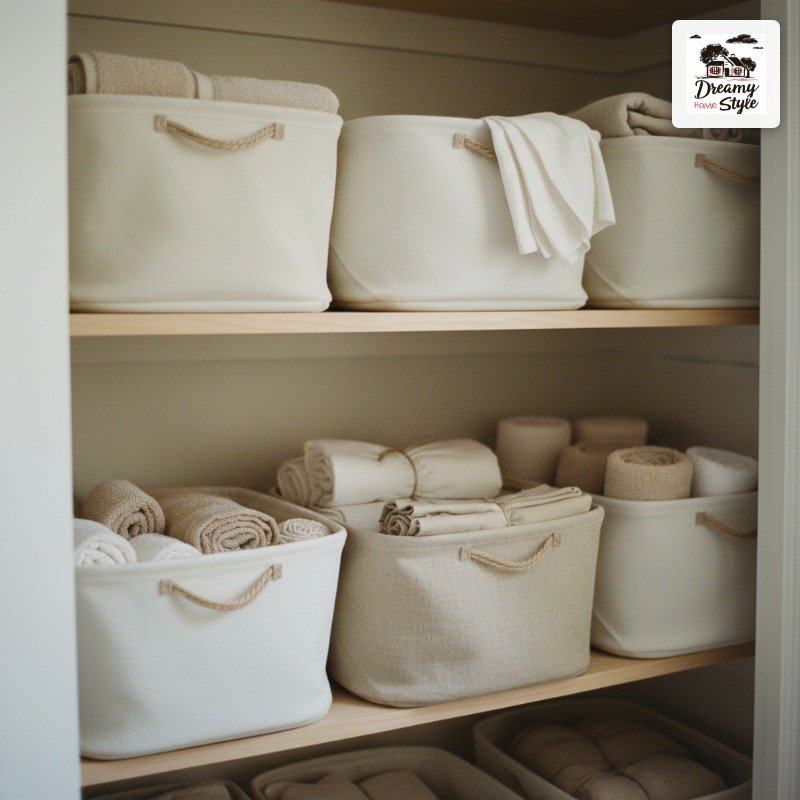
You just need to add shallow bins that sit at the front of the shelf and force you to use only the first half of the depth.
I got these low rectangular bins from the Container Store — the kind that are maybe five inches tall and open on top.
Put them toward the front edge of each shelf.
Now you’re only stacking things one or two deep, and you can actually see what’s there.
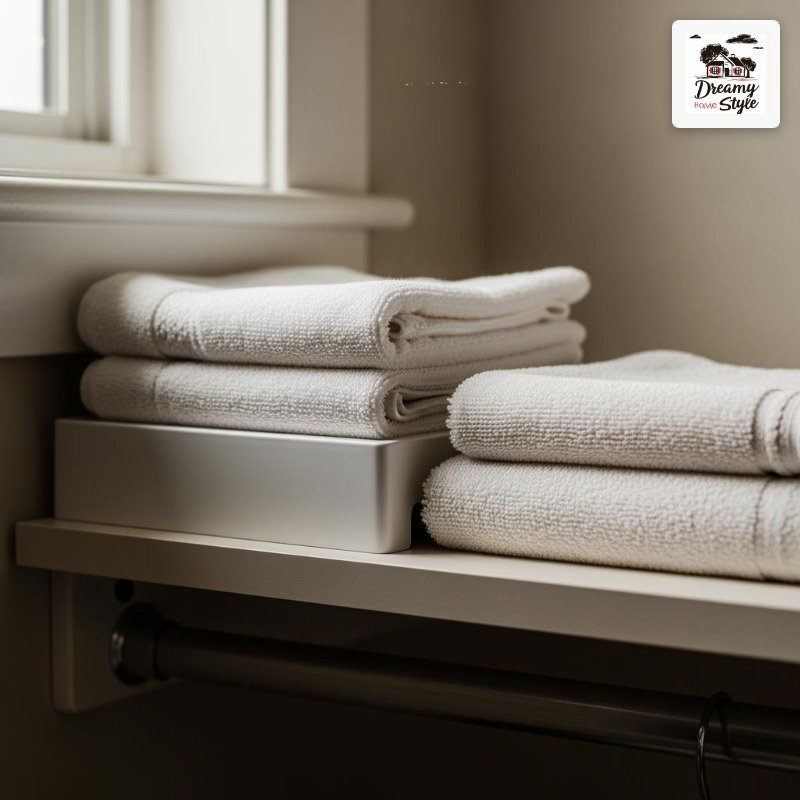
Alternatively: shelf risers.
Add a small riser at the back of a shelf to create a visual second tier so nothing gets buried.
I tried turntables (lazy Susans) in there once after seeing them all over Pinterest.
Didn’t work for me — too awkward for stiff folded fabric.
But I know some people swear by them for smaller items like washcloths and hand towels.
Rolling Towels Instead of Stacking Them
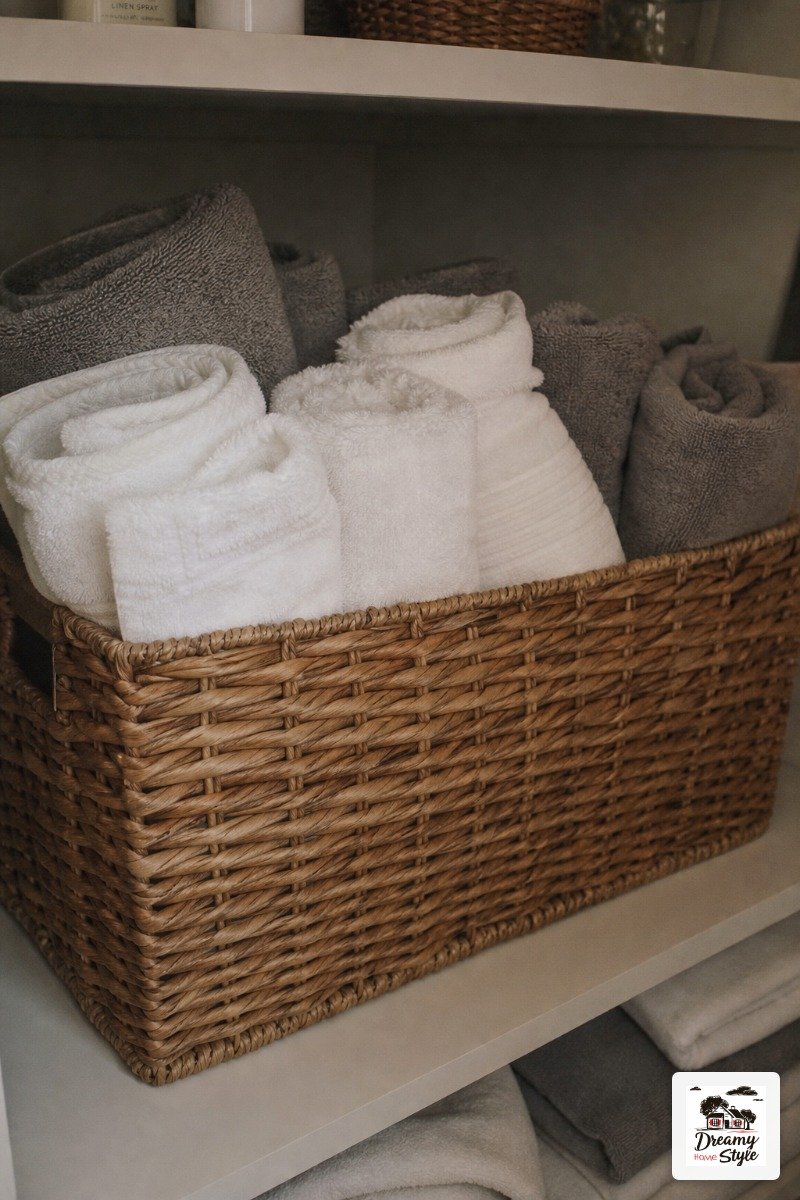
Hotel roll.
Tight, even, satisfying.
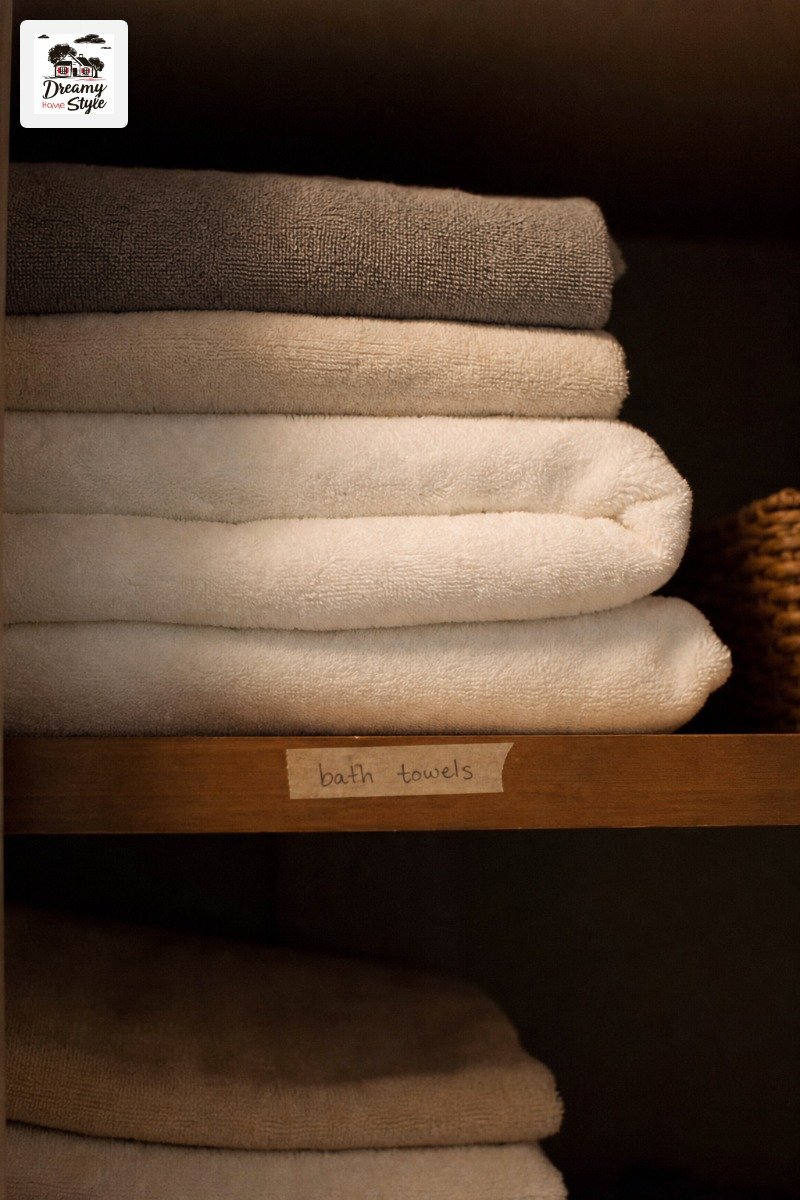
Rolled towels take up less horizontal space and they don’t topple.
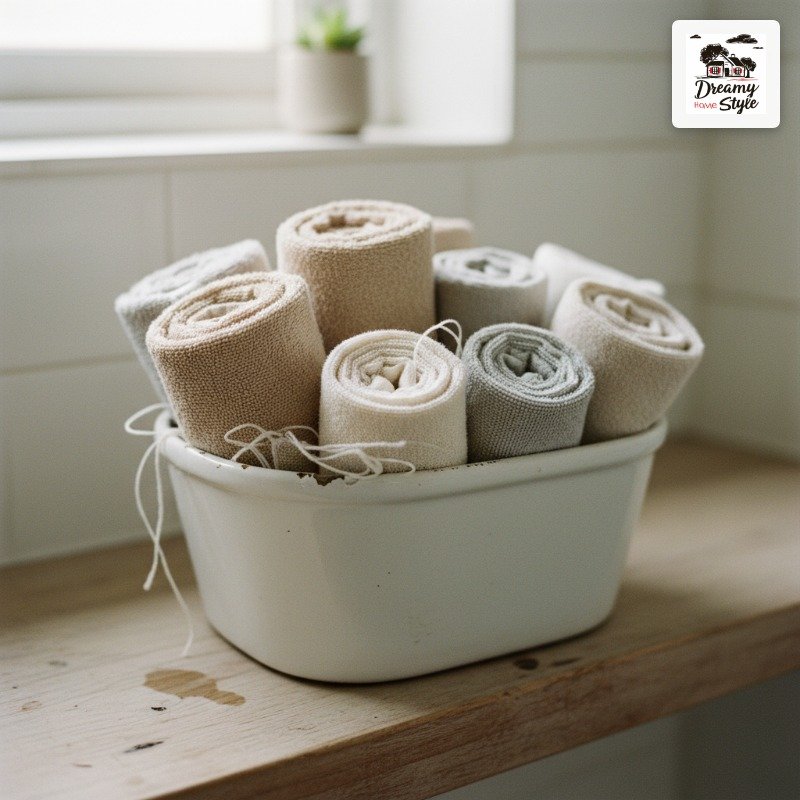
I stack mine vertically in a big open basket on the bottom shelf.
You can see every towel at a glance, grab one from the top, and the rest stay put.
Biscuit has knocked that basket zero times, which is frankly a miracle.
Spa roll your hand towels and washcloths separately into a smaller bin.
There’s something genuinely calming about opening a closet and seeing that.
The one caveat: really thick towels don’t always roll well.
They get lumpy in the middle.
If yours are fluffy, a loose fold and stack is fine — just don’t stack more than four high or you’ll be back to the avalanche situation.
Assigning Every Shelf a Job
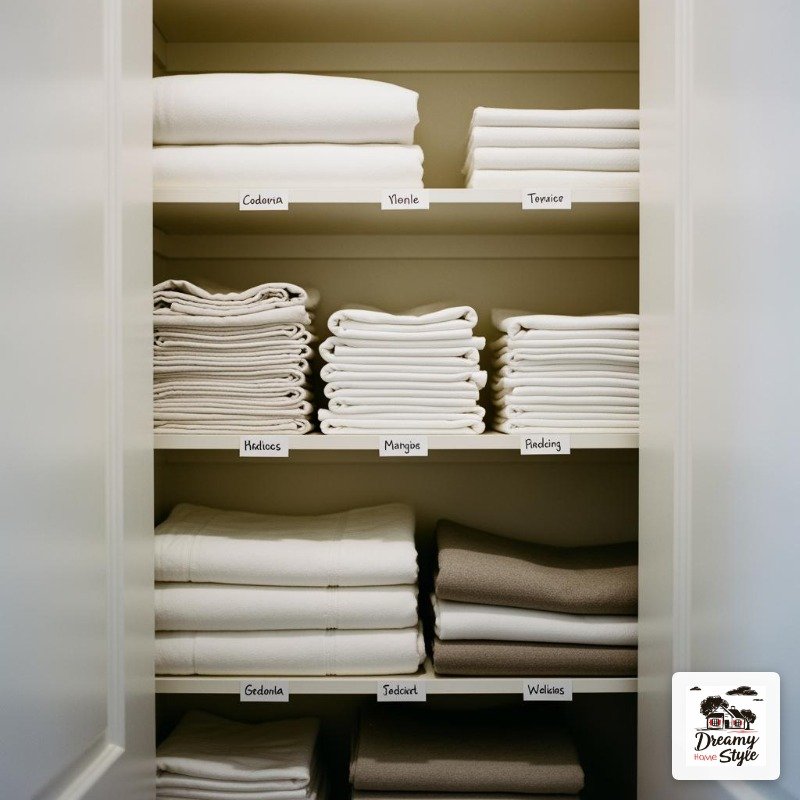
This is the part people skip and then wonder why the system collapses in three weeks.
Each shelf needs one category and one category only.
Bed linens on one shelf.
Bath towels on another.
Hand towels and washcloths together.
Extra blankets on the top shelf where they’re out of the way because honestly how often do you need the spare duvet.
I put a tiny label on each shelf edge — just masking tape and a Sharpie, nothing fancy.
Looks a little kindergarten-classroom but I genuinely don’t care because it works.
When every shelf has a job, things go back where they belong without you having to think about it.
The system maintains itself instead of you maintaining the system.
Baskets and Bins — What Actually Works
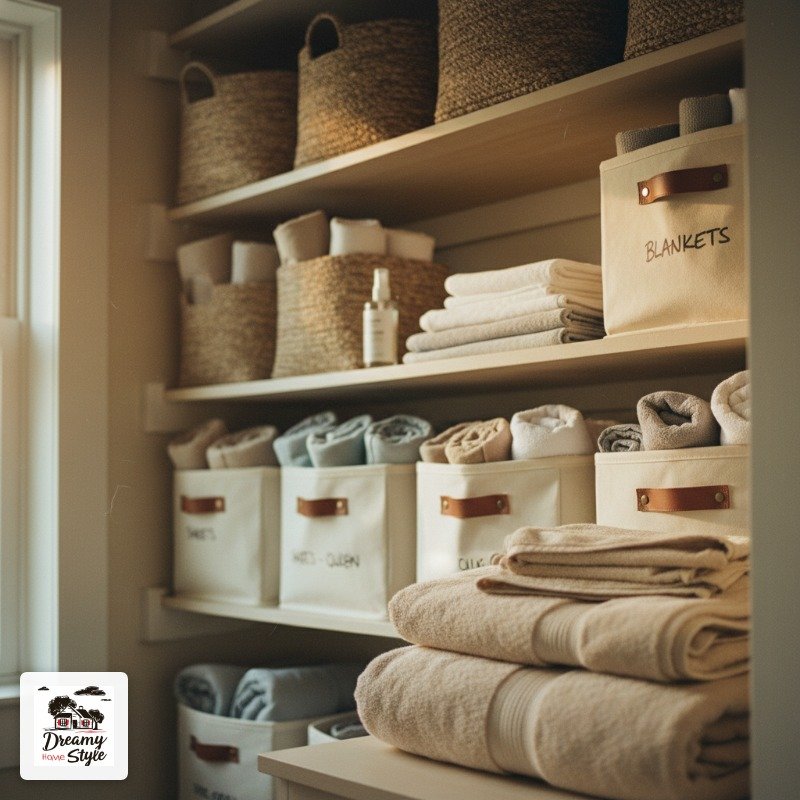
Okay so I’ve bought a lot of baskets.
A lot.
I have opinions.
Wire bins look great in photos but the mesh snags fabric.
Learned that with a set of microfiber pillowcases that came out looking like they’d been through something.
Not worth it.
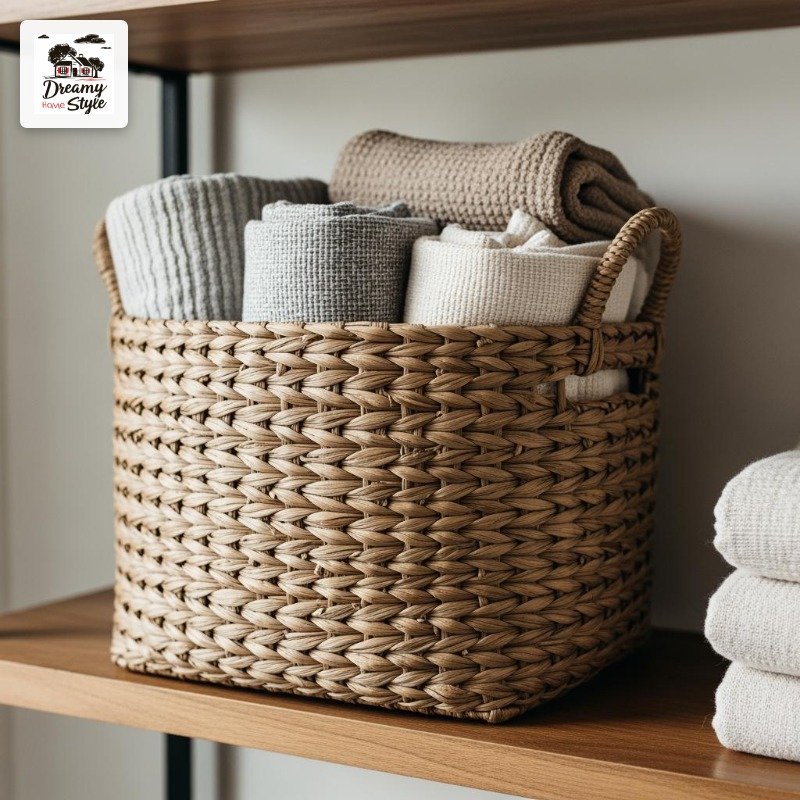
Seagrass and woven baskets are my personal favorites for anything bulky — extra throw blankets, backup pillows, the good-guest towels I pretend I’m saving for company but really just like owning.
They’re sturdy and they look warm and real.
For small items like washcloths and little bars of soap, a simple white canvas bin from IKEA (the SKUBB ones, specifically) is honestly perfect.
Easy to pull out, easy to toss things in, under five dollars.
Don’t Forget the Door
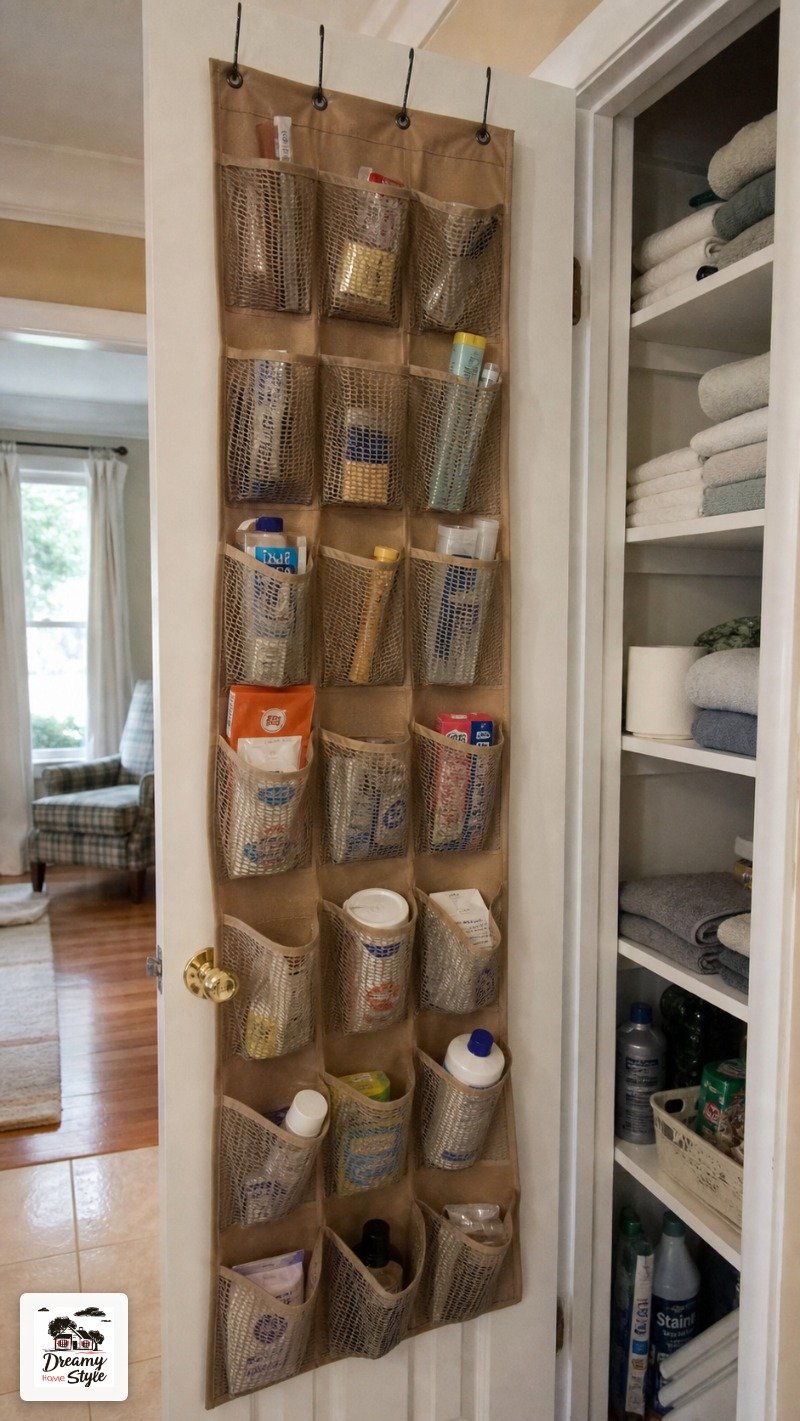
The back of the door is basically free real estate and most of us just ignore it.
An over-the-door organizer with pockets is great for things that get lost — travel-size toiletries, extra soap, a lint roller (Biscuit tax), medicine cabinet overflow.
I put all the random single-packet laundry sheets and dryer balls in mine.
If your closet door opens outward, a mounted hook strip works better than a pocket organizer.
I have four small hooks for my reusable grocery totes that I was previously storing on the floor like some kind of feral person.
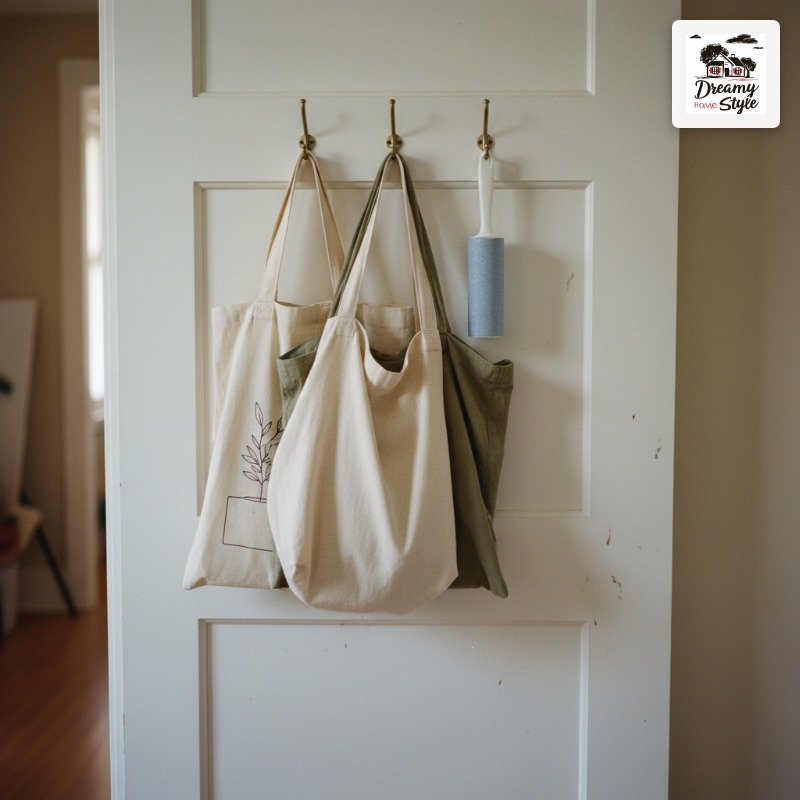
Just make sure whatever you mount doesn’t swing open and bang the door frame.
Ask me how I know.
Scent Is Part of the System
Linens absorb everything.
Every smell in that closet is the smell your sheets will have.
This matters more than people think.
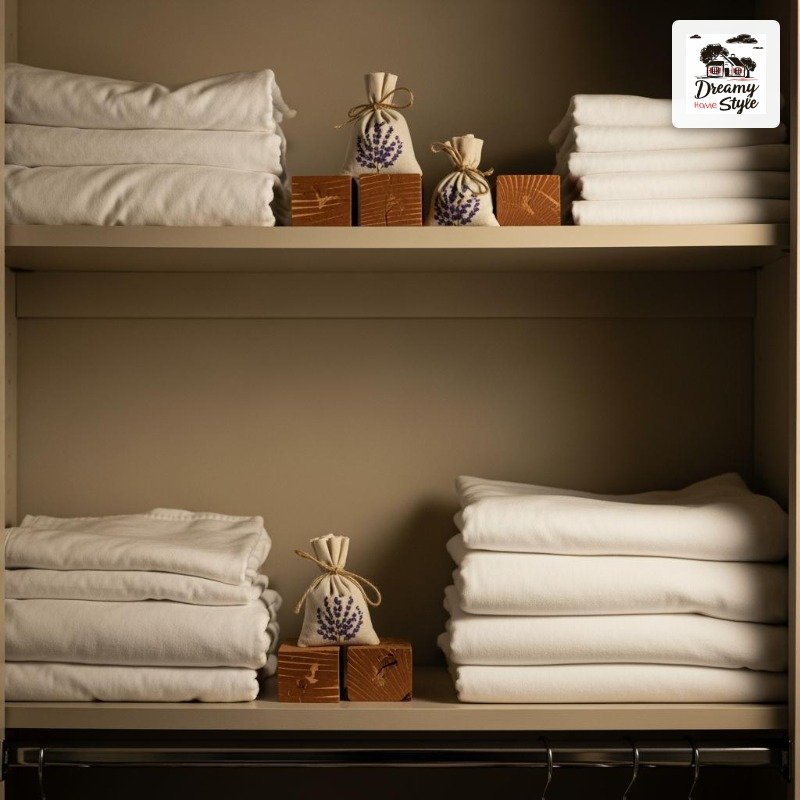
I tuck a few cedar blocks in between sheet stacks — keeps moths away and smells sort of clean and woody.
Not overwhelming, just background-nice.
You can get a bag of them for like seven dollars.
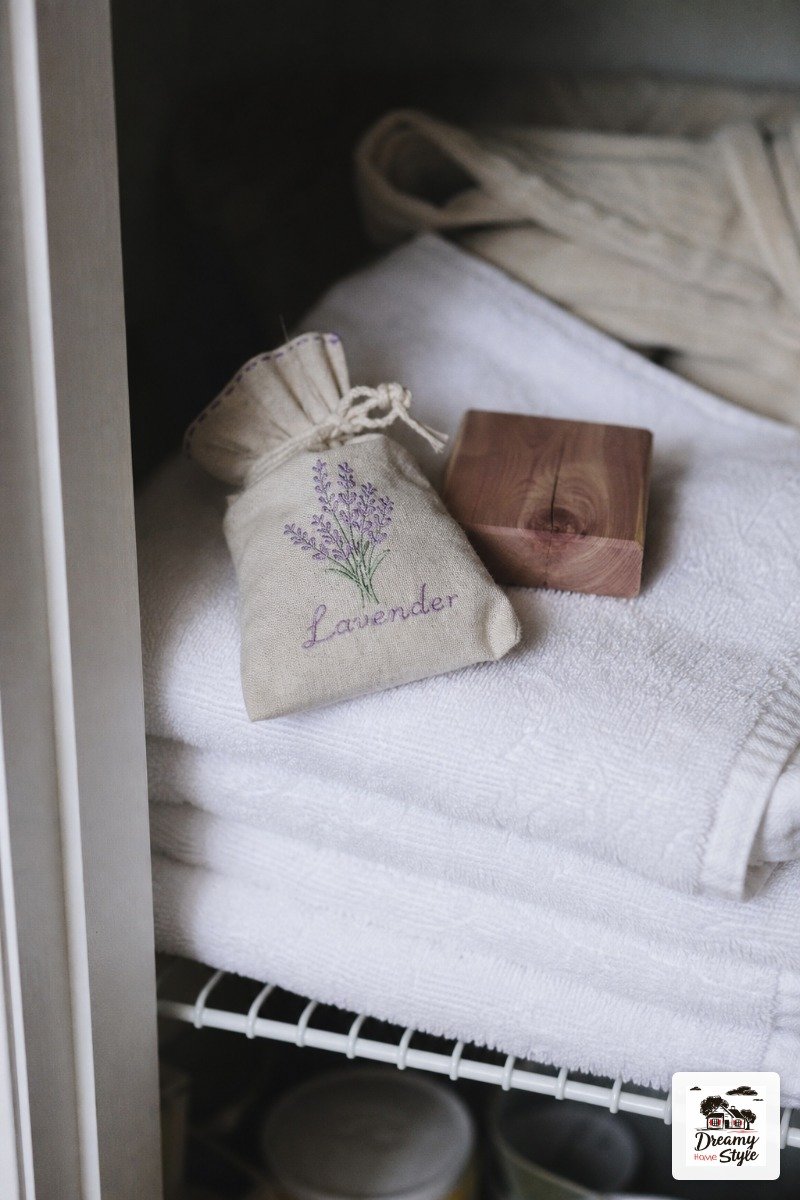
Some people use lavender sachets.
I love the idea but found the smell too strong after a while, personally.
If you love lavender, go for it.
What you want to avoid is mildew smell from sheets that weren’t fully dry before folding.
That’s a different problem but store your linens at the top of your closet where air circulates better if you’re in a humid house.
The One Thing I’d Tell You to Buy First
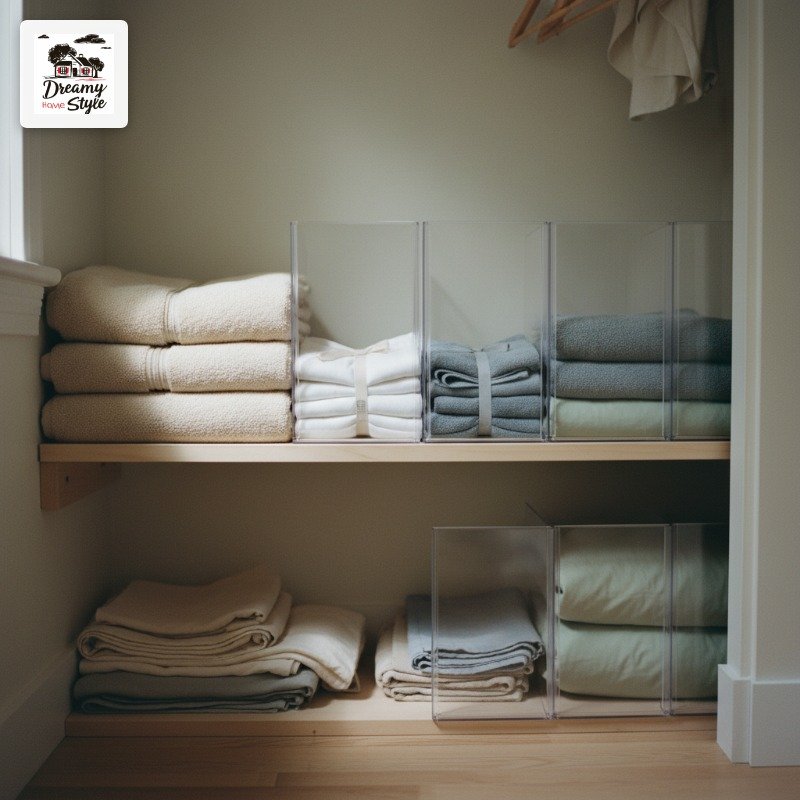
If you can only do one thing, buy shelf dividers.
Not baskets, not fancy labels, not a label maker.
Shelf dividers.
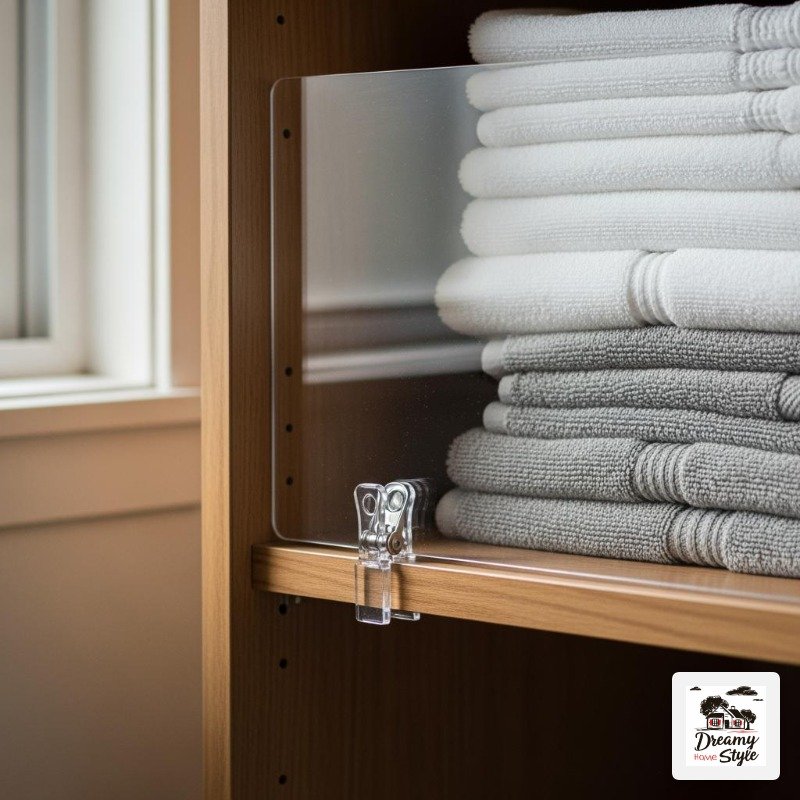
The kind that clip onto a wood shelf and create a vertical wall so your neat stack of towels can’t lean over into chaos.
Mine are just basic acrylic from Amazon, cost me about eighteen dollars for a pack of six.
Stacks stop collapsing.
Things stay in their zones.
It’s such a small fix for how much it does.
I put off buying them for over a year thinking they were unnecessary.
That was a mistake I replayed every time I opened the closet and watched a pile of washcloths slowly tip over like a tiny slow-motion tragedy.
What to Do With the Stuff That Doesn’t Fit Any Category
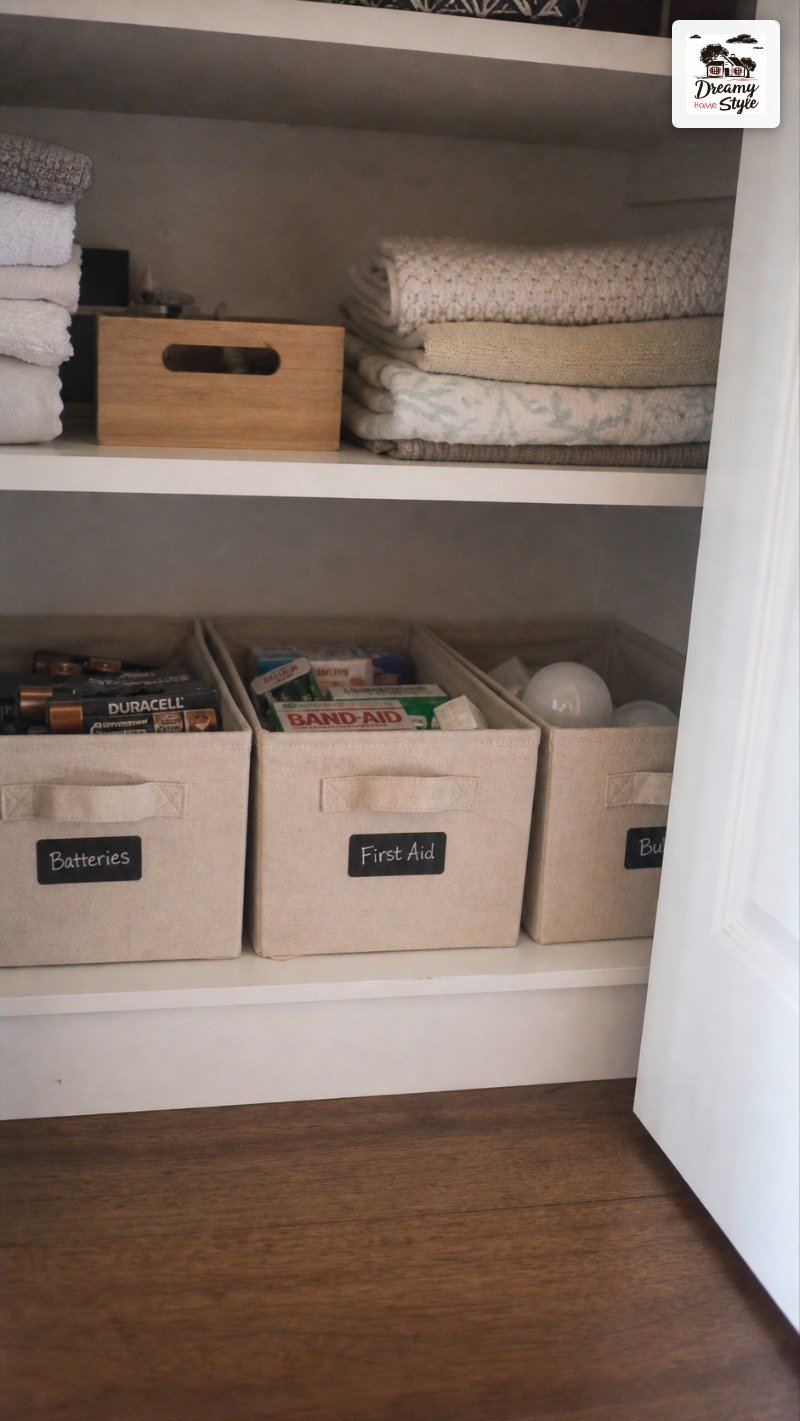
Every linen closet has a weird pile of stuff that isn’t really linens.
First aid kit.
Lightbulbs.
That battery caddy you set up three years ago.
Extra hooks you haven’t mounted yet.
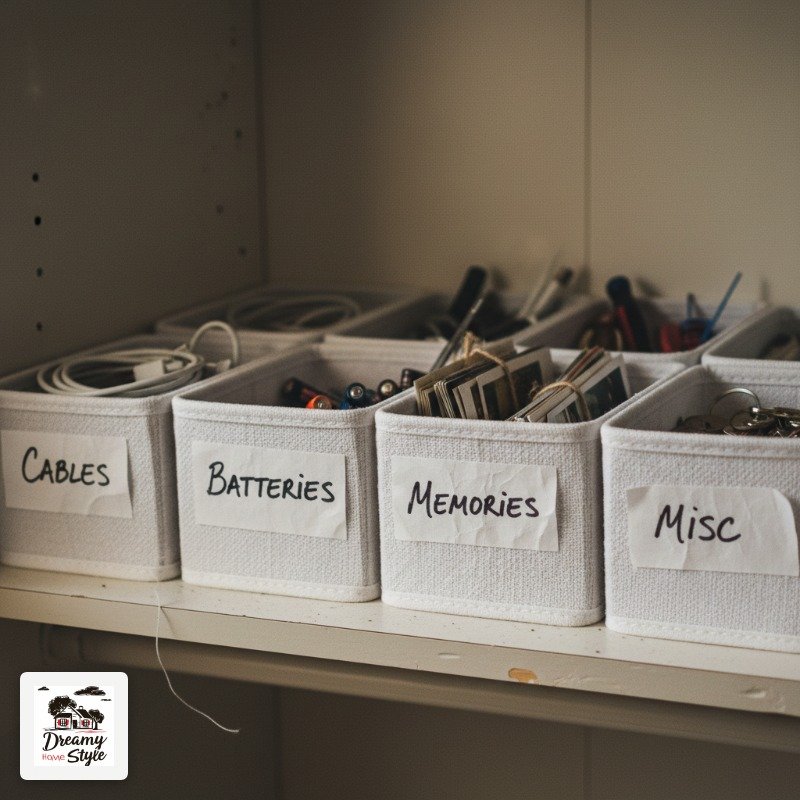
I used to shove all of that into one basket labeled ‘misc’ which is basically a label for ‘I gave up on this.’ Not useful.
Give the miscellaneous stuff its own small zone — ideally the bottom shelf if it’s heavy, or the top if it’s rarely used.
Keep each category in its own small bin with a real label.
Batteries.
Medicine.
Hardware.
Three separate things, three separate containers.
It’s not glamorous but it means you can actually find a bandage when you need one without unpacking half the closet.
Keeping It This Way — the Maintenance Reality
I want to be real with you: it will get messy again.
Life happens.
Laundry day is rushed.
Biscuit is underfoot.
It’s fine.
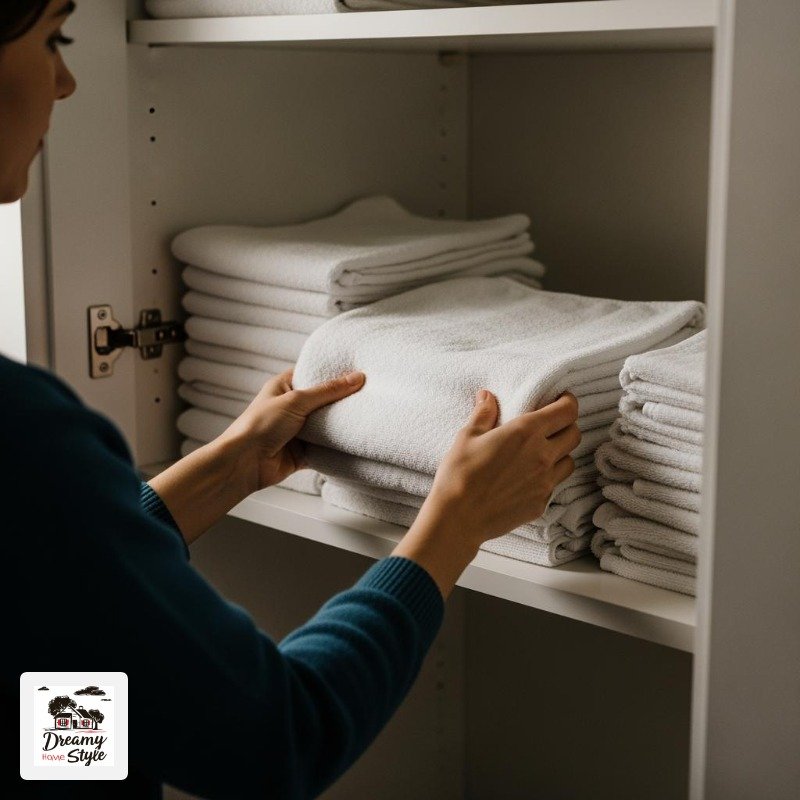
The goal isn’t a closet that stays perfect — it’s a closet where the reset takes five minutes instead of an hour.
If the system is simple enough, you’ll actually maintain it.
I do a quick ten-minute closet reset every time I do a full laundry cycle.
Put things back in their spots, refold anything that’s gotten sloppy, check if anything’s running low.
That’s it.
And honestly — don’t over-engineer it at the start.
A system that’s 70% perfect and actually functions beats a perfect system you abandon after two weeks.
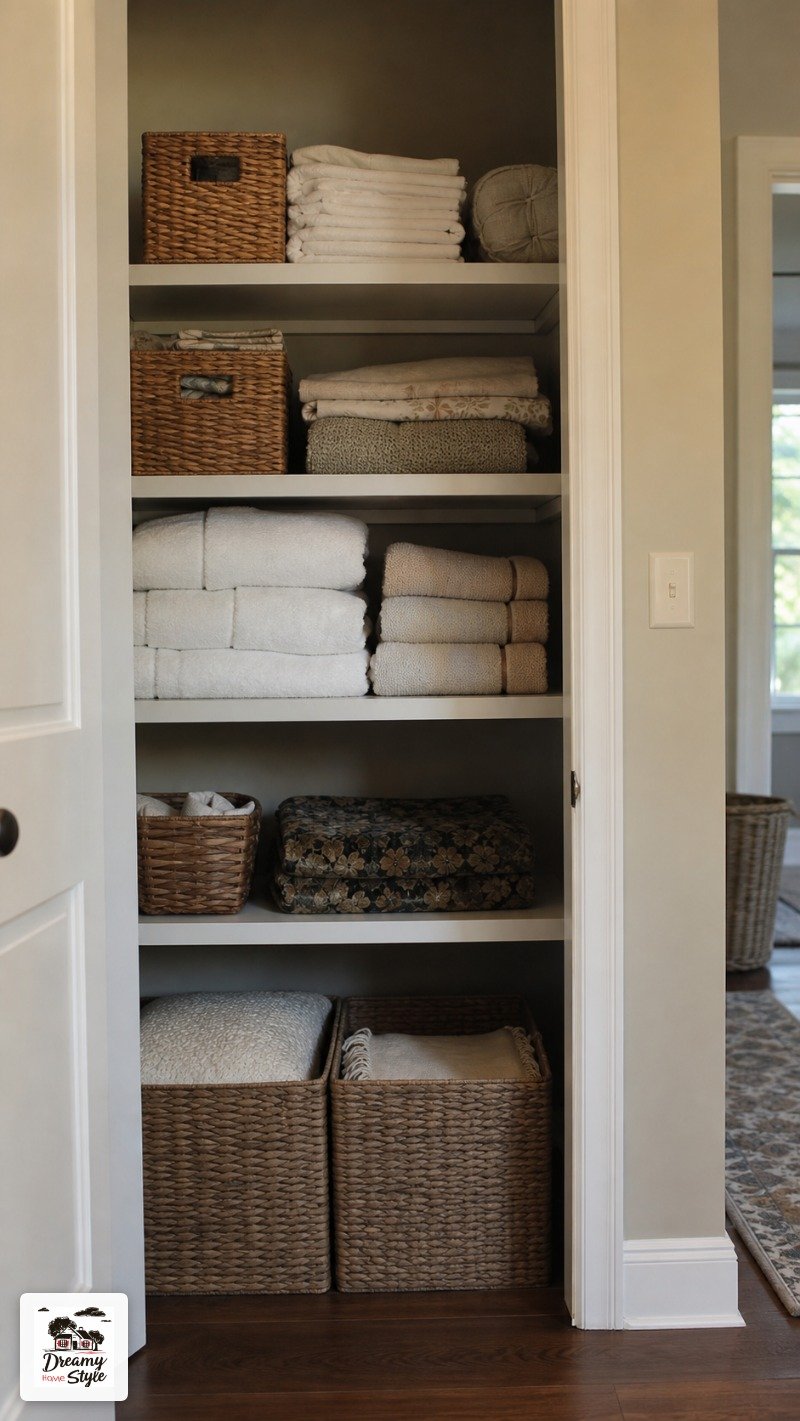
The Closet I Have Now vs. The Closet I Had Before
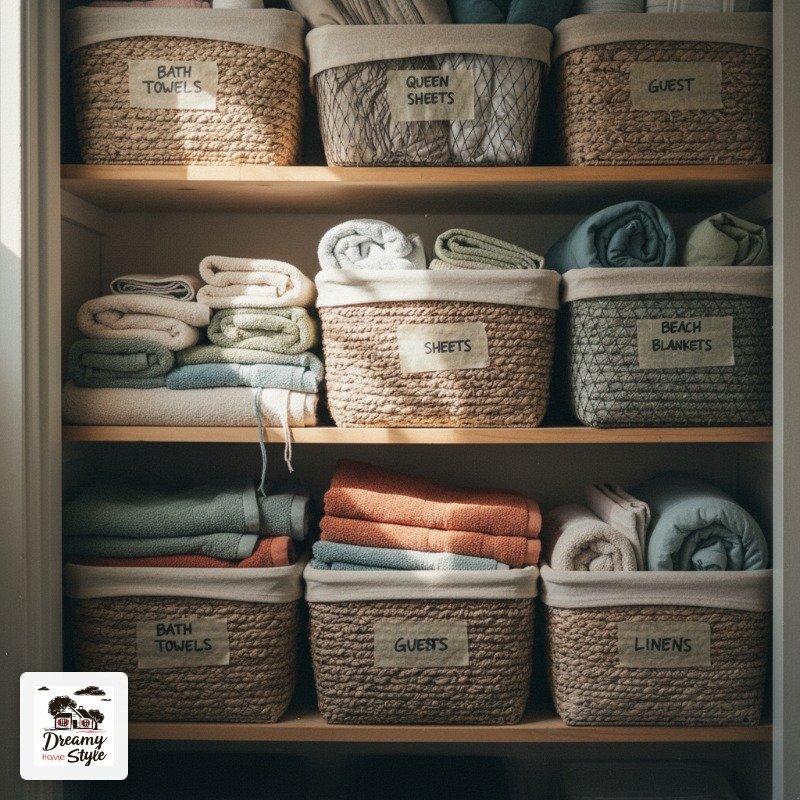
I’m not going to pretend my linen closet looks like an Instagram grid.
It doesn’t.
My baskets don’t all match.
My shelf labels are still masking tape.
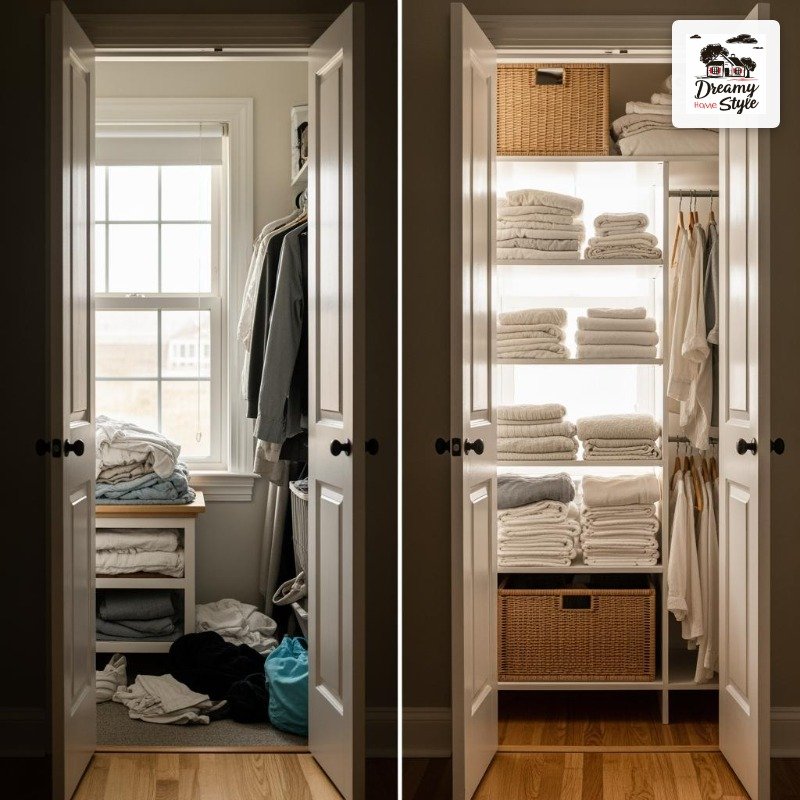
But I can open that door without flinching.
I can find a fitted sheet in under thirty seconds.
I know where the extra toilet paper is.
I know where the guest towels are.
Biscuit knocked the door open last month and nothing fell out.
That’s the whole point.
Not a photoshoot.
A closet that functions like it’s supposed to so you don’t have to think about it.
Start with the pillowcase trick and the shelf dividers.
Seriously.
Give yourself one afternoon, one bag of donations, and a cup of coffee.
You’ll feel so much better when it’s done.
Related read: The IKEA Kallax Bible — Instant PDF + Kindle download. Secure checkout by Stripe