
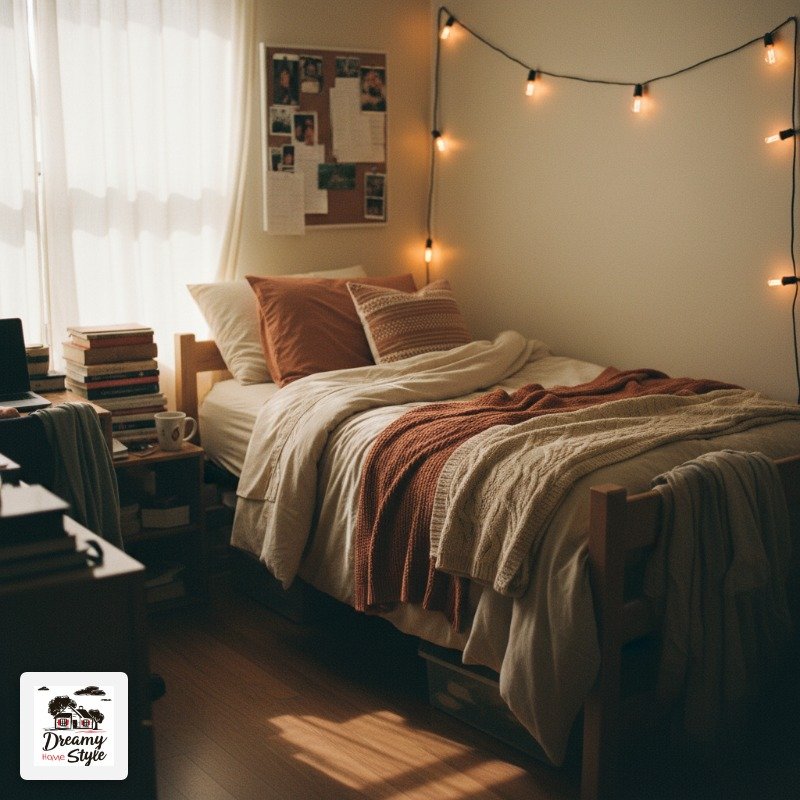

My college roommate freshman year had the most stunning bed I’d ever seen in a ten-by-twelve cinderblock room, and I spent the whole semester convinced she had some secret interior design background.
Turns out she just knew one thing I didn’t: the bed is basically the whole room.
When you’re working with a dorm, there’s no living room to retreat to, no kitchen table to style.
It’s just that one bed, shoved against a wall, under fluorescent lighting that should honestly be illegal.
So yeah.
How you style it matters more than you think.
And once I figured out the method she was using?
I’ve been obsessed ever since.
Why the Bed Is the Whole Room (Not Just Part of It)
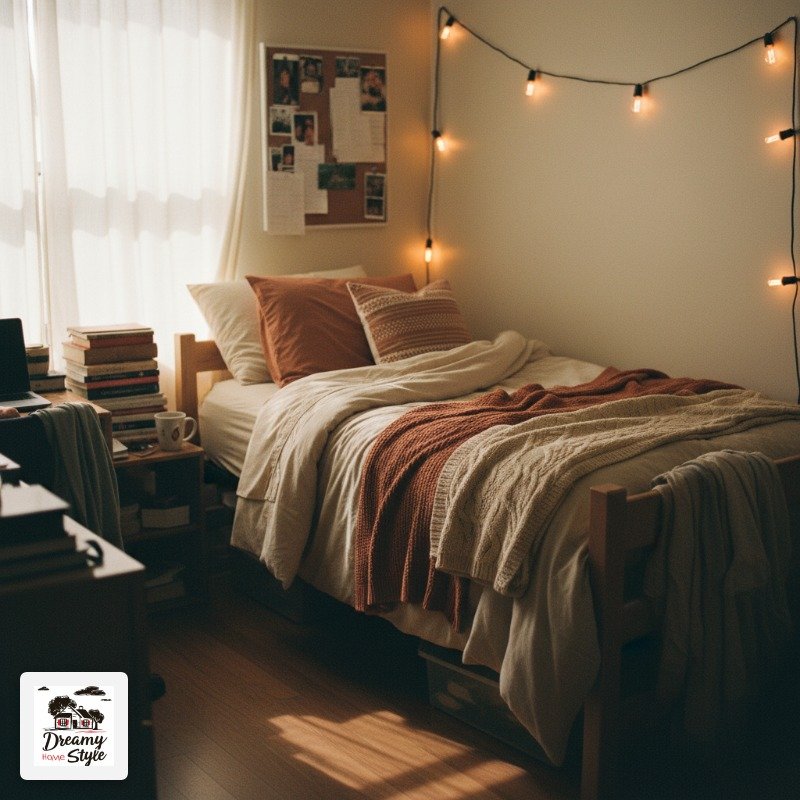
In a regular bedroom, the bed competes with a dresser, maybe a reading chair, a window with actual curtains.
In a dorm?
It wins by default.
It IS the room.
That sounds limiting.
It’s actually kind of freeing once you accept it.
When I started thinking about dorm beds the way I think about a sofa in a studio apartment — as the anchor point everything else orbits — the styling decisions got so much easier.
You’re not decorating a bed.
You’re decorating a whole living space that happens to have a bed in it.
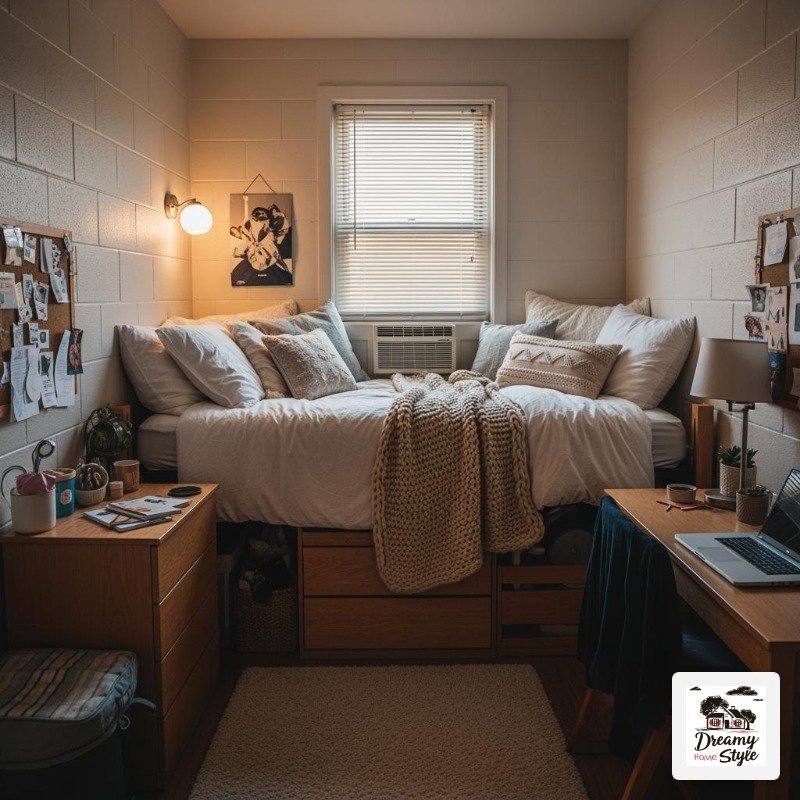
So give it the attention it deserves.
All of it.
Start With a Neutral Base (Then Break It On Purpose)
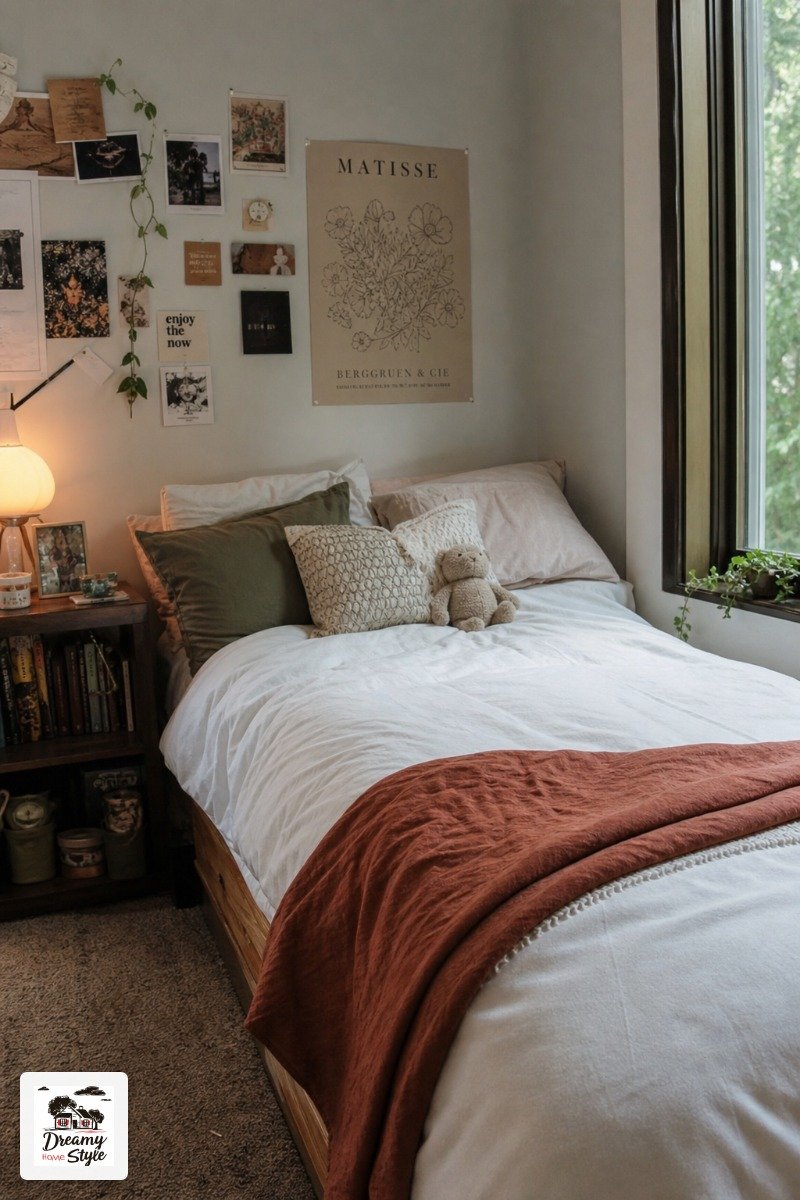
The method that gets people every time starts with the base layer: a solid, neutral fitted sheet and duvet cover.
White, oatmeal, soft grey.
Something that reads ‘calm’ before anything else happens.
I know, I know.
Neutrals sound boring.
Stay with me.
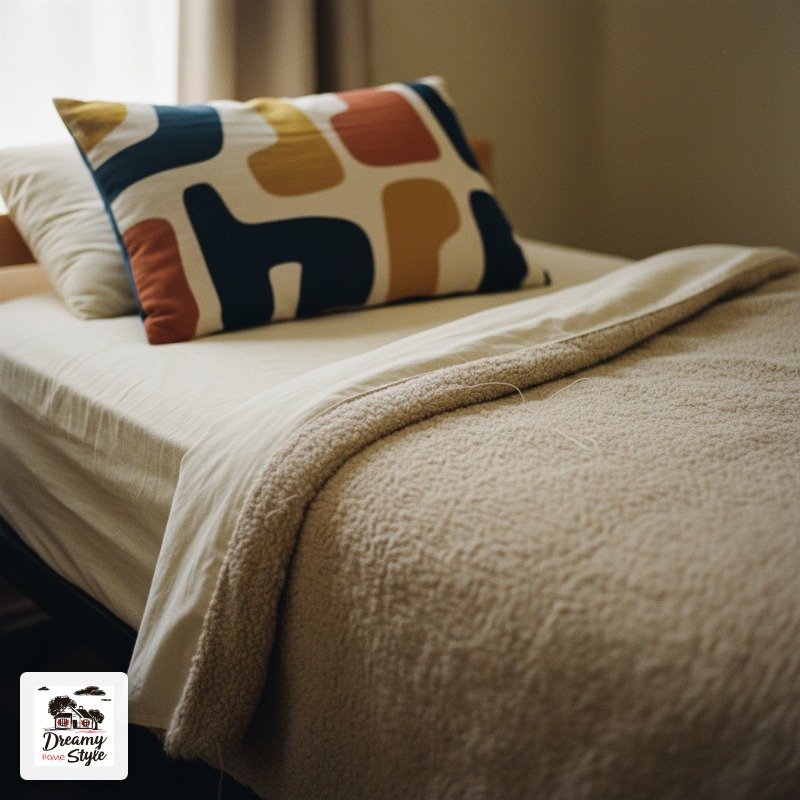
The neutral base is what makes everything you layer on top look intentional instead of chaotic.
It’s like priming a wall before painting.
Skip it and the whole thing fights itself.
Once the base is in place, that’s when you go a little wild.
A patterned pillowcase here, a warm-toned throw there.
The contrast is what makes it look styled instead of just… made.
I changed my mind about this completely junior year after trying to build a whole color story from the bottom up.
It looked like a craft store exploded.
Never again.
The Pillow Stacking Trick That Actually Works
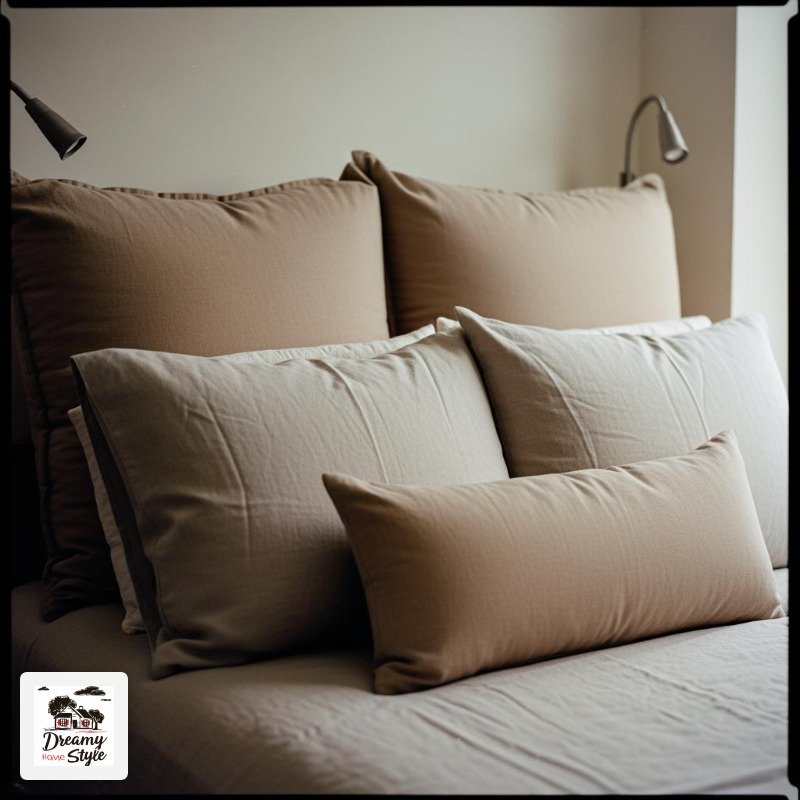
Here’s the actual method people lose their minds over: it’s all about the stack, not the spread.
Most people line pillows up flat across the headboard like soldiers.
Same size, same height, all in a row.
It looks fine.
It doesn’t look special.
Instead, start with your two sleeping pillows standing upright in their cases against the wall or headboard.
In front of those, lean two standard Euro shams (those big square ones) at a slight angle.
Then one or two accent pillows in front of that, smaller, maybe a lumbar or a fun shape.
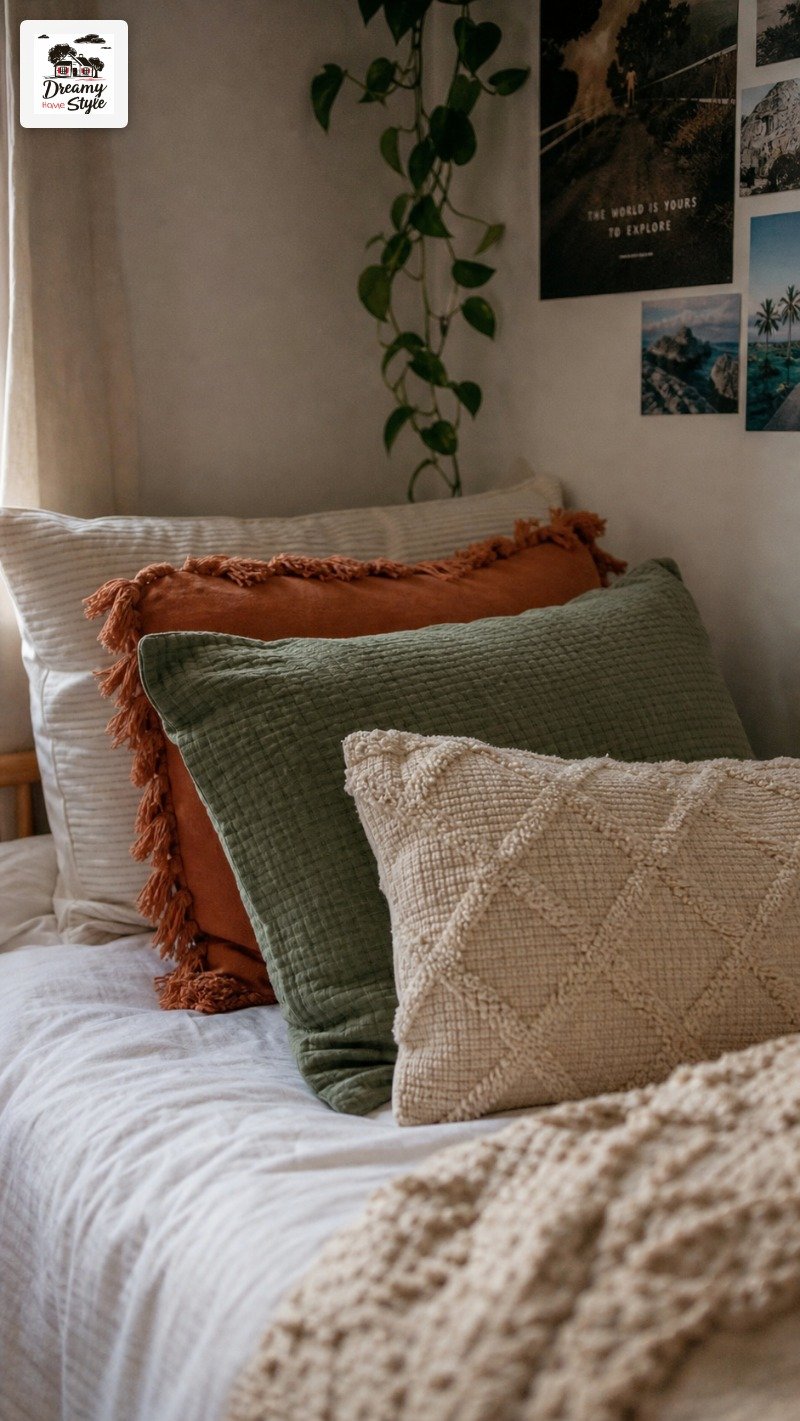
The depth.
That’s what does it.
Your eye reads layers as ‘intentional’ and ‘luxurious’ even when everything came from Target and a thrift store.
(My lumbar pillow cost $4 at Goodwill.
People ask about it constantly.)
Throw Blankets Are Doing More Work Than You Realize
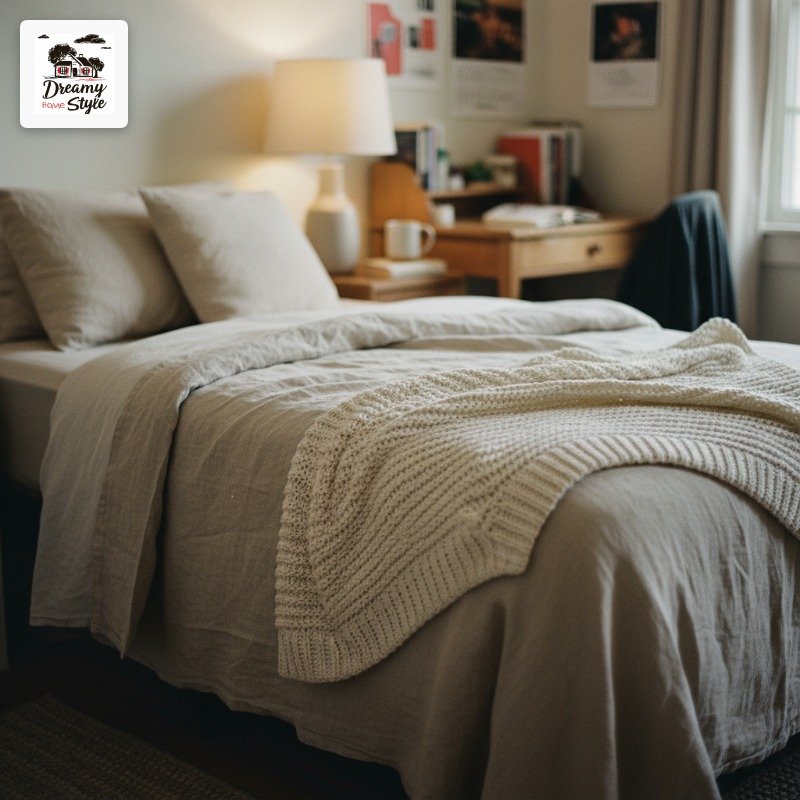
A throw blanket casually draped across the foot of the bed is doing so much heavy lifting in every beautiful dorm photo you’ve ever saved.
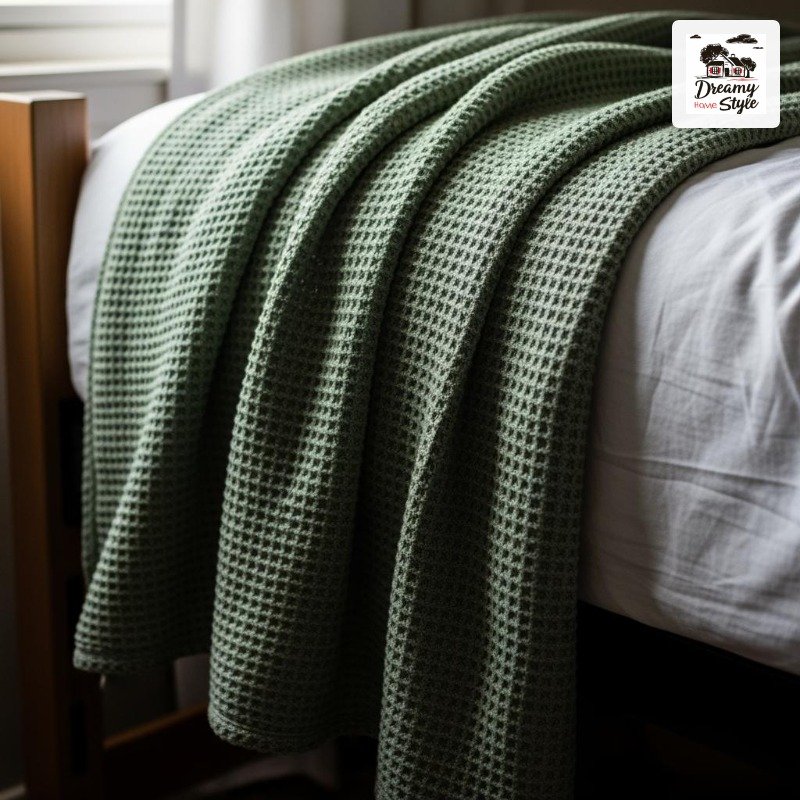
The word ‘casually’ is doing a lot of work in that sentence, by the way.
There’s a whole art to the casual drape.
Don’t fold it neatly.
Don’t spread it flat.
Loosely fold it in thirds lengthwise, then lay it across the bottom third of the bed and let one end hang lower than the other.
Tuck nothing.
Let it be imperfect.
Chunky knit throws read really warm and cozy.
Waffle weave is lighter and more modern.
A faux fur throw is a bit much in a small space, honestly — it tends to overwhelm everything else.
I tried it.
Biscuit also tried to nest in it for three weeks straight, which was its own problem.
Picking a Color Story Without Losing Your Mind
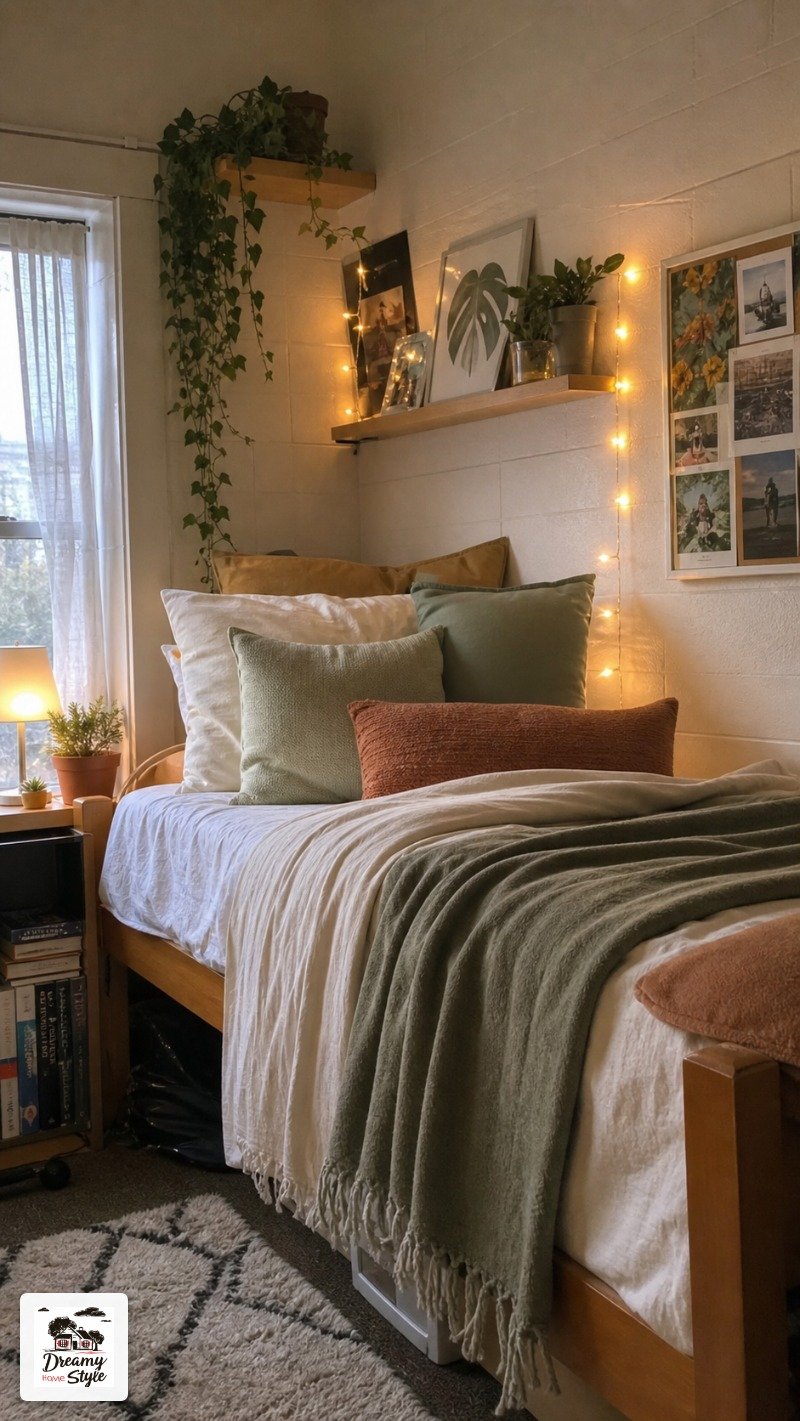
You don’t need a mood board.
You need two colors and one accent.
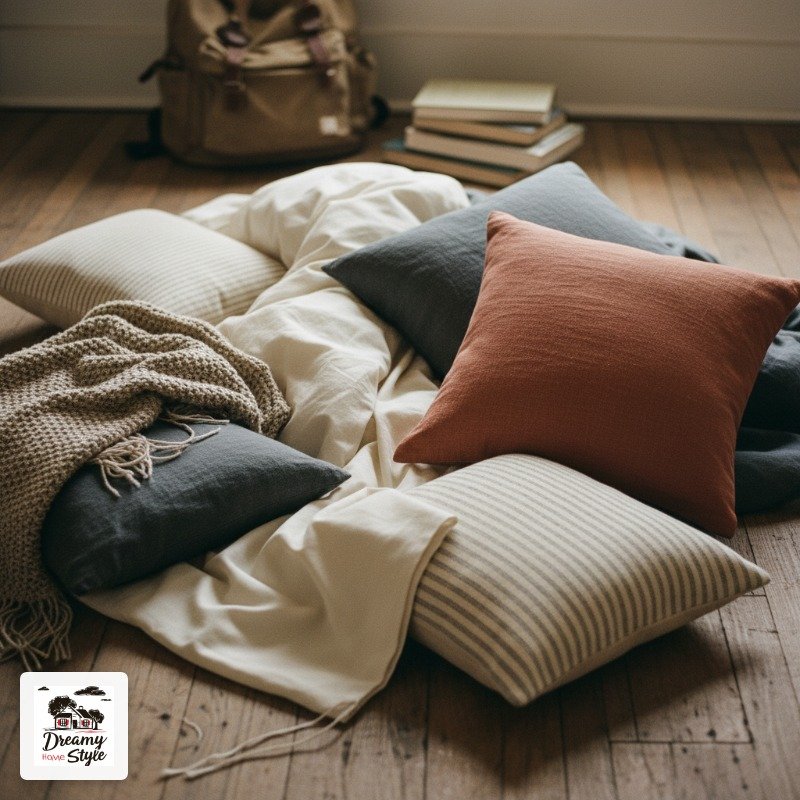
Pick two colors that genuinely calm you down — the ones you’d want to wake up looking at after a terrible exam week.
Then pick one accent color that’s a little unexpected.
My personal go-to: warm white, sage green, and a hit of terracotta.
It works in every season and it photographs beautifully in bad dorm lighting, which matters more than people admit.
The mistake I see everywhere is picking three equally loud colors with no neutral to breathe.
It’s exhausting to look at.
Your room should feel like a relief when you walk in, not another thing demanding your attention.
Texture Is What Separates Flat From Fabulous
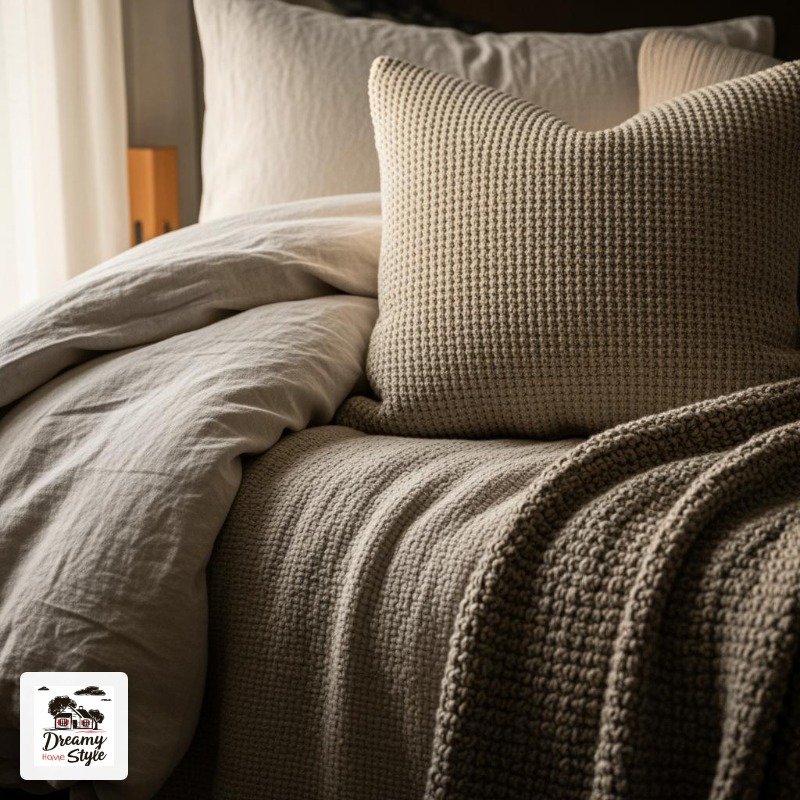
Color gets all the credit.
Texture does all the actual work.
If everything on your bed has the same surface — smooth cotton, smooth cotton, more smooth cotton — the whole thing looks flat even if the colors are gorgeous.
You need contrast in how things feel, not just how they look.
Mix a linen duvet with a waffle-knit pillow cover.
Put a chunky woven throw next to a silky-ish pillowcase.
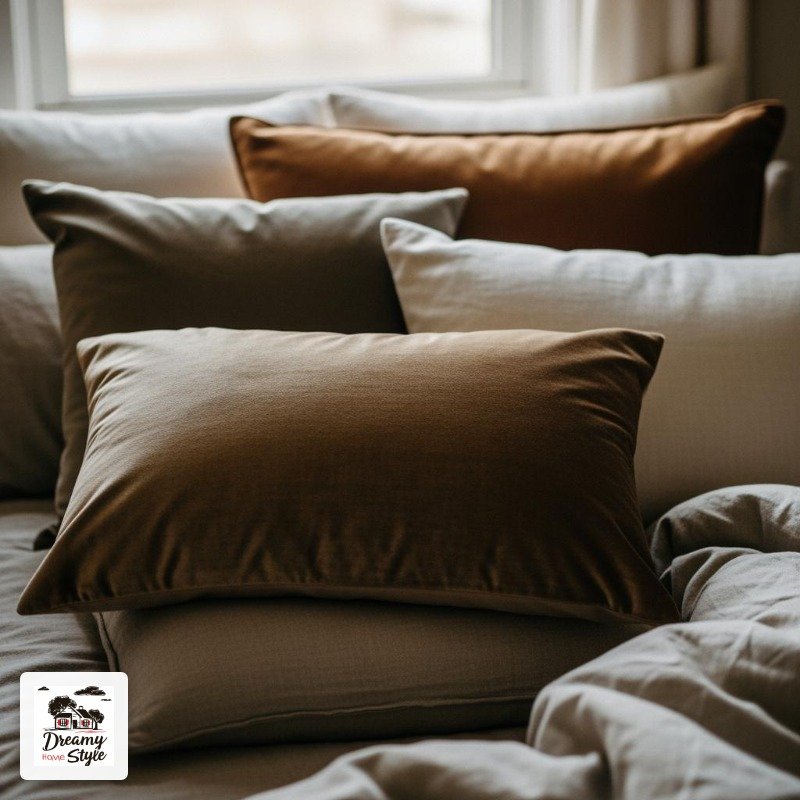
A velvet lumbar pillow next to rough-weave shams.
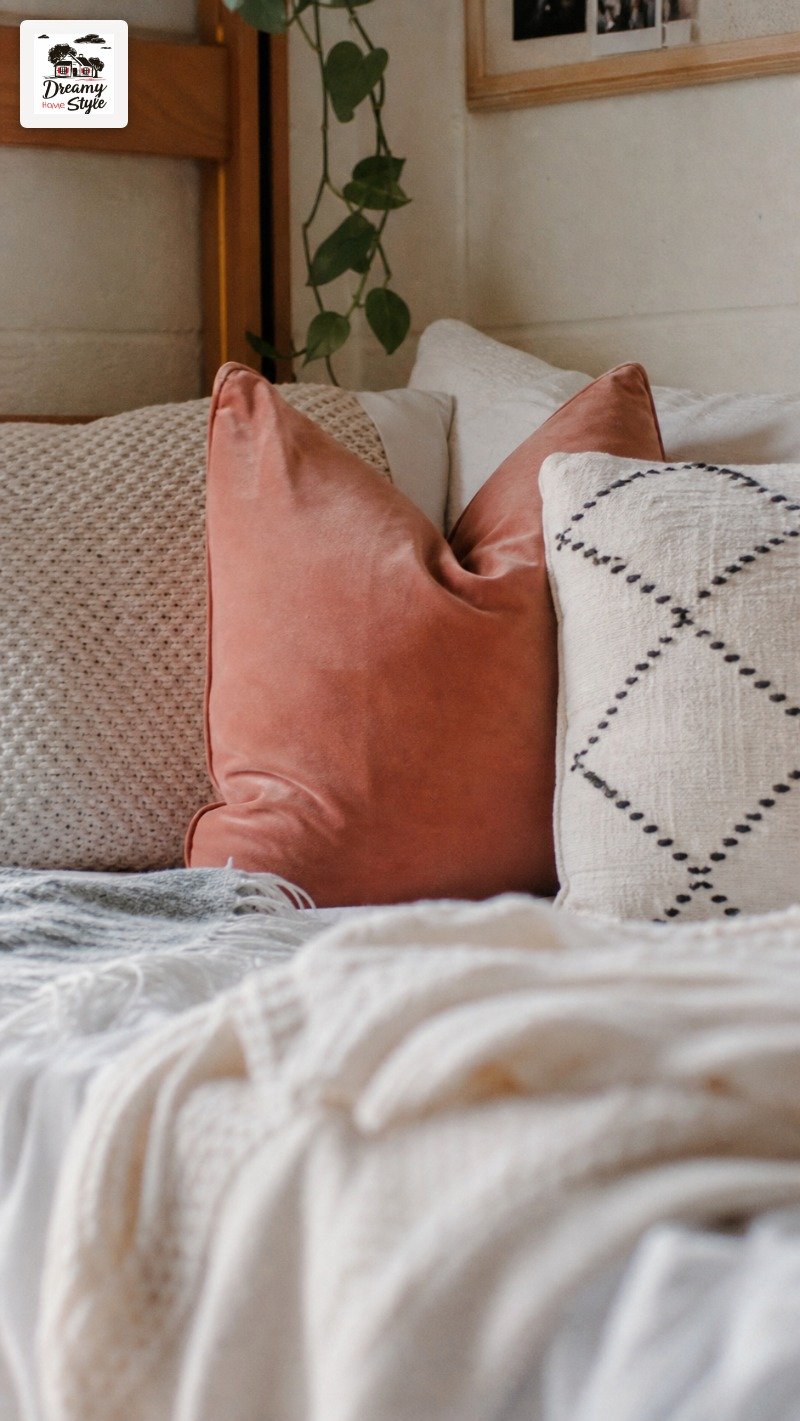
Your eye moves around a textured bed the same way it moves around an interesting face.
There’s something to land on everywhere.
That’s what makes a bed look ‘done’ in photos and in person.
The Under-Bed Situation Nobody Talks About
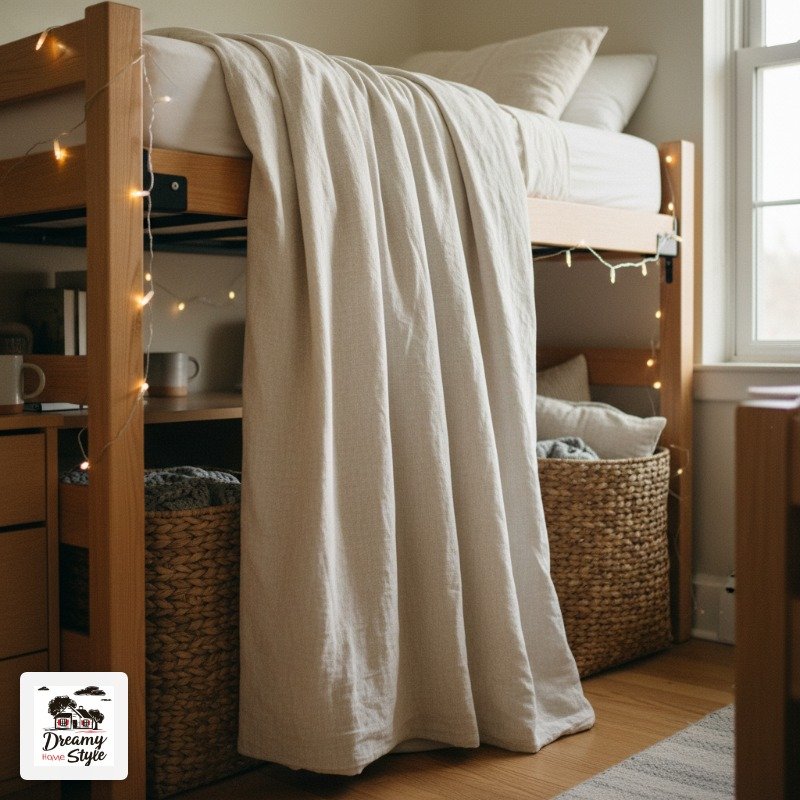
Okay this is a tangent but hear me out: what’s under your bed affects how the top looks.
When you’ve got mismatched storage bins, random suitcases, and a floor fan stuffed under there with no organization, the whole bed reads ‘chaotic’ even from above.
It’s a visual weight thing.
Your brain senses the disorder even when it can’t see it directly.
Matching storage containers under the bed — even just cheap matching ones from IKEA or Amazon — make the whole room feel more pulled together.
Sounds insane.
It’s true.
If you can raise the bed high enough with risers, a bed skirt or a long duvet that drops to the floor hides everything and instantly makes the bed look more… substantial.
More like furniture and less like a cot.

Lighting Is the Real Styling Tool (Overhead Lighting Is a Crime)
I will die on this hill.
Overhead fluorescent dorm lighting should not be used for anything except finding something you dropped.
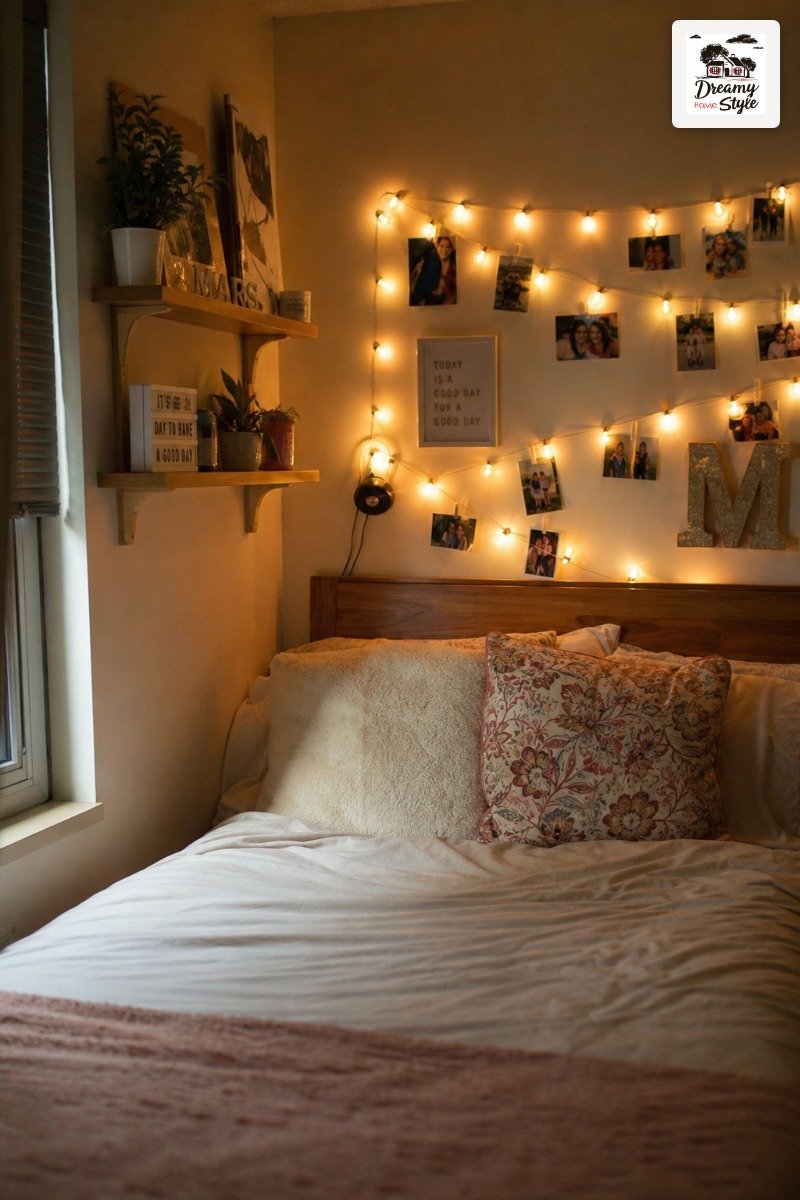
String lights are the classic move for a reason — they work.
Warm white Edison bulbs strung above the bed or along the wall behind it create a glow that makes even cheap bedding look expensive.
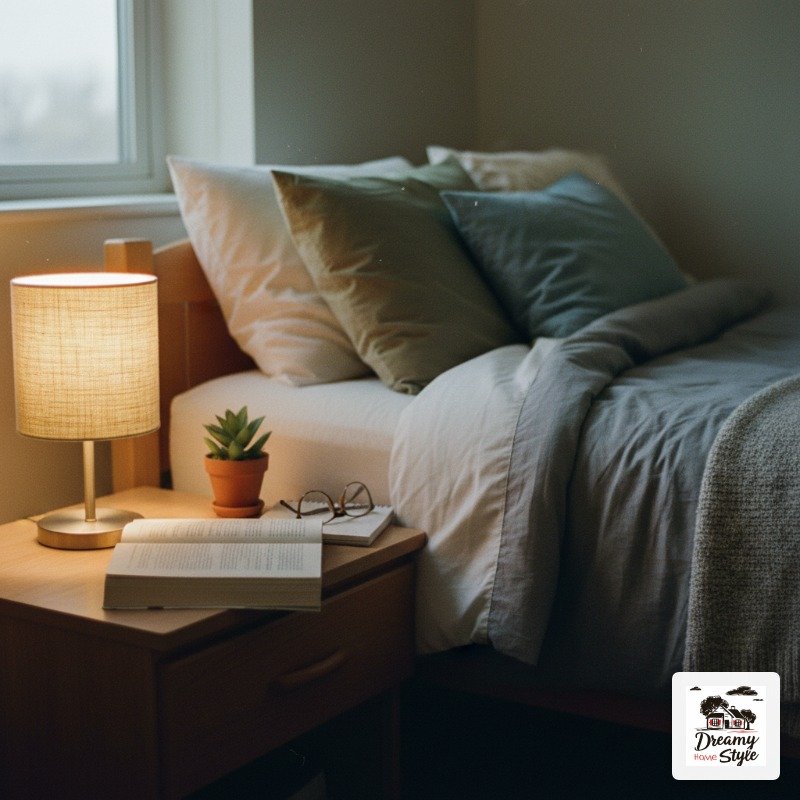
A small table lamp on your desk or nightstand adds a second warm light source and changes the whole mood of the room at night.
The goal is layered light at different heights, same as I’d do in my actual house.
I bought a $14 clip-on lamp from Amazon my sophomore year and it was genuinely one of the better decisions I made.
Sounds small.
Made that corner feel like a little sanctuary.
That One Small Rug That Changes Everything
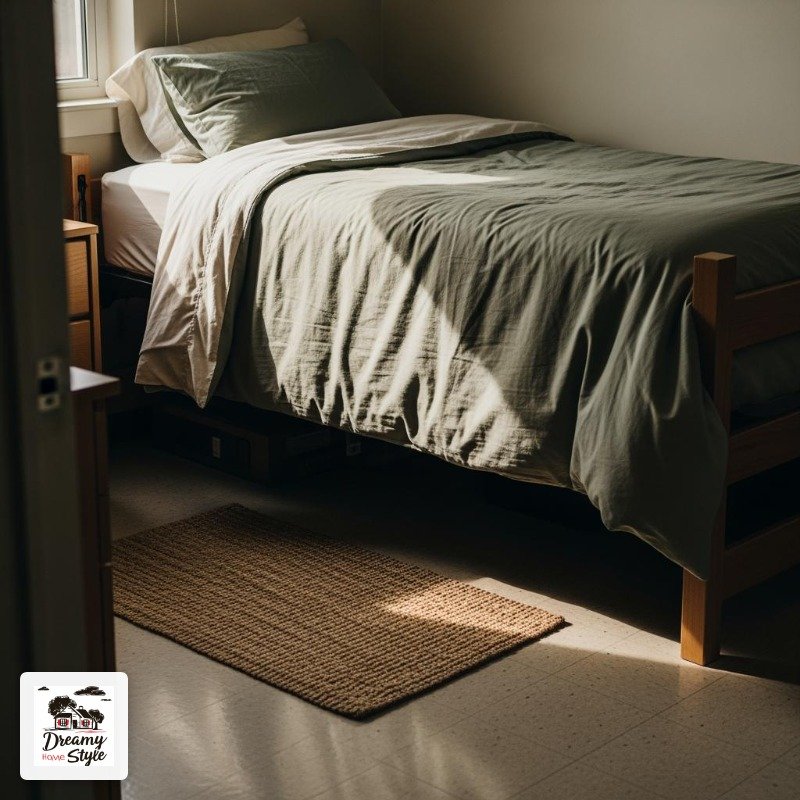
If your bed is pushed against a wall with nothing but cold tile or industrial carpet underneath, the whole setup feels temporary.
Like you’re camping.
A small rug in front of or beside the bed anchors it.
Suddenly the bed feels like it belongs somewhere instead of just sitting there.
You don’t need anything big.
A two-by-three or a two-by-four runner beside the bed is plenty.
I found a braided jute one at HomeGoods for $18 and honestly it did more for my dorm room vibe than the new duvet I spent four times as much on.
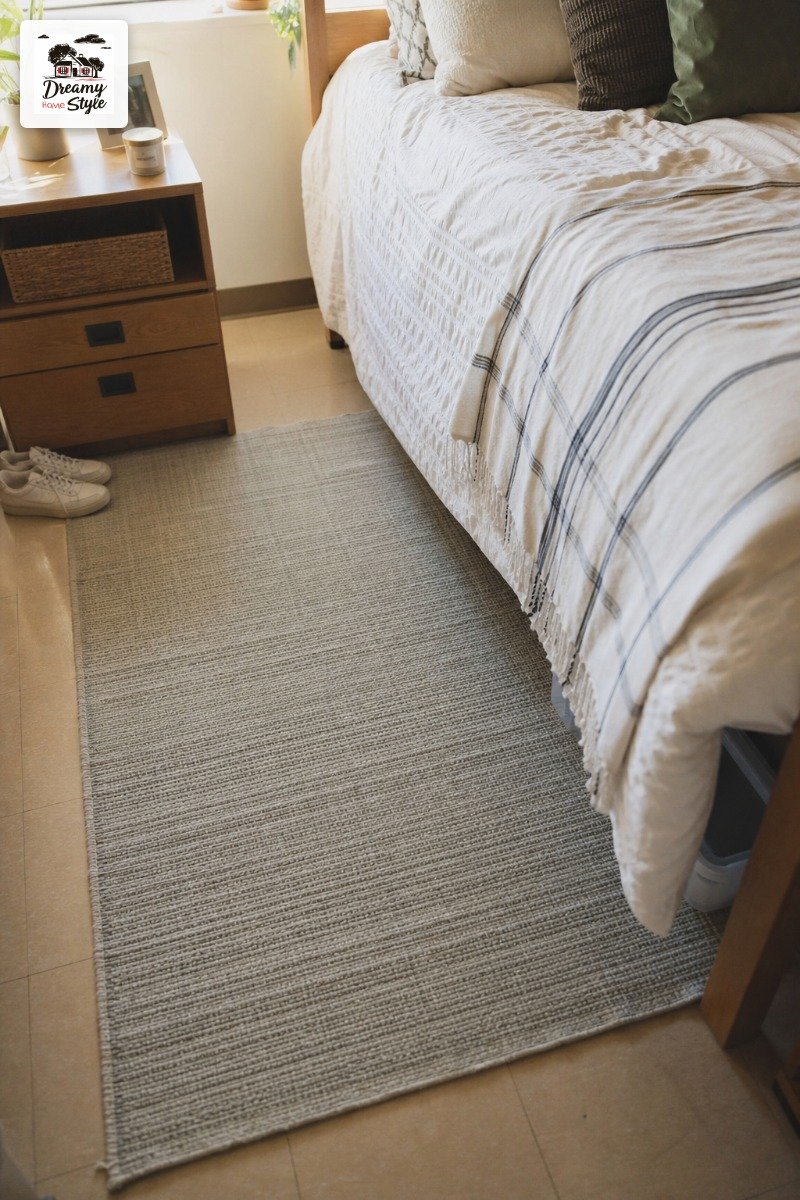
Washable rugs are worth prioritizing if you can.
Dorm floors are not clean.
That’s all I’ll say about that.
One Plant (Just One) Does a Surprising Amount
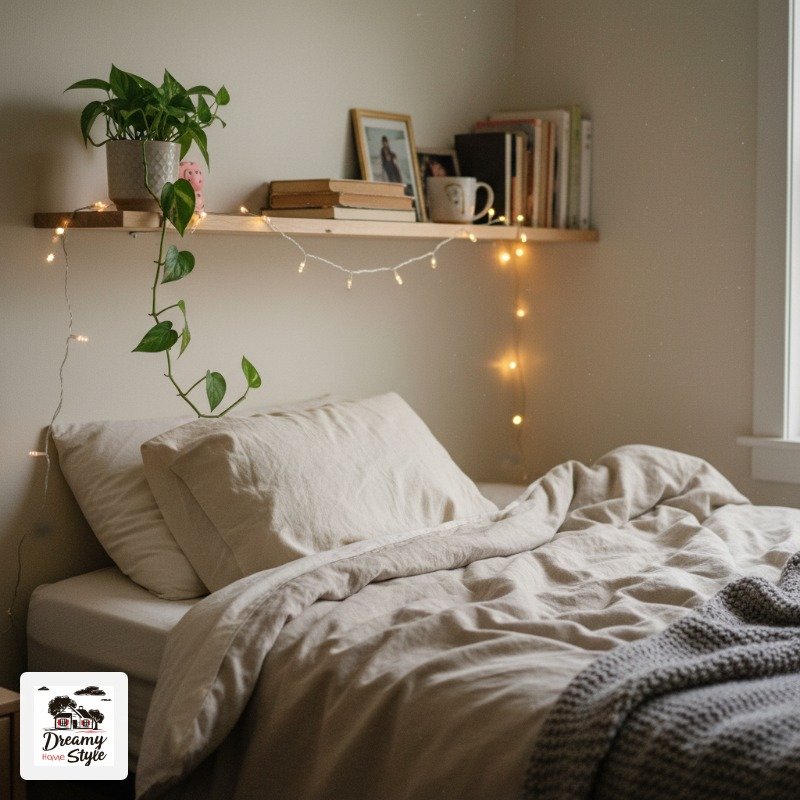
Not a shelf full of plants.
Not a whole little garden situation.
One plant.
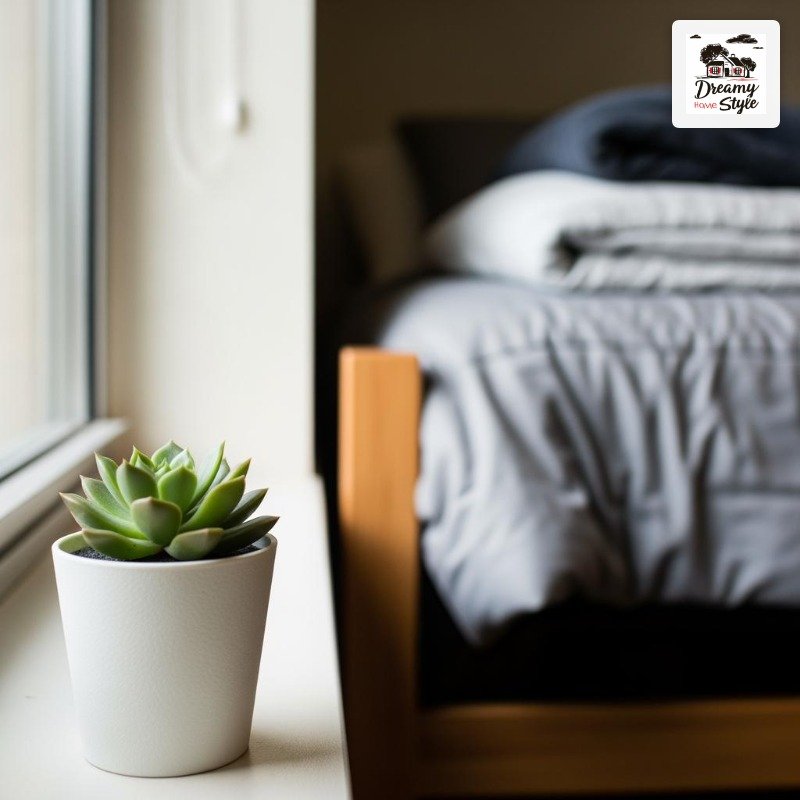
A single pothos on a shelf above the bed, or a small succulent on the windowsill nearby, adds a softness and a aliveness that no amount of throw pillows can replicate.
Plants also do something psychological in a dorm room — they remind you the space is yours.
You’re tending something.
That matters more than it sounds when you’re living in a building with a few hundred strangers.
Pothos, snake plants, and ZZ plants are basically indestructible.
I’ve had a pothos survive things I’m not proud of.
It’s still going.
It’s been through more than most people I know.
How to Make a Dorm Bed Look Good in Photos
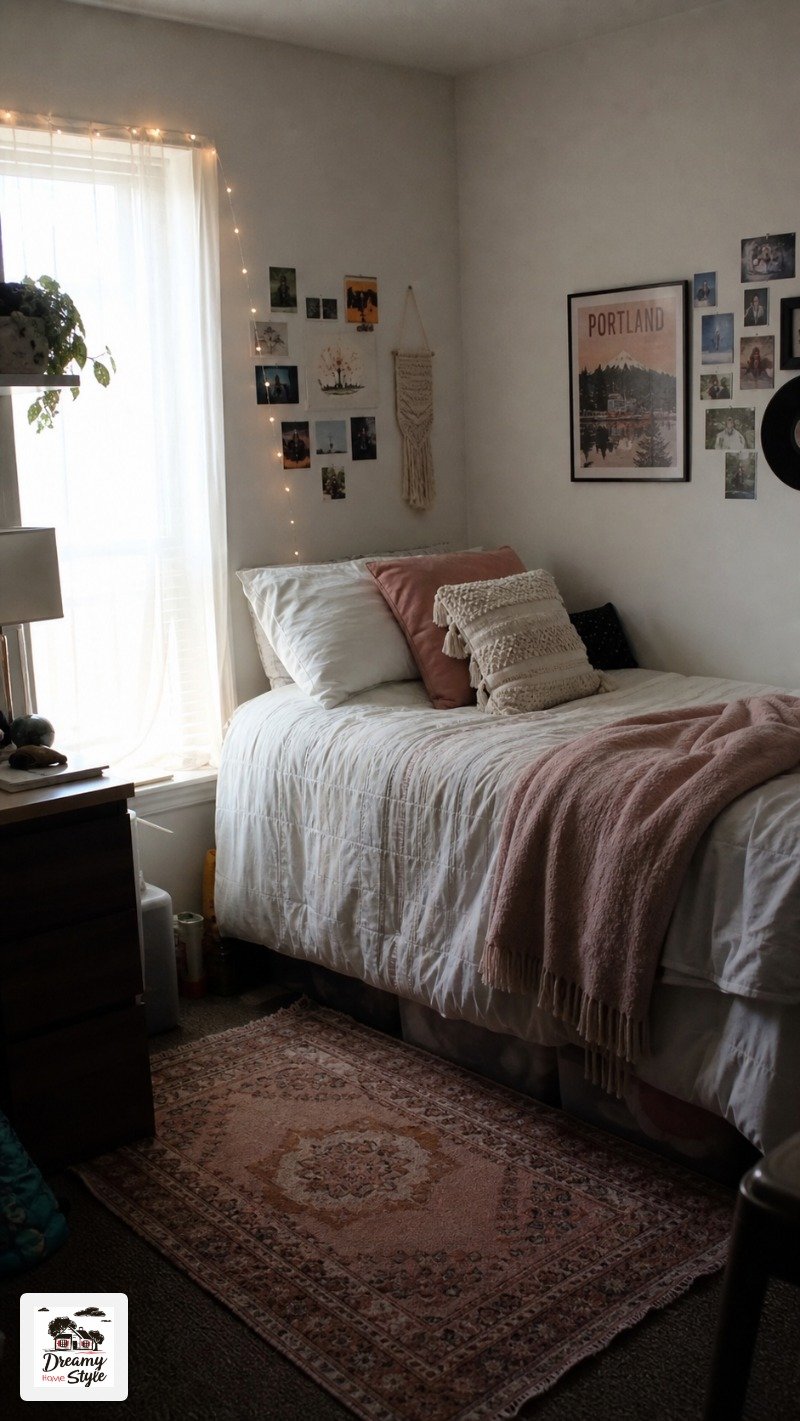
I know this sounds shallow.
It’s not.
When your space looks good in photos, it usually means it actually looks good in real life too.
The camera doesn’t lie so much as it clarifies.
Natural light is everything.
If you want to take a photo of your bed, do it in the morning when the light comes through the window at an angle.
That one condition alone will make your space look like a Pinterest photo.
Step back.
Take the photo from across the room if you can.
Show the corner, not just the close-up.
Context makes a styled bed look intentional instead of just ‘zoomed in on some pillows.’
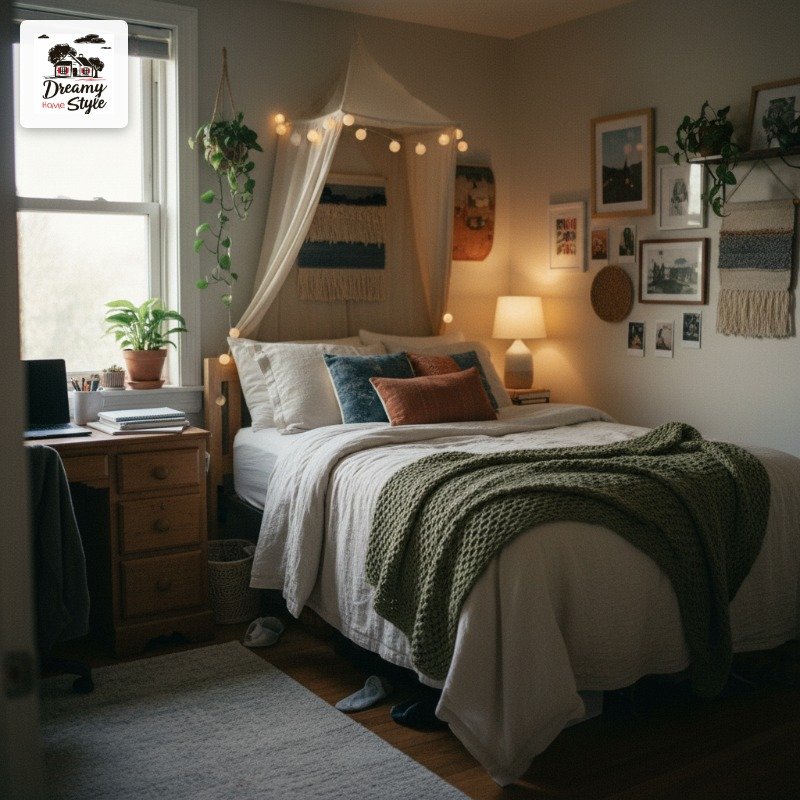
And turn off the overhead light before you shoot.
Every time.
No exceptions.
The Thrift Store Finds Worth Looking For
You don’t need to spend much.
You really don’t.
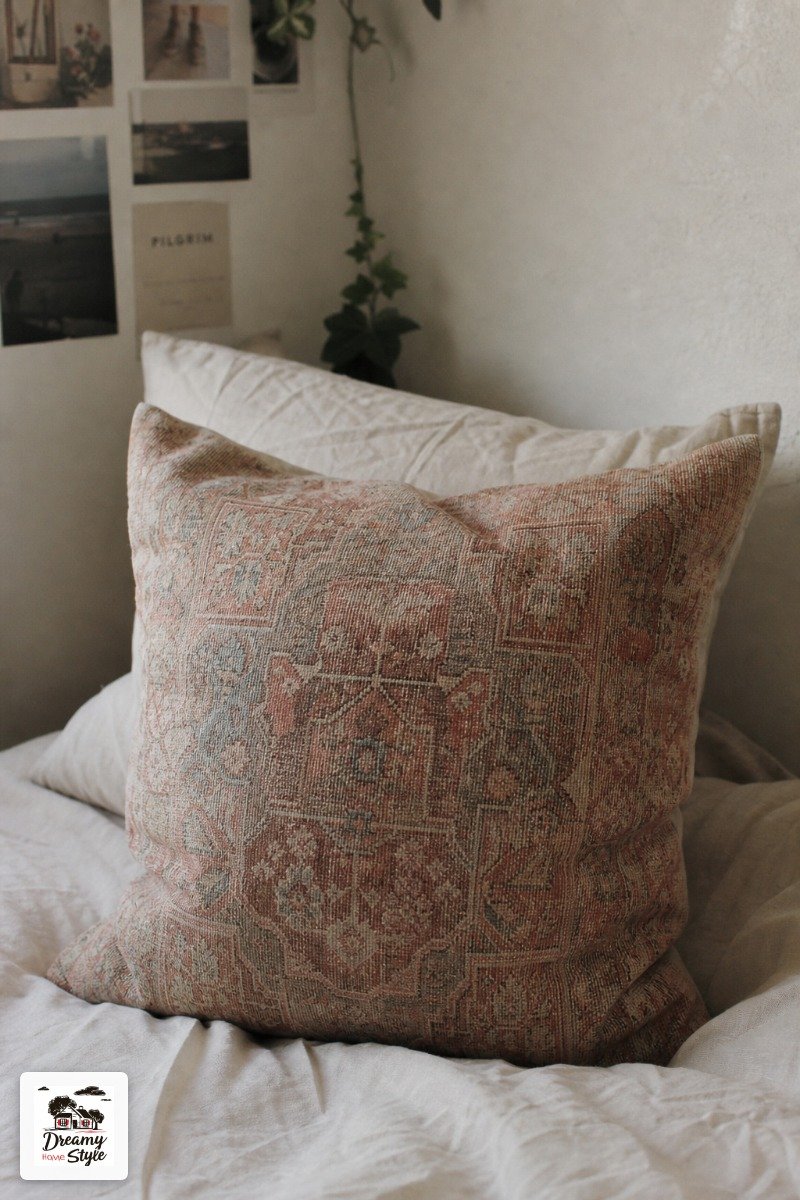
Throw pillow covers are the single best thrift store find for dorm bedding.
The pillow insert inside doesn’t matter — just buy a cheap one new.
But the covers?
Thrift stores are full of them, usually for one or two dollars, and some of them are genuinely beautiful linen or velvet pieces.
Euro shams are another good one.
They’re big and they’re expensive new, but thrift stores get them constantly because people donate whole bedding sets.
Avoid used actual pillows and mattress toppers from thrift stores.
I feel like that goes without saying but just in case: please don’t.
Buy those new.
Everything else?
Fair game.
Making the Bed Every Morning Is Actually Worth It
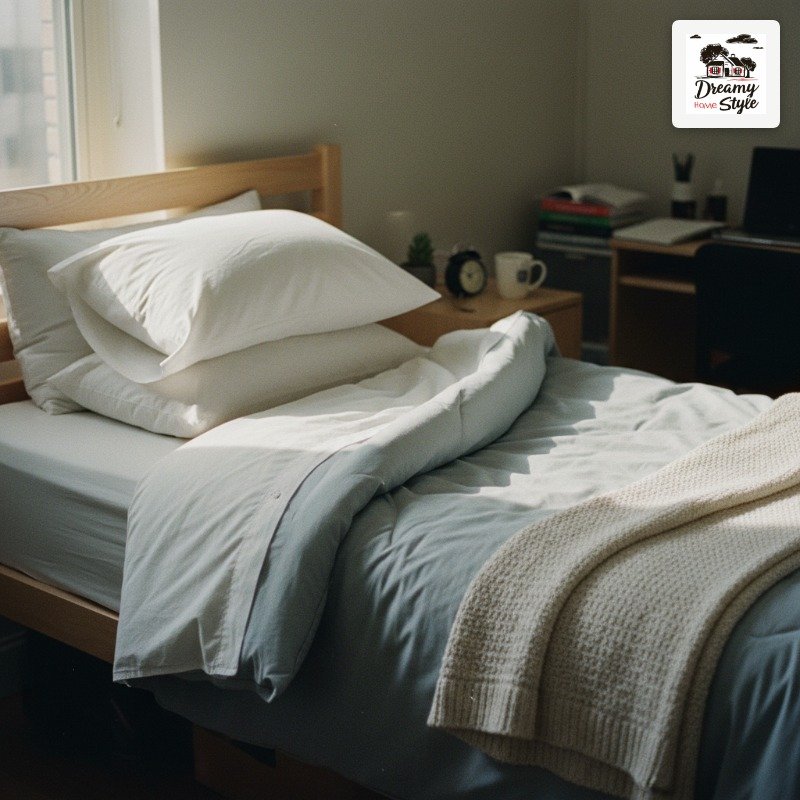
I resisted this for a long time.
Felt like busywork.
But in a dorm, where your bed is also your couch and your desk chair and your place you eat cereal at midnight — a made bed means the whole room looks intentional.
An unmade bed in a tiny dorm room makes the entire space feel chaotic even if nothing else is messy.
The method I use takes about three minutes.
Straighten the duvet, stack the pillows in order (big to small, back to front), toss the throw across the foot.
Done.
It sounds like life advice from a mom.
It kind of is.
But honestly, coming back to a made bed after a bad day in a tiny cinderblock room feels way better than you’d expect.
I swear that’s true and not just something I’m saying.
Related read: Things I Wish I Knew Before I Decorated My First Home — Instant PDF + Kindle download. Secure checkout by Stripe