
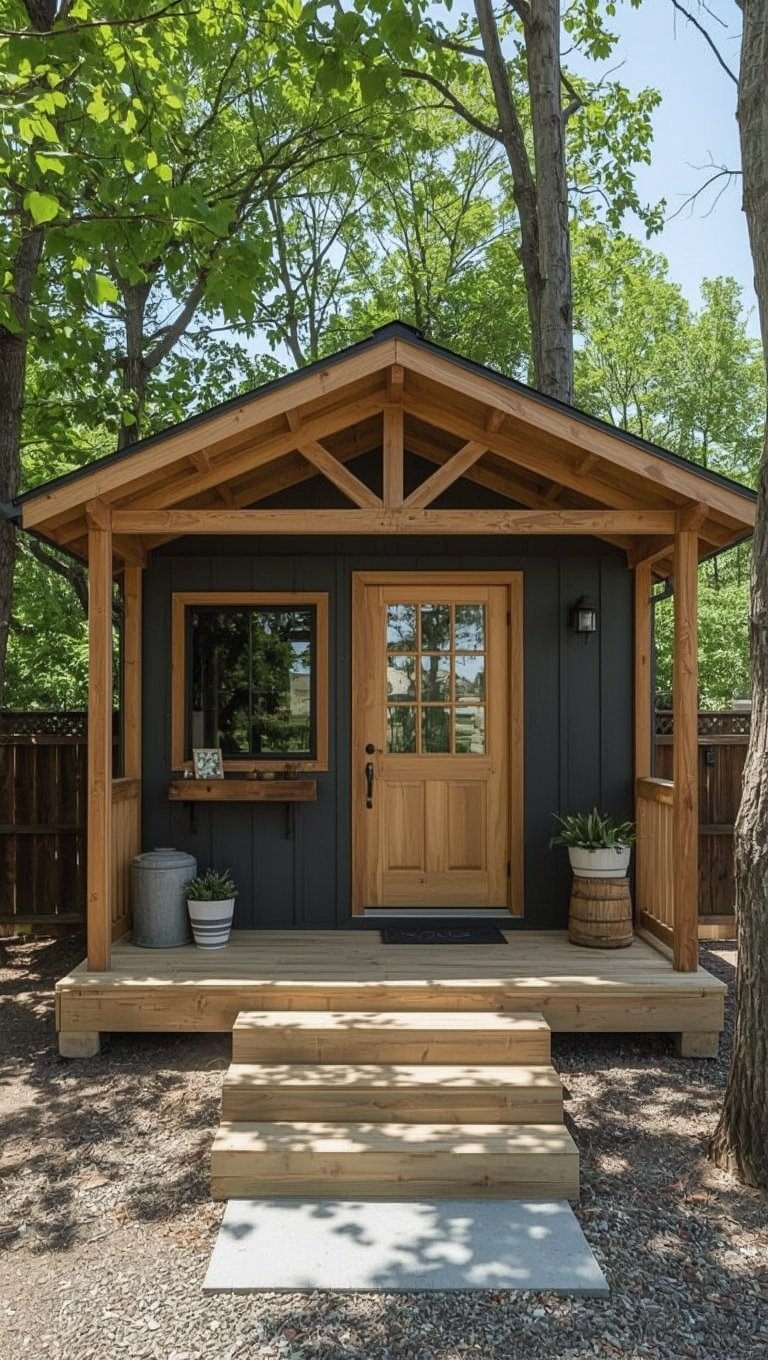

I used to think a she shed was some Pinterest fantasy for people with a fat renovation budget and a husband who does carpentry on weekends.
Then last spring I stood in my own dusty, spider-web-covered storage shed and had this little moment.
What if this ugly duckling could actually become mine.
Not a man cave leftover, not a junk pile, just a small warm corner that smelled like me and felt like exhaling.
So I did it on a shockingly tiny budget, and honestly, it’s one of my favorite spaces in my whole home now.
I’m walking you through exactly how, friend to friend, no fluff.
Start With What You Already Have (Yes, Even That Ugly Shed)

Okay, first things first, you do not need a fancy pre-built structure to start this journey.
I started with a plain metal tool shed that had been sitting in my backyard since we bought the house.
It was dented, it was dusty, and it had approximately one thousand cobwebs in the corners.
But structurally, it was totally solid.
So instead of buying anything new, I spent a Saturday afternoon just clearing it out and hosing it down.
And honestly, seeing that empty little box afterward felt so full of possibility.
If you’ve got an old shed, a detached garage corner, or even a shady spot under a covered patio, that’s your starting point.
You don’t need permission to dream big in a small space.
I always tell my readers this, the bones matter more than the brand.
A shed from a big box store works exactly the same as a fancy cedar one once it’s painted and dressed up.
So don’t let the “before” photo intimidate you, mine looked like a horror movie set too.
My little hack here is to take a before picture before you clean anything.
It’s kind of embarrassing, but it makes the transformation feel so much more real later.
And trust me, on the hard days of this project, that photo will remind you why you started.
Thrifted Furniture That Looks Way More Expensive Than It Is


I’m going to be honest with you, almost everything in my she shed came from a thrift store or a curb.
My favorite piece is this little rattan chair I found for eight dollars at a local secondhand shop.
It had a rip in the seat, so I just threw a cushion over it, and now it’s basically the star of the whole room.
I love hunting for pieces with good bones, even if the fabric or finish looks tired.
Wood furniture especially can be sanded and repainted for practically nothing.
So if you see a little side table with a wobbly leg, don’t walk away, that thing just needs a tiny screw and some love.
My tip here is to shop with your imagination turned all the way up, not your current taste.
Picture the piece in a totally different color, and suddenly a beige eyesore becomes the coziest little accent.
One variation I’d suggest is checking your own garage or attic first.
I actually used an old nightstand from my guest room that I wasn’t using anymore.
It just needed a coat of soft white paint and new knobs, and it looked brand new.
The emotional payoff here is huge honestly, because every piece has a story now.
It’s not showroom furniture, it’s your furniture, and that feels so much warmer to sit with.
Paint Colors That Make a Tiny Space Feel Like a Warm Hug

Paint is genuinely the cheapest transformation you can make, and it changes everything.
I went with a soft buttery cream for my walls because I wanted the space to feel sunny even on gray days.
And oh my gosh, it did exactly that.
The second I finished that first coat, the whole shed felt less like storage and more like a little retreat.
My advice is to avoid stark white if you’re going for cozy, it can feel a little clinical in a small space.
Warm neutrals, soft sages, or even a dusty terracotta tend to feel like a hug instead.
If you want drama, I say go for it on just one wall.
I did a deep forest green on the back wall of my shed and it makes the whole space feel intentional, not accidental.
A can of paint is genuinely one of the cheapest ways to make a space feel finished.
My little hack is to use leftover paint samples from other rooms in your house.
I had a sample pot of blush pink left over from my daughter’s room, and it became the trim color in my shed.
So before you buy anything new, dig through your garage shelf of half-used paint cans.
You’d be surprised how far a quart can stretch in a space this small.
Lighting That Feels Soft, Not Like an Interrogation Room
Nothing kills a cozy vibe faster than one harsh overhead bulb buzzing above your head.

So the very first thing I did after painting was ditch the single bare bulb that came with my shed.
I strung warm white string lights along the ceiling beams, and it instantly felt like golden hour, all day long.
Honestly, I’m obsessed with what a few strands of lights can do to a mood.
My favorite cheap trick is layering light sources instead of relying on one.
A little thrifted lamp on the side table, a flickering flameless candle, and those string lights together create this soft glow that no single ceiling fixture could ever give you.
If you have an outlet nearby, even a small plug-in sconce adds so much warmth for so little money.
And if you don’t have electricity out there like I didn’t at first, battery-operated lanterns are honestly a lovely workaround.
I kept a little basket of them near the door for evenings.
The emotional shift here is real, soft light makes you want to linger, while harsh light makes you want to leave.
So if you remember one tip from this whole post, let it be this one.
Change your lighting before you change anything else, and watch the whole space soften.
Layering Rugs Without Spending a Fortune
A cold, bare shed floor never feels like a retreat, it just feels like storage with cute pillows.

So rugs became one of my first purchases, but I refused to pay full price for them.
I found a jute rug at a discount home store for under thirty dollars, and it instantly warmed up the space.
Then I layered a smaller vintage-style rug on top from a flea market for extra texture.
Honestly, that layering trick is one of my favorite budget hacks in my whole house, not just the shed.
It makes a floor look curated instead of just covered.
My tip is to always check the clearance section of home stores first, rugs get marked down constantly at the end of a season.
If you’re crafty, an outdoor rug can also work beautifully in a shed, since they’re more durable and often cheaper.
I actually used a small outdoor rug remnant under my little reading chair.
It gave the space this grounded, finished feeling without me spending very much at all.
A rug does something psychological too, it tells your feet and your whole body that you’ve arrived somewhere intentional.
So don’t skip this step even if your budget is tiny, a rug remnant is better than no rug at all.
DIY Curtains That Cost Almost Nothing

Curtains in a she shed do more than block light, they add this soft, feminine layer that makes the whole room feel finished.
I didn’t want to spend real curtain money on a tiny shed window, so I got a little resourceful.
I used a flat bedsheet from a linen closet that I never used anymore, cut it down, and hemmed the edges myself.
It took maybe an hour, and it cost me nothing because I already owned it.
My favorite variation here is using lace fabric remnants for a dreamier, softer look.
If sewing isn’t your thing, fabric glue or even iron-on hem tape works just as well for a no-sew version.
I love how a simple curtain instantly makes a window feel intentional instead of bare.
One little hack, thrifted curtain panels are almost always cheaper than buying new ones, even if the length is wrong.
You can always hem them shorter for your smaller shed window.
The emotional reason this matters is subtle but real, curtains soften harsh light and give you privacy to just be yourself in there.
So even a scrap of pretty fabric on a tension rod can transform that little window completely.
Creating a Reading Nook That Begs You to Sit Down

If there’s one corner of my she shed I protect fiercely, it’s my little reading nook.
I tucked that thrifted rattan chair into the corner near the window, added a small side table, and piled on cozy throws.
And now, that corner is where I disappear to most evenings with a cup of tea.
My tip is to angle your chair toward the window if you can, natural light while reading is just unmatched.
I also added a small basket beside the chair for blankets, because nothing ruins a cozy moment like getting up to search for a throw.
If you have a small space like mine, this corner doesn’t need much, just one comfortable seat and soft lighting nearby.
I love adding a little side table too, even a thrifted stool works, just something to hold your mug or your book.
One variation I’d suggest is a floor cushion setup instead of a chair if your shed is especially tiny.
It’s even cheaper and adds this relaxed, bohemian feeling.
The whole point of this nook is permission, permission to sit down and do absolutely nothing productive for twenty minutes.
And honestly, in my house full of little ones, that permission is priceless.
Repurposing Old Windows and Doors for Character
Some of my favorite details in my she shed cost me nothing because I already had them sitting around.

I found an old window frame in our garage from a previous renovation, and I hung it on the wall as art.
It gives the space this vintage, cottage-like character that brand new decor just can’t replicate.
My tip is to check local salvage yards or online marketplace listings for free or nearly free architectural pieces.
People are constantly getting rid of old doors, shutters, and window frames during renovations.
I also used an old shutter, leaned against the wall, to display a few postcards and photos.
It’s such a simple hack, but it adds so much texture and history to the room.
If you find an old door, you could even use it as a unique tabletop resting on two small stools.
I love how repurposed pieces make a space feel collected over time instead of purchased all at once.
The emotional pull here is nostalgia, these pieces feel like they have a past, and that makes your shed feel lived in rather than staged.
So before you buy new decor, ask around, someone in your life probably has an old window gathering dust in their garage right now.
Shelving Made From Reclaimed or Scrap Wood

Storage in a she shed doesn’t need to look like storage, it can look like styling.
I used a few leftover wood boards from an old fence repair to build simple floating shelves.
My husband helped me mount them with basic brackets, and the whole project took less than an hour.
Now they hold my favorite candles, a few books, and one small trailing plant.
My tip is to sand the wood lightly and add a coat of stain or paint to match your color scheme.
It instantly makes scrap wood look intentional instead of leftover.
If you don’t have access to reclaimed wood, thrifted wooden crates stacked on their sides make lovely open shelving too.
I actually used two crates like this for extra storage near my desk.
The emotional payoff of open shelving is that it turns your everyday items into little vignettes.
Even a stack of books becomes decor when it’s styled with a candle and a small trinket beside it.
So don’t hide your things away in this space, let a few of your favorites be seen.
Cozy Textiles That Make You Want to Curl Up
If lighting sets the mood, textiles seal the deal, and this is where I really let myself play.

I layered soft throw blankets over my chair, added a couple of mismatched pillows, and suddenly the whole space felt like a hug.
My favorite trick is mixing textures, something knit, something velvet, something linen, so nothing feels too matchy or showroom perfect.
I found most of my pillow covers at a discount store for a few dollars each.
If you sew even a little, pillow covers are one of the easiest beginner projects, just two rectangles and a zipper or envelope closure.
My tip is to buy inexpensive pillow inserts separately and splurge slightly on the covers, since covers are what people actually see and touch.
I also draped a soft throw over the back of my chair, just for that lived-in, ready-to-be-used look.
One variation I love is adding a floor pouf for extra seating when a friend stops by.
Mine was a secondhand find that I recovered with fabric scraps.
The emotional reason textiles matter so much is simple, they’re the layer you actually touch, so they need to feel soft and inviting under your hands.
So don’t skimp here, even a couple of thrifted throws change the whole feeling of the room.
Adding Personal Touches That Make It Feel Like Yours
Here’s the thing nobody tells you, a she shed isn’t really about the furniture, it’s about the feeling of it being unmistakably yours.

I hung a small collage of family photos near my reading nook, mixed with a few postcards from trips I’ve taken.
And every time I glance at that wall, I feel this little rush of warmth.
My tip is to include at least one object that has zero decorative value but tons of sentimental value.
I keep my grandmother’s old teacup on my little shelf, chipped handle and all, because it makes me smile every single time.
If you’re on a tight budget, printed photos are one of the cheapest decor items you can add, and they’re the most meaningful by far.
I also added a small chalkboard where I jot little quotes or reminders to myself.
It’s silly, but it makes the space feel like an extension of my own personality instead of a generic room.
One variation I’d suggest is a small memory jar, filled with little notes about favorite moments, tucked on a shelf.
The emotional core of this whole project is really this section, because a she shed without your personal fingerprints is just a nice shed.
So don’t be afraid to make it a little quirky, a little sentimental, completely and unapologetically you.
Bringing in Plants and Greenery Without Spending Much

A little greenery does something magic to a space, it makes it feel alive and breathing instead of static.
I started with cuttings from my own houseplants at home, rooted them in little jars of water, and eventually potted them once roots formed.
It cost me nothing, and now my shed is dotted with these little green reminders of growth.
My tip is to choose low-light, low-maintenance plants if your shed doesn’t get tons of natural sunlight.
Pothos and snake plants have been so forgiving for me, even when I forget to water for a week or two.
If you want instant impact without the wait, a few stems of eucalyptus in a thrifted vase add that same soft, organic feeling immediately.
I also love drying small bunches of lavender and hanging them upside down near my window, it adds scent and charm at the same time.
One variation is a small hanging planter near the window, which adds greenery without taking up any floor space.
The emotional reason plants matter so much here is that they make the room feel like it’s still part of the living, breathing outdoors, even though you’re tucked away inside.
So even one small plant on your shelf changes the whole energy of the space.
Little Hacks That Make the Whole Space Function Better
By this point you’ve got the pretty parts handled, so let’s talk about the small functional hacks that made my life easier out there.

I added simple weatherstripping around my door for just a few dollars, and it made such a difference keeping drafts out.
My tip is to grab an inexpensive area rug pad underneath your rug, it adds a surprising amount of warmth underfoot in a shed without insulation.
I also picked up a small battery-powered fan for warmer months, since my shed doesn’t have built-in cooling.
If scent matters to you like it does to me, a simple reed diffuser or a few drops of essential oil on a cotton ball tucked behind a shelf keeps the whole space smelling cozy.
One little hack I love is using removable adhesive hooks on the inside of the door for scarves, bags, or a little apron if you craft out there.
I also kept a small caddy of basic tools and extension cords tucked under my side table, so the practical stuff stays hidden but handy.
The emotional reason these small hacks matter is that comfort isn’t only visual, it’s how the space actually functions day to day.
So don’t skip the boring stuff, a warm floor and a draft-free door make all that pretty styling actually enjoyable to sit in.