
I know a wood-burning fireplace mixed with old cotton sheets drying on a line sounds like an oddly specific smell to get emotional about.
But it takes me right back to my great-aunt’s farmhouse, the one with the crooked porch step and the kitchen that always smelled like something was baking.
That house wasn’t fancy.
It wasn’t even fully finished in some rooms.
But it felt like the safest place on earth.
That’s the exact feeling I try to bottle up every time I decorate my own home now.
Not perfection.
Not a magazine spread.
Just warmth, softness, and a little bit of worn-in history in every corner.
So let’s talk about how you can bring that same old-soul, 1900s farmhouse feeling into your own space, one detail at a time.
Reclaimed Wood Everything

There’s just something about touching a piece of wood that already has a story.
I’m obsessed with reclaimed wood, and I don’t think that will ever change.
When I redid my dining room table two years ago, I chose a reclaimed oak top instead of a shiny new one.
And the difference in feeling was instant.
You could see little nail holes, faded stain marks, even a burn mark near one edge.
To me, that’s not a flaw, it’s a character line.
It’s the wood’s way of saying “I’ve been somewhere.”
If you’re just starting out, you don’t need a whole room of it.
Start small, maybe a mantel, a shelf, or a single accent wall.
Look for reclaimed barn wood, old fence posts, or salvaged beams if you can find them locally.
Sanded-but-not-perfect is the sweet spot.
Too polished and it loses that soul.
My tip: keep the finish matte, never glossy.
Glossy wood reads modern, and modern is not the vibe we’re going for here.
A little wax or raw oil finish keeps it looking honest.
And honestly, the imperfections are what make guests stop and ask where it’s from.
That’s the whole point.
You want your home to feel collected over years, not bought in a weekend.
So take your time with this one.
Let the wood find you.
Vintage Farmhouse Sink


Okay, this one might be my favorite feature in the whole house.
A deep, apron-front sink just does something to a kitchen.
When I installed mine, I went with a fireclay basin in soft white.
It’s heavy, it’s a little impractical, and I love it anyway.
There’s a certain romance to standing at a big open basin, washing vegetables like someone might have done a hundred years ago.
If a full apron sink isn’t in the budget right now, that’s okay.
You can find vintage-style faucets with a high gooseneck arch that hint at the same era.
Pair it with a simple brass or unlacquered finish for extra warmth.
Unlacquered brass ages beautifully too, which is kind of perfect for this whole style.
It gets little water spots and patina over time, and instead of looking dirty, it looks earned.
My honest tip: skip the stainless steel here if you can.
Stainless is gorgeous, but it reads clean and modern, not soft and storied.
White or cream fireclay just melts into that farmhouse feeling so much better.
And if you’re renting, a simple swap of the faucet and a few open shelves nearby can still get you most of the way there.
Small changes, big feeling.
That’s kind of my whole philosophy with this style.
Shiplap Walls Done Right


I know, I know, shiplap gets a lot of eye rolls these days.
But hear me out, because there’s a right way and a wrong way to use it.
The wrong way is slapping it on every single wall in the house.
The right way is choosing one meaningful spot and letting it breathe.
In my own living room, I only did shiplap behind the fireplace.
It became this soft, textured backdrop instead of a loud statement.
I painted mine a warm off-white, almost like weathered cream, not stark white.
Stark white can feel a little cold and new-build.
Warm white feels like it’s been there through a few seasons of sunlight fading it just slightly.
If you want variation, try a horizontal shiplap in the kitchen and a vertical tongue-and-groove in a bathroom.
Mixing the direction keeps things from feeling matchy.
My tip: leave small gaps between boards instead of caulking every seam tight.
Those tiny shadow lines are what give shiplap its texture and charm.
Too smooth and it just looks like flat paneling.
You want it to catch a little light and shadow when the sun hits it in the afternoon.
That’s the detail most people skip, and it’s the one that matters most.
Antique Finds & Flea Market Treasures


This is where the real soul of a farmhouse home comes from, in my opinion.
Not a store, not a catalog, but a dusty flea market table on a Saturday morning.
I found an old dough bowl at a local market for basically nothing, and it now holds fresh lemons on my counter.
Every time I look at it, I remember the little old man who sold it to me and the story he told about his mother using it.
That’s the kind of layering you just cannot buy new.
My advice, go slow with this.
Don’t try to fill your whole house with vintage finds in one weekend.
Let pieces find you over months, even years.
Look for chipped ironstone pitchers, old wooden crates, tin advertising signs, or galvanized buckets.
Even a rusty old rake head can become sculptural leaning in a corner.
If something has a little wear, a little rust, a small dent, don’t pass it up.
That’s the texture we’re after here.
My personal rule: if I feel an emotional pull toward something, even if I don’t know where it’ll go yet, I buy it.
It usually finds its home eventually.
And when guests ask about that one weird little item on your shelf, and you get to tell its story, that’s when your home starts to feel like a memoir instead of a showroom.
Cozy Cotton & Linen Textiles

Texture is everything in this style, and fabric is where you really feel it.
I switched all my throw pillows to washed linen a while back and never looked back.
There’s a slight wrinkle to linen that just feels relaxed, not sloppy.
It’s the difference between a home that feels curated and one that feels stiff.
For my bedding, I layer a chunky cotton waffle blanket over crisp white linen sheets.
The mix of textures makes the bed look inviting instead of just made.
My tip: choose muted, faded tones over bright, saturated ones.
Think oatmeal, buttermilk, faded sage, dusty rose.
These colors feel like they’ve been sun-bleached on a clothesline for years.
I also love vintage-inspired ticking stripe fabric on smaller accent pillows.
It adds a little pattern without feeling busy or modern.
If you sew, even a little, hemming your own curtains from linen fabric by the yard saves money and gives them a slightly imperfect, homemade edge.
That imperfection is actually the goal here, not something to fix.
Avoid anything with a shiny or synthetic sheen.
Farmhouse textiles should look like they’d feel good against bare feet on a cold morning.
Soft, worn-in, a little rumpled.
That’s cozy done right, in my book anyway.
Wrought Iron & Black Metal Accents


Every farmhouse space needs a little bit of weight and contrast.
That’s where black metal comes in for me.
I added simple wrought iron hardware to my kitchen cabinets, and it changed the whole room instantly.
Black hinges, black cup pulls, even a black iron pot rack hanging above my stove.
There’s something grounding about it against all that soft white and wood.
My tip: don’t go too sleek or industrial with your metal choices.
You want hand-forged looking pieces, slightly uneven, with visible hammer marks if possible.
Perfectly smooth black metal reads more modern farmhouse, which is a totally different vibe.
I also love a black iron chandelier with candle-style bulbs in a dining room.
It adds just enough drama without feeling fancy or formal.
Little details matter here too, like iron drawer pulls shaped like simple bars instead of ornate knobs.
Simplicity with a bit of heft is the sweet spot.
If you’re renting and can’t swap hardware, even a black iron plant stand or a small iron-framed mirror can bring in that same grounding contrast.
It’s such an easy, low-commitment way to test the look before going bigger.
I promise once you add a little black metal, you’ll notice how much it was missing before.
Open Shelving in the Kitchen

I was nervous about open shelving at first, not going to lie.
I worried it would just look cluttered or hard to keep clean.
But once I did it in my own kitchen, I actually found it made me more intentional about what I own.
Only my prettiest ironstone dishes and vintage glassware made the cut.
Everything else got tucked away in closed cabinets below.
My tip: keep your open shelves a little imperfect and asymmetrical.
Stack a few plates, lean one, add a small vintage pitcher beside it.
Perfectly even, matchy displays feel more like a store display than a real kitchen.
I also like mixing in a small stack of cloth napkins or a little dried lavender bundle between the dishes.
It softens the whole shelf and adds that lived-in texture again.
Wood shelves with visible grain work best here, not painted MDF.
You want to see the material, feel its age a little.
If you’re nervous about dust, don’t stress too much.
A little bit of gentle wear actually fits the whole aesthetic.
Not sure which look is yours?
Take the free decor style quiz to find out.
This isn’t about a magazine-perfect kitchen.
It’s about a kitchen that feels like yours, worn in all the right places.
Soft, Muted Color Palette


If there’s one thing that ties this whole look together, it’s the color palette.
I always tell people, start with the walls before anything else.
In my own home, I chose a warm, slightly yellowed white, almost like old cream paper.
It reads so much softer than a stark, cool white ever could.
From there, I layer in muted, dusty tones, think faded blue, sage green, warm taupe.
Nothing neon, nothing glossy, nothing that feels fresh off a factory line.
My tip: test your paint swatches at different times of day before committing.
Farmhouse colors need to feel gentle in both morning light and evening lamp glow.
A color that looks perfect at noon can feel cold and flat by candlelight.
I also love adding a deeper, moody color in one small room, like a powder bath or a mudroom.
It creates contrast without overwhelming the whole home.
Something like a deep forest green or a soft charcoal blue works beautifully there.
Avoid stark Black and White combos though, they tip the whole look into modern farmhouse instead of true 1900s charm.
We want warmth, not contrast for contrast’s sake.
Soft, muted, sun-faded, that’s the whole mood.
Mismatched Vintage Chairs

This is one of my favorite little tricks, and it’s such an easy one.
Instead of buying a matching dining set, mix your chairs.
In my own dining room, I have four completely different vintage chairs around one table.
One is a bentwood cafe chair, one is a painted ladder-back, two are simple wooden farmhouse chairs with woven seats.
None of them match, and somehow that’s exactly why it works.
My tip: keep one unifying element even while mixing styles.
For me, it’s wood tone.
All my chairs sit in a similar warm honey-brown range, even though their shapes are totally different.
That little thread ties the whole mismatched set together.
If you want an easier entry point, buy one style of chair but in different painted colors instead.
Soft sage, buttermilk, faded blue, all slightly different but clearly a family.
Flea markets and estate sales are perfect for this project because chairs are usually sold individually there anyway.
You’re not looking for a set.
You’re building a little collection, one chair at a time, almost like each one has its own personality at your table.
That’s such a warm feeling to sit down to every single day.
Farmhouse Lighting (Lanterns, Pendants)

Lighting might be the most underrated part of this whole style, honestly.
I didn’t realize how much it mattered until I swapped my kitchen’s boring flush mount for a simple black iron lantern pendant.
The whole room instantly felt warmer and more intentional.
My tip: look for lighting with visible glass, cage details, or aged metal finishes.
Anything too sleek or chrome will pull you right out of that old farmhouse feeling.
In my entryway, I hung a small lantern-style sconce on each side of the door.
It gives that welcoming, almost porch-light glow the moment you walk in.
For bulbs, I always choose a warm, soft white tone, never a cool blue-white.
Cool lighting makes everything feel clinical, and that’s the last thing we want here.
Edison-style bulbs with visible filaments add such a soft, golden glow too.
They’re a small detail, but they change the whole mood of a room after dark.
If you’re on a budget, even swapping your lampshades to a linen or burlap style can shift the whole feeling.
Little changes, layered together, make the biggest difference in the end.
Lighting is basically the mood-setter for everything else you’ve built.
Don’t skip it.
Fresh Flowers & Greenery in Vintage Vessels


Nothing finishes a farmhouse room quite like something living in it.
I always keep a little greenery or fresh flowers somewhere in my kitchen.
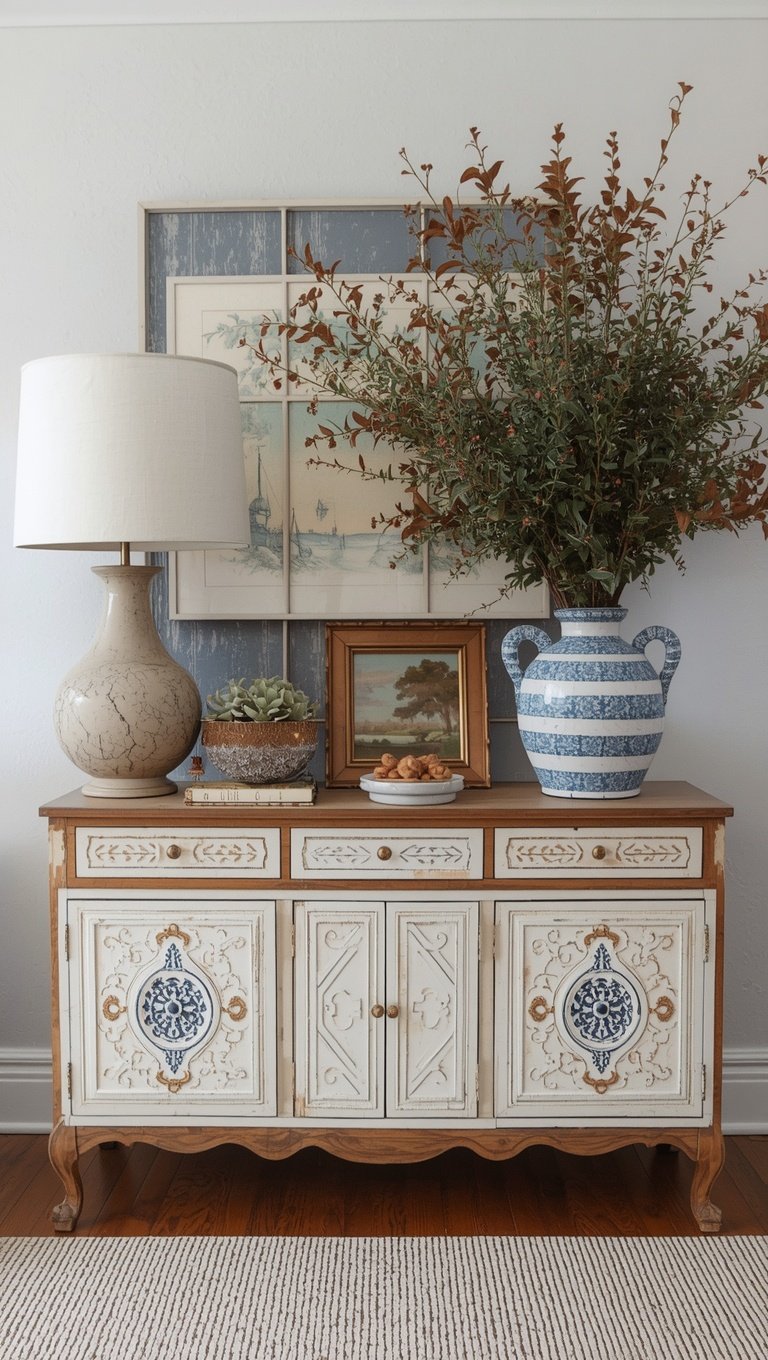
Instead of a modern vase, I use an old milk bottle or a chipped ironstone pitcher.
Even a mason jar works beautifully here, and it costs you nothing extra.
My tip: don’t overdo the arrangement.
A loose, slightly wild bunch of stems feels so much more natural than a tight, perfect bouquet.
I love simple eucalyptus, wildflowers, or even just a few sprigs from my own backyard.
Dried lavender bundles hung upside down near a window are another favorite of mine.
They add scent, texture, and that soft faded purple tone all at once.
In colder months, I swap flowers for a few dried wheat stems or pampas grass in the same vintage vessel.
It keeps that living, breathing feeling going all year long.
Greenery is such a small, affordable detail, but it’s the one that makes a room feel cared for.
A home without anything living in it can start to feel a little stiff, even with all the right furniture.
So keep something green or blooming nearby.
It’s such a simple habit, and it makes a bigger difference than people expect.
Layered Vintage Rugs

Rugs are where I see people rush the most, and it shows.
A single flat rug just doesn’t give you that cozy, collected farmhouse feeling.
In my own living room, I layer a large jute or sisal rug as the base.
Then I add a smaller vintage-style rug on top, slightly faded, with a soft pattern.
The mix of texture underfoot is honestly one of my favorite parts of the room.
My tip: choose a top rug with muted, worn-in colors, almost like it’s been walked on for decades.
Bright, saturated patterns feel too new and pull away from that old-soul feeling.
I also love a runner in a hallway that looks like it came from an old farmhouse entry.
A little fraying at the edges is not a flaw here, it’s practically a feature.
If a true vintage rug is out of your budget, a machine-made vintage-style rug can still get you most of the way.
Just look for muted tones and a slightly distressed pattern print.
Layering rugs also helps zone a bigger open room, like separating a sitting area from a dining space.
It’s a small trick, but it adds so much warmth and definition all at once.
Family Heirlooms & Personal Touches Display

Okay, this last one is the most important, and it’s the one I think people skip.
You can buy every single item on this list, and your home still won’t feel like a true farmhouse until you add pieces that are actually yours.
In my own home, I display my grandmother’s old rolling pin on a kitchen shelf.
Right next to it sits a small framed photo of her farmhouse kitchen from decades ago.
Those two objects mean more to me than anything I’ve ever bought new.
My tip: look through old family boxes before buying more decor.
An old quilt, a chipped teacup, a hand-written recipe card, these things carry weight that new items simply can’t fake.
If you don’t have family pieces, ask around.
Grandparents, aunts, neighbors, estate sales, they’re often thrilled to pass things along to someone who’ll actually love them.
Frame an old letter, display a worn cookbook, hang a quilt over a chair back instead of folding it away in a closet.
These personal touches are what separate a farmhouse-style home from an actual farmhouse home.
One feels like a look you bought.
The other feels like a life you’re living.
And that, to me, is the whole heart of this style.
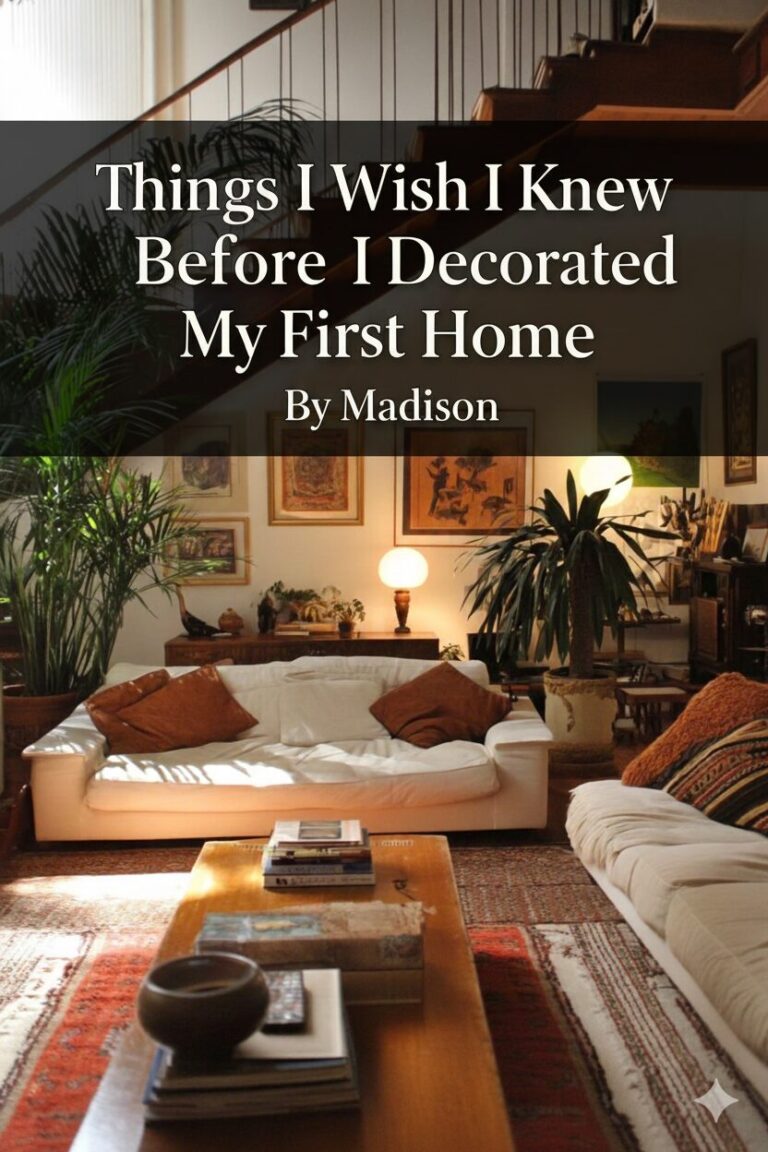
Related read: Things I Wish I Knew Before I Decorated My First Home — Instant PDF + Kindle download. Secure checkout by Stripe