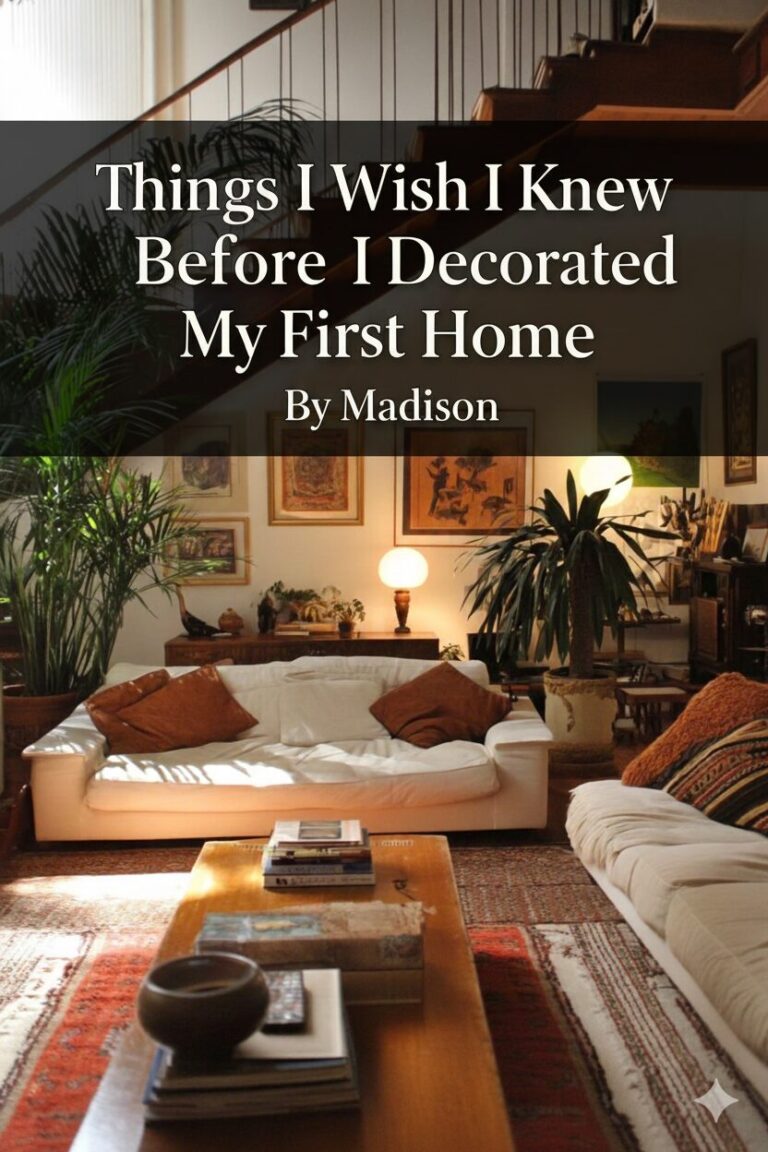

The first thing people touch when they walk into your home is not your paint color.
It’s your railing.
I didn’t think about that until a friend grabbed mine, made a little face, and said “oh, this is sturdy” in the tone you use when something is definitely not stylish.
That comment lived in my head for weeks.
So one Saturday morning, coffee in hand, I decided the railing was getting a glow-up whether it liked it or not.
What I learned that weekend changed how I look at entryways completely.
Your railing isn’t just a safety feature, you guys.
It’s basically the handshake your home gives every single guest.
And once you start seeing it that way, you can’t unsee it.
Why Your Stair Railing Is Doing More Work Than You Think

Okay, real talk for a second.
Your eyes go to your staircase the moment you walk through the front door.
It’s just how sightlines work in most entries.
So if that railing is dated, scuffed, or just kind of “builder basic,” it’s quietly setting the tone for everything else.
I noticed this so clearly in my own place.
My walls were freshly painted, my console table was styled within an inch of its life, and yet the whole entry still felt unfinished.
The railing was the missing piece.
It’s the thing your hand touches on the way up, and touch matters more than we give it credit for.
There’s something so satisfying about a railing that feels solid and looks intentional under your palm.
Cheap-feeling hardware, on the other hand, kind of undoes all your hard work.
So before you repaint another wall or buy another lamp, take a hard look at your railing.
It might be the one upgrade doing the least amount of work for the biggest visual payoff.
That’s kind of my whole philosophy with entries, honestly.
Small, high-touch details over big expensive overhauls.
Matte Black Iron: The Instant Upgrade

If I had to pick one trend that earns its hype, it’s matte black iron railings.
I know, I know, everyone and their sister has done matte black anything at this point.
But there’s a reason it keeps showing up.
It reads modern and traditional at the same time, which is such a rare combo.
When I swapped my old oak spindles for slim black iron ones, the whole staircase suddenly looked architectural instead of just functional.
It’s such a chameleon finish too.
It works with farmhouse, with modern coastal, with moody traditional, honestly with almost everything.
My tip here is to go with a matte finish, not glossy.
Glossy black can feel a little harsh and cold in an entry.
Matte softens it just enough to feel warm.
If you’re renting or not ready to commit to iron spindles, there are peel-and-stick and wrap options now that mimic the look.
I haven’t personally tried those, but I’ve seen friends do it with surprisingly good results.
The one splurge-worthy version is solid iron with a hand-forged look.
It costs more, but it feels like a piece of furniture, not a fixture.
And that’s the feeling you’re chasing here.
Cable Railings for a Modern, Airy Feel
Cable railings are having a real moment, and I get it completely.

There’s something about those thin horizontal lines that just opens a space up.
My sister did this in her split-level and I was genuinely jealous.
It lets light travel through the staircase instead of getting blocked by chunky spindles.
If your entry feels a little dark or boxed in, this is worth considering.
The look is very clean, very California-modern-meets-mountain-house.
It pairs beautifully with wood posts, which keeps it from feeling too industrial or cold.
I’d lean wood posts over metal ones if warmth is what you’re after.
One thing to know going in: cable systems usually need professional installation for the tension to be safe and code compliant.
This isn’t really a DIY-in-an-afternoon project, more of a “hire it out and enjoy it forever” situation.
It’s worth every penny in my opinion.
The emotional payoff is huge because the staircase almost disappears visually, and your eye just floats up toward the light.
If you have a small entry, this trick alone can make it feel twice as big.
That’s the kind of upgrade that changes how a whole room breathes.
Mixing Wood and Metal for Warmth

Pure black iron can sometimes feel a little stark if your home leans cozy.
That’s where mixing wood and metal comes in, and honestly it’s my favorite combo of all time.
Think black metal balusters with a warm wood handrail on top.
The metal gives you that modern edge, and the wood keeps everything grounded and touchable.
When I did this in my own hallway, it instantly felt more “lived in home” and less “showroom.”
There’s a warmth to wood grain under your hand that metal just can’t replicate.
My tip is to match your handrail wood tone to your flooring, not your furniture.
That one small choice ties the whole staircase into the architecture of the house.
If your floors are a warm oak, go warm oak on the rail too.
If you’ve got walnut floors, pull that same deep tone into the handrail.
It creates this seamless flow from floor to railing that feels expensive without actually being expensive.
Variation idea: try a lighter whitewashed wood rail with black metal for a more coastal, relaxed feel.
Or go deep walnut with black iron for something moodier and more dramatic.
Both are gorgeous, it really just depends on the vibe you’re chasing for your home.
The Power of a Fresh White Paint Job

Sometimes the answer isn’t a full railing replacement at all.
Sometimes it’s just paint, and I love that for you if that’s where you’re at.
A tired, yellowed white railing can drag down an entire entry without you even realizing it’s the culprit.
I lived with mine for way too long before I connected the dots.
A crisp, true white paint job on spindles and railing can feel like a total refresh.
The trick is using the right paint and prep, because stairs get touched constantly.
Skip the wall paint and grab a proper trim or door paint made for high-touch surfaces.
It dries harder and holds up so much better over time.
Sand lightly first, even if it feels tedious.
That step is what keeps your paint from chipping within a month.
I learned that one the hard way, unfortunately.
My personal recommendation is a warm white rather than a stark white.
Something like a soft cream reads more expensive and less clinical in most entries.
It also hides everyday scuffs a little better, which matters if you’ve got kids or pets running up and down those stairs all day.
Swapping Out Spindles Without a Full Renovation

You do not need to replace your entire railing system to change its whole personality.
This is something I wish someone had told me sooner.
Spindles alone can be swapped while keeping your existing handrail and posts.
It’s a much smaller project and a much smaller budget too.
I did this in a rental years ago and the landlord barely noticed the difference in cost, but guests absolutely noticed the difference in look.
Simple square spindles instead of ornate turned ones can modernize things instantly.
Or go the other direction and add a few decorative iron spindles mixed into wood ones for texture.
That mixed pattern is so unexpected and so pretty in person.
My hack here is to only replace every third or fourth spindle with a statement piece if budget is tight.
It creates rhythm without requiring you to buy dozens of new pieces.
Always double check your local code for spacing requirements before you start removing anything, especially if you have little ones at home.
Safety first, always, no exceptions there.
But once code is sorted, this is such a satisfying weekend project with a genuinely dramatic before and after.
Rope Railings for a Coastal, Cozy Vibe

If your home leans coastal, nautical, or just breezy and relaxed, rope railings are so charming.
I first saw this on a trip to a friend’s beach house and could not stop thinking about it.
There’s something so tactile and warm about rope under your hand instead of cold metal.
It photographs beautifully too, if we’re being honest about how much we all care about that.
The look works best with Natural Wood Tones and lighter color palettes throughout the entry.
I wouldn’t pair this with a super modern, sleek interior, it just clashes a bit.
But in a cottage, a lake house, a beachy bungalow, it’s absolutely perfect.
My tip is to choose marine-grade rope if you’re anywhere near humidity or coastal air.
Regular rope will wear and fray faster than you’d like.
It’s a small detail that makes a big difference in how long this look lasts.
Variation idea: use rope just on the top handrail while keeping simple wood spindles below.
That way you get the texture without going full rope-everything, which can feel like a lot for some spaces.
It’s a softer, more subtle way to bring in that coastal warmth.
Wall-Mounted Floating Rails for Small Entries
Small entries and narrow staircases benefit so much from this idea.

A wall-mounted rail with no spindles at all can visually open up a tight space in a way that’s honestly kind of magic.
I tried this in a narrow hallway staircase and the difference in how open it felt was wild.
Without vertical spindles breaking up the sightline, your eye just travels straight through.
The wall becomes part of the design instead of competing with a bulky railing system.
This works especially well if you paint that stairwell wall a soft, moody color.
The rail almost disappears against it, and the color does all the visual work instead.
My favorite version of this is a simple black metal rail mounted directly to a warm painted wall.
It feels minimal, modern, and surprisingly cozy all at once.
One thing to know: this style requires solid wall anchoring since it’s taking on all the structural weight.
Definitely worth having a pro check your wall type before installing.
Once it’s in though, it’s low maintenance and really easy to keep clean, which is a nice bonus for busy households.
Curved Iron Balusters for Old-House Charm

If your home has any age or character to it, lean into that instead of fighting it.
Curved, scrolled iron balusters bring such old-world charm to a staircase.
I’m a sucker for anything that feels like it has a story, and these do.
They work beautifully in homes with original moldings, arched doorways, or vintage hardware already in place.
The scrollwork catches light in such a pretty way throughout the day.
In the morning it throws these delicate little shadow patterns across the wall, and I genuinely love that.
My tip is to keep the rest of your entry more streamlined if you go this route.
Ornate railings paired with an already busy entry can start to feel cluttered fast.
Let the railing be the statement piece and simplify everything else around it.
A plain runner, minimal wall art, maybe one great light fixture.
That restraint is what lets the railing’s detail actually shine instead of getting lost.
It’s a beautiful option if you’re trying to honor an older home’s original character while still feeling fresh and cared for.
My Favorite Weekend Paint Hack
Okay, this one is so simple but it genuinely surprised me with how much impact it had.

Two-tone your railing.
Paint the spindles one color and the handrail a slightly different, deeper shade.
I did black spindles with a slightly warmer charcoal handrail and it added this subtle depth I wasn’t expecting.
It sounds like a small thing, but it makes the railing look custom instead of store-bought.
My hack is to use painter’s tape and take your time on the transition line where handrail meets spindle.
That clean line is what sells the whole effect.
Rush it and it just looks messy instead of intentional.
I’d budget a full Saturday for this, mostly for dry time between coats.
Two thin coats always beats one thick, drippy one.
Trust me on that, I’ve made the drippy mistake more than once.
This is honestly one of the most budget-friendly upgrades on this whole list.
A couple cans of paint, some tape, and a free weekend can genuinely transform how your entry feels.
Lighting That Makes Your Railing Glow

Nobody talks about this enough, so let’s talk about it.
Lighting changes how your railing reads more than almost anything else on this list.
A pendant light hung near the base of your stairs can throw the prettiest warm glow across black iron or wood grain.
I added a simple brass pendant near mine and suddenly the railing looked intentional, almost sculptural, at night.
Wall sconces along the stairwell do something similar if you have the wall space for it.
They create these soft pools of light that catch every curve and texture in your railing.
My tip is to choose warm bulb temperatures, nothing cool or blue toned.
Cool lighting makes iron feel cold and unwelcoming, and warm lighting makes it feel rich and cozy.
If you’re not ready for an electrician, even a plug-in floor lamp near the base of the stairs can do wonders.
It’s such an easy, low-commitment way to test the effect before going bigger.
I did that for almost a year before finally hardwiring a sconce, and honestly the floor lamp already made me so happy.
Light really is the secret finishing touch most people skip.
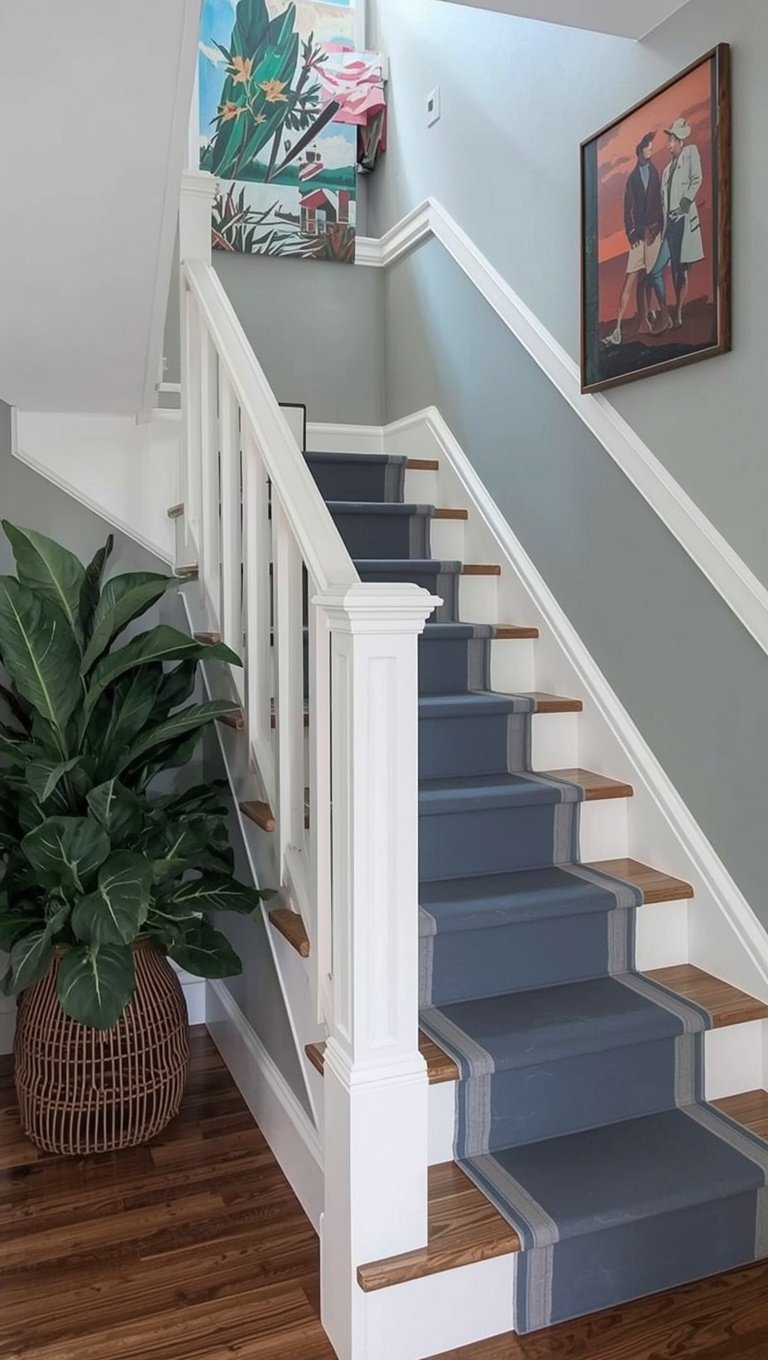
Pairing a Runner Rug With Your New Railing

Your stair runner and your railing are basically dance partners.
They need to move together, not compete for attention.
If your railing is going bold and black, I’d keep your runner more textural and neutral.
Something like a woven jute or a soft striped wool in muted tones.
If your railing stays simple and wood-toned, that’s your chance to bring in a patterned or colorful runner instead.
I made the mistake once of doing a bold railing and a bold patterned runner together, and it was honestly a lot.
Like, visually loud in a way that stressed me out every time I walked by.
One statement element per staircase is my rule now.
My tip is to hold fabric swatches right up against your railing finish before committing to anything.
Lighting changes color so much, and what looks great online can look totally different against your actual iron or wood tone.
It only takes a few minutes and it saves you from an expensive return.
When these two elements are in sync, the whole staircase feels styled instead of just decorated.
Related read: Things I Wish I Knew Before I Decorated My First Home — Instant PDF + Kindle download. Secure checkout by Stripe