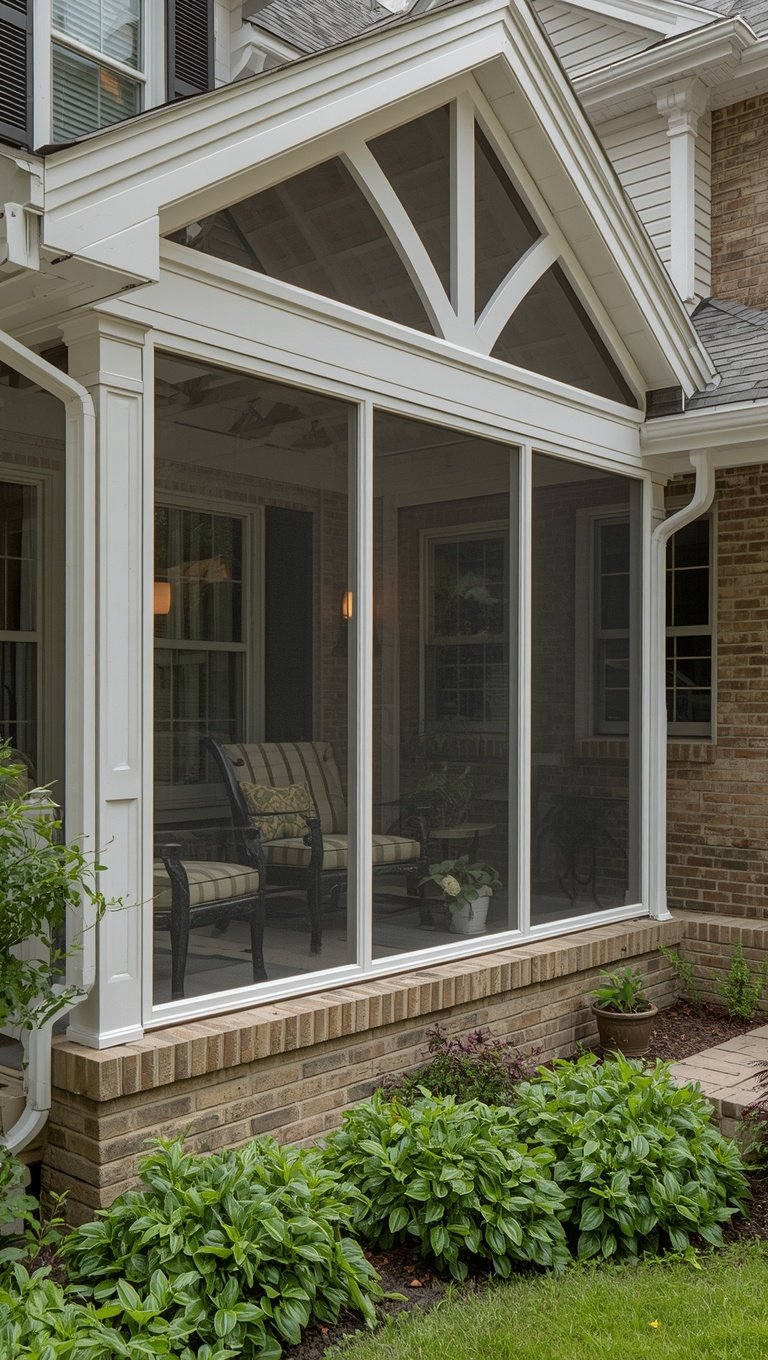

Okay, so here’s the thing nobody tells you.
A screened porch doesn’t feel like an outdoor space.
It feels like a room your house was always missing.
The second you add a real ceiling, real flooring, and walls made of screen instead of drywall, your brain just… accepts it as interior space.
I noticed it the first week mine was done.
I kept walking out there with my coffee like it was my living room, because to me, it kind of was.
And that’s the emotional trick that makes this upgrade feel so much bigger than its price tag.
You’re not just adding square footage.
You’re adding a whole new mood to your house.
A place that’s yours, that smells like fresh air, but still feels held and cozy.
When I had friends over last summer, every single one of them asked if we’d done a full addition.
Nope.
Just a screen, a slab, and a little vision.
That reaction alone tells you everything about how much visual and emotional value this project delivers.
If you’re on the fence, let this be your sign.
Sometimes the smallest structural change creates the biggest shift in how your home actually feels to live in.
The Real Cost Math (And Why It Beats a Full Addition)

I’m going to be honest with you because that’s just how I roll.
A full room addition can run you an eye watering amount, and that’s before you even pick a paint color.
A screened porch, on the other hand, skips so many of the expensive parts.
You’re not pouring new deep foundations in most cases.
You’re not running full HVAC into the space.
You’re not framing insulated walls or adding drywall, taping, and mudding.
You’re basically building a covered structure with screen panels instead of windows, and that changes the entire budget conversation.
When I priced mine out, it landed at roughly half of what a comparable enclosed addition would have cost.
Sort of wild when you think about how much use we get out of it.
We eat breakfast there.
We nap there.
My husband takes every single work call from that porch now, and I don’t even blame him.
If you’re working with a tighter budget, this is honestly one of the smartest square-footage-per-dollar moves you can make on an older home.
And if you already have a covered patio, you’re even further ahead, because sometimes all you need is the screen system itself.
That was actually my exact situation, and it cut my project timeline down by weeks.
Picking the Right Spot on Your House

This part matters more than people think.
I made the mistake of almost putting mine on the side of the house that gets zero breeze, and my contractor gently talked me out of it.
You want to think about where your natural airflow moves through your yard.
You also want to think about the view you’ll actually be looking at every single day.
For me, it was a no-brainer once I stood in a few different spots with my morning coffee and just paid attention.
The back corner near our garden won, hands down.
If you have a small backyard, I’d genuinely start by connecting the porch to your kitchen or dining area.
That flow makes entertaining so much easier, because you’re not walking guests through the whole house to get outside.
Another thing I wish someone told me sooner.
Consider your afternoon sun.
A west-facing porch can turn into a greenhouse by 4pm in summer, and that kind of heat kind of kills the whole cozy vibe you’re going for.
North or east facing spots tend to stay more pleasant longer into the day.
If you’re not sure, just sit outside at different times for a weekend before committing.
Trust me, that lazy little research project pays off big time once the structure is permanent.
Flooring That Makes It Feel Like a Real Room, Not Just a Patio
This is where the magic really happens, in my opinion.
Bare concrete says patio.
The right flooring says room.
I went with a warm toned composite decking that mimics real wood, and it completely changed how the space reads.
Tile is gorgeous too if your climate allows it, and it gives that indoor-outdoor look that feels so elevated.
If you want a softer option underfoot, some people go with painted or stained concrete and layer in a durable outdoor rug on top.
That’s actually what I’d do if I had a smaller porch and a smaller budget, because rugs are an easy way to add color without a huge investment.
Whatever you choose, avoid anything that feels cold or purely functional.
You’re trying to trick your brain into thinking you’ve stepped into a living room, remember.
So the floor has to carry some of that emotional weight.
I still remember the first time I walked out there barefoot after it was finished.
It felt substantial under my feet, warm, intentional.
That’s the feeling you’re chasing.
Little tip from me to you, go a shade lighter than you think for small porches, because it keeps the whole space feeling airy and open instead of boxed in.
Furniture That Blurs the Line Between Indoors and Out

I’m a little obsessed with this part of porch design.
You don’t have to buy strictly “outdoor” furniture anymore, and that’s honestly a game for how these spaces feel.
Since you’re protected from rain and direct sun by the screen and roof, you have way more flexibility.
I mixed in a vintage rattan chair I found at an estate sale with a more traditional weather resistant sofa.
The contrast gives it that collected-over-time look instead of a showroom set.
If I had a smaller porch, I’d lean into a single statement chair, a small side table, and skip the full seating set entirely.
Less furniture, more breathing room, always reads more expensive.
Layer in pillows in a mix of textures, because that’s what makes a space feel finished and lived in.
I did linen mixed with a chunky boucle, and it instantly felt like a magazine spread.
A small drink table between two chairs does more emotional work than people expect.
It says, stay a while, have a conversation, don’t rush off.
That’s the energy you want your porch to give off.
Warm, unhurried, a little bit indulgent.
Lighting That Turns It Into Your Favorite Room After Sunset

Nobody talks about this enough, but lighting is what makes a porch feel magical at night instead of just… dark.
String lights are the obvious starting point, and honestly, they’re still my favorite.
I did two rows crisscrossed across the ceiling, and it instantly gave that soft glowy ambiance I was craving.
But don’t stop there.
A small table lamp on battery power adds this cozy, almost living-room level of warmth.
I also added a lantern with a flickering LED candle, and it’s silly how much I love it.
If you can swing it, install a dimmer on any hardwired fixture, because full brightness kills the mood instantly.
You want golden, low, flattering light, the kind that makes everyone look a little softer and happier.
My favorite nights out there involve almost no overhead light at all, just the string lights and a few candles scattered around.
It feels like a secret little world tucked onto the side of my house.
And when the bugs are staying outside the screen while we’re glowing in that soft light inside it, there’s genuinely nothing better.
If you only do one upgrade from this whole list, let it be the lighting.
It’s the cheapest change with the biggest emotional payoff, hands down.
Ceiling Fans and Airflow Tricks That Keep It Comfortable

A screened porch without airflow can turn sticky fast, especially in summer.
This is where a ceiling fan earns its keep.
I went with a wet-rated fan since mine isn’t fully enclosed from the elements, and that distinction actually matters for longevity.
The difference in comfort was almost instant once it was installed.
Even on a still, humid evening, that gentle circulating air keeps things from feeling stagnant.
I run mine on the lowest setting most nights, just enough to keep things moving without blowing napkins off the table.
If your porch runs long instead of square, consider two smaller fans instead of one large one.
That was a tip from our contractor, and it made the airflow so much more even across the whole space.
A few oscillating floor fans work in a pinch too, if you’re not ready to commit to ceiling wiring yet.
Honestly, that’s how I started, and I upgraded to the ceiling fan about a year later.
No shame in doing this in phases, by the way.
Some of my favorite porches were built exactly that way, slowly, one improvement at a time.
Choosing the Right Screen (Because Not All Screens Are Equal)

I had no idea how many options existed here until I started researching.
Standard fiberglass screen is the classic choice, and it’s budget friendly and easy to replace if it ever tears.
But if you want a more invisible, high-end look, there are finer mesh options that basically disappear from your eyeline.
We went with a slightly heavier mesh on the side facing our neighbor’s yard, just for a touch more privacy.
That small decision made a bigger difference than I expected.
If you deal with serious sun exposure, solar screen options can cut glare and heat while still letting the breeze through.
Some porches now use retractable screens too, which let you fully open the space up when the weather is just too good to screen off.
That’s on my someday wish list, not gonna lie.
For now, our fixed screens do the job beautifully, keeping mosquitoes and gnats out while letting every bit of breeze wander through.
There’s something so satisfying about hearing rain on the roof while staying completely dry and bug free.
It’s one of those small sensory pleasures I didn’t know I needed until I had it.
Cozy Textiles That Make It Feel Finished

Textiles are the fastest, cheapest way to make any space feel intentional.
A porch is no different.
I layered an oversized outdoor rug under the seating area, and it instantly grounded the whole room.
Throw pillows in a mix of patterns add personality without much cost at all.
I rotate mine seasonally, which is such a fun little ritual honestly.
Curtains on the outer edges are my personal favorite trick.
They soften the hard lines of the screen and add this dreamy, billowy movement whenever the wind picks up.
I hung mine on a simple tension rod system, nothing fancy, and they’ve held up beautifully through two summers.
A soft throw blanket draped over the arm of a chair signals comfort before anyone even sits down.
It’s a small detail, but it whispers, relax, stay a while.
If your budget is tight, start with pillows and a rug, then build from there.
Those two elements alone do about eighty percent of the emotional lifting in any space, in my humble opinion.
Storage That Keeps the Space Functional, Not Just Pretty

A gorgeous porch that’s cluttered with random outdoor gear stops feeling special pretty fast.
I learned this the hard way with a pile of gardening tools that lived out there for way too long.
A simple storage bench solved almost everything.
It gave us extra seating and hidden space for cushions, blankets, and citronella candles all at once.
A vertical cabinet tucked into a corner works if you have deeper storage needs.
I painted ours to match the trim, so it blends in instead of standing out.
Baskets are another easy win, and they add texture while hiding smaller items like sunscreen, bug spray, or the remote for our fan.
Keeping surfaces mostly clear makes the whole porch feel more like a curated room and less like a catch-all.
That was a mindset shift for me, honestly, treating it with the same care I’d give my actual living room.
Once I did that, I started using it that way too, which was really the whole point from the beginning.
Seasonal Touches That Keep It Feeling Fresh All Year

This is one of my favorite parts of having a porch, ready or not.
It becomes this little canvas you get to restyle throughout the year.
In spring, I swap in lighter linens and fill a few pots with fresh herbs and flowers.
Summer is all about the boldest colors I own, because the light out there just makes everything glow.
By fall, I bring in warmer tones, some pumpkins, a chunky knit throw, and suddenly it feels like a completely different room.
Even in colder months, if your climate allows it, a porch can stay usable with a small space heater and heavier textiles.
We use ours through most of the year here, just adjusting layers as the seasons shift.
Changing things up seasonally also keeps the space from ever feeling stale or forgotten.
It gives me a little decorating project every few months without the commitment of redoing an entire room.
Honestly, it scratches that itch for change in the coziest, lowest stakes way possible.
Privacy Considerations Nobody Mentions Until It’s Too Late

I didn’t think about this until our porch was almost finished, and I’m so glad someone flagged it in time.
Screens let light and air through, but they also let a surprising amount of visibility through too, especially at night with the lights on inside.
If your porch faces a neighbor’s yard or a street, this is worth planning for early.
We added privacy panels on two sides using a lattice insert, and it made a huge difference without blocking the breeze.
Tall potted plants or a small hedge outside the screen line can soften sightlines too, and they look beautiful doing it.
Curtains, like I mentioned earlier, pull double duty here as both style and privacy.
I close ours on the side facing the street once it gets dark, and it instantly feels more like a private retreat.
If privacy is a big concern for you, think about screen placement and landscaping together, not as separate decisions.
They really do work best as a team.
Nobody wants to feel like they’re on display just for wanting to enjoy their own backyard in the evening.
Small Budget Hacks That Still Look High End

I love this part because it’s basically my whole personality when it comes to decorating.
You do not need a huge budget to make this space feel special.
Secondhand furniture, refreshed with a coat of paint or new cushions, saves so much money and adds character you can’t buy new.
String lights are cheap and do more visual heavy lifting than almost anything else on this list.
A single splurge item, like one great lantern or one gorgeous rug, can anchor the whole space even if everything else is budget friendly.
I did that with my rug and kept the rest of my choices simple.
Thrifted mirrors or art can make a porch feel like an actual room instead of an afterthought.
Even a small side table from a garage sale, sanded and repainted, can look custom with a little love.
If I had a small hallway budget for this whole project, I’d prioritize lighting first, textiles second, and furniture last, because you can always upgrade furniture slowly over time.
The bones matter more than the price tags, every single time.
This whole project taught me that the coziest spaces are rarely the most expensive ones.
They’re just the most intentional.