
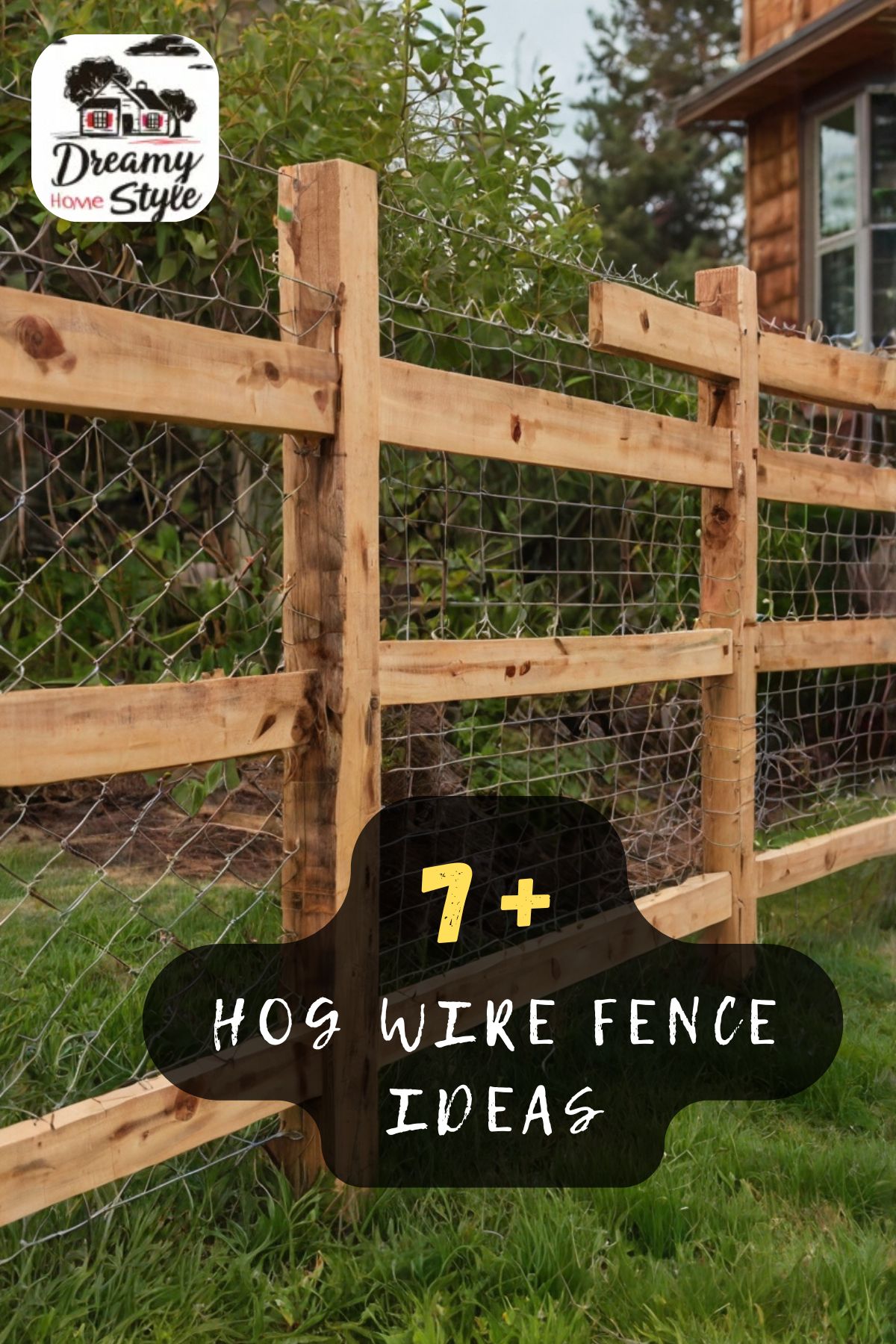

Okay, so first things first — hog wire is basically a welded wire mesh panel, originally used on farms to contain livestock.
But somewhere along the way, designers and homeowners started noticing that this humble, gridded panel had a kind of raw, architectural beauty to it.
And the rest, as they say, is history.
The panels are made from heavy-gauge galvanized wire, welded into a grid pattern, and they’re incredibly sturdy.
When you frame them in wood — usually cedar or redwood — or even steel tubing, the combination creates this open, airy fence that feels modern without trying too hard.
I love it because it doesn’t block your view, it doesn’t trap heat, and it has this slightly industrial-meets-organic vibe that pairs beautifully with almost any landscaping style.
Think climbing roses spilling over it, or jasmine threading through the grid.
Seriously swoon-worthy.
If I had to describe the feeling it gives a yard, I’d say it’s like the difference between wearing a heavy coat and wearing a linen blazer — same coverage, completely different energy.

My Favorite Wood + Hog Wire Combo (The Classic for a Reason)


When I finally committed to redoing my fence, I went with cedar posts and rails paired with hog wire panels, and I have zero regrets.
Cedar is naturally resistant to rot and insects, which is a huge deal when you’re investing in a fence that’s supposed to last.
It also has this warm, honey-toned color when it’s fresh, and it weathers to a soft silvery gray over time that I personally find even more beautiful.
The hog wire panels sit inside the cedar frame like a picture in a frame — clean, intentional, and a little artsy.
And because the wire is galvanized, it stays rust-resistant even through rainy seasons.
I went with a 4×4 wire grid opening on my panels, which gives that classic open-weave look without feeling too industrial.
If you want something a little more refined, a 2×4 grid is slightly tighter and gives a more polished aesthetic.
Both are gorgeous — it just depends on your vibe.
My personal tip: stain your cedar before assembling the fence, not after.
You get way more even coverage, and trust me, trying to paint around those wire panels is a headache you do not want.
The Modern Black Steel Frame Look I’m Kind of Obsessed With

Okay, so the cedar combo is classic and warm — but if your home leans more contemporary or industrial, a black powder-coated steel frame with hog wire is absolutely stunning.
I spotted this at a neighbor’s house last spring, and I literally stopped my car to stare.
The contrast of the matte black steel against the silver wire grid is so sharp and intentional-looking.
It photographs beautifully, which, let’s be honest, matters.
This style pairs especially well with homes that have black window frames, concrete patios, or a more minimalist design aesthetic.
It’s the kind of fence that makes your backyard look designed, not just enclosed.
The steel frames are usually welded or bolted together with square tubing, and many local metal fabricators can custom-build panels for you.
It’s a bit pricier than wood, but the longevity and zero-maintenance factor are honestly worth it.
No staining, no repainting, no warping.
If I were starting from scratch with a modern home, this is the direction I’d go without even blinking.
Pair it with ornamental grasses or black-eyed Susans for planting, and the whole thing looks like something out of a luxury landscape magazine.
Using Hog Wire as a Garden Trellis Fence (Two Jobs, One Beautiful Structure)

This is one of my absolute favorite ideas, and it’s so smart that I wish I’d thought of it sooner.
Because hog wire has all those open grid squares, climbing plants absolutely love it.
Roses, clematis, honeysuckle, wisteria, cucumber vines — they all weave through that grid like it was made for them.
Which, in a way, it was.
When I added a section of hog wire fence along my vegetable garden bed, I leaned into this fully.
I planted climbing beans on one side and a beautiful climbing rose called ‘New Dawn’ on the other.
By midsummer, the fence had become this living, blooming wall that smelled incredible every time you walked past.
The structure supports the plants without you having to add extra trellises or stakes, so it’s genuinely doing double duty.
And visually, a hog wire fence covered in green vines and flowers softens that industrial edge in the most gorgeous way.
If you have a small backyard or a tight side yard, this approach is your best friend.
It adds privacy, beauty, and function without making the space feel smaller.
Trust me on this one.
Horizontal Rail Hog Wire Fencing for That Sleek, Custom Look

There’s something about horizontal lines in a fence that just feels instantly elevated.
When you run your cedar or redwood rails horizontally — rather than the traditional vertical post-and-rail style — and tuck hog wire panels between them, the result is this long, low, architectural look that feels custom and intentional.
I’ve seen this style used to border a driveway, and it looked more like a designed landscape feature than a simple fence.
The horizontal lines draw the eye outward, which actually makes narrow spaces feel wider.
That’s sort of a genius little optical trick.
For this style, I’d recommend spacing your rails about 18-24 inches apart vertically, which creates just the right proportions.
You can go with three rails for a shorter fence or four to five rails for something taller.
Stain them in a deep espresso brown or a warm gray for maximum visual impact.
And if your property has a slight slope, horizontal fencing handles that grade change more gracefully than vertical styles — you can step the panels instead of raking them, and it still looks intentional.
This is the style I’d absolutely choose if I had a longer fence run where I wanted something that felt cohesive and designer-level without breaking the bank.
Adding a Hog Wire Fence to Your Front Yard (Yes, Really)

I know, I know — front yard fencing can feel risky.
Too tall and it looks unwelcoming, too short and it feels pointless.
But hog wire in the front yard, done right, is genuinely charming.
A low hog wire fence — think 3 to 4 feet tall — with a simple cedar frame and a pretty gate creates this cottage-meets-modern curb appeal that stops people in their tracks.
When I was visiting my cousin in Colorado last summer, her neighbor had done exactly this, with white-painted cedar posts, silver wire panels, and a little climbing rose arching over the gate.
I stood there on the sidewalk for a full minute just taking it in.
It looked like something you’d find in a small French village, but also completely at home in a modern American neighborhood.
The key is proportion — keep the fence low enough that it feels welcoming, not defensive.
Add some soft landscaping right at the fence line — lavender, salvia, or ornamental grasses — and the whole thing looks curated rather than utilitarian.
It’s one of those ideas that sounds a little unexpected but lands really beautifully in practice.
My Tips for a DIY Hog Wire Fence (What I Wish I’d Known Before I Started)

Okay, real talk — I DIY’d a section of my hog wire fence myself, and I learned a few things the hard way so you don’t have to.
First: your posts are everything.
If your posts aren’t plumb and evenly spaced, nothing else will look right, no matter how pretty your panels are.
Rent or borrow a post-hole digger, go at least 2 feet deep (deeper if you’re in a frost zone), and use concrete to set them.
Don’t skip the concrete.
Second: buy a fencing stapler or a pneumatic staple gun to attach the wire panels to the wood frame.
Hand stapling with a hammer is honestly miserable and the staples never go in clean.
Third: stretch the wire tight before you staple it.
Loose wire sags over time and looks sloppy.
Use a wire stretcher tool or even just a pair of pliers and a helper to pull the panel taut before you fix it in place.
And finally — wear gloves.
The cut edges of hog wire are sharp and unforgiving, and I have the tiny scars to prove it.
It’s a totally doable project for a weekend warrior, I promise.
Just plan more time than you think you’ll need.
Hog Wire Fence Panels as Outdoor Art Walls

This one might be my most unexpected favorite idea, and it’s something I genuinely never would have thought of on my own.
You can use hog wire fence panels — framed and mounted on a patio or garden wall — as a display structure for outdoor art, hanging planters, lanterns, and little decorative objects.
Think of it like a giant pegboard for your outdoor space.
I’ve seen this done on covered patios where a framed hog wire panel is hung on a wall, and then small potted succulents in terracotta pots, vintage lanterns, and even small framed artwork are hooked and hung from the wire grid.
The effect is this layered, gallery-wall feeling but outdoors, and it’s so cozy and personal.
The grid squares of the wire make it incredibly easy to rearrange things whenever you feel like a refresh.
S-hooks work perfectly for hanging items, and they’re inexpensive and easy to find.
This approach is especially perfect for small patios or balconies where you want to add personality without taking up floor space.
It’s decorating UP, which is one of my favorite tricks in any small space.
And because hog wire is weatherproof, everything stays rust-free and sturdy season after season.
The Cost Breakdown: What to Expect When You Budget for This Project

Let’s talk numbers for a second, because I think one of the reasons people hesitate on hog wire fencing is that they assume it’s expensive.
And while it’s not the cheapest option out there, it’s far more affordable than most people expect — especially considering how long it lasts.
Hog wire panels themselves are generally quite budget-friendly, especially compared to decorative iron or vinyl.
The bigger cost factor is your framing material — cedar will cost more than pine, but it will also last much longer, so it’s worth the investment.
Steel frames cost more upfront but essentially zero for maintenance over time.
If you’re DIYing, you can significantly reduce your overall cost compared to hiring it out.
Labor is where fence projects really climb in price.
Get at least two or three quotes from local fencing contractors before committing, and ask specifically if they’ve worked with hog wire before — it’s a specific skill, and not everyone does it well.
My personal recommendation: DIY the simpler flat runs, and hire out any gate-hanging or tricky corners.
That’s the sweet spot between saving money and not losing your mind on a Saturday afternoon.
A well-built hog wire fence is genuinely one of the best investments you can make in your outdoor space — it adds value, beauty, and longevity.
Finishing Touches That Make a Hog Wire Fence Look Expensive

Here’s a little secret: the difference between a hog wire fence that looks Pinterest-worthy and one that looks… just okay, usually comes down to the finishing details.
Post caps are the first thing I always mention.
A simple flat cap on top of each post looks a thousand times more finished than a raw cut post, and decorative pyramid or ball caps add even more personality.
They’re inexpensive and take about two minutes to install.
Next: casing your wire edges.
Where the hog wire panel meets the wood frame, a thin strip of wood trim — a 1×2 nailed right over the edge — covers any rough wire ends and gives the whole fence a really clean, crafted look.
Stain or paint consistency matters enormously.
Even coverage, clean lines, and a color that complements your home’s exterior will elevate the whole project.
And finally — landscape it.
Plant something at the base of your fence.
It doesn’t have to be elaborate — even simple ornamental grasses or a row of lavender plants make the fence look like it belongs to the yard rather than just sitting in it.
That integration between the hardscape and the plantscape is what takes a fence from functional to genuinely beautiful.
And that’s the whole dream, isn’t it?
Why Hog Wire Fencing Just Feels Right for Right Now

There’s something about hog wire fencing that perfectly captures what so many of us are craving in our homes right now.
It’s honest.
It uses real materials — actual metal, actual wood — in a way that’s visible and intentional.
There’s no pretending it’s something it’s not.
And in a world full of vinyl, composite, and laminate everything, that kind of material honesty feels genuinely refreshing.
It’s also incredibly versatile in a way that few fencing styles can claim.
It works in a farmhouse yard with raised beds and chicken coops.
It works in a sleek, modern courtyard with concrete and ornamental steel.
It works climbing roses and it works with ornamental grasses.
It works in the front yard and the back, at the edge of a pool deck, or along a garden path.
That kind of versatility is rare, and once you see how many ways it can work, it’s really hard to go back to thinking of it as just a farm material.
When I look at my backyard now — with that open, airy fence framing the whole space, the light coming through the wire grid at golden hour, the roses just starting to thread their way through — I feel genuinely proud of it.
And that feeling?
That is exactly what a beautiful home should give you.