
So before I get into the dreamy part, let me back up for a second.
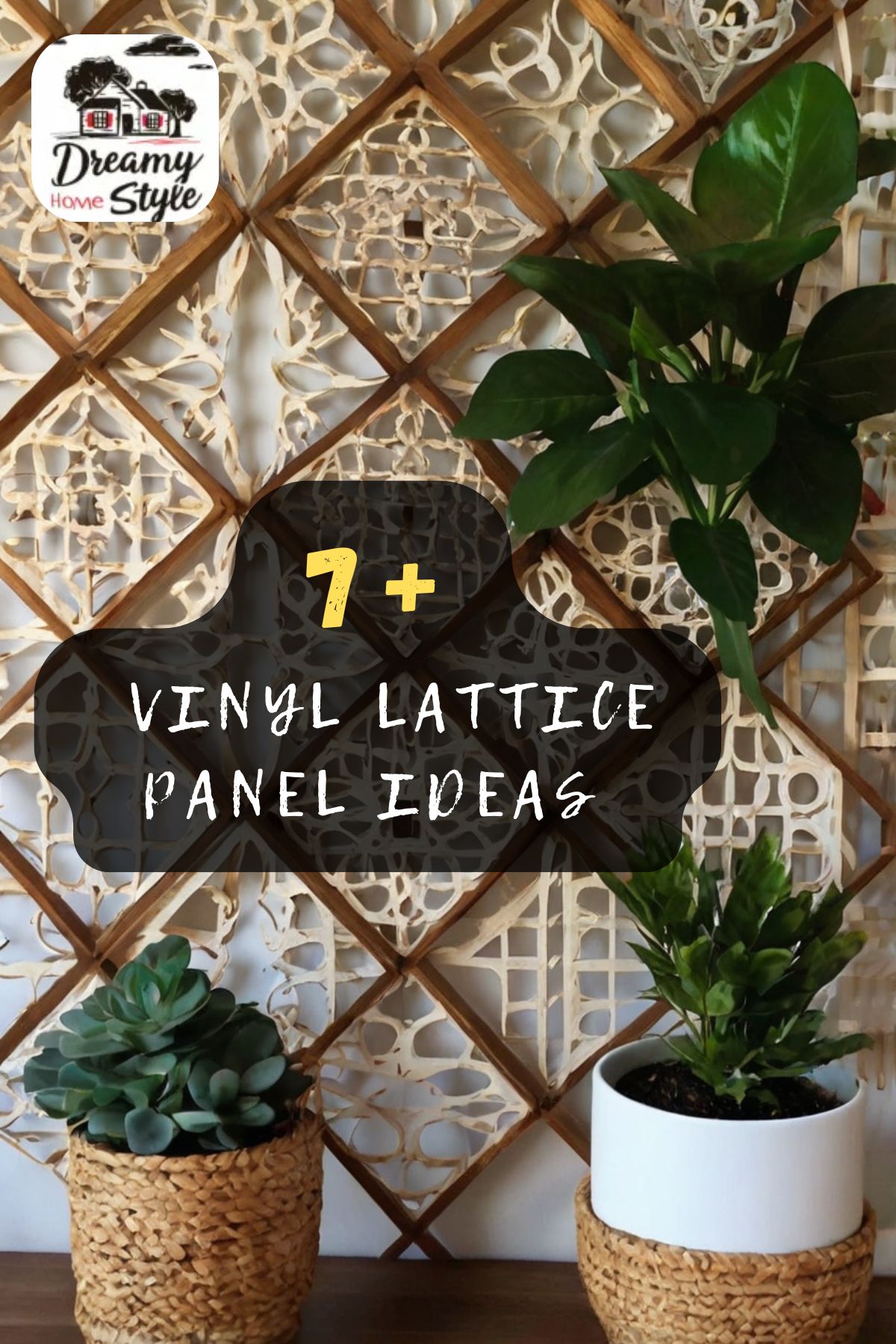
Vinyl lattice panels are basically those gorgeous grid-patterned sheets — you’ve seen them a thousand times — but made from PVC vinyl instead of wood.
They come in a crosshatch or diagonal pattern, in different sizes, and in colors like classic white, tan, gray, and sometimes even dark brown.
I always associated lattice with old-school cottage gardens or the bottom of a deck.
You know, kind of grandma-ish?
But when I actually started looking closely at how people were using them in modern outdoor design, I was genuinely surprised.
They can look so clean.
So intentional.
So elevated, actually.
The vinyl version specifically caught my attention because it doesn’t rot, it doesn’t splinter, and — this is the part I love most — it doesn’t need painting.
My neighbor has wood lattice and she’s out there every spring with a brush and a prayer.
Meanwhile, mine just… exists.
Looking good.
Doing nothing but being pretty.

Why I Chose Vinyl Over Wood (The Honest Truth)


I’ll be real with you — I almost went with wood because it felt more “natural.”
And there’s something warm and romantic about the idea of real wood in a garden, right?
But then I thought about my actual life.
I’m not someone who has free weekends to sand and repaint outdoor structures.
I want to enjoy my garden, not maintain it to death.
Vinyl lattice panels are completely weatherproof.
Rain, sun, humidity — none of it phases them.
They won’t warp.
They won’t crack (not in normal conditions, at least).
They genuinely hold their color for years without fading the way painted wood does.
When I tackled my own backyard project last fall, I realized I also didn’t want to deal with the weight of thick wood panels.
Vinyl is surprisingly lightweight, which makes DIY installation so much more manageable if you’re doing it solo or with just one other person.
And the cost?
Vinyl lattice panels are typically very budget-friendly — you can cover a lot of space without spending a fortune.
That alone sealed the deal for me.
I wanted beautiful and practical.
Turns out, I didn’t have to choose.
My Favorite Ways to Use Vinyl Lattice Panels in a Garden


Okay, this is where it gets fun.
Because these panels are so versatile, and I sort of went down a rabbit hole of ideas before I landed on what worked for my space.
The most classic use is as a privacy screen.
You mount the panels vertically along a fence line or a pergola, and suddenly you have this gorgeous, semi-private backdrop.
I used mine to block the view of my neighbor’s storage area (bless his heart, but I didn’t need to see that from my patio).
But you can also use them as a trellis for climbing plants.
Jasmine growing through white vinyl lattice?
Absolutely dreamy.
Roses?
Even better.
Another idea I’m obsessed with: using lattice panels to create a garden “room.”
You essentially section off a little nook of your yard with panels on two or three sides, add some string lights overhead, and suddenly you have an outdoor sitting area that feels like its own magical little world.
If I had a long, boring side yard, that’s literally the first thing I’d do.
You can also use them horizontally as a raised garden bed surround, or lean them decoratively against a wall with potted plants hanging from the grid.
The possibilities are genuinely endless.
How to Plan Your Vinyl Lattice Panel Project (Before You Buy Anything)


I made the mistake of buying panels before I properly measured, and I’m telling you — don’t do that.
Start by deciding what you actually want the panels to do.
Privacy?
Decoration?
Plant support?
All three?
Because that changes everything about what size, thickness, and style you need.
Standard vinyl lattice panels come in a few common sizes, usually around 4×8 feet, but you can find smaller options too.
Measure your space carefully.
Then add a little buffer for the framing, which I’ll talk about in a second.
Think about the look you want.
Diagonal lattice (the classic diamond pattern) has a more traditional, romantic feel.
Square lattice (where the grid runs straight up and down) looks more modern and architectural.
I went with diagonal white for my space because I wanted that soft, cottage-garden energy.
But if you have a sleek, contemporary outdoor space, square lattice in a gray or dark tone could look incredibly chic.
Also consider height.
Taller panels (six to eight feet) give you more privacy and drama.
Shorter panels work beautifully as decorative accents or garden borders.
Write it all down before you shop — you’ll thank yourself later.
Understanding Vinyl Lattice Panel Thickness (This Matters More Than You Think)

This is the detail most people skip, and then regret.
Vinyl lattice panels come in different thicknesses, usually ranging from about 1/4 inch to 1/2 inch.
Thinner panels are lighter and less expensive, but they flex more — especially in wind.
If you’re using your panels for a decorative purpose in a sheltered spot, thinner is totally fine.
But if you’re building something structural — like a freestanding privacy screen or a trellis that needs to hold the weight of climbing plants — go thicker.
I learned this the not-so-fun way when my first decorative panel, a thinner one I’d just leaned against a wall, went absolutely flying during a windstorm.
Nothing broke, thankfully.
But it was a good reminder that “heavy-duty” is worth the extra few dollars per panel.
Look for panels described as “standard,” “premium,” or “heavy-duty” on the packaging.
Some brands also offer a “thick” lattice that has noticeably more rigid structure.
If your project involves any kind of outdoor exposure — and most garden projects do — I’d always lean toward the sturdier option.
Also, thicker panels just feel more substantial and high-end.
It’s one of those small investments that makes a noticeable difference in the finished look.
The Framing Situation: How to Actually Install Vinyl Lattice Panels

I’m not going to pretend this is complicated, because it really isn’t.
But framing your panels properly is what separates a project that looks polished from one that looks like a quick fix.
Vinyl lattice panels need to sit inside a frame — usually made from PVC trim boards, pressure-treated wood, or aluminum channel.
The frame holds the panel in place, keeps the edges clean, and makes the whole thing look intentional.
If you’re attaching panels to an existing fence or wall, you can use simple wood furring strips to create a frame directly on the surface.
If you’re building a freestanding screen, you’ll need posts set in the ground (or weighted planters for a no-dig option).
There are also vinyl lattice frame kits available that are specifically designed to snap or clip around the edges of panels.
These are brilliant for beginners.
When I did my backyard project, I used PVC trim boards in white to match my panels, and the whole thing looked so clean and deliberate.
A few screws, some PVC cement at the corners, and I was done.
The biggest tip I can give you: don’t skip the frame.
Even the prettiest lattice panel looks unfinished when the edges are raw and exposed.
A little frame changes everything.
Making It Look Lush: Pairing Vinyl Lattice With Plants

This is honestly my favorite part of the whole thing.
Because lattice on its own is lovely.
But lattice covered in green and blooming things?
That’s where it becomes something you can’t stop looking at.
Climbing plants are your best friends here.
Clematis is one of my top recommendations — it climbs easily, blooms in the most gorgeous purples and pinks, and looks absolutely stunning against white vinyl.
Jasmine is another one I love because it smells incredible and has this delicate, romantic look.
For a more dramatic statement, try climbing roses.
They take a little more patience, but oh my goodness — a lattice covered in roses is one of the most beautiful things a garden can offer.
If you want faster results, annual vines like morning glories or black-eyed Susans are wonderful.
They fill in quickly and give you that lush, cottage feel within a single season.
You can also hang potted plants directly from the lattice grid using simple S-hooks.
I have little succulent baskets hanging from mine, and the way they look against the white panels in the afternoon light is chef’s kiss.
Herbs work too — imagine a kitchen garden wall with little pots of basil, mint, and rosemary hanging from a lattice panel right outside your back door.
So, so good.
Color Options and My Personal Favorite Picks

White is the classic for a reason.
It’s crisp, it’s clean, it makes everything around it look intentional.
And against green plants and garden foliage, white lattice just pops in the most satisfying way.
But white isn’t your only option, and honestly, some of the other colors are incredibly beautiful depending on your space.
Tan or almond tones are warmer and work beautifully in spaces with natural wood tones, earthy stone, or terracotta pots.
Gray lattice feels very modern and pairs gorgeously with metal planters, concrete pavers, and a more minimalist garden aesthetic.
Dark brown vinyl lattice gives you that wood-look warmth without the maintenance, and it can look really rich and sophisticated.
Black lattice is having a serious moment right now — it’s bold, graphic, and looks stunning against white walls or bright, colorful plantings.
My personal pick will always be white.
There’s something about the way a white lattice fence glows on a sunny afternoon, with shadows of leaves playing through the grid, that just makes me happy.
It feels like a French garden.
Like something out of a beautiful old movie.
But if your outdoor space has a dark, moody, or earthy vibe — don’t be afraid to go bold.
The color you choose should feel like an extension of your home’s personality.
Budget Breakdown: What to Expect to Spend

I know this is the part everyone wants to know, so let me be honest with you.
Vinyl lattice panels themselves are one of the more affordable outdoor materials out there.
A standard 4×8 panel typically runs somewhere between $15 and $40, depending on the thickness and where you buy it.
That’s genuinely not much for the visual impact you get.
Where costs can add up is in the framing and installation materials.
PVC trim boards, posts, concrete for post footings, screws, and any hardware — these things add up.
For a basic privacy screen covering maybe 8-10 linear feet, budget somewhere in the range of a few hundred dollars for everything including materials.
If you’re hiring someone to install it, labor will add to that.
If you’re doing it yourself (which is totally doable for most people), you keep costs beautifully low.
One budget hack I love: buy your panels in bulk if you’re covering a large area.
Some home improvement stores offer slight discounts when you buy multiple panels at once.
Also, don’t overlook the framing — PVC trim is usually very affordable and gives you that clean, finished look without spending much.
The whole point is that this is a project where you genuinely get more than you pay for.
The transformation is dramatic.
The cost doesn’t have to be.
Vinyl Lattice for Privacy: My Setup and What I’d Do Differently

If privacy is your main goal — and honestly it was mine — here’s what I’ve learned from actually doing this.
Taller panels make a bigger difference than you think.
I started with 6-foot panels, and while they were lovely, I realized I could still see (and be seen by) people on my deck.
I ended up extending to 8 feet on one section, and it changed everything.
Suddenly the space felt truly enclosed.
Cozy.
Private in the best way.
If you’re building a privacy screen, think about sightlines from multiple angles — not just straight on.
Sometimes you need panels on two sides, not just one, to actually feel screened in.
Also, lattice is not solid.
The open grid design lets light and air through, which is wonderful for plants and airflow, but it does mean it’s not a complete visual barrier.
If you want total privacy, you’d layer lattice with dense, fast-growing climbing plants to fill in the gaps over time.
Or look into solid vinyl fence panels with decorative lattice toppers — that combo gives you privacy at the bottom with beautiful, airy detail at the top.
If I were starting over, I’d also invest in a bit more framing hardware to make sure everything is rock solid.
Nothing worse than a screen that wobbles in the wind.
Anchor it well and it’ll last for years.
Decorating Around Your Vinyl Lattice Panels

Once the panels are up, the real fun begins.
Because lattice is such a neutral, structured backdrop, it works beautifully as a canvas for outdoor décor.
String lights are the obvious first move, and I’m not ashamed to say I have approximately three different strands draped across and around mine.
At night, the lattice catches the warm light in this gorgeous, dappled way that makes the whole corner of my yard look like something out of a fairy tale.
Hanging lanterns look beautiful tucked into the lattice grid too.
Outdoor artwork — yes, there is such a thing — can be hung directly on the panels.
A weatherproof metal sign, a decorative wreath, or a set of rustic outdoor mirrors can all transform a flat lattice wall into a real design moment.
I also love hanging a small chalkboard on the lattice near my herb garden.
It’s practical and adorable at the same time.
For a really cohesive look, let your color story flow from the panels into your furniture and planters.
If you have white lattice, white or natural wood furniture feels intentional.
If you’ve gone gray or dark, black metal furniture and terracotta pots look stunning.
Think of the lattice as the wall of an outdoor room.
Then decorate accordingly.
Maintenance Tips That Make Vinyl Lattice Worth Every Penny

Okay, this section is genuinely my favorite to write because it’s so satisfying.
Vinyl lattice panels need almost no maintenance.
There.
That’s the section.
Kidding, but only a little.
The main thing you’ll ever need to do is give them a rinse.
A garden hose does the job perfectly for general dust and debris.
If you get algae buildup — which can happen in humid climates or shaded spots — a gentle scrub with a soft brush and some mild soap takes care of it instantly.
No sanding.
No repainting.
No treating.
No sealing.
Just a quick wash and you’re done.
I genuinely spend maybe fifteen minutes a year on mine, and that’s it.
One tip: avoid pressure washing at very high settings, as it can potentially damage the surface or force water into joints.
A medium setting on a standard garden hose nozzle is more than enough.
If you live somewhere with very cold winters, keep in mind that vinyl can become slightly more brittle in extreme cold.
It’s generally fine, but avoid banging against it or putting heavy pressure on it mid-winter.
Other than that?
Just enjoy it.
That’s the whole point.
The freedom from weekend maintenance projects is genuinely one of the biggest reasons I recommend vinyl over wood every single time.
My Final Honest Thoughts on Vinyl Lattice Panels for Gardens

I’ve done a lot of garden projects over the years.
Some of them were way more effort than they were worth.
Some were underwhelming.
And some — like this one — genuinely made me fall back in love with my outdoor space.
Vinyl lattice panels fall firmly in that last category.
They’re affordable.
They’re low maintenance.
They’re versatile in a way that I don’t think most people fully appreciate until they start using them.
And they bring that cozy, layered, intentional feel to a garden that can be so hard to achieve on a budget.
Whether you use them for privacy, as a plant trellis, as a decorative backdrop, or all three — you’re going to be happy with the result.
I say that with the confidence of someone who has genuinely sat in her backyard on a warm evening, string lights glowing, jasmine weaving through white lattice, thinking I can’t believe how good this looks.
That feeling?
Totally worth it.