
There’s a specific kind of embarrassment that hits when your neighbor’s yard looks like a Pinterest board and yours looks like you gave up sometime last spring.
I’ve been there.
Overgrown edges, a sad little planter by the door, and a backyard that had real potential — buried somewhere under a lot of “I’ll deal with it later.”
Then one Sunday morning, coffee in hand, I just walked outside and looked at it differently.
Not as a problem to fix.
As a space waiting to become something.
And slowly — with some simple ideas, a little patience, and zero professional help — it actually did.
No landscape architect.
No enormous budget.
Just a few really good ideas applied with some love and consistency.
If your yard is sitting there right now feeling a little forgotten, I have you.
These are the ideas that genuinely changed mine.

Why a Simple Focal Point Changes Your Whole Yard

The very first thing I did in my own garden was stop trying to fix everything at once.
That’s the trap, right?
You look at the whole yard and feel overwhelmed, so you do nothing.
What actually worked for me was picking one spot — just one — and making it beautiful.
For me, it was a small corner near the back fence.
I added a pretty birdbath, surrounded it with lavender, and planted two small ornamental grasses on either side.
That’s it.
And suddenly, the whole yard felt like it had a purpose.
A focal point gives the eye somewhere to land.
It makes even the messiest garden feel intentional.
It could be a decorative planter, a garden sculpture, a water feature, or even a beautifully painted garden gate.
Whatever feels like you.
If I had a yard that felt totally chaotic, this is the very first thing I would do — before anything else.
Pick your focal point.
Make it gorgeous.
Watch how the whole space shifts.
My Obsession With Layered Planting (And Why It Works)


Okay, this one is a little bit of a game-changer — wait, I’m not supposed to say that.
Let me try again: layered planting is the thing that made my garden look like it belonged in a magazine.
The idea is simple.
You plant tall things at the back, medium things in the middle, and low-growing things at the front.
Tall ornamental grasses or flowering shrubs in the back.
Something like salvia or coneflowers in the middle.
And then creeping thyme or alyssum spilling over the front edge.
When I first tried this in my side yard, I honestly couldn’t believe how professional it looked.
It creates depth.
It makes the garden feel lush and full, even when you haven’t planted that many things.
And the textures — oh, the textures.
Soft feathery grass next to bold, wide hydrangea leaves next to tiny delicate ground cover?
That’s the kind of combination that makes people stop and ask, “Who did your garden?”
The answer is: me, with a lot of love and a little patience.
Adding a Garden Path (Even a Short One) Feels So Dreamy


I added a simple stepping stone path in my backyard a couple of summers ago, and I think about it every single time I walk outside.
It sounds small.
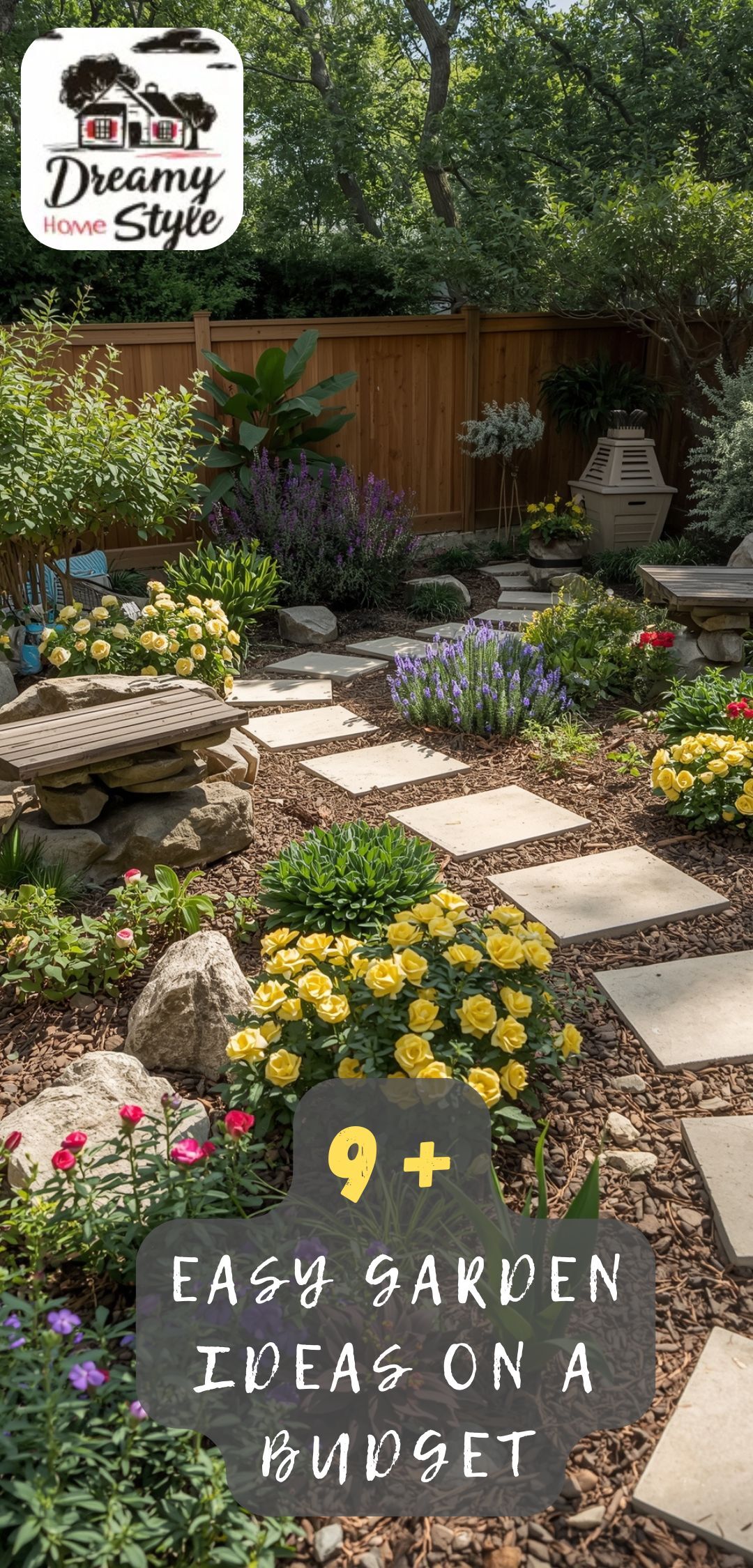
But there’s something about a path — even just five or six stones — that makes a garden feel complete.
It invites you in.
It says, “Come, walk here, explore.”
You can use classic round stepping stones from any garden center.
Or you can get creative with reclaimed wood rounds, flat river stones, or even broken concrete pieces arranged artfully.
I went with irregular flagstone, and I tucked creeping thyme between the gaps.
Now, every time I step on them, there’s this tiny release of that herby, beautiful scent.
Sensory gardening is a real thing, and I am fully here for it.
If you have a small yard, a path can actually make it feel bigger by guiding the eye through the space.
Even in a tiny urban garden, a winding little path adds so much character.
Trust me on this one.
Container Gardens Are My Absolute Favorite Trick

Containers are basically the cheat code of gardening.
I say that with full love and zero shame.
When I moved into a rental with a concrete patio and zero garden beds, containers are literally what saved me.
Big terracotta pots, wooden crates, vintage metal buckets — they all work.
You can create the most stunning little garden scenes without touching a single inch of actual ground.
My favorite combination right now is a large pot with a tall spike plant in the center, trailing sweet potato vine spilling over the sides, and bright flowers tucked in around the middle.
It’s called a “thriller, filler, spiller” combo, and once you know about it, you can’t unsee it.
Containers also let you move things around.
Not loving how something looks by the door?
Shift it to the corner.
Slide it to the patio.
Cluster three different sized pots together for an instant vignette.
They’re also great if you’re renting or if your soil is terrible.
Just fill them with good quality potting mix and go.
Honestly, some of my prettiest garden moments have come entirely from containers.
A Garden Bench Does More Than You Think


A bench in a garden is not just a place to sit.
It’s an invitation.
It’s a little promise that says, “This is a space worth staying in.”
When I placed a simple wooden bench at the far end of my garden — tucked slightly under a climbing rose — the whole garden transformed.
Suddenly there was a destination.
A reason to walk through the garden, not just around it.
I added a small lantern beside it and a flat stone underneath for stability.
In the evenings, I actually use it.
Tea.
A book.
Just sitting and listening to the birds.
If I’m being honest, that bench is probably my favorite thing I’ve ever added to my outdoor space.
You don’t need anything fancy.
A simple wooden bench, a metal bistro set, even a reclaimed pallet bench painted a pretty sage green — all of it works.
Just make sure it’s nestled into something.
Surrounded by plants, near a fence, under a pergola.
It needs to feel like it belongs somewhere, not just dropped in the middle of the grass.
Vertical Gardening Is Perfect for Small Yards

If your yard is tiny — like, really tiny — vertical gardening might be the thing that saves you.
I’m talking about growing up instead of out.
When I helped my sister redo her narrow city garden, we didn’t have much ground space to work with.
So we went vertical.
A simple wooden trellis against the fence.
We trained a climbing rose on one side and a fast-growing jasmine on the other.
Within one season, that plain wooden fence had become this lush, romantic green wall.
The scent of the jasmine in the evening?
Absolutely unreal.
You can also do vertical gardening with pocket planters — fabric or felt pockets that hang on a fence or wall and hold herbs, succulents, or trailing flowers.
They’re inexpensive, easy to install, and honestly so pretty.
Vertical elements also add height to a flat garden, which creates visual interest and makes the whole space feel more designed.
It tricks the eye in the best way.
Ground Cover That Actually Looks Intentional

Can I confess something?
For years, I just let weeds fill in the gaps between my plants, told myself I’d deal with it later, and then never did.
Sound familiar?
What changed everything for me was discovering the magic of intentional ground cover.
Creeping thyme is my forever love.
It’s low, it’s fragrant, it blooms in these tiny purple flowers, and it suppresses weeds like a dream.
Ajuga is another one I adore — it has these gorgeous dark purple-bronze leaves and little blue flower spikes in spring.
If you want something softer, baby’s tears or Irish moss gives you that lush, velvety green carpet look that feels almost fairy-tale-like.
Ground cover between stepping stones, underneath garden benches, along the edges of paths — it fills everything in and makes the garden look like you meant for it to look that way.
Which, of course, you did.
The difference between a bare-looking garden and a full, lush one is often just the ground cover doing its quiet, beautiful work.
A Small Water Feature Adds So Much Magic

Water in a garden changes the energy of the whole space.
I know that sounds dramatic, but I really mean it.
There’s something about the soft sound of trickling water that makes everything feel more peaceful, more intentional, more alive.
My first water feature was a $30 solar-powered fountain in a terracotta pot.
I filled the pot with water, dropped in the little pump, added some smooth river pebbles, and placed it in a sunny corner of my patio.
That’s it.
And the sound it made — this gentle, babbling little trickle — transformed my whole outdoor experience.
I started sitting outside more.
The birds found it almost immediately.
A little frog showed up, which I was absolutely delighted by.
You don’t need a pond.
You don’t need a professional installation.
A simple fountain in a pot or a small pre-formed basin with a recirculating pump is all it takes.
Solar-powered options make it even easier — no wiring, no electrician, no fuss.
Just sunlight and water doing their beautiful thing.
String Lights Turn a Yard Into Something Magical at Night

Daytime garden?
Lovely.
Evening garden with string lights?
Absolutely dreamy.
I hung warm Edison-style string lights above my patio a few years ago, and I think it’s the single best thing I’ve ever done for my outdoor space.
They run between two fence posts, zigzagging in a loose, casual way.
Nothing too stiff or formal.
Just this warm, golden glow that makes everything underneath look softer and prettier.
Outdoor dinner parties hit differently under string lights.
Even just reading a book outside in the evening becomes this whole mood.
If you have trees, you can wrap the lights around the branches.
If you have a pergola, string them overhead.
If you don’t have either, tall shepherd’s hook poles work beautifully to create anchor points.
Go for warm white — not cool white.
Warm white feels cozy and romantic.
Cool white feels like a parking lot, and we are not doing that.
The lighting in your garden at night is just as important as the plants you choose during the day.
Don’t sleep on this one.
My Favorite Low-Maintenance Flowering Shrubs

I love flowers.
I also love sleep, free weekends, and not spending every evening deadheading and watering with a level of dedication I simply do not have.
So low-maintenance shrubs?
My absolute people.
Hydrangeas are the obvious queen of this category, and I will not apologize for loving them.
Big, lush blooms that last for months, come in the most gorgeous shades of white, blush, blue, and purple, and honestly don’t ask that much of you once they’re established.
Spirea is another one I’m slightly obsessed with.
It comes in gorgeous gold or lime green foliage varieties and just explodes with tiny flowers in spring.
Knock Out roses are the answer for anyone who loves roses but has been scared off by how fussy they are — these ones are not fussy.
At all.
And butterfly bush?
If you want pollinators, movement, color, and fragrance all in one plant, butterfly bush is it.
I planted one in my back garden corner and the butterflies genuinely showed up within days.
It was one of those little garden moments that makes you feel like everything is okay.
The Power of Repeating Plants Throughout Your Garden

Here’s a styling secret that interior designers use all the time — and it works just as well in the garden.
Repeat yourself.
Pick two or three plants you love, and use them throughout different areas of your yard rather than using a completely different plant in every single spot.
When I redid my front garden, I used lavender as my repeating plant.
It’s along the path.
It’s in the corner bed.
It’s in a pot by the door.
And suddenly the whole front yard felt cohesive and designed — like someone had actually thought it through.
Which, for once, I had.
Repetition creates rhythm.
It tells the eye, “Yes, this all belongs together.”
Without it, a garden can feel like a random collection of plants.
With it, it feels curated.
You can do this with a color instead of a specific plant — repeating soft purple tones throughout, for example, in different flower varieties.
Or repeat a pot style.
Or repeat a texture, like spiky versus soft and round.
Any of these approaches will tie your garden together beautifully.
Making Your Yard Feel Like a Real Outdoor Room

This is the big-picture idea that brings everything else together.
Your yard — no matter the size — can feel like an actual room.
A living space.
An extension of your home.
When I started thinking about my backyard that way, my whole approach shifted.
I added a rug under the patio furniture.
Yes, an outdoor rug.
It anchored the seating area and made it feel like a room, not just furniture sitting on concrete.
I added a side table, a few lanterns at different heights, a plant stand with trailing greenery.
Suddenly it felt layered.
I thought about traffic flow — how you move through the space.
I thought about zones — a seating area here, a garden bed there, a little path connecting them.
Even a tiny yard can have zones.
And zones make it feel intentional and designed.
Your outdoor space deserves the same thoughtfulness you give to your living room.
Maybe more, actually, because it’s the space where you breathe.
Where you slow down.
Where the best summer evenings happen.