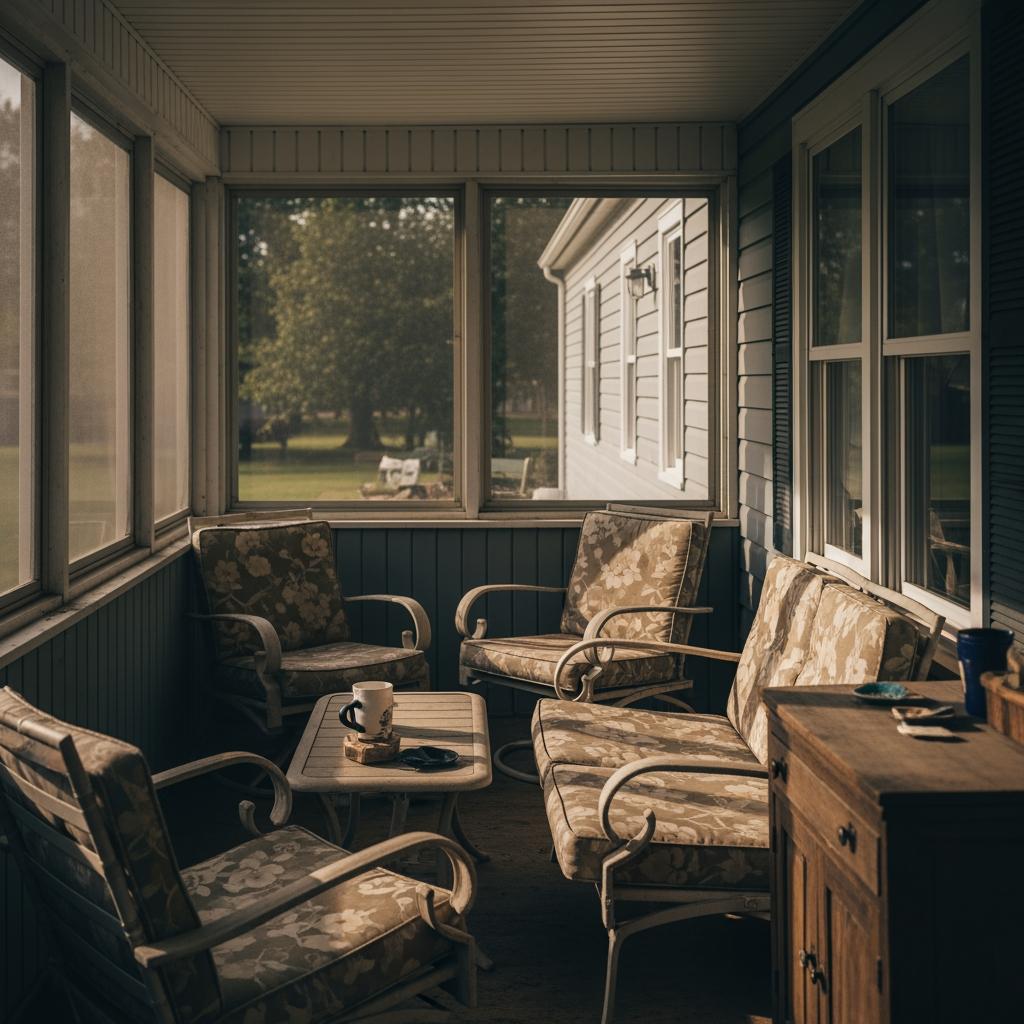
Last July I dragged my patio cushions out of storage, set them on my back porch chairs, poured my coffee, and immediately wanted to cry.
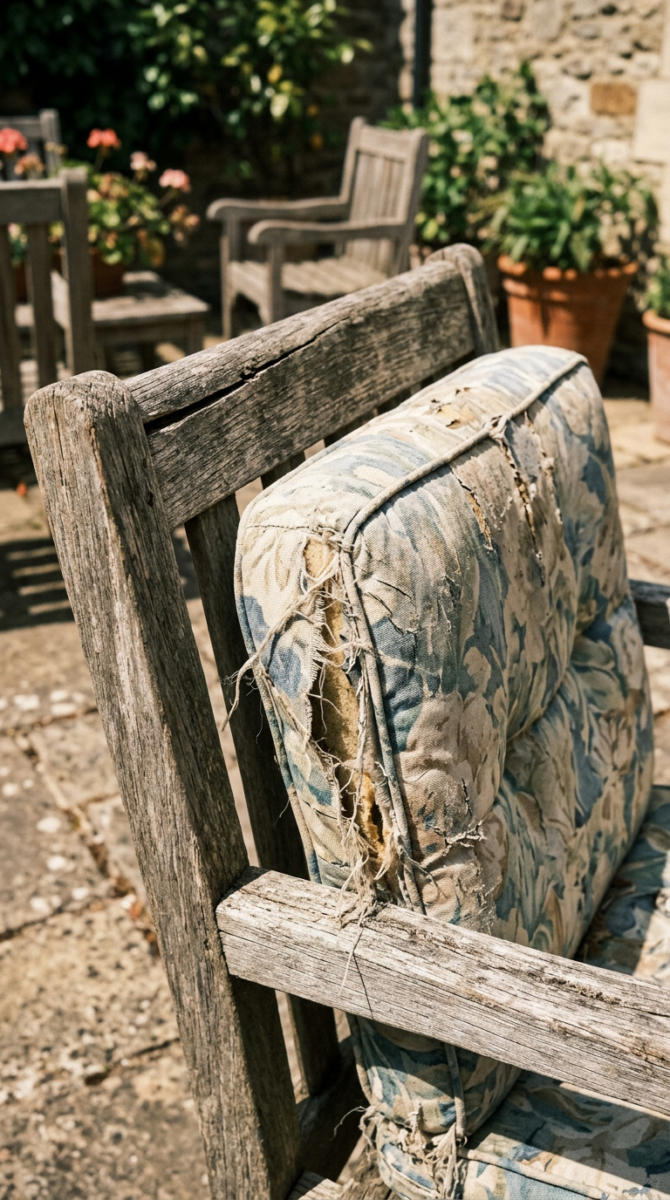
They were streaked with mildew, faded to this sad bleached-out beige that used to be coral, and one had a crack running along the piping like it had lived a very hard life.
I’d bought them two summers before.
Two summers.
I spent sixty-something dollars on those cushions and treated them like they were invincible.
Spoiler: they are not.
So I got obsessive about it.
I researched, I tested, I ruined a few more things in the process, and now my porch cushions are genuinely holding up.
Here’s everything I know.
Why Outdoor Cushions Die So Fast (It’s Not Just the Sun)
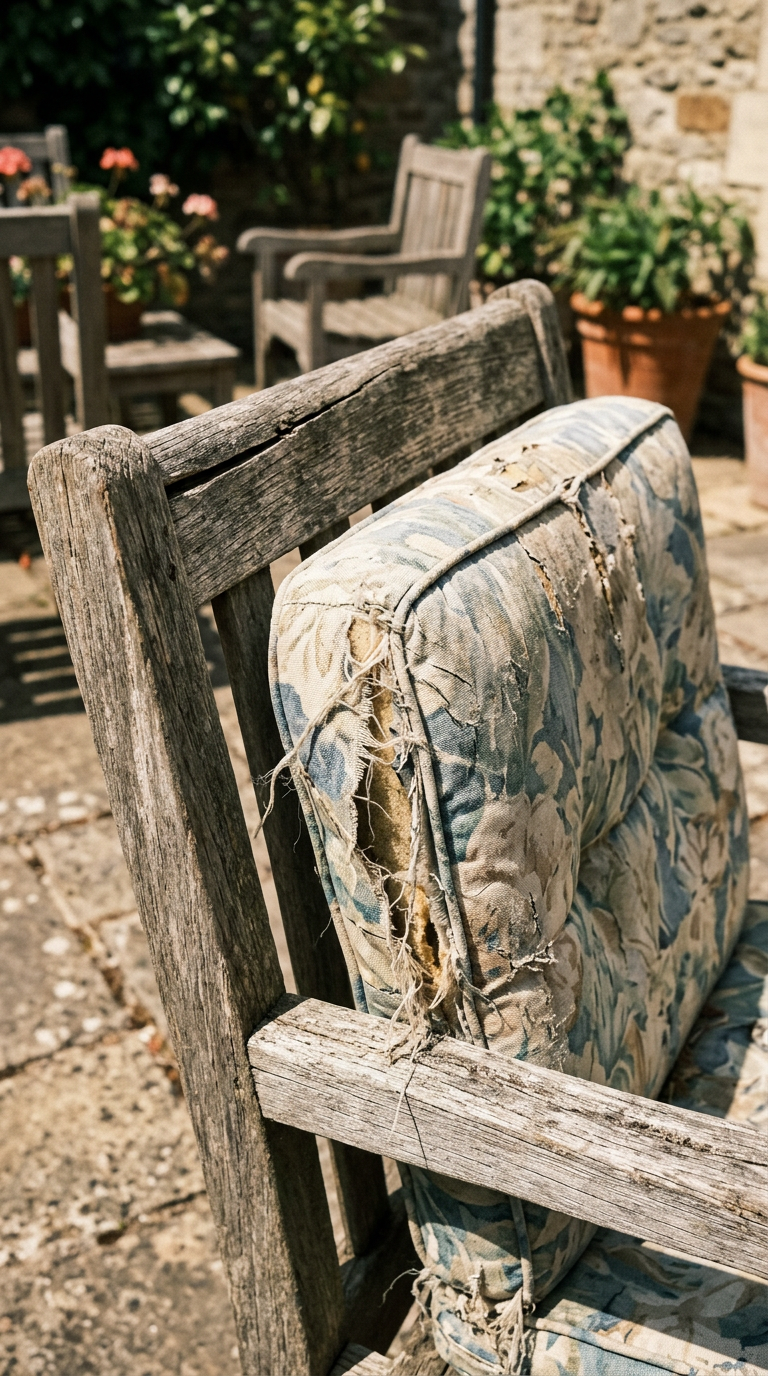
Most people blame fading on sun exposure, and sure, UV rays are brutal.
But honestly the bigger killer is the combination of things happening at once — heat, moisture that gets trapped inside the fill, mildew that starts growing before you even notice it, and then the freeze-thaw cycle if you live anywhere with real winters.
The fill is what really betrays you first.
Even if the fabric looks okay-ish, the foam or poly fill inside absorbs moisture every single time it rains or gets dewy overnight.
That moisture doesn’t fully dry out.
It just… sits there.
And then you’ve got a soft little mildew hotel on your porch.
I didn’t understand any of this when I bought my first set.
I thought outdoor meant weatherproof.
It doesn’t.
It means weather-resistant, which is a very different thing.
The cracking along seams and piping is usually the fabric drying out after repeated wetting and drying cycles.
It gets brittle.
There’s a fix for that, and I’ll get to it.
The Fabric Really Does Matter — Buy Smarter the First Time
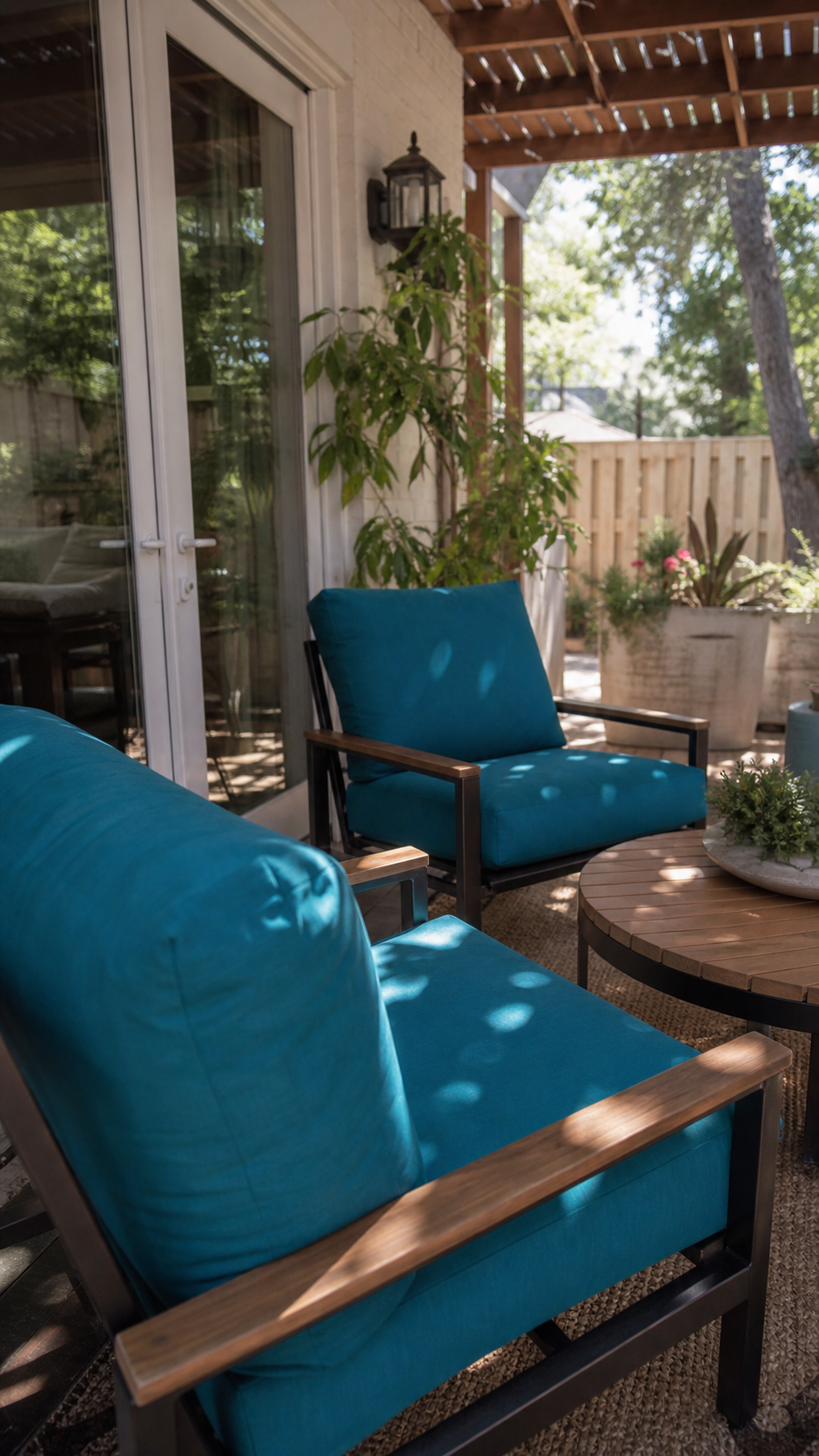
Okay this is where I’ll mildly contradict every budget tip you’ve ever read: cheap outdoor fabric costs you more in the long run.
I’ve been through four sets of bargain cushions.
I now own one set of Sunbrella-covered cushions that I bought secondhand at an estate sale for thirty bucks, and they look incredible after two full summers.
Sunbrella is the gold standard and everyone in the outdoor decor world knows it.
Solution-dyed acrylic means the color goes all the way through the fiber, not just on the surface.
So when UV hits it, there’s no coating to fade off.
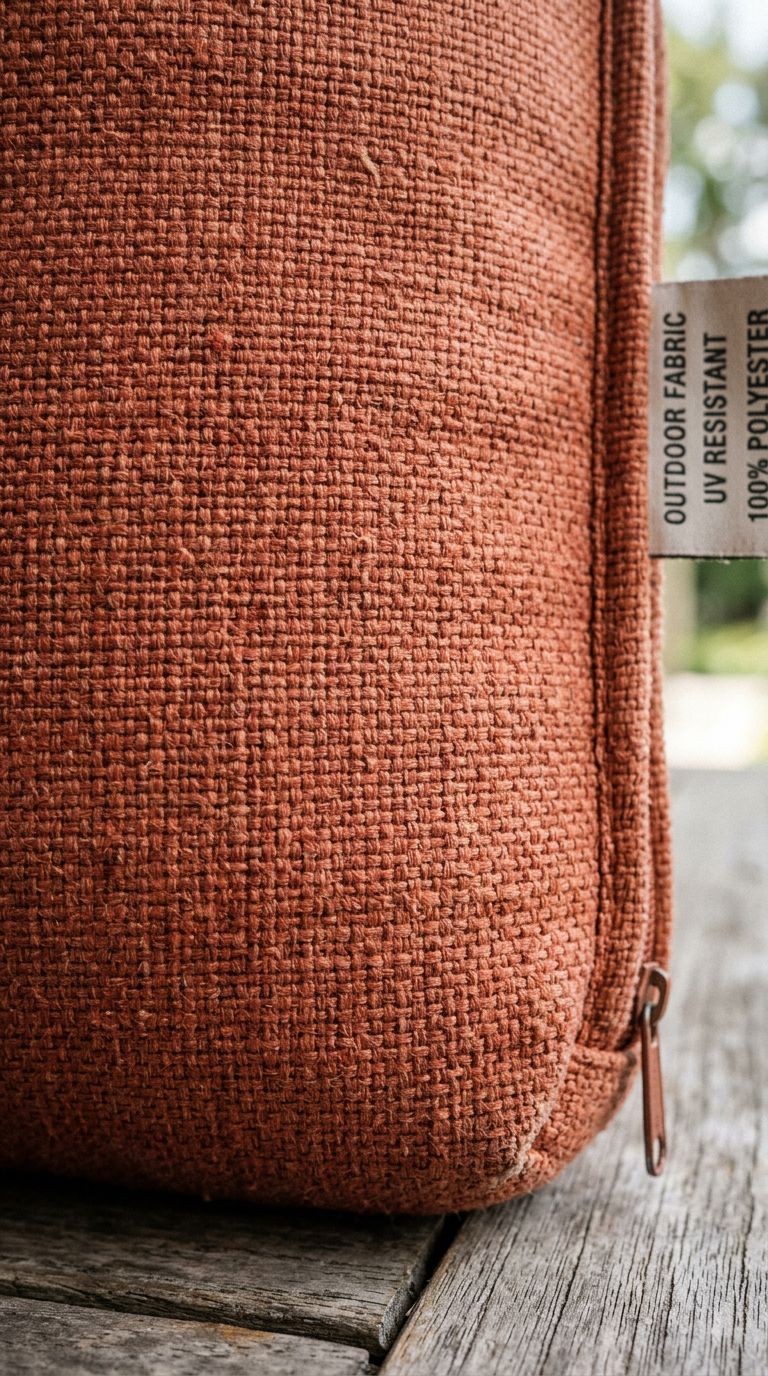
If Sunbrella new is out of budget (it is for me, always), look for estate sales, Facebook Marketplace, and outdoor furniture stores doing end-of-season clearance.
The fabric holds up, even used.
Other decent options: anything labeled solution-dyed acrylic or marine-grade fabric.
Polyester blends can be okay for covered porches.
For full sun?
Don’t bother with basic polyester.
It’ll be gray and sad by September.
My Actual Cleaning Routine (That Doesn’t Ruin the Fabric)
The first time I cleaned outdoor cushions I used straight bleach.
The mildew came off.
So did about half the color.
I stood there holding a very clean, very patchy cushion cover and felt genuinely stupid.
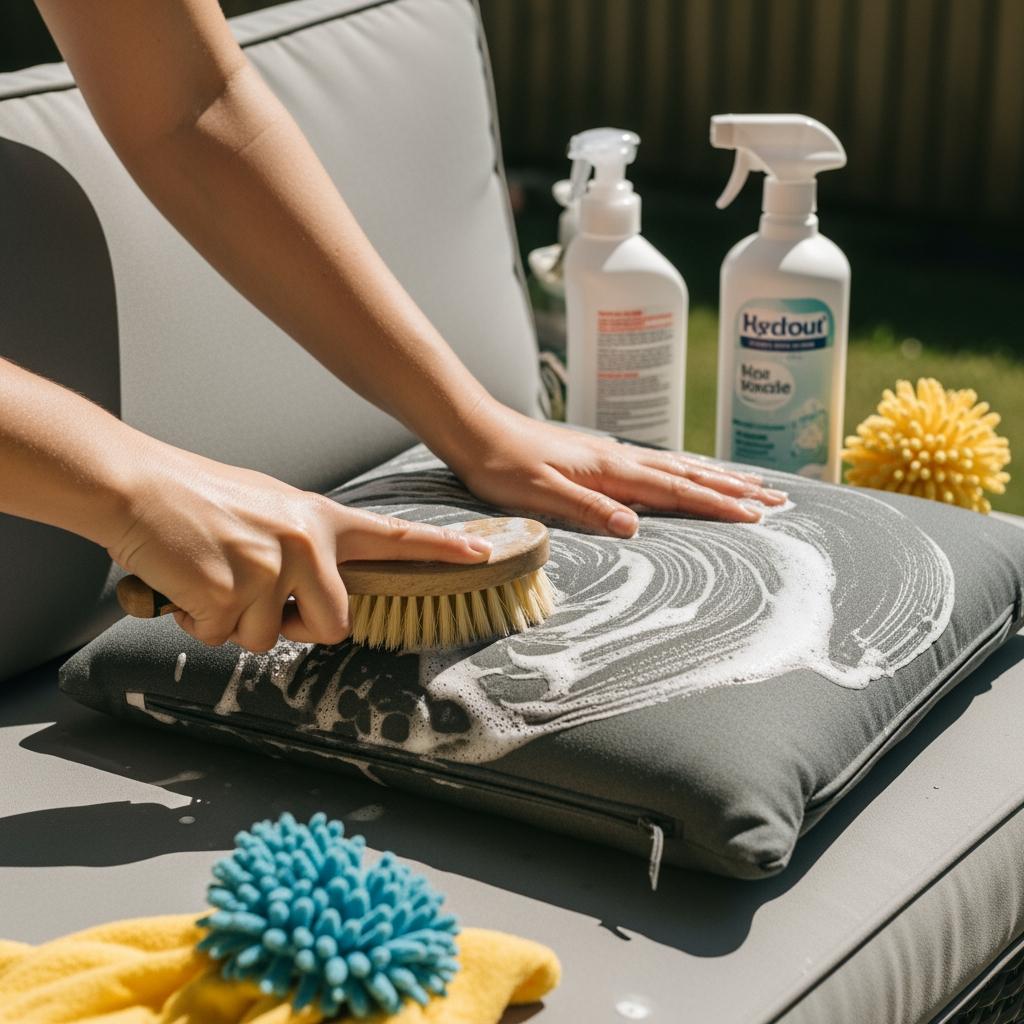
Now I use a mixture of mild dish soap, white vinegar, and warm water.
About a tablespoon of Dawn, a quarter cup of vinegar, in a bucket.
Scrub with a soft brush (I use an old dish brush), rinse really well, and let them air dry completely in the sun before putting them back on the chairs.
For actual mildew spots, oxygen bleach — like OxiClean, not chlorine bleach — is your friend.
Mix it per the directions, let it sit for ten minutes, scrub gently.
It lifts mildew without destroying the color.
I’ve used this on my coral cushion covers three times now and the color’s still pretty good.
Do this at the start of the season and once mid-summer.
Don’t wait until they look terrible.
Waterproofing Spray Is Not Optional — It’s What Changes Everything
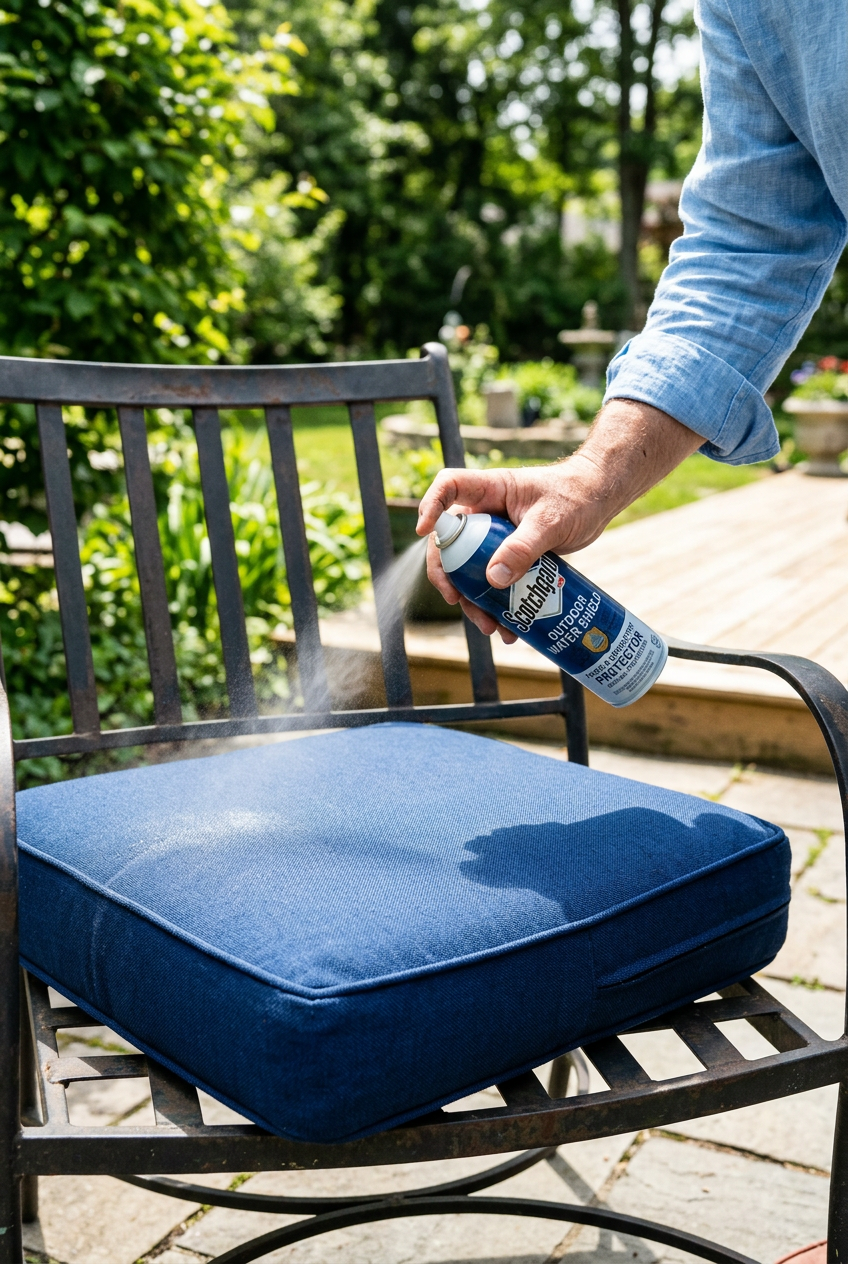
This is the single biggest thing I was not doing for the first three years of owning outdoor furniture.
I just… skipped this step.
Big mistake.
A fabric protector spray — I use 303 Fabric Guard, which runs about fifteen dollars and lasts a full season — creates a barrier that makes water bead up and roll off instead of soaking in.
That means less moisture getting into the fill, less mildew, less fabric breakdown.
It works.
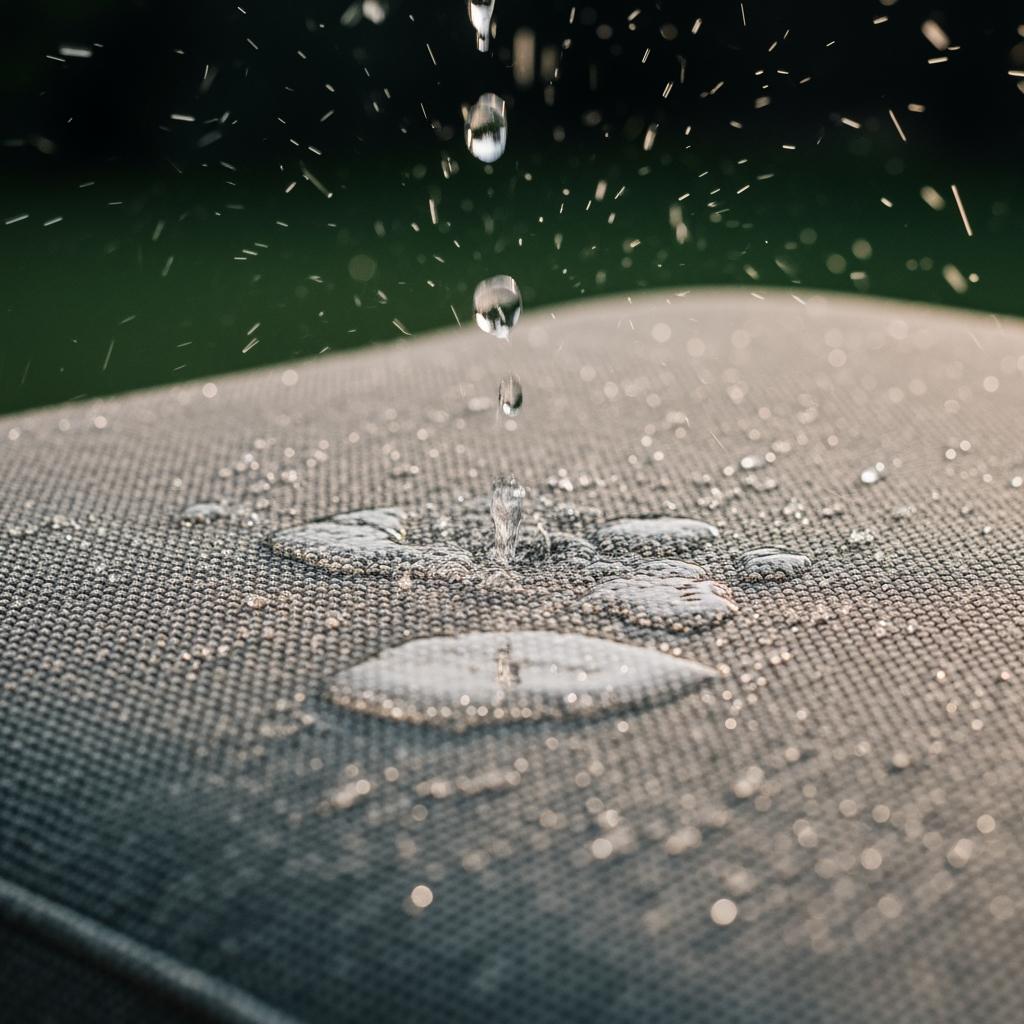
You spray it on clean, dry cushions.
Let it dry for a few hours.
Done.
Reapply once mid-season if you’re in a really rainy climate or if your cushions are in full, direct sun constantly.
It doesn’t change how the fabric feels or looks.
Biscuit still climbs on my porch chairs and leaves fur everywhere, but at least the moisture situation is handled.
(He has no respect for my efforts, by the way.)
The Storage Situation (Most People Get This Completely Wrong)
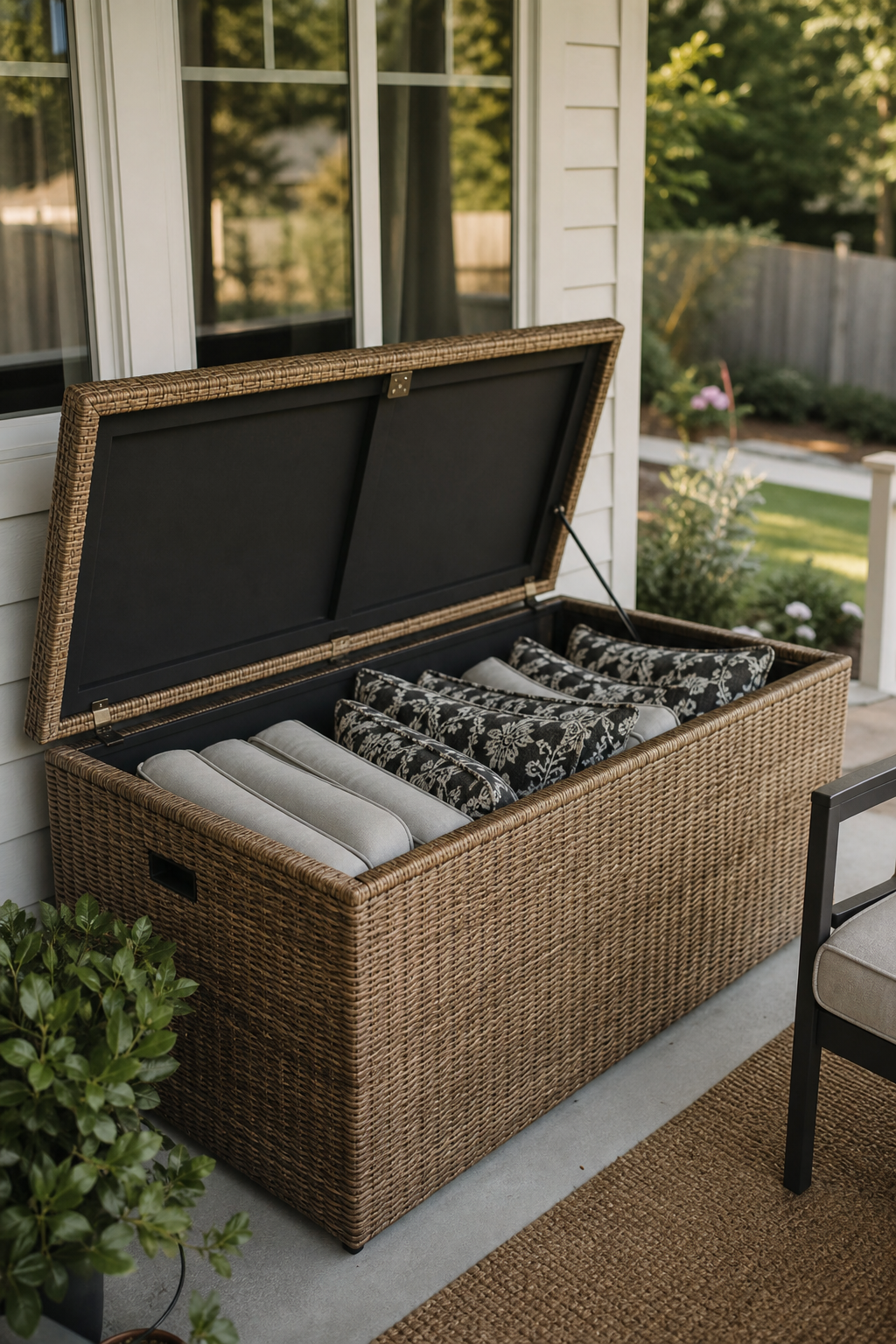
Stuffing damp cushions into a deck box is how mildew dreams come true.
I did this.
The smell when I opened that box in spring was genuinely offensive.
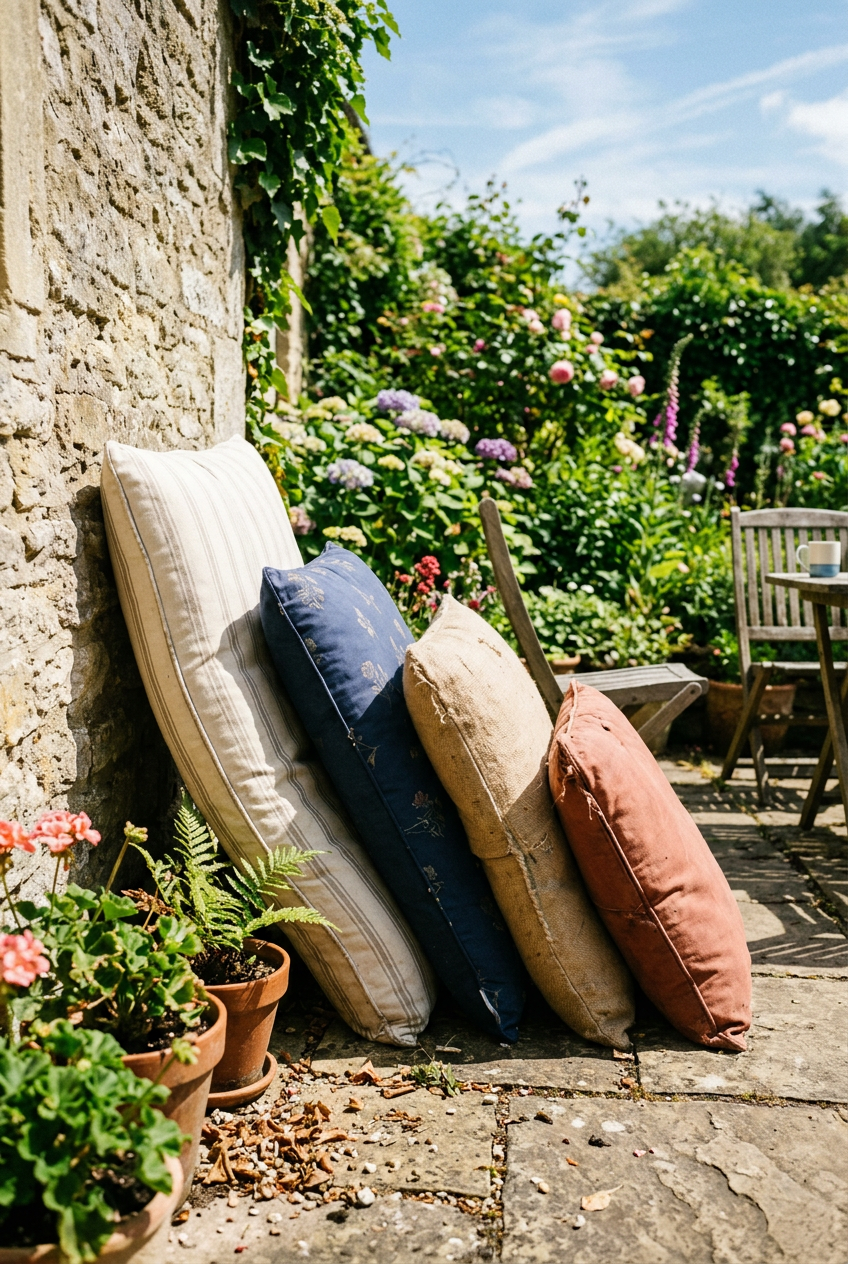
Cushions need to be fully dry before you store them.
Like, all the way through.
Not just surface dry — the fill inside needs to dry out too, which takes longer than you think.
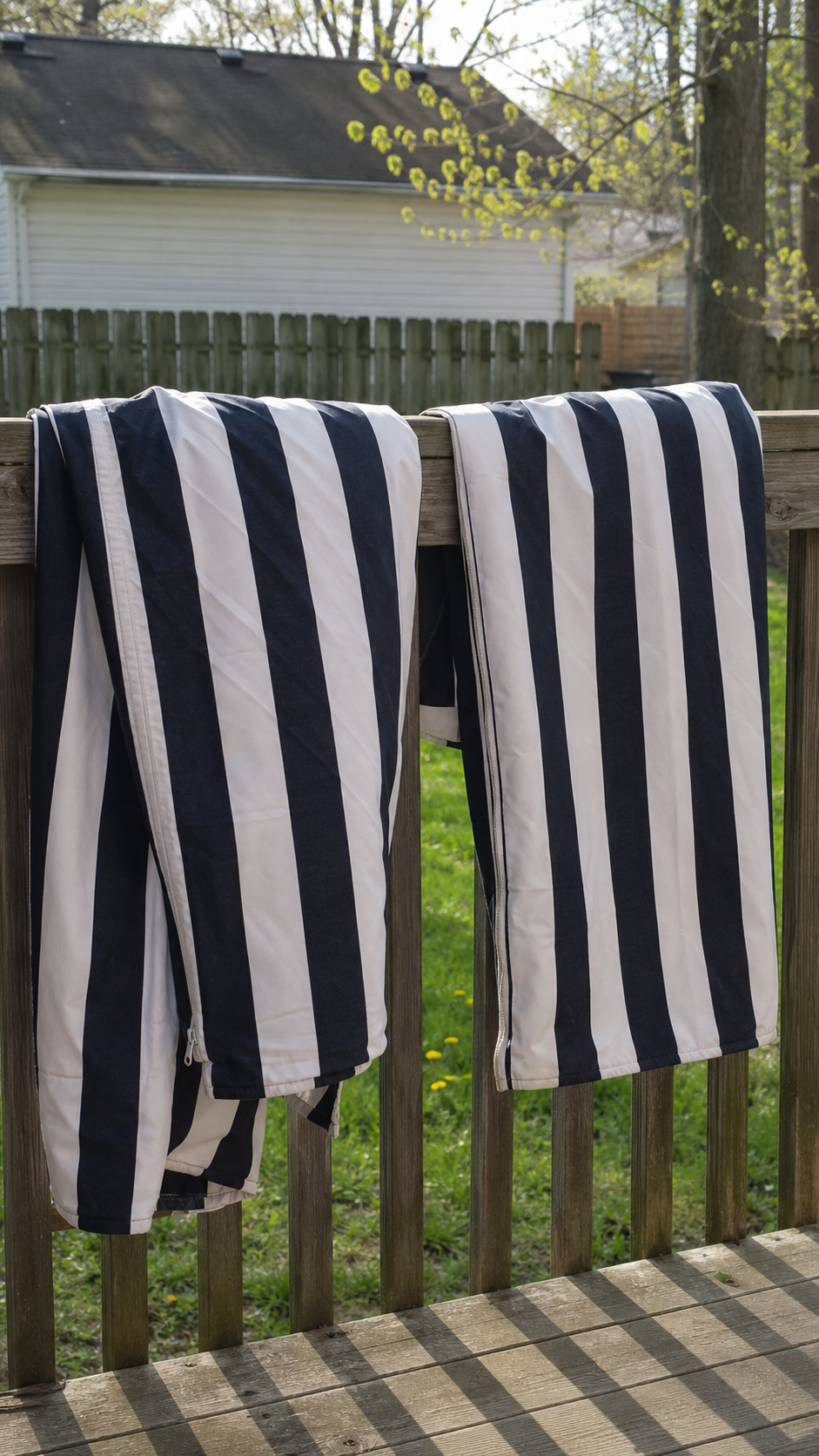
Leave them upright leaning against something in the sun for a full day after any rain before you put them away.
If you have covered outdoor storage, great.
If not, get breathable storage bags, not plastic bags or plastic bins with tight lids.
Moisture has to have somewhere to go or you’re just sealing in a mildew situation.
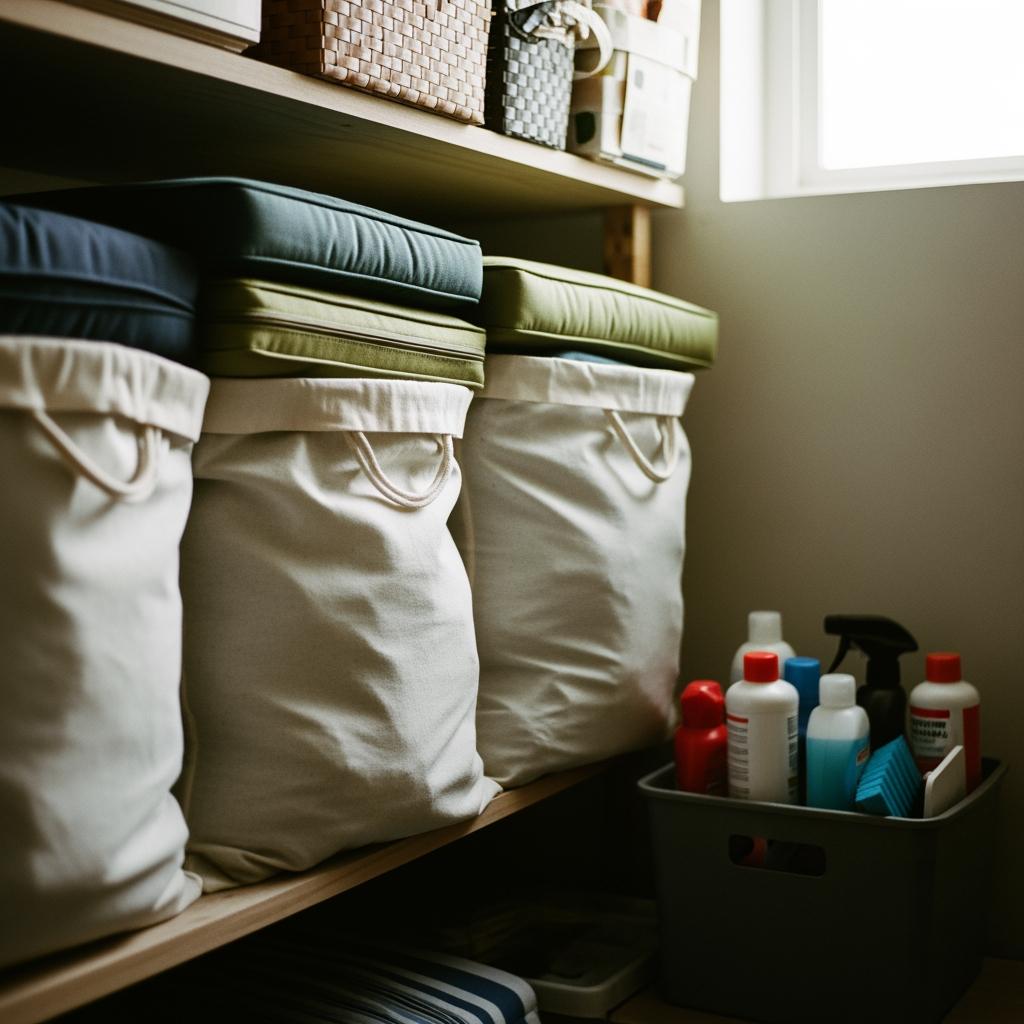
For winter storage, I bring mine inside to my basement (which is dry-ish) in those breathable cotton storage bags.
They come out in spring smelling completely fine.
This was a game-changer, honestly.
The indoor winter storage alone added at least a year to my last set.
Bringing Faded Cushions Back to Life Before You Give Up on Them
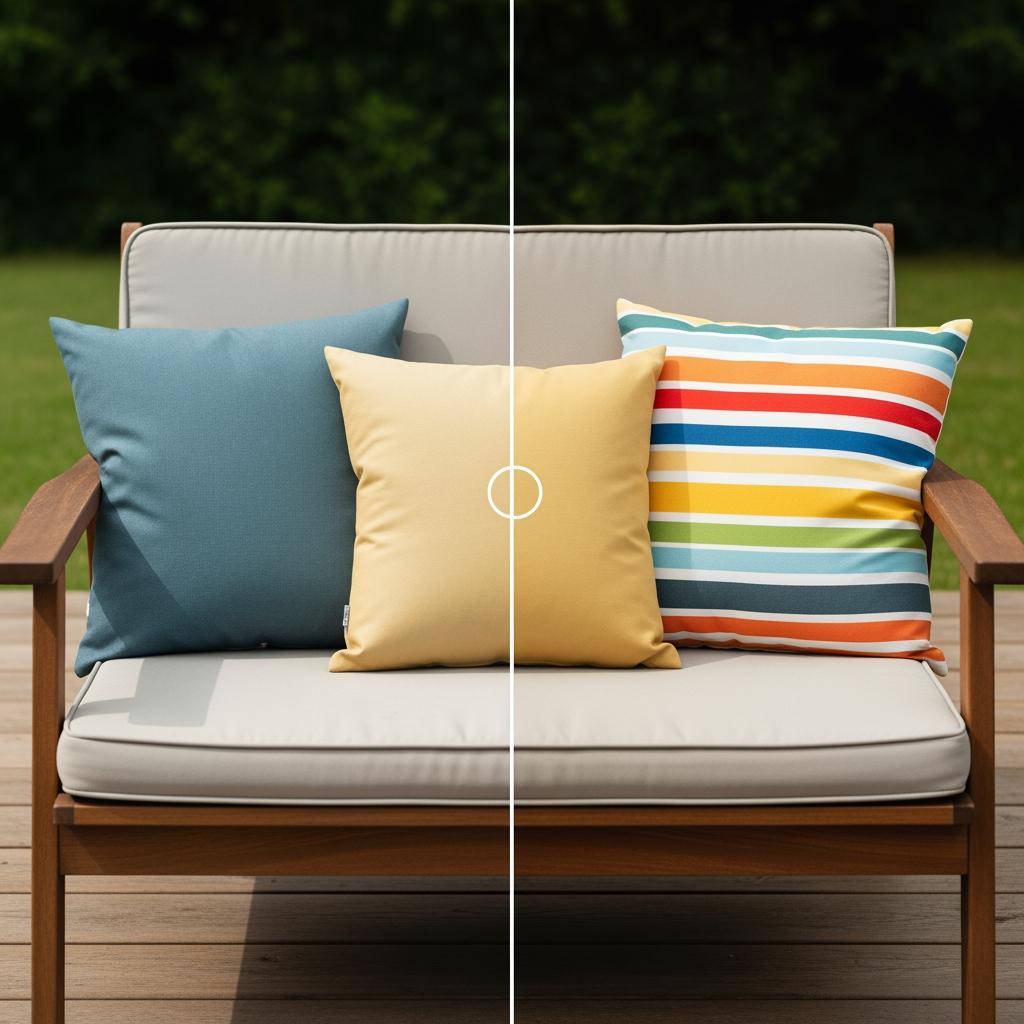
Before you throw out a faded set, try this: a good deep clean plus fabric spray paint.
Specifically, I’ve used Rust-Oleum 2X Fabric Spray Paint on a set of chalky-white cushions that I’d given up on, and I was shocked at how decent they looked after.
It’s not perfect.
Up close you can tell.
But at normal porch-sitting distance?
Totally fine.
And it bought me another season out of cushions I was about to put in the trash.
Prep is everything with fabric spray paint.
Clean the cushions, let them dry completely, then tape off any areas you don’t want painted.
Spray in thin, even coats and let each coat dry before adding another.
Don’t glob it on or the fabric gets stiff and weird.
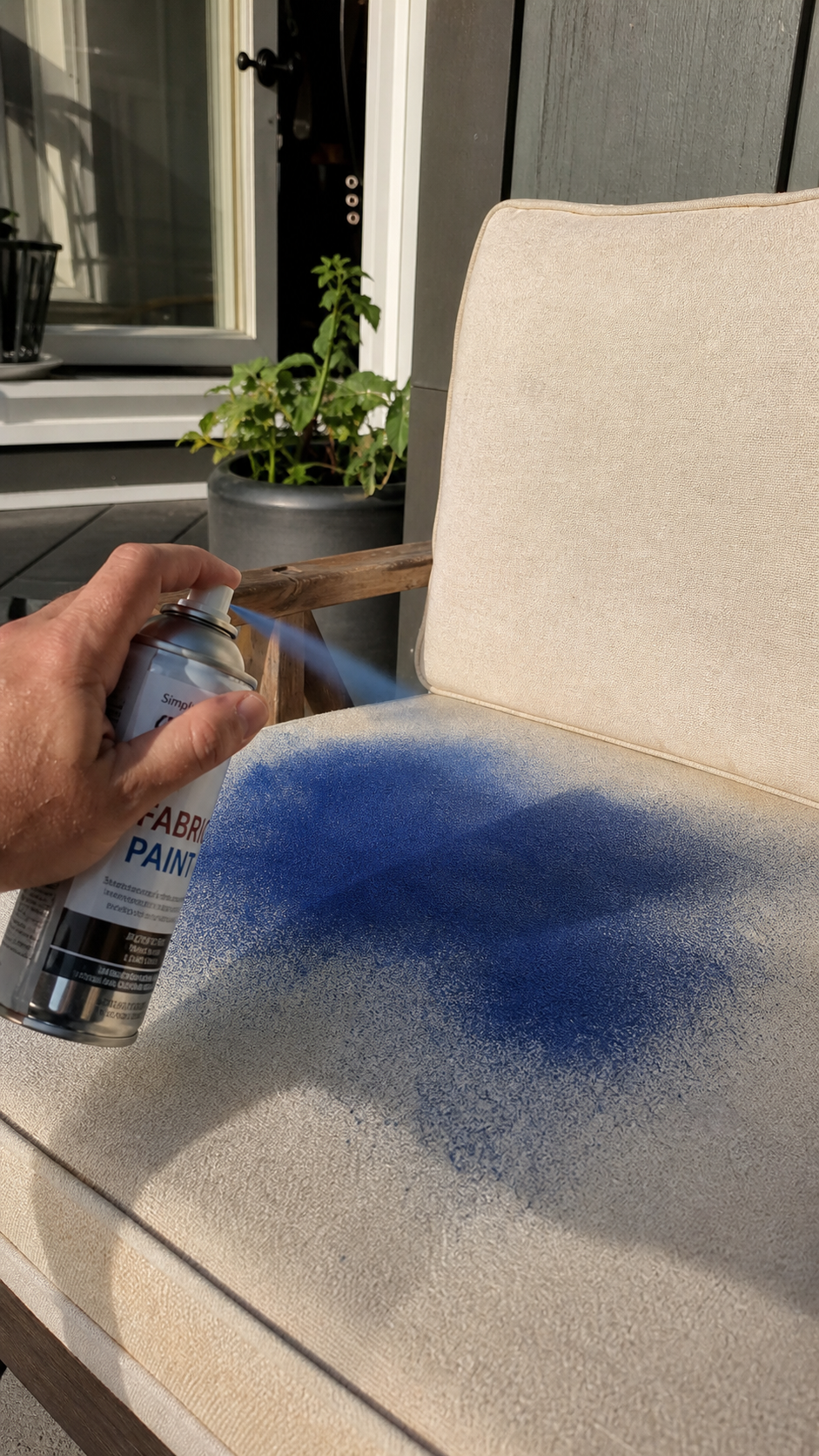
This isn’t a forever fix.
But spending eight dollars instead of sixty on new cushions is just smart math.
Dealing with Cracked and Peeling Piping Before It Spreads
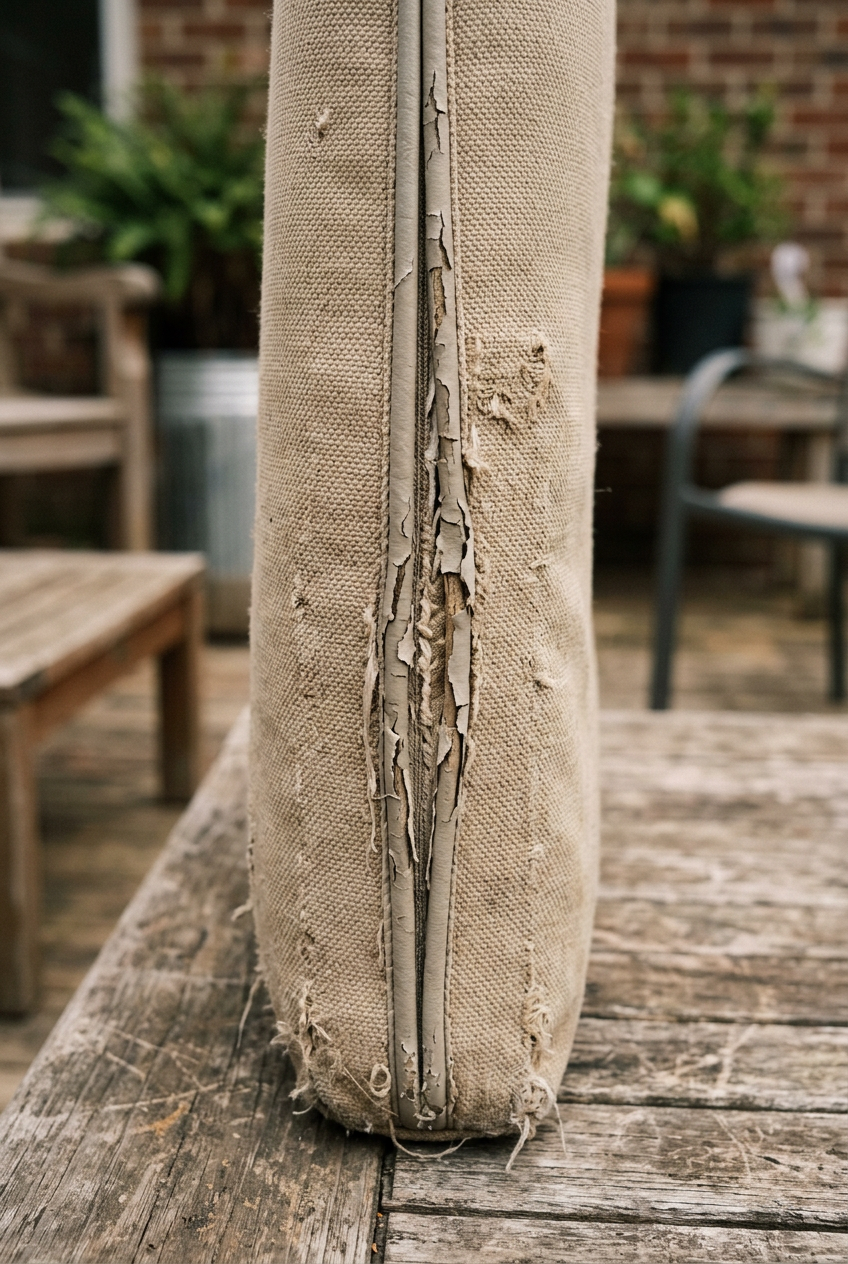
The piping — that little rolled fabric edge around most outdoor cushions — is always the first thing to crack and peel on lower-quality cushions.
Once it starts, it sort of unravels fast.
If you catch it early, a product called Leather and Vinyl Repair Gel (weird name for fabric use, I know) can seal small cracks in vinyl piping and stop it from spreading.
I used it on two of my chairs last summer and the piping held up the rest of the season.
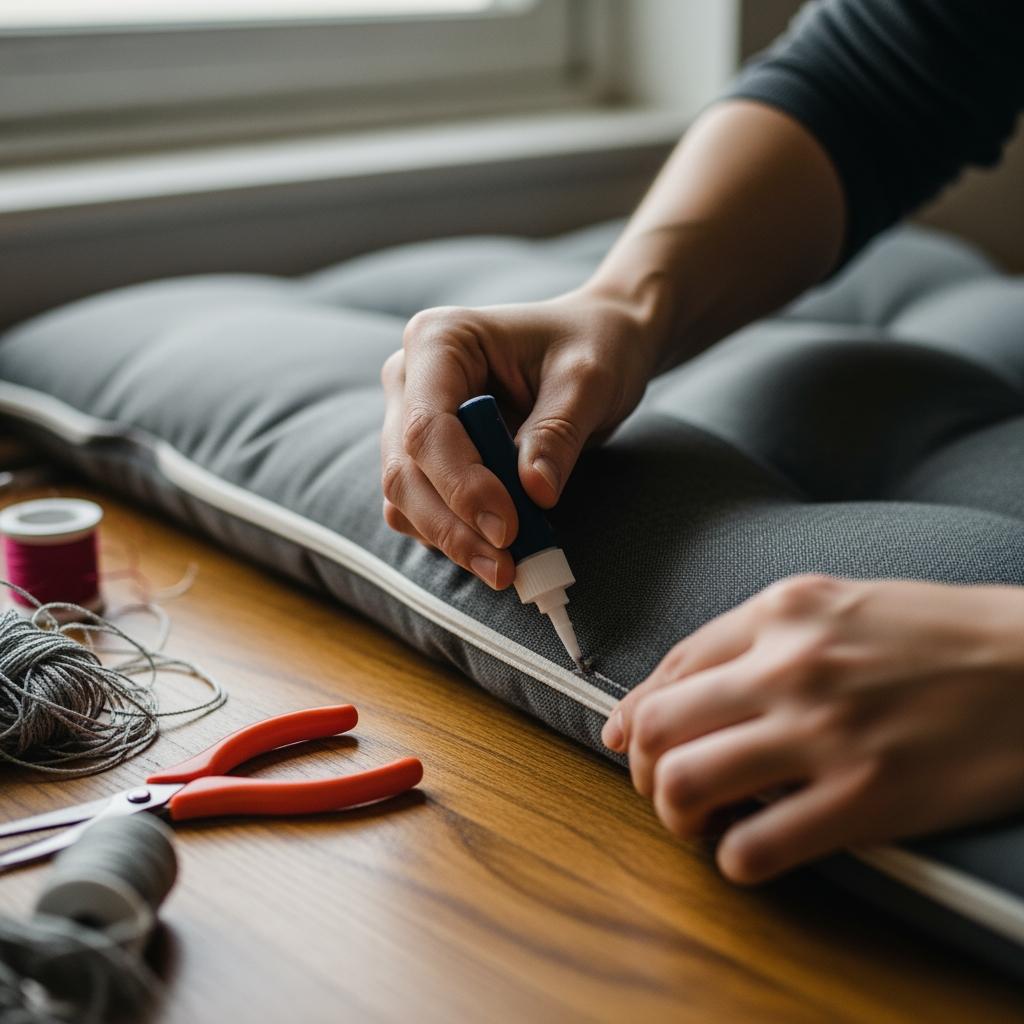
For actual fabric piping that’s fraying, clear fabric glue works better.
Press it in, clamp it or use a clothespin, let it set overnight.
If the piping is totally gone, honestly you can repiping a cover yourself with basic sewing skills and cotton cording from any craft store.
I did it once.
It took an hour and looked surprisingly decent.
Don’t let ‘I can’t sew’ stop you — it’s straight lines.
The Mildew Problem and How to Actually Solve It, Not Just Mask It
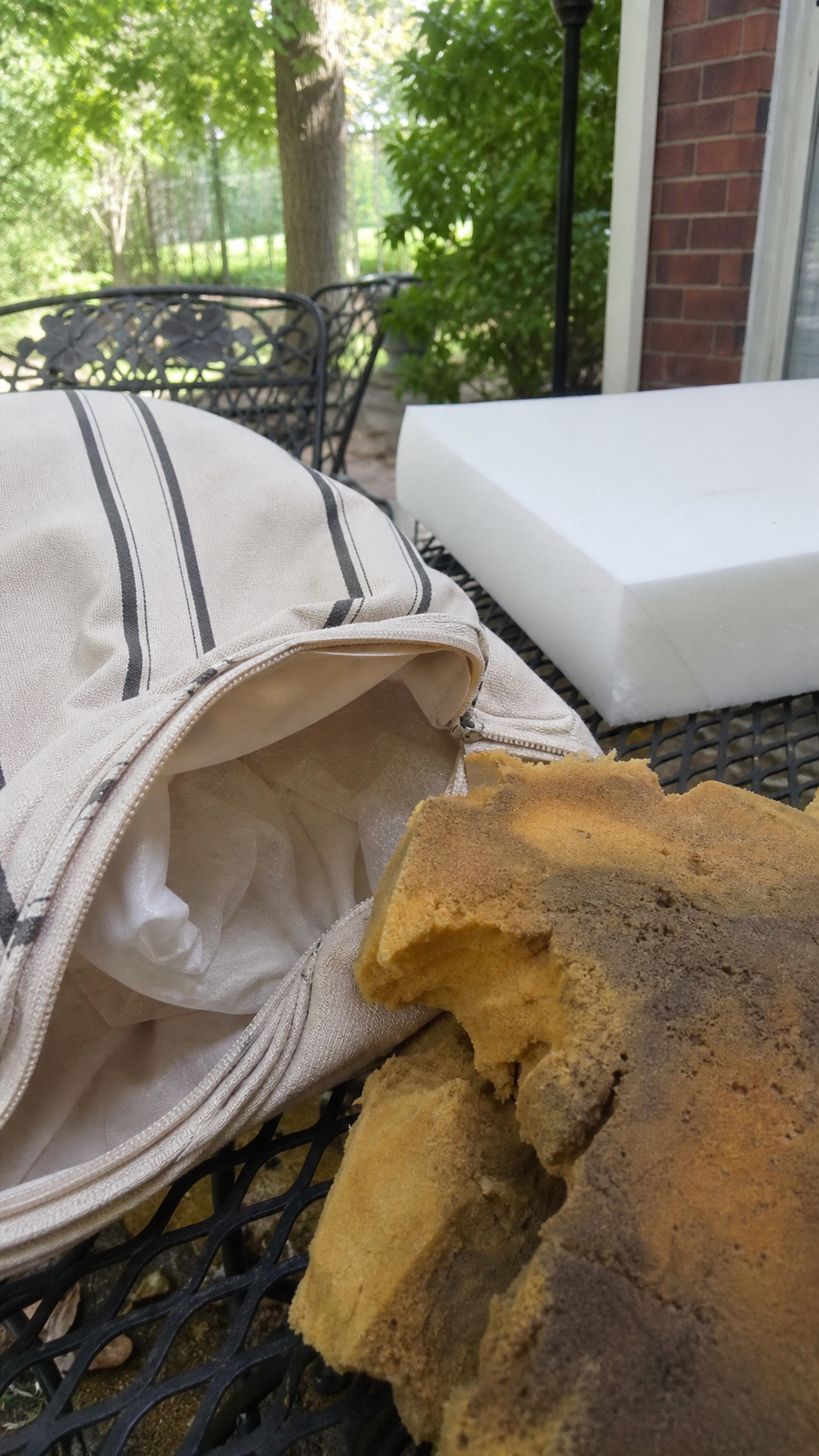
Surface mildew comes off with cleaning.
But if the mildew is inside the fill — like actually in the foam or poly — cleaning the cover won’t fix the smell or the problem.
The fill needs to go.
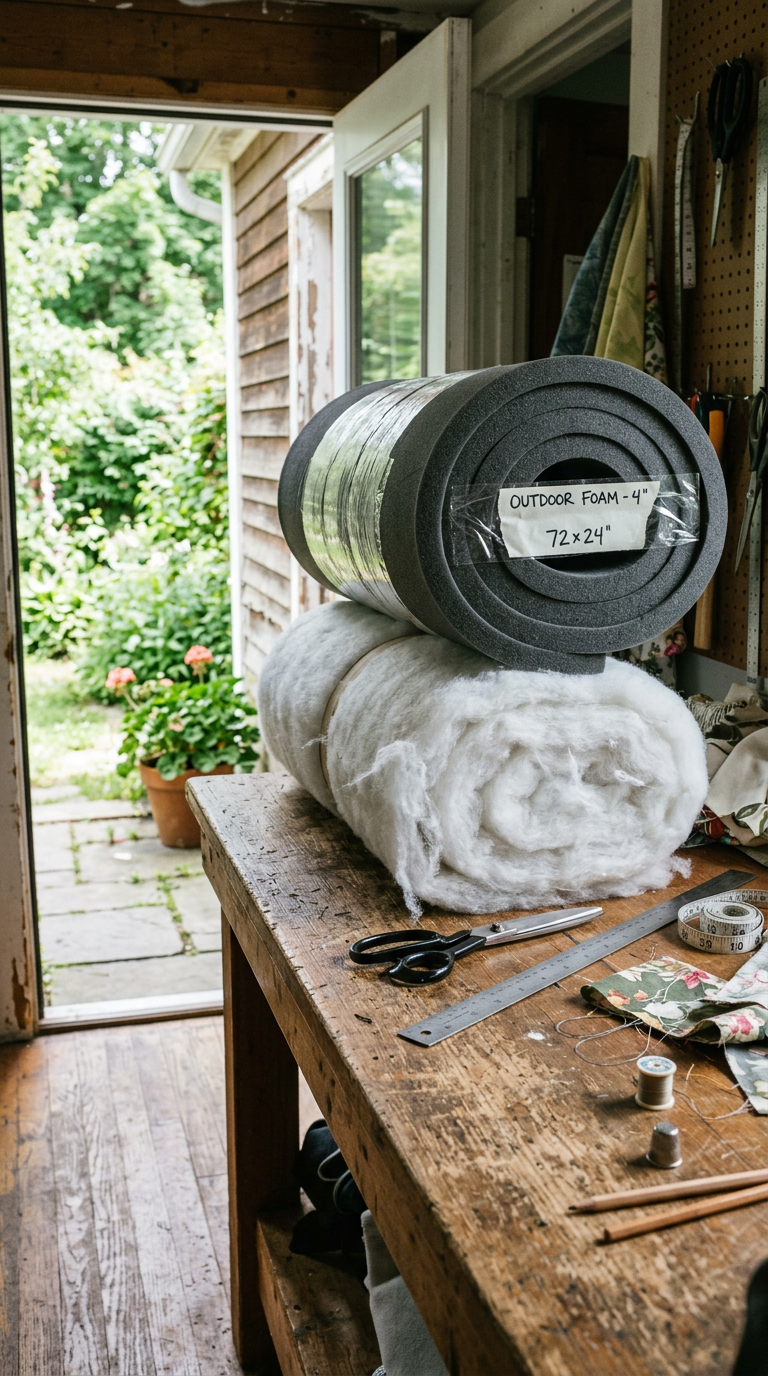
Replacing outdoor cushion fill is not that hard.
Unzip the cover (most outdoor cushions have hidden zippers), pull out the old fill, buy new outdoor-rated polyester fiberfill or a new foam cut to size from a fabric store.
Rezipped, done.
Outdoor foam specifically is important here.
Regular upholstery foam holds moisture and grows mildew fast.
Outdoor foam is open-cell and drains water rather than trapping it.
The difference in longevity is significant.
(I learned this the expensive way, obviously.)
New fill in an old cover can completely revive a cushion you thought was done.
I’ve done this twice and it’s completely worth the twenty-ish dollars in materials.
Covers You Can Actually Wash — Why Removable Matters So Much
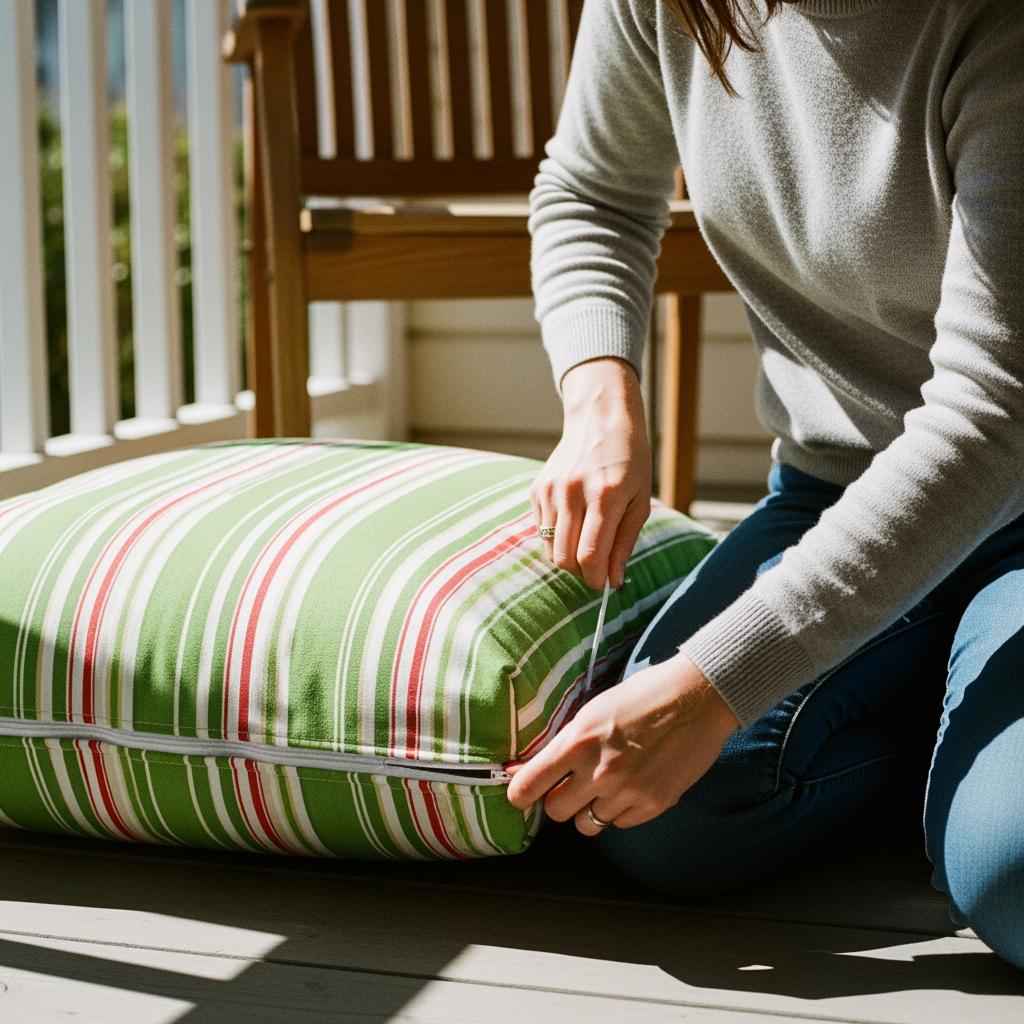
If your outdoor cushions don’t have removable, washable covers, that’s your problem.
Full stop.
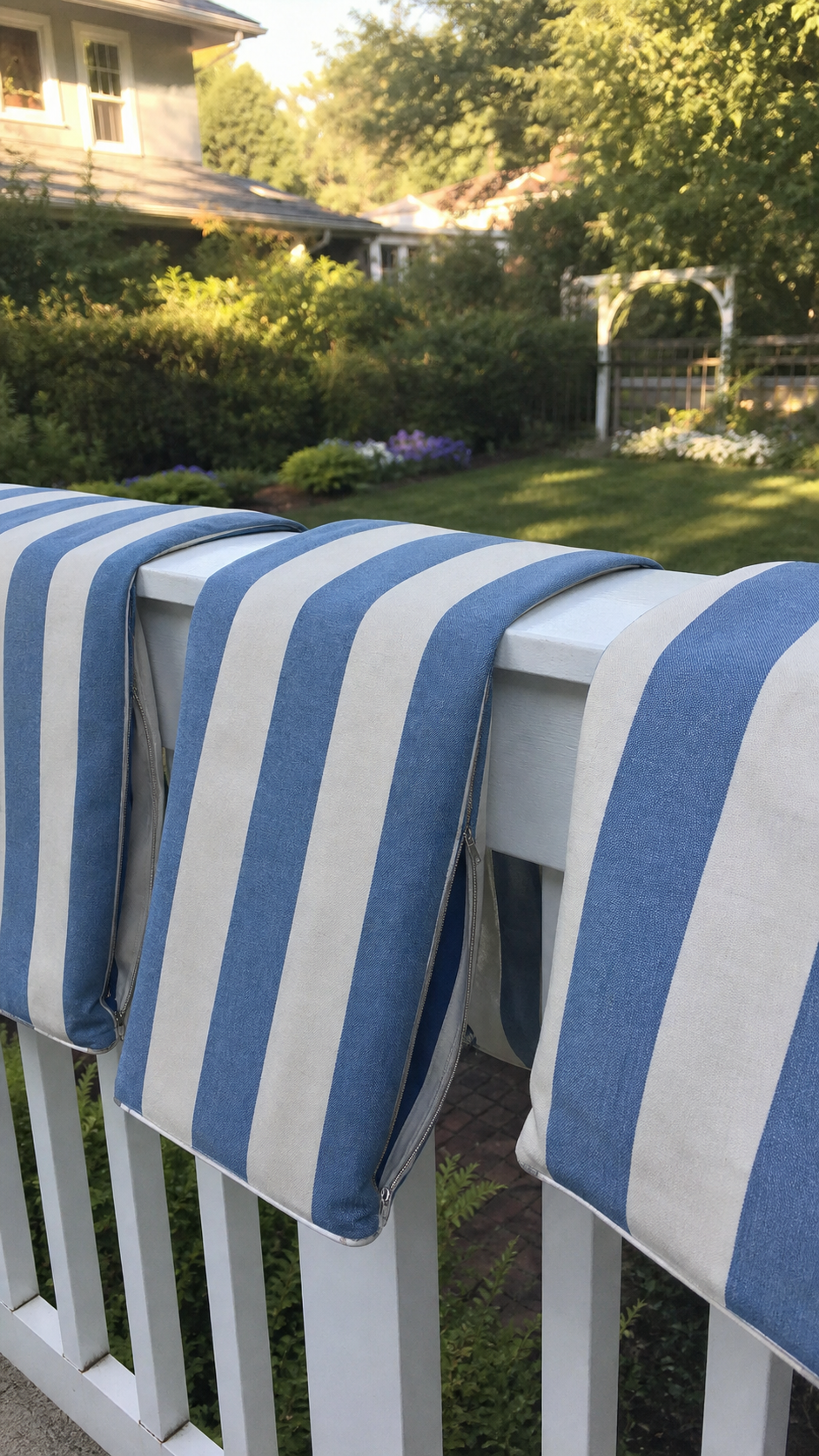
Fixed cushions that you can’t take apart are a one-way ticket to mildew and permanent staining because you can never actually get them clean.
When I’m buying cushions now, removable cover is the very first thing I check.
Non-negotiable.
Most Sunbrella-covered cushions have removable covers with hidden zippers.
A lot of higher-quality outdoor furniture does too.
If you’ve got a set with fixed covers, consider buying separate cushion cover slipcovers for them — they exist, they fit most standard sizes, and they completely changed how I maintain my set.
Machine washable is even better.
Cold water, gentle cycle, air dry.
Never put outdoor cushion covers in the dryer — the heat breaks down the water-resistant coating and you lose whatever protection the fabric had.
Sun Placement and Simple Habits That Add Years to Cushions
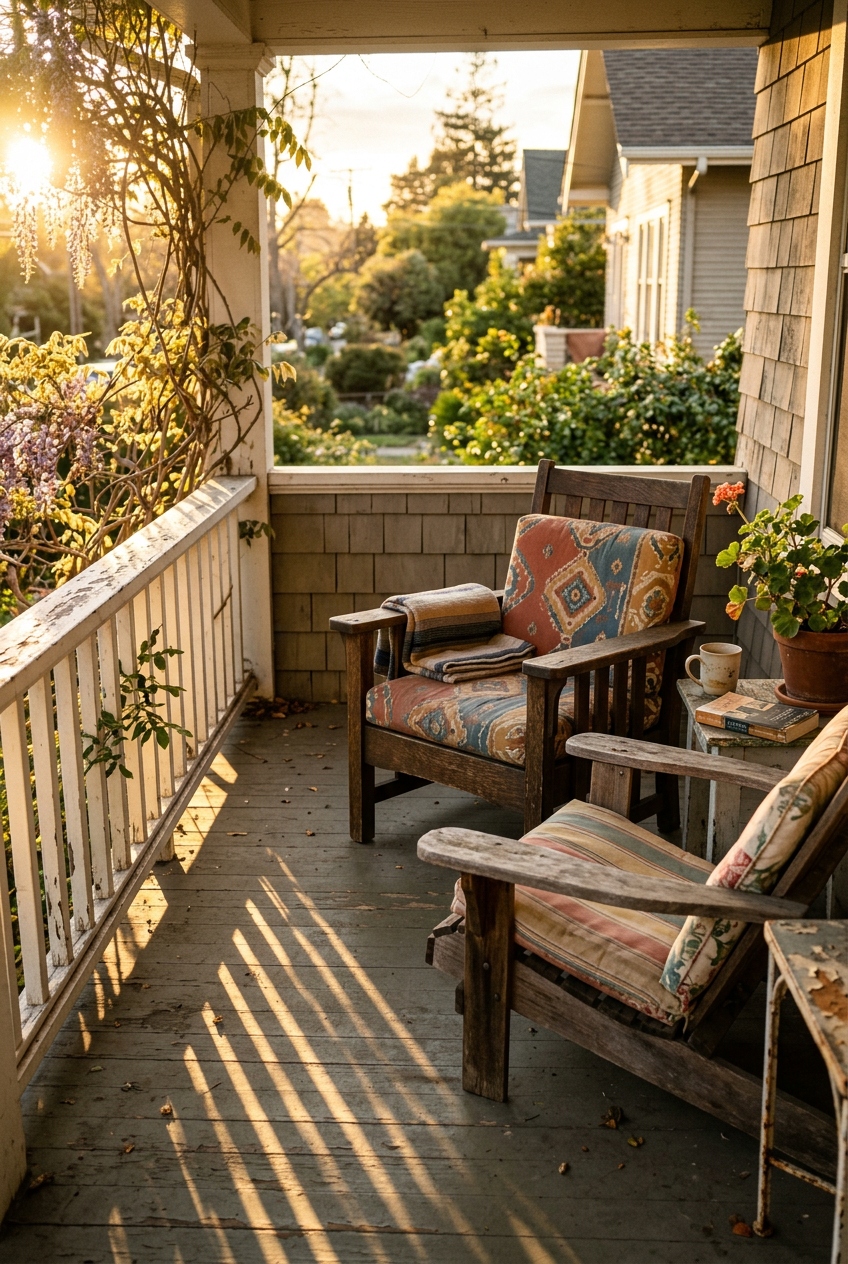
My back porch gets absolutely punished by sun from about two to six in the afternoon.
It’s a west-facing problem and I can’t change the direction of my house, unfortunately.
What I can do: flip the cushions.
Rotating which side faces up and which faces the back of the chair distributes the UV damage so no single side takes all the punishment.
I do this once a week during peak summer.
Takes thirty seconds.
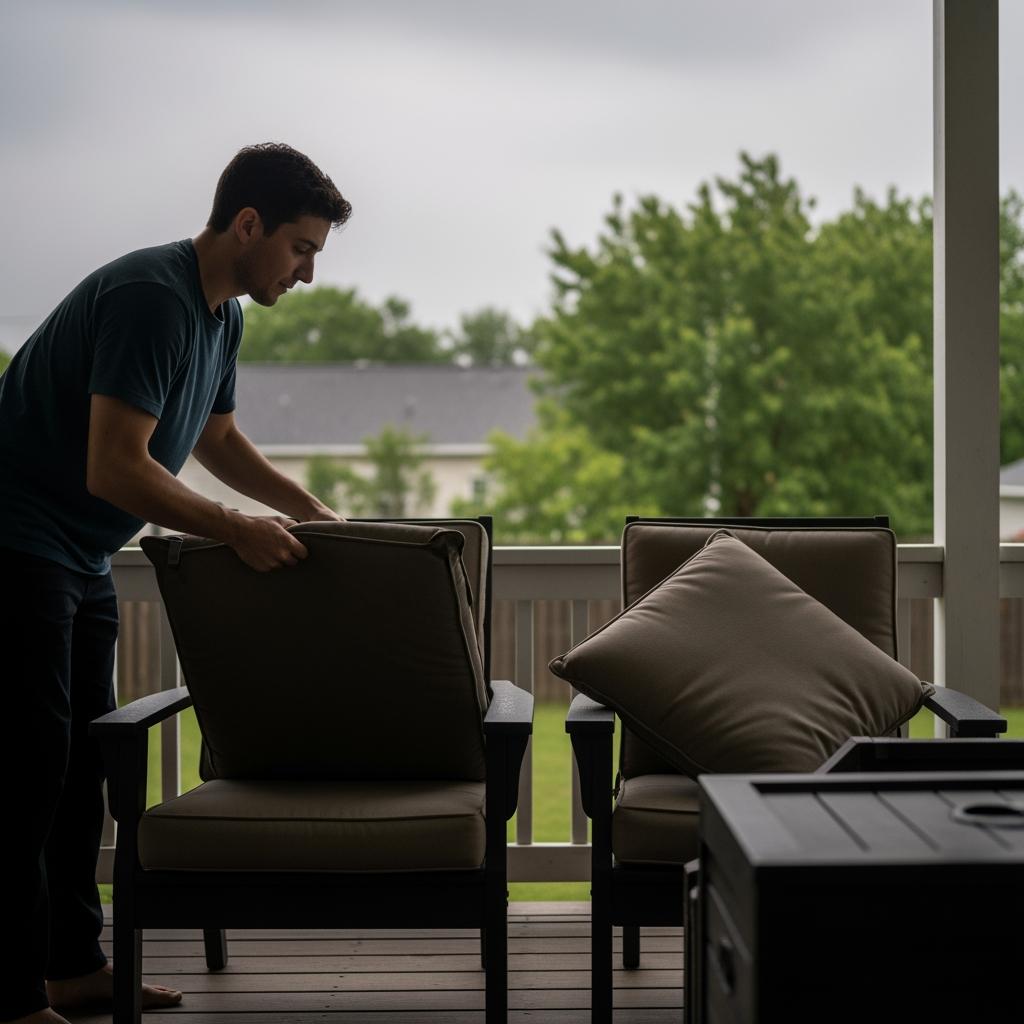
Also: if you know a storm is coming, bring the cushions inside or flip them face-down on the chairs.
Rain sitting on top of a cushion for six hours soaks in.
Rain running off a face-down cushion mostly just puddles below it.
These are small habits.
But honestly, small habits are the whole thing.
The cushions that last are the ones that get a little attention regularly, not a big rescue mission at the end of every ruined season.
DIY Cushion Covers: When Making Your Own Is Actually Worth It
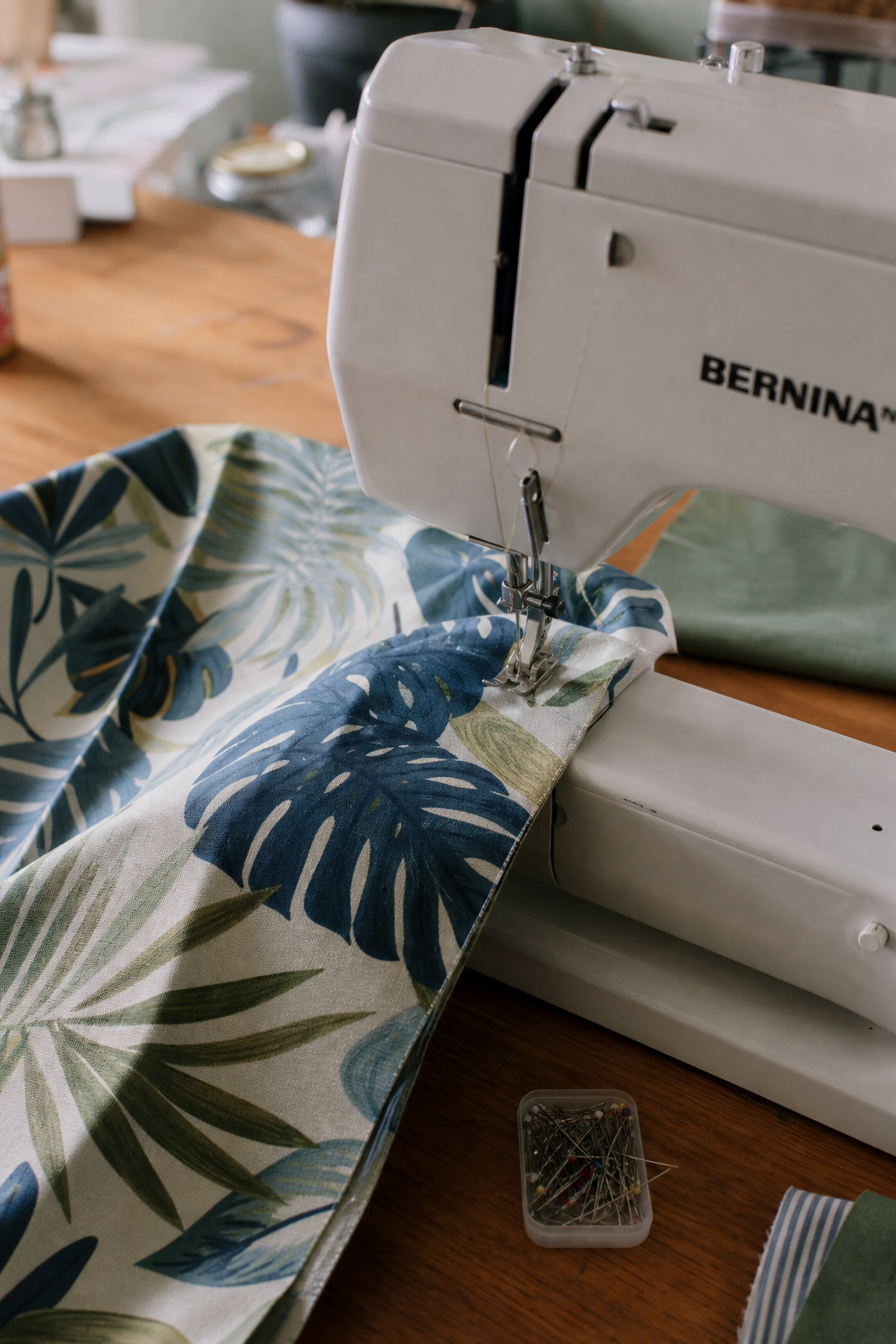
I made my first set of outdoor cushion covers from outdoor fabric I bought on clearance at Jo-Ann Fabrics.
Four yards, ended up costing me about eighteen dollars total.
They covered two bench cushions for my porch.
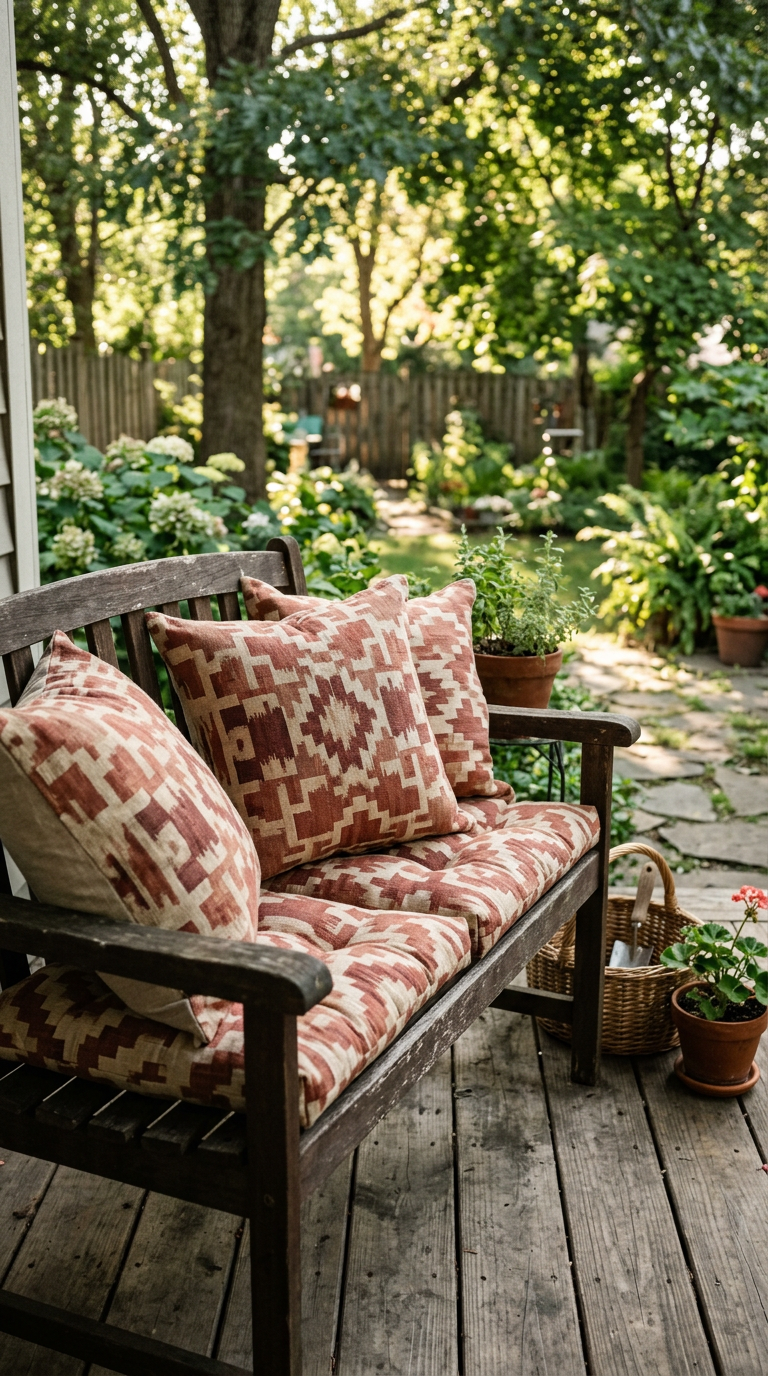
It’s not a beginner sewing project, but it’s not advanced either.
Straight seams, a zipper insertion (which sounds scary but really isn’t once you do it once), and you’re done.
There are really good free patterns online for basic box cushion covers.
The advantage of making your own is getting exactly the fabric you want, in exactly the size you need, for way less money than buying premade covers.
My handmade covers have held up better than store-bought ones because I chose the fabric carefully and used outdoor-rated thread.
Use outdoor thread, by the way.
Regular thread rots outside.
I found this out after my first seam started splitting by August.
Outdoor polyester thread only.
What to Actually Look for at Thrift Stores and Estate Sales
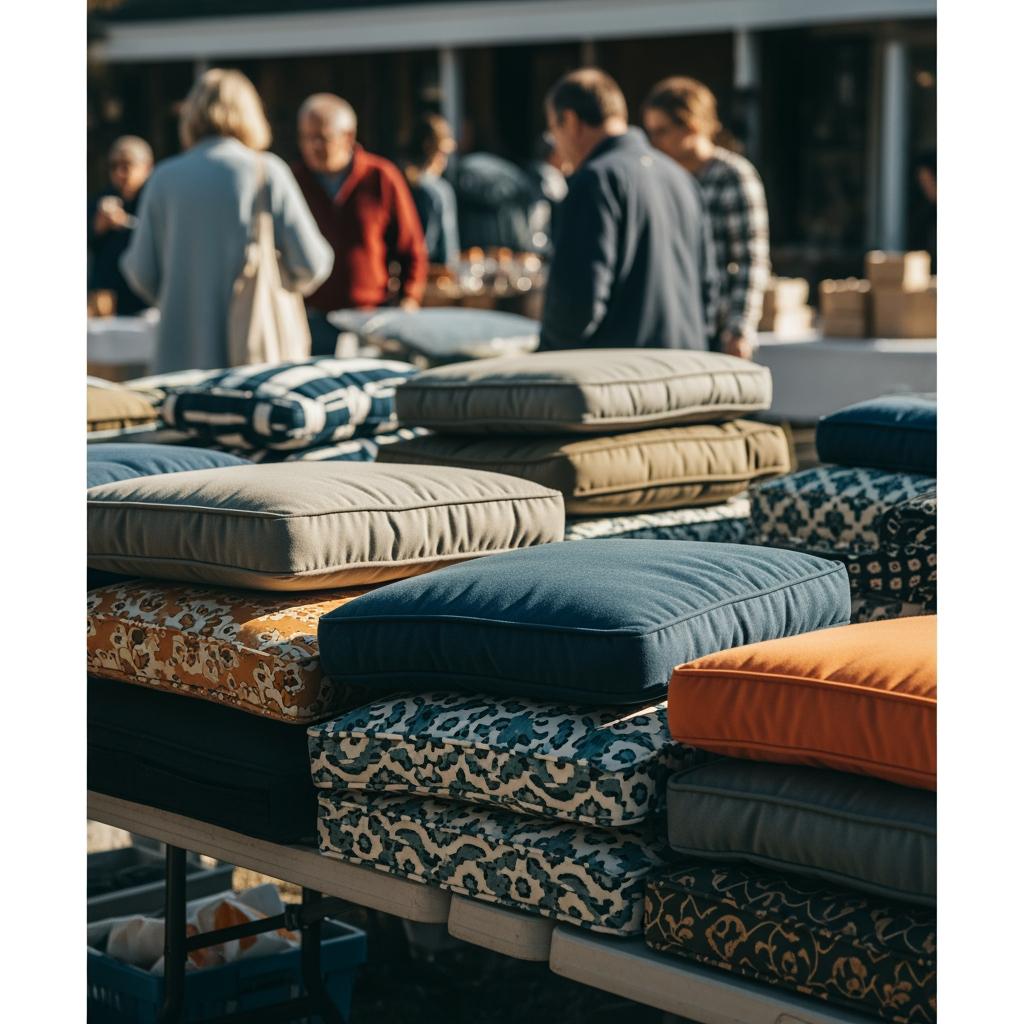
I am a thrift store person.
I find outdoor cushions at estate sales pretty regularly and some of them are genuinely in great shape because they were kept inside or barely used.
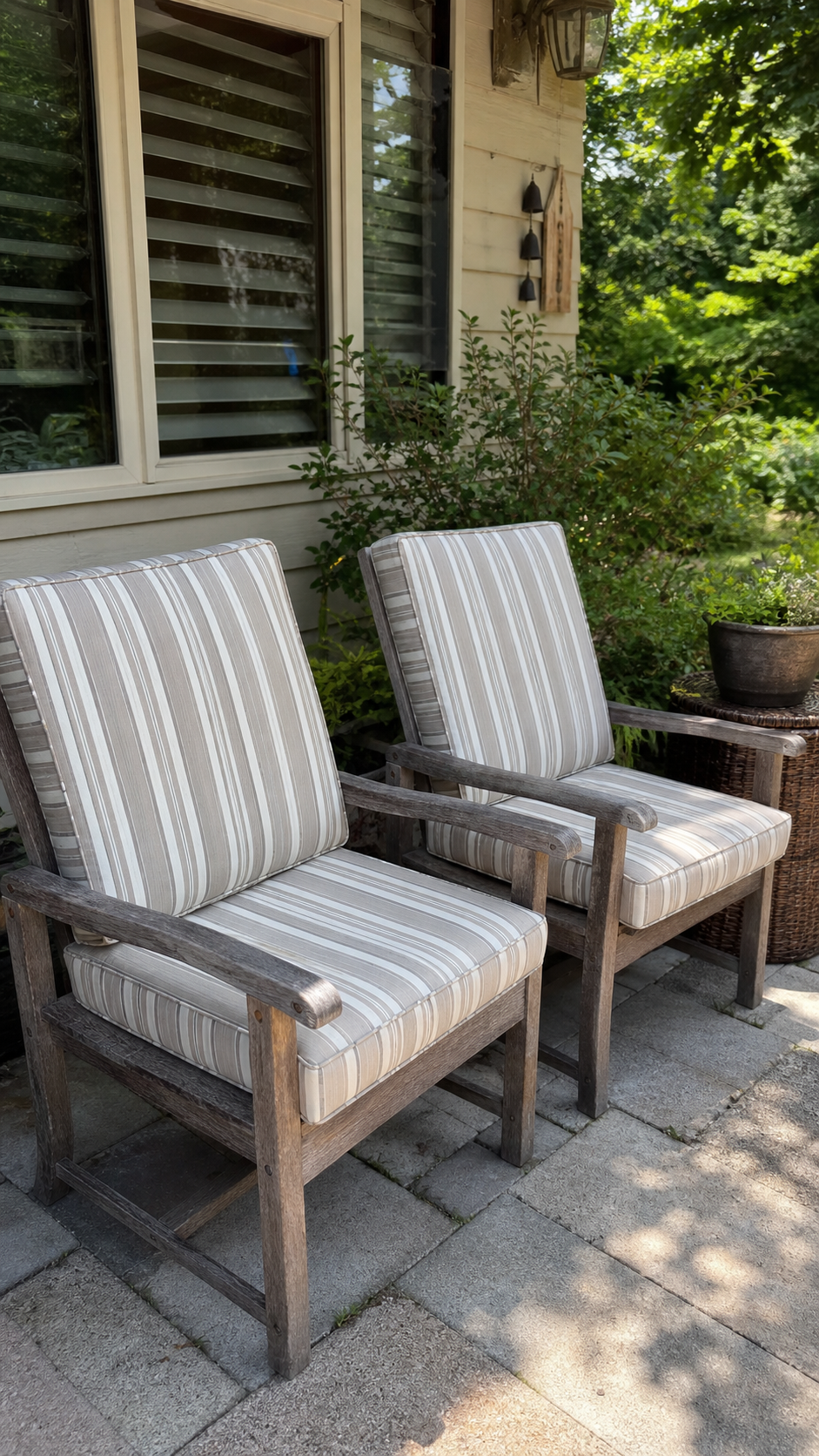
What to check: smell it first (mildew smell is a no, always), look at the seams for fraying or splitting, press it firmly to feel if the fill is still lofty or has gone flat and lumpy.
Check the piping.
Check the zipper.
Sunbrella and other quality fabric outdoor cushions show up at estate sales way more often than you’d think.
Rich people buy good outdoor furniture and then don’t use it much.
I got a set of four deep-seat chair cushions for forty dollars at a sale last spring.
They’re Sunbrella.
They look almost new.
Don’t rule out cushions that just need new covers.
If the fill is solid and the cover is a mess, you can recover them.
I’ve done that with estate sale finds three times now.
End-of-Season Care That Actually Makes Next Summer Better
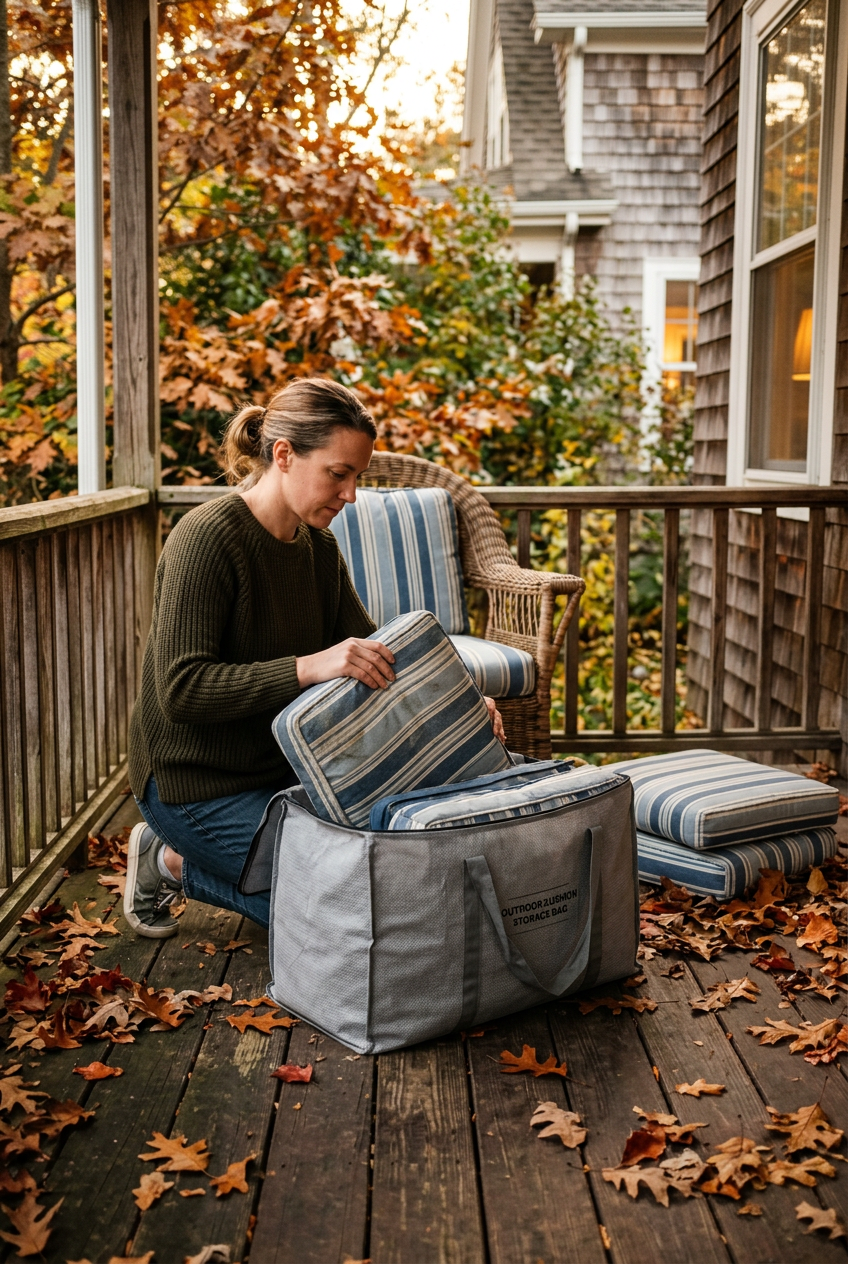
The things you do in October matter way more than what you do in May.
May is damage control.
October is prevention.
Full clean before storage — every year, no skipping.
Spray them with 303 Fabric Guard after cleaning and before putting them away so they go into storage already protected.
Check for any small repairs that need making before they turn into big repairs.
I keep a little bin in my basement with outdoor cushion supplies: OxiClean, the fabric guard spray, outdoor thread, fabric glue, a spare zipper or two.
When something needs a fix I do it before storage so it’s ready in spring.
Takes maybe thirty minutes a year total.
Biscuit usually tries to supervise this whole process from his spot on the porch, which is unhelpful.
But I do it anyway.
And every spring when I drag the cushions out and they actually look good, it’s genuinely one of my favorite feelings.