
I used to think my backyard was just a place to store the trash cans.
Then one Sunday morning, coffee in hand, I sat on my crooked little step and actually looked at it.
Bare dirt patch, one sad lawn chair, and a whole lot of nothing.
So I started small, one macrame hanger and a thrifted rug, and within a season the whole space felt like a hideaway.
Now it’s the spot where I read, where my friends linger long after dinner, where my dog naps in dappled shade.
If you’ve got a patch of outdoor space that feels more “meh” than magical, I promise you, this is fixable.
And it doesn’t take a big budget or a total overhaul.
It takes a few soulful touches, layered slowly, with love.
Layer Textures Like You Mean It

Texture is the first thing I go for, always.
A smooth patio alone feels cold, kind of sterile, like a waiting room.
So I threw down a vintage-style outdoor rug with a faded rust pattern, and everything softened instantly.
On top of that, I piled floor cushions in mismatched fabrics, some velvet, some woven cotton.
None of them match on purpose.
That’s the whole point of boho, nothing has to be perfectly coordinated.
When I did this in my own backyard last spring, I remember standing back and just grinning like an idiot.
It suddenly looked lived-in, loved, like a space with a story.
My tip: mix at least three textures in every seating area, rug, cushion, and something woven like rattan or jute.
The emotional payoff is huge, because texture makes a space feel touchable, and touchable spaces feel safe.
A flat, textureless patio just doesn’t invite you to stay.
Optional variation, if you’re renting and can’t leave rugs outside permanently, grab an indoor-outdoor one you can roll up when it rains.
I do this every fall, and it’s saved my rug more than once.
Honestly, it’s such a small effort for such a big mood shift.
Hang Macrame Everywhere You Can

Macrame is basically the boho garden’s version of jewelry.
It dresses everything up without trying too hard.
I started with one plant hanger on my porch beam, and now I’ve got five, holding pothos, string of pearls, and one very dramatic fern.
There’s something about the knots and the fringe that feels handmade, personal, warm.
When the wind moves through them, the whole porch sways a little, and I swear it’s calming just to watch.
If you’re new to this, start with just one hanger near your seating area, at eye level, so you actually notice it.
Don’t hang them too high, that’s a mistake I made early on and it just looked lost up there.
My favorite combo is a neutral cotton macrame with a trailing green plant, it photographs beautifully but it feels even better in person.
Why it works emotionally, macrame adds softness and movement, and movement makes outdoor spaces feel alive instead of static.
A garden that just sits there is fine.
A garden that sways and rustles feels like it’s breathing with you.
Personal hack, thrift stores are goldmines for vintage macrame, so check there before buying new.
I found one of my favorite pieces for four dollars at an estate sale.
String Lights Are Non-Negotiable For Me

I will die on this hill, string lights change everything.
The second the sun starts dipping, my whole garden shifts into this golden, dreamy version of itself.
I use warm white bulbs, never the cool blue ones, because cool light feels clinical out there.
I’ve strung them along my fence line, zigzagged above the seating nook, and wrapped a few around an old tree.
The first night I turned them all on together, I actually gasped a little.
It felt like stepping into somewhere else entirely, somewhere softer.
If you want that same feeling, layer your lights at different heights, some low near the ground in lanterns, some high strung overhead.
That layering creates depth, so it doesn’t look like one flat string of dots.
My tip, use battery-powered or solar strings if you don’t have an outdoor outlet nearby.
I did this for two years before finally running proper wiring, and it worked just fine.
Optional variation, add a few flameless candles in glass jars for flicker without the fire risk.
The emotional reason this matters so much, warm light triggers coziness on a primal level.
It says relax, stay a while, you’re safe here.
Mix Plant Heights Like You’re Building A Little Jungle

A garden with plants all the same height just looks flat to me, kind of boring honestly.
So I started thinking in layers, tall, medium, trailing, ground cover.
I’ve got a tall banana-leaf plant in the back corner, medium ferns and grasses in the middle, and low creeping thyme along the edges.
It creates this sense of depth, like the space goes on forever even though my yard is honestly pretty small.
When I rearranged my pots by height last summer, my sister walked in and asked if I’d hired a landscaper.
I hadn’t, I’d just moved a few things around and finally let the tall ones breathe.
My favorite trick, use a plant stand or an overturned crate to boost a shorter plant into the “tall” category instantly.
It’s such a cheap fix and it makes such a visual difference.
Don’t be afraid of a few oversized leaves either, big leafy plants like elephant ears add drama without any real effort.
Why this works emotionally, layered greenery mimics a forest, and forests feel protective, wild, a little magical.
A flat row of matching plants just doesn’t do that for your nervous system.
Personal tip, group odd numbers of pots together, threes and fives just look more natural than pairs.
I learned that the hard way after years of buying plants two at a time.
Build A Hammock Or Swing Corner
Every boho garden needs one spot that’s just for lounging, no chores, no purpose except rest.

For me, that’s my hammock chair, hung from an old wooden beam I salvaged from a barn sale.
I added a sheepskin throw and two small pillows, and now it’s basically where I disappear every afternoon.
There’s something about a swaying seat that feels like a hug, honestly.
I remember the first time I sat in mine with a cup of tea, and I didn’t move for an hour.
My phone just sat there, untouched, which never happens.
If you don’t have a sturdy beam, a freestanding hammock stand works just as well and it’s totally portable.
My tip, drape it in a soft woven blanket in a color that pops against your greenery, like rust or mustard.
Optional variation, a simple swing bench with cushions does the same emotional job if hammocks aren’t your thing.
The point isn’t the exact furniture, it’s creating one spot that says slow down.
Why it matters, we’re all so wired to keep moving, keep doing, and a swing forces stillness in the sweetest way.
It’s basically permission to do nothing, and we all need a place that gives us that.
Thrift Your Furniture, Don’t Buy It New

Almost nothing in my garden came from a regular furniture store.
My side table used to be a wooden crate.
My bench came from a barn cleanout, sanded down and left a little rough on purpose.
There’s a warmth to worn wood and chipped paint that new furniture just can’t fake, no matter how “distressed” they market it.
I spent one whole Saturday driving to three different thrift shops, and I came home with a side table, two lanterns, and a rug for under sixty dollars total.
That’s the boho secret, honestly, it’s not about spending more, it’s about hunting a little.
My tip, look for pieces with interesting shapes, curved legs, woven seats, carved details, since those add character even in small doses.
Don’t worry about matching wood tones either, boho spaces thrive on a little mismatch.
Optional variation, if thrifting isn’t your thing, rattan and wicker furniture from budget stores gives a similar textural feeling.
The emotional reason this works, worn and imperfect objects feel like they have history, and history makes a space feel like it belongs to you.
New, shiny furniture can feel a little impersonal, like a showroom.
I’ll take a wobbly thrifted stool with a story over a perfect new one any day.
Create A Fire Pit Nook With Floor Seating

A fire pit is where the real magic happens once the sun goes down.
I set mine low to the ground, surrounded by floor cushions instead of chairs, and it changed the whole energy of gathering there.
Sitting low, close to the flames, feels intimate in a way that regular patio chairs just don’t.
My friends linger for hours around that fire pit, way longer than they ever did around my old patio set.
I added a few chunky wool blankets nearby too, for when the night gets cooler.
There’s nothing quite like watching sparks drift up while everyone’s talking softly, half in shadow, half lit by firelight.
My tip, use a mix of cushion heights so people can lean back or sit up depending on the moment.
Optional variation, if open flame isn’t allowed where you live, a tabletop fire bowl gives a similar flicker and warmth.
Why this works emotionally, fire is primal, it slows conversation down and pulls people closer together, literally and figuratively.
It’s honestly one of the reasons my garden gatherings feel so different from indoor ones.
Personal hack, keep a basket of extra blankets right next to the seating so nobody has to go inside once they’re settled.
That one small thing keeps the whole night going longer.
Let Wind Chimes And Natural Sound In

Sound is something people forget about when designing outdoor spaces.
I added a simple bamboo wind chime near my back door, and it changed the whole feeling of stepping outside.
There’s a soft, hollow clinking every time the breeze moves through, and it’s oddly soothing, almost meditative.
I also let a few ornamental grasses grow tall near my seating area, since they rustle in the wind too.
The first time I sat outside during a light storm, just listening to the chimes and the grass, I felt so unbothered by everything else going on that week.
My tip, choose chimes made from natural materials like bamboo or shell rather than metal, since the tone feels softer and warmer.
Optional variation, a small solar fountain adds trickling water sound if you want something more constant.
Why this matters emotionally, gentle ambient sound masks street noise and neighbor chatter, giving your garden a sense of privacy even in a crowded area.
It tricks your brain into feeling far away, even if you’re twelve feet from your fence.
Personal tip, hang chimes near where you actually sit, not just anywhere, so you notice them daily instead of forgetting they exist.
Add Tapestries And Dreamcatchers As Wall Art

Blank fences always bothered me, like unfinished sentences.
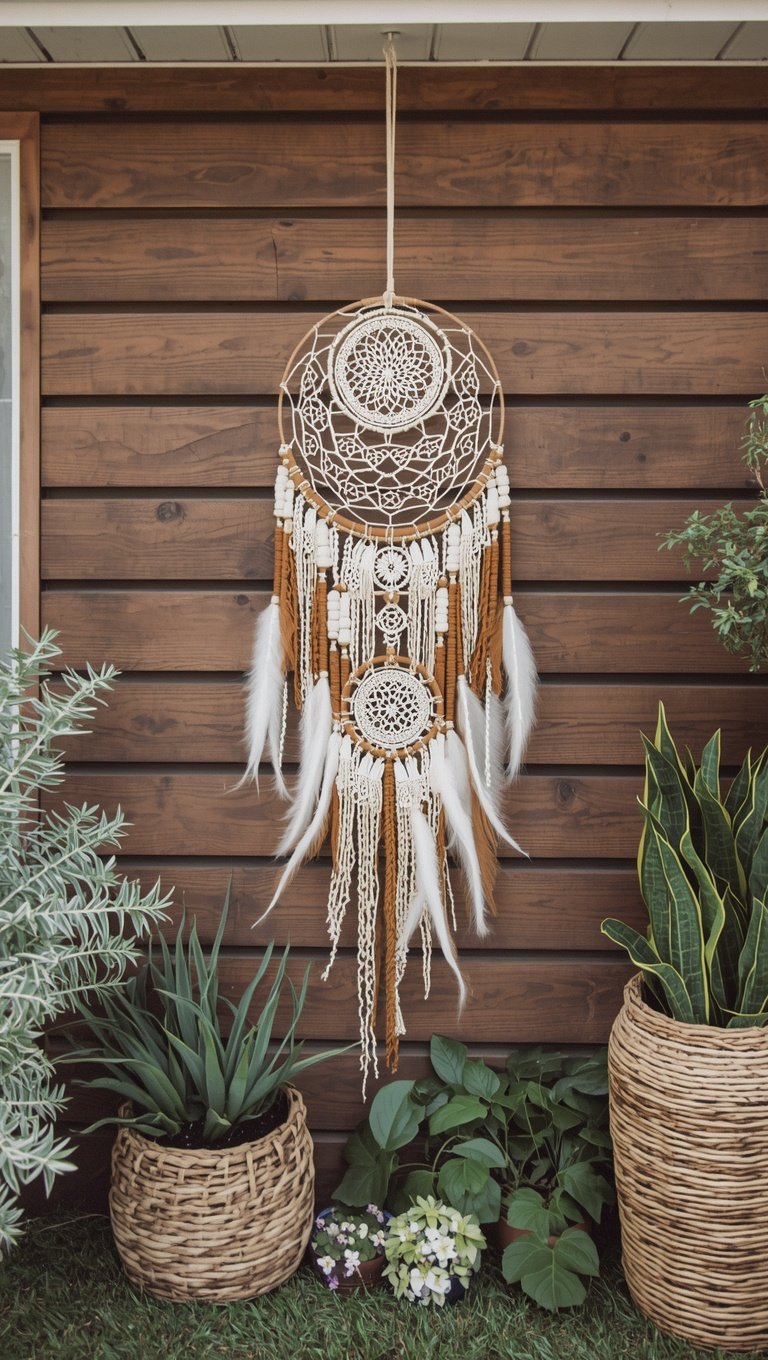
So I started hanging a woven tapestry along mine, a big one with mandala patterns in warm earth tones.
It instantly gave the space a focal point, somewhere your eye naturally lands.
I added a dreamcatcher off to the side too, mostly because I love how it catches the late afternoon light.
The first evening the sun hit it just right, little rainbow flecks scattered across my patio, and I just stood there watching like a kid.
My tip, choose one large tapestry rather than several small ones, since one bold piece reads as intentional rather than cluttered.
Optional variation, an old rug or quilt hung flat against a fence works just as beautifully if tapestries feel too on-the-nose for you.
Why this works emotionally, a decorated fence stops feeling like a boundary and starts feeling like a backdrop, like a stage for your life outside.
A bare fence just reminds you where your space ends.
Personal hack, use outdoor-rated fabric or bring tapestries in during heavy rain so the colors don’t fade too fast.
I learned that one after my first tapestry bleached out by midsummer.
Mismatch Your Lanterns On Purpose

Matching lantern sets always felt too stiff to me, too showroom.
So I collected mine one at a time, a brass one from a flea market, a glass one from a clearance sale, a little ceramic one from my grandmother’s old porch.
None of them match, and that’s exactly why I love them.
Grouped together on a table or hung at different heights, they create this soft, flickering glow that feels collected rather than purchased.
The night I first lit all of them together, my patio looked like something out of a storybook, and I actually teared up a little, which felt silly but true.
My tip, cluster three to five lanterns of varying heights rather than spacing them evenly, since clusters feel more natural.
Optional variation, mason jars with candles inside make a budget-friendly lantern alternative that still gives that flickering warmth.
Why this matters emotionally, mismatched objects feel like they were gathered over time, over a life, and that sense of history makes a space feel deeply personal.
A store-bought matching set just doesn’t carry that same feeling.
Personal tip, use flameless candles on windy nights so you’re not constantly relighting things.
Tuck A Reading Nook Into The Greenery

My favorite corner of my whole garden is barely three feet wide.
It’s just a single chair, tucked behind a tall potted palm, half hidden from the rest of the yard.
I put it there on purpose, so it feels a little secret, a little separate from everything else.
I added a small side table for my book and my tea, and a soft throw for cooler evenings.
The first time I sat there and realized nobody could really see me from the house, I felt this little wave of relief, like I’d found a hideout.
My tip, use tall plants or a simple trellis to create partial privacy, you don’t need full walls to make a nook feel enclosed.
Optional variation, a simple curtain panel hung from a pergola does the same job if you don’t have plants tall enough yet.
Why this works emotionally, humans crave small enclosed spaces, it’s why window nooks and blanket forts feel so good even as adults.
A nook says this spot is just for you, and that’s a rare feeling to give yourself outside.
Personal hack, face your nook away from the house windows, so it truly feels like an escape rather than an extension of indoor life.
Choose Natural Materials Over Anything Plastic

If I can help it, nothing in my garden is plastic, not the furniture, not the planters, not the decor.
I lean on rattan, bamboo, wood, and jute every single time.
There’s a warmth to natural materials that plastic just can’t replicate, no matter how well it’s molded to look woven.
My planters are mostly terracotta and woven basket-style pots, and even unplanted, they look intentional sitting around.
When I swapped my old plastic patio furniture for a rattan set two years ago, the whole yard suddenly felt cohesive, like it finally made sense.
My tip, if you already own plastic pieces, disguise them with woven baskets or wooden crates rather than replacing everything at once.
Optional variation, seagrass rugs and baskets are a budget-friendly way to bring in that natural texture without a full furniture overhaul.
Why this matters emotionally, natural materials age beautifully, they weather and fade in ways that feel charming rather than broken.
Plastic just looks worn out, natural materials just look lived-in.
Personal tip, oil wooden furniture once a season to keep it looking rich instead of gray and dried out.
Add Little Personal Touches That Are Just Yours

The last twenty percent of any boho garden is the part that’s truly personal.
For me, that’s a small collection of crystals on my side table, a few feathers I’ve found on walks, and one weathered stone from a beach trip years ago.
None of it is expensive, none of it is “designed,” it’s just mine.
I also keep a little dish of found seashells near my hammock, and every time I glance at it I remember exactly where each one came from.
These tiny objects are what make the space feel like a diary rather than a display.
My tip, don’t buy decor just to fill space, wait for pieces that actually mean something to you, even if that takes longer.
Optional variation, a small shelf near your seating area is a lovely spot to rotate these personal treasures through the seasons.
Why this matters emotionally, personal objects hold memory, and memory is what turns a pretty garden into a beloved one.
Anyone can buy a boho aesthetic off a shelf.
Not everyone can make it feel like home, and that’s the whole difference.
So if you take just one thing from all of this, let it be that, slow down, gather what you love, and let your garden fill up with pieces of your actual life.
Related read: Things I Wish I Knew Before I Decorated My First Home — Instant PDF + Kindle download. Secure checkout by Stripe