
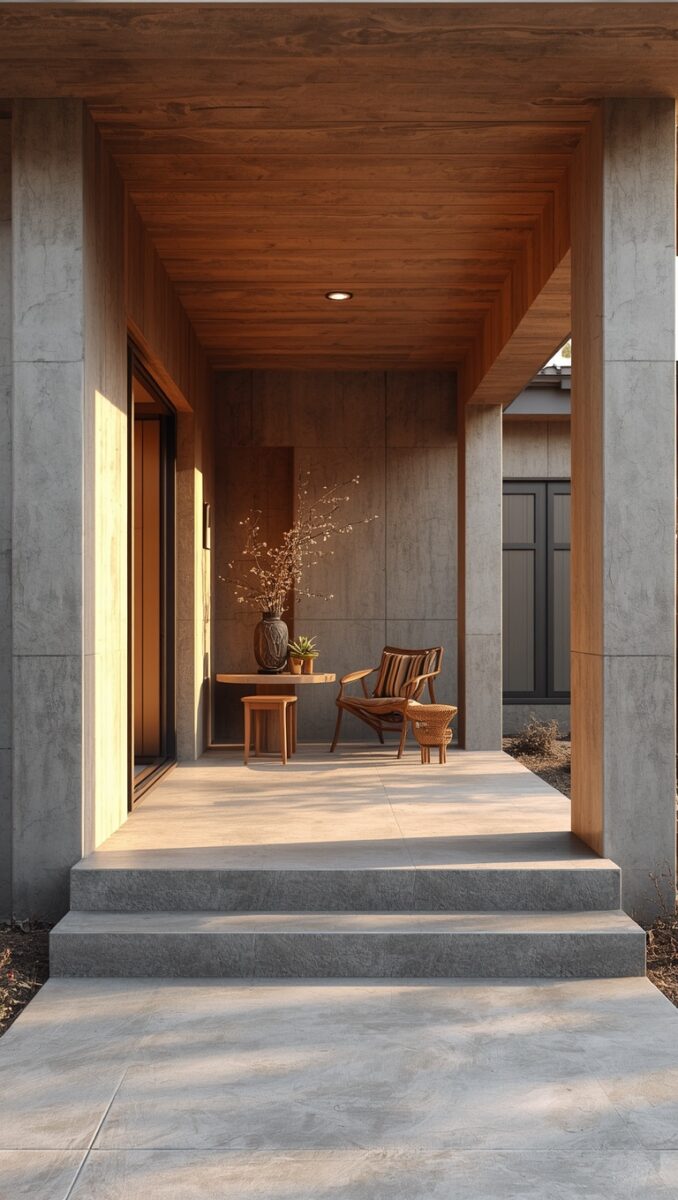
I ruined my first porch paint job in about six weeks.
Thinking of a blue porch ceiling? Try the pale haint blues on a photo of your porch with the free haint blue porch ceiling visualizer.
Six weeks.
I picked a color I loved, slapped it on a sunny Saturday, and felt so proud of myself.
Then the Georgia heat hit.
And the rain.
And suddenly my beautiful slate-blue porch looked like a peeling, faded disaster that made the whole front of my house look tired and neglected.
That was my wake-up call.
I became a little obsessed after that — reading, testing, asking questions at my local paint counter until the guy there knew me by name.
What I learned completely changed how I approach porch concrete, and I want to share every bit of it with you.
Why Concrete Is Actually a Tricky Surface to Paint

Concrete looks solid and simple.

But it is honestly one of the most unforgiving surfaces you can paint.
It expands in heat, contracts in cold, absorbs moisture from below, and takes a beating from foot traffic every single day.
When I tackled my own porch the second time around, I realized the surface itself needs as much attention as the color you choose.
Regular interior or even exterior wall paint just was not made for this.
It flexes the wrong way.
It does not bond the way porch-specific coatings do.
So if you have ever wondered why your last porch paint job peeled so fast — this is probably why.
The good news is that once you understand what concrete actually needs, everything else gets so much easier.
The First Thing You Have to Do Before Any Color Goes Down

Prep.
I know, I know — it sounds so unglamorous.
But skipping prep is exactly why most porch paint jobs fail within a season.
When I redid my porch, I spent almost an entire weekend just cleaning and preparing the surface before a single drop of paint touched it.
You want to pressure wash the concrete first to remove all the dirt, mildew, and old residue.
Then let it dry completely — and I mean fully dry, not just surface-dry.
If your concrete has old paint on it that is peeling or flaking, you really need to strip or grind that off.
I used a stiff wire brush on mine and it was tedious but so worth it.
Any cracks should be filled with a concrete patching compound before you start.
Think of prep as the foundation of the whole project.
Mess it up and even the most expensive paint will not save you.
My Favorite Concrete Paint Colors for a Front Porch

Okay, here is where it gets fun.
Color is everything on a front porch because it sets the entire mood of your home from the curb.
My personal obsession right now is warm greige tones — that soft mix of gray and beige that feels both modern and cozy at the same time.
It looks stunning against white trim and brick.
Another color I am completely in love with is deep charcoal.
It feels dramatic without being harsh, and it hides scuffs and dirt so beautifully in between cleanings.
Soft sage green is also having such a major moment and honestly, it just feels like a breath of fresh air on a porch floor.
If your home has a more traditional or farmhouse vibe, a classic warm white or creamy ivory on the concrete keeps things light and airy.
And for something truly bold — a terracotta or brick red is cozy, earthy, and so inviting.
Whatever color you choose, always test a small sample patch first.
Concrete changes colors dramatically once the paint dries, and natural light on a porch floor hits differently than any paint chip will show you.
The Type of Paint That Actually Lasts on Concrete

This is the thing nobody talks about enough.
Not all paint is created equal when it comes to concrete floors.
After my first failed porch project, I switched to a 100% acrylic concrete floor paint and the difference was night and day.
Acrylic floor paints are specifically formulated to handle the expansion and contraction of concrete without cracking or peeling the way regular paint does.
You also want to look for something labeled for exterior use and ideally rated for foot traffic.
Epoxy-based concrete coatings are another amazing option if you want something even more durable — they bond like nothing else and the finish is gorgeous.
I personally used a water-based acrylic porch and floor paint on my last project and it has held up through multiple seasons now.
One tip I will always give — do not go cheap on the paint here.
Spending a little more on a quality product saves you from redoing the whole thing in a year.
Your porch is one of the first things people see.
It deserves good paint.
How Many Coats You Really Need

One coat is never enough on concrete.
I learned this the hard way.
Concrete is porous, which means it absorbs paint differently than a wall does, and a single coat will look patchy, thin, and uneven once it dries.
For my porch, I did a primer coat first — specifically a concrete bonding primer — and then two full coats of floor paint on top of that.
Three total layers.
And you know what?
It looked so smooth and professional when it was done.
Allow each coat to dry fully before adding the next one.
Rushing this step is a common mistake that causes bubbling and lifting.
If you live somewhere with high humidity, give extra drying time between coats.
A little patience here is what separates a porch that lasts one season from one that lasts several years.
The Primer Step That Most People Skip

Please do not skip the primer.
I am saying this as someone who skipped it once and deeply regretted it.
A concrete bonding primer does something really specific and important — it creates a surface that paint can actually grip onto.
Without it, even the best porch paint can start lifting at the edges within a few months, especially in high-traffic spots near the door.
When I re-did my porch with primer, the paint adhered so much more smoothly and evenly.
There are primers made specifically for concrete and masonry surfaces.
Look for one that says “bonding primer” on the label.
Apply it the same way you would apply paint — with a roller for large flat areas and a brush for edges.
Let it cure according to the instructions on the can before moving to your first color coat.
This one step genuinely makes everything that comes after it work better.
My Technique Tips for a Smooth, Even Finish

The way you apply the paint matters just as much as which paint you choose.
A thick nap roller — something around ¾ inch — works really well for concrete because it gets into the texture and covers evenly.
I always start with the edges using a brush, cutting in along the house, steps, and any trim lines.
Then I roll the large open areas in smooth, overlapping strokes going in one direction.
Do not overwork the paint once it is down.
Concrete absorbs quickly and if you keep rolling over the same spot, it starts to drag and look uneven.
Work in sections and keep a wet edge going so you do not get lap marks.
If you are painting in warm weather, try to work in the early morning or late afternoon when the concrete is not blazing hot from direct sun.
Hot concrete makes paint dry too fast and that is when you get bubbles and uneven texture.
Slow and steady really is the move here.
Adding a Sealer — the Step That Changes Everything
A sealer is what takes your porch from pretty to actually protected.

After all your coats of paint are fully cured, adding a clear concrete sealer on top locks everything in.
It creates a barrier against moisture, UV rays, foot traffic, and even light staining.
When I added a sealer to my porch the second time around, I noticed the color stayed vibrant so much longer than my first attempt.
Look for an exterior concrete sealer that is compatible with your paint — water-based over water-based is a safe rule.
Matte, satin, and gloss finishes are all available.
I personally love a satin finish on porch floors because it has just enough sheen to look polished without being slippery when wet.
Reapply the sealer every year or two depending on how much foot traffic and weather your porch handles.
It is a small step that adds so much life to the whole project.
What to Do If Your Concrete Has Stains or Old Paint

Stains and old paint are not dealbreakers — but they do need attention.
If there are oil stains on your concrete, a degreaser applied before cleaning works really well to lift them.
Old paint that is still firmly bonded can sometimes be painted over with the right primer.
But if it is cracking, chipping, or peeling?
It has to come off first.
You can rent a floor grinder or use a chemical paint stripper for large areas.
For smaller spots, I have had good luck with a heat gun and a scraper.
Rust stains are a special situation — there are specific concrete rust removers that work much better than general cleaners.
Take the time to really address whatever is on your concrete before you start painting.
Think of it like skincare — you would not apply a beautiful product over a surface that has not been properly cleaned and prepped.
Same energy here.
How Weather Affects Your Porch Paint Job

Timing your porch painting around the weather is something I think about a lot now.
Temperature and humidity both directly impact how paint bonds to concrete.
Ideally, you want to paint when temperatures are between 50 and 85 degrees and humidity is moderate.
Painting on a blazing hot afternoon in peak summer is a recipe for bubbling and poor adhesion.
Painting when rain is expected within 24 hours is also something to avoid — moisture getting into fresh paint is bad news.
I usually plan my porch painting projects for late spring or early fall when the weather is more cooperative.
Check the forecast for at least two full days before you start.
And if you live somewhere with harsh winters, know that freeze-thaw cycles are really tough on concrete paint — a good sealer helps protect against this significantly.
Working with the weather instead of against it is honestly one of the most underrated parts of a successful porch project.
The Colors That Work Best in Direct Sunlight

If your front porch gets a lot of direct sun — like mine does for most of the afternoon — color choice becomes even more important.
Very dark colors absorb more heat and can make the concrete surface almost uncomfortably hot underfoot.
They also tend to show fading more visibly over time in intense sun.
Light to medium tones tend to hold up better in full-sun situations.
Warm taupes, soft grays, and muted greens all handle sunlight really beautifully.
If you are set on a darker shade because it fits your home perfectly, I completely understand — just make sure you use a UV-resistant paint formulated for exterior floors and always seal it well.
I have also seen people use a mid-tone base color with a light decorative pattern or stencil on top, which is such a creative way to add personality without committing to an all-over dark shade.
Your porch should feel good to stand on, not just look good from the curb.
Both things matter.
Simple Ways to Make Your Painted Porch Feel Extra Special

Okay this is my favorite part — the little extra touches that take a painted porch from nice to genuinely dreamy.
A stenciled border along the edge of the porch floor in a contrasting color adds such a custom, elevated look.
I am kindda obsessed with the Moroccan tile stencil patterns right now — they feel so luxurious on a porch floor.
Layering a durable outdoor rug over your painted concrete is also a brilliant move.
It adds warmth, texture, and protects the high-traffic center of the floor at the same time.
Adding potted plants with trailing greenery right at the edges of your porch makes the whole space feel lush and welcoming.
String lights overhead or a lantern beside the door create that cozy golden glow in the evenings.
If I had a small front porch right now, the first thing I would do after painting it a warm greige is add a single oversized planter with a mix of ferns and trailing ivy.
It just instantly makes a space feel loved and lived in.