

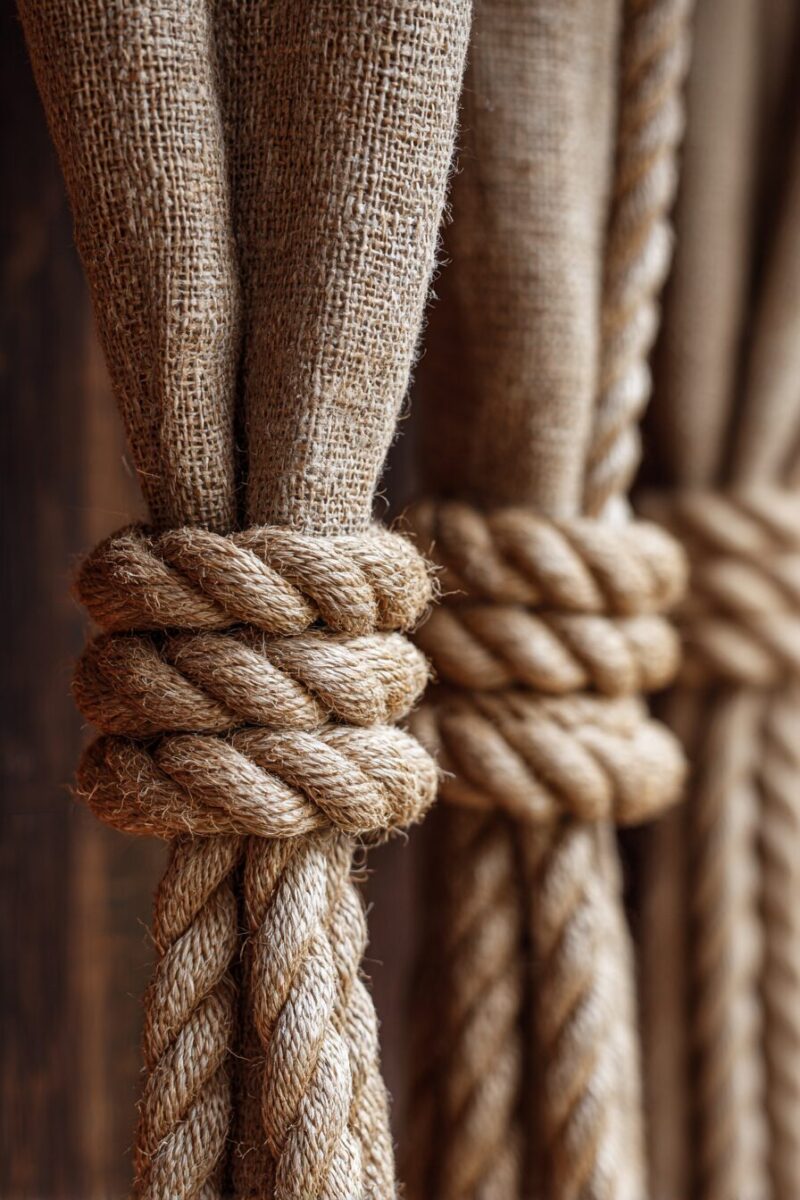
I Replaced Every Curtain in My House With Hippie Styles — Here’s What Actually Worked
Overhead lighting is a crime.
Bad curtains are a close second.
I’ve spent the last three years slowly fixing both problems in my 1960s ranch house, and honestly the curtain journey has been the more interesting one.
I’ve tried macrame in the living room (yes), tie-dye in the bedroom (complicated), bamboo beads in the sunroom (obsessed), and beaded doorway curtains in the hallway (Biscuit hates them, I love them).
What I’ve learned: hippie curtains aren’t one thing.
There’s a massive difference between a $18 tie-dye panel from a craft fair and a hand-knotted macrame piece that took someone forty hours to make.
And some styles work beautifully in specific rooms while being a total disaster in others.
Further down I’ll break down exactly which style suits which space, what things actually cost, and the mistakes I made so you don’t have to.
Stick around.
The patchwork section alone might save you from a pretty expensive crafting mistake I made last winter.
Macrame Curtains: The One Style Worth Spending Real Money On

I put a macrame curtain in my living room window about two years ago and I genuinely can’t picture the room without it anymore.
It’s a 36-inch wide piece I found from a small Etsy shop, natural cotton, with a driftwood dowel at the top.
Cost me $74.
And I’ll be honest — I hesitated at that price.
Then I looked at it hanging in my window at 4pm when the light comes through at that low angle, throwing lace-like shadows across my cream wall, and I stopped hesitating immediately.
That’s the thing about macrame that photos don’t fully capture.
It’s not just a curtain.
It’s basically a shadow-projection system.
The patterns shift throughout the day as the light changes angle, so the wall behind it is doing something slightly different every hour.
I find it genuinely calming to just sit on my couch and watch it.
What to Look For (and What to Skip)
Material matters a lot here.
Cotton rope is softer and drapes more gracefully.
Jute is rougher and more rustic-looking — great for a cabin aesthetic, a little scratchy-feeling if you accidentally brush against it every day.
I’d go cotton for living areas, jute for a covered porch or sunroom where the rugged texture fits.
Knot density is the other thing.
Open, airy knotwork filters light beautifully but gives you basically zero privacy.
Tighter, denser patterns offer more coverage but block more light.
My living room piece is medium density — I get that gorgeous dappled light effect while the neighbors can’t actually see in.
That’s the sweet spot for most people.
Size-wise: measure your window width and go at least 10 inches wider on each side if you’re using a rod, so the curtain frames the window rather than just covering it.
For length, floor-to-ceiling always looks more intentional than window-sill length.
Always.
Price Reality Check
- Mass-produced macrame panels (big box stores): $25–$45. Totally fine for a starter piece. The knots are sometimes uneven but it photographs well.
- Handmade Etsy pieces: $60–$180+ depending on size and complexity. Worth it if you’re keeping them long-term.
- DIY kit (rope + dowel + instructions): $20–$35. I tried this once. My version looked like a sad volleyball net. Some people are great at it, I am not one of them.
Maintenance is genuinely easy.
I take mine down twice a year, shake it out in the backyard (Biscuit acts like it’s attacking him every time), and spot-clean any dirty bits with a damp cloth.
A gentle hand wash in cool water maybe once a year.
Lay flat to dry or hang outside.
That’s it.
Tie-Dye Curtains: More Nuance Than You’d Think

Okay so I had a whole moment with tie-dye curtains in my bedroom and it did not go the way I expected.
I bought a pair of rainbow spiral panels, hung them up, and felt like I was sleeping inside a Grateful Dead poster.
Which, look, is some people’s dream.
For me it was a lot.
I swapped them for a set in indigo and ivory with a more subtle shibori-style pattern and suddenly my bedroom felt like something out of a boutique hotel.
Same concept — hand-dyed fabric, organic pattern, bohemian energy — but the color palette made all the difference.
Tie-dye curtains live and die by color choice.
Here’s how I’d actually think about it:
Color Palette Guide: Which Room, Which Palette
- Bedroom: Stick to analogous colors (blues and purples, or warm terracottas and rusts). The eye rests easier on harmonious palettes. Avoid rainbow multi-color if you want the room to feel calm rather than energizing.
- Living room: This is where you can go bolder. A deep teal and mustard tie-dye reads as sophisticated-boho rather than college-dorm. Pair with solid-colored throw pillows in one of the curtain’s secondary tones.
- Kids’ room or teen space: Full rainbow spiral, go for it. It works beautifully here and the energy fits the space.
The light thing is real, by the way.
When morning sun hits a light-colored tie-dye panel, the color washes across the opposite wall.
My indigo panels throw a soft blue cast into my bedroom in the early morning and it’s genuinely one of my favorite things about waking up in that room.
Fabric weight matters for function.
Sheer or lightweight cotton (around 100–130 GSM if the listing specifies it) lets light through beautifully but provides minimal privacy.
For a bedroom you want something heavier, 160 GSM and up.
For a living room where you’re just filtering light, lighter is lovely.
One caveat: tie-dye does fade.
Cold water wash, gentle detergent, hang to dry — do all of that and they’ll hold color for a good while.
But if your windows get direct harsh afternoon sun, expect some fading within a year or two.
Honestly I’ve come to like the faded look.
It starts to feel genuinely vintage rather than artificially so.
Beaded Doorway Curtains: Practical Magic (and One Thing Nobody Warns You About)


Biscuit walked through my beaded curtain exactly once.
He has never done it again.
He now detours through the kitchen to avoid the hallway entirely, which is objectively hilarious.
I, however, am completely in love with this curtain and have no plans to remove it.
The clicking sound is the thing.
It’s soft and rhythmic and when there’s a little airflow from the window at the end of the hall, the whole curtain sways slightly and produces this gentle, meditative sound.
It’s been one of the cheapest mood upgrades in my house (I paid $22 for a wooden bead curtain from a small import shop — it was 36 inches wide and 80 inches long, standard doorway size).
Bead Material Breakdown: Which Type For What Effect
Wooden beads: warmest look, earthiest sound, most natural feel.
Great for boho and rustic spaces.
My personal pick.
They’re also the lightest, so they move easily in even a gentle draft.
Plastic colored beads: this is the classic 1970s version, and when done right it’s actually super fun.
Look for designs with a motif — a tree, a peace sign, a sunset — built into the pattern.
Solid-color random plastic beads look cheaper.
Patterned ones look intentional.
Glass beads: the most elegant option.
They catch light and throw tiny prismatic reflections around the room, which is genuinely beautiful.
They’re heavier though, so they hang straighter and don’t sway as much.
Also more expensive — expect $45–$90 for a full doorway width in glass.
One thing nobody tells you: standard doorway widths in American homes vary a lot.
Measure your doorway before buying.
Most beaded curtains come in 36-inch or 39-inch widths, but older homes (hi, my house) often have 32-inch or 34-inch doorways.
You can trim wooden or plastic strand curtains fairly easily.
Glass bead curtains are harder to modify.
Installation is simple — most come with a mounting rod or can hang from a tension rod.
No drilling required.
That’s genuinely appealing if you rent or just hate committing to hardware holes.
Tapestry Curtains: The Style That Gets Unfairly Dismissed

People hear “tapestry curtain” and picture a dorm room wall hanging awkwardly jammed into a window.
And yeah, that’s a real risk.
But done right, tapestry curtains are genuinely the most striking option in this entire list.
The key is treating them like actual curtains, not like fabric you happened to hang near a window.
That means using a proper curtain rod, hanging them at ceiling height (or as close as you can get), and letting them puddle very slightly on the floor if the length allows.
That extra four to six inches of length transforms the whole look from “craft project” to “intentional design decision.”
My favorite use for tapestry curtains is in a space that doesn’t get a ton of foot traffic — a meditation corner, a reading nook, a bedroom window that’s mostly decorative.
The detailed artwork needs space to breathe and be noticed.
In a high-traffic area, the complexity can feel overwhelming.
Pattern Styles and What They Do to a Room
Indian block-print tapestries in deep blue and gold or red and ivory have a rich, slightly formal quality.
They look incredible against white or off-white walls and bring incredible warmth to a room that needs grounding.
Mandala-print tapestry fabric (which overlaps with the mandala curtain section below, but bear with me) works better in rooms where you want meditative calm.
The symmetry is genuinely soothing to look at.
Nature scenes — forest, mountain, celestial — read as more casual and whimsical.
Great for a teenager’s room or a casual living space where you want personality without formality.
Light control is real with tapestry.
A standard-weight tapestry fabric (most Indian imports are around 150–170 GSM) will significantly reduce light without fully blocking it.
Morning light through a warm-toned tapestry is genuinely beautiful — it casts color into the room like a stained glass window but softer.
For a bedroom that needs full blackout, you’d layer a liner panel behind it.
Prices are accessible.
Indian block-print tapestries large enough for a standard window (54 x 84 inches) run $25–$55 at most.
Custom or artisan-made pieces cost more.
I’ve found genuinely beautiful ones at thrift stores for $4.
Keep your eyes open.
Bamboo Bead Curtains: The Underrated One

I put bamboo bead curtains in my sunroom and I sort of can’t believe I waited so long.
The room faces east and gets intense morning light — before the bamboo curtains, it was basically unusable before 9am because of the glare.
Now the light filters through in warm, golden slices and the room is my favorite spot in the house for morning coffee.
Bamboo bead curtains are the gentlest option in terms of light filtration.
Unlike fabric curtains that either block or don’t, bamboo filters in a more organic way — the light comes through the gaps between strands but is softened and broken up, so you get illumination without harsh direct sun.
The sound is different from wooden bead curtains too.
Lighter, more delicate.
Almost like a very soft rain.
In my sunroom with the window cracked, the bamboo curtains produce a constant low, calm sound that I find genuinely meditative.
More than one person has sat in that room and said it feels peaceful in a way they couldn’t immediately explain.
The sound is part of it.
Where Bamboo Works Best vs. Where It Doesn’t
Bamboo bead curtains are great for: sunrooms, enclosed porches, rooms where you want to filter light rather than block it, doorways between rooms where you want a visual separation without a physical barrier, any space with an Asian-inspired or natural aesthetic.
They’re less ideal for: bedrooms where you need real privacy or light control, windows facing a street where actual coverage matters, or spaces that feel very formal (bamboo has an inherently casual energy that doesn’t translate to every style).
Natural bamboo color is a warm golden tone that goes with almost everything.
Painted versions in sage green or deep brown look beautiful in the right space.
I’d avoid the ones painted in bright non-natural colors — they lose the organic quality that makes bamboo special in the first place.
Sustainability note for those who care: bamboo is genuinely one of the most renewable materials available, growing back in a few years versus decades for hardwood.
If eco-conscious sourcing matters to you, it’s a real selling point here, not just marketing language.
Price range: $20–$55 for most window sizes.
Wider or custom-trimmed widths cost more.
Trimming them yourself is easy — most bamboo strands can be cut with heavy scissors or a craft blade.
Fringe Curtains: High Drama, Low Commitment

Fringe curtains are the most “maximalist” option on this list and I say that affectionately.
They’re not subtle.
They move constantly.
They demand attention.
And in the right space, they’re absolutely spectacular.
I have a short fringe curtain — more of a valance, honestly, about 18 inches long — over my kitchen window, and it’s one of those things that makes people stop and go “wait, what is that?” when they visit.
It’s natural cotton in cream and rust, and when the window is open it just sways constantly in a way that looks almost alive.
The length of the fringe genuinely changes the whole character.
Here’s how to think about it:
Fringe Length Guide
- Short fringe (6–12 inches): Best used as a topper or valance. Adds texture without overwhelming. Works in smaller windows, kitchens, bathrooms.
- Medium fringe (24–36 inches): Works as a partial curtain panel, covers the upper third of a window. Gives you the movement and drama while still letting plenty of light through the lower portion.
- Full-length fringe (60–84 inches): Full commitment. Looks incredible in a boho bedroom or living room. Provides minimal actual light filtering but maximum visual impact.
The layering trick is real and useful: hang a simple solid linen or cotton panel for privacy, then hang a fringe curtain over it on the same rod.
You get the functional coverage of the base panel plus the textural, moving quality of the fringe layer.
It looks like something from a boutique hotel and costs maybe $40 total if you shop the sales.
Material-wise: cotton fringe hangs naturally and moves beautifully.
Synthetic fringe can look a little cheap up close but it’s very affordable ($15–$25) and holds up well to washing.
For something you’re investing in aesthetically, I’d pay a little more for natural fiber.
For a kid’s room or a space that gets rough treatment, synthetic is practical.
Hemp Rope Curtains: The Grown-Up Macrame


If macrame is the art student, hemp rope curtains are the architect.
They have a rawer, more structural quality — less decorative knotwork, more honest material.
I’m genuinely obsessed with how they look in the right space.
The texture is the whole point.
Hemp rope has a roughness that cotton doesn’t — you can see the individual fibers, the slight variation in color along each strand, the way it catches light differently depending on the angle.
Against a whitewashed wall or natural plaster, it looks like something out of a Scandinavian design magazine crossed with an American farmhouse.
Hemp also has a very slight natural scent, especially when it’s new — earthy, like the inside of a barn but cleaner.
It fades after a few weeks but I genuinely liked it while it lasted.
Small detail, but it adds to the sensory experience of the room in a way that synthetic materials never could.
Hemp vs. Macrame: When to Pick Which
This is a question I get from friends a lot because the two styles look similar in photos.
Here’s how I actually differentiate them:
- Macrame has decorative knotwork as the main visual feature. The patterns are the point. It’s more delicate-looking, more artistic.
- Hemp rope curtains are about the material itself. Simpler construction — vertical strands, maybe some basic knotting, but the visual interest comes from the rope’s texture and color variation rather than complex patterns.
For a room with a lot going on visually (busy rug, gallery wall, collected furniture), hemp’s simplicity is actually an asset.
It adds texture without competing.
Macrame, with its more elaborate patterns, needs a calmer backdrop to really read well.
UV resistance is a genuine selling point here too.
Hemp fiber is naturally resistant to sun damage in a way cotton isn’t.
For a south- or west-facing window that gets several hours of direct sun daily, hemp will outlast cotton macrame by years without fading or degrading.
Natural-dyed hemp versions are particularly beautiful — plant-based dyes give colors a softness and variation that synthetic dyes on synthetic materials can’t replicate.
Look for madder red, indigo, or walnut brown if you want something with color but still earthy and organic-feeling.
Peace Sign Print Curtains: How to Do This Without It Looking Like a Dorm Room

Okay I want to defend peace sign curtains for a second because they get a bad rap.
Yes, they can look like a Hot Topic clearance sale.
But they don’t have to.
The difference between a peace sign curtain that looks intentional and one that looks like you’re nineteen years old is almost entirely about scale and color palette.
Large-scale, widely-spaced peace signs on a solid background (especially in muted or sophisticated colors like terracotta on natural linen, or navy on off-white) read as a bold graphic print rather than a costume.
Tiny, densely-packed, rainbow-colored peace signs on a bright background reads as novelty.
Both are valid choices — just be honest with yourself about which effect you’re going for.
The spaces where peace sign curtains genuinely sing:
- A teenager’s room. Full stop. Let them have the bold rainbow version. It’s their space.
- A casual den or music room where you’ve already committed to a retro aesthetic — think vintage band posters, a record player, worn-in leather furniture.
- A kids’ playroom where maximalism is basically the design goal anyway.
For a living room or bedroom where you want something more subtle, look for tone-on-tone designs — the peace symbol woven into or printed in a slightly different texture than the background fabric.
From a distance it reads as a textured solid.
Up close you see the detail.
That’s a sophisticated execution of the concept.
These tend to be among the most affordable options on this whole list.
A pair of panels in cotton or cotton-poly blend typically runs $20–$40.
Wash cold, tumble dry low.
Easy.
Mandala Pattern Curtains: What They Do to Light (and to the Room’s Energy)

Mandala curtains are the ones I get the most questions about when people see them in my home photos.
There’s something about the symmetry that the eye just finds deeply satisfying — you look at them and there’s an almost involuntary feeling of settling and calm.
I have a single mandala panel (just one, not a pair) in my bedroom, hung to one side of the window rather than centered over it.
It’s about 45 x 90 inches, deep teal and gold on a cream ground, Indian block-print style.
I bought it for $34 at a small import store that has since closed, which still makes me a little sad.
Similar pieces are widely available though.
The trick with mandala curtains is placement.
Because the pattern is radially symmetrical, it works best when the curtain can hang flat and still — you want to actually see the design clearly, not have it constantly in motion.
So these are better for windows that don’t get strong drafts, or in spaces where the curtain is mostly decorative rather than functional.
Mandala Curtain Buying Details Worth Knowing
Print quality varies enormously.
Cheap digital printing on synthetic fabric can look muddy and flat.
Hand block-printing or high-quality digital printing on natural cotton produces colors that are richer and more complex — you’ll see slight variations and imperfections that make it feel handmade rather than factory-produced.
Color saturation matters for light effects.
A darker, more saturated mandala curtain (deep jewel tones) will cast colored light into the room when the sun hits it directly.
It’s a beautiful effect but it changes the room’s color temperature significantly.
A lighter, more muted mandala lets light through more neutrally.
Many mandala curtains come with a top pocket for a standard curtain rod — most are designed for 1-inch or 1.5-inch rods.
Check this before you order.
I’ve had two arrive with pockets too narrow for my existing rod and it was annoying both times (I learned this the somewhat irritating way).
Metallic-accented mandala prints, where gold or silver ink highlights parts of the design, look especially beautiful in the late afternoon when raking light hits the metallic areas and they catch the light differently from the matte portions.
It’s a small detail that photographs can’t fully capture but is lovely in real life.
Patchwork Fabric Curtains: The One I’d Warn You About Before You Start

Last winter I decided to make my own patchwork curtains for the guest room.
I had a box of fabric scraps, a vision, a YouTube tutorial, and way too much confidence.
Six hours later I had something that looked like a quilt that had lost a fight with itself.
Here’s what I didn’t understand going in: patchwork curtains need to hang straight.
Quilts and patchwork blankets can have slight irregularities and it just reads as handmade-charming.
Curtains hang from a rod and the eye immediately tracks the vertical lines — any pulling, puckering, or uneven seams become very obvious.
The fabric has to be cut and sewn with a lot more precision than I was bringing to the project.
I ended up buying a patchwork curtain panel from an Etsy seller who makes them from vintage sari fabric ($58 for one panel, 44 x 84 inches).
It’s the most-commented-on thing in my guest room.
The colors are incredible — saffron, teal, deep pink, ivory — and the fabric has a history and weight to it that new fabric doesn’t have.
I’m glad I did both — I know my limits and I know what I want to spend six hours on, and hand-sewing curtain panels isn’t it.
If you’re a genuinely skilled sewer and want to DIY this, here are the practical details that’ll save you trouble:
- Pre-wash all fabrics before cutting. Different fabrics shrink at different rates and you do not want to find this out after the curtain is hung and you’ve washed it once.
- Use a consistent seam allowance (3/8 inch works well) and press every seam as you go. This is the thing I skipped and it’s why my curtain looked like a crumpled disaster.
- Back the whole piece with a lightweight interfacing or muslin lining. This stabilizes the patchwork and helps it hang straight.
- Cut patches on the grain of the fabric (parallel to the selvage), especially if mixing wovens and knits. Mixing grain directions causes warping.
Bought or handmade, the thing that makes patchwork curtains special is that they genuinely improve with time.
As different fabrics fade and soften at different rates, the piece becomes more complex and layered-looking rather than wearing out evenly like a single fabric would.
My Etsy panel already has this quality because the vintage saris were at different stages of fading when they were pieced together.
In five years it’s going to look like a family heirloom.
That’s what all of these styles have in common, actually.
They get better as they live in your house.
The macrame softens, the tie-dye develops that worn-in vintage quality, the bamboo patinas, the patchwork layers up.
These aren’t curtains you replace every few years when the trend shifts.
They settle in, accumulate light and story, and become part of what makes your home feel specifically and irreplaceably yours.
Related read: Things I Wish I Knew Before I Decorated My First Home — Instant PDF + Kindle download. Secure checkout by Stripe