

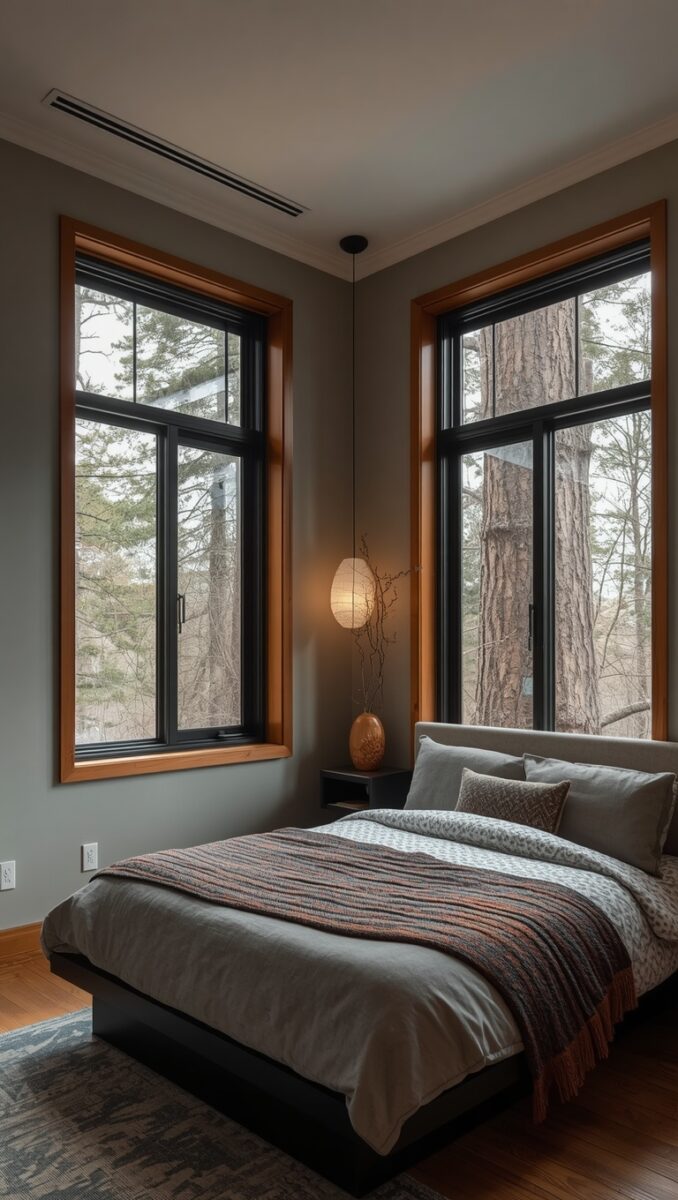
My sister stayed with me for four nights last winter.
She ended up staying for nine.
And no, it wasn’t because her flight got cancelled or anything dramatic like that.
It was because she kept saying my guest room felt like a hotel, but softer, like a hotel that actually loved her.
I still think about that compliment more than I probably should.
There’s something so satisfying about creating a space that makes someone exhale the second they walk in.
A space that says “you’re taken care of here” without you having to say a single word.
So if you’ve got a guest room that’s currently more storage closet than sanctuary, I get it, I’ve been there too.
Let’s fix that together, one cozy little detail at a time.
Start With a Bed That Feels Like a Hug

I’m just going to say it: most guest room beds are sad.
Thin comforter, mismatched pillowcases, maybe a throw blanket that’s seen better days.
When I redid my own guest room, the bed is where I put almost all my budget.
Because that’s where your guest actually lives for eight hours a night, you know?
I layered a plush duvet with a lightweight quilt folded at the foot, just in case someone runs warm.
And I added way more pillows than felt reasonable at first.
Two sleeping pillows, two decorative ones, and one small lumbar pillow for reading in bed.
It felt excessive when I set it up.
But every single guest has mentioned how good the bed felt, unprompted.
That’s the emotional payoff right there.
A great bed tells your guest, without saying it, that you thought about their comfort before they even arrived.
My tip: go one size up on your duvet if you can.
A duvet that drapes generously over the sides feels so much more luxurious than one that barely covers the mattress.
Optional variation: if your climate runs warm, swap the down duvet for a breathable cotton waffle blanket instead.
It still looks soft and inviting, just lighter.
Either way, aim for hotel-level plushness.
It’s honestly the fastest way to upgrade the whole room.
Lighting That Feels Like a Warm Exhale


Overhead lighting is, in my humble opinion, the enemy of coziness.
It’s harsh, it’s flat, and it makes everyone look a little tired.
In my guest room, I turned off the overhead light almost entirely and leaned into lamps instead.
A small lamp on the nightstand, a slightly bigger one on the dresser, both on warm bulbs, not the cool white kind.
The difference this made was honestly kind of shocking.
The room went from “spare bedroom” to “boutique hotel” with just two lamps and a bulb swap.
I also added a tiny plug-in nightlight near the outlet, low to the ground, so guests aren’t fumbling for a switch at 2am.
It’s such a small thing, but it says “I thought of you even in the dark.”
My favorite trick is layering three light sources at different heights.
Lamp on the nightstand, lamp on the dresser, and a soft floor lamp in the corner if there’s room.
It creates this glow that just feels held, if that makes sense.
Optional variation: string lights along a headboard or mirror frame for guests who love a little whimsy.
Why it works emotionally: warm, layered light signals rest.
Our brains just relax faster in that kind of glow.
It’s a small investment that changes the entire feeling of the room in about twenty minutes.
A Little Welcome Station on the Nightstand

This one is so simple and it gets the biggest reaction every single time.
I keep a small tray on the nightstand with a carafe of water, a glass, and a couple of little wrapped mints.
That’s genuinely it.
But my mother in law once texted me a photo of it because she was so touched.
It communicates something bigger than water and mints, honestly.
It says “I anticipated your needs before you even had them.”
I also like to tuck a folded note next to the tray with the wifi password and my phone number, in case they need anything overnight.
It saves them from that awkward moment of texting you at 11pm asking for the password.
My personal recommendation is to keep the tray simple and rotate what’s on it seasonally.
In the fall I’ll add a little dish of chocolates.
In the summer, maybe a small bottle of local sparkling water instead.
Optional variation: swap the carafe for a cute insulated water bottle if counter space is tight.
It still gets the same warm reaction.
The emotional reason this works so well is that it removes a small layer of vulnerability from being a guest.
Nobody wants to creep downstairs at midnight looking for a glass.
You’re basically saying, before they even ask, I’ve got you.
Windows That Actually Let People Sleep


I used to think curtains were purely decorative.
Then I stayed in a guest room with paper-thin blinds and woke up at 5:47am to blinding sunlight.
Never again, for my own guests.
Blackout curtains, or at least a blackout liner behind pretty curtains, are non negotiable in my guest room now.
Your guest is already sleeping in an unfamiliar bed, in an unfamiliar house, probably a little anxious about oversleeping or being too loud.
The least we can do is give them real, deep, dark sleep.
I chose curtains in a soft linen-look fabric with a hidden blackout lining, so it still looks soft and pretty during the day.
Nobody wants their guest room to look like a hotel conference room with heavy black drapes.
My tip: hang the curtain rod higher and wider than the window itself.
It makes the ceiling feel taller and the window feel bigger, and it fully blocks light from sneaking in around the edges.
Optional variation: if full blackout feels too dark for your style, a room-darkening liner still cuts a huge amount of light while keeping things airy.
Why this matters emotionally: good sleep is the difference between a guest who feels refreshed and grateful, and one who’s quietly cranky and trying to hide it.
It’s one of those upgrades nobody notices consciously.
They just wake up saying “I slept SO well” and have no idea why.
The Blanket Ladder (And Why I’m Obsessed)

Okay, this one is more style than function, but hear me out.
A blanket ladder leaned in the corner with two or three soft throws changed the whole personality of my guest room.
It’s such a small, inexpensive piece.
But it makes the room feel curated instead of thrown together.
I use it to add extra warmth options without cluttering the closet or the end of the bed.
A chunky knit throw for guests who run cold, a lighter waffle-weave one for guests who don’t.
Visually, it fills that awkward empty corner that every guest room seems to have.
And it just feels so lived-in and cared for, like someone actually decorated this space on purpose.
If I had a smaller guest room, this is honestly the first thing I’d add.
It takes up barely any floor space and it adds instant texture and warmth.
My personal recommendation is a light wood ladder if your room leans neutral, or a black metal one if you want something a little more modern and graphic.
Optional variation: skip the ladder entirely and use a woven basket at the foot of the bed instead.
Same cozy effect, different silhouette.
The emotional reason this small detail works is really about permission.
It silently tells your guest “grab whatever you need, get as cozy as you want.”
There’s something so comforting about a room that gives you options instead of just the bare minimum.
Fresh Flowers or a Little Plant, Always

I try to never let a guest walk into an empty, plant-less room.
Even one small stem in a bud vase changes the entire energy of the space.
There’s something about a living, breathing thing in the room that makes it feel like someone was excited for you to arrive.
I usually grab whatever’s in season and affordable, sometimes it’s a single eucalyptus stem, sometimes it’s a small bunch of ranunculus if I’m feeling fancy.
If fresh flowers aren’t realistic for you right now, a low maintenance plant works just as beautifully.
A little potted pothos or a small snake plant on the dresser adds that same soft, alive feeling.
And bonus, it doesn’t wilt if your guest stays a few extra days.
My tip is to keep the vase or pot small and simple, you don’t want it competing with the nightstand tray or the lamp.
One clean, pretty element is more powerful than a cluttered arrangement.
Optional variation: a small bowl of lemons or dried lavender works too if you want that sensory touch without live greenery.
Why it works emotionally: flowers and greenery are just universally read as care.
Nobody associates fresh flowers with an afterthought.
It’s one of the fastest, cheapest ways to make a guest feel genuinely welcomed instead of just accommodated.
A Cozy Chair or Little Reading Nook

Not every guest room has space for this, and that’s totally okay.
But if yours does, even a small accent chair in the corner adds so much warmth.
I found mine secondhand and reupholstered it in a soft bouclé fabric, and it’s become my guests’ favorite spot.
It gives people somewhere to sit besides the bed, which sounds small but genuinely matters.
Nobody wants to be stuck sitting on the mattress to put their shoes on or check their phone.
I paired the chair with a small side table and a reading lamp, so it doubles as a quiet little nook.
A stack of two or three books on the side table adds a nice touch too, nothing too heavy, maybe something light and easy to dip in and out of.
If I had a smaller guest room, I’d swap the full chair for a slim accent stool instead, just enough for a spot to set a bag or sit for a minute.
My personal recommendation is choosing a chair in a fabric that can handle a little wear, since guest rooms get used in bursts.
Optional variation: a window bench with cushions works beautifully too, especially in a room with a nice view.
Why this matters emotionally: it turns the room from a place to sleep into a place to actually relax.
And that distinction is everything when someone’s away from their own home.
The Full Length Mirror Nobody Thinks About

This one gets overlooked so often, and it’s such an easy fix.
Most guest rooms have a small mirror, if any mirror at all.
But your guest is getting dressed in that room, possibly for something important, a family dinner, an interview, whatever it is.
I added a simple full length mirror leaning against the wall in the corner, and it instantly made the room feel more functional and more finished.
It’s such a practical touch, but it also just looks pretty, especially propped in a nice frame.
My tip is to lean it rather than mount it, it’s easier to install and it adds a relaxed, styled look.
Optional variation: a mirror with a little shelf built in gives guests somewhere to set jewelry or a phone while they get ready.
Why it works emotionally: it’s about dignity, honestly.
Nobody wants to guess how they look before walking out the door in someone else’s house.
Giving your guest the tools to feel put together is such a quiet, generous gesture.
It’s one of those things they’ll never mention, but they’ll absolutely notice if it’s missing.
Fresh Towels That Feel Like a Spa Day

I keep a separate set of towels just for guests, and I never let them touch my everyday linen closet rotation.
They stay folded on the end of the bed or on a little shelf in the closet, always fresh, always soft.
I go one shade darker or richer than my usual bathroom towels, just to make them feel special and separate.
A hand towel, a bath towel, and a washcloth, all matching, all soft.
I also like tucking in a couple of mini toiletries, a travel size shampoo, a little bar of nice soap, in case someone forgot something.
It happens to everyone eventually.
My tip is to wash guest towels in a lightly scented detergent, nothing overpowering, just something that smells clean and a little luxurious.
Optional variation: if you want to go the extra mile, a small bathrobe hung on a hook feels incredibly indulgent for very little cost.
Why this works emotionally: it’s the little spa-day feeling.
It tells your guest they don’t have to rough it, they can actually relax and be taken care of.
There’s something so comforting about sinking into a soft towel after a long travel day.
It’s a tiny detail, but it lingers in someone’s memory way longer than you’d expect.
A Scent That Feels Like a Warm Welcome

Smell is so underrated when it comes to how a room feels.
I keep a simple candle or a reed diffuser on the dresser, something soft, like sandalwood or a light vanilla.
Nothing overpowering, since strong scents can be a lot for someone who’s not used to them.
The second a guest walks in and catches that warm little scent, something shifts.
It feels intentional, like the room was waiting for them.
I never light the candle right before someone arrives, by the way, I light it about thirty minutes ahead so the room smells warm without being smoky.
My tip is to pick one signature scent and stick with it, so it becomes associated with staying at your place specifically.
Optional variation: a linen spray on the sheets works beautifully if you’re not a candle person.
Why it works emotionally: scent memory is powerful.
Your guest will smell that same candle somewhere else, months later, and think of your guest room instantly.
It’s such a soft, quiet way to make an impression that lasts way longer than the visit itself.
Personal Touches That Make It Feel Like Them, Not Just You

This last one is my favorite, honestly.
It’s easy to decorate a guest room that reflects your taste.
It’s a little harder, and so much more meaningful, to decorate one that considers theirs.
When my in-laws visit, I make sure there are a couple of books I know they’d actually enjoy on the nightstand.
When my college roommate stays over, I leave out the specific tea she always used to drink back then.
It’s such a small gesture, but it says “I remember you, specifically.”
I also like leaving a handwritten note, nothing long, just something warm like “so happy you’re here.”
My tip is to think about the actual person staying, not a generic guest.
What do they like, what would make them feel remembered.
Optional variation: a small local guidebook or a few restaurant recommendations feels thoughtful if they’re visiting from out of town.
Why this matters emotionally, more than anything else on this whole list, is that it moves the room from “nice” to “loved.”
Anyone can buy soft sheets and a good lamp.
But noticing someone, really noticing them, is what makes a guest room feel like it was made just for them.
And that’s the feeling that makes people want to stay a little longer.