

I’ll confess something a little embarrassing.
I once stood in a stranger’s kitchen at an open house and ran my hand along their sink for a good long while.
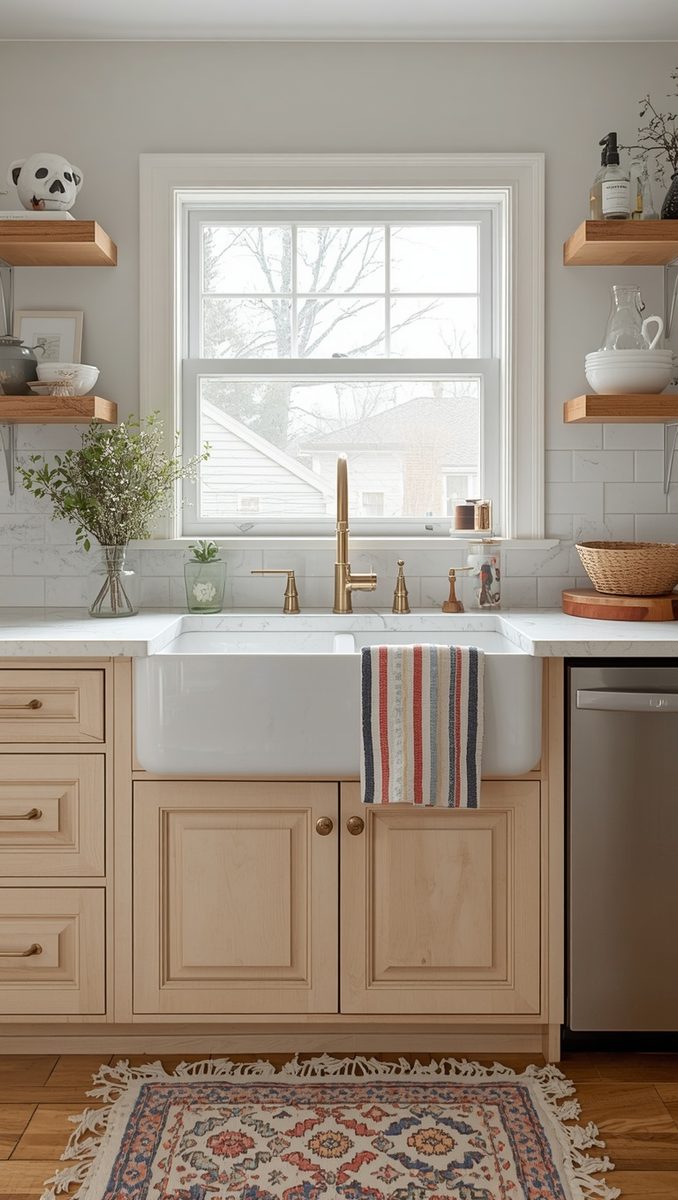
It was a big, creamy white apron front, smooth as a river stone.
The realtor gave me a funny look.
I didn’t care one bit.
Something about that deep, curved basin made the whole room feel settled, like it had been loved for ages.
I went home and couldn’t stop thinking about it.
And honestly, I still can’t.
So here’s everything I’ve learned since, from my own kitchen and a few I’ve helped friends with.
Why the Sink Is the Real Heart of a Farmhouse Kitchen

I used to think the stove was the star.
Then I started really watching where I stand.
I’m at the sink all day long, rinsing berries, filling the kettle, looking out the window while the water runs.
So it only makes sense that this is where you should spend your love.
An apron front sink pokes its face out past the cabinet line, and that little detail changes everything.
It becomes the focal point.
It says “this kitchen is lived in” before you’ve even said hello.
And I love that it’s useful, too, because you’re not leaning over a counter edge to reach the basin.
My lower back thanked me within days.
Fireclay: The Creamy White Classic

If you want that storybook look, fireclay is where I’d start.
It’s glazed ceramic fired at a super high heat, and it has this soft, almost buttery sheen.
When I ran my fingers over mine for the first time, it felt cool and silky, kind of like a good dinner plate.
It hides fingerprints and water spots better than you’d think.
It also doesn’t scratch easily, which matters when you’ve got a cast iron skillet and zero patience.
The tradeoff is weight, because these things are heavy.
Get a friend or a pro to help with installation.
If I could only pick a material for a true farmhouse feel, this is the one I’d pick, every single time.
Enameled Cast Iron for Old-World Charm

Cast iron feels like a family heirloom.
It’s coated in thick, glossy enamel, and the color depth is gorgeous.
My aunt has one in a warm white that looks almost like fresh cream, and it’s been in her kitchen for years.
It holds a bit of cold, so your hands feel it first thing in the morning.
I kinda adore that, honestly.
You do need to be a little gentle, though, since a hard hit from a heavy pot can chip the enamel.
I’d keep a rubber mat or a bottom grid in there for peace of mind.
And skip harsh scrubbing powders, because they dull that pretty shine over time.
Stainless Steel If You Want Modern Meets Cozy

I know, I know.
Stainless doesn’t sound very farmhouse.
But hear me out, because I tried one in a rental-style makeover and I was surprised.
A brushed stainless apron front looks sleek against warm wood and soft cabinet colors.
It’s lightweight, forgiving, and almost impossible to chip or crack.
If you cook a lot and you’re not precious about your sink, this one is a workhorse.
Look for a thicker gauge, because thin steel can sound tinny and dent more easily.
My tip is to add a little rubber sink mat to quiet the clanging of dishes.
It’s practical, and it still looks lovely.
Copper for That Glow You Can’t Fake

Okay, this is my “if money were no object” pick.
Copper has a warmth that no other material can touch.
Late afternoon light hits it and the whole kitchen goes honey-gold.
It also naturally fights bacteria, which is a lovely little bonus.
Over time it develops a patina, so it changes and deepens like a good leather bag.
Some people adore that, and some people want it to stay shiny forever.
I’m firmly in the first camp.
If you’re in the second, you’ll need to wax it regularly, so just know that going in.
Single Bowl vs. Double Bowl
This one was a real debate in my house.

A single deep basin lets you soak a huge roasting pan without any weird wrestling.
When I tested one at my sister’s place, I wondered why I ever put up with a divided sink.
But a double bowl is handy if you wash dishes by hand while also prepping veggies on the other side.
So think about how you actually live, not how a magazine says you should.
I’m a single-bowl girl through and through.
If you want some flexibility, a low-divide option is kind of a sweet middle ground.
You get the separation, but a big pan can still sit across the middle.
Getting the Size and Depth Right

Measure carefully.
Then measure again, you know?
Most apron fronts run pretty wide, and the depth can get downright generous.
When I was planning mine, I stood at the sink and pretended to wash dishes with a taped-out outline on the counter.
It sounds silly, but it showed me right away that a very deep basin felt too reaching for my height.
If you’re on the shorter side, ask about a slightly shallower depth.
If you love scrubbing big stockpots, go deeper and enjoy it.
A sink that fits your body is worth way more than one that just looks pretty in a photo.
Don’t Forget the Cabinet Underneath

Here’s the part nobody warns you about.
These sinks are heavy, and they need a specially cut cabinet.
The front of the cabinet has to be open or reworked so the apron can sit right at the edge.
I learned this the hard way when my first quote had a surprise line for “cabinet modification.”
Ask about it up front so you’re not caught off guard.
You’ll also want solid support underneath, especially with fireclay or cast iron.
My contractor added extra bracing and I slept better knowing it was there.
It’s not glamorous, but it’s what keeps the whole dream in one piece.
Pairing the Right Faucet

A good faucet is like jewelry for your sink.
I love a gooseneck in aged brass because it feels so soft and collected.
A bridge style with cross handles gives that old-fashioned farmhouse charm in a heartbeat.
If you cook a lot, a pull-down sprayer is a blessing.
I’m obsessed with mine, I’ll say that plainly.
Think about reach, too, because a tall spout needs a deep enough basin to avoid splashing.
If I had a small kitchen, I’d choose a single finish and repeat it on the cabinet hardware.
It ties everything together without trying too hard.
Choosing Countertops That Play Nice

The counter meets that apron front in a really visible way.
Butcher block feels warm under your palms and looks so cozy beside white fireclay.
Marble brings a soft, veiny elegance, though it does etch, so be ready for a lived-in look.
Quartz is steady and low-maintenance if you’ve got kids or just zero time.
When I picked mine, I held big samples up to the sink and looked at them in morning light and evening light.
Colors can shift a lot, so don’t skip that step.
I also like a slightly rounded edge, since a sharp corner right at the apron can feel harsh.
Soft shapes and a soft sink just belong together.
Cabinet Colors and Backsplash Ideas

This is where the story really starts to sing.
Soft sage cabinets with a creamy sink feel like a quiet morning in the countryside.
Deep navy gives a lovely contrast and makes the white basin glow.
For backsplash, I adore simple subway tile with a slightly handmade wobble.
It catches the light in tiny, imperfect ways, and I love that.
If you want something fresh, try a vertical stack instead of the usual brick pattern.
And a pretty shelf just above the sink, with a few vintage pitchers, is kind of my secret weapon.
It makes the whole corner feel curated without feeling fussy.
Related read: Things I Wish I Knew Before I Decorated My First Home — Instant PDF + Kindle download. Secure checkout by Stripe