
Wabi sabi is a Japanese philosophy that finds beauty in imperfection, impermanence, and incompleteness.
It sounds poetic, and it really, truly is.
But it’s also deeply practical for your living room.
It’s not about being messy or careless.
It’s about choosing things that feel real — things that have a little history, a little wear, a little soul.
When I first started learning about it, I kept thinking: this is the opposite of everything I was taught about decorating.
And that’s exactly why I fell in love with it.
The chipped ceramic vase on my shelf?
Wabi sabi says that chip is what makes it interesting.
The linen throw that’s slightly faded from the sun?
That fading is the story.
It’s a philosophy that lets your home breathe — and lets you breathe inside it.

The First Thing I Did: Letting Go of “Perfect”


This one was harder than it sounds.
I stood in my living room with a notepad, fully ready to do a wabi sabi makeover, and my first instinct was to buy new things.
More intentional things.
But wabi sabi doesn’t start with buying — it starts with releasing.
I put away the matching decorative set I had on my coffee table.
The three identical candles in the same size and color.
The coordinated bookends.
And I replaced them with things that felt a little random, a little collected over time.
An old wooden bowl I got at a flea market.
A single dried branch I picked up on a walk.
A candle I’d already burned halfway down, with wax drips on the side.
Suddenly, the table looked alive.
It looked like someone actually lived here — and not just someone who had a Pinterest board as a personality.
That shift in mindset is the real foundation of wabi sabi living.
My Favorite Wabi Sabi Color Palette for a Living Room


Okay, let’s talk color — because this is where wabi sabi gets really cozy.
The palette is earthy, muted, and deeply calming.
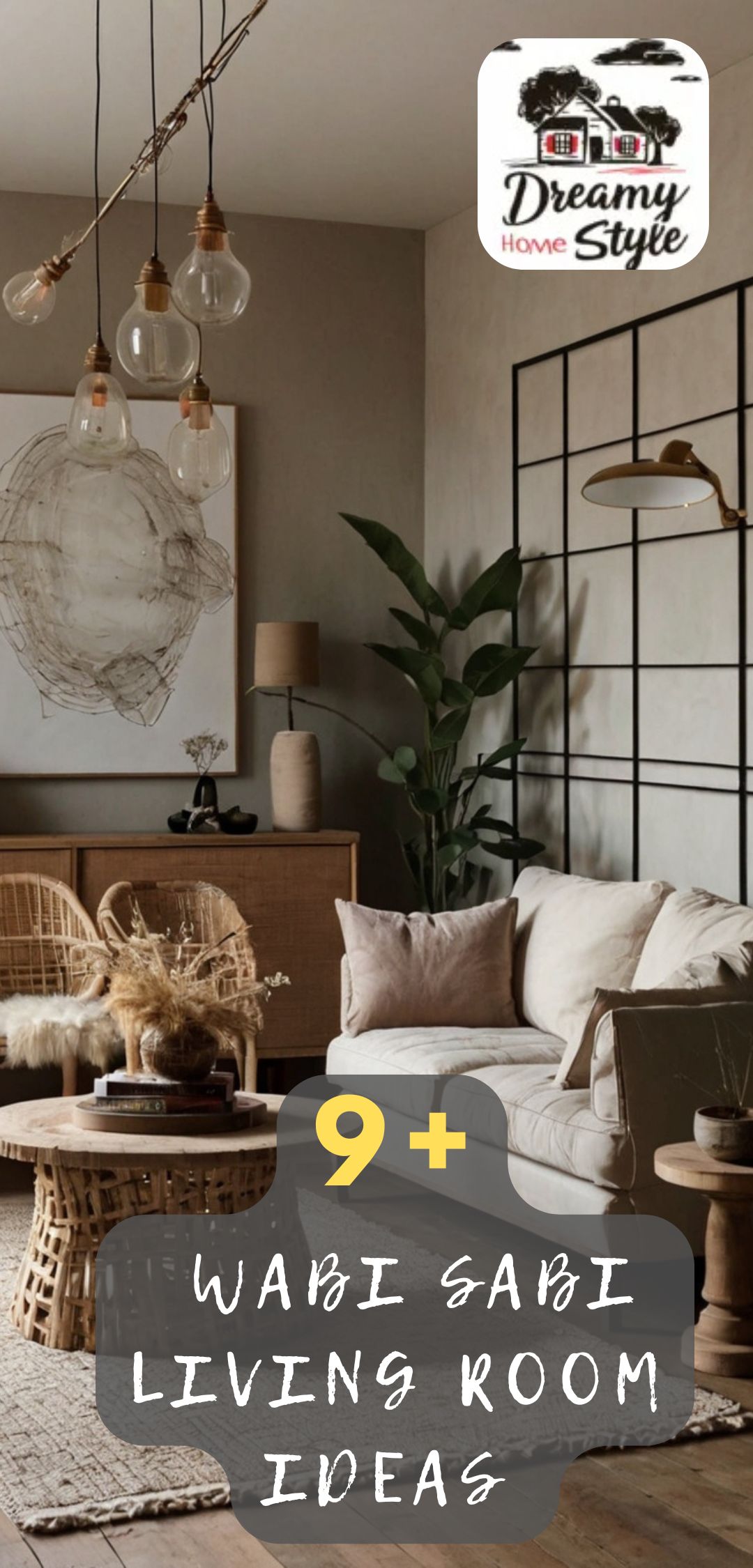
Think warm taupes, dusty creams, soft greiges, foggy sage, clay, and raw linen.
Nothing too bright.
Nothing too saturated.
When I repainted my living room, I chose a color that was sort of between a warm white and a pale sand.
It changes throughout the day.
In the morning light it looks almost golden.
By evening it shifts into something deeper and creamier.
That changeability — the way the color isn’t one fixed thing — is very wabi sabi.
If I had to pick one accent color to layer in, I’d go with a dusty terracotta or a muted rust.
Just a touch.
In a pillow, a small vase, a candle.
Not overdone.
Never overdone.
Textures That Make a Wabi Sabi Room Feel Like a Warm Hug


Texture is everything in a wabi sabi living room.
This is where the sensory magic actually happens.
When I sit on my linen sofa, I can feel the slight roughness of the fabric.
It’s not silky smooth.
It’s not perfectly uniform.
And that’s the whole point.
Wabi sabi textures include: raw linen, chunky knit wool, unglazed ceramics, rough-hewn wood, stone, rattan, jute, and worn leather.
Layering these textures together is what creates that deeply cozy, “I never want to leave this room” feeling.
I layered a jute rug under a small wool rug in my sitting area.
Two rugs.
Different textures.
Slightly mismatched in tone.
And it looked so much more interesting than any single rug I’d had before.
My tip: don’t overthink it.
Just keep piling on textures that feel natural and imperfect — and trust the process.
How to Choose Wabi Sabi Furniture (My Personal Approach)


Wabi sabi furniture has a quiet, worn quality to it.
It doesn’t shout.
It doesn’t brag.
A reclaimed wood coffee table with visible knots and grain lines?
Yes, absolutely.
A linen sofa with a slight slub in the fabric?
Love it.
A vintage armchair that’s been reupholstered but still shows its age in the legs?
That is the dream.
When I was hunting for my coffee table, I almost bought a sleek new one online.
And then I found an old, slightly battered wooden one at an estate sale for almost nothing.
It had a water ring on one corner.
A small scratch along the edge.
I hesitated for about thirty seconds — and then I bought it immediately.
That table now anchors my entire living room.
The “flaws” are what make it beautiful.
That’s the whole lesson, right there.
Plants and Nature: The Living, Breathing Element


A wabi sabi living room needs nature in it.
Not perfectly manicured, symmetrically placed nature.
Real, slightly imperfect nature.
A single dried pampas grass stem in a tall stoneware vase.
A trailing pothos that’s growing a little wild and you’ve just sort of let it do its thing.
A bunch of dried lavender that’s lost most of its color but still smells faintly sweet.
I’m obsessed with dried botanicals for this reason — they’re beautiful because they’re fading.
They lean into impermanence so naturally.
Fresh flowers work too, especially when they’re past their prime peak.
There’s something so quietly beautiful about a slightly drooping peony.
I also love bringing in found objects from nature.
A smooth rock from a hike.
A piece of driftwood.
A small pile of acorns in a bowl on the shelf.
These little details make a room feel rooted in the real world — and that’s exactly the energy wabi sabi is after.
The Art of Wabi Sabi Shelving and Display

Forget gallery walls where everything is perfectly spaced and matted.
Wabi sabi shelving is about negative space, asymmetry, and collected moments.
When I styled my shelves, I started by taking everything off.
Every single thing.
Then I put back only what I actually loved.
Not what matched.
Not what “completed the look.”
Just the things that made me feel something.
A handmade pot I got at a craft market.
A stack of books I actually read, with their spines facing different directions.
A small framed photo that’s slightly yellowed at the edges.
And then I left gaps.
Big, intentional empty spaces.
Those gaps are not “empty” in wabi sabi — they’re breathing room.
They give the eye somewhere to rest.
They make everything else feel more intentional, more considered, more beautiful.
Lighting That Feels Like Golden Hour Every Night

Lighting in a wabi sabi living room should feel soft, warm, and a little imperfect.
No harsh overhead lights.
No cool, clinical whites.
I layered my lighting completely — and it made the biggest difference.
A floor lamp in the corner with a linen shade.
A few candles on the coffee table (the kind that have already melted a little, because that looks incredible).
A small table lamp on a side table with a warm amber bulb.
And one single Edison-style pendant that I use as more of a mood piece than actual task lighting.
The goal is to create pools of light rather than flooding the whole room.
That unevenness — some bright spots, some shadow — is exactly what makes a room feel cozy and alive after dark.
If I had one single wabi sabi lighting tip to give you, it would be: buy warmer bulbs than you think you need.
And add candles.
Always more candles.
Ceramics, Pottery, and Handmade Decor I’m Obsessed With

Handmade ceramics are basically the mascot of wabi sabi decorating, and I am completely here for it.
The slightly uneven rim of a handmade mug.
The glaze that drips in an unexpected way.
The bowl that’s not quite a perfect circle.
These are the pieces I seek out now whenever I’m at a craft fair, a local pottery studio, or a small online shop.
They have an energy to them that mass-produced pieces just don’t.
I have a collection of small stoneware vessels on my window ledge.
They’re all slightly different heights.
Slightly different shades of cream and grey and warm brown.
No two are the same.
And together, they’re one of my favorite things in my entire home.
My personal tip: look for pieces with visible throwing marks — those ridged lines left by the potter’s hands on the clay.
Those marks are literally the definition of wabi sabi beauty.
Imperfection as art.
What to Avoid in a Wabi Sabi Living Room

This is the section I wish someone had given me early on.
Because wabi sabi can accidentally tip into “I just stopped caring about my house” — and that’s not the vibe.
Avoid anything too shiny or reflective as a focal point.
Avoid matching sets that look like they were bought as a kit.
Avoid overly bright, saturated colors.
Avoid clutter for clutter’s sake — wabi sabi is curated, not chaotic.
There’s a difference between “collected over time” and “I just never put things away.”
The goal is intentional imperfection.
Every chipped bowl, every worn wooden surface, every faded textile — it should feel chosen.
Loved.
Kept because it means something or brings beauty in a quiet way.
I also avoid anything that feels like it’s trying too hard.
Wabi sabi rooms should feel effortless.
Like they just sort of happened organically.
That’s the energy.
A Few Wabi Sabi Hacks I Use All the Time

These are my go-to tricks, and they make such a difference.
Leave one thing “unfinished” in a vignette — a candle half-burned, a book left open, a throw that’s not quite folded.
It instantly makes a space feel lived in.
Embrace asymmetry in your pillow arrangement.
Instead of two on each side, try three on one side and one on the other.
Mix your metals.
A little brass, a little aged iron, a matte black candle holder — it all works together in a wabi sabi space.
Use odd numbers in your groupings.
Three, five, seven.
Odd numbers feel more organic and natural than even ones.
Let your plants be a little wild and imperfect.
Resist the urge to trim every stray leaf.
And my personal favorite hack?
Display things you actually use.
A beautiful linen napkin folded on the coffee table.
A worn journal with a soft leather cover sitting out on the shelf.
The things you love and reach for daily — those are the most wabi sabi objects you own.
Why Wabi Sabi Makes Your Living Room Feel More Like You

Here’s the thing nobody tells you about perfectly decorated rooms.
They can feel like you’re living in someone else’s vision of beauty.
And wabi sabi fixes that.
Because when you decorate with imperfection, with worn things, with handmade things, with nature and texture and warmth — you’re decorating with truth.
Your truth.
When I finally finished pulling my wabi sabi living room together, I sat down on my linen sofa, looked around, and exhaled.
Like, genuinely exhaled.
The chipped pottery.
The faded botanical print.
The coffee table with its little water ring.
None of it was perfect.
And it was the most beautiful my home had ever felt.
That’s what wabi sabi gives you — not a flawless room, but a room that feels like a relief.
A room that says: you don’t have to be perfect here.
And honestly?
That’s the most beautiful thing a home can say.