
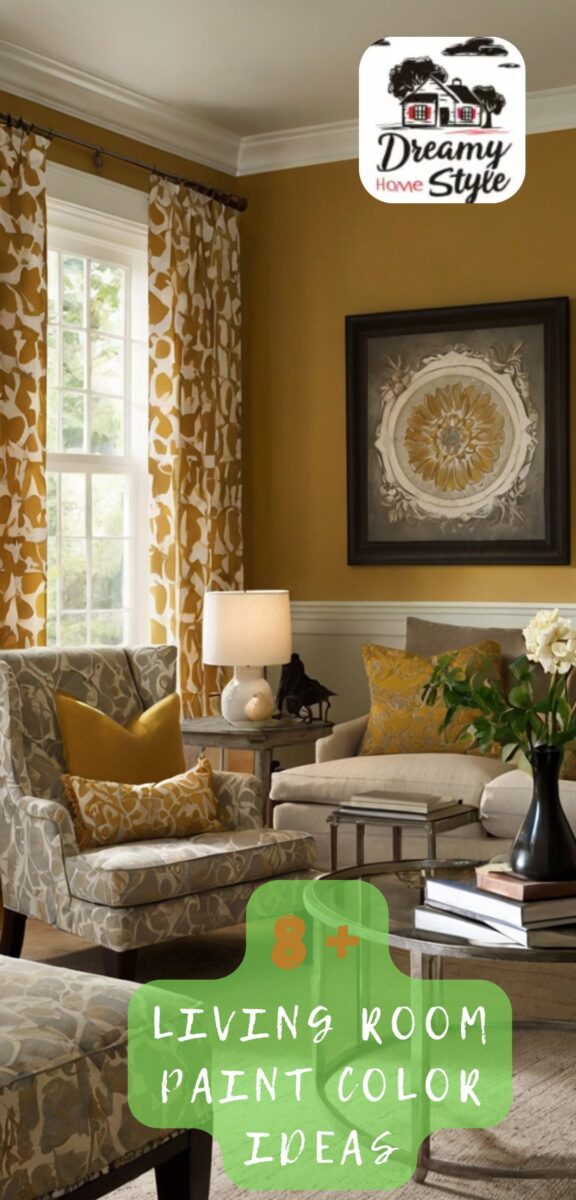
I stood in my living room holding a paint swatch for twenty minutes, completely frozen.
Before you head to the paint store, run your room through the free paint calculator.
Not because I didn’t love the color.
Because I loved three of them, and I had no idea which one was going to make my space feel the way I wanted it to feel — cozy, alive, and sort of like a deep exhale after a long day.
That moment sent me down the longest, most wonderful rabbit hole of living room paint research I’ve ever been in.
And honestly?
I came out the other side with some genuinely exciting discoveries.
So if you’ve been staring at your living room walls lately thinking something has to change — this one’s for you.

Warm Terracotta Is Having a Full Moment and I’m Completely Here for It

I painted one accent wall in my living room a deep, dusty terracotta last autumn, and I haven’t stopped thinking about how right it felt.
It’s one of those colors that looks completely different depending on the light.
In the morning, it has this soft, peachy warmth that makes the whole room feel like you’re drinking coffee inside a hug.
By evening, with a lamp on?
It deepens into something almost russet and rich — kind of moody, kind of romantic.
Terracotta works beautifully if you have wood floors, natural fiber rugs, or any warm-toned furniture.
It sort of pulls everything together without trying too hard.
If I were starting fresh in a neutral room, this is the first color I’d reach for.
The emotional reason it works is simple — terracotta feels grounded.
It has this earthy, lived-in quality that makes a space feel like it has a story.
And right now, after years of cold grays and sterile whites, people are hungry for that warmth.
My tip?
Don’t go too orange.
Look for terracotta shades that lean toward clay or brick — they photograph beautifully and age even better.
Soft Sage Green Is the Color That Actually Calms Me Down


There’s something about sage green that just… slows me down.
I noticed it the first time I walked into a friend’s living room that she had painted this quiet, muted sage.
The whole room felt like it was breathing.
Sage green sits in that perfect in-between space — it’s not too bold, not too safe.
It has just enough color to feel intentional, but it’s soft enough that it never overwhelms.
I love pairing it with creamy whites, Warm Wood Tones, and a little brass or gold hardware.
The combination is genuinely dreamy — like a French country cottage met a modern California home and they became best friends.
Sage also works incredibly well in rooms that get a lot of natural light.
It shifts beautifully from a cool, almost gray-green in the morning to a warmer, more olive tone in the afternoon.
If I had a small living room, I would absolutely lean into sage.
It’s one of those colors that makes a space feel larger without going the boring white route.
My personal hack?
Get a sample pot and paint a large piece of cardboard instead of the wall directly.
Move it around the room at different times of day before you commit.
It’s kindda a game, but it’ll save you from a paint regret situation.
Moody Navy Is the Bold Choice That Always Pays Off


Okay, I know navy sounds scary for a living room.
I thought the same thing before I saw it done right, and now I’m low-key obsessed.
Deep, moody navy on all four walls creates this cozy, enveloping feeling — like you’re inside a beautiful, velvet jewelry box.
It’s the kind of room that makes guests stop at the doorway and say “oh, wow.”
The trick is pairing it with lighter furniture and reflective surfaces.
Think cream linen sofas, light oak side tables, plenty of mirrors, and warm-toned lighting.
The contrast is what makes it sing.
When I tackled a small den renovation a while back, I went dark navy and never looked back.
People kept telling me it would feel claustrophobic, but it actually felt more intimate and special — like the room had personality.
Navy also has this incredible staying power.
It doesn’t feel trendy in a way that ages quickly.
It feels sophisticated and timeless, which is exactly what I want from a color I’m committing to.
If you’re nervous, try it on one feature wall first.
That’s usually enough to fall completely in love and paint the rest within a week.
Trust me on this one.
Creamy Off-White Is Not Boring Anymore — Here’s Why I Changed My Mind


I used to roll my eyes a little at off-white living rooms.
I thought it was the “I couldn’t decide” color — the safe, noncommittal choice.
And then I saw it done with real intention, and I genuinely changed my mind.
The right off-white — think warm, buttery, slightly yellow-toned — transforms a living room into this luminous, sun-soaked space.
It makes everything glow.
The textures in your furniture, the shadows from your plants, the flicker from candles — all of it becomes more visible and more beautiful against a warm off-white wall.
The key difference between boring beige and gorgeous cream is the undertone.
You want warmth.
Avoid anything with a pink or gray undertone — those can read cold or dated.
Look for names like “antique white,” “linen,” “cream,” or “vanilla.”
My personal favorite approach is to combine off-white walls with warm wood shelving and a ton of cozy textiles.
Chunky throws, woven baskets, linen pillows — all of that layering is what makes an off-white room feel curated instead of empty.
It’s also the easiest color to decorate around because it doesn’t fight with anything.
So if you’re someone who loves changing your accessories and décor with the seasons, this is honestly your best friend of a background color.
Dusty Lavender Is the Unexpected Color That’s Quietly Trending

When I first started seeing dusty lavender pop up in living rooms, I was sort of skeptical.
Lavender felt like it belonged in a baby’s nursery or a teenage bedroom, not a sophisticated living space.
But the dusty, muted version?
Completely different story.
This is a lavender that’s had the brightness turned way down — almost gray, almost lilac, with just a whisper of purple.
It’s subtle enough that you might not even identify it as purple at first glance.
What you’ll notice instead is this soft, almost ethereal quality the room takes on.
Everything looks a little dreamy, a little romantic.
It pairs so beautifully with soft whites, blush tones, and natural textures like linen and rattan.
I first tried dusty lavender in a little reading nook corner, and it made that space feel like the most peaceful spot in my entire home.
I genuinely looked forward to sitting there every single evening.
The emotional pull of this color is that it feels restful.
In a world where living rooms often double as workspaces and stress zones, a color that visually signals “calm down, you’re safe here” is genuinely priceless.
My suggestion?
Pair it with warm white trim to keep it grounded and prevent it from reading too cool.
Warm Greige Is the Sophisticated Neutral I Recommend to Everyone


Greige — that perfect blend of gray and beige — has been around for a while, but the warm version of it is what’s really capturing my heart right now.
Traditional greige can sometimes read a little flat or clinical, especially in rooms with limited natural light.
But warm greige?
It has this gorgeous, honeyed quality that makes a living room feel polished without feeling cold.
It’s the kind of color that makes people walk in and say “this feels so put together” without being able to explain exactly why.
When I styled a living room in a warm greige last year, I noticed it did something magical with the lighting.
Every lamp in the room cast this amber, golden glow against the walls that just made the whole space feel expensive and intentional.
Warm greige also works with literally every furniture style — modern, traditional, bohemian, transitional.
It genuinely does not fight with anything, which is sort of the point.
If you’re someone who doesn’t want to repaint every time you update your furniture or accessories, this is your color.
My tip: look for greige shades with a slight taupe or sand undertone rather than anything that pulls pink or green.
Sample it in multiple lighting conditions before you buy the full can.
Chocolate Brown Is Making the Most Unexpected Comeback

I was not expecting to fall in love with chocolate brown walls.
But here we are, and I’m honestly a little shook by how stunning it looks.
Deep, rich chocolate brown — especially when it has a slight matte finish — creates this warm, womb-like coziness that I haven’t found in any other color.
It’s sophisticated in a way that feels very “old European library meets modern loft.”
Think leather sofas, brass accents, warm wood shelving loaded with books, and maybe a vintage rug with deep jewel tones.
The whole combination is incredible.
When I helped a friend repaint her living room in a deep chocolate brown, the transformation was genuinely jaw-dropping.
The room went from “perfectly nice” to “where did you find a designer?”
The magic of very dark, warm colors is that they absorb light in a way that makes a room feel smaller but in the best sense — intimate, curated, intentional.
It’s not claustrophobic; it’s enveloping.
And it is absolutely having a moment right now in the interior design world.
My variation suggestion: if full chocolate brown feels too bold, try it on your fireplace wall only.
Even one wall will shift the entire energy of the room.
Forest Green Gives Your Living Room the Most Grounded, Organic Feeling

There is something about forest green walls that makes me want to light a candle, curl up, and never leave.
It’s one of those colors that carries so much emotional weight — it feels natural, organic, and deeply calming in a way that almost no other color can replicate.
Forest green — especially in a deep, saturated shade that leans toward hunter or olive — brings the outside in.
It makes your living room feel connected to something bigger than itself.
When I painted a feature wall in a dark forest green, the room suddenly felt like it had roots.
Like it had always been that color and I was just finally seeing it clearly.
It works especially well with natural wood furniture, rattan and wicker accents, and lots of real plants.
The layering of different greens — the wall, the plants, a green velvet throw — is so rich and satisfying visually.
My personal tip: don’t shy away from going dark.
The lighter, more pastel versions of green can sometimes look a little unfinished.
The deeper, moodier shades are where forest green really earns its reputation.
Pair it with warm white trim and brass fixtures, and you will absolutely obsess over the result.
Peachy Blush Is Softer and More Livable Than You’d Think

Blush in a living room sounds like it could go very wrong very fast.
I get it — the word “blush” can conjure images of overly sweet, ultra-feminine spaces that feel more like a dressing room than a real living area.
But a peachy, warm blush — one that leans more toward sunset than pink — is genuinely stunning and surprisingly versatile.
The peachy undertone grounds it and gives it a sophistication that pure pink simply doesn’t have.
It reads warm and welcoming rather than precious or overdone.
I had a moment of pure design joy when I saw this color paired with natural linen sofas, terracotta pots, and warm wood tones.
The whole palette felt like a gorgeous, glowy Tuscan afternoon.
The emotional effect of peachy blush is interesting — it literally makes people feel welcome.
It’s warm, it’s inviting, and it has this flattering quality that makes everyone who sits in the room look a little more radiant.
Which is genuinely a feature, not a coincidence.
My suggestion for using this color?
Keep your accents earthy and natural.
Avoid cold metallics or stark white — they can clash with the warmth.
Go for brass, warm wood, and natural fiber textiles instead.
You’ll absolutely love how it pulls together.
Stone Blue Is the Quiet, Collected Color I Keep Coming Back To

Stone blue is one of those colors that’s genuinely hard to describe until you see it on a wall.
It’s not quite gray, not quite blue — it lives somewhere in between, with this dusty, muted quality that feels almost ancient.
Like old pottery, weathered stone, or the sky on a cool, calm morning.
It has an inherent quietness to it that I find incredibly appealing.
When I think about living rooms that feel truly peaceful — not just pretty, but genuinely restful — stone blue is almost always part of the picture.
It pairs beautifully with warm whites, natural wood, and soft textiles in cream or caramel tones.
The combination feels considered without trying too hard, which is honestly my favorite design sweet spot.
Stone blue also works in rooms that get cooler, north-facing light — which is saying something, because a lot of colors look flat or cold in that light situation.
The inherent warmth of the stone undertone saves it.
My optional variation: try stone blue on just your ceiling for a completely unexpected and gorgeous effect.
It creates this kind of “open sky” feeling above you that makes even a lower-ceilinged room feel like it’s breathing.
Pair it with warm walls and it becomes one of the most interesting rooms in your home.
The Secret to Making Any Paint Color Look More Expensive

Here’s something I wish someone had told me way earlier in my home decorating journey.
The color itself is only half the equation.
The finish you choose will completely determine whether a paint color looks rich and intentional — or flat and builder-grade.
For living rooms, I almost always recommend a matte or flat finish for walls.
I know it sounds counterintuitive because matte shows marks more easily, but it creates this velvety, sophisticated look that eggshell and satin simply cannot replicate.
The way a matte finish absorbs light — creating soft shadows and depth — makes any color look more expensive automatically.
Eggshell is a very close second and a bit more practical if you have kids or pets.
But if you can get away with matte?
Do it.
The other thing that elevates any paint color is your trim and ceiling choice.
Don’t just default to stark white trim — try a warm, creamy white or even a slightly tinted trim color that picks up a subtle tone from your wall color.
It makes the whole room feel more intentional and layered.
And always, always paint your ceiling a shade lighter than your walls if you’re going dark.
It lifts the space and keeps the room from feeling heavy.
These are the little things that separate “I painted my living room” from “I transformed my living room.”
How to Test Paint Colors Without Committing Too Early (My Actual Process)

I have made so many paint mistakes in my life that I’ve basically developed a system at this point.
And I’m sharing it because I want to save you the time, money, and mild emotional devastation of painting an entire room the wrong color.
Step one: always, always get samples.
Not the little card swatches — the actual sample pots.
Paint large swatches (at least the size of a piece of poster board) on multiple walls in the room.
Step two: observe them at every time of day and in every lighting condition.
Morning light, afternoon sun, lamp light in the evening, overhead light.
Colors shift dramatically depending on the light source, and the color you fall in love with at the paint store might look completely different in your actual room.
Step three: live with the samples for at least a few days before deciding.
I know it feels like a lot, but your eyes adjust and you start to really feel the color rather than just assess it analytically.
Step four: consider what you’re keeping in the room.
Your sofa, your rug, your curtains — all of those things have undertones that will interact with your wall color.
Hold your fabric swatches up next to your paint sample and look at how they talk to each other.
That’s honestly the most important step that most people skip.
And my last tip?
Trust your gut over trends.
Trends are a starting point, not a rulebook.
The best color for your living room is the one that makes you feel like you’re finally home.