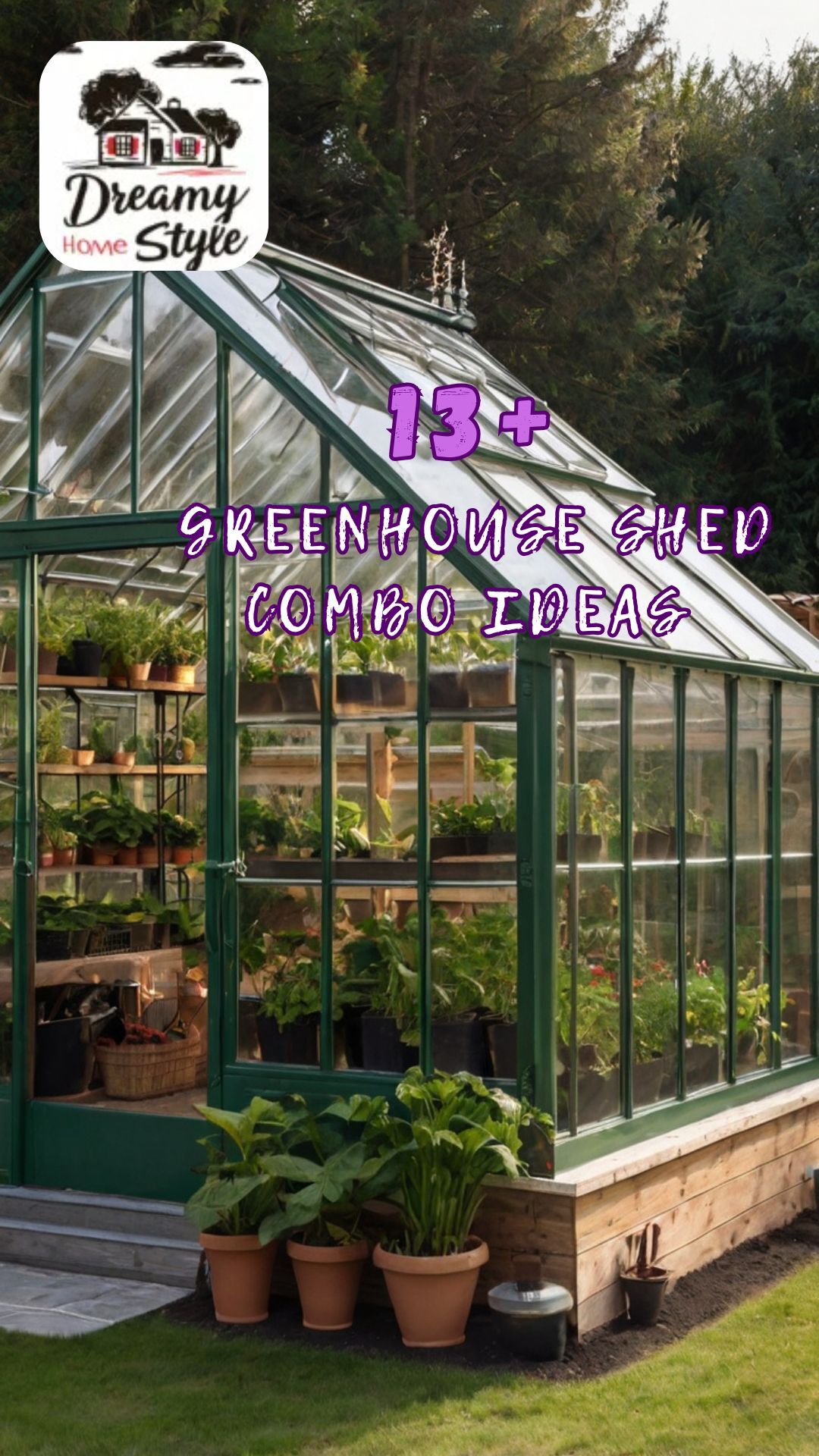

As an avid gardener living in a four-season climate, I’ve learned firsthand how valuable it is to have a greenhouse for starting seeds early in spring, growing food year-round, and overwintering plants.
The addition of a shed provides plenty of room to organize and store pots, tools, hoses, and everything else I need for gardening.
Combining the two not only saves space in my small backyard, but also allows me to step right from the shed into the greenhouse to tend to my plants.

Lean-To Greenhouse and Shed


One of the simplest and most budget-friendly ways to combine a greenhouse and shed is with a lean-to style.
This type of greenhouse connects to and leans against the side of an existing shed, essentially using the shed wall as one of its walls.
Many prefab lean-to greenhouses are 6 to 12 feet long and attach right to the shed with screws, making installation quick and easy.
I recommend this style for anyone with a smaller shed looking to add a greenhouse for the first time.
By attaching it to the shed, you don’t take up any additional yard space.
The lean-to greenhouse provides just enough room for a workspace, seed starting area, and some plants.
And it’s right next to the shed, so you can easily access any tools, pots, and materials stored inside.
Some key advantages of lean-to greenhouses:
– Budget-friendly and easy DIY option
– Small footprint, good for smaller yards
– Can be installed right against existing shed
– Provides basic seed starting and plant growing space
– Access tools and materials in shed conveniently
One downside is the limited space and headroom.
Lean-to greenhouses usually offer just enough room for a shelf, table, and some floor space.
Make sure to check the dimensions to ensure enough space for your needs.
Pro tip: opt for a taller shed (at least 8 ft) to get more usable headroom in the attached greenhouse.
Tap to Explore These Beauties
See my ideas in action 👇 Tap any image to explore full details.
Shed-Roof Greenhouse


Stepping up in size, the shed-roof greenhouse is another practical combo.
As the name suggests, this style has a sloped roof like a shed and often connects directly to a shed or workshop.
The walls of the greenhouse portion are typically made of clear polycarbonate or glass panels.
One major perk of the shed-roof design is the ample amount of headspace.
The angled roof provides enough overhead room for taller plants, bigger projects, and even a loft storage area.
Compared to a lean-to greenhouse, the larger interior and vertical space make this a much more functional growing environment.
I recommend a shed-roof greenhouse for gardeners who want plenty of room to grow a wide variety of plants – tomatoes, peppers, herbs, flowers, and more.
💭 Ever wondered what your room would actually look like rearranged?
I built a free tool that lets you drag furniture around a 2D floor plan. No signup, no catch.
See the Room Planner →The larger space allows room for bigger plants in soil beds, a potting bench, storage shelves, and good walkways.
Being attached to the shed provides easy access to tools, gloves, fertilizer, and other gardening gear.
Some key advantages of shed-roof greenhouses:
– Good amount of floor space and headroom
– Sloped roof allows for loft storage area
– Connects directly to shed or workshop
– Grow a variety of plants, herbs, and vegetables
– Comfortably fits potting bench, sinks, shelves
The main downside is that shed-roof greenhouses take up more yard space than a lean-to.
However, the ample room for growing and storage may be worth the larger footprint.
Attached Greenhouse with Separate Shed

Rather than connecting the greenhouse directly to the shed, another option is to build an attached greenhouse with a separate shed.
This style has the greenhouse attached to the home or garage, while the shed sits nearby but detached.
Structurally, attached greenhouses have a wall that adjoins the home.
This allows convenient access in and out of the greenhouse right from indoors.
Meanwhile, the standalone shed can be sited anywhere in the yard that works best.
One major advantage of separating the structures is that both buildings gain features tailored specifically for their function.
For example, the greenhouse can have amenities like sink countertops, electrical outlets, and automatic louvers.
And the shed can have tool racks, shelves, and storage hooks.
When planning an attached greenhouse, consider adding:
– Door connecting to the home
– Sink, countertops, and electrical outlets
– Automatic louvers or ventilation
– Roll-up shades and thermal curtains
– Shelves, beds, and work tables
For the shed, make sure to include:
– Shelving and wall storage
– Tool racks, hooks, and hangers
– Workbench and supplies storage
– Electricity if wanted for lighting/power tools
Greenhouse Shed Conversion


If you already have a shed, converting it into a greenhouse is a great way to get a custom setup without the high cost of building from scratch.
For experienced DIYers, shed to greenhouse conversions make for fun and fulfilling projects.
Start by planning needed changes like removing one shed wall for more light and installing polycarbonate or glass panels.
Be sure to add any desired amenities like sinks, electrical, and storage shelves to make the space as functional as possible.
To turn a metal shed into a greenhouse, replace solid metal walls with clear greenhouse panels.
For wooden sheds, remove and replace one entire wall with greenhouse glazing.
You can also replace the roof with greenhouse panels or retain the existing roof for shade.
If keeping the shed floor, lay down weed barrier before adding gravel or pavers for good drainage.
For convenience, you may want to pour a concrete slab floor and install a drain.
💭 I Wrote a Book About My Biggest Decorating Mistakes!
When I decorated my first home, I thought I knew what I was doing. Spoiler: I didn't. 😅
💸 I bought a sofa way too big for my living room. Paint colors that looked amazing in the store but terrible on my walls.
Shed conversions allow you to repurpose an existing structure rather than purchasing a new custom greenhouse-shed.
And you can give your greenhouse any custom look and features you want.
Some key benefits:
– Cost-effective way to gain a greenhouse
– Make use of an existing shed
– Add any features and amenities you want
– Customizable to your space and needs
– Fun DIY project with fulfilling results
Find Your Room's Color Palette
Tap a vibe — get a curated 5-color palette with hex codes you can copy ✨
Greenhouse with Potting Shed

Every gardener needs space to pot plants, refill seed trays, and get their hands dirty.
Combining a greenhouse with an attached potting shed creates the ultimate gardener’s hideaway right in your backyard.
Typically, the potting shed adjoins the greenhouse as an annex and may share a wall.
This allows moving easily between the spaces but keeps the mess of potting contained.
Outfit the potting area with:
– Counters and work tables
– Utility sink and sprayer
– Storage cabinets and shelves
– Compost bins
– Seeding trays, pots, and supplies
Meanwhile, the greenhouse can contain:
– Plant beds and shelves
– Lounging/seating area
– Climate control systems
– Lighting and electrical outlets
I recommend installing a wide doorway or double doors between the greenhouse and potting shed.
This makes it easy to transport plants, tools, and materials between the spaces.
Having a dedicated potting shed prevents the greenhouse from getting too dirty and crowded.
And you’ll have organized storage for all those seed packets, trays, pots, and tools right where you need them.
Whimsical Greenhouse Shed

Every great backyard needs a whimsical focal point, and few structures lend themselves better to playfulness than a greenhouse shed.
This combo creates opportunities for adding color, flare, and fun touches.
Some ideas for whimsy:
– Bold, vibrant color for the shed walls or greenhouse framing
– Shaped windows, doors, or roofline
– Decorative tiles, carvings, or accents
– Weathervane, finials, shutters, and window boxes
– Mosaic stepping stones, pathways, and planters
Don’t be afraid to get creative and add personality!
For inspiration, browse gardening books, Pinterest boards, and garden sculpture websites.
Elements like colorful patio umbrellas, handcrafted benches, and art glass can make your greenhouse shed truly one-of-a-kind.
I recommend creating spaces both inside and surrounding your greenhouse shed to relax and enjoy the space:
– Comfy seating andsmall table inside the greenhouse
– Stepping stone path leading up to the door
– Wrought iron or mosaic plant stands
– Container garden with flowering plants & vines
What's Your Decor Personality?
5 questions · 30 seconds · Instant style match 🏡
Modern Greenhouse Shed

For contemporary garden designs, a modern greenhouse shed combo exudes chic style.
Sleek lines, simple forms, and glass combine to create an airy sun-filled space.
Some key elements that make a greenhouse design modern:
– Metal or wood frame with clean lines
– Floor to ceiling glass panels
– Open layout and high ceilings
– Concrete slab or painted wood floor
– Metal shelves and furnishings
For a coordinating shed, opt for:
– Simple rectangular shape
– Metal panels or bare-wood siding
– Barn door style sliding or metal door
– Hidden HVAC and utilities
Minimalist plant stands, shelves, and architectural features complement the contemporary vibe.
Stick to a neutral color palette of whites, grays, and blacks for a streamlined look.
Grow a mix of leafy greens, herbs, and exotic flowers like orchids or bromeliads.
The abundance of natural light and open views create an indoor oasis for your modern backyard.
Rustic Greenhouse Shed

Looking for a more natural style?
A rustic greenhouse shed blends beautifully into cottage gardens, country landscapes, or woodland settings.
Handcrafted wood details and a weathered patina give the combo inviting vintage charm.
Some elements that make a rustic greenhouse:
– Salvaged windows and doors
– Cedar or redwood framing
– Galvanized metal roofing
– Stone flooring or brick foundation
Complement with a shed featuring:
– Board and batten or shake siding
– Tin roofing
– Barn door with strap hinges
– Stone or faux rock exterior
When furnishing the spaces, use wicker baskets, wooden worktables, and galvanized containers.
Repurposed Greenhouse Shed

Breathing new life into old materials rewards you with a one-of-a-kind greenhouse shed combo.
From reclaimed doors and windows to salvaged finds, there are lots of ways to repurpose items into a functioning growing space and shed.
Here are some ideas for repurposed greenhouse and shed building:
Greenhouse:
– Old window frames converted into walls or doors
– Storm window panels and screens for walls
– Leftover glass shower doors for end walls
– Scrap metal roofing panels or corrugated fiberglass
Shed:
– Repurposed wooden pallets for side walls
– Old barn wood for exterior siding
– Metal drum containers for potting benches
– Leftover house doors or siding
Use your imagination to see the potential in leftover materials and architectural salvage.
Visit salvage yards, classified ads, and garage sales to hunt for components.
Part of the reward of repurposing is giving once-loved items another life while reducing waste.
Breathing new purpose into old things creates a meaningful DIY experience and charming backyard combo.
This or That?
Pick your fave — see what other readers chose! 👀
Luxury Greenhouse Sunroom

For gardeners looking to indulge, a custom luxury greenhouse sunroom combines high-end amenities with an open, light-filled interior.
Soaring ceilings, airy glass walls, and top-notch fixtures transform this space into an indoor paradise.
Some features that elevate a greenhouse to luxury status:
– Aluminum and glass frame construction
– Electric ventilation systems
– In-floor heating
– Automated shade and watering systems
– Stone or tiled floors
– Built-in jasmine and speakers
Complement with a handsome shed featuring:
– Cedar shake or stucco exterior
– Copper gutters and finials
– Finished interior with electrical
– Insulation and HVAC system
– Relaxing accent lighting
– High-end organization systems
For the ultimate backyard escape, adjoin the luxury greenhouse to the shed with wide sliding doors.
This allows the spaces to open entirely for seamless indoor-outdoor enjoyment.
Grow ornamental plants like orchids, hibiscus, jasmine, and gardenias to complete the upscale ambiance.
The posh finishing details make gardening a truly grand experience.
💭 I Wrote a Book About My Biggest Decorating Mistakes!
When I decorated my first home, I thought I knew what I was doing. Spoiler: I didn't. 😅
💸 I bought a sofa way too big for my living room. Paint colors that looked amazing in the store but terrible on my walls.
Mini Greenhouse Shed

Don’t let limited space stop you from creating a greenhouse shed combo.
Compact mini greenhouses and sheds provide just enough room for small-scale growing and storage.
These pint-sized structures are also a great budget option.
Look for mini greenhouse kits under 100 square feet.
Many have polycarbonate panels and sheet metal frames that easily bolt together.
Mini sheds are also widely available in kit form, with plastic, wood, and metal versions.
Be strategic about organizing the small spaces and selecting compact plants.
Here are some tips:
Greenhouse:
– Focus on 2-3 types of small plants
– Use wall-mounted shelves
– Install grow lights for seed starting
– Rotate plants seasonally
Shed:
– Use vertical tool storage
– Add shelves all the way to ceiling
– Use wall-mounted racks and hooks
– Store supplies in stackable containers
Even though small, mini greenhouses and sheds provide the essential functions you need.
The adorable structures add charm and maximize every bit of available space.
Quick Design Dilemma
Cast your vote — see what other readers think! 🤔
DIY Hoop House Greenhouse

If you’re handy and want a customizable growing space, consider a DIY hoop house greenhouse.
These tunnel-style greenhouses are easy to construct from PVC pipes, plastic sheeting, and lumber.
Start by laying a foundation of lumber or concrete blocks to attach the base of the PVC pipe frame.
Bend the pipes into hoops or an arched shape.
Connect the hoops down the length of the structure with pipe or wood framing.
Secure clear greenhouse plastic over the framework and anchor it tightly.
Add doors, vents, shelves and other features as desired.
Make sure to seal edges and seams thoroughly so the plastic lasts.
Installing wiggle wire in the door openings helps reinforce them when opened frequently.
Pair your hoop house with a simple wooden shed or retrofitted structure for storage.
For example, you could turn a small camper shell into potting shed.
Get creative repurposing items as your matching shed.
DIY hoop greenhouses are extremely affordable, often under $500 to construct.
The plastic coverings may need replacing every several years.
But these homemade structures are perfect for beginners and anyone on a tight budget.
Geodesic Dome Greenhouse

For a truly eye-catching structure, a geodesic dome greenhouse sheds the conventional rectangular shape.
Based on geometric spheres, these futuristic-looking greenhouses consist of a complex frame of interlocking triangles and hexagons.
Geodesic domes provide exceptionally sturdy, robust construction capable of withstanding heavy snow loads.
The arched shape also sheds snow easily.
And the dome’s shape provides ample interior headspace without needing a lofty peak.
Any shed paired with a dome greenhouse is sure to make a bold statement!
Go modern with a sleek metal shed or craft a miniature matching dome.
Though complex, hobbyists can even take on the challenge of DIY geodesic domes with plans and structural software programs available online.