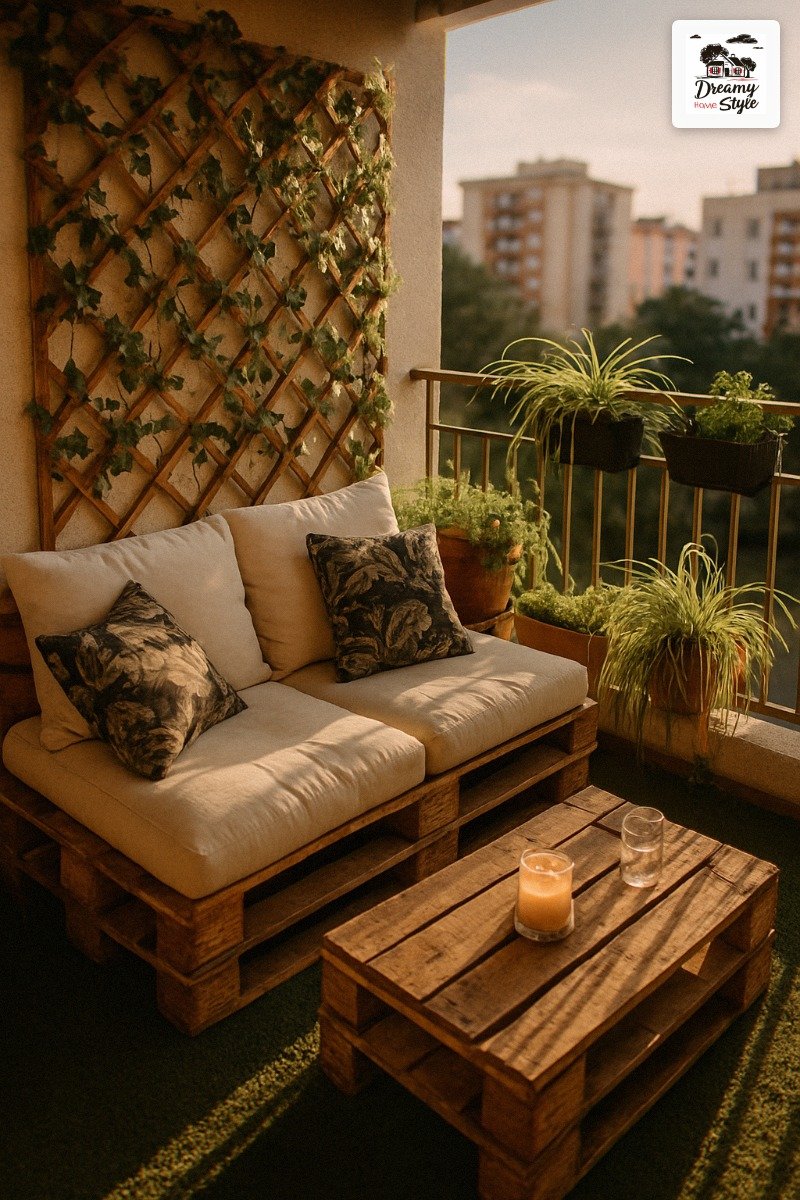

The Daybed Sat There for Three Months Looking Exactly Like a Pallet
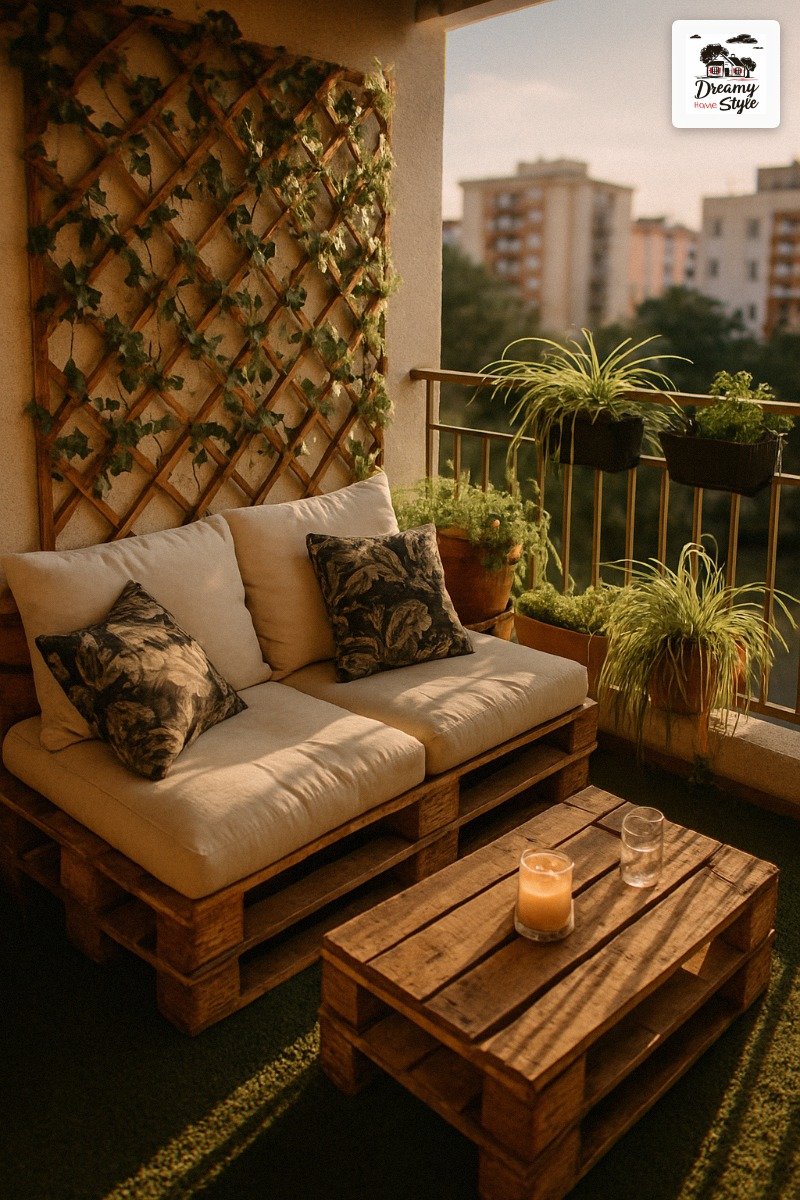
And then I added the bolster frame and my neighbor Denise leaned over the railing and asked where I got it.
That’s the whole story, honestly.
That’s also why I wrote this.
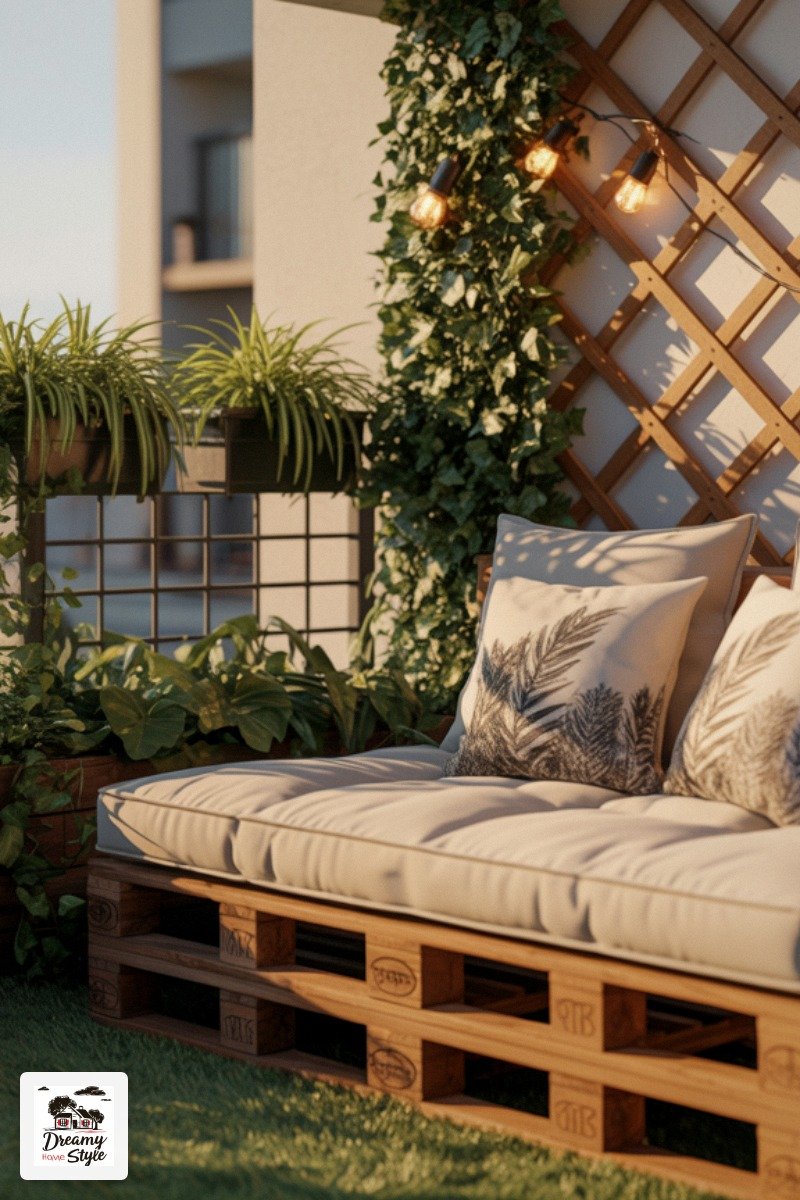
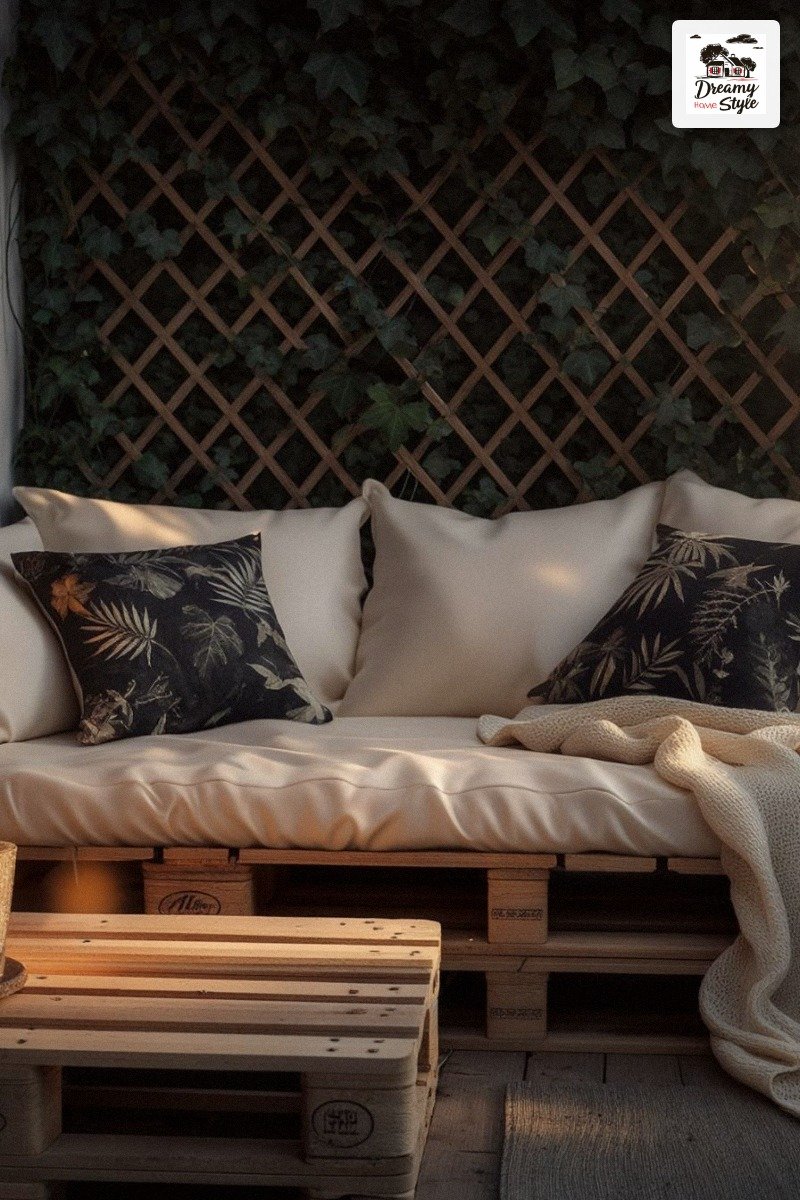
Every pallet daybed guide online stops at the structural step.
Stack, sand, cushion, done.
What you end up with is outdoor storage with a throw pillow on it.
The bolsters are the entire design.
Not a nice addition.
The entire thing.
Why Most Pallet Daybeds Look Unfinished
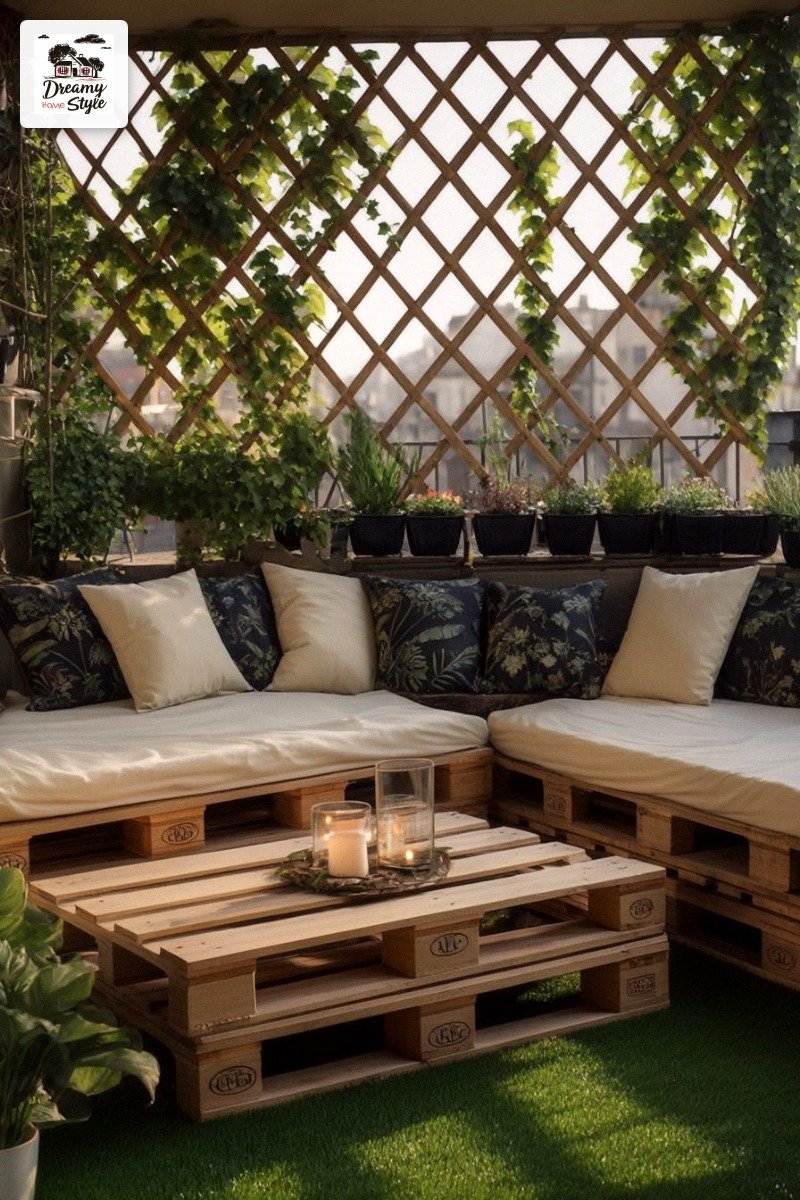
Here’s the problem nobody says out loud: a standard euro pallet is 47×39 inches.
That’s it.
39 inches wide.
A twin bed is 38 inches wide, which means a single pallet is narrower than the thing you sleep on and looks exactly like a bench.
A bench with a cushion is a bench.
You need two pallets oriented side-by-side to get to something that reads as a daybed, and even then, your cushion needs to overhang the pallet edge by at least 2 inches on all sides or the wood frame telegraphs itself through the whole look.
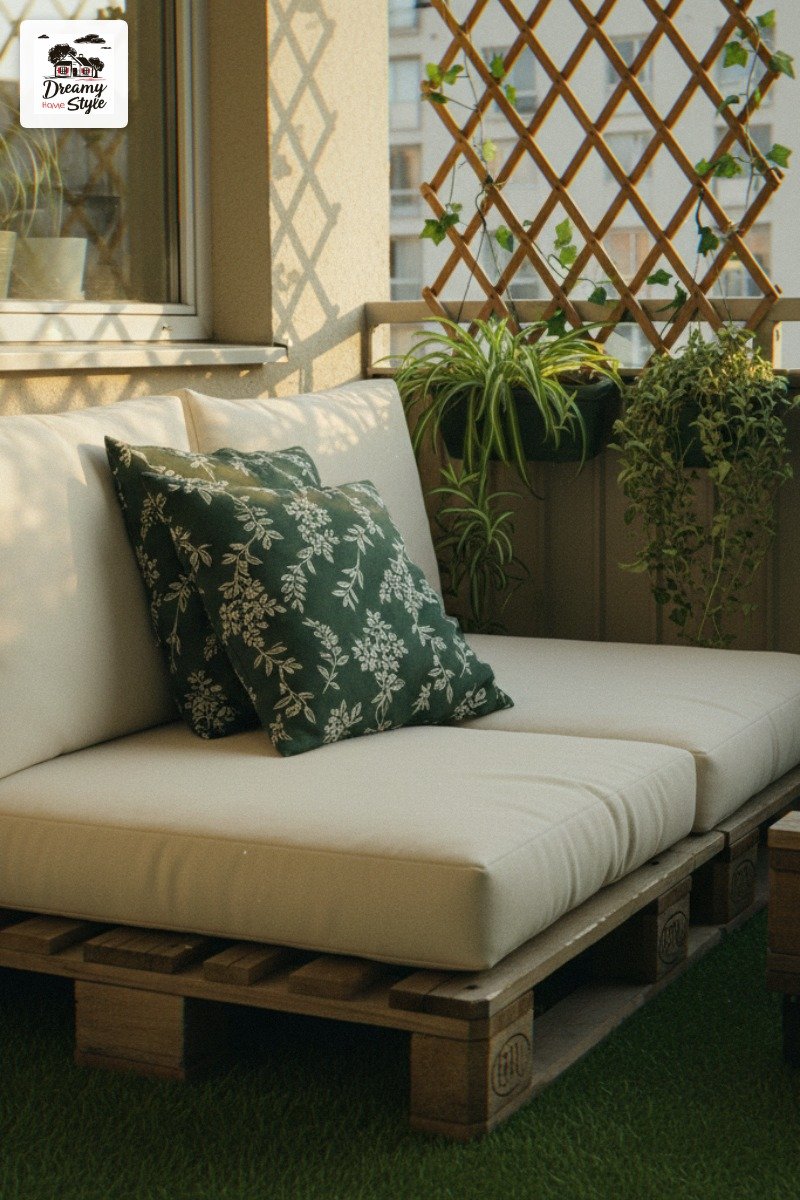
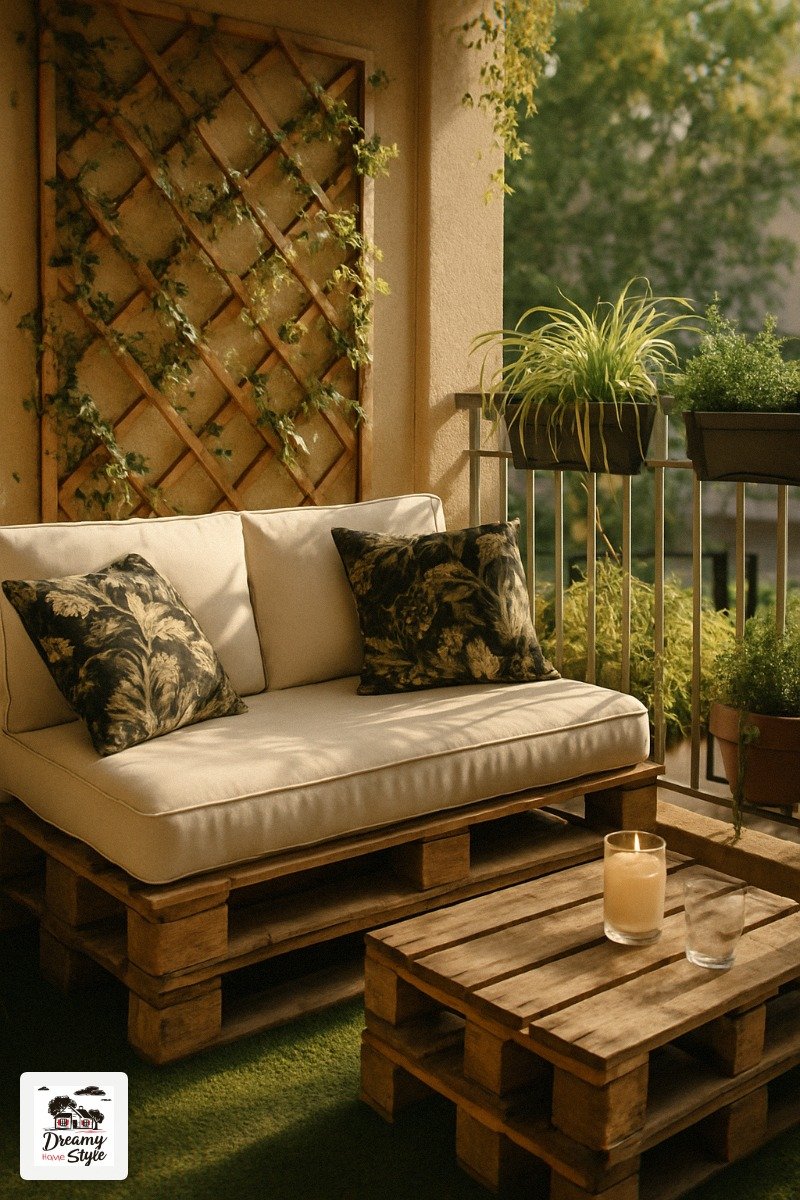
The bolster frame is what sells the illusion.
Without it, cushions prop against the wall, slide down, and look accidental.
With it, you have a sofa silhouette.
Same platform.
Completely different object.
Balcony Weight Limits: Check This Before You Buy Anything
This is the section most guides skip because they’re written for homeowners with ground-level patios.
You are not that.
A typical apartment balcony has a live load rating of 40 to 60 pounds per square foot, and that number is engineered, not approximate.
Two heat-treated wood pallets weigh roughly 70 pounds each.
Add cushions, the bolster lumber, legs, two adults, and you’re looking at 550 to 600 pounds total on a finished build.
On a 60-square-foot balcony rated at 40 lbs/sq ft, your capacity is 2,400 pounds.
You’re probably fine.
But “probably” isn’t the answer you want when you’re on the fourth floor.
Call or email building management.
It takes 10 minutes.
Tell them you’re placing outdoor furniture and ask if there’s a weight restriction.
Document the response.
A $200 build becoming a liability issue is not a story I want to write about.
Pallet Selection: The Stamp Is the Whole Thing
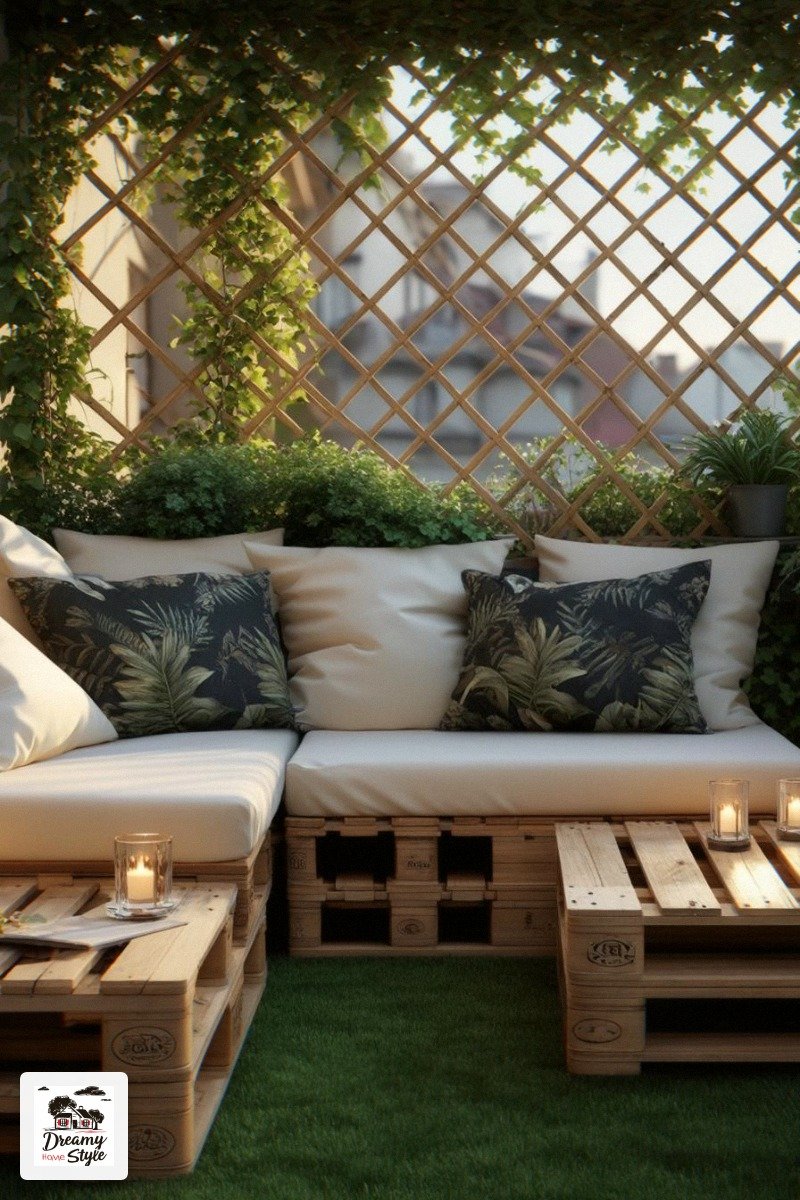
Every pallet has an IPPC stamp burned or stenciled into the side stringer.
You’re looking for two letters: HT.
Heat treated.
That’s the one.
If you see MB, walk away — that’s methyl bromide, a fumigation chemical you do not want baking in afternoon sun three feet from where you’re sitting on an enclosed balcony.
“Any free pallet works” is advice from 2015 that’s gotten a lot of people into avoidable situations.
For sourcing: Facebook Marketplace is genuinely the fastest option if you don’t have a truck.
Search “free pallets” filtered to within 5 miles and you’ll find listings from small businesses who need them gone yesterday.
Hardware stores like Home Depot and Lowe’s also give away damaged pallets if you ask at the contractor entrance.
For the build, you want stringer pallets at least 5.5 inches thick — the thinner block pallets feel spongy underfoot and don’t hold leg hardware as well.
Getting them home without a truck: a pickup rental from Home Depot runs about $25 for 90 minutes.
Worth every dollar.
The Two-Pallet Configuration That Actually Looks Like a Daybed
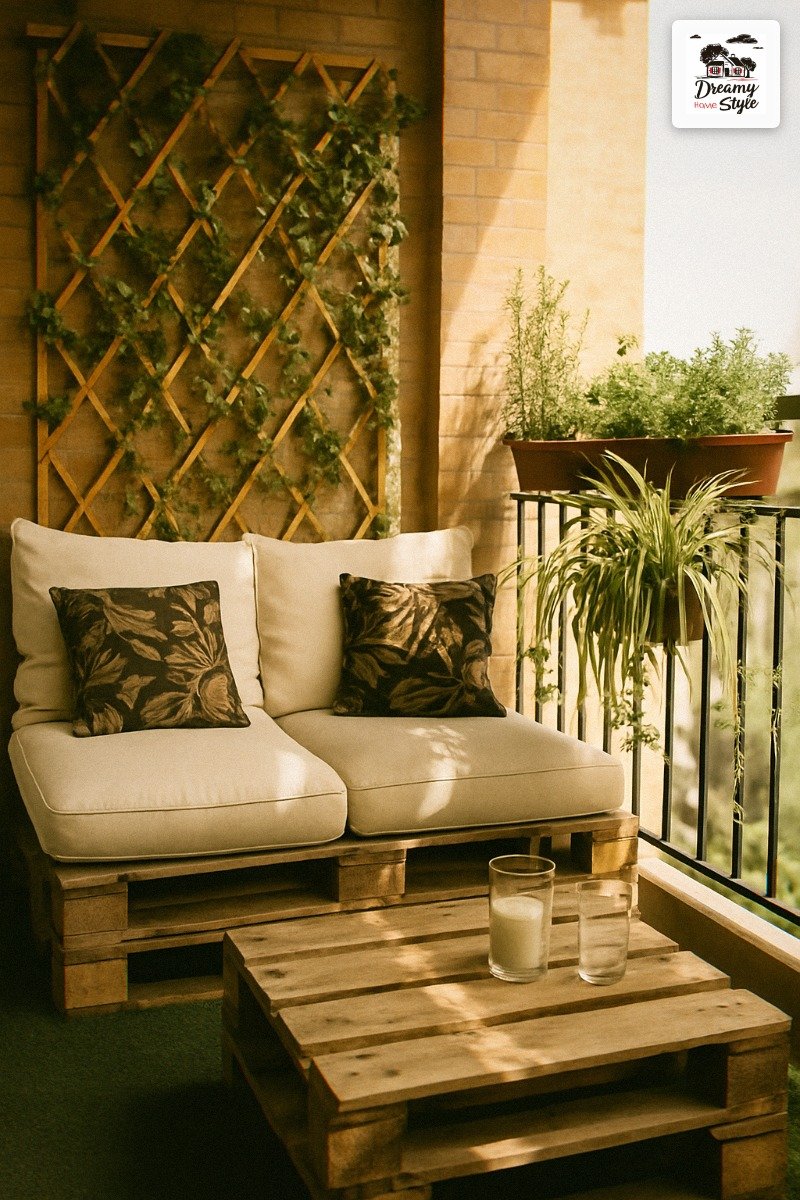
Lay both pallets with their long edge (47 inches) as the depth and their short edge (39 inches) end-to-end so you get 78 inches of length.
That gives you a 78×47-inch platform, which is close enough to a twin XL footprint to use standard-size cushions without custom ordering anything.
The gap between the two pallets is where most people lose.
If it’s over half an inch, the seat cushion sags visibly in the middle and you can feel the gap through the foam.
Pull them tight and run four 3/8-inch carriage bolts through the adjoining stringers, two near each end.
Pre-drill everything or you’ll split the stringer, which I did, because I didn’t pre-drill, because I was impatient.
(The impatient version added 45 minutes to the project.)
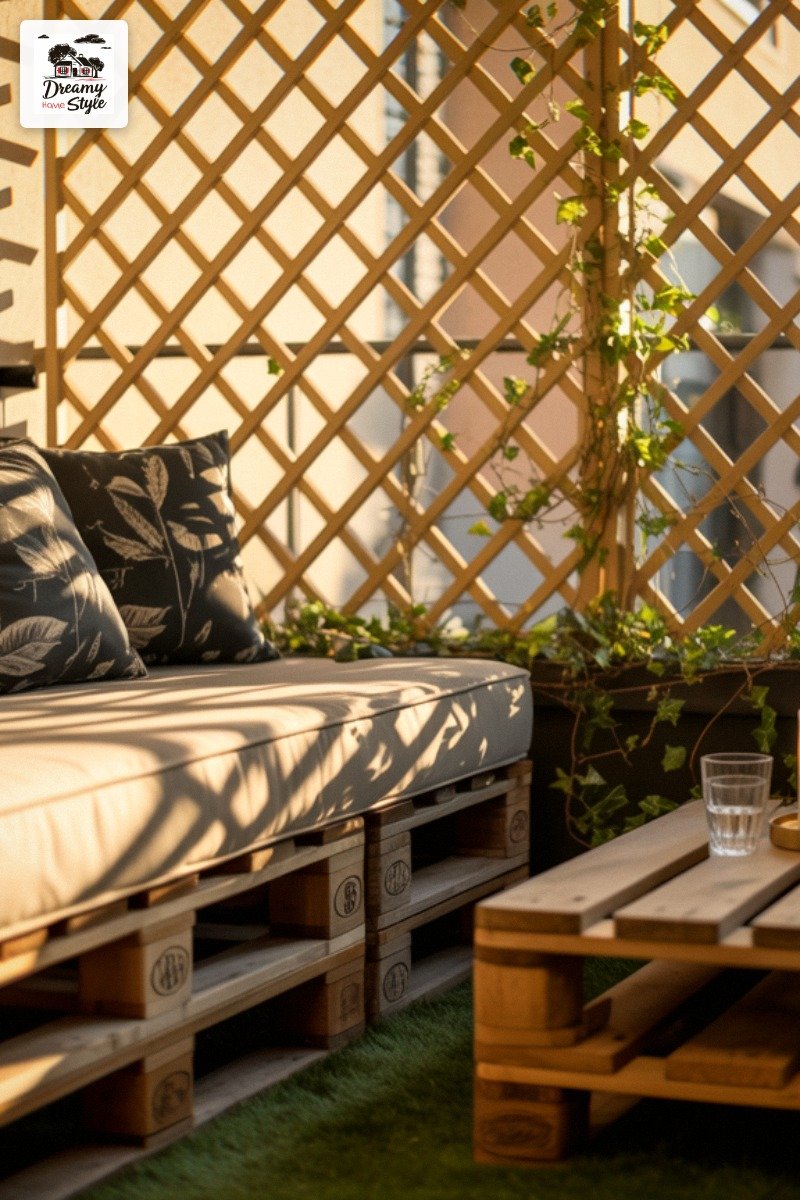
Orientation matters more than how smooth the wood is.
Spend your time getting the configuration flush, not sanding every board to a furniture finish.
Legs vs. No Legs
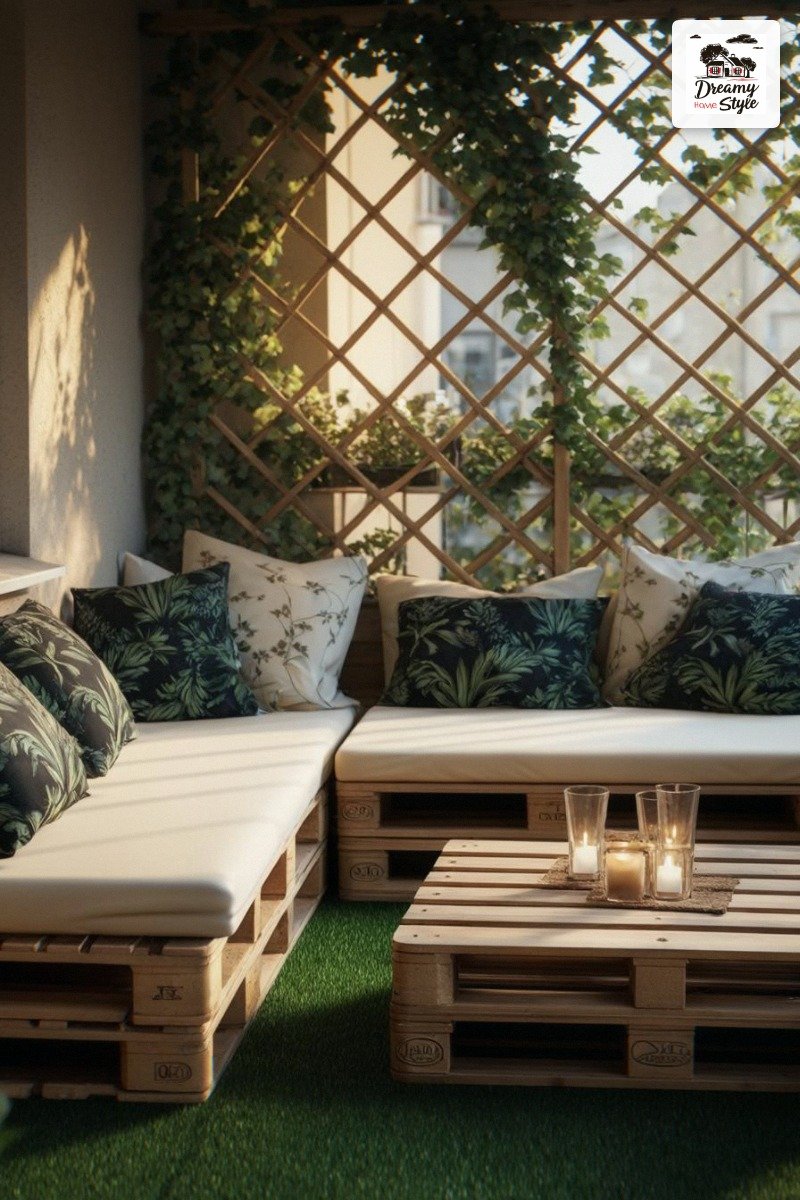
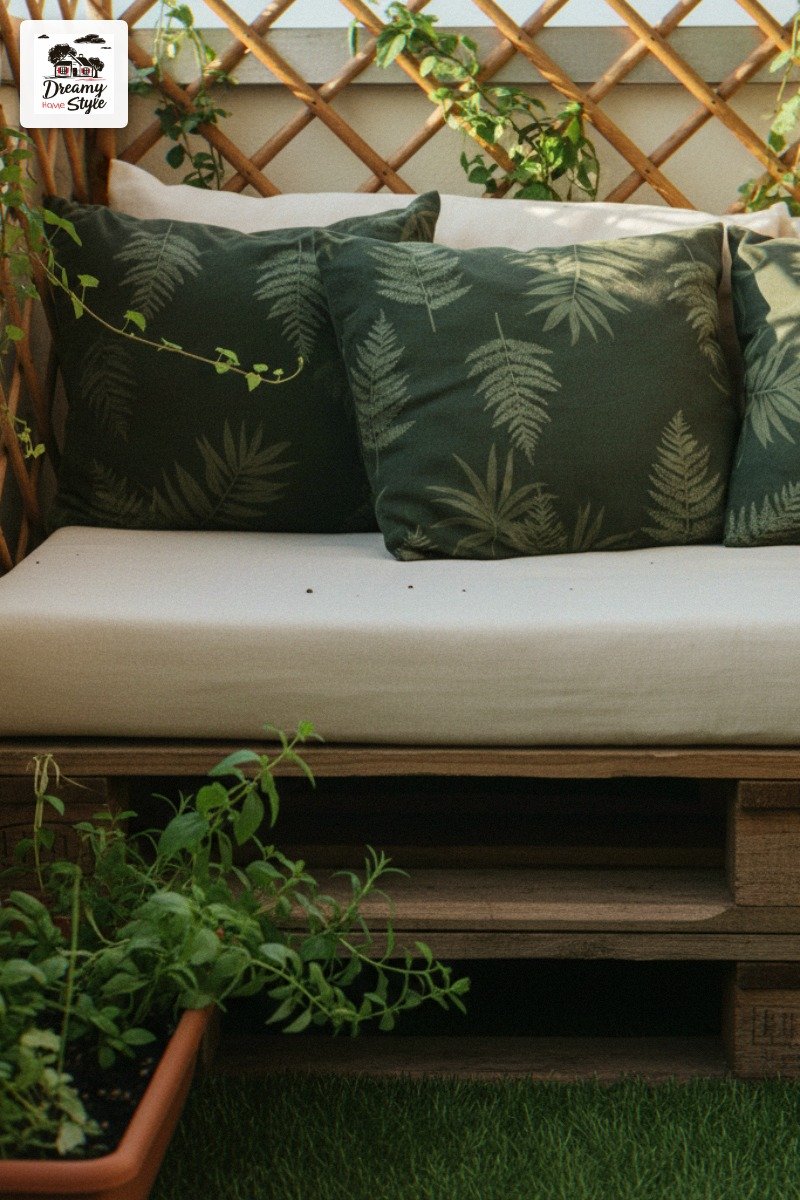
No legs means the platform sits directly on balcony concrete.
Balcony concrete is not flat and it holds water after rain.
That moisture wicks into the bottom pallet boards and starts the rot process inside of one season.
Elevation is not aesthetic preference, it’s basic protection for the material.
Hairpin legs, 4 to 6 inches tall, are the move here.
They read as intentional furniture rather than a thing waiting to be moved.
A set of four runs $25 to $40 on Amazon (I used a black powder-coated set, can’t remember the brand, but they’re all roughly the same at that price point).
Attach them with 2.5-inch wood screws driven into the pallet stringers, not into the deck boards — the deck boards are too thin to hold under load and will pull out.
Mark the stringer locations before you flip the platform, or you’ll be driving screws blind.
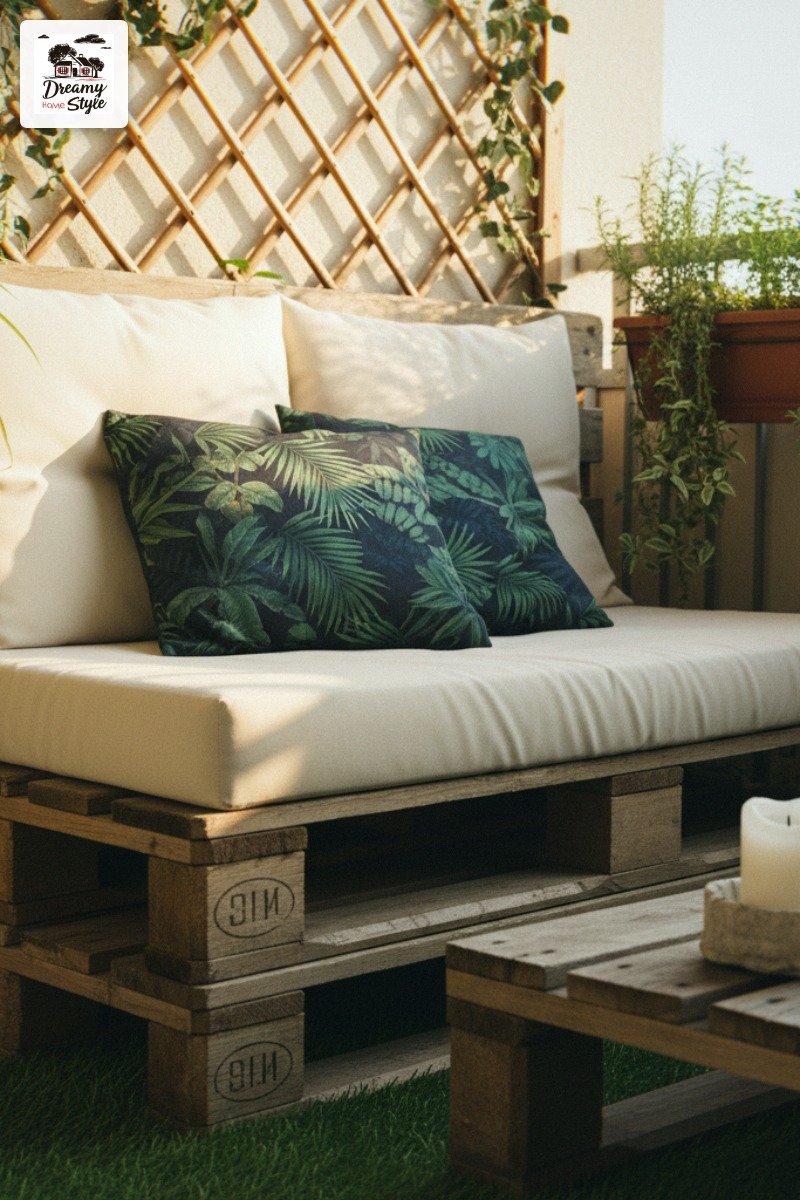
A platform sitting flat on concrete looks temporary.
Legs make it furniture.
That’s not a small distinction.
Sanding and Sealing: You’re Probably Doing It Backwards
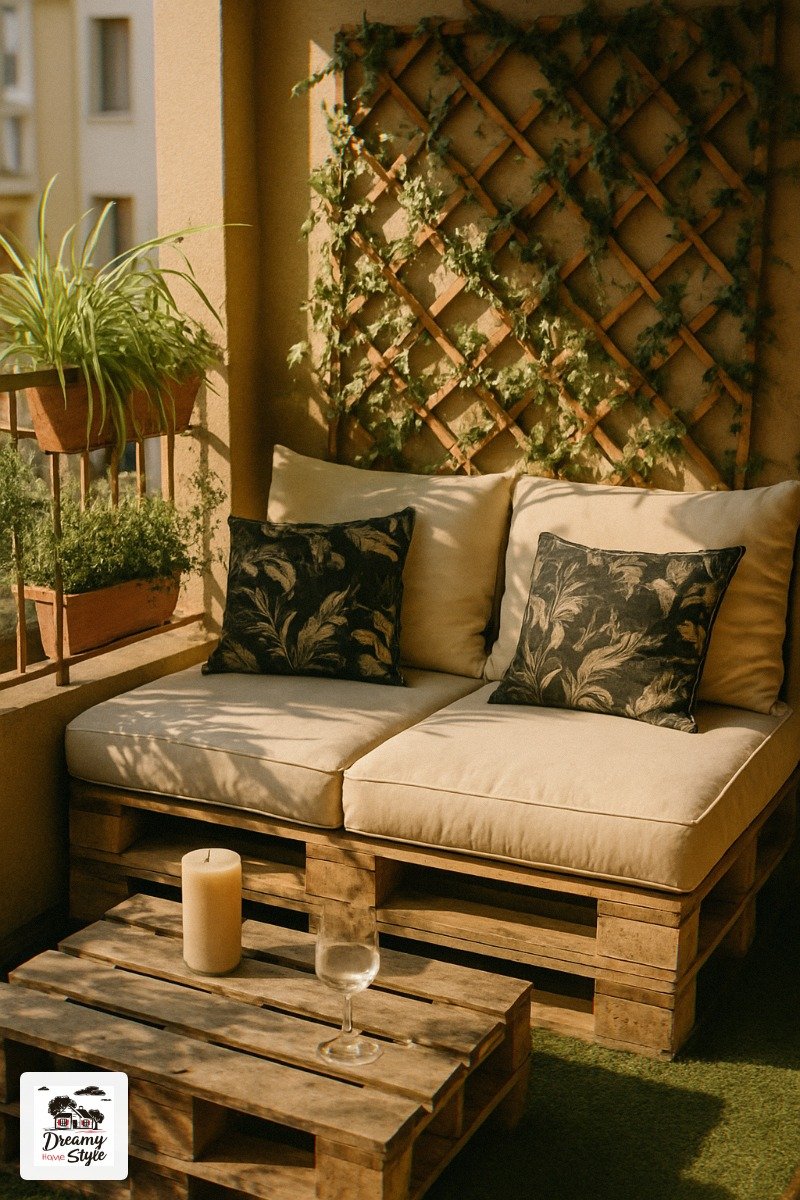
Start at 60-grit to knock off splinters and rough edges, finish at 120.
Don’t go finer than 120 on outdoor wood — anything smoother closes the grain and the sealer won’t penetrate properly.
I learned this by going all the way to 220 on my first attempt and watching the Thompson’s WaterSeal bead off like water on a car hood.
(I sanded it back down.
That was a fun Sunday.)
Thompson’s WaterSeal and Rust-Oleum’s Ultimate Spar Urethane are both rated for direct sun and both work.
Give each coat a full 4 hours dry time at around 70°F.
Painting over the sealer is backwards — and don’t use chalk paint outdoors under any circumstances.
It has essentially no weather resistance and will start peeling by the second summer.
I know it photographs well.
It still peels.
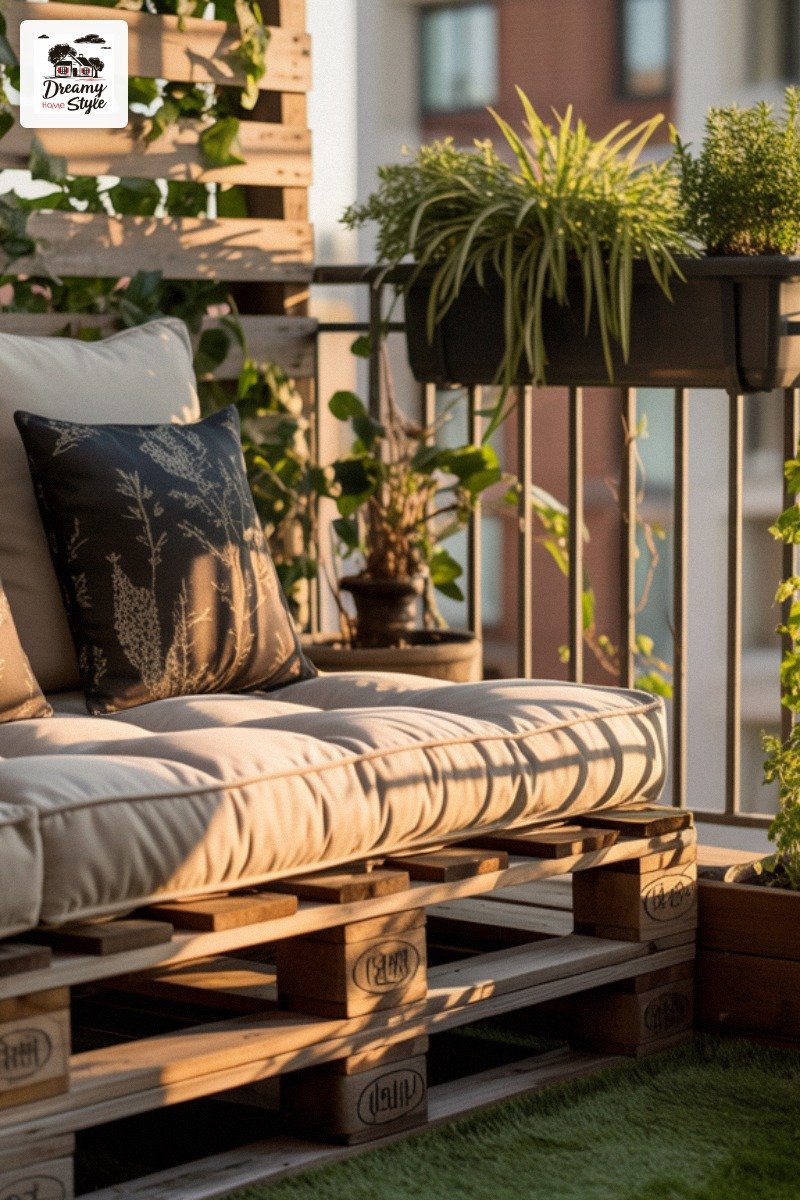
Bare sealed wood looks intentional.
It also lets you recoat it easily when the time comes.
Building the Bolster Frame: The Step That Changes Everything
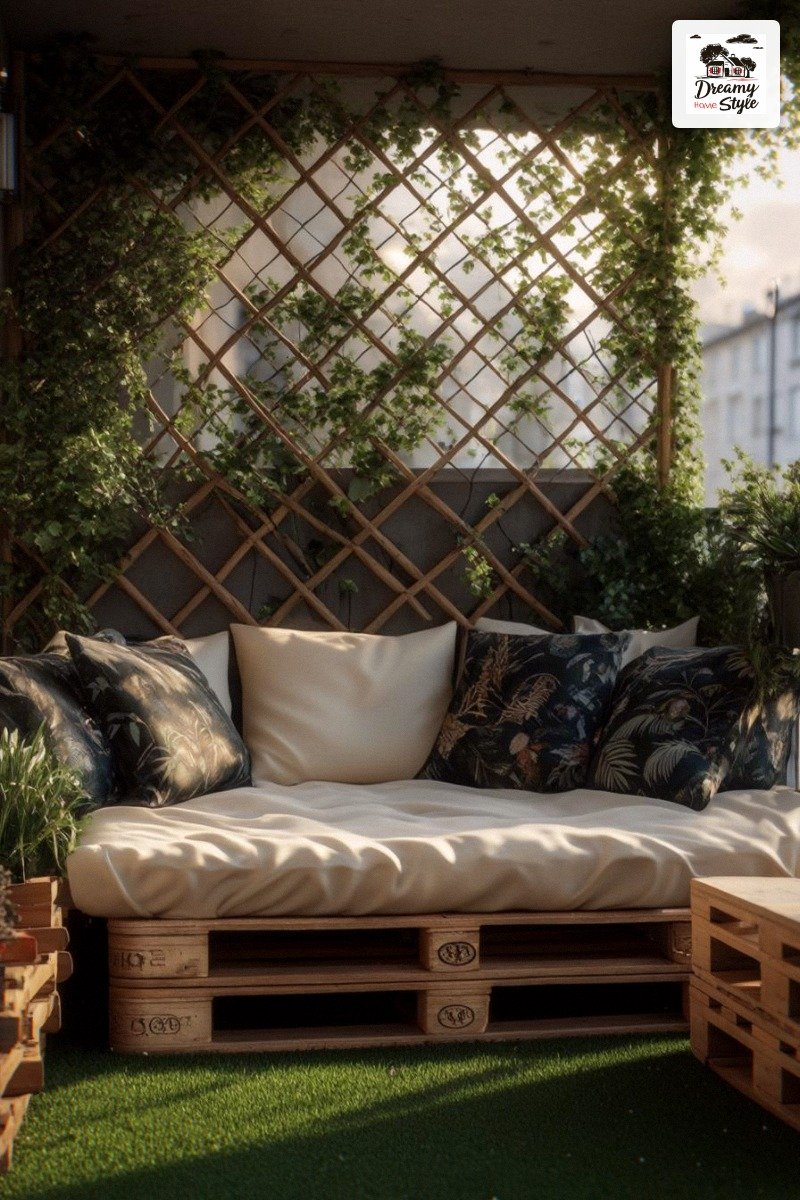
This takes about 45 minutes and is genuinely the highest-return action in the entire build.
You’re making an L-shaped frame: one back rail running the full 78-inch length of the platform, cut from 2×4 lumber, sitting 18 inches above the platform surface.
Two arms, also 2×4, cut to 24 inches each, running out from the ends of the back rail toward the front of the daybed.
Connect the frame to the pallet with 3-inch structural screws driven down into the stringer blocks — not the deck boards.
Three screws per connection point, staggered slightly so you’re not splitting the grain.
The frame doesn’t need to be beautiful.
It needs to be rigid, because the bolster cushions will push against it every time someone leans back.
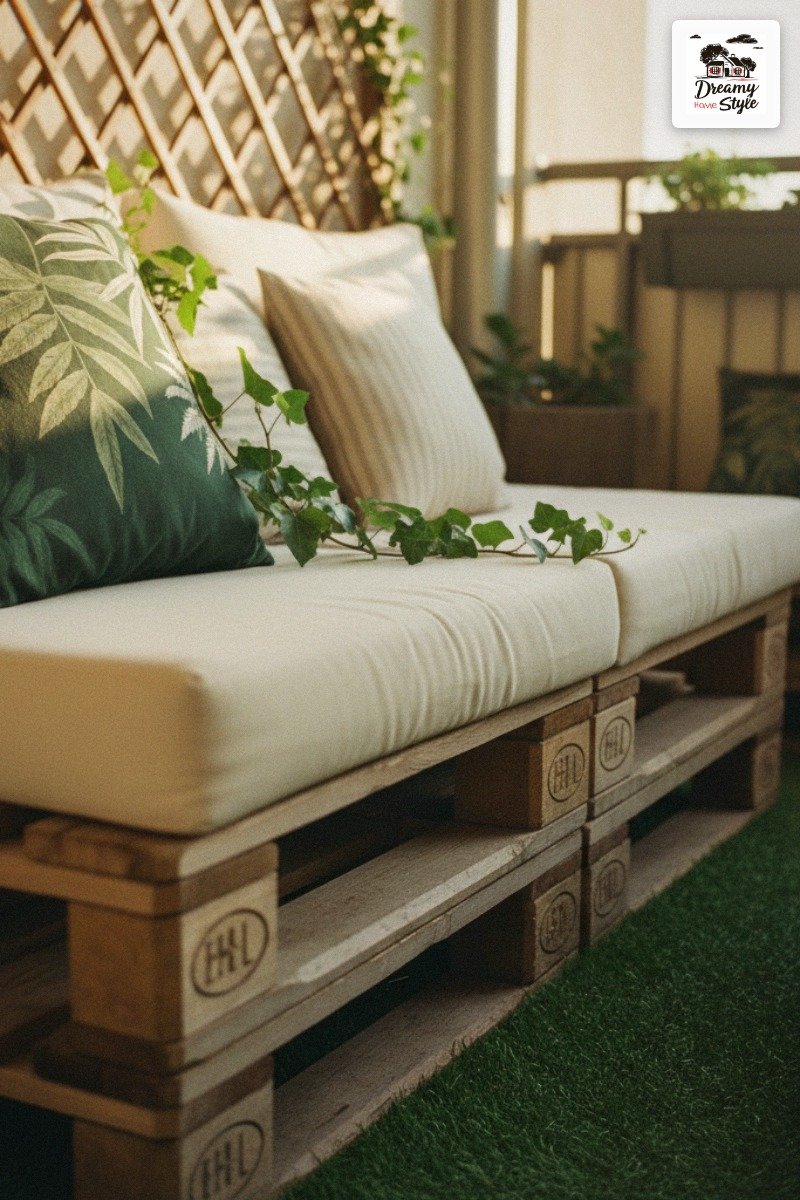
Without this frame, you’re propping cushions against a wall.
With it, you have a daybed.
Cushion Math
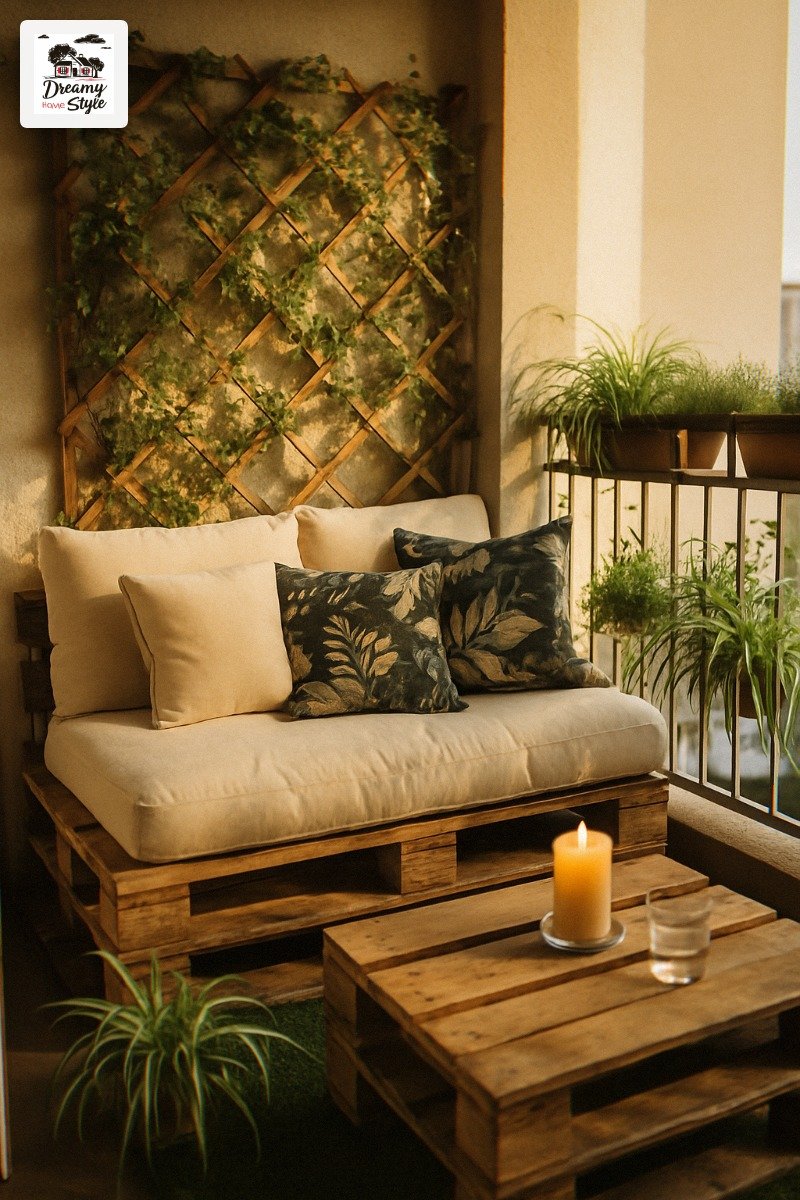
The seat cushion should run 75×44 inches — that 2-inch overhang on all sides I mentioned earlier.
Minimum 4-inch thickness, and do not go cheap on foam density.
Low-density foam, anything under 1.8 lb per cubic foot, compresses to about an inch and a half after one season of regular use and makes the whole build look bad.
The bolster cushions are 18×54 inches for the back and two 18×24-inch pieces for the arms.
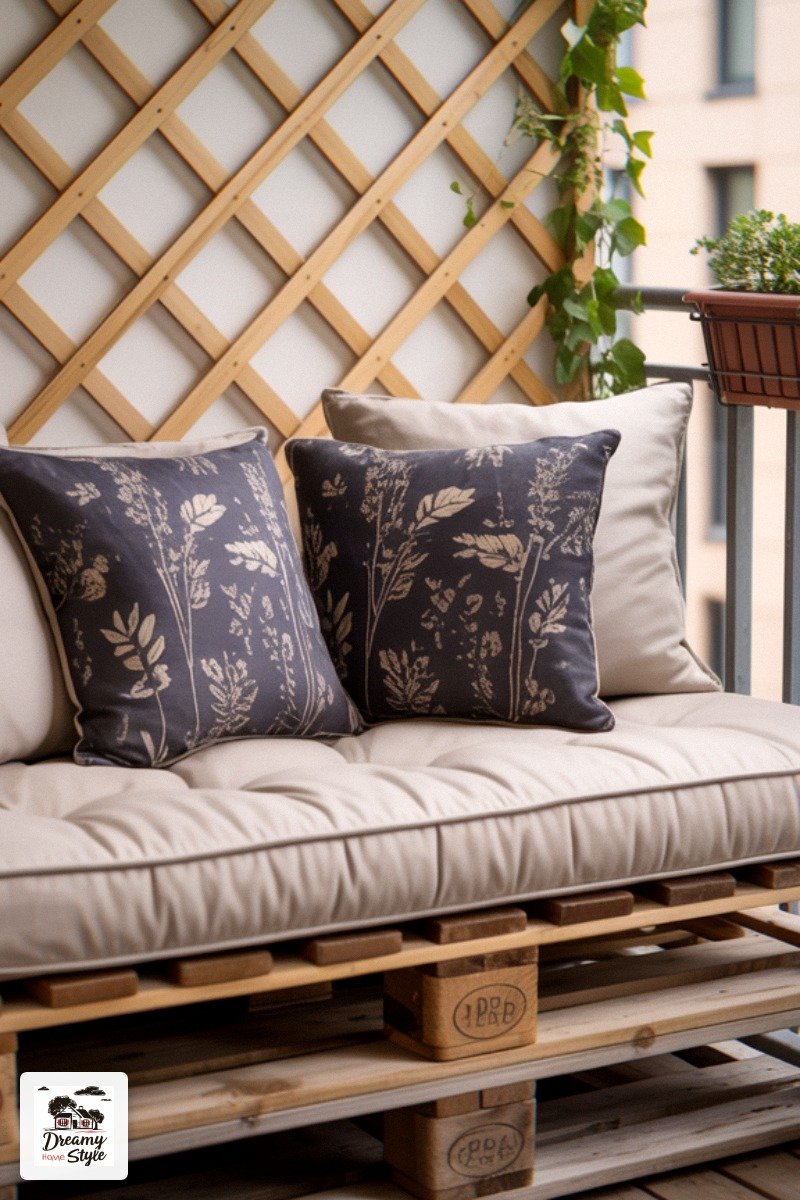
Sunbrella-fabric cushions for the main seat start around $85 to $120 at Target or Wayfair in that size.
That’s the floor, not the average.
A $40 polyester cushion will flatten out and look exhausted by mid-summer, and then all the work you put into the frame looks like a waste.
The cushion is what people touch.
It’s what shows in every photo.
Spend the money there first.
Weatherproof Upholstery That Doesn’t Look Like It Belongs on a Pontoon Boat
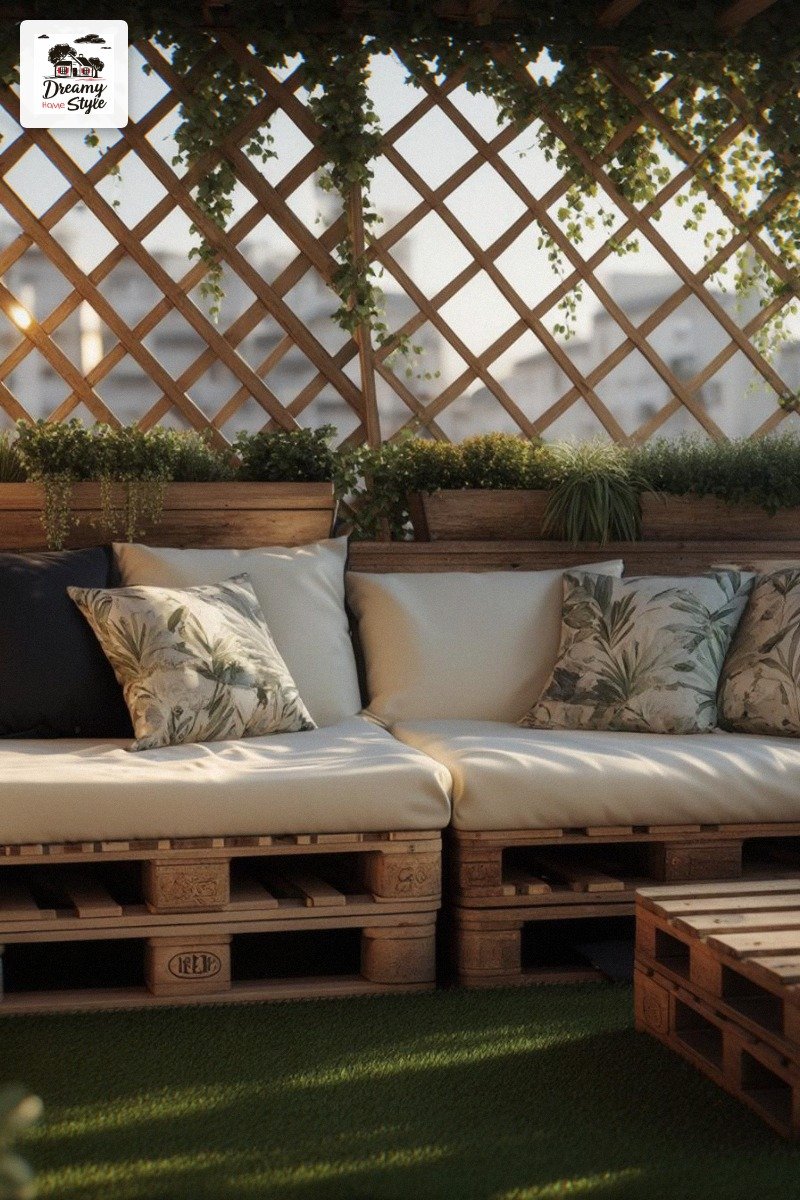
Standard outdoor fabric looks like outdoor fabric.
You know the look.
Thick, slightly shiny, vaguely institutional.
It’s fine on a dining chair.
On a daybed with a built frame, it undercuts the whole thing.
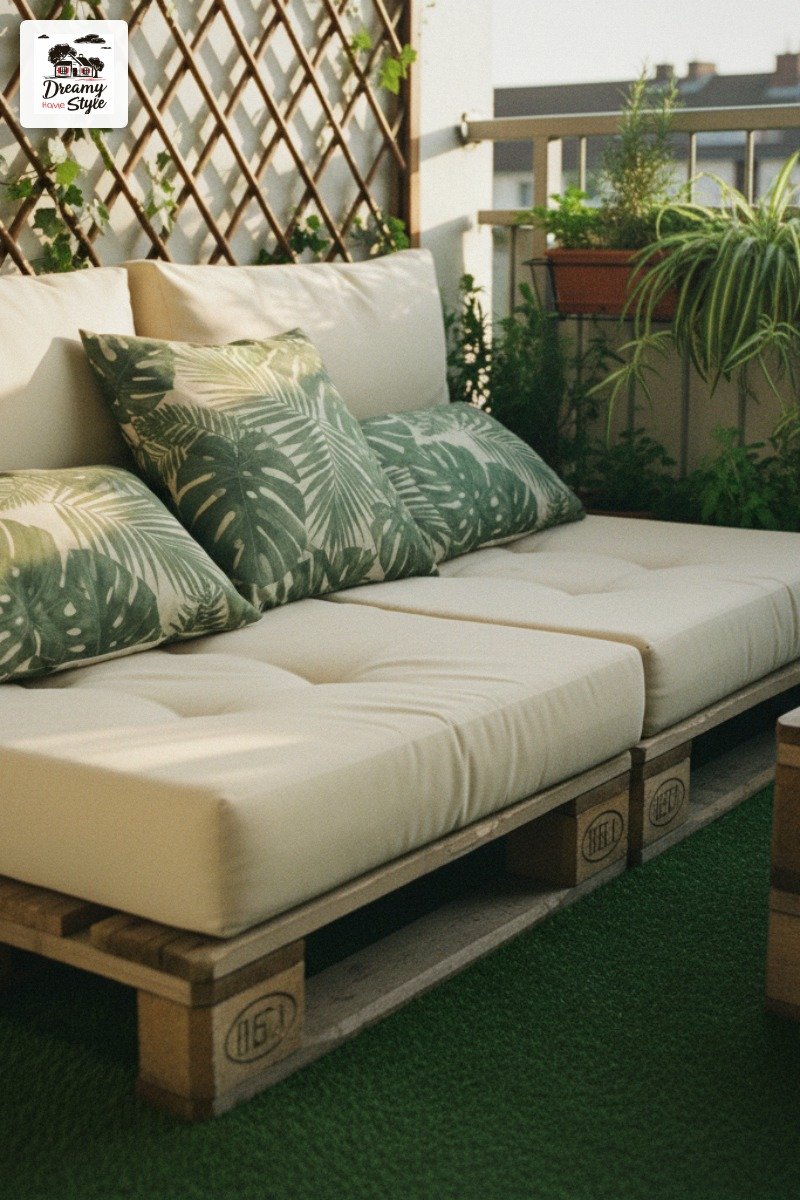
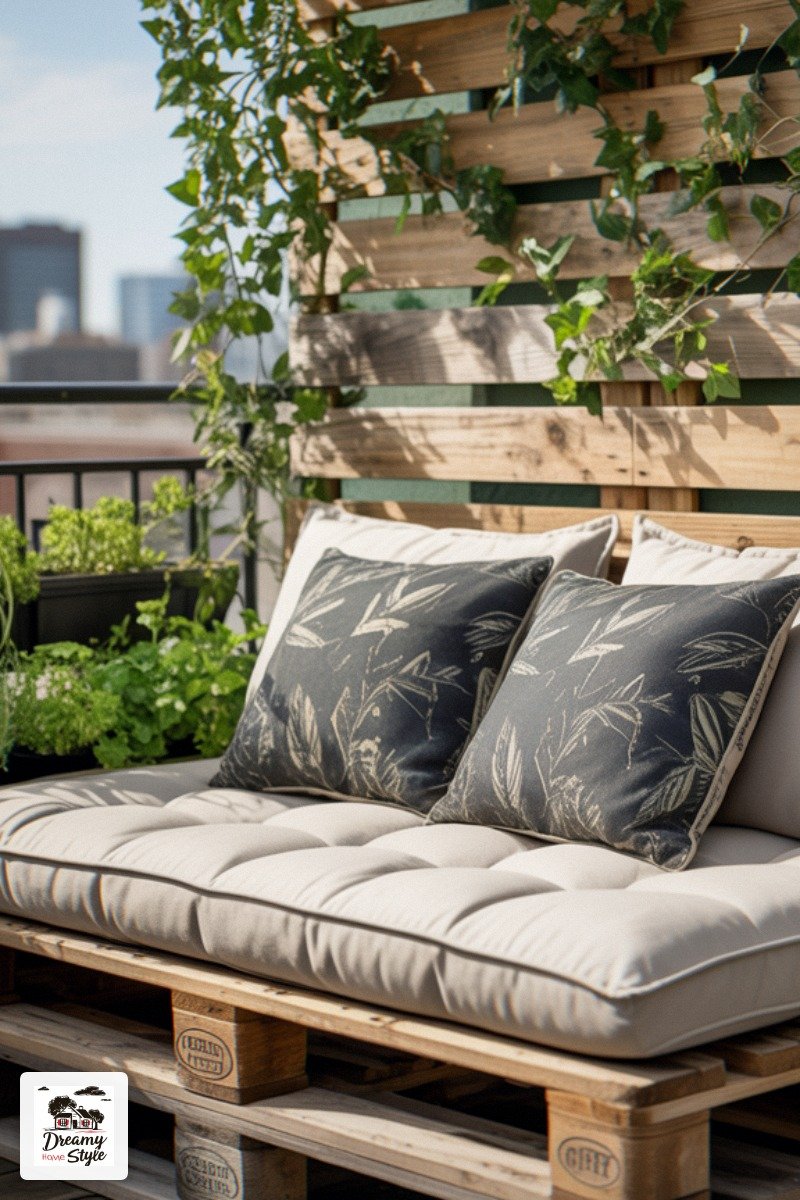
Linen-look outdoor fabrics are the answer.
Outdura Linen and Perennials Rough Linen both read as interior upholstery at photo distance (and honestly in person too).
Sunbrella Grade 3 runs $15 to $22 per yard if you’re doing custom cushion covers.
Whatever you choose, verify it’s rated UPF 50+ and has a minimum 10,000 double-rub Wyzenbeek rating — that’s the durability floor for anything that’s going to be primary seating.
The visual incongruity of refined linen-look fabric on raw sealed wood is genuinely the whole aesthetic.
It’s what makes people ask which store you got it from.
Color Pairing the Frame to the Floor, Not the Cushion
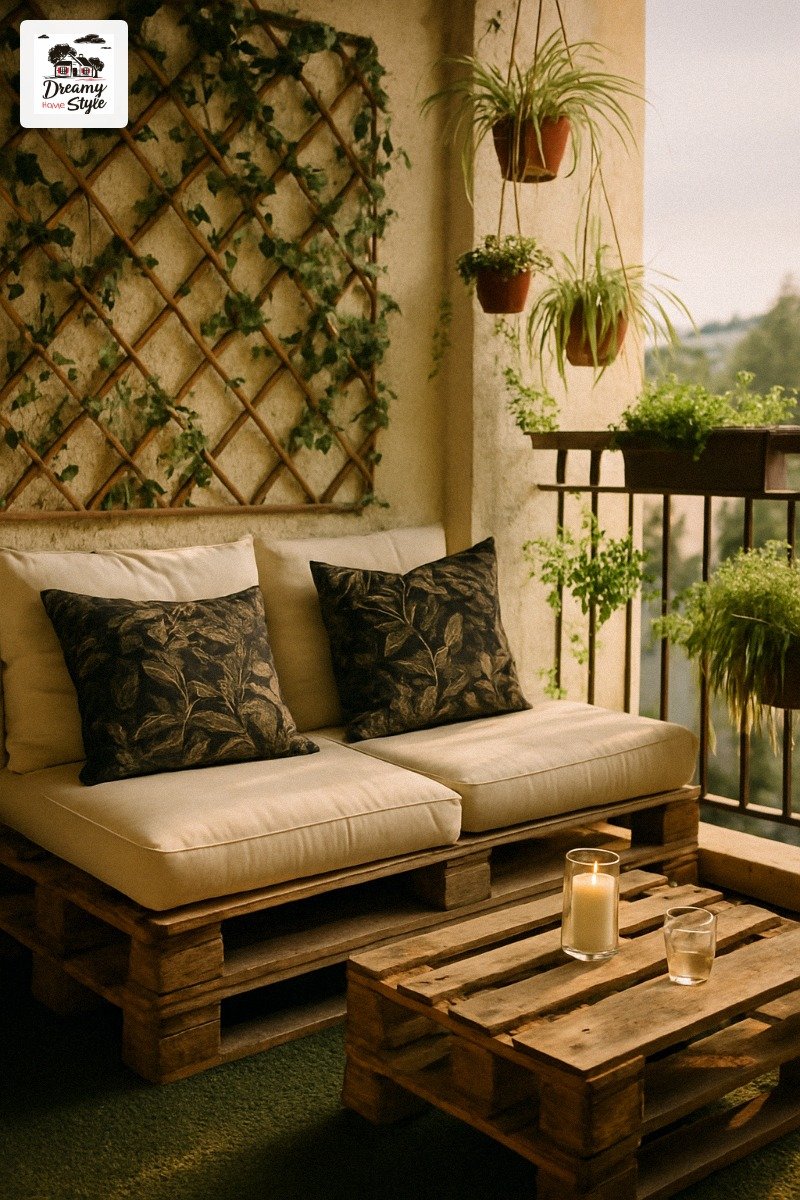
This is backwards in almost every guide and it’s why so many builds look visually disconnected.
The cushion is a small surface.
The balcony floor is enormous.
Your eye registers the floor first and the frame needs to respond to that, not to the textiles sitting on top of it.
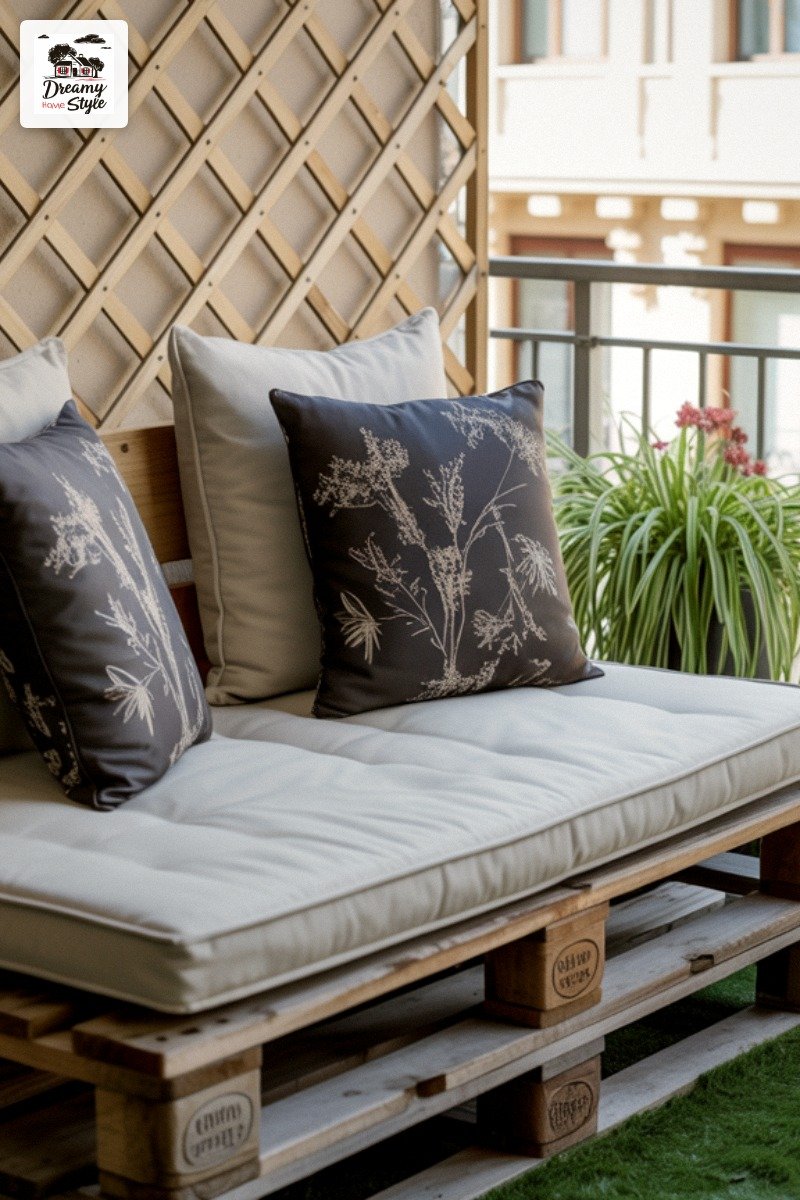
Warm grey concrete floors: use a warm walnut stain.
Minwax Early American 230 is the specific one I’d reach for.
Raw sealed wood next to warm grey concrete looks cold and slightly sad.
Terracotta tile floors: raw sealed wood or a whitewash is actually right here, because you want warmth fighting warmth.
Always, always test your stain on a pallet offcut in actual balcony light before committing.
The same stain looks different under afternoon sun than it did in your kitchen.
HOA and Rental Reality
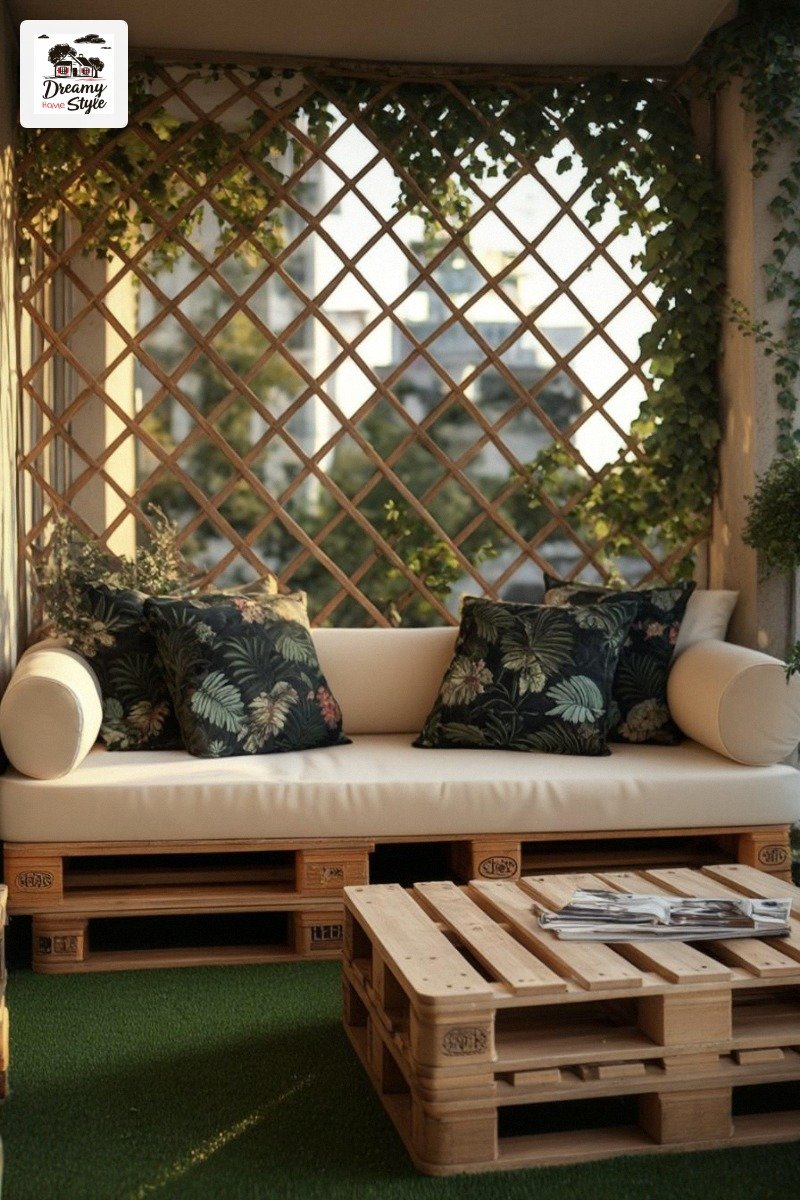
Most HOA restrictions target things attached to railings or walls.
This build attaches to nothing.
It sits on the balcony floor as freestanding outdoor furniture, which is what it is.
The back frame tops out at 24 inches total height — typical balcony furniture height limits are 42 inches.
You’re not close to the line.
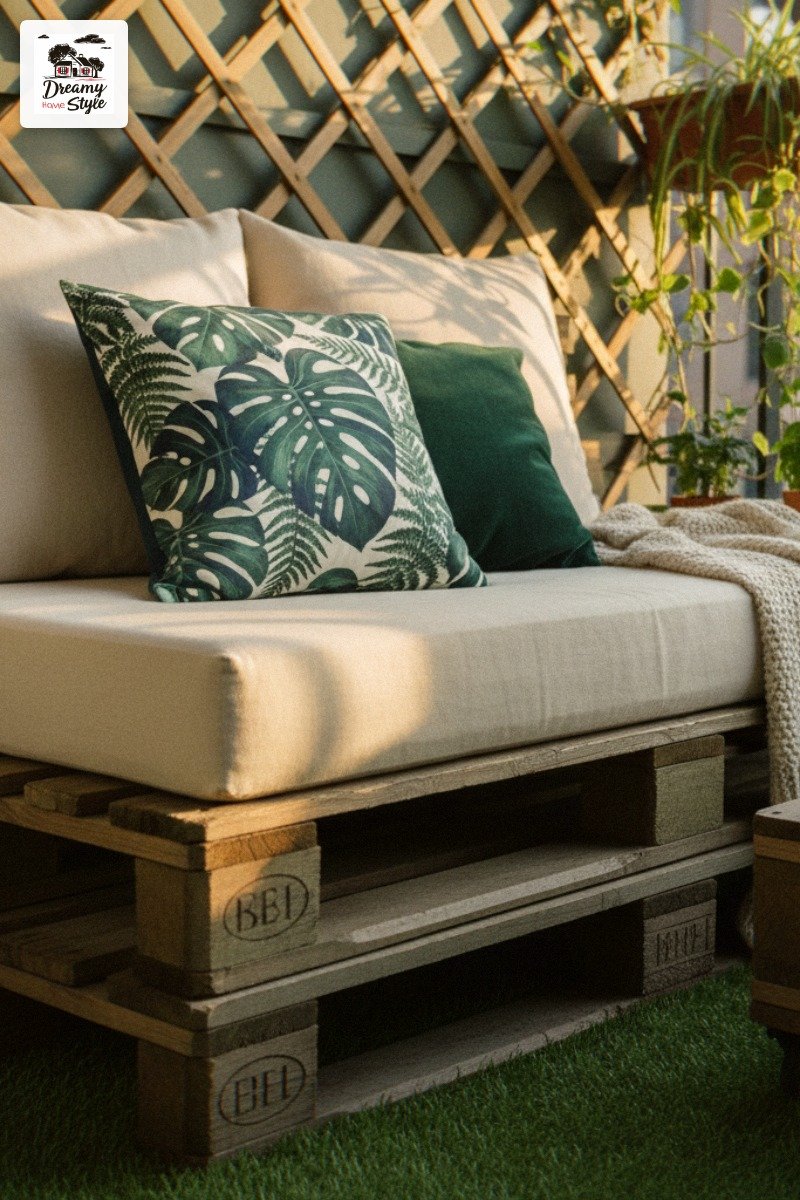
Before you build: photograph the empty balcony.
Keep your receipts.
If you ever need to communicate with a landlord about it, use the phrase “removable outdoor furniture” and mean it — because it genuinely is removable, which is part of why this configuration exists.
Guides written for homeowners never address this because homeowners don’t have to.
You do.
Ten minutes of documentation protects a $200 to $350 investment from becoming an argument.
The $200 vs. $350 Version
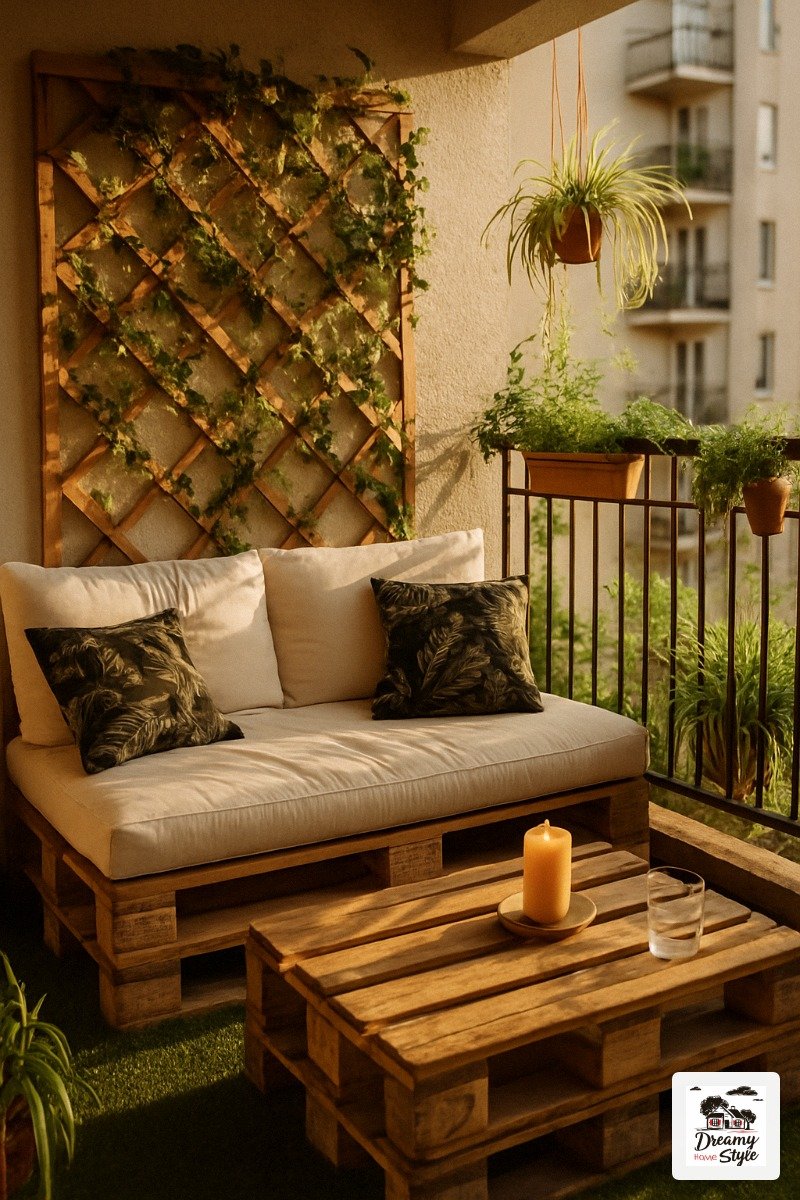
The $200 build: two free pallets, $30 in hardware (carriage bolts, structural screws), $40 for sealer, $90 for a decent seat cushion, $40 in 2×4 lumber for the bolster frame.
That’s a real daybed.
It works.
The $350 build adds $40 hairpin legs, upgrades to an $85 Sunbrella-grade cushion, and throws in $25 for throw pillows.
The extra $150 is entirely legs and cushion quality.
Everything else is cosmetic and mostly not worth it.
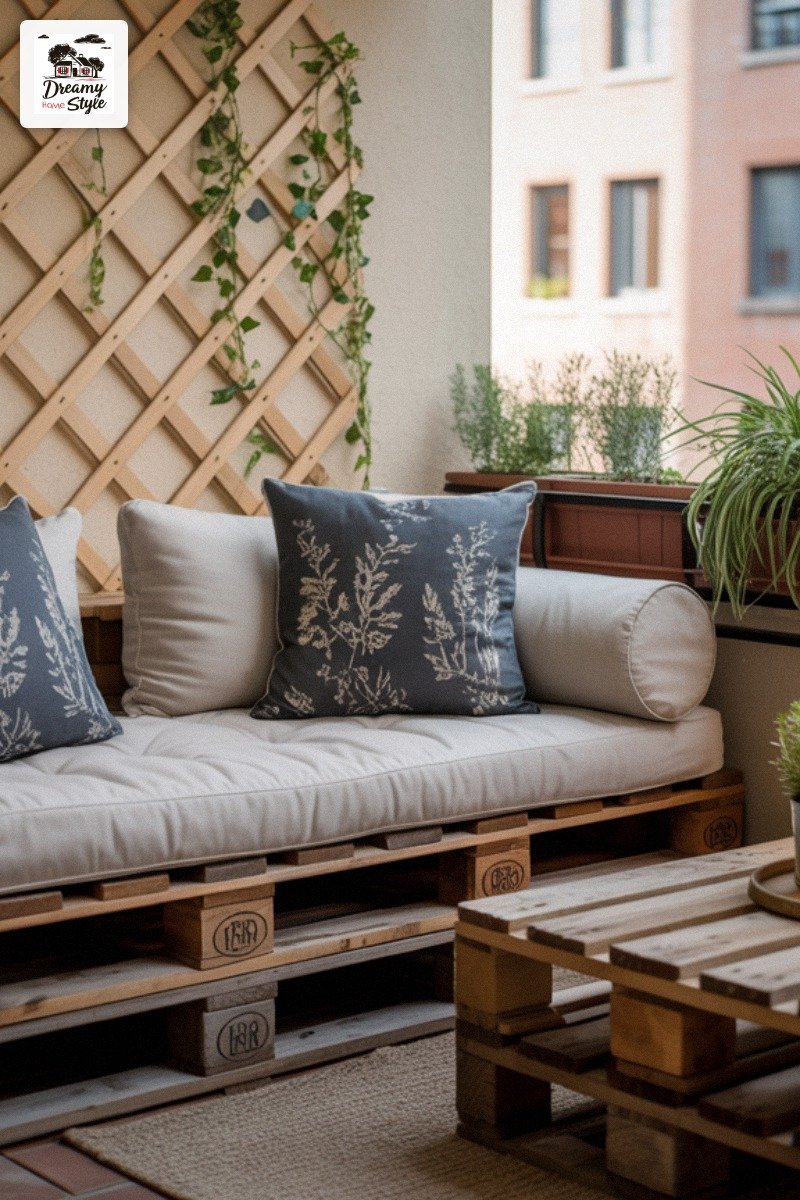
If you have to choose one: choose the cushion.
Fabric is what people touch and what reads in photos.
The legs are invisible once someone’s sitting on it.
I say this as someone who bought the legs first and sat on a terrible foam cushion for two months before upgrading.
Prioritize correctly.
Year Two: What Actually Degrades
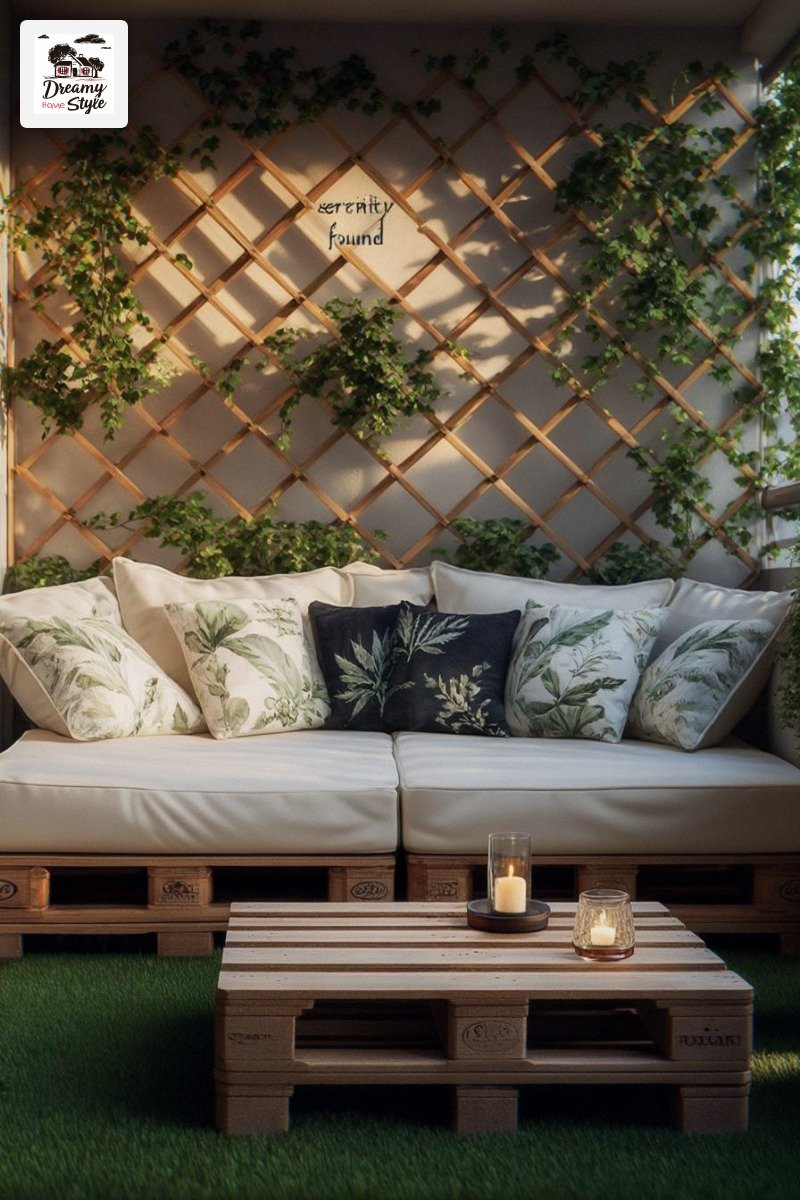
People who say pallets rot fast built directly on concrete without sealing.
That’s a construction failure.
A properly sealed, elevated build should go four to five seasons before anything structural needs attention.
Reapply spar urethane every 18 to 24 months if you’re in a climate with real sun exposure.
Individual deck boards can be replaced for under $5 in lumber without dismantling the bolster frame — just unscrew the board, cut a replacement to length, drop it in.
For the Sunbrella fabric: 1 cup bleach, a quarter cup dish soap, one gallon of water.
Apply, let it sit, rinse thoroughly.
Don’t skip the rinse.
The cushion covers will outlast the foam inside them if you’re consistent about cleaning.
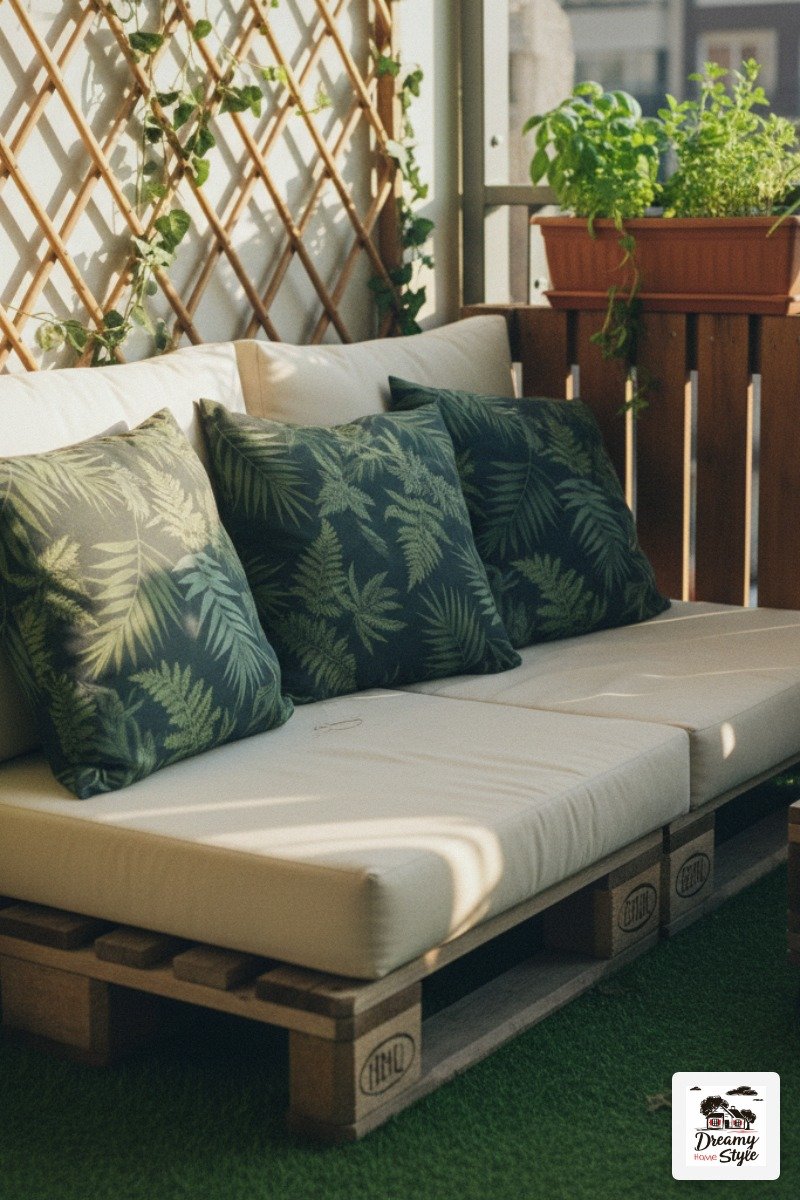
This isn’t disposable furniture.
It’s not precious either.
It’s a well-built thing that needs occasional attention, like everything else on a balcony.
Related read: Things I Wish I Knew Before I Decorated My First Home — Instant PDF + Kindle download. Secure checkout by Stripe