
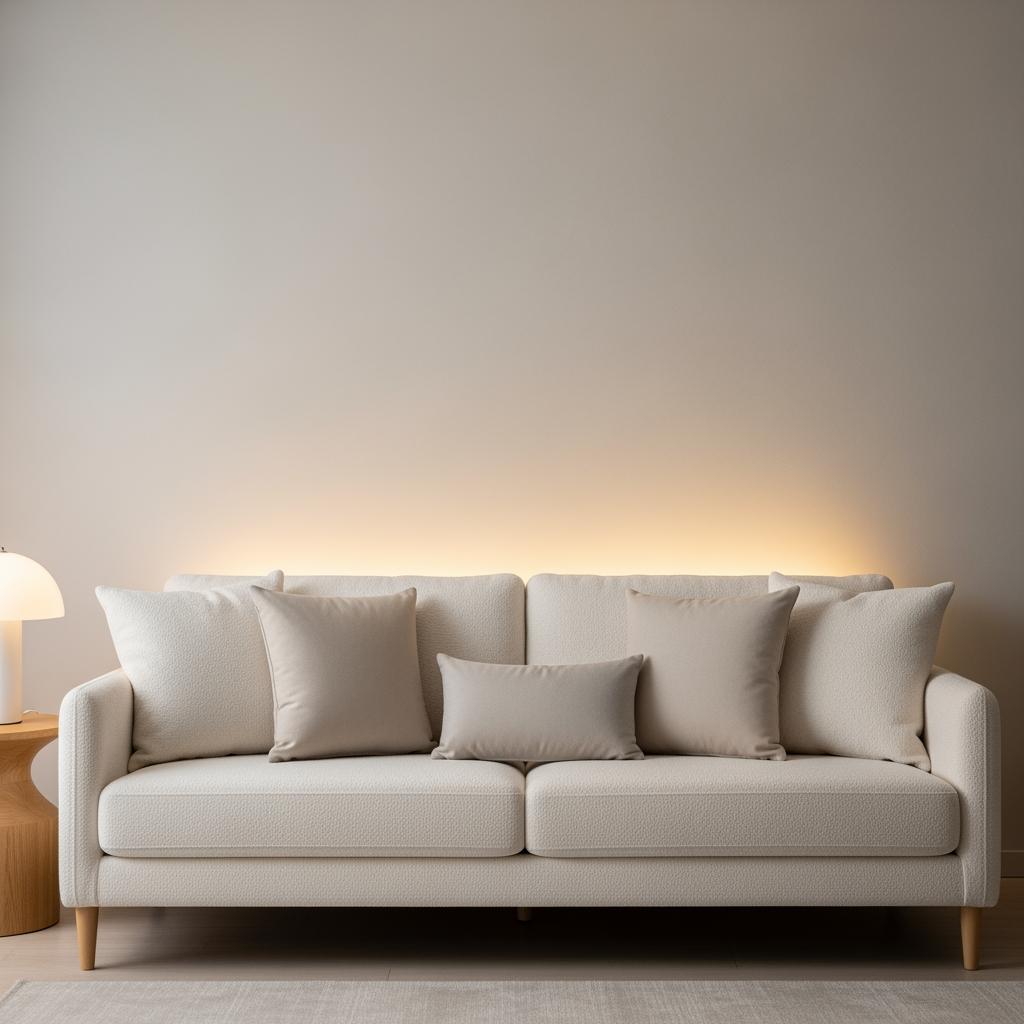

Okay, confession time — I used to be a throw pillow hoarder.
Like, embarrassingly so.
I’d wander into HomeGoods, spot something with a cute print or a chunky knit texture, and toss it in the cart without a second thought.
And then I’d get home, pile it onto my sofa, and wonder why the whole thing looked… wrong.
Too busy.
Too random.
Just off.
It wasn’t until I finally sat down and figured out an actual formula — sizes, shapes, quantities, textures — that everything clicked.
Now my living room looks like something out of a magazine, and I spent way less to get there.
So let’s talk about it.
Why Most Throw Pillow Arrangements Fall Flat
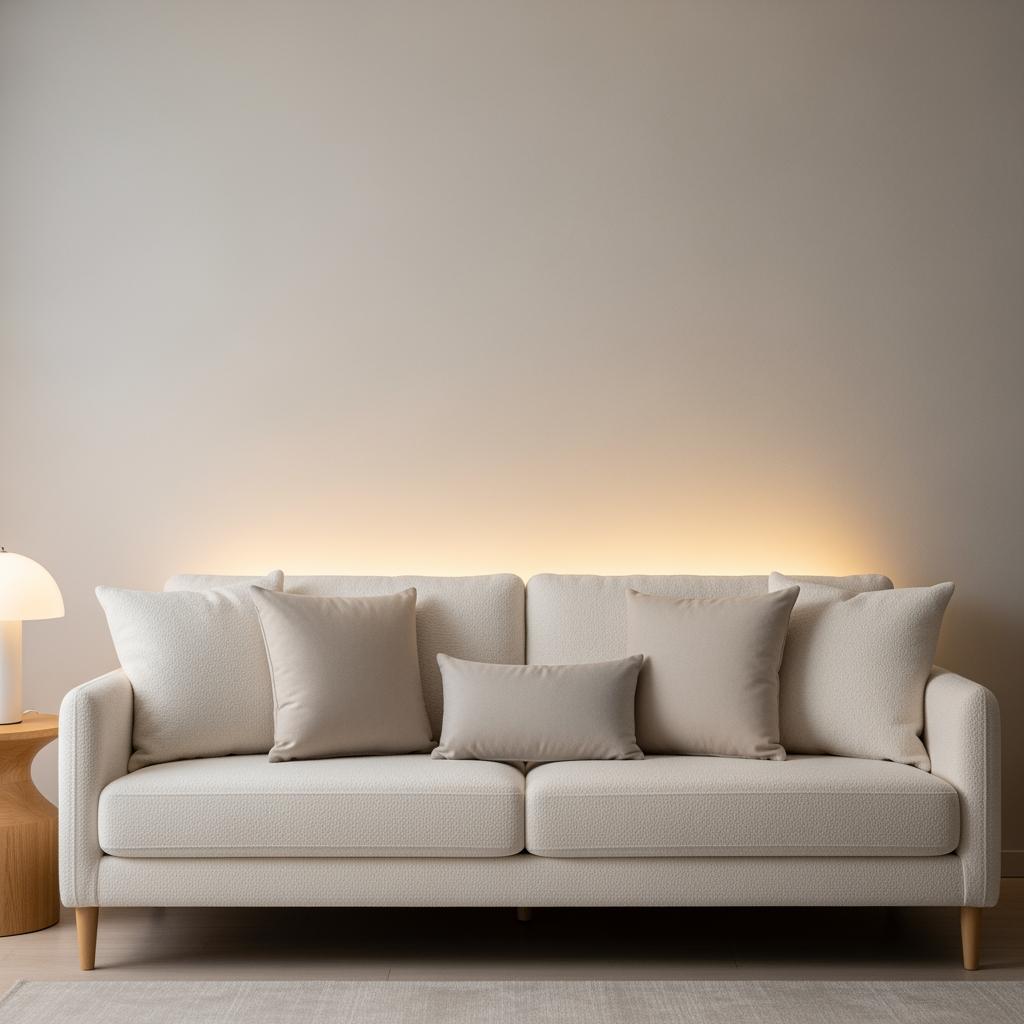
Here’s the hard truth: buying pillows one at a time, based on vibes alone, almost never works.
It’s not that your taste is bad.
It’s that throw pillows are a system, not a solo act.
And without understanding that system, you end up with a sofa that looks cluttered instead of curated.
I used to think more pillows meant more personality.
But actually?
Too many competing patterns, sizes, and textures cancel each other out.
The eye doesn’t know where to land.
It just feels… loud.
When I finally cleared everything off my sofa and started from scratch with a plan, the difference was immediate.
Suddenly it felt intentional.
Warm and layered, but calm.
That’s the goal.
The Magic Number — How Many Pillows You Actually Need

This is the question I get asked more than anything else.
And the answer is: it depends on your sofa size, but there’s a sweet spot.
For a standard three-cushion sofa, I always recommend an odd number — usually around five pillows total.
Odd numbers feel natural.
Even numbers feel stiff.
A loveseat?
Three pillows is perfect.
A sectional?
You can go up to seven or eight, but you have to be strategic about placement.
More surface area doesn’t mean more is more — it just means more room to make mistakes.
When I tackled my own living room refresh last fall, I pulled every pillow off the couch and laid them on the floor.
I counted.
There were eleven.
No wonder it looked chaotic.
I edited down to five and honestly?
It looked ten times better.
The Size Formula That Changes Everything
Okay, this is where most people go wrong.
They grab all the same size pillows — usually those square ones — and wonder why the arrangement looks flat.
Size variation is everything.
It creates depth, visual interest, and that layered look you see in designer spaces.
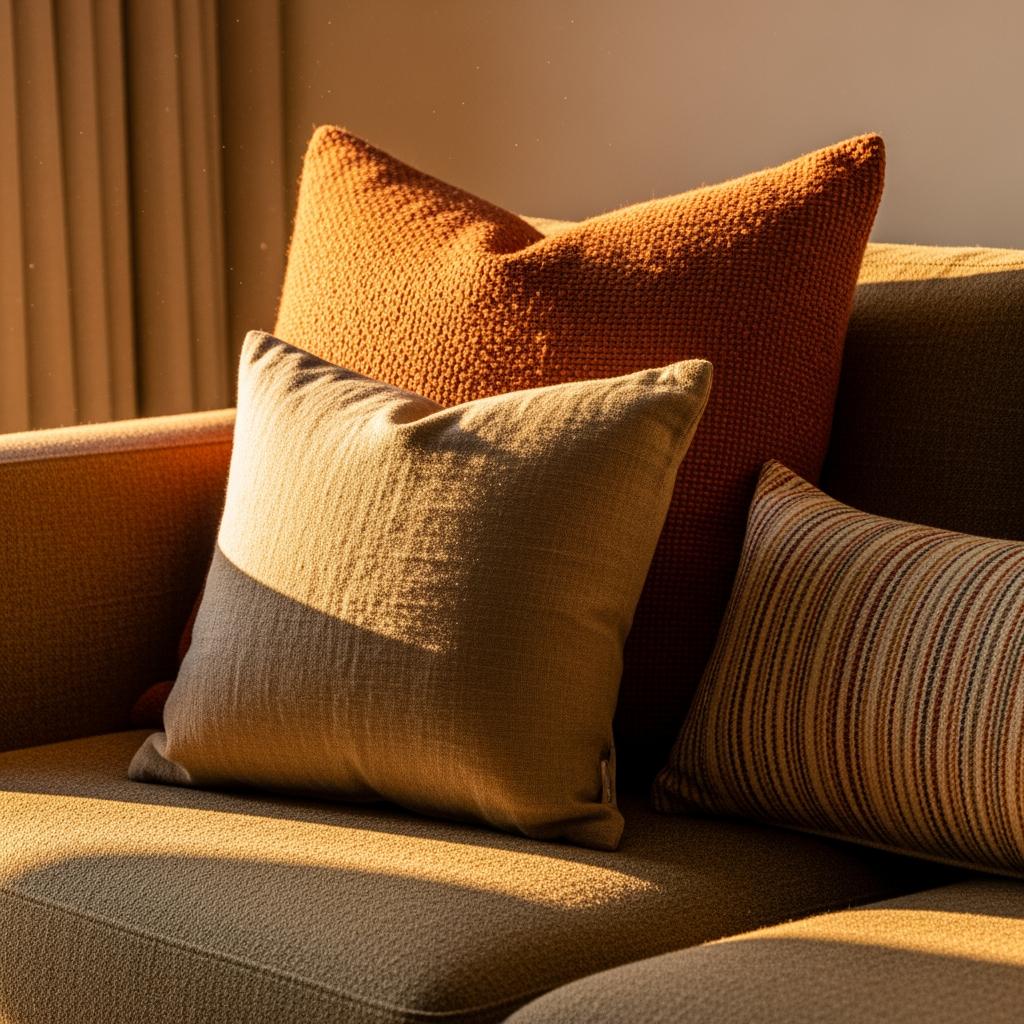
My go-to formula is: large square in the back, medium square in front, and a lumbar pillow centered or slightly off to one side.
That combination almost always looks gorgeous.
The lumbar especially — I’m kind of obsessed with a good lumbar pillow.

For the record, large means around twenty-four inches, medium is around twenty inches, and a lumbar usually runs about fourteen by twenty-two.
You don’t have to be exact.
But that gradient from big to small to long?
It works every time.
Shape Matters More Than You Think

We talk a lot about color and pattern, but shape is sort of the secret weapon of throw pillow styling.
Mixing shapes — squares, rectangles, rounds — adds a sculptural quality to your arrangement.
It makes things feel intentional and dynamic, not just thrown together.
I added a round pillow to my bedroom styling last year and it was one of those tiny changes that made a huge difference.
It broke up all the square energy and added this soft, almost artsy feel.
So underrated.
If you’ve never tried a bolster pillow on a bed, please do.
It adds that hotel-suite polish that I am always chasing.
And for a sofa, even one round pillow nestled into the corner can elevate the whole look.
Building Your Color Story — The Rule I Swear By

Color is where people either nail it or completely lose the plot.
And the mistake I see most often is trying to match everything too perfectly.
When every pillow is the exact same shade of dusty blue, it looks flat and almost clinical.
You want harmony, not uniformity.
My personal rule is the sixty-thirty-ten breakdown.
Sixty percent of your pillows should be in your dominant neutral.
Thirty percent in a secondary color or warm accent.
Ten percent in a bolder pattern or pop color.
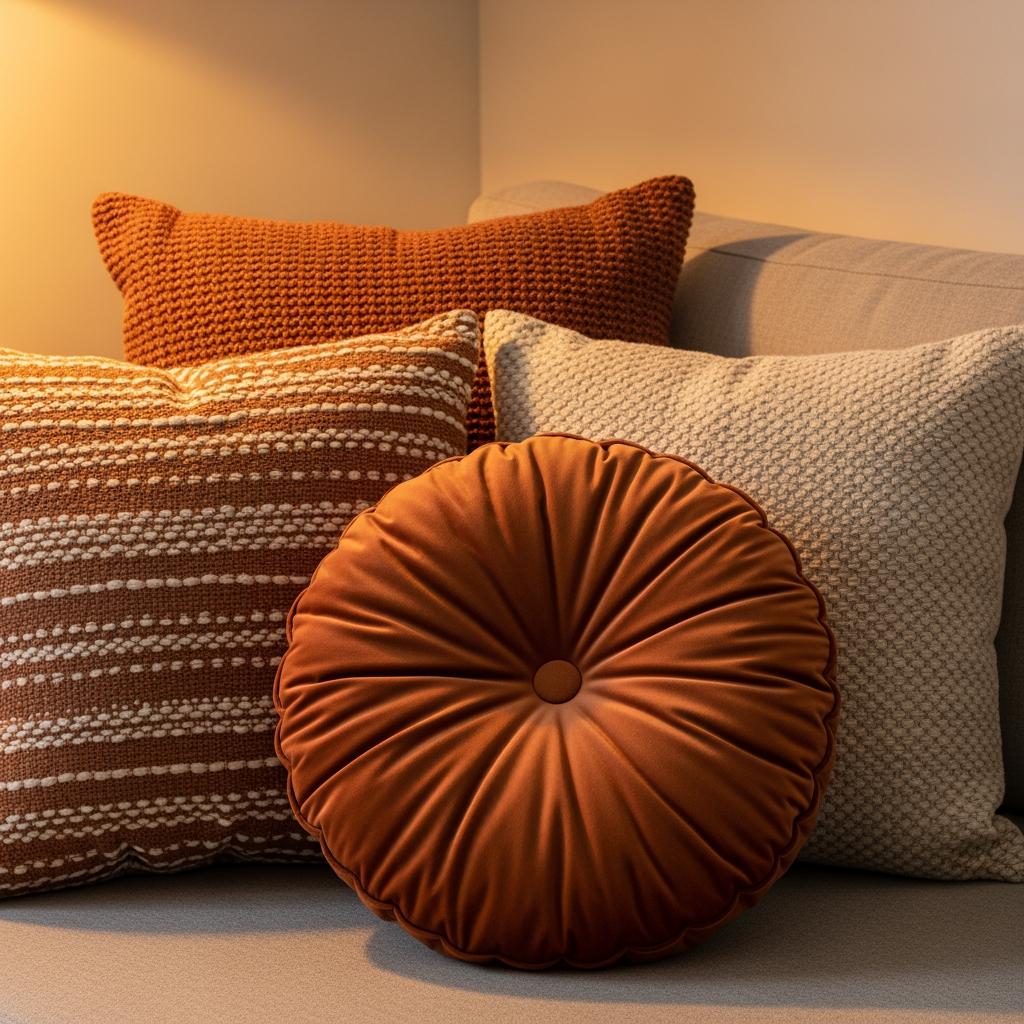
So for a neutral sofa, I might do ivory and linen as my base, add in a warm terracotta or sage, and then one patterned pillow that ties it all together.
That one pattern is sort of the anchor.
Everything else revolves around it.
Texture Is the Secret Ingredient
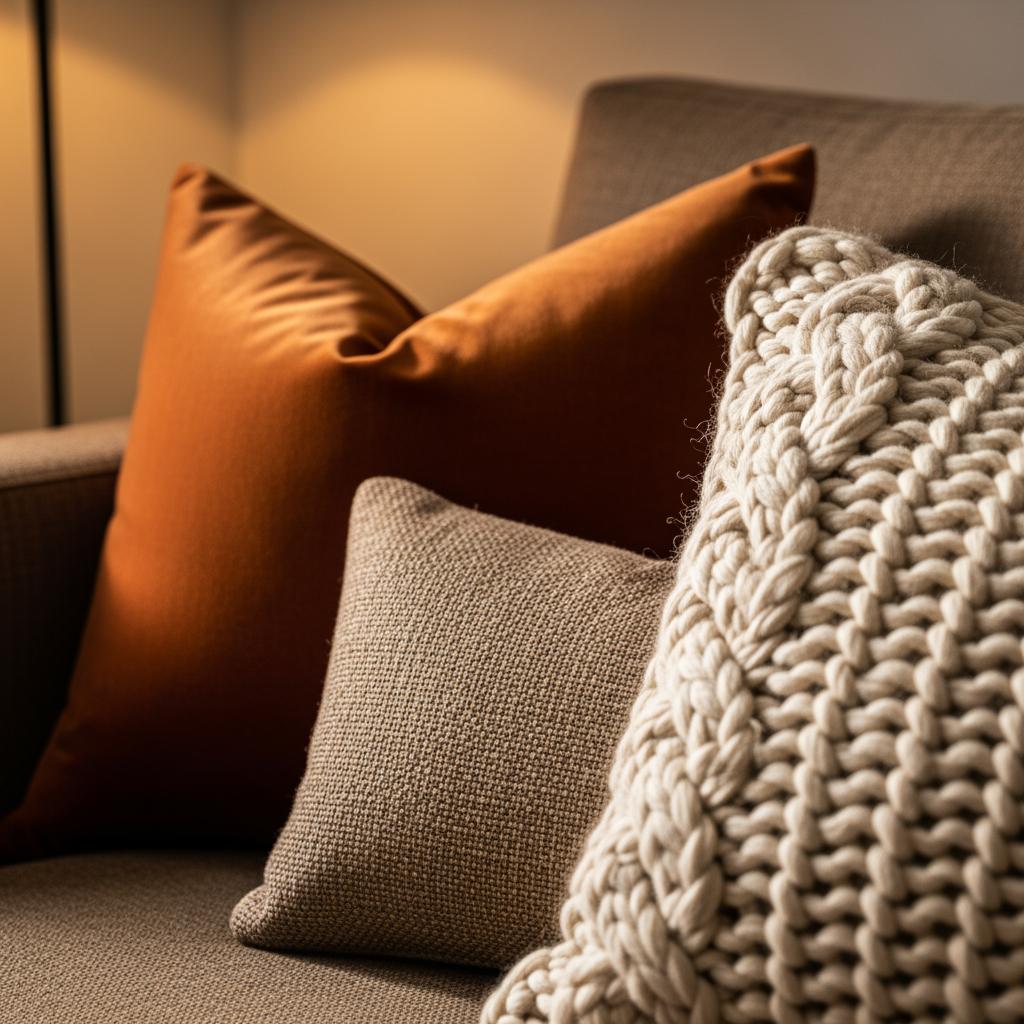
If color is the melody, texture is the harmony.
You can work entirely within a neutral palette and still have a deeply interesting, layered arrangement — as long as you’re mixing textures.
Velvet next to linen next to a chunky knit?
That combination is *chef’s kiss.*

Texture is also what makes a space feel touchable and warm.
When I walk into a room and want to sink into the sofa, it’s almost always because of the textural variety in the pillows.
Smooth, soft, nubby, cozy — it all plays together.
One of my favorite tricks is pairing a sleek velvet pillow with a rougher, woven one right next to it.
The contrast makes both look more interesting.
And it adds that tactile richness that photographs beautifully, too.
Pattern Mixing Without the Mess

Mixing patterns is the styling move that looks the most impressive but also the most intimidating.
And honestly?
It’s easier than it sounds once you know the trick.
The trick is: vary the scale of your patterns, not just the designs themselves.
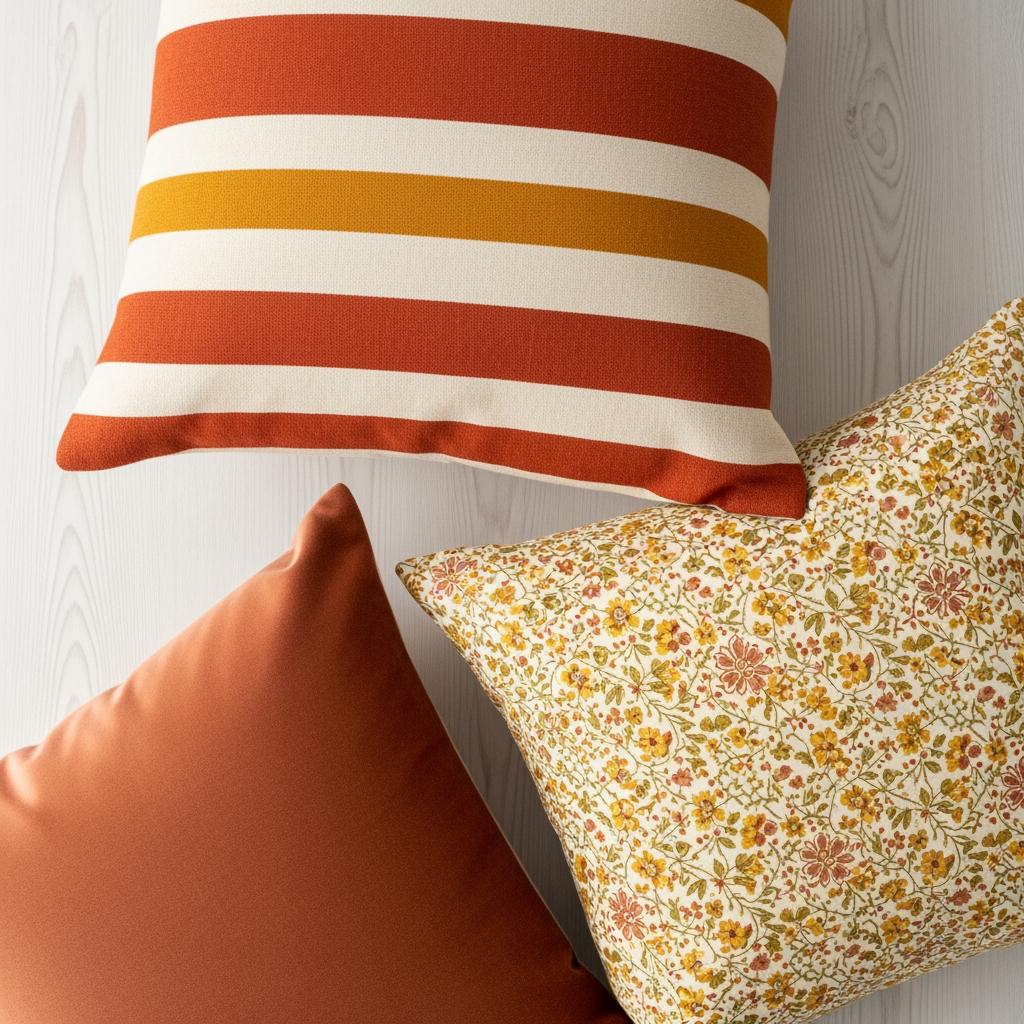
So pair a large bold print with a small geometric.
Or a wide stripe with a delicate floral.
Keep them in the same color family and the mix will feel intentional, not chaotic.
Different scales stop the patterns from competing.
I learned this the hard way when I paired two similar-scale patterns and it looked like a visual argument.
Once I swapped one out for something smaller in scale, everything relaxed.
Now I always think: big pattern, small pattern, solid.
That trio almost never fails.
The Lumbar Pillow — Why It’s Non-Negotiable

I cannot stress this enough: the lumbar pillow is not optional.
It is the finishing touch that separates a styled sofa from a furniture-showroom sofa.
That long, rectangular shape adds an architectural quality that rounds and squares just can’t replicate.
On a sofa, I like to place the lumbar centered at the front layer, or tucked slightly off-center for a more casual, lived-in look.
On a bed, it sits right at the front — almost like a little crown.
Either way, it pulls everything together.
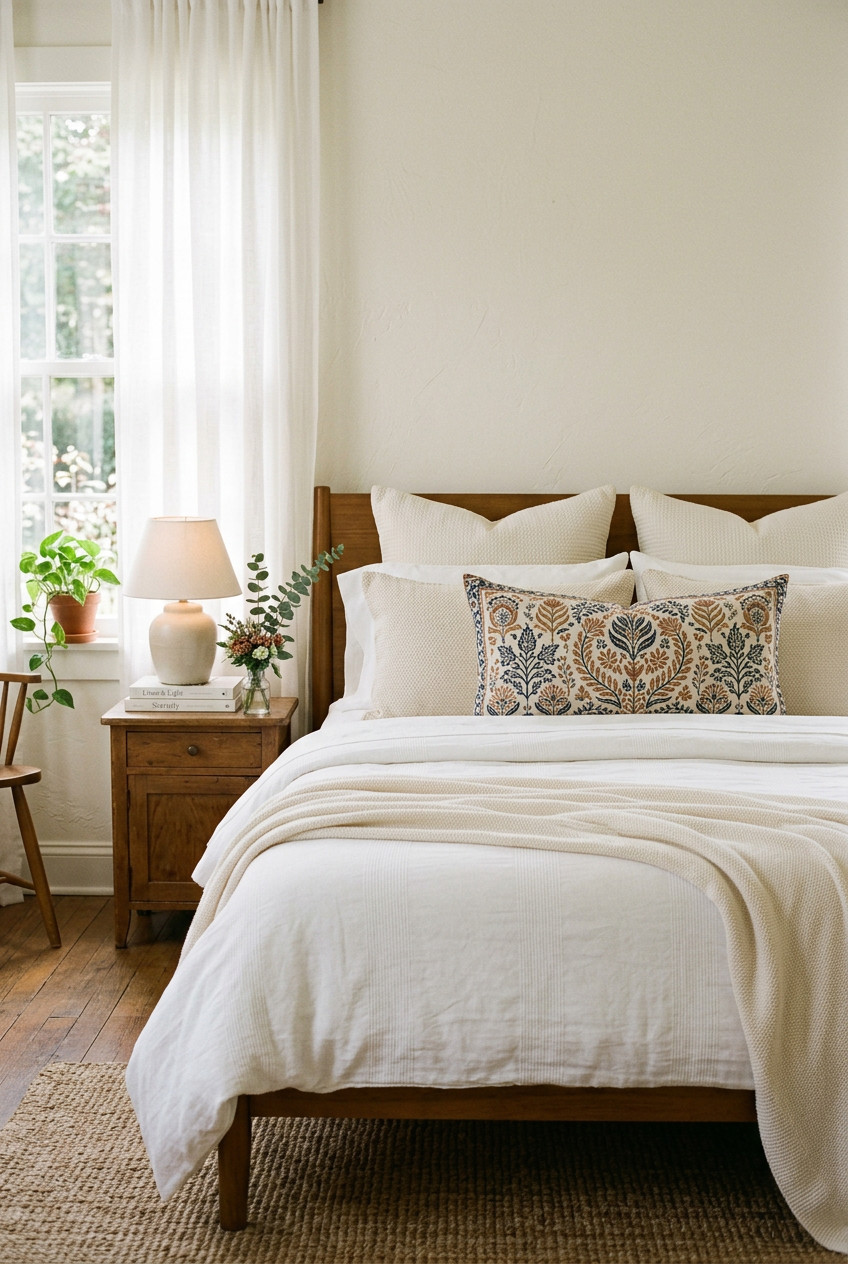
If I had to choose just one pillow upgrade to make today, it would be swapping out a plain square for a great lumbar.
Something in a printed fabric, a contrast stripe, or embroidered detail.
Immediately elevated.
Every time.
How to Style Pillows on a Sectional (Without Losing Your Mind)
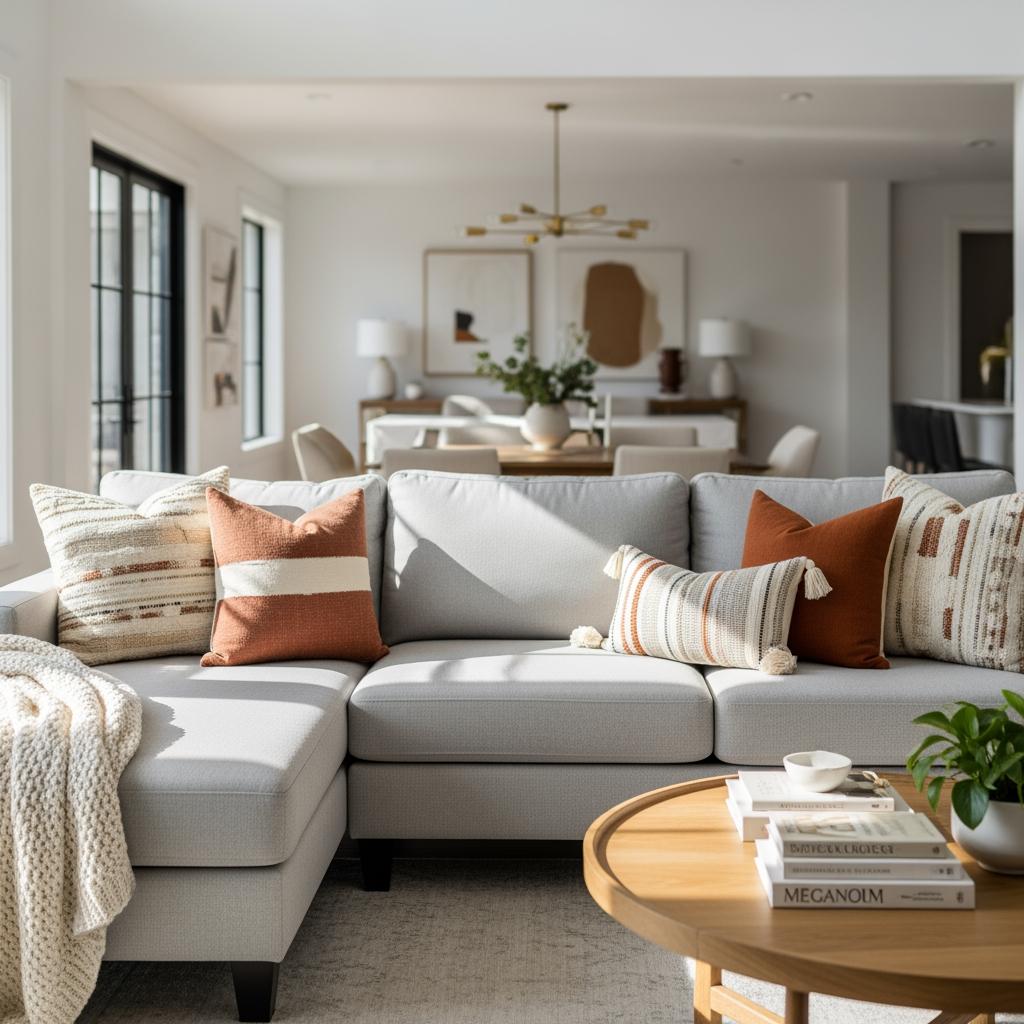
Sectionals are basically the wild west of throw pillow styling.
So much space, so many options, and so many ways to get it wrong.
But there’s a structure that works beautifully every time — and it’s all about treating each end like its own little vignette.
I like to create a mirrored arrangement on each end of the sectional — not perfectly identical, but sort of echoed.
Same color family, similar shapes, slightly different combinations.
It creates visual balance without feeling rigid.
The corner of a sectional is sort of its own zone.
I’ll often put one large pillow there, almost like an anchor.
And then build outward on each arm from that point.
If I had a big sectional, this is exactly the approach I’d take first.
Bedroom Pillow Styling — The Layered Look I’m Obsessed With
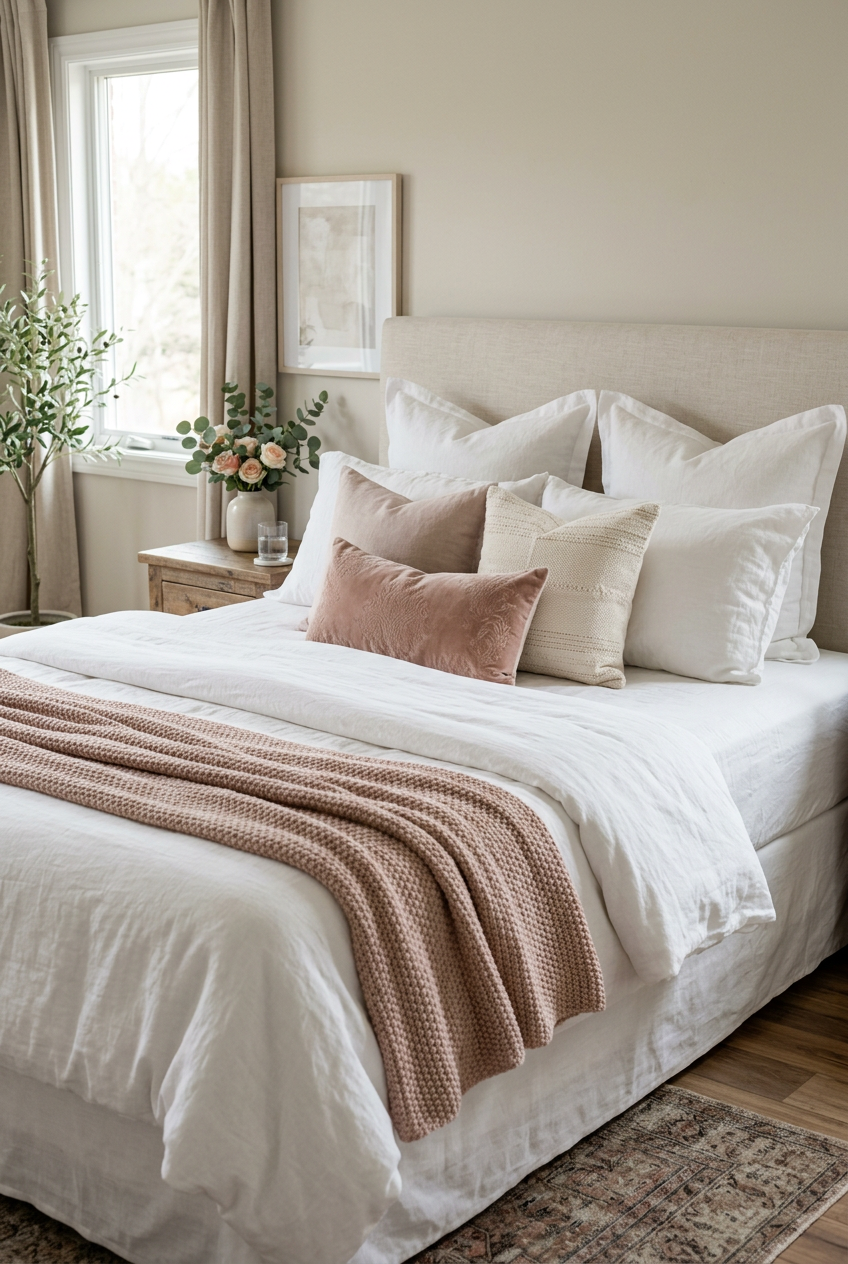
Bedroom pillows are a different kind of art form.
You’re working with sleeping pillows, Euro shams, decorative squares, and that precious lumbar — and the goal is to layer them so beautifully that you almost don’t want to mess up the bed in the morning.
My favorite arrangement: two Euro shams in the back, two standard sleeping pillows in front, two smaller decorative squares, and one lumbar at the very front.
That layered stack is so satisfying to look at.
Warm, full, but not overwhelming.
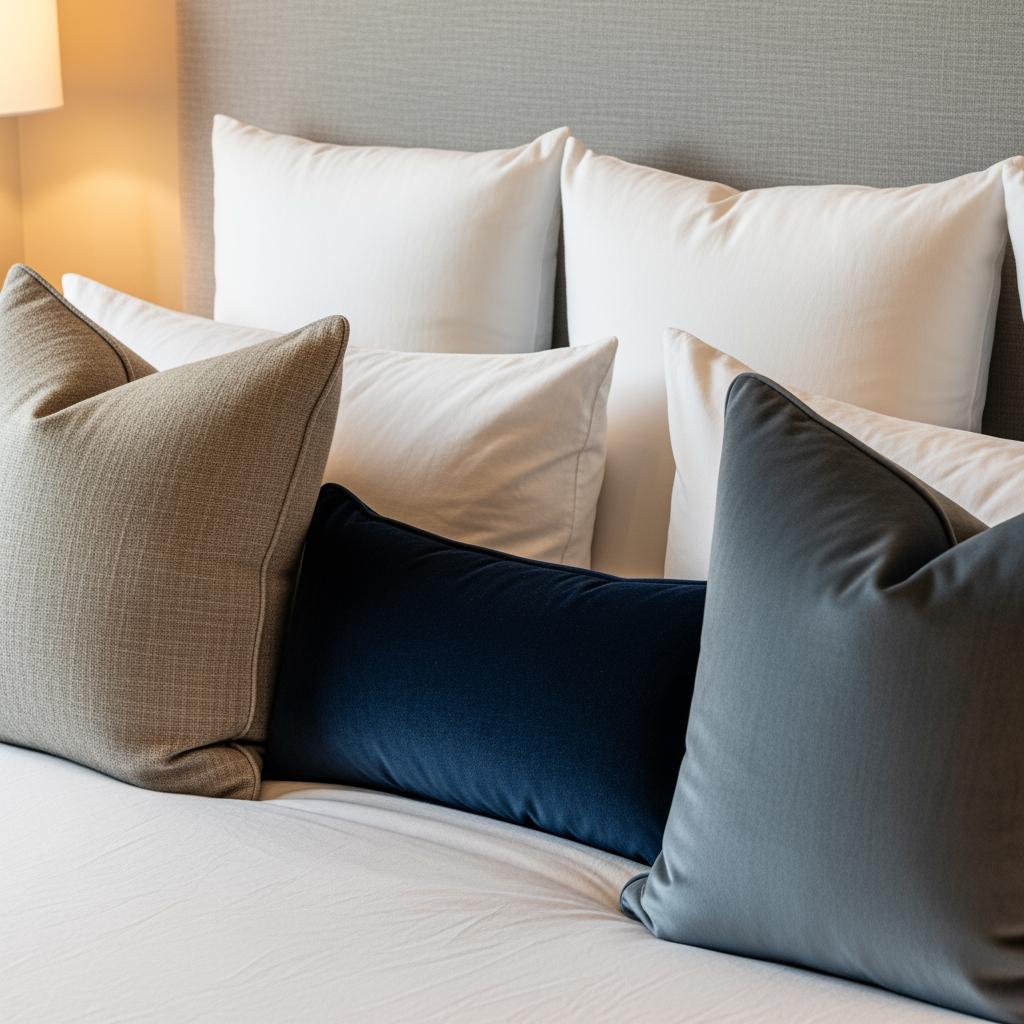
The key — and I use that loosely — is keeping the back layers taller and the front ones lower, so it creates a kind of cascading effect.
And varying the pillowcase fabric (crisp cotton, soft linen, velvet) adds so much depth.
When to Break the Rules (And How to Do It Well)

Okay, so I’ve given you a formula — but I also want you to know that rules in styling exist to be broken, gently and intentionally.
Once you understand why the formula works, you can start playing with it.
And that’s where the really fun, personal stuff happens.
Maybe you love a maximalist vibe and want more pillows than I’d normally suggest.
Cool.
Just make sure your colors and textures still feel cohesive, even if the quantity is higher.
Maximalism works when everything is curated, not just collected.
Or maybe you want a completely tonal look — all creams and whites — with zero pattern.
Absolutely gorgeous if the textures are varied enough.
Breaking the pattern-mixing rule is totally fine if you’re doubling down on textural interest instead.

Budget-Friendly Ways to Refresh Your Pillow Situation
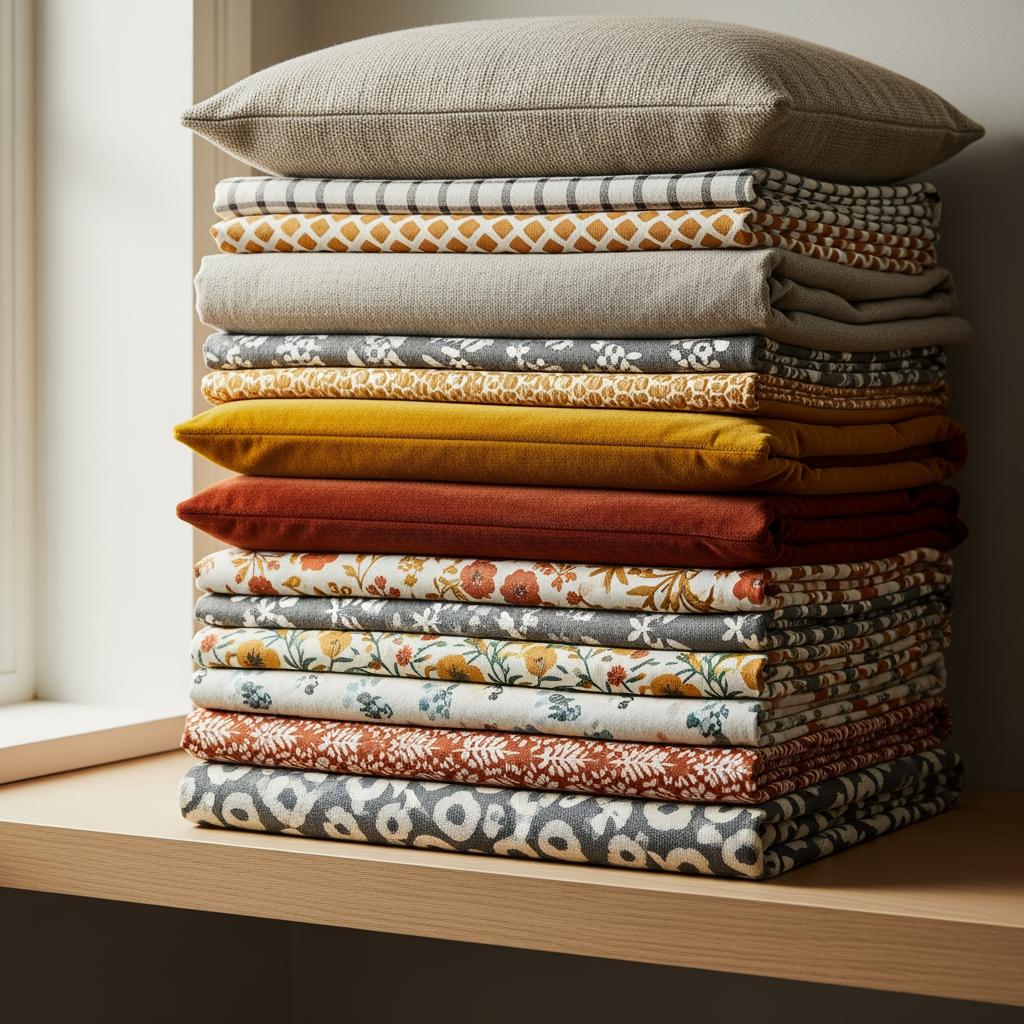
Here’s something I love telling people: you don’t need to replace your pillows, just your pillow covers.
Inserts are reusable.
Covers are swappable.
This is the most budget-friendly styling secret I know, and it completely changed how I approach seasonal refreshes.
I have a set of good-quality inserts in the sizes I use most.
And then I collect covers — textured ones, printed ones, seasonal ones — that I can rotate in and out.
Same inserts, completely different look, fraction of the cost.

Thrift stores and discount shops are genuinely incredible for this.
When I tackled my guest room refresh last spring on a tight budget, every single cover came from thrift finds and end-of-season sales.
The room looked a thousand dollars.
It cost maybe forty.
My Go-To Shopping Strategy Before You Buy a Single Pillow

Before you buy anything, do this: take a photo of your sofa or bed, completely empty.
Then lay out every pillow you already own on the floor beside it.
You’ll probably find you already have pieces that work — you just haven’t combined them right yet.
From there, identify what’s missing.
Do you have all squares and no lumbar?
Add a lumbar.
All solids and no pattern?
Bring in one print.
All rough textures and nothing soft?
You need some velvet in your life.
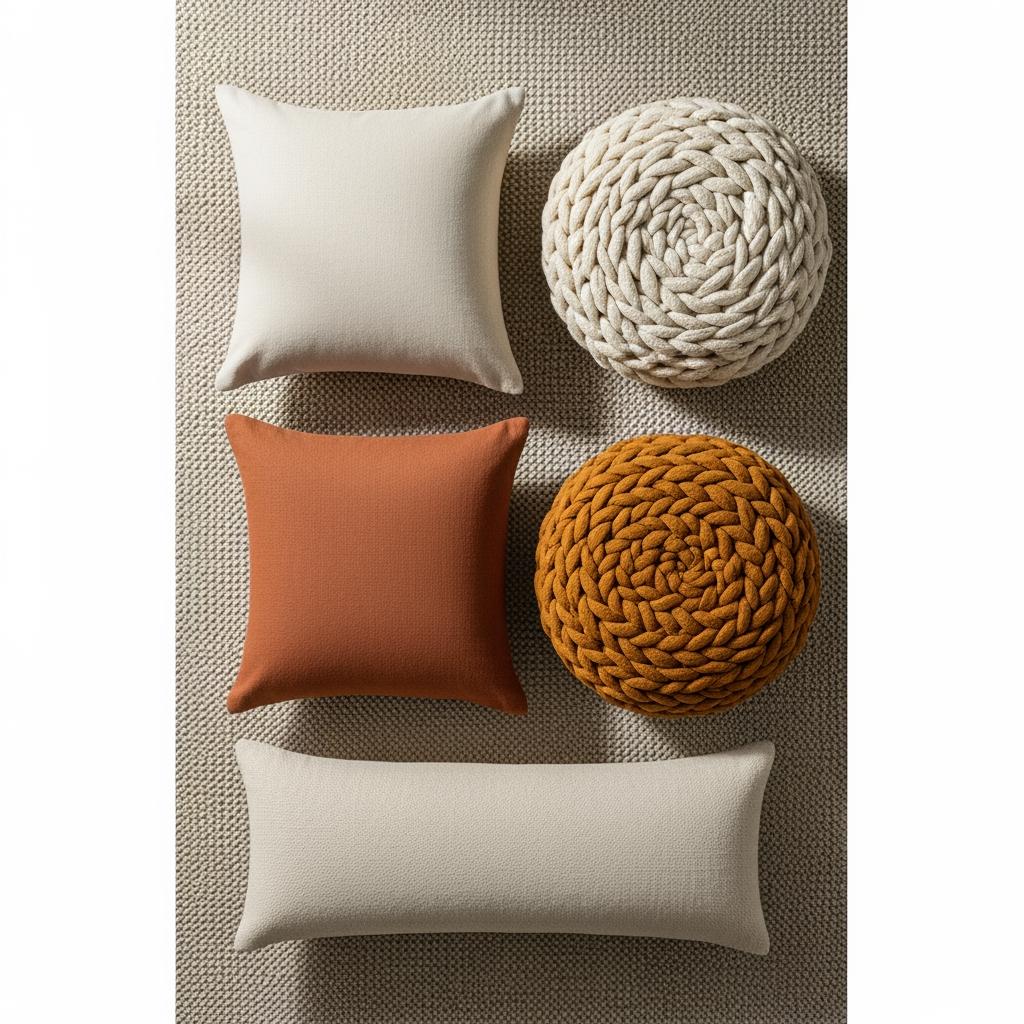
Shopping with intention instead of impulse is the move that saves money and actually results in a space you love.
I promise you, buying one perfect pillow that fills a gap in your arrangement beats grabbing six cute ones that don’t work together.
Every single time.