
Barndominiums have officially gone from countryside trend to full-blown obsession, and the luxury versions are absolutely stealing the show on social media right now.
What started as a practical housing solution has transformed into some of the most jaw-dropping interiors you’ll see online, combining rustic charm with high-end finishes that rival any penthouse or mansion.
Get ready to screenshot every single one of these ideas because your dream home is about to get a serious upgrade.
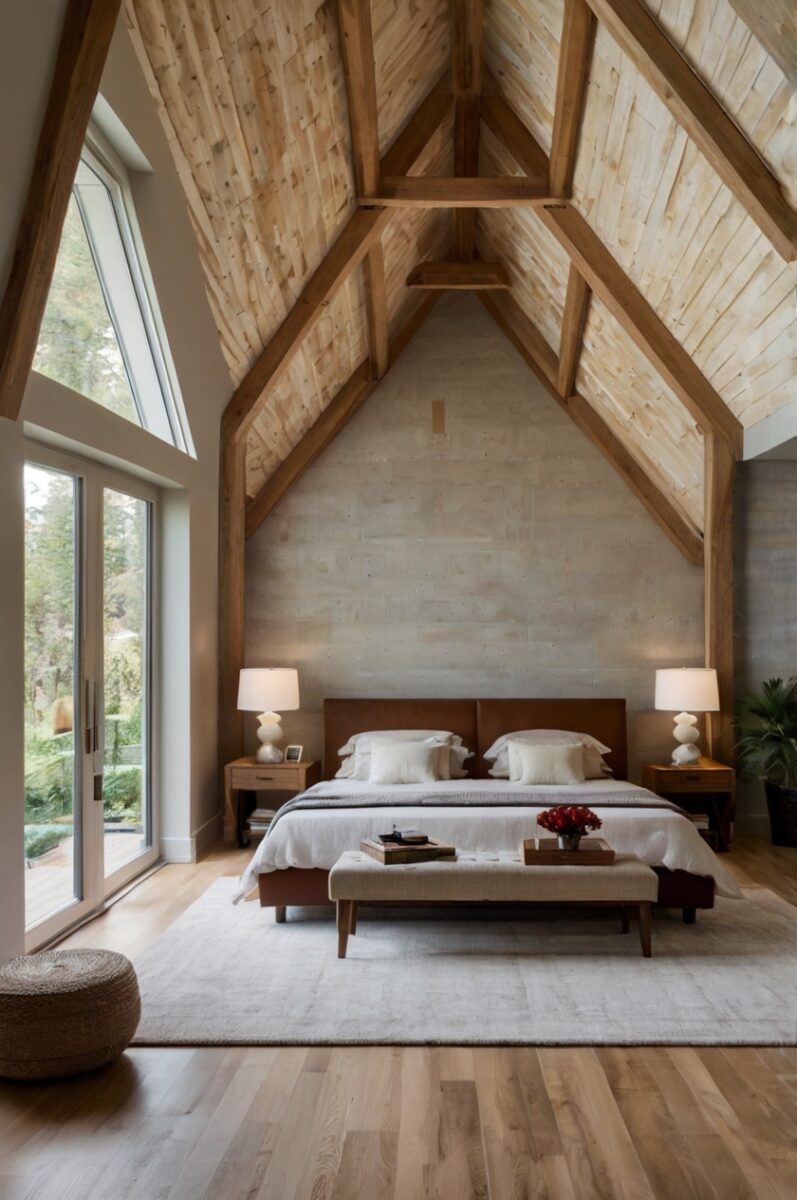
Floor-to-Ceiling Windows Meeting Massive Exposed Beams

This combo is absolutely dominating the barndominium scene right now, and for good reason—it’s the perfect marriage of rustic authenticity and modern luxury.
The exposed beams aren’t just decorative—they’re usually original structural elements that tell the story of the building, creating instant character that you simply can’t fake with new construction.
Paired with floor-to-ceiling windows, these beams create the most incredible contrast between heavy, grounded wood and airy, light-filled spaces.
You’re looking at 20-foot ceilings in some cases, with beams that might be reclaimed from century-old barns or custom-hewn from local timber.
The windows themselves are often commercial-grade, installed in massive panels that can span entire walls without interruption.
This design choice completely transforms how you experience the space throughout the day as natural light shifts and moves across those textured wooden surfaces.
During golden hour, the beams practically glow, casting long shadows that make the whole space feel alive and dynamic.
The best part is how this setup connects you to the outdoors without sacrificing any comfort or climate control—you get views of rolling hills, forests, or farmland from every angle.
Designers are getting creative with window placement too, adding clerestory windows up high to bring in even more light while maintaining privacy.
The thermal efficiency has come so far that these massive windows don’t mean sky-high energy bills anymore, thanks to triple-pane glass and advanced coatings.
You’re essentially living in a modern glass house that happens to have the soul of a 19th-century barn.
This look works in any climate too—mountain barndominiums use it to frame snowy peaks, while coastal versions capture ocean views, and prairie builds showcase endless skies.
The installation cost runs high, but the visual impact and the way it makes you feel connected to your surroundings is absolutely priceless.
Industrial-Chic Gourmet Kitchens With Restaurant-Grade Equipment

These aren’t your grandma’s farmhouse kitchens—we’re talking about culinary spaces that would make professional chefs weep with envy.
The barndominium kitchen trend has exploded into full-blown luxury territory with six-burner ranges, custom range hoods made from hammered steel, and islands that could double as landing strips.
Picture a 12-foot island crafted from a single slab of quartzite or marble, anchoring an open space that flows seamlessly into living and dining areas.
The cabinetry game has evolved way beyond basic shaker styles—you’re seeing custom metalwork, blackened steel frames with glass inserts, and mixed materials that create serious visual interest.
Exposed ductwork and industrial pendant lights hang from those soaring ceilings, turning functional elements into design features that cost more than most people’s cars.
The appliance packages in these spaces often hit the $50,000 to $100,000 range, featuring brands like Wolf, Sub-Zero, and Miele integrated so seamlessly they almost disappear.
What makes these kitchens special is how they balance that raw industrial aesthetic with warmth—maybe through a butcher block section on the island or open shelving made from reclaimed barn wood.
The color palettes tend toward moody and dramatic: charcoal grays, deep blacks, warm metallics, with maybe a pop of natural wood to keep things from feeling too cold.
You’ll find pot fillers over professional ranges, prep sinks in the islands, and walk-in pantries that are bigger than some studio apartments.
The backsplashes are where people really go wild—everything from floor-to-ceiling marble slabs to handmade zellige tiles to weathered brick reclaimed from old factories.
Lighting gets layered in ways that would impress any interior designer, with task lighting under cabinets, statement pendants over the island, and recessed cans throughout.
Smart home integration is standard in these builds, letting you control everything from your oven preheat to your hood fan from your phone.
The workflow design follows professional kitchen principles, creating distinct zones for prep, cooking, cleaning, and storage that make cooking for two or twenty equally manageable.
Spa-Worthy Primary Bathrooms That Redefine Relaxation

Barndominium bathrooms have officially entered the luxury resort category, and people online cannot stop sharing these stunning spaces.
You’re looking at freestanding soaking tubs positioned in front of massive windows, rainfall showers that could fit six people, and finishes that belong in a five-star hotel.
The footprint alone sets these bathrooms apart—many clock in at 400 to 600 square feet, which is bigger than most New York City apartments.
That extra space gets used for everything from double vanities that stretch 10 feet long to separate toilet rooms with full privacy.
The tub placement is always the hero moment: centered in front of a picture window with views of private land, or tucked under a vaulted ceiling with a statement chandelier overhead.
These aren’t basic acrylic tubs either—you’re seeing cast iron, copper, natural stone, and even hand-hammered metal pieces that function as much as sculpture as bathtub.
Walk-in showers have become walk-in experiences, with multiple shower heads, body sprays, steam features, and benches tiled in the same stone as the walls.
The popular materials include large-format porcelain slabs that mimic marble, actual marble and granite, textured stone tiles, and even concrete for a more industrial vibe.
Heated floors are essentially standard in these builds because when you’re already investing this much, you might as well make every step feel like luxury.
The vanity areas feature professional lighting that would work in a makeup studio, with dimmable sconces at face level for perfect illumination.
Storage gets built in everywhere—medicine cabinets hidden behind mirrors, drawers with custom organizers, and linen closets that could stock a small boutique hotel.
The fixtures trend toward matte black, brushed gold, or oil-rubbed bronze, creating that perfect bridge between rustic barn vibes and modern sophistication.
People are also adding unexpected luxury touches like towel warmers, dedicated makeup areas with ring lights, and even compact washer-dryers hidden in custom cabinetry.
The whole space becomes this private retreat where you can unwind completely, which is exactly what people want after seeing these designs blow up their feeds.
Show-Stopping Steel Staircases That Double As Art Installations

Nothing announces “luxury barndominium” quite like a custom steel staircase floating through your main living area.
These aren’t tucked away in corners—they’re positioned as central design features that immediately grab attention the second anyone walks through the door.
The fabrication work on these staircases is absolutely insane, with custom metalwork that can take months to design and install.
You’re seeing everything from minimalist floating treads with cable railings to elaborate blacksmith-crafted designs with hand-forged details.
The most popular style right now features thick steel stringers in matte black or raw steel finish, paired with wood treads cut from reclaimed barn beams or live-edge slabs.
The open riser design keeps sight lines clear across the space, which is crucial when you’re trying to maintain that open, airy barndominium feel.
Some builds go ultra-modern with completely floating stairs that appear to defy physics, cantilevered from a central spine or anchored into a concrete wall.
Others lean into the industrial aesthetic with exposed bolts, rivets, and welds left visible as part of the design language.
The railings tell their own story—whether it’s sleek horizontal steel cables, custom vertical pickets, or even glass panels that disappear visually while providing safety.
Lighting integration has become huge, with LED strips installed under each tread to create a floating effect at night that looks absolutely magical.
The investment for one of these custom staircases typically starts around $30,000 and can easily climb past $100,000 depending on complexity and finishes.
But you’re not just buying a way to get upstairs—you’re installing a functional sculpture that defines your entire space.
The wood choices for treads run the gamut from white oak and walnut to exotic species like Brazilian cherry or reclaimed heart pine with centuries of patina.
Installation requires serious engineering too, since these stairs need to support weight while appearing impossibly light and delicate.
The way these staircases interact with those soaring barndominium ceilings creates incredible vertical drama that photographs like crazy, which explains why they’re all over Instagram and Pinterest right now.
Soaring Ceilings Crowned With Statement Chandeliers


When you’ve got 24 to 30 feet of vertical space to work with, anything less than a show-stopping light fixture feels like a missed opportunity.
Luxury barndominiums are answering this challenge with chandeliers so dramatic they’ve become the signature element of the entire design.
You’re seeing everything from massive antler chandeliers that span 8 feet across to modern geometric pieces made from brass and glass that cost as much as a luxury car.
The scale has to match the space, which means fixtures that would look absurd in a normal 9-foot ceiling become absolutely perfect when hung from a soaring barn roof.
Wagon wheel chandeliers got a serious upgrade, now featuring Edison bulbs, reclaimed wood, and custom metalwork that elevates them from rustic cliché to legitimate design statement.
Industrial-style fixtures made from repurposed materials—old pulleys, vintage factory cages, salvaged architectural elements—bring authentic character and serious visual weight.
The installation alone is an engineering feat, requiring structural analysis to ensure the ceiling can support fixtures that might weigh several hundred pounds.
Positioning matters enormously—these chandeliers typically hang over the main living area or dining space, becoming the focal point that anchors the entire floor plan.
Modern farmhouse styles are incorporating crystal chandeliers for unexpected glamour, creating this amazing juxtaposition against rough-hewn beams and metal siding.
The light they cast is equally important, creating ambient pools of warm glow that make these massive spaces feel intimate and inviting rather than cavernous.
Dimming systems let you adjust the mood from bright and energetic for entertaining to soft and cozy for quiet evenings.
Some homeowners are going with multiple statement fixtures rather than just one, creating a rhythmic visual pattern across the ceiling plane.
Smart controls mean you can change lighting scenes with voice commands or smartphone apps, which feels pretty incredible in a space that still celebrates old barn bones.
The price tags reflect the custom nature of these pieces—anywhere from $5,000 for a nice production piece to $50,000+ for one-of-a-kind commissioned work.
These chandeliers photograph spectacularly, which is part of why they’ve become such social media darlings—they add that instant “wow” factor that makes people stop scrolling.
Reclaimed Wood Accent Walls That Tell Stories

There’s something almost magical about bringing 150-year-old barn wood inside a new luxury space, and this trend is absolutely everywhere right now.
These aren’t small accent walls either—you’re seeing entire 30-foot walls clad in weathered boards that carry the marks of decades of sun, rain, and wind.
Each piece of reclaimed wood brings its own history: nail holes from long-gone fixtures, saw marks from mills that don’t exist anymore, color variations from years of natural aging.
The installation is an art form, with each board carefully selected and positioned to create visual flow while celebrating the imperfections that make reclaimed wood special.
Some designers go for the full barnwood siding look with horizontal planks in varying widths, while others create modern patterns with vertical installations or even herringbone arrangements.
The wood species vary wildly—you might find oak, pine, cedar, or even rare old-growth timber that would be impossible to source new today.
Treatment options range from clear sealing that preserves the weathered gray patina to light wire-brushing that brings out grain patterns while maintaining that aged character.
Certain builds feature walls where every board is different, creating this incredible patchwork effect, while others source matching lots for more uniformity.
The texture these walls add to a space is impossible to replicate with any new material—you get depth, shadow lines, and tactile interest that draws people across the room to touch it.
Lighting becomes crucial with reclaimed wood walls because the right grazing light across that weathered surface creates insane depth and brings out every detail.
Sourcing authentic reclaimed wood has become a whole industry, with specialized companies deconstructing old barns across America and carefully cataloging their materials.
The cost reflects the labor involved—expect to pay $15 to $40 per square foot installed, depending on the wood’s age, species, and condition.
What makes this trend perfect for barndominiums is how it honors the building type’s agricultural heritage while delivering the high-end aesthetic that luxury buyers expect.
The biological patina and natural aging cannot be faked convincingly, which makes authentic reclaimed wood a true luxury material despite its humble origins.
These walls work in any room too—primary bedrooms, living areas, dining spaces, even bathrooms when properly sealed against moisture.
Dedicated Home Theaters That Rival Actual Cinemas

The wide-open footprints of barndominiums create perfect opportunities for home theaters that would be impossible in traditional houses.
You’re seeing dedicated screening rooms with 150-inch projection screens, tiered seating with power recliners, and sound systems that cost more than most people’s entire home renovation budgets.
The acoustic treatment in these spaces is no joke—professional designers are installing sound-absorbing panels disguised as decorative elements, along with bass traps and diffusers for true cinematic audio.
The seating arrangements typically feature 8 to 12 genuine theater recliners upholstered in leather, with built-in cup holders, tray tables, and power controls for every position.
Projection technology has advanced to where you’re getting 4K laser projectors that deliver brightness and color accuracy that was impossible just a few years ago.
The screens themselves might be motorized and hidden in the ceiling, dropping down from a custom steel beam for an element of theater magic.
Lighting design gets incredibly sophisticated with rope lighting along aisles, LED strips that create ambient glow without screen interference, and full dimming automation tied to the start of your movie.
Sound systems typically run 7.2.4 Dolby Atmos configurations at minimum, with some installations going absolutely wild with in-ceiling height channels and enough subwoofers to make your chest vibrate.
The aesthetics blend perfectly with barndominium style—exposed ductwork gets painted black, walls might feature that same reclaimed wood but with acoustic backing, and the overall vibe stays true to the industrial-rustic feel.
Many designs incorporate a small bar area or kitchenette right in the theater space, complete with a popcorn machine, beverage fridge, and candy display worthy of an actual concession stand.
The room isolation is crucial since these spaces often connect to open-concept living areas—you need serious soundproofing to keep movie explosions from disrupting the rest of the house.
Smart home integration lets you control everything from one interface: lights dim automatically, the screen descends, the projector fires up, and your movie starts with a single voice command.
The total investment for these rooms typically ranges from $75,000 to $200,000+ depending on size, equipment quality, and custom elements.
But when you see the finished product—especially in the context of a barndominium’s unique architecture—it becomes clear why these rooms are blowing up online.
People love the idea of having this ultimate entertainment space in what was traditionally thought of as a simple agricultural building, and the contrast is absolutely compelling.
Custom Wine Cellars With Climate-Controlled Sophistication

Wine cellars in barndominiums are becoming serious design moments, transforming utilitarian storage into transparent showpieces that display collections like fine art.
You’re seeing glass-walled wine rooms right off main living areas, with LED lighting that makes hundreds of bottles glow like jewels behind floor-to-ceiling displays.
The climate control technology is incredibly advanced, maintaining precise temperature and humidity levels that protect investments ranging from hundreds to millions of dollars in wine.
These aren’t basement storage areas—they’re prominent design features positioned where guests will see them, often visible from the kitchen or dining areas through frameless glass walls.
Custom racking systems get fabricated from materials that complement the barndominium aesthetic: blackened steel, reclaimed wood, even industrial pipe frameworks that echo the building’s metal exterior.
The capacity varies wildly depending on the owner’s collection, from modest 500-bottle displays to serious installations holding 3,000+ bottles with dedicated sections for different regions and varietals.
The integration into open floor plans creates this cool moment where you’re simultaneously seeing rustic barn elements and this very sophisticated, curated collection of wines.
Many designs include tasting areas right inside the wine room—a small table and chairs where you can actually enjoy bottles in the perfect environment.
Flooring choices tend toward practical materials like sealed concrete, stone tile, or even cork, all chosen for durability and moisture resistance.
The lighting design deserves its own discussion because it’s doing double duty: illuminating bottles for selection while creating ambient mood lighting that makes the whole installation feel special.
LED strips integrated into racking systems can change colors, creating different vibes for different occasions or highlighting specific sections of the collection.
The glass itself is usually insulated to help with temperature control while providing crystal-clear views of the collection from outside the room.
Some installations feature automated retrieval systems borrowed from high-end restaurant wine programs, where you select your bottle from a tablet and it’s delivered via mechanical system.
The investment starts around $30,000 for a modest setup and can easily exceed $150,000 for fully custom installations with top-tier climate systems and finishes.
What makes these wine cellars social media gold is that visual impact—seeing hundreds of backlit bottles through glass walls creates this instant luxury vibe that photographs incredibly well.
High-End Minimalist Bedrooms Under Vaulted Ceilings


The primary bedroom suites in luxury barndominiums are embracing minimalism in a big way, letting architectural elements do all the talking.
You’re walking into serene spaces where a vaulted ceiling draws your eye upward, exposed trusses create natural geometry, and the furnishing palette stays deliberately simple and refined.
The bed positioning is crucial—usually centered under the highest point of the vault, creating this pavilion-like feeling where you’re sleeping in your own private cathedral.
The furniture selection leans toward platform beds in natural wood or upholstered frames in neutral tones, with clean lines that won’t compete with the architectural drama overhead.
Color schemes stay in the white, cream, gray, and taupe families, occasionally punctuated with black accents or Natural Wood Tones for warmth.
The minimalist approach means every single piece in the room needs to earn its place—no clutter, no unnecessary decoration, just intentional choices that enhance the space.
Window treatments when they exist at all, tend toward motorized shades that disappear completely into the ceiling or simple linen curtains that add softness without visual weight.
The flooring often continues from the main living areas—maybe wide-plank white oak or polished concrete with radiant heating underneath for ultimate comfort.
What makes these bedrooms special is how the minimalist approach actually amplifies the rustic barn elements rather than fighting against them.
You get to appreciate the beauty of original metal roofing overhead, or custom steel brackets holding up massive beams, without any decorative competition.
The bedding becomes one of the few places to add luxury texture—high-thread-count linens, cashmere throws, velvet pillows—all in that same neutral palette.
Built-in storage solutions keep everything hidden away, maintaining clean sight lines and that peaceful, uncluttered feeling that makes minimalism so appealing.
Many designs incorporate sitting areas with simple modern chairs positioned to take advantage of views, creating a retreat-within-a-retreat feeling.
The lighting is thoughtfully minimal too: maybe a pair of sleek wall sconces flanking the bed, recessed cans on dimmers, or even a single statement pendant that reads as art.
What’s blowing up online is how these spaces prove that you don’t need a bunch of stuff to create luxury—sometimes space itself, treated thoughtfully, is the ultimate luxury.
The restraint required to keep these rooms minimal actually makes them feel more expensive and carefully curated than spaces packed with furniture and accessories.
Indoor-Outdoor Living Spaces With Massive Bi-Fold Door Systems

This might be the single most popular feature in luxury barndominiums right now: entire walls that disappear with the push of a button.
Commercial-grade bi-fold or sliding door systems are erasing the boundary between inside and out, creating seamless transitions that expand living spaces by hundreds of square feet.
You’re looking at door systems that span 20 to 40 feet of wall space, with individual glass panels reaching 10 feet tall and framed in slim steel or aluminum profiles.
When closed, they provide floor-to-ceiling views and natural light; when open, they stack neatly to the side and basically vanish, turning your living room into a covered outdoor pavilion.
The engineering behind these systems is remarkable—each panel weighs several hundred pounds, yet they glide on precision hardware that makes opening them nearly effortless.
Installation costs reflect this complexity, with complete systems easily running $30,000 to $100,000 depending on the size and specifications.
The threshold details matter enormously—many installations use flush tracks that create a seamless floor transition from interior materials to outdoor decking or patio surfaces.
This setup is perfect for the barndominium lifestyle, which often emphasizes connection to land, whether that’s acreage you own or just a killer view you want to maximize.
The spaces that open up are usually covered porches or patios, extending the usable square footage and creating that indoor-outdoor flow that’s become the gold standard in modern luxury homes.
Heating and cooling systems need to account for these massive openings—smart thermostats and zone controls ensure you’re not trying to air-condition the entire outdoors.
Screen systems are getting more sophisticated too, with retractable screens that can enclose the whole opening for bug-free evenings while maintaining airflow.
The lifestyle these doors enable is what really sells people—imagine hosting parties where your entire living space opens to a patio with fire pits, outdoor kitchens, and lounge areas.
Furniture placement gets planned to work both ways, creating conversation areas that function whether the doors are open or closed.
The seasonal flexibility is incredible—wide open during spring and fall, closed and cozy during winter, open at night for cool summer breezes.
What makes this trend so Instagram-worthy is that dramatic reveal moment when the wall disappears, which people love capturing in time-lapse videos that rack up millions of views.
Open-Concept Great Rooms Spanning 2,000+ Square Feet

The great room concept reaches its ultimate expression in luxury barndominiums where you’re dealing with completely uninterrupted spaces that boggle the mind.
Picture a single room that encompasses living, dining, and kitchen areas across 2,000 to 3,000 square feet without a single load-bearing wall to interrupt the flow.
The structural systems that make this possible—usually steel framing or post-and-beam construction—allow for these massive open spans that would collapse in traditional stick-built homes.
Furniture arrangement becomes the key to defining different zones within the space without relying on walls or physical barriers.
Large area rugs delineate the living area, a massive island separates kitchen from dining, and furniture placement creates natural pathways and conversation areas.
The ceiling height variation adds dimension—maybe the living area has the full 30-foot vault while the kitchen area steps down to a more intimate 16 feet.
What you’re creating is essentially a modern version of those great medieval halls, where everything happened in one grand space and the architecture itself provided all the drama.
The heating and cooling of these volumes requires sophisticated HVAC systems, often using multiple zones and high-efficiency equipment designed for commercial applications.
Acoustics get carefully managed through strategic placement of soft furnishings, area rugs, upholstered furniture, and sometimes hidden acoustic panels disguised as wall art.
The design challenge is making these enormous spaces feel cozy and livable rather than cold and empty—a balance that the best designers absolutely nail.
Material transitions help define areas too: maybe hardwood in the living space, tile in the kitchen, and concrete in the dining area, all flowing together visually.
The sight lines are incredible—from any point in the great room, you can see the entire space, which creates this wonderful sense of connection even when people are doing different activities.
Window placement around the perimeter brings in light from multiple directions, ensuring no dark corners despite the massive square footage.
The furniture scale has to match the room—regular-sized sofas and tables look ridiculous in these spaces, so you’re seeing oversized sectionals, 12-foot dining tables, and appropriately scaled accessories.
What’s capturing people’s attention online is how these spaces manage to feel both grand and welcoming, impressive yet livable—a tough balance that luxury barndominiums seem to achieve naturally.
Industrial Pipe Shelving And Custom Metal Details Throughout

The industrial design movement has found its perfect home in luxury barndominiums, where metal accents feel authentic rather than trendy.
Custom pipe shelving made from black iron or steel appears throughout these homes—in kitchens, bathrooms, bedrooms, and living areas—providing both function and serious visual punch.
Unlike the basic DIY pipe shelves you might see in apartments, these are fully custom fabrications with perfectly fitted joints, integrated lighting, and finishes that cost hundreds of dollars per linear foot.
The pipe diameter and finish get selected to match other metal elements in the space, creating a cohesive design language that ties the whole interior together.
Shelving configurations range from simple wall-mounted units to floor-to-ceiling installations that function as room dividers, maintaining open sight lines while providing storage and display opportunities.
The shelves themselves might be reclaimed wood, live-edge slabs, or even concrete, all supported by that industrial pipe framework.
This aesthetic extends beyond just shelving—you’re seeing custom pipe handrails, towel bars, pot racks, curtain rods, and even furniture frames all fabricated from matching materials.
The labor involved in creating these custom pieces is substantial, with welding, fitting, finishing, and installation requiring skilled metalworkers who understand both form and function.
What makes this work in luxury spaces rather than reading as cheap or industrial is the quality of execution—perfectly aligned welds, immaculate finish work, and thoughtful proportions that show real design intelligence.
The matte black finish has become almost ubiquitous, but you’re also seeing raw steel with clear coat, oil-rubbed bronze, and even copper pipe for warmer tones.
Integration with smart home features happens too—lighting built into shelving units, hidden cable management for tech, even motorized sections that move or adjust.
The maintenance is actually pretty minimal since quality finishes resist fingerprints and the industrial aesthetic means small imperfections actually add character over time.
People online are obsessed with these details because they create visual interest at every level, giving you something to look at and appreciate beyond just the major architectural elements.
The cost varies dramatically—basic pipe shelving might run $500 to $1,000 per unit, while fully custom installations with intricate details can hit $10,000 or more.
These metal elements also provide crucial visual weight and darkness that grounds all the light wood and white walls, preventing spaces from feeling too soft or washed out.
Polished Concrete Floors With Radiant Heating Systems

Concrete flooring has gone from industrial necessity to luxury design choice, and barndominium builds are showcasing why this material deserves serious respect.
You’re looking at seamless polished concrete that flows through thousands of square feet without a single seam or transition, creating this incredible sense of continuity.
The polishing process involves multiple grinding stages with increasingly fine diamond pads, eventually achieving a glass-like finish that reflects light beautifully.
Color options have expanded way beyond basic gray—you can get custom stains in warm browns, cool charcoals, or even metallic additives that create subtle shimmer effects.
The real game-changer is integrating radiant floor heating, which turns this naturally cool material into the most comfortable flooring you’ve ever walked on barefoot.
Hydronic systems run warm water through tubes embedded in the concrete, creating even, gentle heat that rises naturally and eliminates the need for forced-air vents and ductwork.
The thermal mass of concrete means it holds heat beautifully, staying warm long after the system cycles off and creating incredible energy efficiency.
Installation requires serious planning since the heating system goes in during the pour, making this a decision you need to nail during the construction phase.
The aesthetic works perfectly with luxury barndominium design—industrial enough to honor the building’s agricultural roots, refined enough to support high-end furnishings and finishes.
Maintenance is shockingly easy compared to other flooring options: sweep regularly, damp mop occasionally, and reseal every few years to maintain that protective layer.
The durability is essentially unmatched—this floor will outlast the building itself, never needing replacement the way wood, tile, or carpet would over decades.
Area rugs become important design elements, adding softness and defining zones within the open floor plan while showing off that beautiful concrete as a border.
The reflective quality of polished concrete actually helps bounce natural light deeper into the space, making rooms feel brighter and more open.
Some installations incorporate decorative saw cuts or scoring patterns, creating geometric designs embedded right into the floor surface.
The cost sits around $8 to $15 per square foot for basic polished concrete, but custom colors, patterns, or high-gloss finishes can push that to $20+ per square foot.
What’s making this trend explode online is how unexpected it feels—people still associate concrete with garages and basements, not luxury homes, so the cognitive dissonance creates engagement.
These floors photograph incredibly well too, reflecting those statement chandeliers and creating depth in photos that makes spaces look even more impressive than they already are.
Luxe Modern Farmhouse Kitchens With Mixed Metals And Textures

The modern farmhouse aesthetic has evolved into something much more sophisticated in luxury barndominiums, with layers of texture and mixed finishes creating depth.
You’re seeing kitchens that combine warm brass fixtures, matte black cabinet hardware, stainless steel appliances, and maybe copper accents all in the same space—and somehow it all works beautifully together.
The cabinetry itself often features two-tone designs: maybe navy blue lowers with white uppers, or natural wood lowers paired with painted uppers to break up the visual mass.
Shaker-style doors remain popular but they’re getting upgraded with custom proportions, inset construction, and soft-close hardware that whispers quality.
The countertop materials are going bold—thick slabs of leathered granite, dramatic quartzite with heavy veining, even soapstone or concrete for that authentic farmhouse connection.
Islands are staying massive but getting more architectural, with waterfall edges, varying heights for different functions, and integrated seating areas that create casual dining zones.
Backsplashes provide the opportunity to add serious personality: handmade subway tiles, zellige tiles with irregular glazing, or thin brick that references the building’s agricultural heritage.
The mixing of textures is deliberate and layered—smooth stone counters against rough brick, sleek metal fixtures against warm wood, glossy tile against matte painted surfaces.
Open shelving remains popular but it’s being executed with much more restraint and styling—carefully curated displays of beautiful dishes, glassware, and objects rather than everyday kitchen clutter.
The mixed metals trend extends to lighting with brass pendants over the island, black cabinet pulls, and maybe stainless steel appliances, all intentionally coordinated to create visual interest without chaos.
Farmhouse sinks have evolved too—you’re seeing larger capacity undermount versions in fireclay or cast iron, often in colors beyond basic white like charcoal or even black.
The hood situation has become a major design moment, with custom fabrications ranging from plaster hoods that look European and organic to dramatic steel constructions that make a bold industrial statement.
Hardware choices are getting more artisanal, with hand-forged pulls, leather-wrapped handles, or ceramic knobs that add tactile interest every time you open a drawer.
What makes these kitchens so shareable online is that layered, collected-over-time feeling despite being brand new—they look like they’ve evolved organically, which is incredibly hard to achieve.
The price tags reflect all this customization, with these kitchens easily running $150,000 to $300,000+ once you factor in appliances, custom cabinetry, stone, and all those special details.
Luxurious Master Bathrooms With Freestanding Tubs And Massive Showers

The bathroom trend in high-end barndominiums is all about creating hotel-worthy spa experiences in spaces big enough to really spread out.
You’re seeing bathrooms that dedicate 100+ square feet just to the shower—frameless glass enclosures with multiple shower heads, built-in benches, and stone that runs from floor to ceiling.
The freestanding tub placement is always intentional and dramatic: centered in front of a window with privacy louvers, positioned as a sculptural element in the middle of the room, or tucked into a corner alcove for a more intimate feeling.
Tub styles range from classic clawfoot designs to ultra-modern geometric shapes in materials like concrete, copper, or stone composite that cost $5,000 to $15,000 just for the tub itself.
The vanity situation has evolved into full dressing room territory, with separate his-and-hers vanities, makeup areas with proper lighting, and enough counter space to never feel cramped.
Stone selections are going dramatic—book-matched marble or quartzite slabs that create mirror-image patterns, statement veining, or solid colors that create calm sophistication.
Mirrors are increasingly custom and frameless, sometimes spanning entire walls and lit from behind for that soft, diffused glow that’s perfect for getting ready.
The hardware and fixture packages easily hit $10,000 to $20,000 with high-end brands offering finishes that will last decades without tarnishing or degrading.
The shower glass often extends all the way to the ceiling, creating this seamless look while making the bathroom feel even larger and more open.
Some builds include separate water closets for the toilet, giving complete privacy while keeping the main bathroom feeling open and spa-like.
Heated towel racks, both wall-mounted and freestanding, add that resort-quality touch that makes every bath or shower feel like an indulgent experience.
The tile work is where serious money and artistry converge—hand-laid mosaics, custom patterns, slabs with invisible grout lines, all installed by craftspeople who charge accordingly.
Smart features include digital shower controls that remember your preferred temperature and flow settings, automatic fans tied to humidity sensors, and even built-in sound systems.
The storage solutions hide away all the daily essentials—medications, toiletries, cleaning supplies—maintaining that clean, uncluttered aesthetic that makes these bathrooms feel like luxury spas.
What’s driving the online obsession is how these bathrooms make self-care and daily routines feel special and indulgent, turning necessary spaces into true highlights of the home.
Statement Lighting Fixtures That Create Drama At Every Turn

Lighting in luxury barndominiums has transcended simple function to become one of the primary design tools shaping how spaces feel and photograph.
Beyond that showstopper chandelier in the great room, you’re seeing custom fixtures throughout the home that each make their own statement while contributing to a cohesive overall vision.
Kitchen islands get crowned with linear pendants in blackened steel or brushed brass, often in sets of three or five, hanging at varying heights to create rhythm and visual interest.
Dining areas feature fixtures that work with the scale of those huge tables—maybe a second chandelier, or a cluster of oversized globe pendants, or even a custom piece commissioned from a lighting artist.
Bedrooms incorporate statement fixtures that replace the old idea of matching table lamps—maybe an oversized drum pendant, sculptural wall sconces, or even a small chandelier scaled for more intimate spaces.
Bathrooms are getting serious lighting attention too, with fixtures that provide functional light while reading as jewelry: crystal sconces, modern geometric wall lights, or even mini chandeliers over freestanding tubs.
The finish consistency matters—if you’re going with matte black metalwork elsewhere, your lighting fixtures typically follow suit, creating visual connections across the entire home.
Outdoor spaces get equal treatment with large-scale hanging lanterns on covered porches, industrial wall sconces flanking doorways, and landscape lighting that makes the whole property glow after dark.
The bulb technology has shifted almost entirely to LED, giving you warm light that mimics traditional incandescent bulbs while using a fraction of the energy and lasting years longer.
Dimming capability is essentially standard on every fixture, allowing you to adjust mood and ambiance throughout the day and for different occasions.
Some installations incorporate smart lighting systems where you can program entire scenes—”movie mode” dims the great room and brightens the kitchen, “dinner party” brings up the dining chandelier and sets ambient elsewhere.
The investment in lighting across a whole luxury barndominium can easily hit $50,000 to $100,000 when you’re talking about custom pieces and professional-grade fixtures throughout.
What makes these lighting packages so effective is how they create layers—ambient overhead lighting, task lighting where you need it, accent lighting highlighting art or architectural features, and decorative fixtures that function as sculpture.
The photography potential is enormous because great lighting design makes every other design element look better, which is why these homes photograph so beautifully for social media.
The fixtures themselves become conversation pieces—guests notice and comment on them, they create memorable visual moments, and they often connect to the homeowner’s personal style in ways that mass-market options never could.
Luxury barndominiums have proven they’re way more than just a passing trend—they’re reshaping what’s possible in high-end residential design.
These interiors succeed because they honor the building’s agricultural DNA while incorporating every modern luxury and convenience you could want.
Whether you’re planning your own build or just love scrolling through stunning interior design, these ideas show where the trend is heading right now.
The best part is how personal these spaces become, with each barndominium reflecting its owner’s unique vision while still celebrating that amazing barn-meets-luxury aesthetic that’s captured everyone’s imagination.
Related read: The IKEA Kallax Bible — Instant PDF + Kindle download. Secure checkout by Stripe