
I used to think paneling was something you’d find in a dusty old basement from the seventies.
Dark.
Heavy.
Definitely not something I’d ever want in my home.
Then I walked into a friend’s renovated living room one afternoon and just… stopped.
Her lower walls were covered in the most beautiful soft white board and batten, and the whole room felt so warm, so layered, so intentional.
I literally stood there like — okay, what is this and why don’t I have it?
That was the moment everything changed for me.
I went home, measured my own walls, and started sketching out ideas before dinner was even on the table.
Half-wall paneling became a sort of quiet obsession after that.
And now I’ve added it to three different rooms in my home — with zero regrets.
So if you’ve been scrolling past paneling inspo and thinking “that’s not really my style,” I just want you to give me a few minutes.
Because I’m about to share every idea, tip, and little secret I’ve picked up along the way — and I have a feeling at least one of them is going to make you grab a measuring tape.

What Half-Wall Paneling Actually Is (And Why It Works So Well)

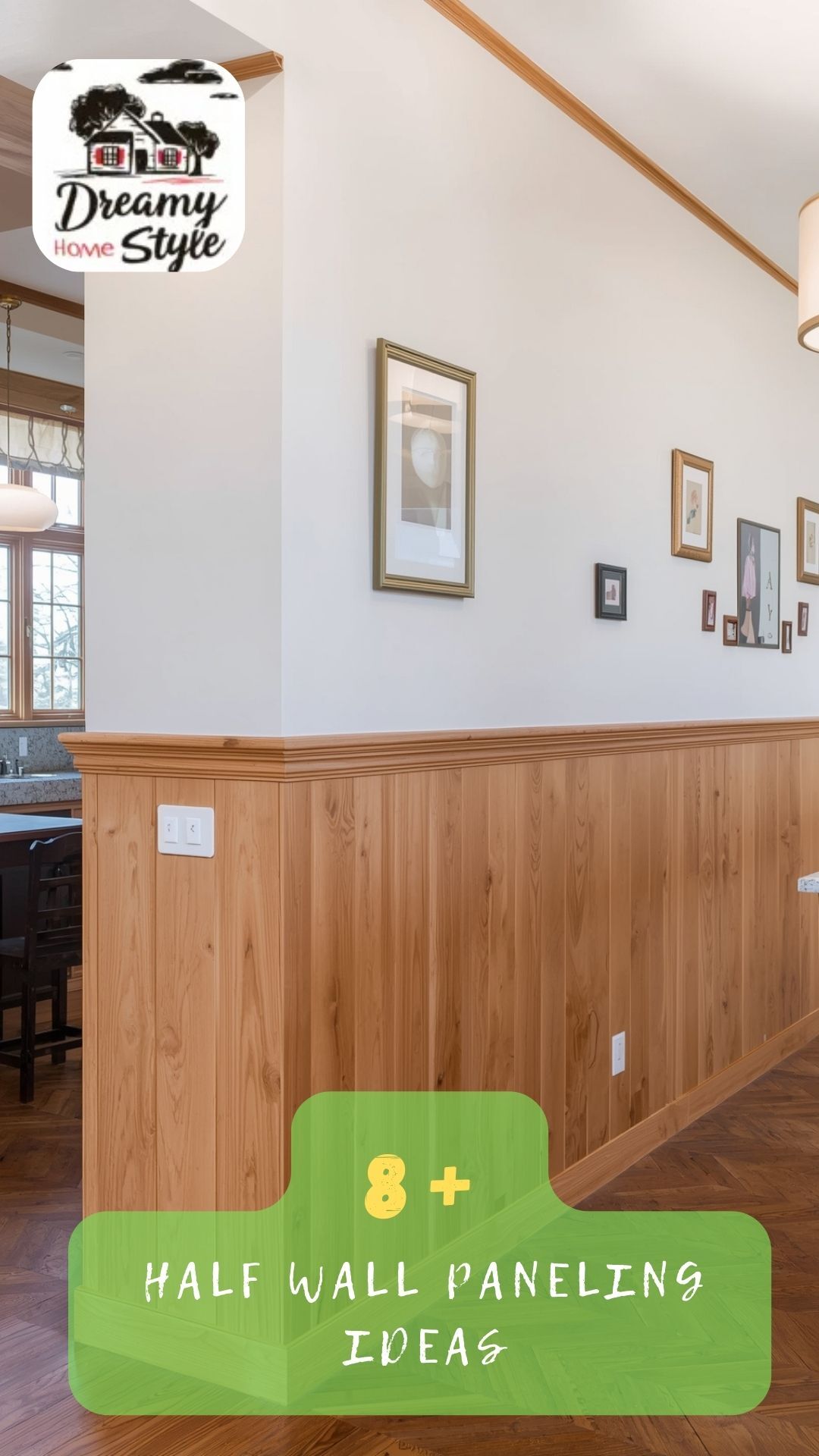
Half-wall paneling — sometimes called wainscoting — is essentially decorative wall treatment that covers the lower portion of a wall, usually from the floor up to about chair-rail height.
And it works for a reason that goes deeper than just “looking pretty.”

It creates visual weight at the bottom of a room, which actually makes ceilings feel taller.
It adds texture where the eye naturally lands first.
It gives a room that layered, curated look that’s so hard to achieve with paint alone.
I think of it like the baseboards of your dreams — but more.
When I tackled my own hallway a little while back, I kept wondering why the space always felt unfinished no matter what I did with the decor.
Half-wall paneling was the answer.
One weekend of work, and suddenly the hallway felt like it belonged in a house tour.
It’s that kind of detail that makes guests say, “Wait — did you renovate?” when you really just added some trim and paint.
That’s the quiet magic of paneling.
The Classic Shiplap Half-Wall That Never Gets Old


Shiplap is one of those things I thought I’d get tired of.
I was wrong.
Horizontal shiplap on the lower half of a wall still feels so fresh to me, especially when it’s painted in a warm white or a soft creamy tone.
The overlapping planks create this gentle shadow line that gives walls so much more dimension than flat paint ever could.
I love it most in living rooms and bedrooms — somewhere you spend a lot of time sitting and looking at the walls.
If I were doing a Cozy Reading Nook, shiplap below the chair rail with a soft sage or dusty blue above would be my first move.
One tip I swear by: paint the shiplap AND the wall above in the same color family, but with slightly different sheens.
The lower panels in a flat finish, the upper wall in eggshell.
It’s such a subtle trick, but it adds this beautiful depth that people notice without knowing why.
And honestly, the installation is more manageable than it looks.
Peel-and-stick shiplap options have come a long way, so you don’t always need a nail gun and a full weekend to make it happen.
Board and Batten: My Personal Favorite for a Reason

Okay, if I had to choose just one half-wall paneling style to live with forever — it would be board and batten.
No contest.
There’s something about those clean vertical lines that feels both classic and modern at the same time.
It’s structured but warm.
Polished but not cold.
Board and batten is essentially flat boards (the “boards”) with thin strips of wood (the “battens”) placed at regular intervals on top.
The result is this gorgeous geometric texture that looks incredibly high-end.
When I did this in my guest bedroom, I used wide-spaced battens so each panel section was quite generous.
Then I painted everything — walls, trim, battens — in one single moody color.
A deep dusty blue-green.
The whole thing looked like it cost ten times what it actually did.
I’ve seen board and batten done in super tight, narrow spacings for a more formal, traditional feel.
And I’ve seen it done wide and airy for a more relaxed, modern farmhouse vibe.
Both are absolutely beautiful.
You just pick what feels like you.
Beadboard: The Cozy Cottage Style I Can’t Stop Recommending

Beadboard has this sweet, slightly nostalgic quality that I absolutely adore.
It’s those narrow vertical grooves — very close together — that give it that distinctive cottage-y texture.
I think of beadboard as the warm hug version of paneling.
It’s soft, it’s charming, and it works in almost every room you can think of.
In a bathroom, it makes the space feel like an old New England inn — in the best way.
In a kitchen, it adds this quaint, farmhouse energy that feels incredibly inviting.
In a child’s room?
So dreamy.
If I had a small powder room, beadboard on the lower half with a fun, patterned wallpaper above would be my absolute go-to.
The contrast between the textured panels and the printed paper feels so layered and intentional.
One thing to know: beadboard panels come in full sheets now, so installation has gotten so much simpler.
You don’t need to painstakingly line up individual planks.
One sheet covers a good amount of wall, and the grooves give the illusion of individual boards.
Paint it crisp white for classic cottage, or go soft blush for something a little more romantic.
Either way, it’s a winner.
Going Bold: Dark and Moody Panel Colors That Stopped Me in My Tracks

For the longest time I thought paneling had to be white or off-white.
And then I saw a deep forest green half-wall in someone’s dining room and I nearly fell over.
It was stunning.
Dark, moody, rich panel colors are having such a wonderful moment, and honestly, they deserve to stay forever.
Charcoal.
Inky navy.
Deep burgundy.
Forest green.
Warm chocolate brown.
Any of these on the lower half of a wall creates this incredibly dramatic, cozy effect — especially in a room with good natural light.
The trick is to keep the upper wall lighter — a warm white, a pale linen, or even just a few shades lighter of the same color.
That contrast is what makes the paneling really sing.
In my own dining room, I went with a deep muted olive for the lower panels, and a creamy warm white above.
I paired it with brass hardware and warm pendant lighting.
The whole room now feels like the kind of place you want to linger over a long dinner.
Which is exactly the point.
Don’t be afraid of dark.
In the right space, it wraps you in the coziest way.
The Two-Tone Paint Trick That Makes Paneling Look Even More Custom

This is one of my favorite little hacks and I feel like not enough people talk about it.
When you install half-wall paneling, you automatically create a natural “break” in your wall — the chair rail or the top edge of the panels.
Most people paint everything one color and move on.
But the secret is using two distinct tones, separated at that exact break point.
Lower panels in one color.
Upper wall in another.
It sounds simple because it is — but the visual impact is huge.
My favorite combos right now: warm cream below, soft sage above.
Dusty rose below, warm white above.
Deep navy below, pale sky blue above.
The two-tone approach makes a room look so intentional.
So designed.
Like you hired someone, even when it was just you on a Saturday afternoon with a paint roller.
One rule I always follow: the lower panel color should be slightly deeper or richer than the upper wall.
It grounds the room, visually.
It makes the ceiling feel higher.
And it gives your paneling that architectural, custom-built feeling that everyone obsesses over in those home tour photos.
Half-Wall Paneling in the Hallway (The Transformation Is Unreal)

Hallways are the most overlooked spaces in a home.
They’re usually narrow, usually plain, and usually just something you walk through without thinking.
But here’s what I’ve learned: a well-done hallway actually sets the tone for your entire home.
And half-wall paneling is the single best thing you can do for a plain, forgettable hallway.
When I added board and batten to my own narrow hallway, the change was genuinely shocking.
It went from a passageway to a moment.
It felt like the kind of hallway you slow down in.
The kind that makes you feel like the rest of the house is going to be just as beautiful.
For narrow hallways, I’d suggest keeping the paneling color soft and light — creamy whites, warm taupes, soft putty tones.
Darker colors in a very narrow space can feel a bit closed in.
But light paneling with a slightly richer upper wall color?
Perfect balance.
Add a small console table, a mirror to bounce light, and a little runner on the floor, and you’ve got a hallway that looks like it belongs in an interior design feature.
For real.
Bathroom Paneling That Feels Elevated and Spa-Like

Bathrooms are one of my absolute favorite places to add half-wall paneling.
Especially in a space where you want to feel a little pampered.
Beadboard is the classic choice here, and it works beautifully — especially painted in a soft white or a barely-there grey.
But I’ve been loving board and batten in bathrooms lately too.
There’s something about those clean vertical lines in a spa-like bathroom that feels so serene.
For a primary bathroom, I’d go with paneling in a warm greige or a misty soft sage.
Keep the upper wall in a complementary lighter tone.
Add some unlacquered brass fixtures and soft cotton towels, and the whole room feels like a boutique hotel.
One thing to be mindful of in bathrooms: moisture-resistant materials.
MDF paneling is fine in a powder room where there’s minimal moisture.
But for a shower-adjacent or high-humidity bathroom, go with PVC trim or moisture-resistant MDF.
It lasts so much longer, and you won’t have to deal with swelling or warping.
The effort you put into material choice upfront saves you so much headache later.
Trust me on that one.
Dining Room Paneling That Makes Every Meal Feel a Little More Special

There is something about a beautifully paneled dining room that makes you want to set the table properly.
Light the candles.
Use the good dishes.
I don’t know how a wall treatment does that, but it does.
Panel molding — sometimes called picture frame molding or shadow box paneling — is my top pick for dining rooms.
It’s the more formal, traditional cousin of board and batten.
Instead of continuous vertical battens, you get individual rectangular frames arranged in a grid pattern along the lower wall.
It’s elegant.
It’s architectural.
And it has this quality that makes a dining room feel like a dedicated, special space — not just a room you eat in.
I’d pair panel molding with a deep, saturated wall color: a rich teal, a moody plum, or a warm terracotta.
Add a statement light fixture above the table, some tapered candles, and linen napkins.
The room will feel transformed.
If you’re doing this yourself, investing in a good miter saw and taking your time on the corners is so worth it.
Crisp, clean corners are what make this style look truly polished.
Staircase Paneling That Makes You Pause on the Way Up

I saved staircase paneling for its own section because it deserves it.
It’s one of the most impactful places in the whole house to add paneling — and one of the most underused.
Think about it: your staircase wall is one of the longest, most visible wall runs in your home.
And most of the time, it’s just… a plain wall with a railing.
Adding half-wall paneling alongside a staircase — either board and batten or panel molding — creates this incredible sense of arrival.
Of going somewhere intentional.
The staircase becomes part of the design, not just a functional element.
For a classic look, I love crisp white board and batten on the staircase wall, with a dark stained wood railing and a patterned runner up the stairs.
That contrast between the clean white panels and the warm wood is just gorgeous.
If you want something more modern, try wide-spaced battens in a sophisticated greige or warm taupe.
Keep everything else simple and let the paneling carry the moment.
Staircase paneling is also a fantastic weekend DIY project — one of those things that looks complicated but is actually very approachable once you map it out.
My Honest Tips for DIY Half-Wall Paneling (From Someone Who’s Done It)

Let me be real with you for a second.
Half-wall paneling is one of the most beginner-friendly DIY projects out there.
But there are a few things I wish someone had told me before I started.
First: measure obsessively.
Even small miscalculations compound quickly when you’re spacing battens across a full wall.
Spend twice as long on the measuring phase as you think you need to.
Second: caulk is your best friend.
Every seam, every corner, every place where trim meets wall — caulk it.
That’s what separates a professional-looking result from something that just looks “DIY.”
Third: paint everything before you nail it up, then touch up after.
It’s so much easier to paint individual pieces on the floor or a workbench than to carefully cut in around them on the wall.
Fourth: don’t rush the priming step.
Raw MDF and wood trim soak up paint like a sponge.
If you skip primer, you’ll end up doing three or four coats of your topcoat.
One good coat of primer makes everything smoother, more even, and honestly just easier.
And finally: take your time at the corners.
Outside corners especially.
A sharp, tight mitered corner is the detail that makes everything look intentional and custom.
Styling the Space Above Your Panels (Because the Upper Wall Matters Too)

Okay, so your paneling is up and it looks beautiful.
Now what goes above it?
This is where I see people sometimes lose momentum — they nail the panels and then leave the upper wall feeling a little blank and unfinished.
So here are my favorite ways to style above half-wall paneling.
Gallery walls work beautifully above paneling.
The panels create a natural “anchor” at the bottom, so the gallery feels intentional and grounded, not floating.
Wallpaper above the panels and painted paneling below is one of my favorite combinations.
The contrast in texture — smooth printed paper above, dimensional trim below — is so rich and layered.
A single large piece of art centered on the wall, sitting just above the chair rail, feels incredibly striking.
Especially in a dining room or bedroom.
Sconces placed on the upper wall, just above the paneling line, add such warm, cozy light to a space.
And they draw the eye up, which is always a good thing.
The panel line also works as an unofficial floating shelf line.
You can mount a ledge shelf right at or just above the top of your panels to display objects, books, or small plants.
It feels so natural and purposeful.
The upper wall is part of the story too — don’t forget it.