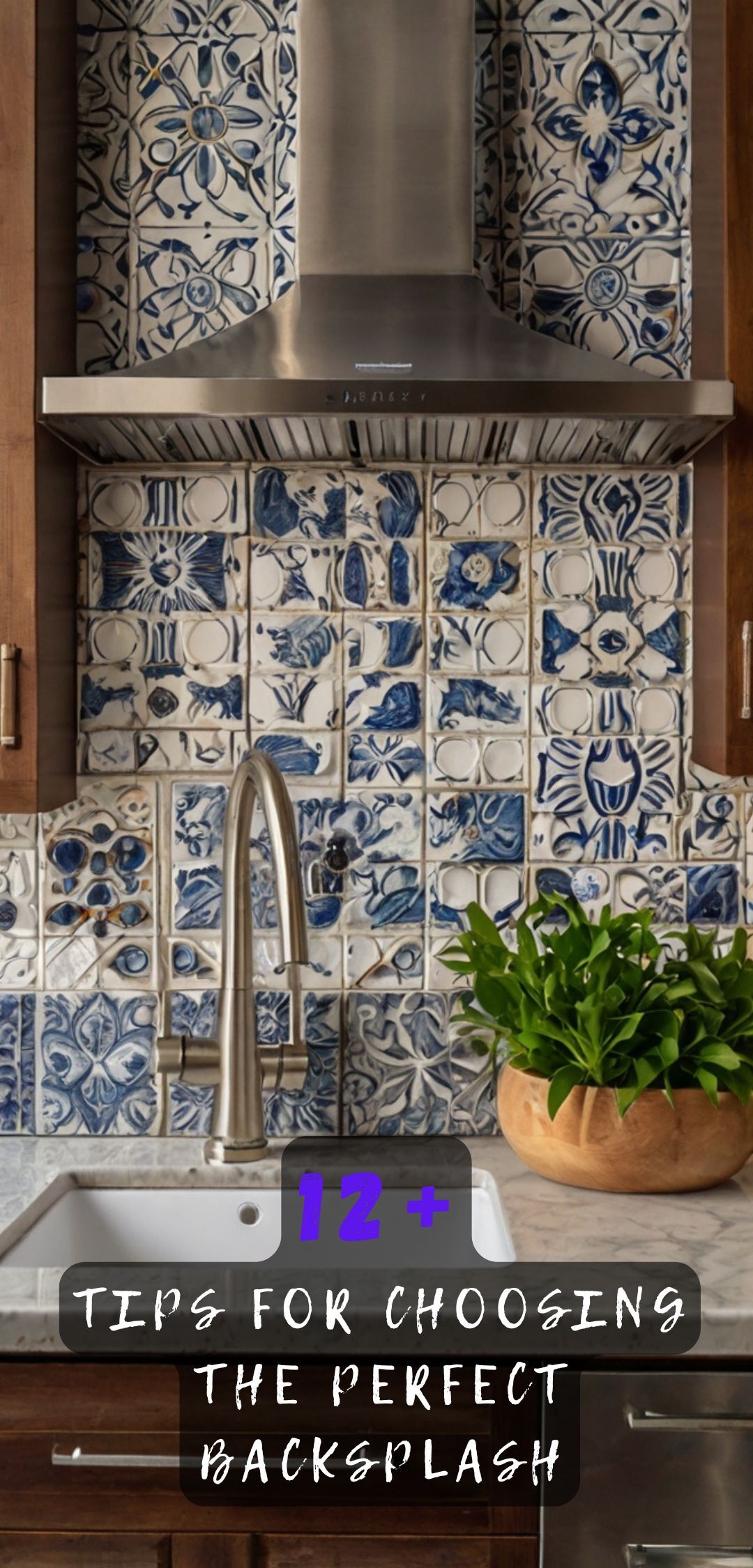

More than just protecting your walls from splashes and stains, the backsplash serves as a major decorative focal point in the kitchen.
Choosing it, however, is about so much more than decoration.
It’s about creating a harmonious backdrop for your daily life—the quiet morning coffee, the chaotic family dinners, the heart-to-hearts while you cook.
The right backsplash should support these moments, not distract from them.
That means considering how the color affects the room’s energy, how the texture interacts with light throughout the day, and how the material feels under your gaze while you’re at the sink.
It’s the art of balancing beauty with serene functionality!

Select a Durable, Low-Maintenance Material


The first key consideration when selecting a kitchen backsplash is choosing a material that is durable, long-lasting, and easy to clean.
Nothing dates a kitchen faster than a splattered, stained, or cracked backsplash.
I always recommend homeowners opt for low-maintenance, resilient materials that can stand up to bumps, spills, and daily wear-and-tear.
Ceramic and porcelain tile are my top backsplash material recommendations.
Available in a vast array of colors, patterns, shapes, and textures, ceramic and porcelain tiles are water-resistant, easy to wipe clean, and hold up well over time.
The hard, non-porous composition prevents staining and resists scratches and chips.
Just be sure the tiles are properly sealed.
Glass tile is another durable and stylish backsplash option.
Made from recycled glass, these tiny mosaic tiles have an opulent, shiny appearance.
The smooth surface wipes clean seamlessly.
Just take care to avoid heavy pans or dropped cookware that could shatter the tile.
Natural stone like granite, marble, and travertine also makes a luxe backsplash choice.
The thick stone slabs offer good stain resistance and a timeless, elegant look.
However, natural stone is prone to etching from acidic foods and requires yearly sealing.
Metals like stainless steel, copper, and tin add a contemporary, industrial vibe, though they dent easily and show water spots.
Epoxy resin backsplashes are also growing in popularity – the glossy, molded panels are non-porous and highly stain resistant.
No matter which material you select, be sure it has properties that will withstand the messiness of food prep.
Choose a Color Palette that Complements Your Design Style


The backsplash presents a prime opportunity to inject color and vibrancy into your kitchen’s design.
When selecting backsplash tile, glass, or stone, think about a color scheme that complements your overall decorative style.
For traditional kitchens, stick with classic white, off-white, or neutral backsplashes.
This clean, timeless palette pairs nicely with ornate crown molding, raised panel cabinets, and stainless steel appliances.
Warm metal copper backsplashes also work well in old world style cooking spaces.
Contemporary kitchens can handle bold, dynamic backsplash colors like navy blue, rich teal, or moody eggplant purple.
These dramatic hues pop against sleek cabinetry and modern metallic or industrial finishes.
Rustic farmhouse kitchens look best with comforting, earthy backsplash colors like terracotta, mustard yellow, sage green, or brick red.
Handmade subway tiles, unfinished wood, and textural natural stone also align with the casual farmhouse aesthetic.
Eclectic kitchens offer the chance to get creative – mix and match different tiles or glass sheets in contrasting colors and patterns for funky retro flair.
Vintage turquoise, retro orange, lime green, and neon pink are fun options.
Select a Shape and Pattern That Complements Your Cabinetry

Beyond color, the shape and pattern of your backsplash tiles or panels will also impact the kitchen’s overall aesthetic.
When selecting a shape and pattern, it helps to consider your cabinetry style.
For contemporary kitchens with sleek, handleless cabinetry, large format rectangular subway tiles, wide planks, or solid glass panels create a seamless, minimalist look.
Farmhouse kitchens with visible wood grain benefit from square penny tiles, hexagons, chevrons, or geometric designs.
Stacked brick patterns also complement shaker-style cabinetry.
Transitional spaces can incorporate interesting herringbone patterns, decorative accents like marble inserts, or combination shapes.
Frameless cabinetry provides the perfect clean backdrop to display more ornate tile designs.
Match the backsplash shape and pattern to the lines, textures, and accents present in your cabinetry.
The goal is a cohesive, holistic feel.
If your cabinetry is ultra-sleek, avoid a heavily patterned or ornate backsplash.
Zone the Backsplash to Functionality

Since the kitchen backsplash is located directly behind countertops, sinks, and stoves, it takes a hefty functional beating.
When designing a backsplash, think about zoning it according to the different work areas.
Use the most durable, resilient backsplash materials behind the messy cooktop or range area.
Materials like metal or stone can withstand excessive heat.
Over the sink, water-resistant glass, marble, or ceramic works best.
In areas prone to oils, acids, or stains, like behind prep zones or the range, opt for heavily textured backsplash materials like pebbled glass or tumbled stone.
The rough surface helps disguise spills and splatters between cleanings.
Consider wipe-cleanability too – highly polished tiles or glass are easiest to keep pristine when situated over workhorse areas.
Zone the backsplash according to which materials make most sense functionally given the kitchen’s layout.
Don’t be afraid to mix up materials, colors, or textures either.
Glass over the sink provides elegant contrast next to brick-patterned tile behind the stove.
Let the backsplash design enhance each work zone.
Use Lighting to Showcase the Backsplash


Proper kitchen lighting serves both a functional and aesthetic purpose.
Give your stunning new backsplash the spotlight it deserves with strategic lighting techniques.
Incorporating led strip lighting above the backsplash or underneath upper cabinets casts a soft, diffused glow to illuminate and accentuate the tiles or panels.
Small directional puck lights aligned vertically along the backsplash also put the focus directly on this design feature.
For glass or mirrored backsplashes, sconces flanking the backsplash bounce ample light around the kitchen.
You can even incorporate lighting within the backsplash design itself – some tile, glass, or stone materials come fitted with LED strips or fiber optic cables that emit a glittering displayed when illuminated.
No matter which lighting approach you use, the goal is to bathe the backsplash in a warm, diffused glow.
Proper lighting transforms the backsplash from a background element into a dazzling design focal point.
Consider Open Shelving Instead of Upper Cabinets

One emerging trend that lets the backsplash steal the show is foregoing upper cabinets in favor of open shelving.
Removing upper cabinets gives the backsplash breathing room to become the design star.
Open shelving also makes kitchens feel airier and less closed-in.
The floating shelves maintain function while opening up sight lines and adding stylistic flair.
For a lighter, more modern aesthetic, offset open shelving made from sleek metal, glass, or reclaimed wood against a colorful statement backsplash.
You can also incorporate matching shelving and backsplashes made from natural wood.
Or try open shelves flanking a solid backsplash for contrast through materials and shapes.
Leaving wall space open above the backsplash prevents a cluttered, heavy look.
Open shelving styles the kitchen, highlights the backsplash, and keeps the space feeling relaxed.
Consider 3D Elements for Added Dimension


While most backsplashes utilize two-dimensional tile, glass, or solid panels, incorporating textural 3D elements adds enticing depth and visual interest.
3D backsplash features quite literally pop off of the wall.
Subway tiles with beveled edges catch and reflect light for added dimension.
Bubble glass tile contains encapsulated air pockets that create a textural, rippled effect.
Small 3D details like decorative tile accents, molded medallions, or geometric tile patterns generate shadows and architectural interest against the backsplash surface.
For a more dramatic 3D statement, try projection tile.
These tiles angle outward from the wall anywhere from 1” to 5”.
Projection tiles create a cool cascading effect.
If your style is more avant garde, experiment with overlapping and stacking different tile shapes to build asymmetrical 3D backsplash collages.
Incorporating angles, shadows, and layers transforms the backsplash into a focal feature.
3D elements add depth and make the backsplash pop visually.
Look to Nature for Organic Inspiration

Nature provides an abundant source of organic shapes, textures, and soothing colors that can inspire beautiful, unique backsplash designs.
Bring the splendor of the outdoors into your kitchen with natural stone, wood, or plant-mimicking tile.
Slate backsplashes in deep forest greens and weathered grays evoke the elemental beauty of moss-covered rocks and lichen.
Emulate the cracked bark of trees with textural 3D ceramic tiles.
For a touch of seaside tranquility, look to mother of pearl mosaic tiles in shimmering ocean blue and silver tones.
Their nacreous ripple effect recalls the Zen-like flow of waves.
Most organically, actual preserved mosses, leaves, ferns, or flowers can be set under glass or resin to craft truly naturalistic backsplashes.
Infuse Personal Style with DIY and Mural Backsplashes

For the ultimate personalization, try crafting a DIY or mural backsplash.
Both allow you to impart a touch of uniqueness through creative custom designs.
DIY backsplashes enable you to achieve any imaginable color scheme.
Purchase inexpensive, neutral base tiles and paint, stencil, or sponge them in any array of colors and patterns.
Add hand-painted accent tiles showcasing your favorite flowers, fruits, or other motifs.
Installing tile loose also makes it easy to swap out and update painted tiles down the road.
Get as creative as you want for a decidedly handmade backsplash.
Murals utilize large format image transfers, allowing you to display favorite photos, art, or scenery across your backsplash.
Companies like Plak It Backsplash let you simply submit images to be printed onto glass, metal, or tile panels.
For a playful cottagecore vibe, try a scenic forest or garden mural.
An abstract pattern or vibrant cityscape channels modern flair.
You can even design an artistic mosaic backsplash collage.
DIY or mural backsplashes let you put a completely personal spin on this kitchen feature.
Don’t be afraid to think outside the tile with these creative mediums.
Design Your Ideal Heights and Dimensions

Standard backsplash heights range anywhere from 4” for minimalist spaces up to 30”+ for full wall coverage.
As the designer, you get to determine the ideal height and dimensions based on your aesthetic vision and functional needs.
Frameless cabinetry and open shelving lend themselves to floor to ceiling backsplash installations.
This creates a sleek built-in look with the backsplash acting as an extension of the wall.
For smaller kitchens, a full wall backsplash optically expands the space.
In workhorse sections like behind sinks and ranges, extend the backsplash a bit lower and higher than the standard 18”-20” range.
This added coverage protects more of the wall from inevitable drips and splatters.
Conversely, a shorter height around 8”-12” works for portions that don’t require heavy duty shielding, like above a banquette.
Mix and match heights and dimensions throughout the kitchen.
Get creative with unique shapes too – try framing out the window over the sink with a backsplash frame or alternating between short and tall lengths.
Don’t allow conventional size constraints to limit your vision.
Design a fully customized backsplash catered to your precise layout.
Incorporate Specialty Cabinetry and Storage


The area directly surrounding the backsplash presents opportunities to include specialized cabinetry and storage integrated right into the design.
For wine lovers, specialty wine racks mounted horizontally along the backsplash provide perfect display storage.
Floating plate racks also make an ideal pairing to store and exhibit your best dinnerware.
Incorporate pull-out vertical spice racks or open shelving to keep cooking essentials within arm’s reach.
Task lighting under cabinets casts a useful glow onto the backsplash’s work areas.
You can even include electrical outlets or charging stations seamlessly built into the backsplash tile.
Window seats, banquettes, or varied counter heights surrounding the backsplash cater to comfortable, ergonomic food prep.
Take a thoughtful approach to specialty storage and cabinetry abutting the backsplash.
Integrated elements customize the space and enhance functionality.
Balance Simplicity and Complexity

When designing your ideal backsplash, aim to strike the perfect balance between simple and complex.
An overly busy backsplash competes visually and feels less relaxing.
An utterly minimalist one lacks personality.
The goal is winning combination of basic bones and thoughtful detailing.
For most kitchens, a simple consistent base tile color punctuated with more elaborate accents hits the right note.
Navy Blue Subway Tile with a bold, Moroccan floral inset over the stove for instance.
Or thick white marble slabs with thin gray marble stripes and trim.
Likewise, stick to a straightforward tile shape like bricks or hexagons, and weave in complementary mosaic shapes and textures.
The eye appreciates a mix of patterns.
Think about bars, shelves, windows or other architectural elements intersecting the backsplash.
Use those junctions to reset the design with a change in color or pattern.
Guide the eye without overwhelming.
Let the backsplash excite without visually exhausting.
Savvy combinations of simple foundations and judicious adornment yields optimal aesthetic results.
Don’t Overlook Small Appliance Backsplashes

In designing a kitchen backsplash, it’s easy to focus solely on the large continuous expanse behind countertops.
But don’t overlook the backsplashes of standalone small appliances too.
Refrigerator backsplashes provide a great place to incorporate personalized magnets or notes.
For a more finished look, add tile or panels that match or complement the main backsplash.
Islands and movable carts used for meal prep also warrant protective, portable backsplashes.
Opt for durable enameled metal or slip-resistant plastic panels.
If your kitchen layout includes a separate beverage center, mini bar, or coffee station, give each niche its own unique backsplash.