
Your TV deserves better than sitting on a basic stand collecting dust and tangled cables.
Built-ins around your television can completely transform your space from cluttered to magazine-worthy, and the best part is that modern designs work with any style from minimalist to farmhouse.
Here are incredible ideas that’ll turn your TV wall into the ultimate focal point.
The Floor-to-Ceiling Minimalist Dream


You’ve probably scrolled past those sleek, all-white built-ins on Pinterest a thousand times and thought they only exist in designer showrooms.
The floor-to-ceiling minimalist built-in brings that same clean aesthetic right into your living room, creating an unbroken vertical line that makes your ceilings feel miles higher than they actually are.
This design wraps your TV in seamless cabinetry that extends from the floor all the way up to the ceiling, usually in a single color that blends with your walls.
The magic happens when you keep everything handleless and push-to-open, eliminating any visual clutter that might distract from the clean lines.
Your TV sits perfectly centered, often recessed slightly into the unit so it looks like it’s floating in a custom-cut frame.
On either side, you’ll have closed storage cabinets below for all those random things you need to hide – gaming consoles, DVD collections you swear you’ll watch again, and the seventeen remote controls that somehow accumulated over the years.
Above and beside the TV, open shelving breaks up the monotony and gives you space to display your personality through books, plants, or that quirky art piece you picked up on vacation.
The key to nailing this look is proportion – you want the TV to take up about one-third of the total wall space, leaving plenty of room for the built-ins to frame it without overwhelming the screen.
Paint everything in a soft white, warm gray, or even a bold charcoal if you’re feeling adventurous, and make sure you integrate LED strip lighting inside those open shelves.
The lighting creates depth and dimension when you’re watching movies at night, and it highlights your displayed items without needing additional lamps cluttering up your space.
You can customize the shelf configuration to fit your exact needs, maybe adding a few deeper shelves for sound equipment or a dedicated spot for your vinyl collection.
This design works incredibly well in modern and contemporary homes, but you can also adapt it to transitional spaces by choosing warmer wood tones instead of painted finishes.
Tap to Explore These Beauties
See my ideas in action 👇 Tap any image to explore full details.
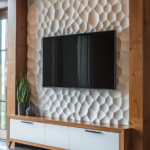
The Rustic Wood and Metal Industrial Combo


Your living room doesn’t have to choose between cozy and edgy when you can have both with an industrial-style built-in.
This design combines raw wood elements with metal accents to create that trendy warehouse-loft vibe that’s been dominating home design magazines for the past few years.
Picture thick, chunky wood shelves made from reclaimed barn wood or rough-cut lumber that still shows all its natural character marks and knots.
These shelves sit on black metal brackets or frames that look like they came straight from an old factory, giving you that perfect balance between organic warmth and urban coolness.
Your TV mounts directly to a wood plank wall or sits on a substantial wood console that anchors the entire unit with serious visual weight.
The asymmetry in this design is what makes it so interesting – you might have three open shelves on one side of the TV and just one large cabinet on the other, creating an intentionally unbalanced look that feels curated rather than cookie-cutter.
Metal pipe shelving can work into the design as well, especially if you want to create a more three-dimensional effect where some shelves protrude further from the wall than others.
💭 Ever wondered what your room would actually look like rearranged?
I built a free tool that lets you drag furniture around a 2D floor plan. No signup, no catch.
See the Room Planner →You’ll want to embrace the imperfections in this style rather than hiding them, so don’t sand down every rough edge or fill every crack in the wood.
The contrast between the dark metal and the lighter or medium-toned wood creates natural visual interest without needing a ton of accessories to fill the shelves.
This built-in works beautifully with exposed brick walls, concrete floors, or any space that already has some industrial bones to build on.
Your storage options in this design tend to be more open than closed, so you’ll display more and hide less – perfect if you’ve got a curated collection of books, vintage cameras, or interesting objects you’ve collected over time.
Add some Edison bulb fixtures or metal cage pendant lights hanging near the unit to emphasize the industrial theme throughout the whole wall.
The beauty of this approach is that you can DIY a lot of it yourself if you’re handy, sourcing reclaimed wood from salvage yards and buying pipe fittings from the hardware store.
The Symmetrical Traditional Built-In Library

You walk into rooms with floor-to-ceiling bookshelves flanking a fireplace and feel that instant sense of sophistication and old-world charm.
That same feeling translates perfectly when you create symmetrical built-in bookshelves around your TV, transforming your media center into something that looks like it belongs in a historic home library.
This design is all about balance and classical proportions, with identical shelving units on both sides of your television creating a mirror image effect.
Your TV sits in the center, often surrounded by a decorative trim or crown molding that elevates it from a simple black rectangle to an intentional design element.
The shelves themselves typically feature traditional details like dentil molding along the edges, raised panel doors on the lower cabinets, and maybe even some decorative corbels supporting the longer shelves.
You’ll want to paint the entire unit in a rich color that adds depth to your room – deep navy, forest green, or classic black all work beautifully and make your displayed items pop against the dark background.
Alternatively, a crisp white built-in creates that fresh, airy feeling while still maintaining all the traditional architectural details that make this style so timeless.
The key to making this work with a TV instead of a fireplace is treating the television with the same respect you’d give to a piece of art in a gallery.
You might frame it with decorative molding that creates a “picture frame” effect around the screen, or recess it slightly so it sits flush with the surrounding shelving.
Interior lighting within the cabinets highlights your book collection and creates that warm, inviting glow that makes the whole room feel more luxurious and lived-in.
Glass-front cabinets on some of the upper sections add another layer of traditional detail while protecting your most precious books or collectibles from dust.
The lower cabinets with solid doors give you plenty of hidden storage for all the less attractive necessities like cable boxes, gaming systems, and those random electronics that don’t deserve to be on display.
You can adjust the shelf heights to accommodate everything from tall coffee table books to your collection of vintage hardcovers, making the unit both beautiful and functional.
This style works particularly well in colonial, craftsman, or traditional homes where the architectural details of the built-in can echo the existing trim and molding throughout your house.
Find Your Room's Color Palette
Tap a vibe — get a curated 5-color palette with hex codes you can copy ✨
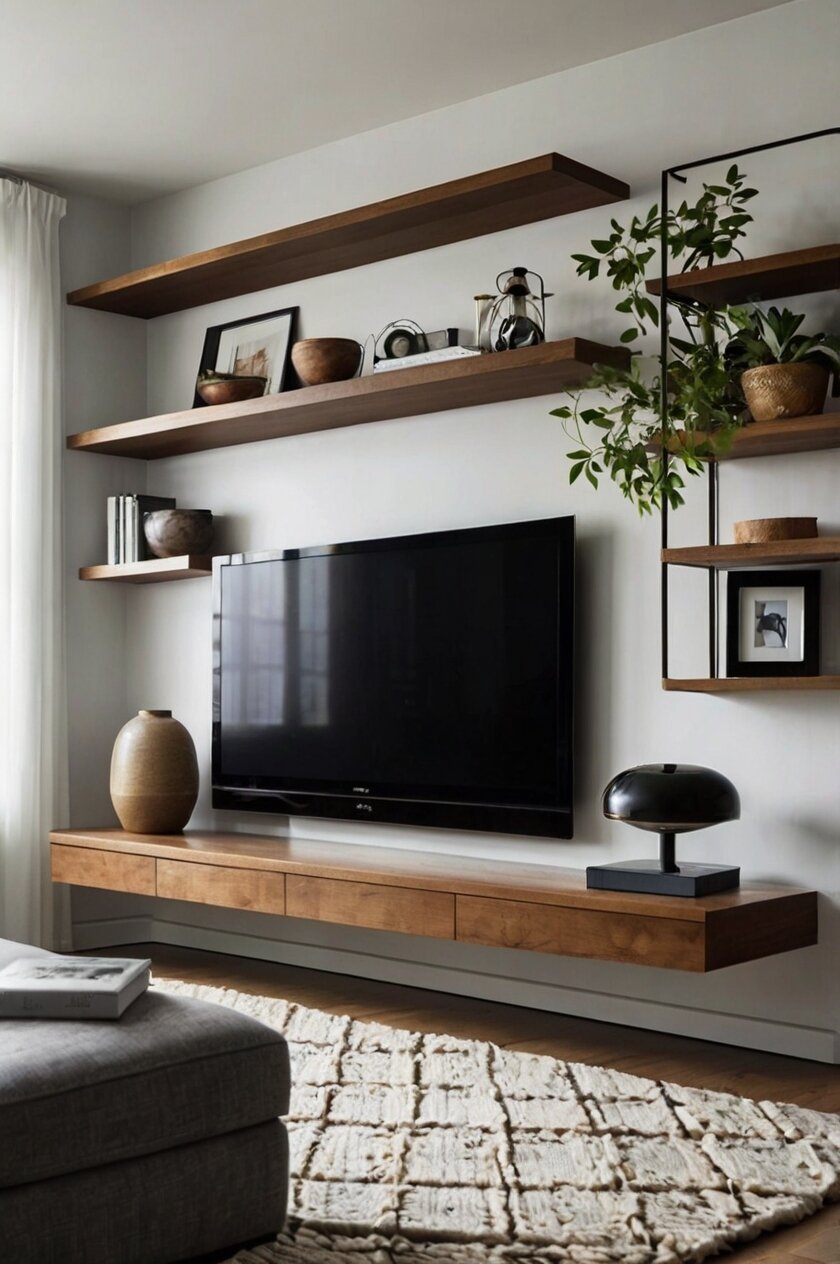
The Floating Shelf Minimalist Setup

You love the idea of a built-in but don’t want to commit to a massive furniture piece that takes over your entire wall.
Floating shelves around your TV give you that custom built-in look without the permanence or the visual weight of a full cabinet system.
These shelves appear to hover on the wall with no visible brackets or supports, creating clean horizontal lines that frame your television on the top, bottom, and sides.
Your TV wall mounts flush to the wall, and then you strategically place floating shelves above and below it, sometimes adding vertical shelves on either side to create a geometric frame effect.
The beauty of this approach is its simplicity – you’re not building out from the wall with deep cabinets, so the whole setup maintains a sleek, streamlined profile that works even in smaller rooms.
You can play with different shelf lengths and positions to create an asymmetrical arrangement that feels modern and artistic, or keep everything aligned and symmetrical for a more structured look.
Wood floating shelves in walnut, oak, or lighter woods add warmth to the space, while white or black shelves create a more contemporary feel that blends seamlessly with your walls.
The challenge with floating shelves is that everything stays on display, so you’ll need to be more intentional about what you put on them and how you arrange those items.
💭 I Wrote a Book About My Biggest Decorating Mistakes!
When I decorated my first home, I thought I knew what I was doing. Spoiler: I didn't. 😅
💸 I bought a sofa way too big for my living room. Paint colors that looked amazing in the store but terrible on my walls.
This design forces you to edit your belongings down to only the things that are either beautiful or meaningful, which actually creates a more peaceful, less cluttered living environment.
You can add small baskets or boxes on some of the shelves to corral smaller items while still maintaining that clean aesthetic throughout the arrangement.
Cable management becomes super important with this style since you don’t have closed cabinets to hide all those wires – invest in cable raceways that match your wall color or run the cables through the wall for the cleanest possible look.
The floating shelf approach works brilliantly in modern, Scandinavian, or contemporary spaces where less is definitely more and you want the focus to stay on your carefully curated decorative objects.
Your shelves can hold a mix of books stacked horizontally, small plants in interesting planters, framed photos, and maybe a few sculptural objects that add visual interest without creating clutter.
This is also the most budget-friendly option on this list since you’re just installing shelves rather than building custom cabinetry, making it perfect if you’re working with a tighter budget but still want a designer look.
The Hidden TV Cabinet Reveal

You’re tired of your TV being the first thing everyone sees when they walk into your living room, but you still want it accessible for movie nights.
The hidden TV cabinet gives you the best of both worlds – a gorgeous built-in that looks like a regular bookshelf or storage unit until you open it to reveal your screen.
This design typically features large cabinet doors that close over your TV when you’re not using it, completely concealing the screen behind what looks like regular storage cabinets.
Your doors might be solid wood panels that match the rest of your cabinetry, or they could be decorative with intricate millwork that makes them a focal point in their own right.
Some versions use sliding barn doors that glide on a track to cover or reveal the TV, adding a farmhouse or rustic element to the overall design.
Others incorporate bi-fold doors that fold back accordion-style when opened, taking up less space than traditional swinging doors when the TV is in use.
The key to making this work is ensuring your doors are easy to operate – you don’t want to struggle with stuck doors or complicated latches every time you want to watch something.
Soft-close hinges make opening and closing the doors feel luxurious and prevent the loud slamming that can happen with regular cabinet doors.
You’ll need to make sure your cabinet is deep enough to accommodate your TV plus any ventilation space it needs to prevent overheating, which usually means building the entire unit out from the wall by at least 8-10 inches.
The surrounding built-in can include open shelving, closed cabinets, or a combination of both, creating a cohesive furniture piece that serves multiple storage functions beyond just hiding your television.
This approach works beautifully in formal living rooms or multi-purpose spaces where you want the room to serve different functions at different times – a sophisticated sitting room during dinner parties and a cozy media room for family movie night.
You can integrate your sound system into the same cabinet, with speakers hidden behind decorative grilles that match the door fronts, so your entire entertainment system disappears when not in use.
The aesthetic you choose for the cabinet doors completely dictates the style of the room – shaker-style doors create a traditional feel, flat-panel doors lean modern, and louvered doors add a coastal or tropical vibe.
What's Your Decor Personality?
5 questions · 30 seconds · Instant style match 🏡
The Open and Closed Storage Combo


You need places to hide the ugly stuff while also wanting to display your favorite books and decorative pieces.
The mixed storage built-in combines closed cabinets with open shelving in a single unit, giving you the flexibility to choose what stays visible and what gets tucked away.
This design typically stacks closed storage cabinets along the bottom portion of the unit where they’re most practical for heavy items and things you don’t want on display.
Your TV sits at the perfect viewing height – usually with the center of the screen at eye level when you’re sitting on your couch – surrounded by more storage options.
Above the TV and extending to the ceiling, open shelving takes over and gives you those display opportunities that make a built-in feel personal and curated rather than just functional.
The closed cabinets can feature solid doors, glass-front doors, or even a mix of both depending on what you’re storing inside them.
You might put solid doors on cabinets that hold board games, extra blankets, photo albums, and electronic equipment, while glass-front cabinets could showcase your favorite collectibles or a beautiful set of dishes.
The open shelves work best for items you reach for frequently or things that add to your room’s aesthetic – books arranged by color, plants that bring life to the space, or travel souvenirs that tell your story.
This mixed approach prevents the built-in from feeling too heavy and closed off, which can happen when you do all closed cabinets, while also avoiding the cluttered look that sometimes comes with all open shelving.
You can play with the proportions to match your personal needs – maybe you need 70% closed storage and only 30% open display, or maybe you’re the opposite and want to show off most of your belongings.
The arrangement possibilities are endless, from symmetrical designs where both sides of the TV mirror each other, to asymmetrical layouts where one side is mostly open and the other is mostly closed.
Different depths add even more visual interest – you might have some deeper cabinets that protrude further from the wall for bulkier storage, while other sections stay shallow and flush to maximize floor space.
Adding interior lighting to the open sections makes them glow at night and draws attention to your displayed items, creating ambiance in the room beyond just the TV’s light.
You can customize the number and placement of shelves in the open sections to perfectly fit your belongings, avoiding that awkward situation where items are either too tall or too short for the space.
This versatile design works with virtually any decor style from modern to traditional, and you can adapt the details – hardware, molding, finish – to match your home’s existing architecture.
The Corner TV Built-In Solution

Your room layout puts you in an awkward position where the corner is actually the best spot for TV viewing, but corner TV stands always look cheap and afterthought-ish.
A custom corner built-in transforms that tricky space into a legitimate focal point that looks intentional and sophisticated rather than like you just ran out of wall space.
This design wraps around two walls meeting at a corner, with the TV positioned at an angle to face into the room for optimal viewing from your seating area.
Your cabinetry extends along both walls in an L-shape or wraps the corner in a curved design that softens the angular architecture of the space.
The TV section itself usually angles out from the corner at about 45 degrees, creating a natural focal point that draws the eye and makes the corner the star of the room rather than dead space.
Shelving and cabinets on both sides of the TV provide tons of storage without taking up any precious wall space on your room’s main walls, leaving them free for windows, artwork, or other furniture.
The corner position actually creates a more intimate viewing experience since the TV is nestled into the space rather than dominating a full wall, which can feel overwhelming in smaller rooms.
You can incorporate lighting under shelves, behind the TV, or inside glass-front cabinets to eliminate the dark cave-like feeling that corners sometimes have.
The built-in can extend as far along each wall as you need – maybe just two feet on each side in a smaller room, or six feet or more in a larger space where you need maximum storage.
Open shelving works particularly well in corner built-ins because it prevents the unit from feeling too heavy or making the corner feel closed off from the rest of the room.
Your bottom cabinets can include pull-out drawers or shelves that make it easier to access items stored in the corner depths where things might otherwise get lost and forgotten.
This approach solves one of the trickiest layout challenges in home design while creating a unique architectural feature that you won’t find in every house on the block.
The corner built-in works especially well in family rooms, bedrooms, or finished basements where the room shape doesn’t lend itself to traditional wall-mounted TV placement.
This or That?
Pick your fave — see what other readers chose! 👀
The Backlit Modern LED Feature Wall

You want your TV wall to look like it belongs in a luxury penthouse or a high-end electronics showroom.
The LED backlit built-in creates that ultra-modern, techy atmosphere by incorporating LED strip lighting throughout the unit to highlight architectural features and create a soft glow that reduces eye strain during viewing.
Your TV mounts to a panel that itself is backlit with LED strips running along the perimeter, creating a halo effect around the screen that looks incredible when the room lights are dimmed.
The surrounding built-in incorporates more LED lighting inside shelves, under cabinets, behind glass doors, and along the top and bottom edges of the entire unit.
This isn’t just decorative – the backlighting serves a functional purpose by reducing the contrast between the bright TV screen and the dark room, which makes watching TV more comfortable and less fatiguing for your eyes.
You can install smart LED strips that change colors through an app on your phone, letting you shift the mood from cool blue for movie watching to warm amber for casual evening relaxation.
The built-in itself typically features clean, modern lines with handleless cabinets and a minimalist aesthetic that lets the lighting do the talking.
Glass shelves with LED strips underneath them create the illusion that your displayed items are floating on light, which looks especially cool with translucent objects or anything with interesting textures.
Your cable management needs to be absolutely perfect with this style since any visible wires will completely ruin the sleek, high-tech aesthetic you’re creating.
The LED strips run on low-voltage power and generate almost no heat, so they’re safe to use in enclosed cabinet spaces and around electronics without any risk of damage.
You can create different lighting zones that operate independently – maybe you want the TV backlight on but the shelf lighting off, or vice versa – giving you complete control over the ambiance.
This design leans heavily contemporary and modern, perfect for urban apartments, modern homes, or anywhere you want to make a bold statement about your love of technology and cutting-edge design.
The contrast between the illuminated sections and the darker cabinet fronts creates dramatic shadows and depth that make the wall feel more three-dimensional and architecturally interesting.
Adding dimmer switches or smart controls lets you adjust the brightness to match different times of day or different activities, from bright for daytime viewing to subtle for late-night gaming sessions.
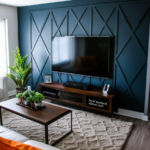
The Two-Tone Contrast Built-In

You love how two-tone kitchens have taken over Instagram and want to bring that same bold design choice into your living room.
The two-tone built-in uses contrasting colors or materials to create visual interest and make different sections of the unit stand out from each other.
This design might pair crisp white upper cabinets with rich navy blue lower cabinets, or combine natural wood shelving with painted cabinet sections in a complementary color.
Your TV becomes the dividing line between the two tones, sitting right at the transition point where the colors meet and creating a natural focal point through color contrast.
The key to nailing this look is choosing colors that complement each other while still providing enough contrast to make both tones distinct – you want them to play off each other, not blend together.
You might go bold with a dark charcoal base and bright white uppers, or keep things softer with a warm gray paired with a creamy off-white for a more subtle effect.
The two-tone approach also works with materials rather than just colors – picture wood lower cabinets paired with painted upper shelves, or glossy lacquered sections next to matte painted areas.
This design trick adds so much visual interest that you can actually keep the overall form of the built-in quite simple, letting the color or material contrast do all the work.
Your lower cabinets in the darker color help ground the unit and hide any scuffs or marks that tend to happen down low near the floor, while the lighter upper sections keep the whole thing from feeling too heavy.
The transition line between the two colors doesn’t have to be perfectly horizontal – you might create a stepped or staggered effect where the color change happens at different heights on different sections of the built-in.
✦ You Might Love This
Trending Living Room Paint Color Ideas You Should Try Right Now Keep Reading →Adding gold, brass, or black hardware to your cabinets becomes even more important in a two-tone design because the hardware acts as jewelry that ties both colors together.
You can use the same hardware finish on both tones to create unity, or mix metals to add even more complexity and interest to the overall design.
This style works beautifully in transitional spaces that blend traditional and modern elements, or in contemporary homes where you want to add warmth without going full traditional.
The two-tone built-in gives you flexibility to match or complement other elements in your room – you might echo an accent wall color, pick up the tones from your furniture, or create contrast with your flooring.
Quick Design Dilemma
Cast your vote — see what other readers think! 🤔
The Built-In with Fireplace Integration

You’ve got both a TV and a fireplace to work into your living room, and the age-old debate about whether the TV should go above the fireplace keeps you up at night.
The integrated built-in with fireplace solves this dilemma by designing custom cabinetry that incorporates both elements in a cohesive way where neither competes for attention.
This design typically positions the fireplace to one side of the wall with the TV on the other side, both surrounded by matching built-in cabinetry that creates symmetry and balance across the entire wall.
Your fireplace might be a traditional wood-burning hearth, a gas insert, or a modern linear electric fireplace, and the built-ins adapt to frame whichever style you’ve chosen.
The TV section gets its own dedicated alcove with shelving or cabinets flanking it, while the fireplace section mirrors that arrangement with its own surrounding storage and display areas.
This side-by-side approach means you can enjoy the fireplace without craning your neck to watch TV above it, and you can watch TV without the fire creating a glare or heat issue.
Your seating arrangement can orient toward whichever feature you’re currently using – chairs angled toward the fireplace for conversation and cocktails, then everyone swivels toward the TV for movie night.
The built-in cabinetry ties both elements together into one cohesive architectural feature rather than two separate things fighting for dominance on your wall.
You might choose to make the built-in symmetrical with identical cabinets and shelves on both the fireplace and TV sides, or create an asymmetrical design that gives different proportions to each element.
💭 I Wrote a Book About My Biggest Decorating Mistakes!
When I decorated my first home, I thought I knew what I was doing. Spoiler: I didn't. 😅
💸 I bought a sofa way too big for my living room. Paint colors that looked amazing in the store but terrible on my walls.
Wood mantels, stone surrounds, and decorative tile around the fireplace add those traditional details that make it feel warm and homey, while the TV section stays more minimal and modern.
The color and finish you choose for the built-in can either match your fireplace surround for a unified look, or contrast with it to define each section as its own distinct space.
This design provides an incredible amount of storage and display space since you’re building out the entire wall with cabinetry, making it perfect for rooms where you need maximum functionality.
The integrated approach works in traditional homes where fireplaces are architectural features worth celebrating, and it also works in modern spaces using sleek linear fireplaces that function more as design elements than heat sources.
Your TV wall doesn’t have to be an afterthought or a source of clutter and cable chaos anymore.
These built-in ideas prove that with some thoughtful planning and design, you can create a stunning focal point that’s both beautiful and functional.
Pick the style that speaks to your personal taste and your room’s needs, and get ready to fall in love with your living room all over again.