Black and brown might just be the most underrated color combo in kitchen design, and honestly, it’s a mystery why more people aren’t jumping on this trend.
These two colors create a depth and sophistication that’s impossible to replicate with lighter palettes, giving your kitchen a grounded, luxurious feel that stands the test of time.
If you’re planning a full renovation or just looking to refresh your space, these ten black and brown kitchen ideas will transform your cooking space into something truly spectacular.
Rich Espresso Cabinets with Warm Brown Backsplash

Picture walking into a kitchen where deep espresso cabinets line the walls, their glossy finish catching the light just right.
This look isn’t just about dark cabinets—it’s about layering different shades of brown to create incredible visual interest.
Your espresso cabinets serve as the anchor, providing that bold, dramatic foundation that immediately commands attention when anyone enters the room.
The magic happens when you pair these dark beauties with a backsplash in warmer brown tones—think terracotta subway tiles, copper-toned glass mosaics, or even natural stone with honey and amber veining.
The contrast between the cool-toned espresso and the warm backsplash creates a dynamic interplay that keeps the eye moving around the space.
You’ll want to make sure your lighting game is strong here because these rich colors absolutely come alive under the right illumination.
Install under-cabinet LED strips to highlight that gorgeous backsplash and prevent the space from feeling too cave-like.
Pendant lights with brass or copper findings add another layer of warmth while tying the whole color scheme together beautifully.
Your countertops become the perfect opportunity to either go bold with black granite or marble, or soften things up with a creamy quartz that has subtle brown veining.
The floor choice matters enormously in this setup—medium-toned hardwood in oak or maple provides just enough contrast without fighting for attention.
This combination works particularly well in kitchens with plenty of natural light, where the sun can dance across all those rich surfaces throughout the day.
The timeless appeal lies in how these colors evoke both modern sophistication and old-world charm simultaneously.
You’re creating a space that feels expensive, intentional, and completely immune to the whims of passing design fads.
Madison’s Current Obsessions
Why Do Cherry Cabinets Deserve A Gorgeous Kitchen Table? The Answer Is Right Here!Black Matte Fixtures Against Natural Wood Tones

Nothing screams modern elegance quite like the stark beauty of matte black hardware and fixtures paired with the organic warmth of natural wood.
This approach flips the script on traditional kitchen design by making the fixtures the star of the show rather than trying to hide them.
Your faucet becomes a sculptural element when it’s finished in that smooth, non-reflective black that looks like it was carved from a single piece of stone.
Cabinet pulls, drawer handles, and hinges in matching matte black create these beautiful punctuation marks across your natural wood cabinetry.
The wood you choose sets the entire mood—lighter woods like maple or white oak create an airy Scandinavian vibe, while walnut or cherry bring a more masculine, library-like sophistication.
The grain patterns in natural wood provide all the visual texture you need, so the simplicity of the black fixtures becomes a perfect counterbalance.
Your range and hood can continue this theme, with black appliances that blend seamlessly into the overall aesthetic rather than sticking out like chrome sore thumbs.
Light fixtures are where you can really have fun—oversized black dome pendants or geometric chandeliers add dramatic flair while maintaining that cohesive look.
The beauty of matte black is that it doesn’t show fingerprints nearly as badly as glossy finishes, making it surprisingly practical for a high-traffic kitchen.
You’re also tapping into a finish that’s been used in high-end design for decades, which means it has serious staying power.
Open shelving in the same natural wood as your cabinets gives you a place to display dishes and glassware, with those black brackets providing structural interest.
The overall effect is clean, sophisticated, and perfectly balanced between industrial edge and organic warmth.
This combination photographs beautifully, which is a bonus if you ever decide to sell your home down the line.
Design Your Dream Room in Minutes! By DreamyHomeStyle
🏡 Start Creating FREE →Madison’s Current Obsessions
8+ Eye-Catching Placemat Colors That Transform Glass TablesChocolate Brown Island with Black Countertops

Your kitchen island deserves to be more than just extra counter space—it should be the showstopping centerpiece that ties your entire design together.
A chocolate brown island topped with sleek black countertops creates this incredible focal point that draws people in like moths to a flame.
The richness of chocolate brown cabinetry on your island provides a sense of grounding and stability that lighter colors simply can’t match.
You’re working with a color that’s associated with comfort, luxury, and timelessness—think of the finest leather goods or premium chocolate bars.
Black countertops on top of that brown base create a horizontal line that defines the space and provides the perfect surface for meal prep, casual dining, or displaying your gorgeous cookbook collection.
Materials matter enormously here—soapstone, honed granite, or even black concrete all bring different textures and personalities to the table.
Your perimeter cabinets can go a few different directions depending on how bold you want to be—crisp white creates maximum contrast, lighter wood tones keep things warm, or you can double down with more brown.
The island becomes an opportunity to add special details like decorative corbels, furniture-style feet, or beadboard paneling on the sides.
Seating around your island takes on new importance when it’s this much of a statement piece—upholstered counter stools in cognac leather or velvet continue the brown theme while adding comfort.
You’ll want to make sure your island has plenty of storage because chocolate brown cabinetry is incredibly forgiving when it comes to hiding everyday mess and fingerprints.
Lighting above the island is critical—three evenly-spaced pendants in glass or metal finishes illuminate the space while creating rhythm and repetition.
The black countertop provides the perfect backdrop for colorful accessories, fresh flowers, or a beautiful fruit bowl that pops against the dark surface.
This setup works in both traditional and contemporary kitchens, proving just how versatile the black and brown combination truly is.
Madison’s Current Obsessions
Marble Table Placemat Colors: 11+ Stunning OptionsTwo-Tone Cabinets: Upper Black, Lower Brown

Breaking up your cabinetry into two distinct color zones might sound risky, but it’s actually a brilliant way to add dimension without overwhelming your space.
Going with black upper cabinets and brown lower cabinets creates a natural visual weight that feels completely intentional and sophisticated.
Your upper cabinets in matte or semi-gloss black recede slightly, making your ceiling feel higher while adding that dose of drama that kitchens often lack.
The dark uppers work especially well with glass-front cabinet doors, where you can display white dishes or glassware that creates beautiful contrast.
Brown lower cabinets in shades ranging from cognac to mahogany provide that warm, welcoming base that makes the kitchen feel approachable rather than austere.
These lower cabinets take the brunt of daily wear and tear, and brown finishes are incredibly forgiving when it comes to scuffs and fingerprints.
The line where black meets brown becomes a natural place to introduce another material—this is where your backsplash or a horizontal band of open shelving can live.
You’re creating three distinct horizontal zones: brown base, middle transition area, and black upper section that guides the eye upward.
Your countertops play mediator between these two colors—going with something neutral like white quartz or light gray marble lets both cabinet colors shine.
Alternatively, you can go bold with a brown-veined marble that picks up tones from your lower cabinets while complementing the black uppers.
Hardware becomes extra important in a two-tone setup because it needs to work with both colors—brushed brass or bronze split the difference beautifully.
You’re giving yourself permission to be bold without going overboard, which is the sweet spot in kitchen design.
The floor color matters immensely here—medium-toned wood or even patterned tile in warm browns and blacks ties everything together.
This approach works particularly well in galley or U-shaped kitchens where you have plenty of wall coverage to really show off the two-tone effect.
You’ll end up with a kitchen that feels custom and thoughtfully designed rather than picked from a catalog.
Madison’s Current Obsessions
Brighten Your Kitchen with These Fun Above The Sink Curtain Ideas!Black Marble Counters with Walnut Cabinetry

Walnut has this incredible ability to look both vintage and ultra-modern depending on how you style it, and pairing it with black marble countertops leans firmly into luxury territory.
The deep brown of walnut cabinetry with its distinctive grain patterns brings an organic, handcrafted quality that immediately elevates your entire kitchen.
Black marble isn’t just a surface—it’s a geological work of art that’s been forming for millions of years beneath the earth’s surface.
The white veining that runs through black marble creates natural movement and interest, ensuring no two sections of your counter look exactly the same.
Your walnut cabinets can be finished in several ways—a natural oil finish highlights the wood’s beauty while a darker stain intensifies the richness and depth.
The grain patterns in walnut are so distinctive that they provide all the pattern your kitchen needs, which is why the clean lines of modern cabinetry work so well.
Black marble options range from dramatic Nero Marquina with bold white veining to more subtle varieties with delicate gray tracings.
You’re working with a material that’s been the choice of palaces and temples for centuries, so you’re in good company.
The maintenance requirements of marble are real—you’ll need to seal it regularly and be careful with acidic substances—but the payoff is a surface that develops character over time.
Your backsplash can extend the marble up the wall for a dramatic, seamless look, or you can introduce a complementary tile in warm browns or even black subway tiles.
Flooring in lighter wood tones prevents the space from feeling too heavy, while large-format porcelain tiles in cream or soft gray provide a neutral foundation.
The hardware on your walnut cabinets should be minimal and refined—slim black pulls or even push-to-open mechanisms that let the wood grain take center stage.
This combination works beautifully in both modern and transitional kitchens, proving its versatility across design styles.
You’re investing in materials that actually improve with age rather than looking dated after a few years.
Madison’s Current Obsessions
13 Stylish Industrial Kitchen MakeoversLeather Brown Accents with Black Hardware

Sometimes the most impactful design choices aren’t about the big structural elements but rather the carefully chosen details that bring personality to your space.
Introducing leather brown accents throughout a predominantly black kitchen creates these warm touchpoints that prevent the space from feeling cold or industrial.
Your bar stools are the obvious starting point—high-backed leather counter seats in rich brown tones provide comfort while adding a sophisticated material contrast.
The natural patina that develops on leather over time means your kitchen actually gets better looking as the years pass.
Cabinet hardware in black iron or matte black finish provides the framework against which these leather accents can really shine.
You’re creating a material story that combines the toughness of black metal with the softness and warmth of leather in a way that feels cohesive.
Leather cabinet pulls do exist, and while they’re less common, they create an incredibly unique tactile experience every time you open a drawer or door.
Your window treatments offer another opportunity—Roman shades or simple panels in faux leather or suede in brown tones add texture while providing privacy.
The backsplash area can incorporate leather tiles, which are an actual thing and bring unexpected softness to a typically hard-surfaced area.
Alternatively, leather-look porcelain tiles give you the aesthetic without the maintenance concerns in a wet environment.
Black cabinets serve as the perfect backdrop for these brown leather moments, allowing each accent to register clearly rather than blending into a brown-on-brown situation.
Your countertops in either black or white provide the neutral surface that lets both the black cabinets and brown accents do their thing.
Decorative elements like leather-bound cookbook stands, brown leather placemats, or even a leather-wrapped handle on your refrigerator continue the theme.
The overall effect is a kitchen that feels collected and intentional, like you’ve thoughtfully curated each element over time.
This approach works especially well in urban lofts or homes with an industrial aesthetic where the raw-meets-refined vibe is already established.
Madison’s Current Obsessions
13 Small Modern Kitchen Designs You'll LoveDark Brown Floors with Black Appliances

The foundation of your kitchen—literally—sets the tone for everything that happens above it, and dark brown flooring creates a rich base that makes black appliances look intentional rather than institutional.
Wide-plank walnut or hickory flooring in deep brown tones brings warmth from the ground up while being incredibly practical for a space that sees constant foot traffic.
Your black appliances stop looking like basic builder-grade choices and start reading as sophisticated design decisions when they’re grounded by dark floors.
The sleek lines of black refrigerators, ranges, and dishwashers create this beautiful contrast against lighter cabinetry while harmonizing with the brown floors.
Engineered hardwood in dark brown tones gives you the look of solid wood with better moisture resistance and stability—a smart choice for kitchens.
The grain patterns in natural wood flooring add organic texture that prevents your floor from reading as a flat, boring surface.
Your cabinetry can go light to create maximum contrast—cream, soft gray, or even white cabinets pop dramatically against dark floors while keeping the space from feeling too heavy.
The black appliances bridge the gap between dark floors and lighter cabinets, creating visual continuity throughout the vertical space.
Area rugs in the kitchen might seem controversial, but a vintage runner in browns and blacks in front of your sink adds comfort and reinforces your color scheme.
The dark flooring is incredibly forgiving when it comes to dirt and spills, which is a massive practical advantage in the busiest room of your home.
Your range becomes a particular focal point when it’s a professional-style black model standing against those rich brown floors—it looks like serious cooking happens here.
Cabinet toe kicks in black create a seamless transition between your brown floors and whatever cabinet color you’ve chosen.
This setup works phenomenally well in open-concept homes where the kitchen flows into living areas, as the dark floors can extend throughout, creating cohesion.
You’re building your color scheme from the ground up in a way that feels natural and unforced.
Madison’s Current Obsessions
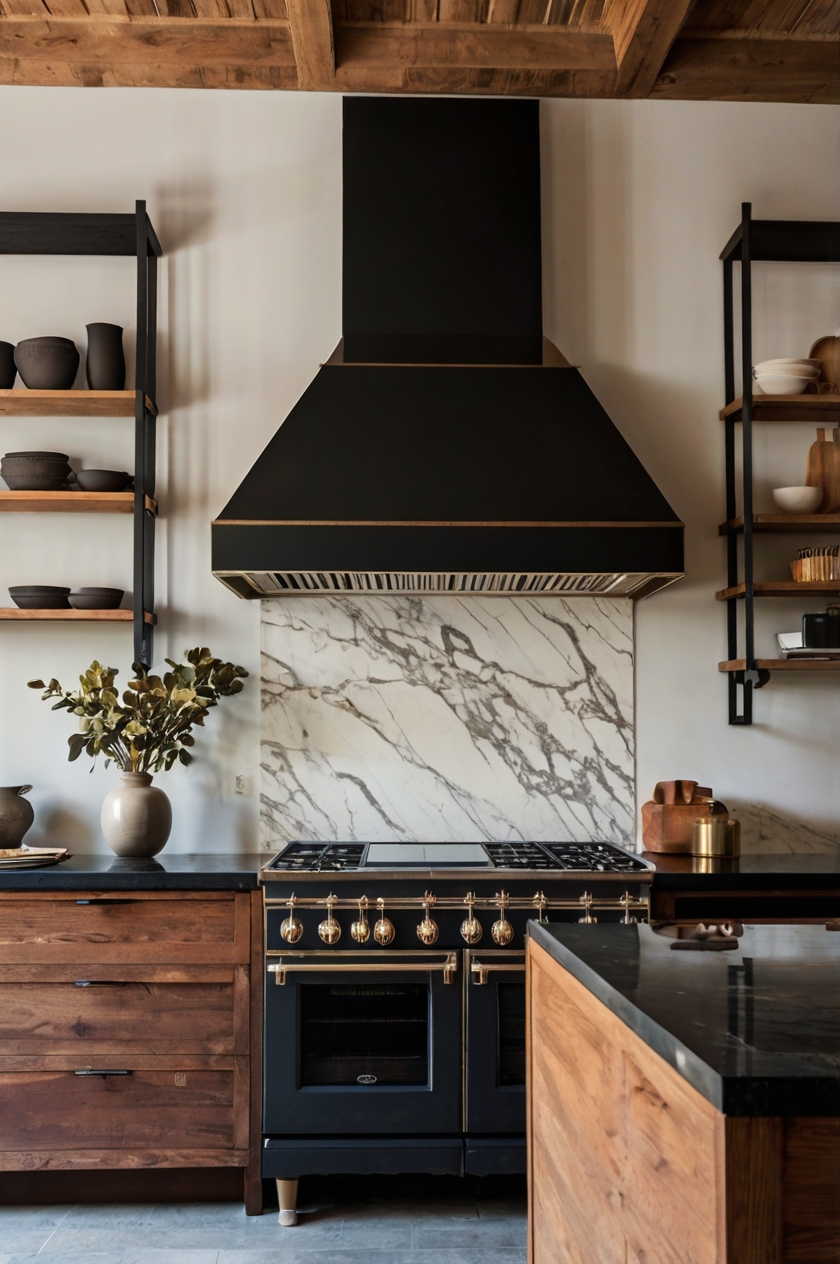
13 Chic Kitchen Ideas Featuring Dark Brown CabinetsBlack Range Hood as Statement Piece with Brown Surrounds

Your range hood is one of the few elements in a kitchen that’s architecturally allowed to break the plane and become truly three-dimensional, so why not make it count?
A black range hood—especially a substantial one in wood, metal, or plaster—becomes the crown jewel of your kitchen when surrounded by warm brown elements.
The range hood can be finished in matte black metal for an industrial look, or you can have a custom wood hood painted or stained black for a more traditional approach.
The wall surrounding your hood is prime real estate for brown elements—think reclaimed wood planks, brown ceramic tiles, or even brown-veined marble or quartzite.
Your hood design can range from a simple rectangular box to an elaborate curved or arched structure that recalls European country estates.
The black finish makes even a massive hood feel less visually heavy than you’d expect because black tends to recede and create shadow rather than bulk.
Brown subway tiles in a chocolate or terracotta shade around the cooking area create a warm halo around your black hood centerpiece.
The contrast between the black hood and brown surrounds draws the eye immediately to the cooking zone, establishing it as the heart of the kitchen.
Open shelving in dark wood on either side of the hood provides both function and symmetry while continuing your brown theme.
Your range below the hood should ideally be black or dark stainless to maintain that bold, cohesive look.
Countertops in this cooking zone can go dark with black granite or lighter with white marble to create even more drama against the brown and black elements.
The hood becomes a conversation starter—guests always notice a well-designed hood because it breaks up the typical horizontal lines of a kitchen.
Lighting inside the hood is functional but also adds drama when the black interior glows with warm LED lights.
This focal point approach means the rest of your kitchen can be somewhat simpler, with the hood doing the heavy lifting in terms of visual interest.
You’re creating a kitchen where people instinctively know where the magic happens because your design literally points them there.
Madison’s Current Obsessions
13 Creative Kitchen Towel Craft Ideas You Must TryMixed Metals: Bronze and Black with Wood Elements

The old rule about not mixing metals is outdated nonsense, and nowhere is this more beautifully proven than in a kitchen that layers bronze and black with warm wood tones.
Your hardware becomes jewelry for your kitchen when you intentionally mix oil-rubbed bronze pulls with matte black knobs across your cabinetry.
Bronze faucets have this living finish that develops a richer patina over time, bringing depth and history to even a brand-new kitchen.
The warm undertones in bronze—those hints of gold and copper—create a natural bridge between black elements and brown wood.
Your light fixtures offer the perfect opportunity to bring in more bronze—a vintage-style bronze chandelier over an island or bronze pendants over the sink add warmth and sparkle.
Wood cabinetry in medium brown tones serves as the neutral backdrop that allows both your black and bronze metals to shine without competing.
The mix of finishes adds layers of visual interest that a monochromatic approach simply can’t achieve.
You’re creating depth through finish variation—the matte black absorbs light while bronze reflects it, creating a dynamic interplay.
Your appliances can be black, which grounds the space and provides large doses of that dark color among the smaller bronze accents.
Cabinet hinges, toe-kick vents, and outlet covers are all opportunities to continue your mixed metal theme in ways that feel cohesive rather than chaotic.
The wood species you choose matters—oak, hickory, or pecan with visible grain patterns add another texture layer that complements the smooth metal finishes.
Bar stools with black metal frames and bronze footrests tie the whole scheme together while providing comfortable seating.
Window hardware, pot racks, and even decorative brackets can alternate between bronze and black, creating rhythm throughout the space.
This approach requires confidence and a good eye, but the payoff is a kitchen that looks collected and curated rather than cookie-cutter.
You’re showing that you understand design at a sophisticated level where rules become guidelines and your personal style takes center stage.
Madison’s Current Obsessions
13 Whimsical Kitchen Designs To Spark Your ImaginationTextured Brown Walls with Sleek Black Cabinets

When everyone else is obsessing over their cabinetry, you can make a bold move by focusing on your walls as the primary source of warmth and texture.
Textured brown walls—whether that’s shiplap, venetian plaster, or specialty paint techniques—create an enveloping warmth that makes sleek black cabinets pop.
Your black cabinets can be ultra-modern with flat-panel doors and integrated handles, creating clean lines that contrast beautifully with the organic texture of brown walls.
The wall treatment you choose sets the mood—rough-sawn wood planks feel rustic and reclaimed, while smooth plaster in warm taupe feels European and refined.
Shiplap or tongue-and-groove paneling stained in rich brown tones adds that farmhouse-meets-modern vibe that’s been popular for good reason.
The horizontal lines of wall planking create movement and direct the eye around the room, while your vertical black cabinets provide counterbalance.
Venetian plaster in browns ranging from café au lait to deep chocolate brings old-world sophistication and a surface that’s infinitely touchable.
The slight variations in color and texture that come with hand-applied plaster mean your walls become a work of art.
Your black cabinets should be sleek enough to feel modern—this prevents the space from reading as too rustic or country when paired with textured walls.
Countertops in white marble or quartz create a bright horizontal band that separates your dark cabinets from brown walls, preventing them from blending together.
Open shelving in black metal with wood shelves continues the theme while providing display space for dishes and decorative items.
The textured walls are incredibly forgiving of imperfections and actually look better with some natural variation, which takes the pressure off achieving perfection.
This combination works particularly well in kitchens with high ceilings where you have plenty of wall space to show off that gorgeous texture.
You’re creating a kitchen that feels warm and inviting despite the boldness of black cabinets, which is a tricky balance that most designers struggle to achieve.
Black and brown kitchens aren’t just a passing trend—they’re a timeless combination that brings sophistication, warmth, and serious style to the heart of your home.
The beauty of this color palette is its incredible flexibility, working equally well in modern, traditional, and transitional spaces.
You’ve got ten solid ideas to run with, so pick the one that speaks to your style and start planning the kitchen you’ll love for decades to come.