
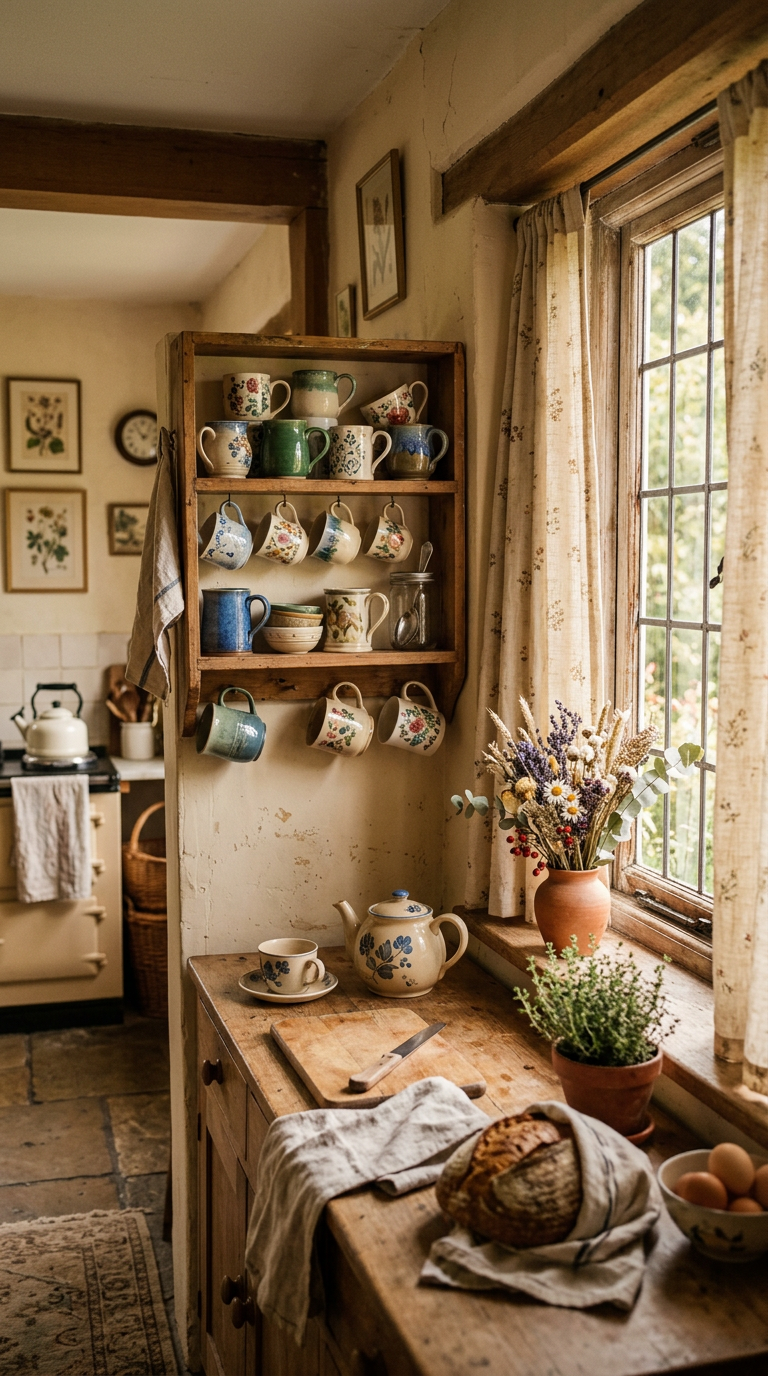

Okay, I’ll confess something a little embarrassing.
I spent months pinning cottagecore kitchens on my boards, completely convinced I needed a farmhouse renovation budget to pull off that dreamy, wildflower-and-warm-wood look.
Then one Saturday, I wandered into my local Goodwill mostly out of boredom — and walked out with a linen tablecloth, three mismatched ceramic mugs, and a little ceramic pitcher that changed everything.
The secret nobody really talks about?
The most gorgeous cottagecore kitchens aren’t built.
They’re gathered.
Slowly.
Imperfectly.
And almost entirely from thrift stores.
Why Cottagecore Kitchens Feel So Different From Everything Else
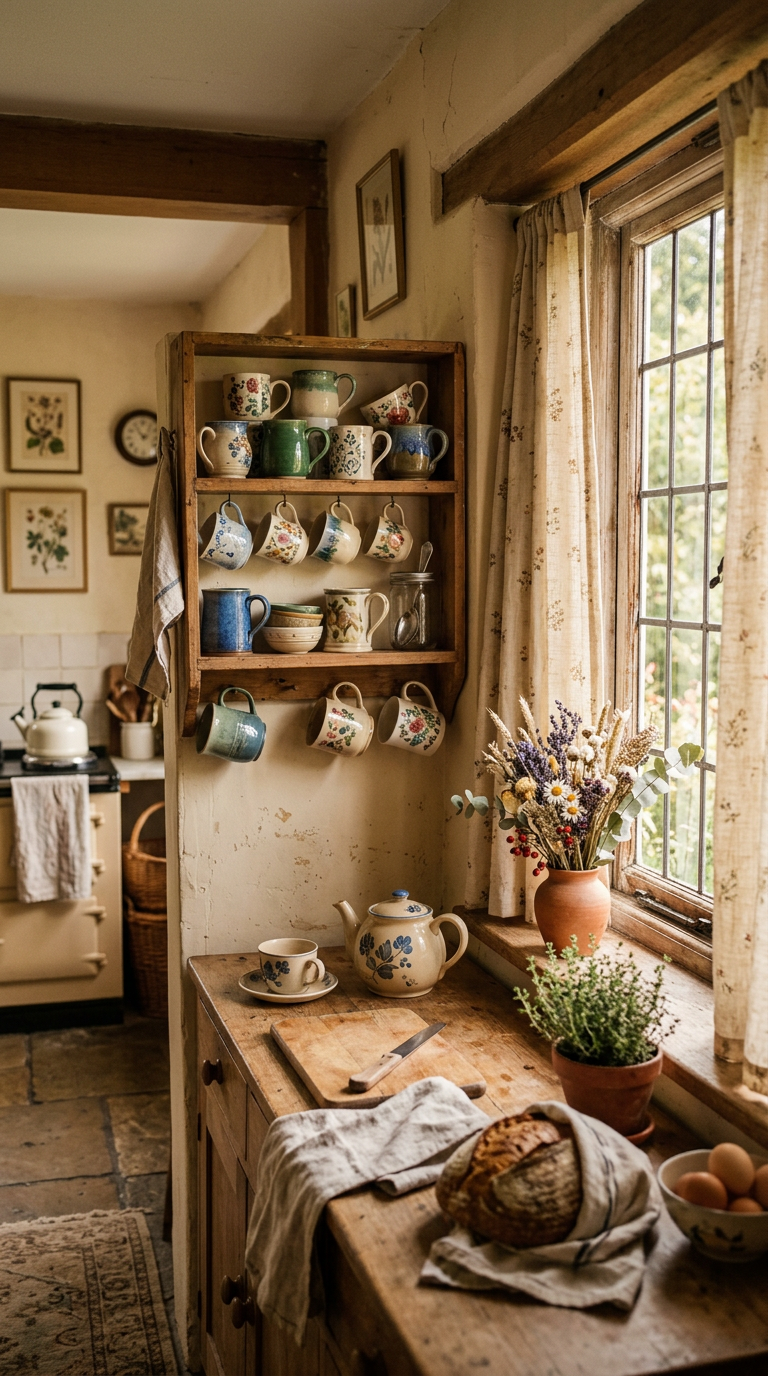
There’s a specific feeling you get standing in a cottagecore kitchen.
It’s soft.
It’s like the room is breathing slowly, and you want to slow down with it.
I think that’s what makes it so deeply appealing right now — it’s the opposite of sharp, cold, and modern.
Cottagecore kitchens aren’t about perfection.
They’re about warmth, texture, and the sense that someone actually lives and loves inside that space.
Nothing is too precious.
Nothing matches too perfectly.
And that’s sort of the whole point.
When I first started pulling my own kitchen in this direction, I realized I’d been overthinking it completely.
You don’t need new cabinetry.
You don’t need a shiplap wall.
You need the right objects — and most of them are waiting for you at the thrift store right now.
The Thrift Store Mindset Shift That Makes Everything Click

Most people walk into a thrift store looking for specific things and leave frustrated.
I used to do this too.
The trick is to shift your mindset completely — you’re not shopping, you’re foraging.
Like picking wildflowers.
You take what’s beautiful, not what’s perfect.
Start thinking in textures and tones instead of specific items.
You’re looking for cream, sage, terracotta, and warm wood.
You’re looking for things that feel hand-made, worn, or old.
Chipped glaze on a bowl?
That’s character.
That’s cottagecore gold.
When I tackled my own cramped little kitchen last fall, I gave myself one rule: only bring home something if it makes me feel something warm.
Not useful — warm.
That small mindset shift completely changed what I picked up and how the space came together.
Open Shelving Is Your Best Friend — And Thrift Stores Are the Secret Weapon
 Open Shelving Is Your Best Friend
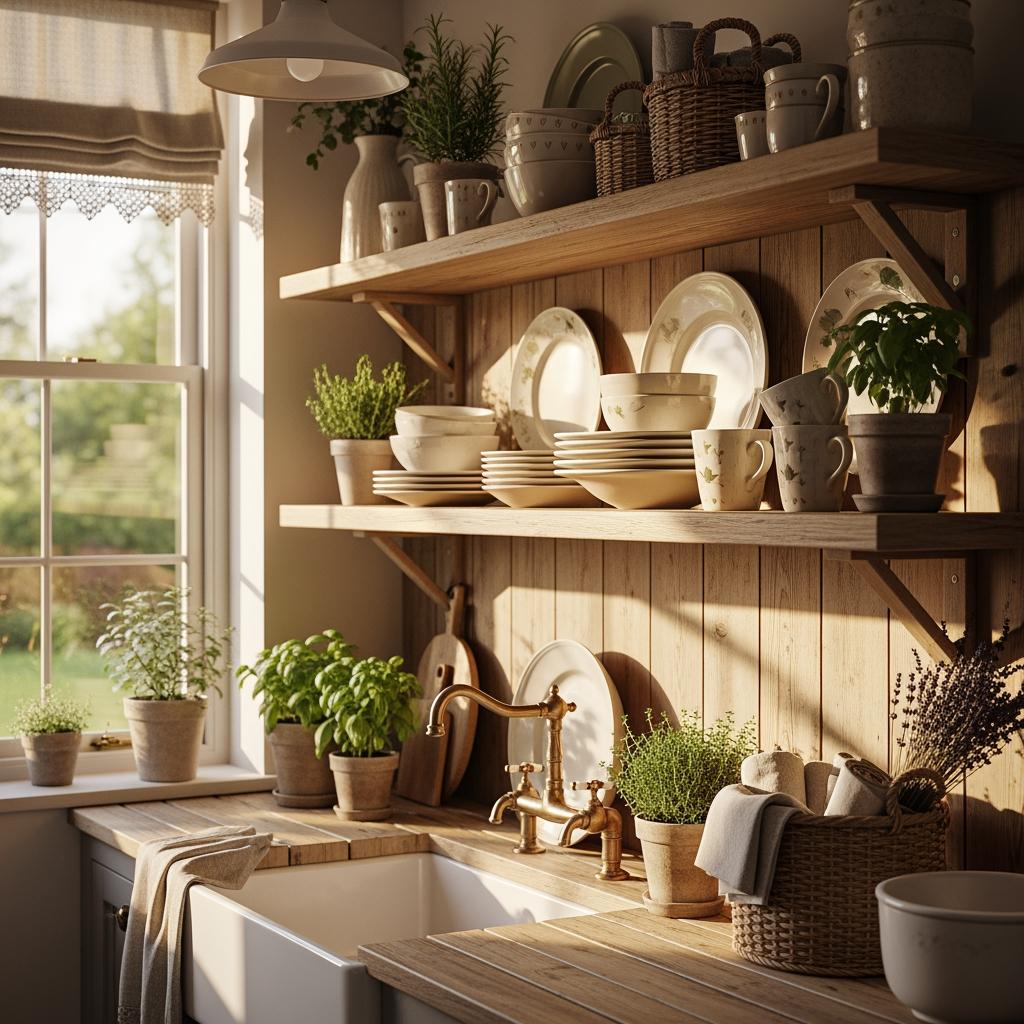
If I had to pick one single thing that transforms a kitchen into a cottagecore dream, it’s open shelving.
Not because it’s trendy — because it lets you tell a visual story.
And thrift stores are absolutely overflowing with the props for that story.

Think about what you actually want people to see on those shelves.
Mismatched dishes in the same color family look intentional and gorgeous.
A row of ceramic mugs in cream and sage?
I’m obsessed with that look.
Little woven baskets for onions or garlic?
Perfect.
Don’t stress about everything matching.
Actually, please don’t.
Some of the most beautiful cottagecore shelves I’ve ever seen have items from completely different eras, patterns, and sizes.
The common thread is color palette and feeling — not a matching set.
Hunting for Ceramics — What to Look For and What to Skip

Ceramics are the heart of a cottagecore kitchen.
They bring texture, color, and that handmade feeling that makes everything look lived-in and lovely.
And honestly?
Thrift stores are the absolute best place to find them.
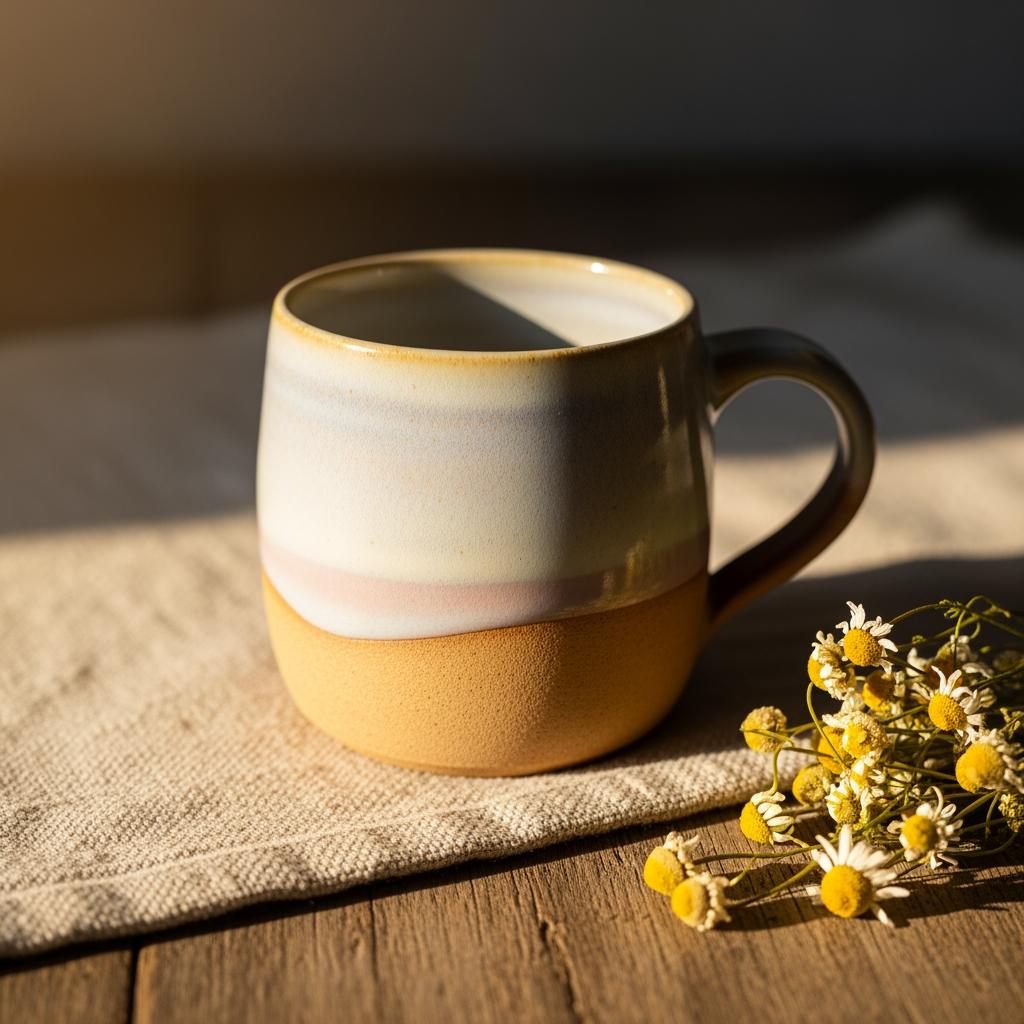
Look for pieces with matte glazes, earthy tones, or slightly irregular shapes.
Hand-thrown pottery feels so right in this aesthetic.
Even mass-produced pieces can work if they have that organic, imperfect quality to them.
I once found the most beautiful cream-colored batter bowl for under two dollars.
Two dollars.
What to skip?
Anything shiny, ultra-modern, or stark white with clean geometric lines.
Those pieces will fight the softness you’re trying to create.
Also skip anything that feels too themed or kitschy — you want warmth, not novelty.
Mix your bowl sizes, your mug heights, your plate patterns.
Just keep your color story consistent — creams, sage greens, terracotta, dusty blue.
That’s what makes a random collection of thrift finds look like a curated, intentional display.
The Magic of Mismatched Vintage Glassware on a Budget
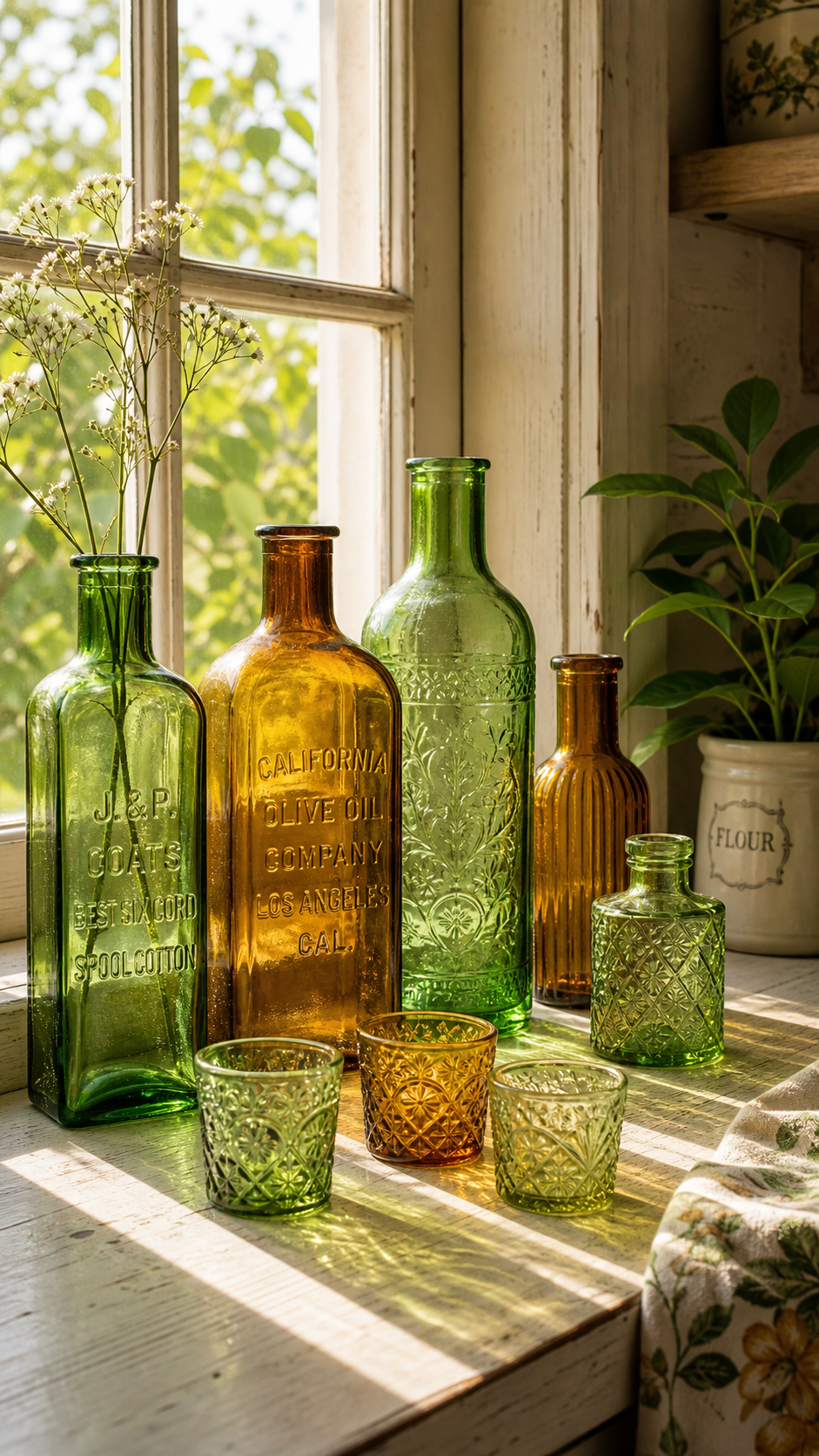
Vintage glassware is one of those things I genuinely get giddy about in thrift stores.
Press glass, Depression glass, little juice glasses with painted flowers — all of it is pure cottagecore magic.
And you can usually find it for almost nothing.
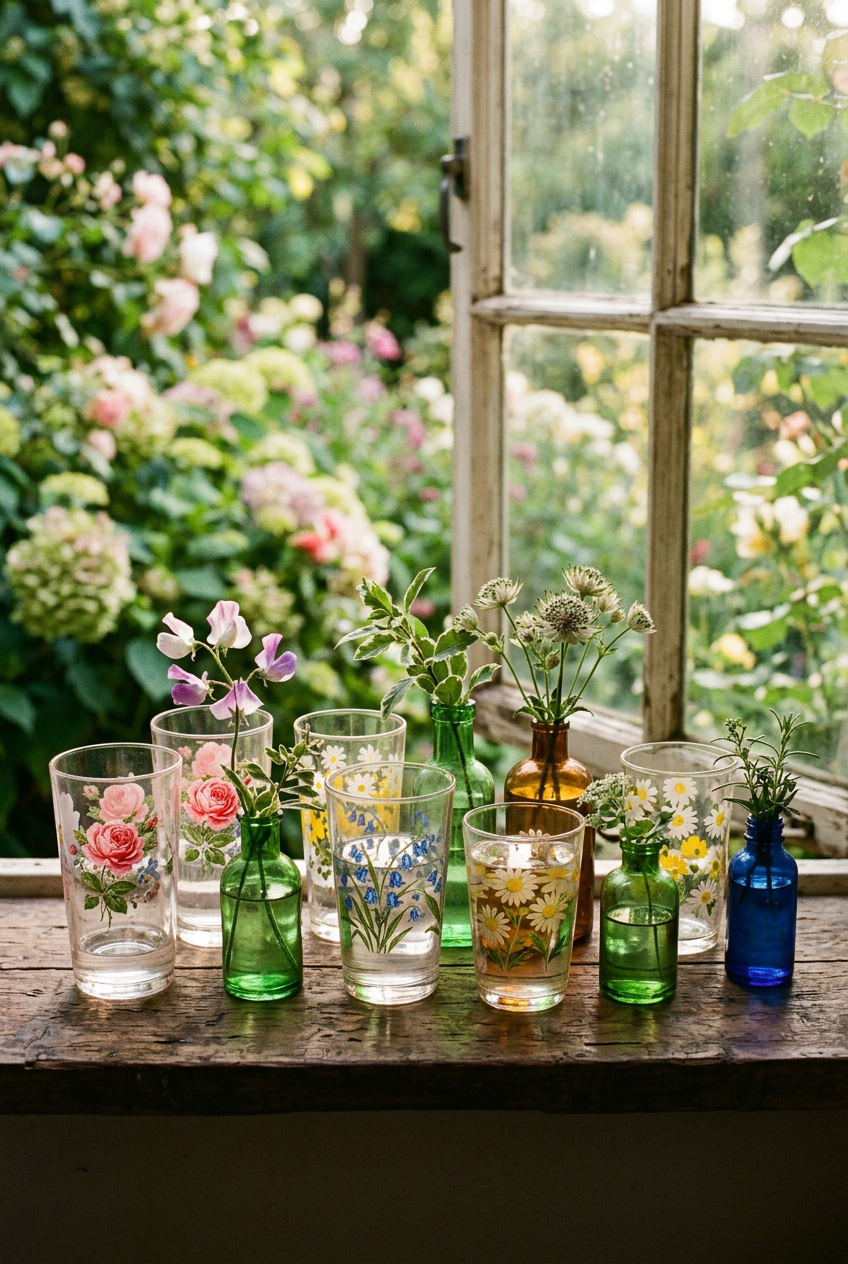
The key look I love is a mix of green and amber glass displayed near a window.
When the light catches it?
It’s like something out of a movie.
I have a little collection of green glass bottles lined up on my kitchen windowsill and I stare at them every single morning.
You don’t need to collect a full matching set.
Actually, that would sort of miss the point.
Pick up one or two pieces every time you thrift.
Over time, your collection will grow into something that looks beautifully curated — but cost you almost nothing.
Linen, Cotton, and Texture — Thrifting the Soft Layers That Change Everything
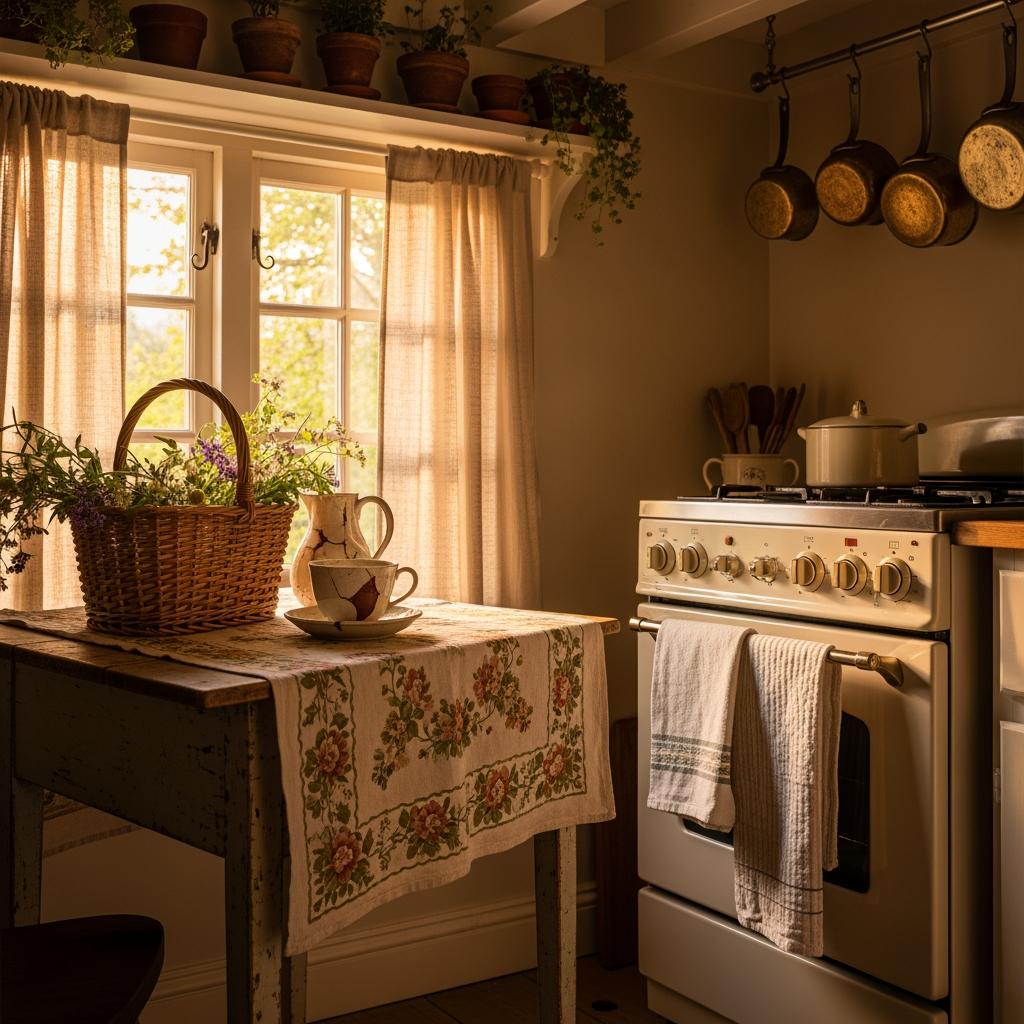
Soft textiles are what make a cottagecore kitchen feel like a hug.
Table runners, dish towels, curtains — the fabric choices you make will completely shift the energy of your space.
And thrift stores are full of overlooked linen treasures.

Look for natural fibers: linen, cotton, light canvas.
Avoid anything synthetic or overly patterned in bright modern colors.
A faded floral tablecloth in dusty rose and cream?
That’s the dream.
Even a slightly stained piece can be bleached, overdyed, or used in a way that hides imperfections.
When I found a bundle of vintage linen dish towels at a church sale for basically nothing, I hung two on my oven handle and folded one on my counter.
Instantly, the kitchen felt softer.
More considered.
It’s kinda wild how much impact a small textile can have.
Wooden Cutting Boards and Utensils — Thrift Store Finds That Look Like They Cost a Fortune
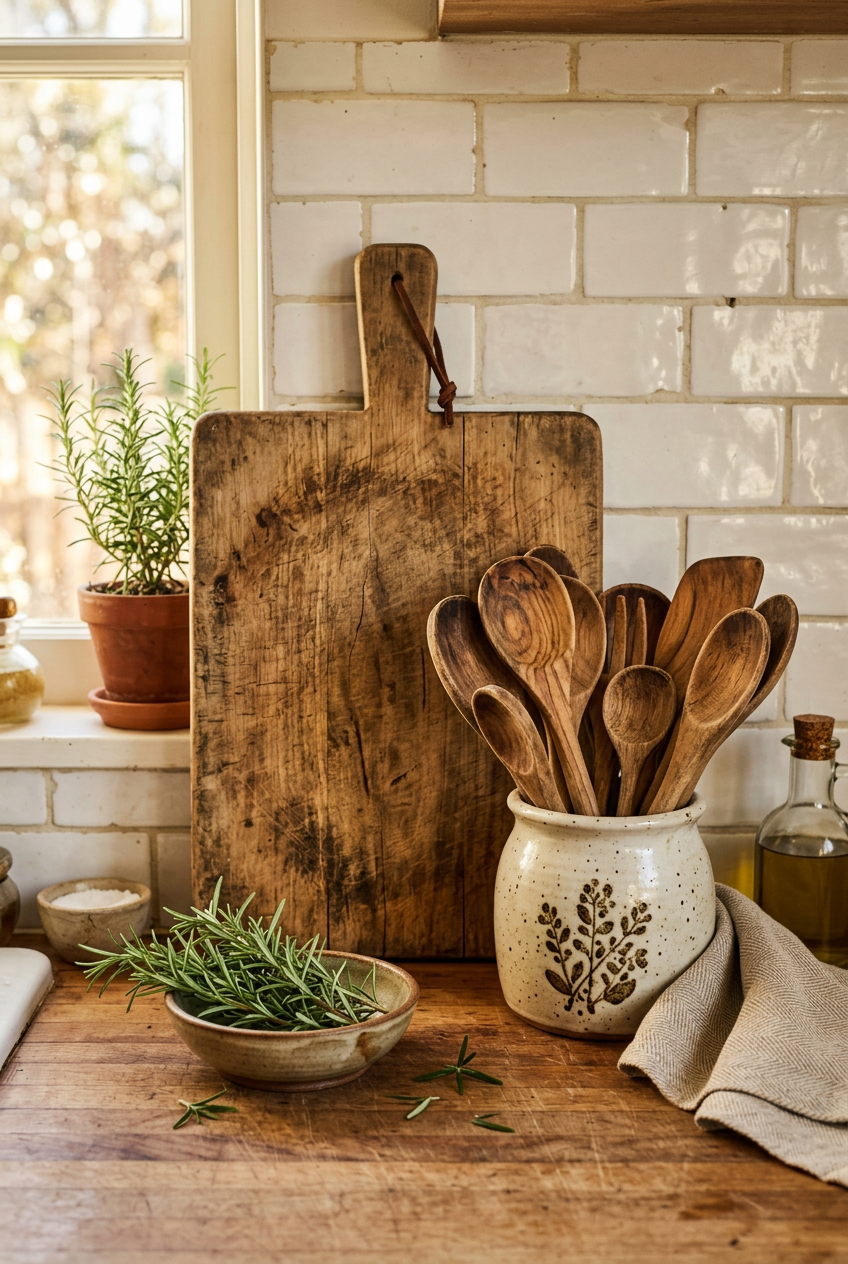
Okay, this is one of my favorite things to hunt for because it looks so expensive and costs so little.
Wooden cutting boards, carved wooden spoons, old rolling pins — they are everywhere in thrift stores.
And they add so much warmth to a kitchen counter or open shelf.
Don’t worry if they’re worn or have old knife marks.
That’s patina, not damage.
A well-worn wooden board propped against a backsplash next to a bunch of fresh herbs looks like something from a gorgeous food magazine shoot.
I grabbed a huge thick maple cutting board for almost nothing at my Goodwill — it had some discoloration, but I sanded it lightly and oiled it with food-safe mineral oil.
It’s now the most complimented thing in my kitchen.
People always ask where I got it.
Always.
Layer your wooden pieces together — a board, a few spoons in a ceramic crock, a small wooden bowl.
The combination of all that warm wood grain against cream ceramics is basically my happy place.
Plants and Dried Botanicals — The Living Layer Every Cottagecore Kitchen Needs

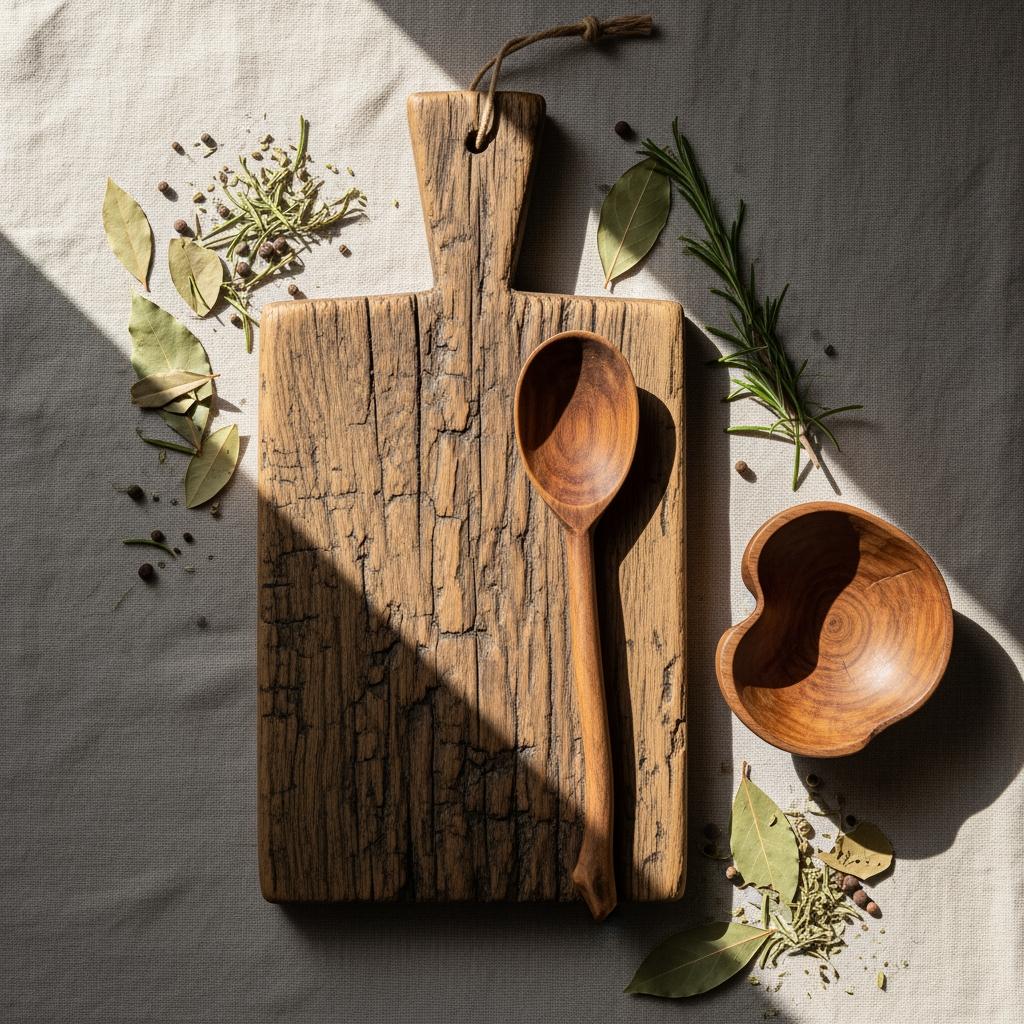
Nothing pulls a cottagecore kitchen together faster than plants and dried botanicals.
Nothing.
And while the plants themselves aren’t thrifted, the vessels and containers for them absolutely are.
Hunt for small terracotta pots, old crockery, tiny ceramic bowls — anything that could hold a small herb plant or a clipping.
I have fresh rosemary growing in an old cream-colored sugar bowl I found thrifting.
It’s one of my most-photographed items on my whole feed.
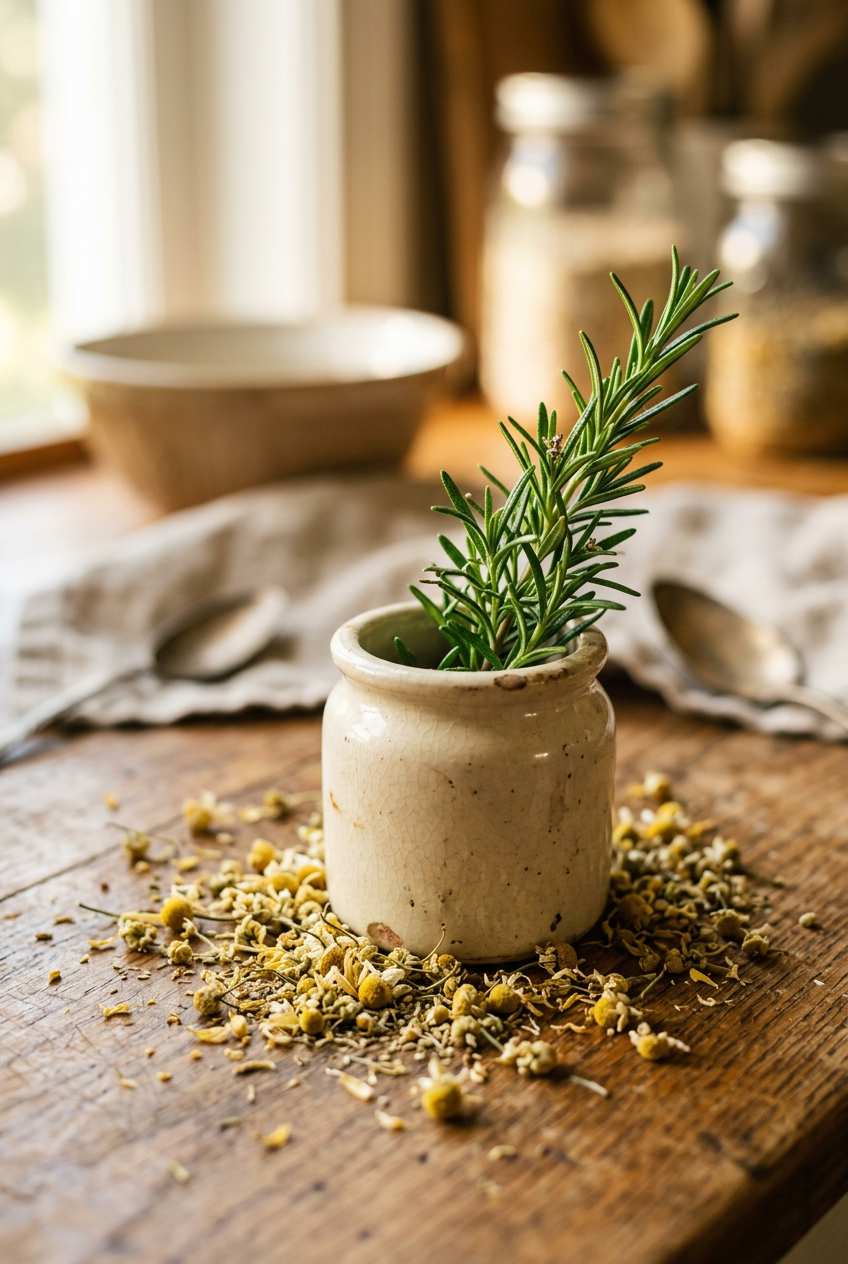
Dried botanicals are also incredibly easy to style and cost almost nothing to source yourself.
Dry your own lavender, chamomile, or baby’s breath.
Bundle them with twine and hang them from open shelving or lay them in a small basket on the counter.
The combination of living green herbs and softly dried botanicals creates this gorgeous layered, natural feeling that is so distinctly cottagecore.
It smells good, looks incredible, and makes your kitchen feel truly alive.
Vintage Tins and Storage Containers That Pull Double Duty as Decor
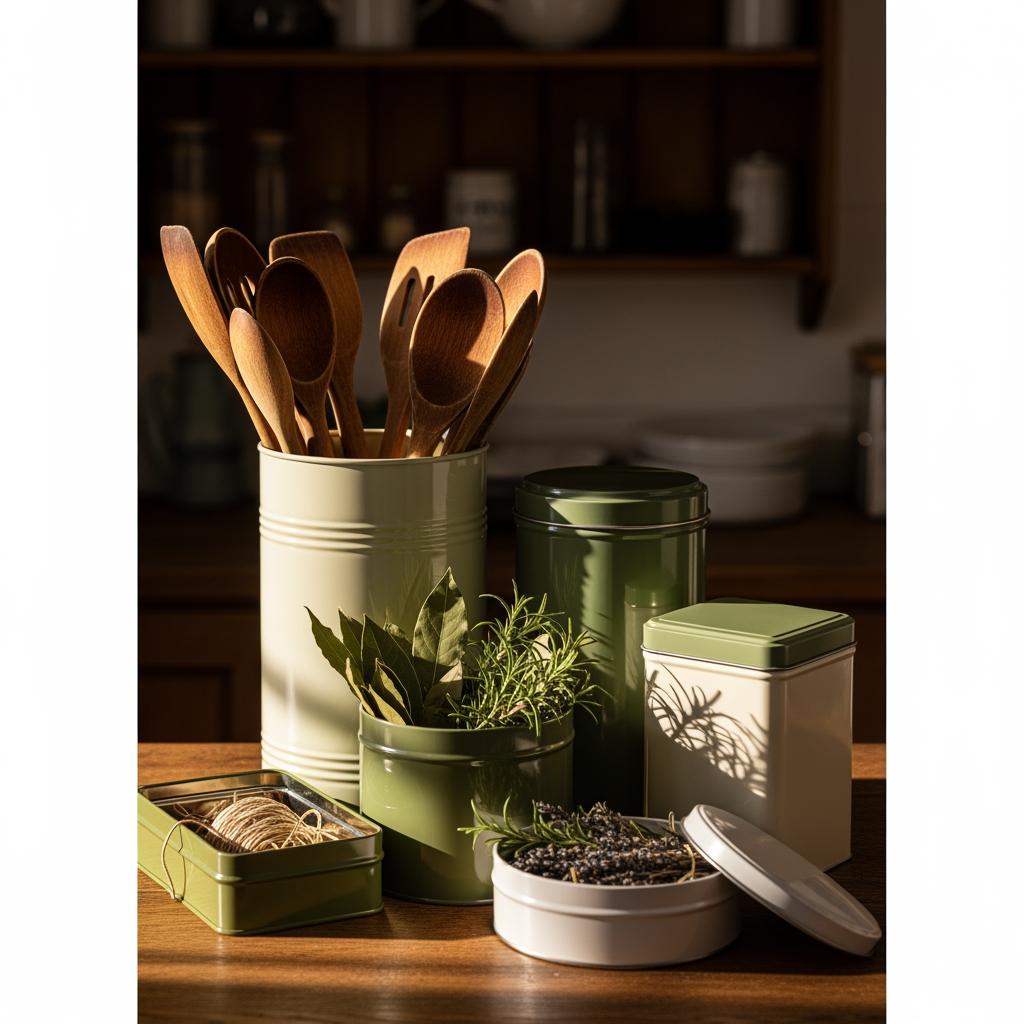
One of the most underrated thrift store finds for a cottagecore kitchen is the vintage tin.
Old biscuit tins, flour tins, tea tins — they are functional, beautiful, and deeply charming.
And they cost almost nothing.

I’m obsessed with grouping a few tins together on a counter — different heights, slightly different patinas.
Fill one with wooden spoons.
Use another to store packets of tea or little seed packets.
The effect is so warm and collected-looking.
Look for pieces with botanical illustrations, muted color palettes, or that lovely worn paint effect.
Avoid anything too bright or too modern-looking.
You want pieces that look like they’ve been in a kitchen for generations — even if you just found them last weekend.
The Art of Layering Thrift Store Finds Without Making It Look Cluttered

This is the part where most people get a little nervous — how do you layer all these beautiful thrifted pieces without it looking like a cluttered mess?
I get it.
I’ve been there.
But there’s a simple guiding principle I always come back to.
Every surface should have a mixture of heights, textures, and negative space.
Tall bottle, medium ceramic, small dish — then a gap.
Let your eye breathe between groupings.
Cottagecore is layered, yes, but it’s not stuffed.
Think of it like composing a photograph every time you style a surface.
You want a focal point, supporting pieces, and breathing room.
The negative space is just as important as the objects.
And please don’t feel like everything needs to be out all at once.
Rotate your thrifted pieces.
Swap things seasonally.
That keeps your kitchen feeling fresh and prevents the dreaded visual overwhelm.
Color Palette Is Everything — How to Stay Cohesive With Mismatched Pieces

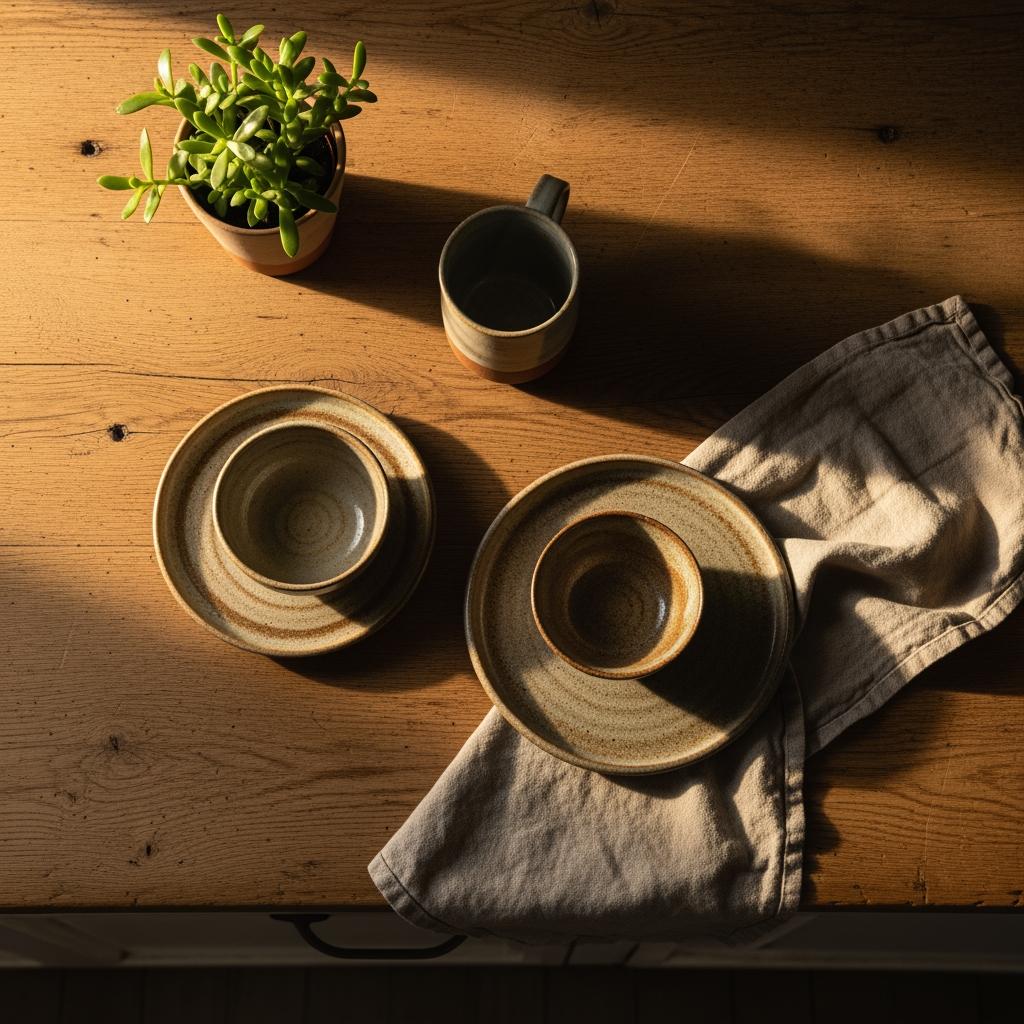
The secret to making thrifted pieces look intentional rather than random is ruthless color discipline.
You don’t need to match.
But you do need to stay within a palette.
My personal cottagecore kitchen palette is cream, sage green, dusty terracotta, warm wood, and the occasional soft blue-grey.
Every thrifted piece I bring home gets held up against that mental palette first.
If it fights it, I leave it behind — no matter how cute it is.
Warm neutrals are incredibly forgiving.
They let patterns coexist without competing.
A cream floral bowl next to a sage green mug next to a terracotta planter just works.
It feels like nature assembled it.

If you’re just starting out, pick three anchor tones and stick to them strictly.
As your eye develops, you’ll start to see which pieces belong and which ones will fight your space.
Trust your gut — it usually knows.
Small Details That Cost Almost Nothing But Feel So Intentional
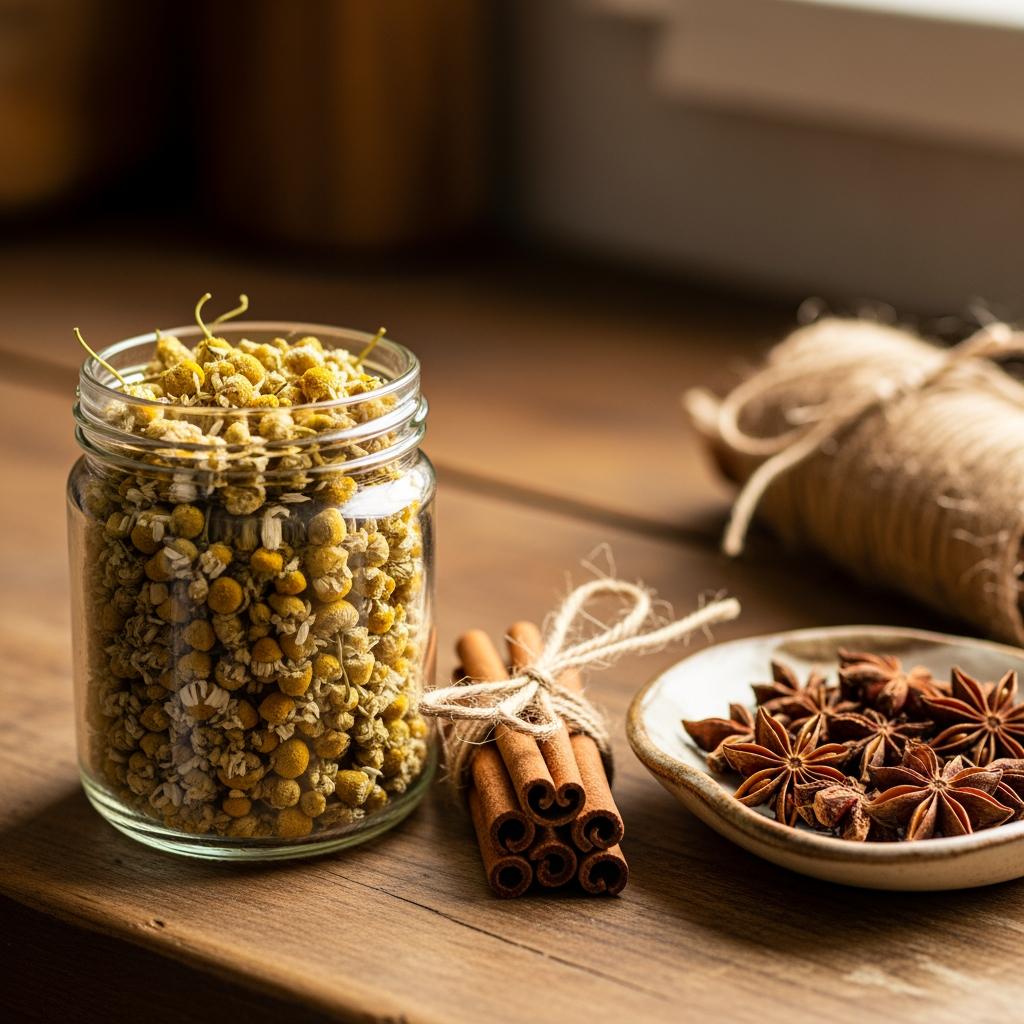
Sometimes the tiniest details are what make a space feel truly considered.
A little piece of twine tied around a bundle of cinnamon sticks.
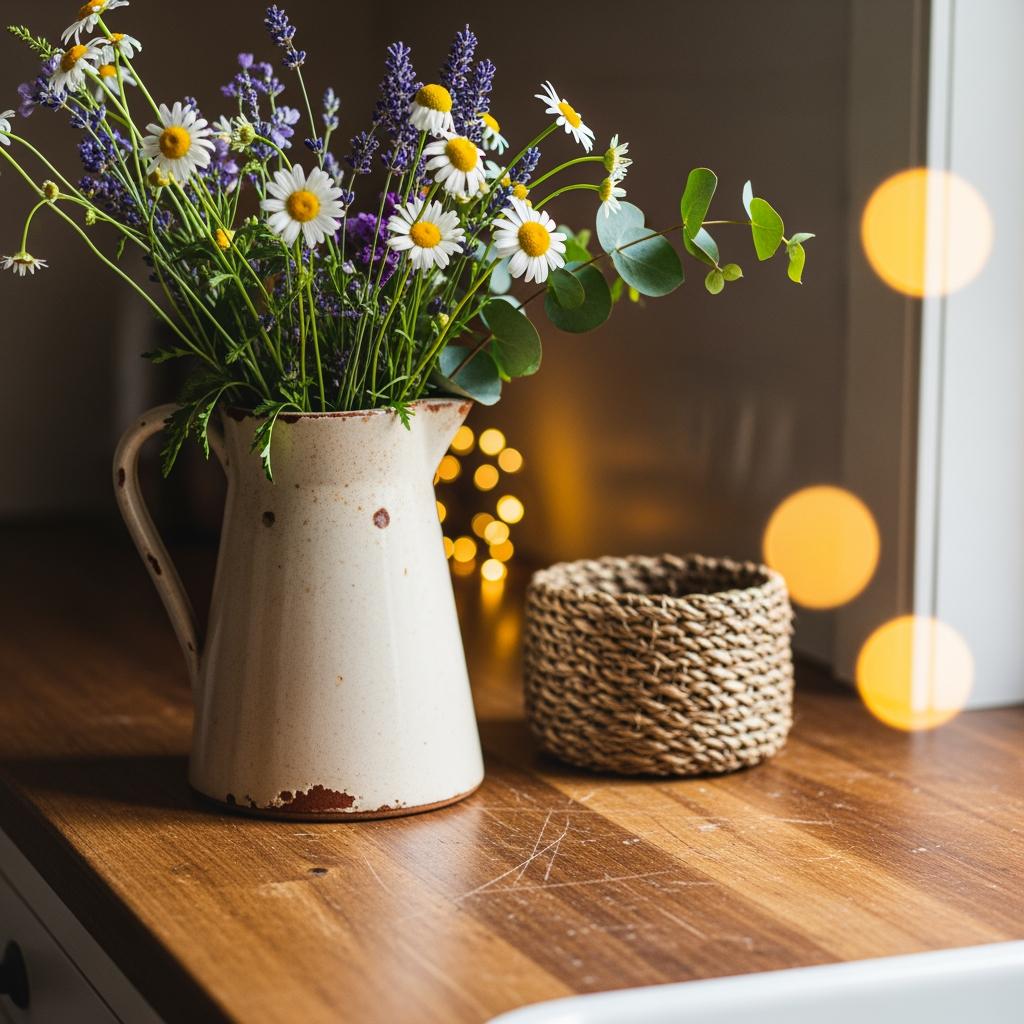
A single dried flower tucked into a ceramic pitcher.
A handwritten label on a jar.
Those micro-moments add up to something really special.
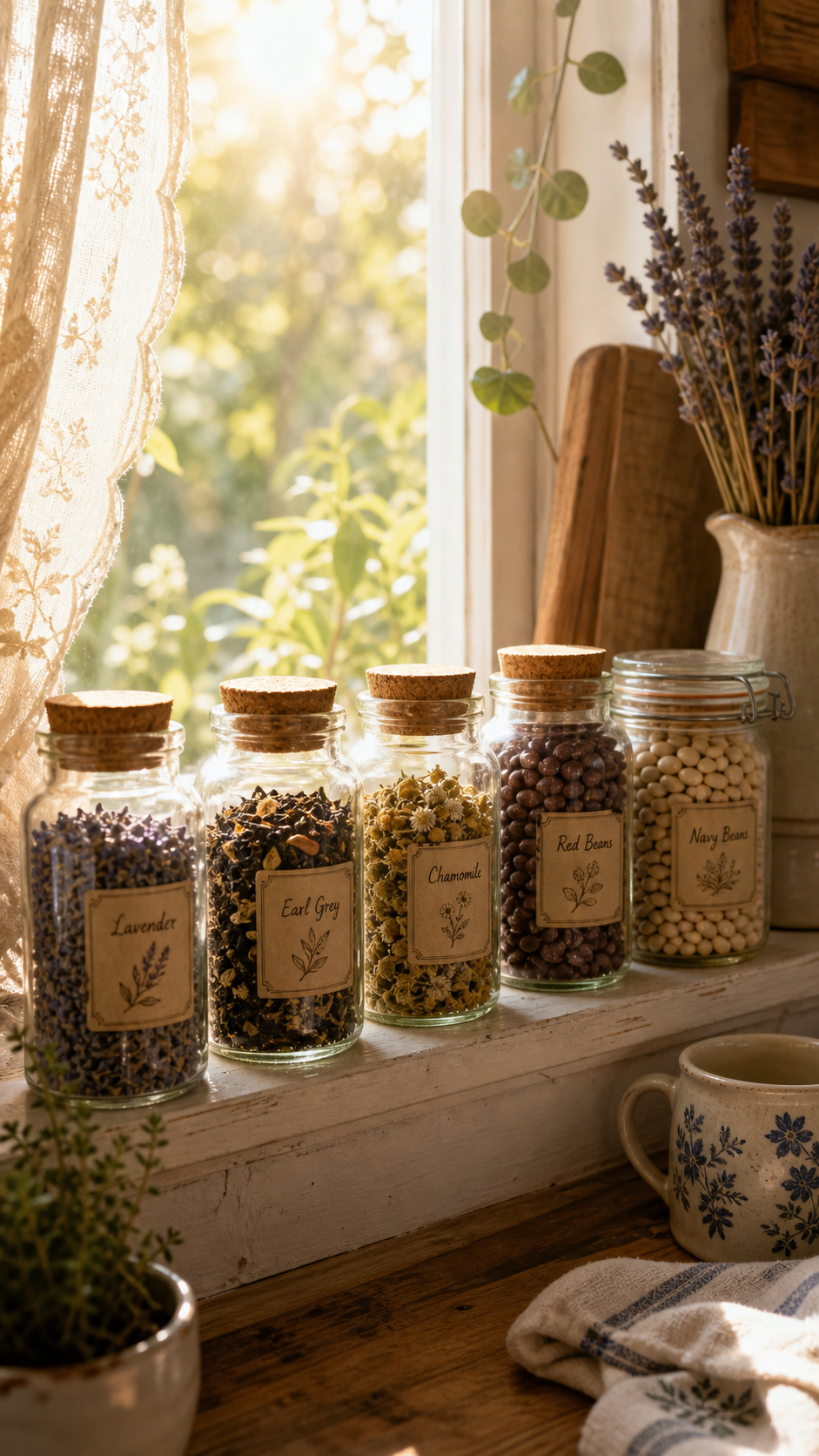
When I style my kitchen counter, I always add at least one thing that smells good — fresh herbs, dried lavender, a cinnamon stick bundle in a little dish.
The sensory experience of a space matters just as much as how it looks.
Old jam jars are one of my favorite thrift-adjacent finds.
Fill them with dried beans, pasta, loose leaf tea, or just decorative dried flowers.
Line them up on a shelf or windowsill.
Instantly charming.
Genuinely functional.
These small details don’t need to cost you anything significant.
That’s sort of the whole joy of this aesthetic — it rewards slowness, observation, and creativity far more than it rewards spending money.
Building Your Cottagecore Kitchen Over Time — Why the Slow Approach Is Actually Better
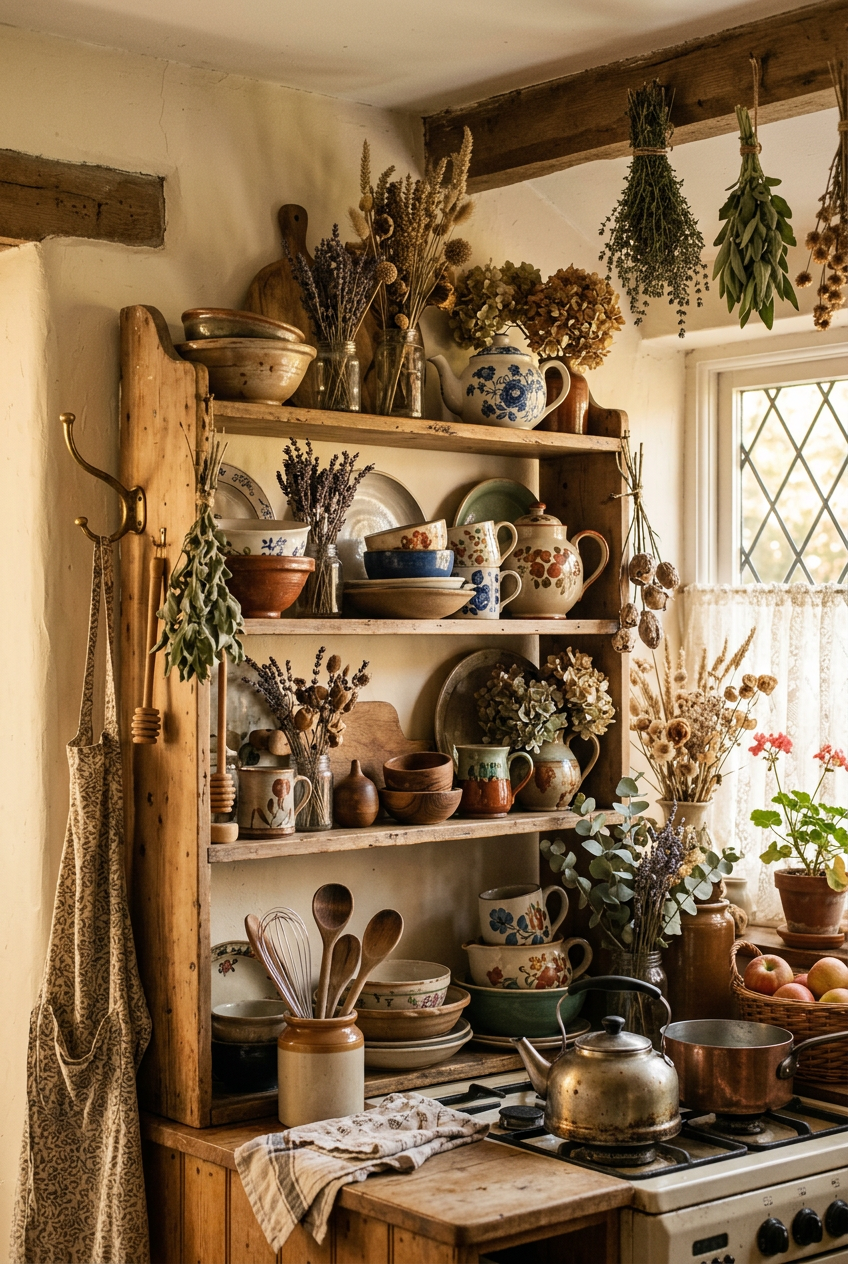
Here’s the thing nobody tells you about designing a beautiful home: the spaces that feel the most special are almost never finished all at once.
They’re built slowly.
Piece by piece.
Story by story.
Every time you find a beautiful thrifted piece, it carries a tiny bit of history with it.
And when you gather enough of those pieces together, your kitchen starts to feel genuinely collected rather than decorated.
That difference is everything in cottagecore.
I still add to my kitchen slowly.
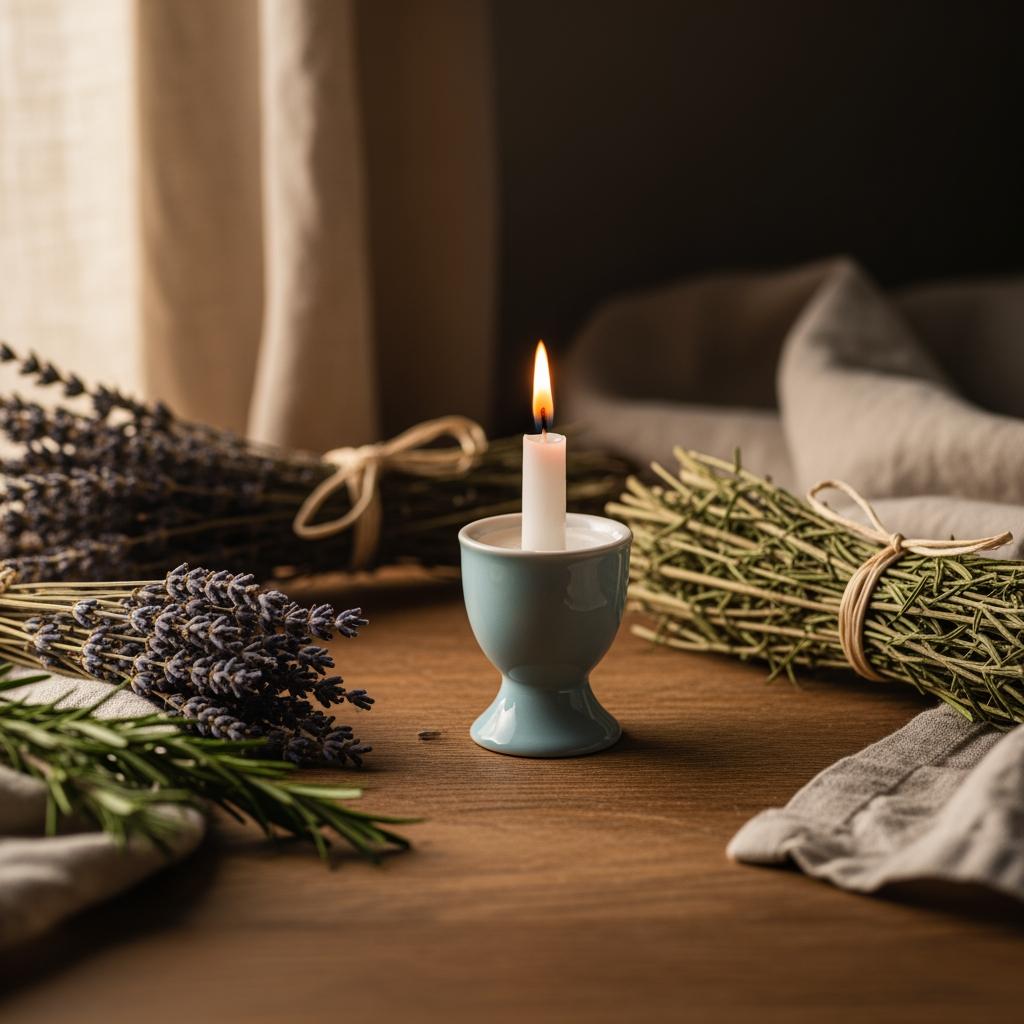
Last month I found the most perfect little ceramic egg cup in the softest pale blue.
I have no idea what I’ll use it for exactly — probably just to hold a small candle or a ring while I cook.
But it makes me smile every time I see it.
Give yourself permission to take your time.
Enjoy the hunting.
Enjoy the slow evolution of your space.
That joy — that gentle, unhurried process of gathering beautiful things — is honestly just as cottagecore as the aesthetic itself.