
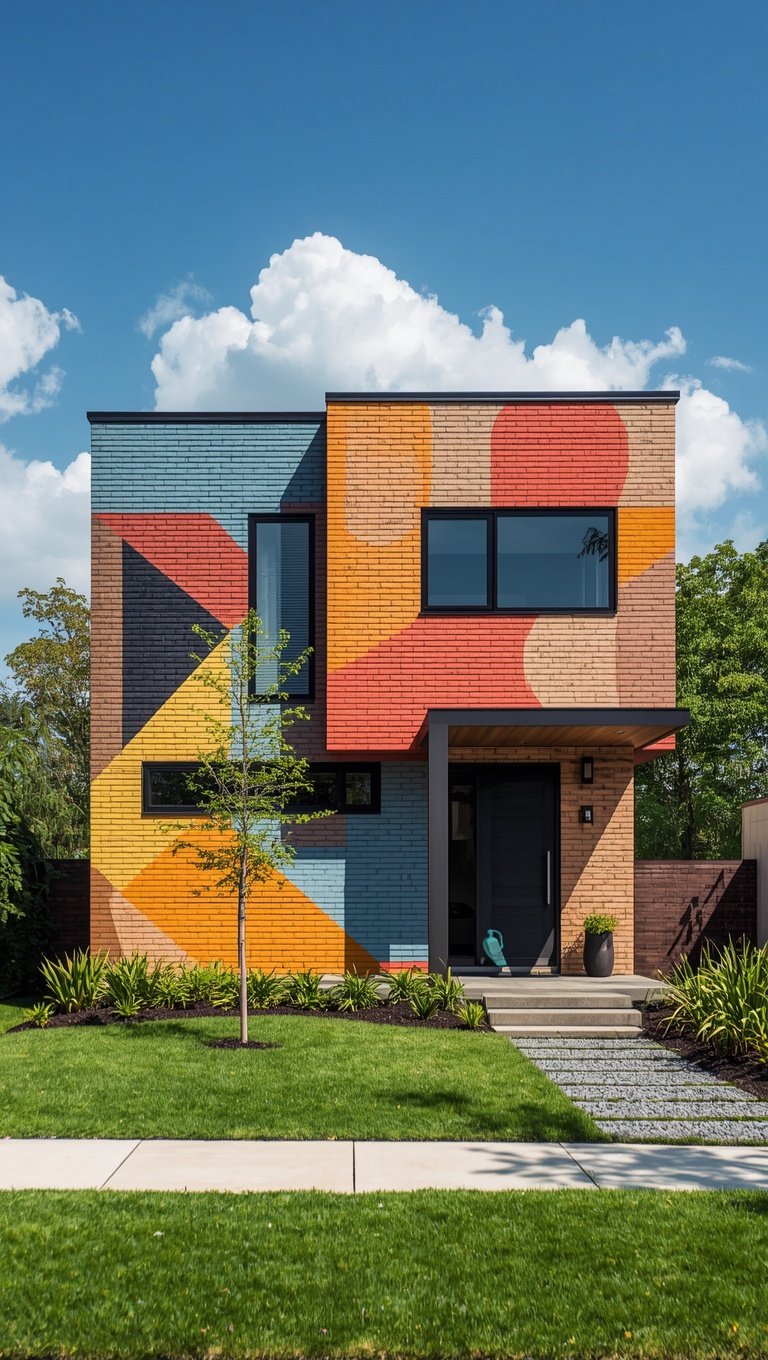

I still remember standing in my driveway, coffee in hand, squinting at my house like it had personally offended me.
The brick was fine.
Not ugly, not beautiful.
Just… there.
It had that sad, builder-grade orange-red tone that sort of blends into every other house on the street.
And I kept thinking — this house has bones.
Good bones.
It just needed something.
That’s when I started seriously looking into painted brick, and honestly?
It changed everything I thought I knew about curb appeal.
If you’ve been staring at your own tired brick exterior wondering if paint is the answer — I’m here to tell you, it very well might be.
Why I Think Painted Brick Gets Such a Bad Reputation

People hear “painted brick” and they panic a little.
“But won’t it peel?”
“Isn’t that permanent?”
“Will it hurt the resale value?”
I had every single one of those thoughts, you know.
And I get it — brick feels like this sacred, untouchable material.
Like painting it is somehow cheating.
But here’s the thing: painted brick has been a design staple in European architecture for centuries.
Those creamy white French farmhouses?
Painted brick.
Those moody charcoal English cottages?
Painted brick.
The reputation problem comes mostly from bad paint jobs — wrong product, no prep, no primer — not from the concept itself.
When it’s done right, painted brick doesn’t look like it’s hiding something.
It looks intentional.
It looks elevated.
It looks like someone actually cared about their home.
And that feeling?
That warmth you get when you pull into your own driveway and feel proud?
That’s worth everything.
The Creamy White Exterior That Feels Like a Fresh Start

If I had to pick one color that does the most heavy lifting in exterior design, it would be creamy white.
Not stark, blinding white — that can feel cold and almost clinical in full sun.
I’m talking about that warm, buttery, slightly-off white.
Think fresh linen.
Think a warm vanilla latte in a clean mug.
When I finally pulled the trigger on my own exterior, I tested about six different white swatches on the brick.
And the difference between them was wild.
Some looked green in the afternoon light.
Some looked almost lavender at dusk.
The one I landed on had just the tiniest hint of yellow undertone, and it made the whole house look like it was glowing.
Creamy white works especially well if you have darker shutters or a black front door — that contrast is chef’s kiss.
It also makes landscaping pop in a way that raw brick never quite does.
Your flowers look brighter.
Your greenery looks lusher.
Everything just feels more curated, more pulled together.
It’s sort of like putting a white linen tablecloth under a dinner spread — suddenly everything looks fancier.
My Obsession With Soft Sage Green Painted Brick
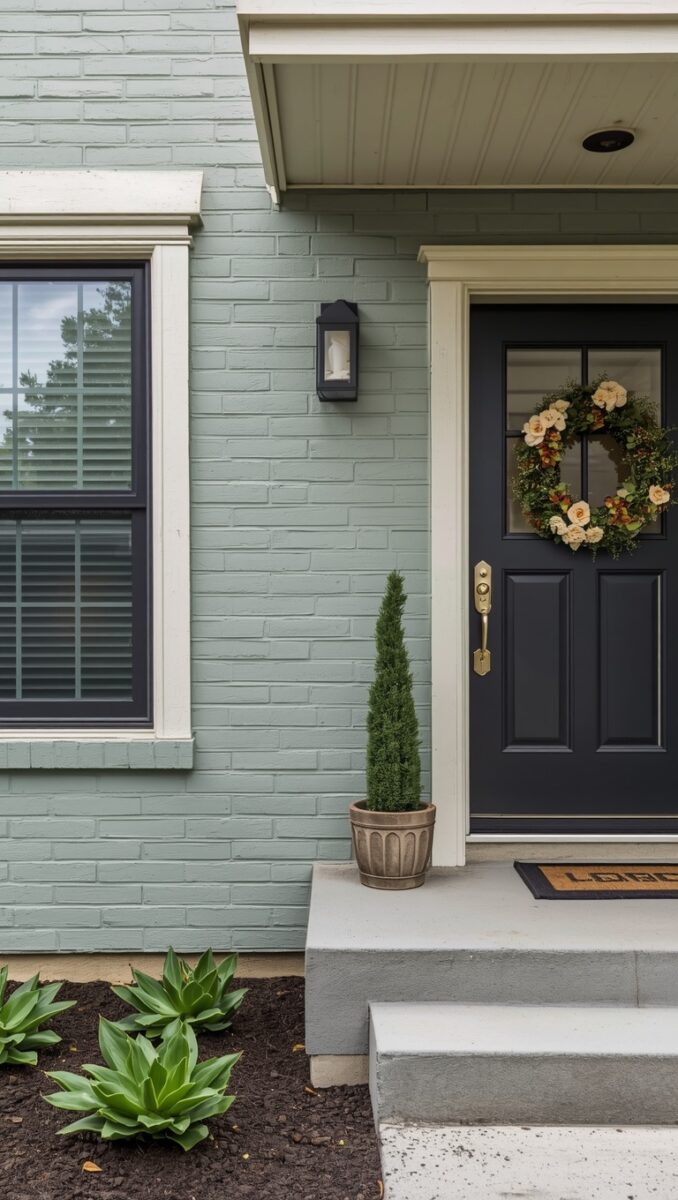 black front door, floral wreath, gold hardware, and potted topiary” class=”wp-image-49584″/>
Okay, I’ll admit it — when I first started seeing sage green brick exteriors on my inspiration boards, I was skeptical.
Green?
On a house?
But then I drove past one in my neighborhood on a rainy afternoon, and I completely stopped the car.
It was stunning.
The color was this dusty, muted sage — not too bright, not too gray — and it made the house look like it had been plucked straight from the English countryside.
Sage green works beautifully with natural wood accents.
Think a cedar front door, wooden porch beams, or even simple rattan light fixtures by the entrance.
The combination of cool green paint against warm wood tones creates this incredibly cozy, organic feeling.
Like the house belongs to the land around it.
I also love sage green on brick because it ages gracefully.
It doesn’t scream for attention.
It just quietly sits there looking refined and lived-in all at the same time.
If you have mature trees in your front yard, sage green will make your home look like it was meant to be nestled among them.
Bonus tip: pair it with matte black hardware and you have an exterior that looks genuinely designer-level.
The Bold Move — Dark Charcoal and Black Painted Brick

This one is not for the faint of heart, and I absolutely love that about it.
Painting your brick a deep charcoal or near-black is a statement.
It says: I know exactly what I’m doing, and I’m not here to blend in.
When I first started seeing dark painted brick homes, I thought they’d feel heavy or unwelcoming.
But in person?
They’re magnetic.
There’s something about a dark exterior that makes every single other detail — the bright white trim, the warm lighting, the lush green grass — pop with almost cinematic contrast.
It’s dramatic without being costume-y, you know?
Dark painted brick works especially well on homes with interesting architectural details — arched doorways, decorative molding, multi-pane windows.
Because the dark background makes all of those details suddenly visible in a way they never were before.
My personal tip: if you go dark, go all in on your exterior lighting.
Warm-toned sconces, a lit-up pathway, maybe some uplighting on a tree or two.
The glow against that dark brick at night is genuinely gorgeous.
Like a boutique hotel you actually get to live in.
Why Limewash Paint Is a Whole Different Experience

If traditional paint feels too permanent for you — I completely understand — limewash might be your answer.
And honestly?
It might be my favorite finish of all.
Limewash is a European technique that’s been used on brick and stone for literally hundreds of years.
It doesn’t sit on top of the brick like a coat of paint.
It soaks in.
Which means it breathes with the brick, it ages naturally, and it creates this gorgeous, textured, layered look that no regular paint can replicate.
When I first touched a limewashed brick wall, I was surprised by how soft and almost chalky it felt.
Not in a fragile way — in a warm, ancient, artisan way.
The effect is this beautiful variation in color.
Some patches lighter, some deeper.
Some almost translucent where the original brick peeks through.
It looks effortlessly imperfect, and that imperfection is exactly what makes it so beautiful.
If your goal is a home that looks like it has a century of warm, collected history — even if it was built three decades ago — limewash is your magic trick.
It’s also incredibly forgiving if you want to DIY, because the variations in application just add to the charm.
Choosing the Right Paint for Brick (What I Wish Someone Had Told Me)

I made a mistake on my first attempt, and I want to save you from it.
I used the wrong product.
Not all paints are created equal, and on brick specifically, you really need to use a masonry paint or an elastomeric coating.
These are formulated to flex slightly with the natural expansion and contraction of brick as temperatures change.
Regular interior or even exterior latex paint doesn’t do that.
And over time?
It cracks.
It peels.
It looks terrible.
I learned this the hard way on a small section of my garden wall, and I’m so glad it wasn’t my entire house.
Elastomeric coatings are thicker, they fill in small cracks naturally, and they create a waterproof seal that actually protects your brick long-term.
They’re also vapor-permeable, meaning moisture can still escape from the brick — which is crucial to prevent issues down the line.
My personal tip: always, always use a masonry primer first.
Brick is porous.
Without primer, your first coat of paint will soak right in and look patchy and sad.
Two coats of primer, two coats of paint, and you’ll have a finish that looks professional and lasts for years.
The Prep Work Nobody Talks About (But Really Matters)

Here’s the unglamorous part of painted brick that I feel like I need to be honest with you about.
The prep work is kind of everything.
You can have the most perfect color picked out, the best paint money can buy, and a gorgeous vision in your head — and if you skip prep, it will not look right.
I’m kindda obsessed with prep now, honestly.
It transformed my results completely.
First: your brick needs to be clean.
Really clean.
We’re talking power wash, let it dry fully — and I mean fully, like a week in dry weather — and then inspect every inch.
Any efflorescence (that white chalky mineral deposit that sometimes appears on brick)?
Scrub it off with a stiff brush and a masonry cleaner.
Any cracks or crumbling mortar?
Fill them in before you even think about picking up a brush.
The reason this matters so much is that paint will highlight every single imperfection rather than hide it.
A clean, repaired surface gives you that smooth, intentional finish that looks like a professional did it.
A rushed surface looks rushed.
And after all the effort you’re putting into this project, you deserve the gorgeous result.
How Painted Brick Changes the Way Natural Light Hits Your Home

This is something I didn’t fully appreciate until after I painted my own exterior, and now I think about it all the time.
Light behaves completely differently on painted brick versus raw brick.
Raw brick has a sort of flat, matte texture that absorbs light and doesn’t do much with it.
Painted brick — especially in lighter tones — catches light.
In the early morning, a creamy white brick exterior glows with this soft, golden warmth that makes your whole house look like it’s lit from within.
In the late afternoon, the light rakes across the texture of the brick and creates these beautiful, subtle shadows that add depth and dimension.
It’s sort of like the difference between unfinished hardwood floors and a beautifully stained, finished floor.
Same material, completely different visual experience.
This light-catching quality is especially worth thinking about if your home faces east or west.
You’ll get these gorgeous golden-hour moments every single day.
And honestly?
Standing in your front yard with a glass of wine at sunset, watching your house glow in that warm light?
It’s one of those small, everyday luxuries that makes homeownership feel genuinely wonderful.
Small Details That Make a Painted Brick Exterior Look Complete

Paint is the foundation.
But it’s the small details that make it feel finished and intentional.
This is where I love to get a little obsessive, honestly.
House numbers.
Please, please update your house numbers if they’re the builder-grade bronze plastic ones.
Matte black numbers mounted on a clean white plaque, or sleek brushed brass on a dark exterior — the difference is remarkable.
Exterior light fixtures.
This is one of the highest-impact, relatively affordable changes you can make alongside painting.
A beautiful lantern-style sconce or a modern cage light completely changes the personality of your front entrance.
Shutters.
If your home has shutters, make sure they’re in good condition and in a color that complements your new brick.
Crisp black shutters on white brick is timeless.
Deep green shutters on a gray brick look really rich and intentional.
And then there’s the front door itself.
I could write an entire post just about front doors.
A freshly painted door in a beautiful, considered color is sort of like putting on the perfect accessory with an outfit.
It pulls everything together.
It makes a statement.
And it makes people smile when they walk up to your house.
The Emotional Reason Painted Brick Actually Works

I want to talk about something that doesn’t usually come up in home design content, but I think it’s sort of the whole point.
Painted brick works — not just visually, but emotionally.
When you drive up to a home that has been thoughtfully painted, you feel something before you even consciously process what you’re looking at.
You feel like someone loves that home.
Like someone made intentional choices.
Like the inside is probably just as warm and considered as the outside.
That’s the power of exterior design — it communicates care.
And I think that’s why so many people feel transformed by this project, even more than they expected to.
It’s not just about making the house prettier.
It’s about finally feeling like your home reflects you.
Your taste.
Your warmth.
The home you’ve been building and tending to and loving for years.
When I stood in my driveway after our exterior was done, coffee in hand again, I felt this wave of quiet pride that I really wasn’t prepared for.
The house finally matched the feeling inside.
And that?
That’s the whole reason to do it.
My Honest Tips Before You Start Your Painted Brick Project

Okay, friend — before you run out and buy paint, let me share a few things I genuinely wish I had known going in.
Test your color in multiple lights. Paint a large swatch — like, at least two feet by two feet — and look at it in the morning, midday, and evening.
Brick colors shift dramatically throughout the day.
Don’t skip the moisture test. Hold plastic wrap against your brick and tape it down for 24 hours.
If moisture collects underneath, you have a moisture issue that needs to be addressed before painting.
Trapping moisture under paint causes serious problems.
Think about your roof color. This sounds obvious but it’s easy to forget.
A warm-toned roof works beautifully with creamy whites and warm grays.
A cool-toned roof pairs better with true whites, cool grays, and greens.
Hire out the hard parts if you need to. Power washing and prepping a full house exterior is genuinely hard work.
If your budget allows, having a professional do the prep and you do the painting is a totally valid approach.
Give yourself grace on the timeline. This project takes longer than you think.
And that’s okay.
The result is so, so worth it.
Trust the process, love every step of it, and enjoy the absolute glow-up that’s waiting on the other side.