
I’ll never forget the moment I walked into my living room last spring and realized my coffee table was stuck in a time warp.
Everything else felt fresh—new throw pillows, that gorgeous linen sofa I’d saved up for—but something was off.
Then it hit me: my coffee table was silently screaming 2010.
You know that sinking feeling when you realize one piece is dragging down your whole space?
That was me, standing there with my iced coffee, finally seeing what had been right in front of me for months.
Turns out, coffee tables are sneaky little style saboteurs.
They’re the center of your living room, literally, and when they’re wrong, everything feels wrong.
So I started fixing mine, piece by piece, and honestly?
The transformation was kind of shocking.

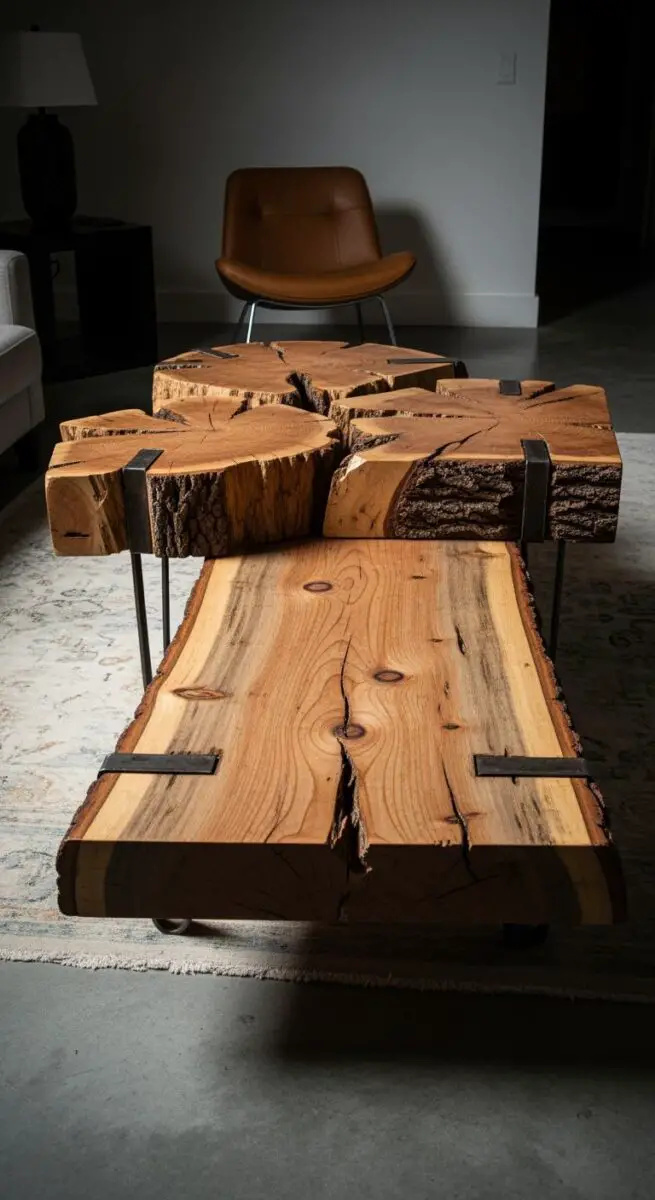
Oversized, Chunky Wood Slabs
I used to think bigger was always better when it came to coffee tables.
That massive reclaimed wood slab I bought years ago felt so statement-making at the time.
But here’s what I’ve learned: those super thick, ultra-rustic chunky tables can make a room feel heavy and stuck in the farmhouse trend that’s already passed its peak.
Don’t get me wrong—I love wood, I really do.
But when the table is so bulky it visually weighs down the entire seating area, it’s a problem.
My living room felt cramped even though I had plenty of space.
The fix wasn’t to ditch wood entirely, but to go for something with cleaner lines and a lighter visual weight.
I swapped to a wood table with slimmer legs and a thinner top, and suddenly the room could breathe again.
If you’re holding onto one of those mega-slabs, consider switching to something more refined.
Look for wood tables with interesting grain but streamlined proportions.
Or mix materials—wood with metal or glass—to keep it from feeling like a log cabin reject.
Your space will instantly feel more current and open.
Madison’s Current Obsessions
Why Settle For Average? These Baddie Apartment Ideas Will Make Your Space Pop!Matchy-Matchy Furniture Sets
This one hurt to admit, but I bought my coffee table as part of a living room “set” years ago.
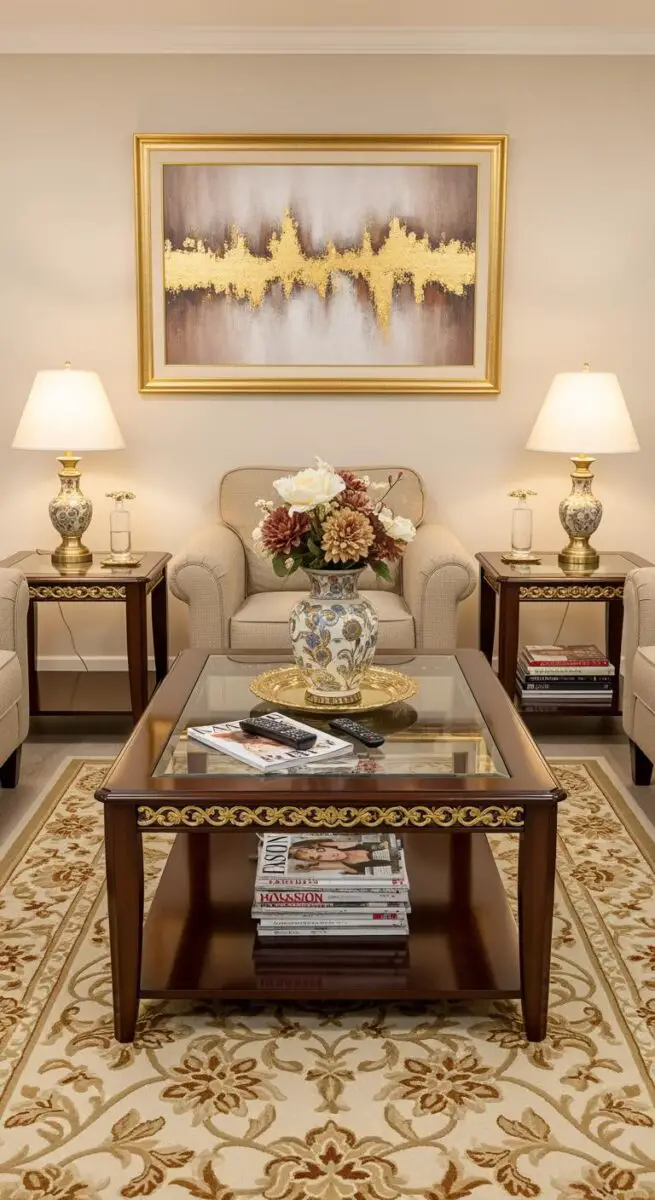
You know the ones—coffee table, two end tables, maybe a console, all perfectly matching.
It felt safe at the time, like someone else had done the design work for me.
But matching sets make a room feel catalog-stiff and completely devoid of personality.
When I finally broke up the set, it was like my living room started actually reflecting me instead of a furniture showroom.
I kept one end table and let the coffee table go.
Then I brought in a vintage brass and glass coffee table I found at an estate sale.
The mix instantly made everything feel more collected and intentional, like I’d curated pieces over time instead of buying everything on one Saturday.
If your coffee table matches your end tables exactly, I’m giving you permission to shake things up.
Mixing different materials, finishes, and even styles creates visual interest and feels so much more sophisticated.
Your living room should tell a story, not look like page 47 of a catalog.
Design Your Dream Room in Minutes! By DreamyHomeStyle
🏡 Start Creating FREE →Madison’s Current Obsessions
Why Not Add A Touch Of Luxury To Your Home With Dark Maximalism? Let’s Get Inspired!Glass Tables with Thick Black Frames
I see these everywhere in older apartments and homes, and they scream early 2000s.
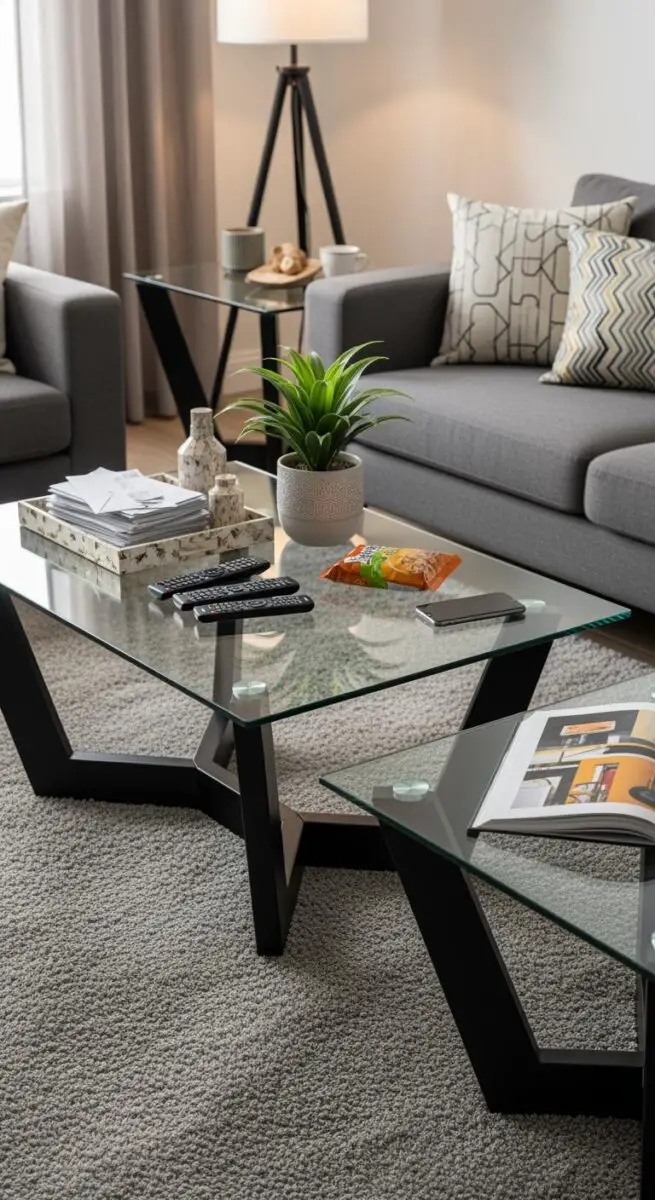
Those heavy black metal frames around a glass top felt modern once, but now they just feel dated and industrial in the wrong way.
The thick black borders cut up the visual flow of a room and make everything feel boxed in.
I had one in my first apartment, and I thought it was so chic.
Looking back at photos now, I cringe a little.
If you love the lightness that glass brings—and honestly, glass can be so good in small spaces—opt for tables with minimal or no visible frame.
I’m obsessed with glass tables that have brass, gold, or even clear acrylic bases now.
They give you that airy, open feeling without the clunky prison-bar vibe.
Or go for a softer metal like brushed nickel or chrome with delicate, thin legs.
The difference is night and day.
Your room will feel current and elegant instead of like a 2005 bachelor pad.
Glass can absolutely work, but the frame makes all the difference.
Madison’s Current Obsessions
13 Magical Decor Ideas for a Whimsical HomeTables That Are Too High or Too Low
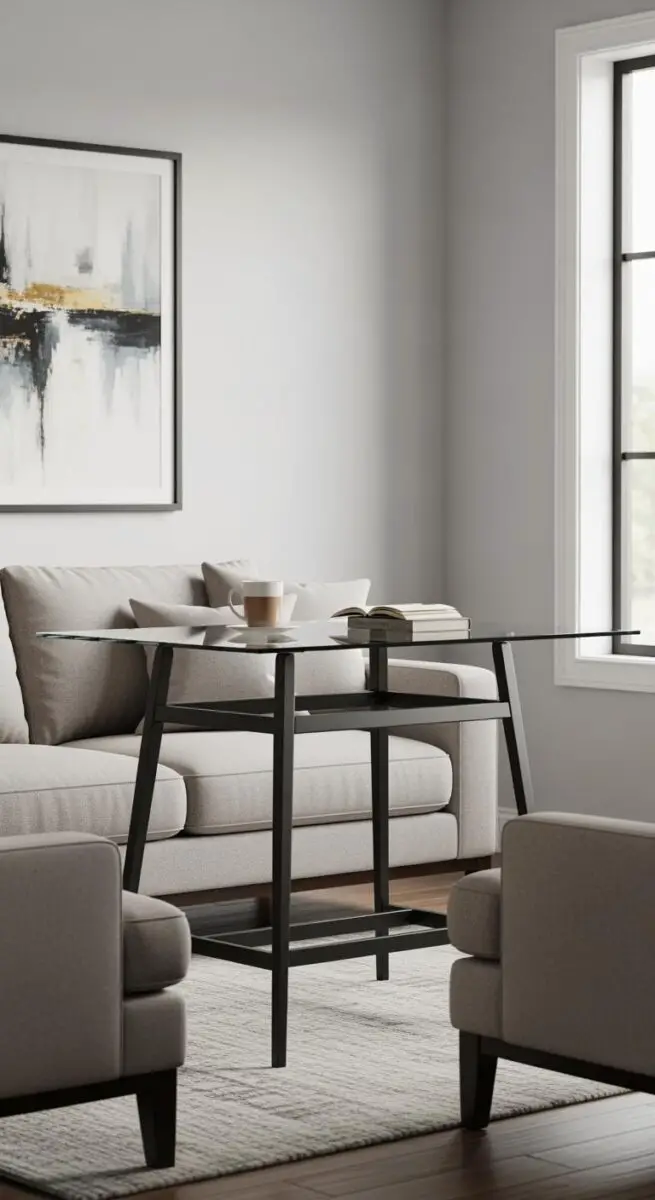
Proportion matters so much, and I learned this the hard way.
I once bought a coffee table that was absolutely gorgeous—vintage, perfect patina, great price.
But it sat about four inches too low compared to my sofa seat height.
Every time I reached for my mug, I had to do this awkward bend that made me feel like I was camping.
On the flip side, I’ve been in living rooms where the coffee table is basically level with the sofa seat, and it just looks wrong.
The ideal height is usually about one to two inches lower than your sofa cushions.
This creates a natural, comfortable reach and keeps the visual flow balanced.
When the proportion is off, the whole room feels off, even if you can’t immediately pinpoint why.
It’s one of those subtle things that dates a space because it signals that the furniture wasn’t chosen thoughtfully.
Before you buy, always measure your sofa seat height.
Bring a tape measure to the thrift store, the estate sale, wherever.
I know it sounds fussy, but getting the height right makes such a difference in how current and cohesive your space feels.
Madison’s Current Obsessions
Unleash Bold Style with 13 Maximalist Decor IdeasAll-White or All-Black Everything

I went through a phase where I thought monochrome was the height of sophistication.
My living room was all white and black—black coffee table, white sofa, black frames, you get it.
It felt very “minimalist chic” at the time.
But now I realize it just felt cold and kind of one-note, like I was afraid of color or texture.
All-black coffee tables, especially those super shiny lacquered ones, can make a room feel harsh and dated.
All-white can feel sterile and honestly, really impractical.
What’s missing is warmth, depth, and variation.
I started bringing in warmer tones—a coffee table with wood and cream tones, or one with a soft terracotta base.
Suddenly my living room felt like a place I actually wanted to curl up in.
Neutrals are still amazing, but they need layers.
Think creams, taupes, warm whites, soft grays mixed with natural materials.
Your coffee table is the perfect place to introduce this warmth.
A table with natural wood, woven elements, or even a soft-colored stone top can anchor the room without that stark, dated monochrome vibe.
Madison’s Current Obsessions
Revamp Your Space: 13 Striking Black Trim Ideas That Will Transform Your Interior DesignOverly Trendy Shapes from Years Ago

Remember when every coffee table had to be an irregular organic shape?
Or those super geometric, faceted tables that looked like crystals?
I bought into the geometric trend hard, and now that table lives in my basement.
Trends move fast in furniture, and when your coffee table is too tied to a specific moment, it ages your whole room.
Those abstract blob shapes from a few years ago, the super angular mid-century knockoffs, the tables shaped like tree stumps—they all scream their era.
I’m not saying go boring, but there’s a difference between timeless interesting and trendy interesting.
Now I lean toward simple shapes—rectangles, rounds, ovals—with interest coming from materials or subtle details instead of wacky silhouettes.
A simple round table with a beautiful stone top or interesting base will outlast a wiggly amoeba-shaped table every single time.
If your coffee table shape makes you think “oh yeah, everyone had these in [specific year],” it might be time for a change.
Classic shapes feel current longer because they let other elements of your room shine.
Madison’s Current Obsessions
13 Enchanting Fall Decor Ideas To Transform Your HomeFaux Marble or Faux Anything, Honestly

I have strong feelings about this one.
That fake marble laminate or printed faux stone top might have saved you money, but it’s probably dating your space big time.
Faux finishes almost never look as good as the real thing, and they tend to look cheaper and more dated as time goes on.
I had a coffee table with a faux marble top that I convinced myself looked “fine.”
But every time someone came over, I could see them clock it—that quick glance that said “oh, that’s not real.”
It made the whole room feel less elevated.
Real materials—actual wood, stone, metal, glass—age beautifully and feel substantial.
If real marble or stone is out of budget (totally understandable), go for honest materials instead.
A simple wood table or a ceramic top beats faux marble every time.
There’s no shame in working with what you can afford, but trying to fake luxury usually backfires.
I’d rather have a beautiful, simple wood table than a plastic-y “marble” one any day.
Your room will feel more authentic and current when the materials are real, even if they’re humble.
Madison’s Current Obsessions
Genius Hacks to Transform Your Tiny Studio into a Dream HomeLack of Legs (Platform or Solid Base Styles)
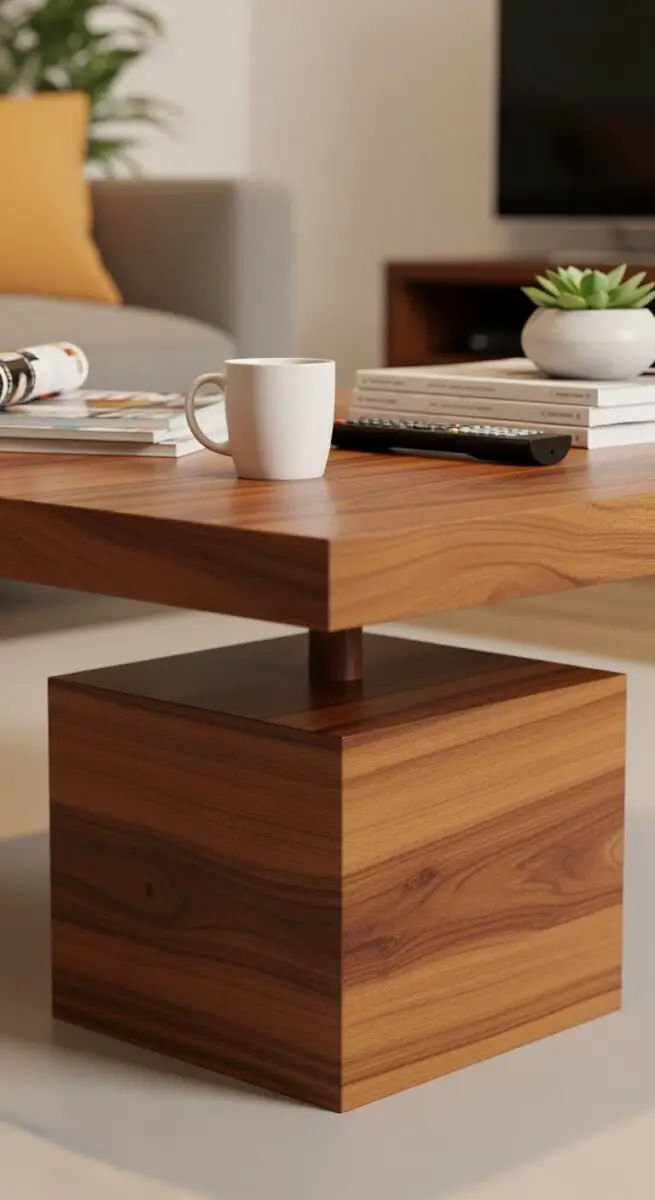
Those solid, blocky coffee tables that sit directly on the floor with no visible legs used to feel so modern and architectural.
I see them in older condos all the time.
But now they make a room feel heavy and visually closed off.
Tables with legs—even short ones—create a sense of lightness because you can see through and under them.
This visual breathing room is everything in making a space feel current and open.
I swapped out a solid cube-style table for one with slim tapered legs, and my living room instantly felt bigger and airier.
It’s wild how much difference that little bit of visible floor makes.
If you’re attached to a platform-style table, you might be able to add feet or legs to it with some DIY work.
Or just accept that it’s time to move on.
Look for tables with interesting leg designs—tapered, hairpin, curved, whatever speaks to you.
Just make sure you can see under the table.
That openness is key to a fresh, modern feel.
Madison’s Current Obsessions
Why These 12 Bookshelf Ideas Will Make You Rethink Your Space!Skipping Texture and Going Flat
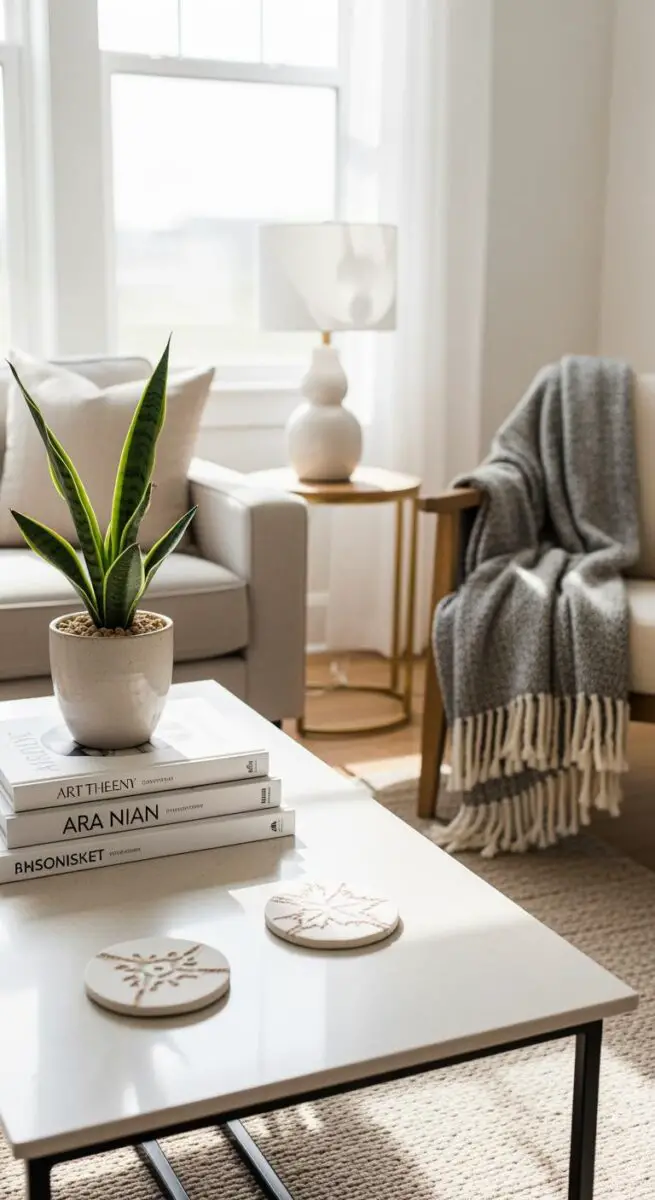
The last mistake I see all the time is coffee tables that are just… flat.
Smooth, one-dimensional, no visual or tactile interest.
A glossy laminate top with nothing happening, a plain painted surface, something that just sits there doing the bare minimum.
Texture is what makes a room feel rich and layered and current.
I swapped a boring smooth-top table for one with a textured ceramic glaze, and the difference was incredible.
Suddenly there was something to notice, something that caught the light differently throughout the day.
Look for tables with interesting surfaces—wood with visible grain, stone with natural variation, woven rattan, hammered metal, anything with dimension.
Even a table with a subtle texture elevates the whole room.
If you already have a flat table, you can add texture through styling—a woven tray, linen coasters, a textured ceramic bowl.
But ideally, the table itself brings something tactile to the space.
This is what separates a room that feels expensive and thoughtful from one that feels generic and dated.
Texture adds warmth, personality, and visual intrigue—all things that make a living room feel like it was designed with care.