
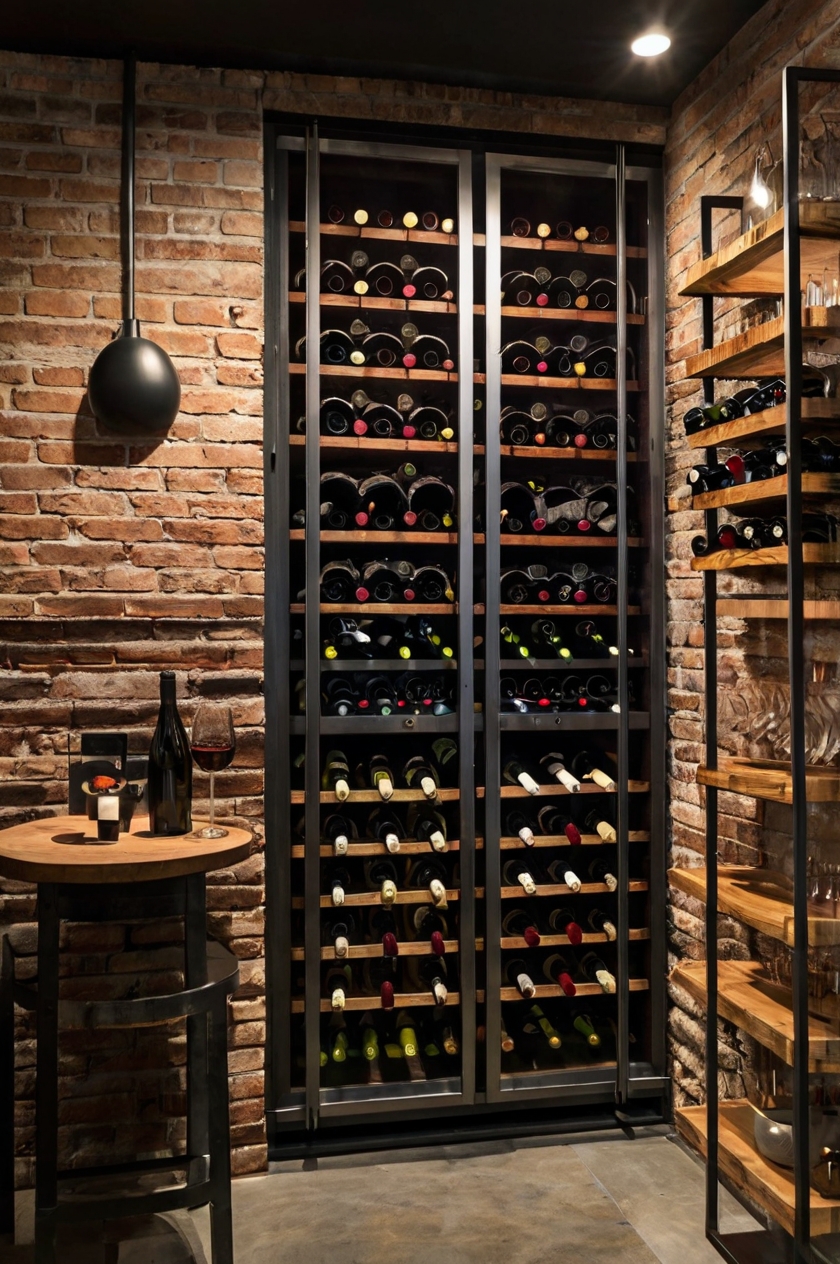

Wine storage has officially moved from dusty basement corners to stunning showpiece spaces that rival your favorite tasting room.
Modern homeowners are ditching the old-school cellar mentality and transforming every possible nook into Instagram-worthy wine displays that actually work.
If you’ve got a growing collection of bottles or just want to store your weekend favorites in style, these ten innovative ideas prove you don’t need a mansion to create the wine storage setup of your dreams.
Design Your Dream Room in Minutes! – By Madison
🏡 Start Creating FREE →Floor-to-Ceiling Glass Wine Walls That Stop Traffic
Your dining room is about to become the most talked-about spot in your entire house.
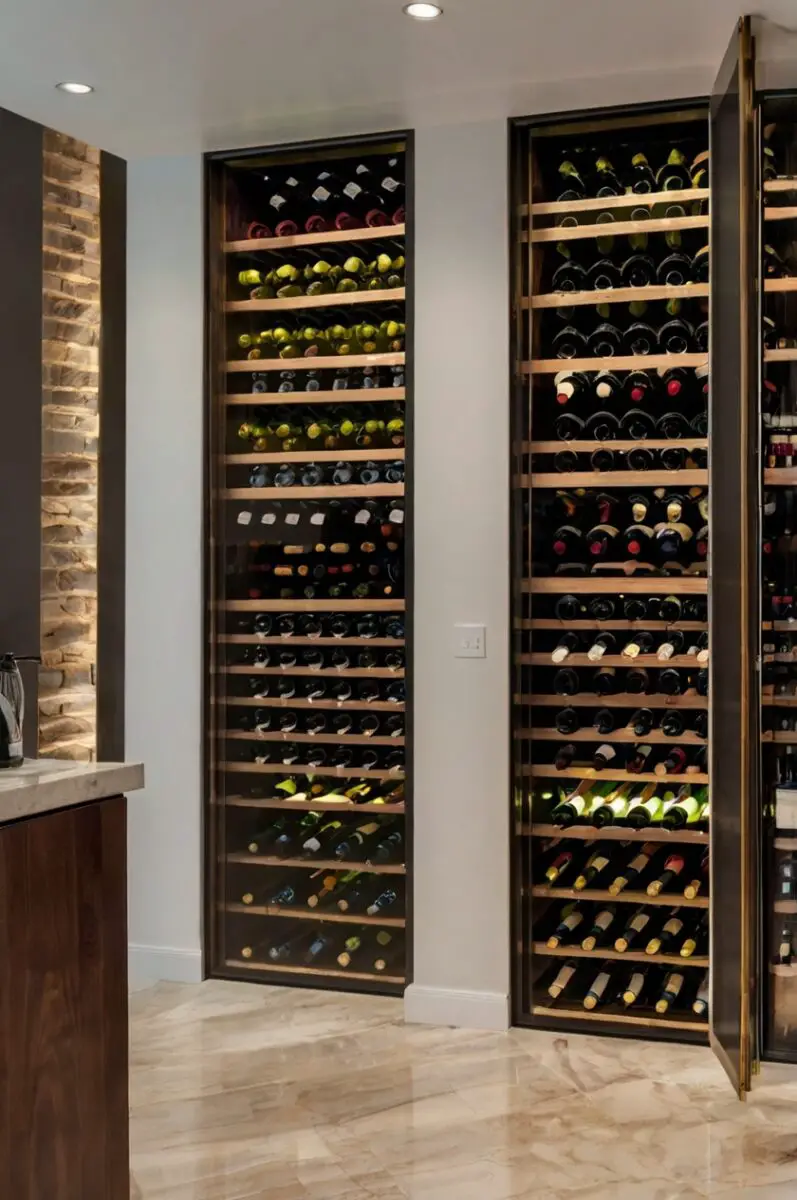
Glass-enclosed wine walls are taking over modern homes because they turn your collection into living art that guests can’t stop staring at.
These transparent displays showcase every bottle from floor to ceiling, creating a dramatic focal point that works as both functional storage and a conversation starter that never gets old.
The beauty of glass wine walls lies in their ability to blend seamlessly with any interior design style while making a bold statement.
You can install them between rooms as architectural dividers, turning dead wall space into a temperature-controlled showcase that adds serious value to your property.
Modern refrigeration technology makes these installations surprisingly energy-efficient, with climate control systems built directly into the framework.
You’re looking at consistent temperatures between 55-58°F and humidity levels that keep corks from drying out, all while the LED lighting makes each bottle pop against the glass.
Installation typically involves working with specialized contractors who understand both wine storage requirements and structural engineering.
The glass panels are usually triple-paned with UV protection to prevent light damage, while the metal racking systems can hold hundreds of bottles in configurations that fit your exact space dimensions.
The cost ranges wildly depending on size and features, but entry-level systems start around $5,000 for smaller walls, while elaborate floor-to-ceiling installations can run $20,000 or more.
The investment pays off in both daily enjoyment and resale value, especially in markets where wine culture runs deep.
Maintenance stays minimal since the enclosed environment protects bottles from dust and keeps temperature fluctuations at bay.
You’ll spend more time showing off your collection than actually maintaining the system itself.
The real magic happens when you dim the dining room lights and let the wine wall’s LED strips create ambiance.
That soft glow filtering through hundreds of bottles creates an atmosphere that fancy restaurants charge premium prices to replicate, and you’ve got it right in your own home.
Under-Staircase Wine Cellars That Make Every Step Count

That awkward space under your stairs just became prime real estate for your growing wine obsession.
Under-staircase wine cellars maximize forgotten square footage that most homeowners waste on random storage junk nobody actually needs.
This clever conversion transforms an architectural dead zone into a custom climate-controlled cellar that fits perfectly into the sloped space without requiring major construction or permits in most areas.
The angled ceiling works perfectly for wine storage since you can install custom racking that follows the staircase slope.
Shorter bottles go toward the low end while larger formats fit comfortably where ceiling height allows, creating a visually interesting display that makes the most of every available inch.
Modern designers are getting creative with access points, installing everything from traditional doors to dramatic glass panels that let you peek at your collection while walking by.
Some homeowners go all-in with full glass fronts and interior lighting that turns the space into a glowing feature that draws the eye throughout the day.
Climate control for under-stair cellars comes easier than you’d think, with compact cooling units specifically designed for small spaces.
These whisper-quiet systems maintain perfect storage conditions without the noise complaints that plague older refrigeration setups, and they tie into your home’s electrical without requiring massive upgrades.
The installation process typically takes a skilled contractor one to two weeks from start to finish.
They’ll need to insulate the space properly, install vapor barriers to prevent moisture issues, and ensure the cooling system has adequate ventilation to work efficiently for years to come.
Budget-wise, you’re looking at anywhere from $3,000 for basic setups to $15,000 for high-end installations with custom millwork and premium cooling systems.
The beauty is that you’re using space that literally served no purpose before, so the return on investment feels even sweeter.
Capacity varies based on your staircase dimensions, but most under-stair cellars comfortably hold 200-500 bottles.
That’s enough room to build a serious collection without taking up valuable basement or garage space that you actually need for other stuff.
Ready to Master the Kallax?
Transform your IKEA cube storage into custom furniture that fits your space perfectly. Get my complete guide with 100+ detailed projects, material lists, and pro tips.
“The IKEA Kallax Bible: 100+ Ways to Transform Cube Storage into Custom Furniture”
Boutique Wine Closets That Hide In Plain Sight

Your spare bedroom closet just went from storing old clothes to housing liquid gold in temperature-controlled luxury.
Converting an existing closet into a wine storage room requires minimal construction while delivering maximum impact on your home’s functionality.
This approach works brilliantly for apartments and smaller homes where dedicated cellar space simply doesn’t exist, turning 20-30 square feet into serious wine storage that preserves your bottles properly.
The process starts by stripping the closet down to studs and installing proper insulation rated for cold storage applications.
Vapor barriers go in next to prevent condensation from wreaking havoc on your walls, followed by moisture-resistant drywall that can handle the constant humidity without developing mold or degradation over time.
Cooling units designed for closet conversions mount through exterior walls or tie into existing HVAC systems.
These compact powerhouses maintain steady temperatures regardless of what’s happening in the rest of your home, protecting your investment from the temperature swings that turn great wine into expensive vinegar.
Racking options range from simple wooden shelves to elaborate custom systems with display rows, bulk storage, and specialized slots for champagne bottles.
You can pack in 300-600 bottles depending on closet size and how you configure the layout, with options for diamond bins, individual bottle storage, or a mix that suits your collecting style.
Lighting transforms these converted spaces from purely functional to genuinely gorgeous.
LED strips with adjustable color temperatures let you create ambiance while protecting bottles from harmful UV exposure, and motion sensors mean you never fumble around in the dark searching for that specific bottle.
The price tag for closet conversions typically lands between $4,000 and $12,000 depending on cooling system choice and racking materials.
That’s incredibly reasonable when you stack it up against building a traditional cellar from scratch, and you’re using space that already exists within your home’s footprint.
Smart homeowners are taking things further by adding small counters or tasting areas right outside the closet door.
This creates a mini wine experience without requiring a massive dedicated room, perfect for sampling bottles before dinner parties or simply enjoying an evening glass in style.
Design Your Dream Room in Minutes! – By Madison
🏡 Start Creating FREE →Kitchen Island Wine Storage That Brings The Bar Home

Your kitchen island is getting a serious upgrade that makes entertaining infinitely easier and way more impressive.
Integrated wine storage built directly into kitchen islands puts your favorite bottles exactly where you need them while cooking and entertaining.
This trend eliminates running to separate cellars or refrigerators mid-recipe, keeping everything within arm’s reach while adding serious style points to your kitchen’s central gathering spot.
Modern island designs incorporate wine fridges, open racking, or a combination that serves both chilled whites and room-temperature reds.
The refrigerated sections maintain perfect serving temperatures for wines that need serious cooling, while open displays showcase special bottles that deserve to be seen and easily accessed during meal prep.
Installation works best during kitchen remodels, but skilled contractors can retrofit existing islands with some creative carpentry and electrical work.
The key is ensuring adequate ventilation for refrigerated units, which need proper airflow to function efficiently without overworking their compressors and driving up energy bills.
Capacity in island installations typically ranges from 20-50 bottles depending on how much space you’re willing to dedicate.
Some homeowners split their islands between wine storage and other features like warming drawers or extra dishwashers, creating ultimate entertaining command centers that handle everything from prep to cleanup.
The visual impact hits immediately when guests walk into your kitchen and spot those bottles gleaming from within the island.
It signals that this is a home where food and wine get taken seriously, setting the tone for memorable dinners before anyone even sits down at the table.
Pricing varies wildly based on whether you’re doing a full island build or adding components to existing structures.
Built-in wine fridges alone run $800-$3,000, while custom millwork and expanded islands can push total costs to $10,000 or more when you factor in countertop extensions and electrical upgrades.
The functionality extends beyond just storage since many island wine sections include stemware racks hanging overhead.
This puts glasses right above the bottles, creating an efficient setup that speeds up both serving and cleanup while looking exceptionally polished.
Daily use proves the real value as you reach for cooking wines without leaving the stove, grab bottles for guests without missing conversation, and keep your counters clear of random wine racks that clutter up valuable workspace.
Everything flows better when the wine lives where the action happens.
Wine Cellars With Dedicated Tasting Lounges

Your basement is about to become the destination spot that keeps guests lingering long after dinner ends.
Combining wine storage with an actual tasting lounge creates a complete experience that rivals your favorite wineries.
These dual-purpose spaces pair climate-controlled storage with comfortable seating areas, tasting bars, and ambiance that makes every bottle feel like a special occasion worth savoring properly.
The layout typically positions floor-to-ceiling wine racks along multiple walls, with a central table or bar area for sampling and conversation.
Comfortable seating encourages guests to settle in and actually enjoy the wines rather than rushing through tastings standing up, turning casual evenings into memorable events that people talk about for weeks.
Proper cellar design separates the storage area from the tasting zone using glass walls or partial dividers.
This maintains ideal storage temperatures around 55°F in the racking sections while allowing the tasting area to sit slightly warmer at 60-65°F, which is actually better for drinking and appreciating wine’s full flavor profile.
High-end installations include dedicated ventilation systems that keep air fresh without temperature fluctuations, plus specialized lighting that creates mood without damaging bottles.
Dimmable fixtures let you adjust ambiance from bright for examining wine labels to low and intimate for evening gatherings.
Many homeowners add wine-related art, barrel furniture, and decor that reinforces the tasting room vibe.
Reclaimed wine barrels work as side tables, vintage winery posters add character, and proper stemware storage keeps everything you need within easy reach.
The investment for combined cellar-tasting rooms starts around $15,000 for modest basement conversions and climbs to $50,000+ for elaborate installations with custom millwork and professional-grade features.
The costs reflect both the storage infrastructure and the finished living space that needs proper flooring, walls, and furnishings.
Size requirements vary, but most successful implementations need at least 150-200 square feet to avoid feeling cramped.
This gives you room for serious bottle storage plus comfortable seating for 6-8 people, striking the balance between functional cellar and welcoming gathering space.
The return on investment goes beyond money since these spaces fundamentally change how you entertain and enjoy your home.
Having a dedicated spot for wine experiences encourages you to actually open those special bottles instead of saving them forever, and friends will absolutely volunteer to come help you “test” the new setup.
Ready to Master the Kallax?
Transform your IKEA cube storage into custom furniture that fits your space perfectly. Get my complete guide with 100+ detailed projects, material lists, and pro tips.
“The IKEA Kallax Bible: 100+ Ways to Transform Cube Storage into Custom Furniture”
Minimalist Floating Wine Racks That Defy Gravity

Your walls are about to become sculptural wine displays that look like they’re straight out of a design magazine.
Floating wine rack systems ditch bulky furniture in favor of sleek metal rods that appear to suspend bottles in mid-air.
These contemporary installations work beautifully in modern homes where clean lines and minimal visual clutter take priority, creating wine storage that doubles as kinetic art you’ll never get tired of looking at.
The engineering behind floating racks is simpler than it looks, with sturdy metal pegs anchored deep into wall studs.
Each peg supports bottles by their necks at precise angles, holding them securely while creating that magical floating effect that makes guests do a double-take when they first notice it.
Installation requires careful planning to ensure pegs hit solid backing, since drywall alone can’t support the weight of multiple bottles.
Professional installers use stud finders and often add backing boards during construction, creating rock-solid mounting points that safely hold your collection for decades.
The aesthetic works especially well in dining rooms, kitchen nooks, and even living spaces where traditional wine furniture would feel too heavy.
You can arrange pegs in geometric patterns, flowing curves, or asymmetrical designs that create visual interest while adapting to your specific wall dimensions and bottle count.
Materials range from basic stainless steel to brass, copper, and powder-coated finishes that match your existing decor.
The simplicity of the design means the focus stays on the bottles themselves, turning labels and glass colors into the decorative elements that catch the eye.
Cost-wise, floating rack systems run incredibly affordable compared to built-in cellars, with quality installations ranging from $200-$1,500 depending on how many bottles you’re storing.
DIY kits are widely available for handy homeowners, while custom designer versions can run higher when you want specific finishes or complex arrangements.
Capacity per installation varies, but most systems comfortably hold 20-100 bottles across a standard wall.
You’re not building a massive cellar here, but rather creating an accessible display for wines you’re actively drinking and rotating through your collection.
The practical benefits extend beyond aesthetics since bottles stay visible and easy to grab without digging through cabinets or racks.
You’ll actually remember what you have and drink through your collection instead of forgetting about bottles hiding in the back of traditional storage setups.
Industrial Chic Basement Wine Cellars With Exposed Elements
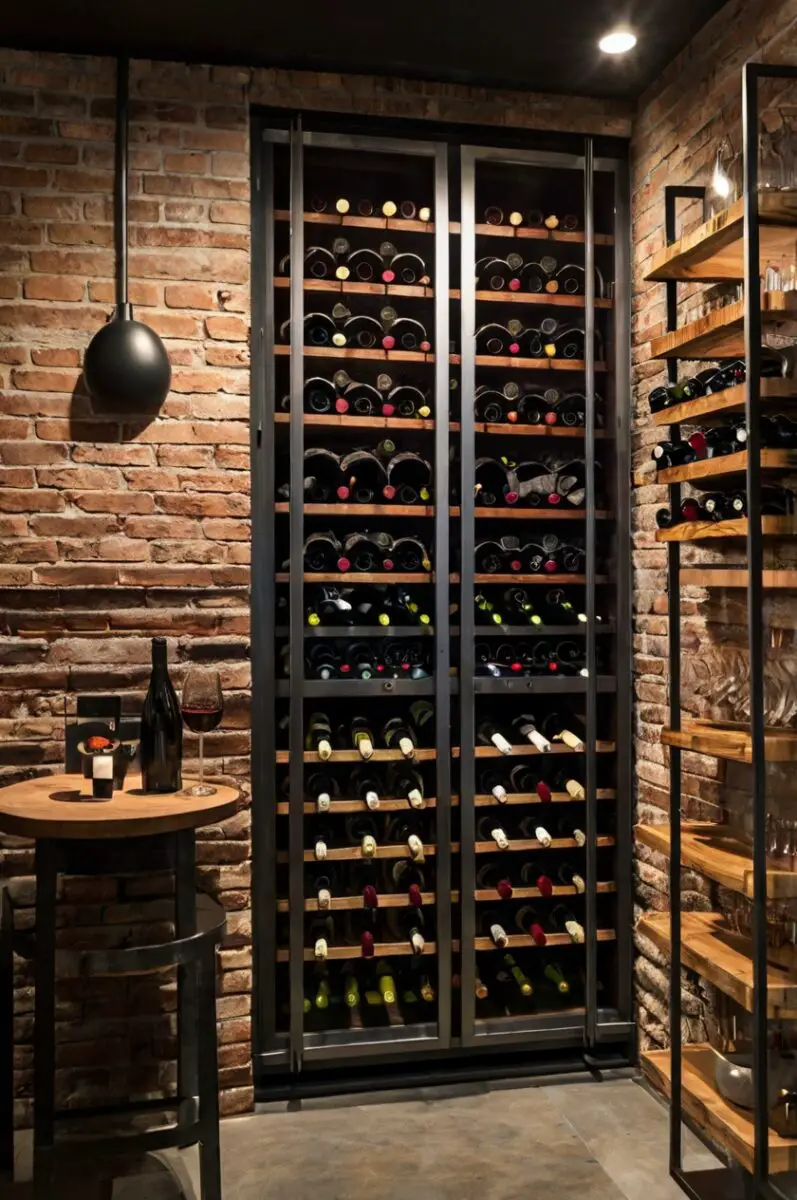
Your basement is getting a raw, edgy transformation that celebrates materials instead of hiding them behind drywall.
Industrial-style wine cellars embrace exposed brick, visible ductwork, concrete floors, and metal racking to create spaces that feel more like urban tasting rooms than suburban basements.
This design approach works brilliantly in older homes with character-filled basements, turning existing architectural elements into features instead of covering everything up with renovation work.
The aesthetic pairs beautifully with wine storage since cellars historically existed in raw spaces where function mattered more than polish.
Modern interpretations add proper climate control and lighting while maintaining that authentic, slightly rough-around-the-edges vibe that makes spending time in the cellar feel like an adventure.
Exposed brick walls provide natural insulation and instant character that would cost thousands to replicate with new materials.
A quick repointing to fix any mortar issues and a coat of sealant protects the brick while keeping that authentic texture that machine-made materials can never match.
Metal wine racks in black steel or iron complement the industrial theme perfectly, offering durability and strength while maintaining the raw aesthetic.
These racking systems often incorporate reclaimed materials or custom welded designs that become conversation pieces in their own right.
Concrete floors work wonderfully in wine cellars since they naturally stay cool and handle moisture without issues.
A simple acid stain or epoxy coating adds color and makes cleaning easy while keeping costs reasonable and the industrial vibe intact.
Lighting makes or breaks industrial cellars, with Edison bulbs, wire cage pendants, and track lighting all working to highlight the space’s architectural features.
Exposed conduit running along walls and ceilings adds to the aesthetic instead of requiring expensive concealment work.
Climate control in basement cellars often proves easier than above-ground installations since underground spaces naturally maintain more stable temperatures.
A quality cooling unit sized appropriately for your square footage handles the rest, maintaining ideal conditions without working overtime.
Budget for industrial cellars can actually run lower than polished alternatives since you’re skipping drywall, drop ceilings, and the finished surfaces that eat up renovation budgets.
Expect to spend $8,000-$25,000 depending on square footage and how much racking you need, with savings going toward better cooling systems and quality finishes where they matter.
Design Your Dream Room in Minutes! – By Madison
🏡 Start Creating FREE →Statement Wine Cabinets That Function As Fine Furniture

Your living room just found its missing piece—and it keeps your wine at perfect temperature while looking absolutely stunning.
High-end wine cabinets have evolved from appliances into genuine furniture pieces that rival any designer showcase you’d buy from luxury retailers.
These freestanding units combine museum-quality craftsmanship with commercial-grade refrigeration, creating focal points that work equally well in formal dining rooms, home offices, or anywhere you want to make a serious design statement.
Modern wine cabinet makers are using exotic woods, hand-applied finishes, and hardware that belongs in fine furniture showrooms.
You’re looking at pieces with intricate inlay work, carved details, and finishes that develop richer patinas over time, turning what could be a basic refrigerator into an heirloom investment.
The refrigeration technology hidden inside these cabinets rivals dedicated cellar systems, with dual-zone temperature controls that let you store different wine types at their ideal serving temperatures.
Vibration dampening systems protect sediment from disturbance, while UV-resistant glass doors shield bottles from light damage without hiding your collection.
Capacity in furniture-quality cabinets typically ranges from 50-200 bottles, providing serious storage without requiring construction or permanent installation.
This flexibility matters tremendously for renters or homeowners who might relocate, since you’re taking your wine storage investment with you rather than leaving it behind.
The visual impact hits immediately when visitors encounter these pieces, which often look nothing like traditional appliances.
Manufacturers are crafting cabinets that reference everything from French armoires to Asian tansu chests, creating options that integrate seamlessly with existing furniture collections regardless of style preference.
Pricing reflects the furniture-quality construction and premium refrigeration, with entry-level pieces starting around $3,000 and luxury models climbing past $15,000.
The top-tier options include features like humidity control, activated charcoal filtration, and smartphone integration that lets you monitor conditions remotely.
Placement flexibility gives these cabinets advantages that built-in solutions can’t match.
You can position them exactly where they look and function best, then relocate if your needs or layout change, all without calling contractors or patching walls.
Daily interaction with these pieces brings genuine pleasure that basic wine fridges can’t deliver.
Opening beautifully crafted doors, seeing bottles organized in handmade wooden racks, and knowing you’re using something built to last generations changes the simple act of selecting wine into a ritual worth savoring.
Ready to Master the Kallax?
Transform your IKEA cube storage into custom furniture that fits your space perfectly. Get my complete guide with 100+ detailed projects, material lists, and pro tips.
“The IKEA Kallax Bible: 100+ Ways to Transform Cube Storage into Custom Furniture”
Wine Refrigerator Drawers That Hide In Plain Sight

Your kitchen is getting a secret weapon that keeps wine perfectly chilled without eating up any visible space.
Undercounter wine refrigerator drawers slide seamlessly into cabinet runs, providing temperature-controlled storage that stays completely hidden until you pull them open.
These innovative appliances appeal to homeowners who want serious wine storage without the visual impact of freestanding units or the construction commitment of full cellars.
The drawer design works brilliantly for frequently accessed bottles since everything stays at eye level when you pull them open.
You’re not bending down to rummage through lower shelves or reaching high for bottles stored up top—everything sits right in your natural line of sight and easy reach.
Modern drawer refrigerators offer dual-zone cooling, with separate temperature controls for different drawer sections.
This lets you keep whites and sparklings ice-cold in one drawer while maintaining slightly warmer temps for reds in another, all within the same appliance footprint.
Installation integrates with standard kitchen cabinetry, requiring only cutout space and electrical connections.
Most units fit 24-inch cabinet openings, the same width as dishwashers and many other built-in appliances, making retrofitting into existing kitchens surprisingly straightforward.
Capacity per drawer typically holds 20-30 bottles depending on configuration and bottle sizes.
Many homeowners install multiple drawers in different kitchen zones, creating wine stations throughout the space that keep bottles accessible wherever you’re working.
The concealed nature of drawer refrigerators appeals strongly to minimalist designers who want all the functionality without any visual appliances.
When closed, these units disappear completely behind cabinet panels, maintaining clean sight lines that make kitchens feel larger and less cluttered.
Premium models include features like soft-close mechanisms, LED interior lighting, and vibration reduction technology that protects wine quality.
The best units operate silently enough that you’d never know they’re running unless you see the subtle glow from interior lights.
Price points for wine drawer refrigerators range from $1,500 for basic single-drawer units to $5,000+ for dual-zone, high-capacity models with all the bells and whistles.
The investment pays off in convenience and that polished, integrated look that makes kitchens feel professionally designed rather than pieced together with random appliances.
Converted Pantries Turned Temperature-Controlled Wine Rooms

Your walk-in pantry is about to have an identity crisis that ends with it becoming the coolest room in your house.
Pantry-to-wine-room conversions are exploding in popularity because they repurpose existing square footage without requiring additions or basement excavations.
These transformations take underutilized storage closets and turn them into proper climate-controlled cellars that can house hundreds of bottles while adding serious value to your property.
The conversion process starts by removing existing pantry shelving and evaluating the space’s potential.
Walk-in pantries work best since they provide enough square footage for meaningful wine storage plus room to actually enter and browse your collection comfortably.
Insulation upgrades come next, with contractors adding R-19 or higher insulation to walls and ceilings.
This creates the thermal envelope necessary for efficient climate control, preventing your cooling system from fighting the rest of your home’s temperature and running up energy bills unnecessarily.
Vapor barriers and moisture-resistant materials protect against humidity issues that could damage both wine and your home’s structure.
Proper installation prevents condensation from forming on cold walls, keeping mold and mildew from ever becoming problems worth worrying about.
Cooling systems for converted pantries typically use through-wall or ductless mini-split units sized appropriately for the space.
These systems maintain steady temperatures and humidity levels, creating conditions identical to traditional underground cellars without requiring below-grade construction.
Custom racking transforms the insulated shell into a functional wine room, with options ranging from simple wooden shelves to elaborate systems with label-forward displays and specialty storage for large formats.
Most converted pantries hold 300-800 bottles depending on dimensions and how you configure the storage layout.
Doors get upgraded to insulated models with proper seals, keeping cold air inside where it belongs.
Many homeowners add glass panels or full glass doors to showcase their collections, turning what used to be a hidden closet into a visible feature that impresses from the hallway.
Total conversion costs typically run $6,000-$18,000 depending on pantry size and finish level.
That’s remarkably affordable compared to building new cellar space, and you’re using square footage that already exists rather than stealing from other rooms or adding onto your home’s footprint.
Modern wine storage has officially broken free from the basement-only mindset that limited homeowners for decades.
These ideas prove you can create stunning, functional wine cellars regardless of your home’s size, layout, or age, transforming everything from closets to kitchen islands into perfectly climate-controlled showcases.
The best part is that today’s technology makes proper wine storage accessible at virtually any budget, meaning your collection can finally get the home it deserves while you get a showpiece feature that makes every day feel a little more special.