
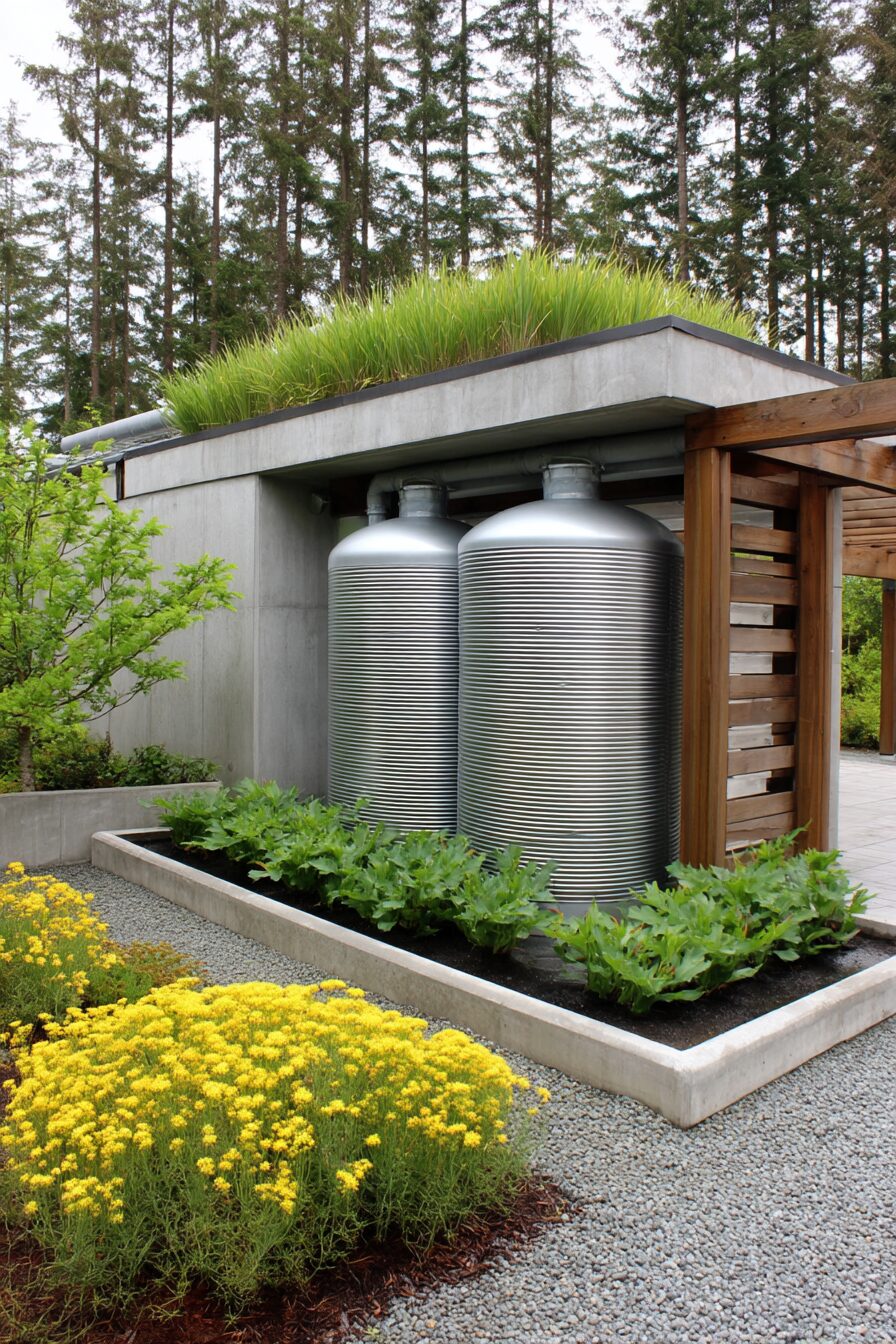

Water is becoming increasingly precious, and collecting rainwater is not just eco-friendly but can significantly reduce your utility bills.
These innovative rainwater harvesting systems blend functionality with style, sustainability with practicality, and can be adapted to any home setup regardless of your space constraints or budget.
Design Your Dream Room in Minutes! – By Madison
🏡 Start Creating FREE →Decorative Rain Barrels with Built-in Planters

Forget those ugly plastic drums that scream “eyesore” in your beautifully landscaped yard.
Modern decorative rain barrels with integrated planters transform water collection into a stunning garden feature that neighbors will envy.
These dual-purpose systems capture roof runoff while providing a platform for growing cascading flowers, herbs, or small vegetables on top.
Available in terracotta, stone-look, and even contemporary metallic finishes, these systems blend seamlessly with any home exterior style from rustic farmhouse to sleek modern designs.
Installation requires minimal effort – simply position near a downspout, connect the diverter, and enjoy both the water savings and the elevated garden aesthetic.
Some models feature adjustable overflow systems that can be linked together, allowing you to expand your storage capacity as needed without sacrificing style.
The natural water pressure created by the barrel’s height can provide enough force to water your garden without requiring any pumps or additional energy.
Maintenance is remarkably simple – an occasional cleaning and winter draining in colder climates is all that’s needed to keep these systems functioning perfectly for years.
With prices ranging from $150 to $500 depending on size and materials, these systems typically pay for themselves within two seasons of reduced water bills.
Most decorative barrels hold between 50-80 gallons, which might not sound like much until you realize that a 1,000 square foot roof can collect approximately 600 gallons from just one inch of rainfall.
Artistic Rain Collection Systems


Transform the mundane act of moving water from your roof to the ground into a mesmerizing water feature that delights the senses with every rainfall.
Rain chains replace traditional closed downspouts with decorative chains or cups that guide water visibly downward, creating a beautiful water feature during rainstorms.
The gentle tinkling sound of water cascading down copper, brass, or stainless steel elements adds a soothing auditory dimension that traditional gutters simply can’t match.
Installation is remarkably straightforward – simply remove your existing downspout and hang the rain chain from your gutter outlet, directing it toward a collection basin below.
The collection basin itself becomes part of the artistic statement, with options ranging from ceramic pots to stone bowls to custom-built rock gardens designed to showcase the flowing water.
Beyond their aesthetic appeal, rain chains actually function more efficiently than closed downspouts in moderate rainfall, as they don’t clog with leaves and debris like traditional systems.
For water collection, these systems typically channel into decorative basins that connect to underground storage or rain barrels, combining form and function in one elegant solution.
Copper rain chains develop a beautiful patina over time, making them one of the few rainwater collection components that actually become more attractive with age and exposure.
Prices range from $50 for simple chains to $300+ for elaborate designer versions, with accompanying collection basins adding another $100-500 depending on materials and complexity.
For the artistically inclined homeowner, rain chains offer perhaps the most visually striking entry point into rainwater harvesting, transforming a practical necessity into a standout design element.
Modular Expandable Collection Systems

Start small today, grow tomorrow – modular rainwater collection systems are the perfect solution for homeowners who want to begin conserving immediately while planning for expanded capacity over time.
These ingeniously designed systems feature standardized components that connect together like sophisticated adult building blocks, allowing you to start with a modest setup and expand as your budget and needs evolve.
The basic starter kit typically includes one collection barrel with filtration, overflow protection, and spigot accessories that can be easily installed by anyone comfortable with basic DIY projects.
As your water harvesting ambitions grow, additional barrels can be connected horizontally or vertically using standardized coupling systems that maintain water pressure and flow throughout the network.
The most sophisticated modular systems include “smart hubs” that can direct water flow between different barrels or storage components based on capacity, intended use, or water quality requirements.
Some manufacturers offer specialized modules like integrated pumps, advanced filtration units, or ultraviolet purification chambers that can be added to your system without replacing existing components.
Color options and decorative panels allow these systems to blend with your home’s exterior or make a bold statement about your commitment to sustainability, depending on your aesthetic preference.
The beauty of this approach is in its flexibility – you’re never locked into a particular configuration and can adapt your system seasonally or as your landscape and water needs change over time.
Entry-level modular systems start around $200, with expansion components ranging from $75 to $350 each, allowing you to spread the investment over months or years while enjoying benefits immediately.
For homeowners uncertain about their long-term water needs or those with changing landscapes, the modular approach eliminates the risk of over-investing initially or being stuck with an inadequate system.

💭 I Wrote a Book About My BIGGEST Decorating Mistakes!
When I decorated my first home, I thought I knew what I was doing. Spoiler alert: I DIDN’T. 😅
💸 I bought a sofa that was WAY TOO BIG for my living room. I chose paint colors that looked amazing in the store but terrible on my walls. I spent THOUSANDS on pieces that didn’t work together. Sound familiar?
“Things I Wish I Knew Before I Decorated My First Home” is your shortcut to avoiding ALL my costly mistakes. ✨ Inside, you’ll find practical, NO-NONSENSE advice that will save you time, money, and a whole lot of decorating regret. 🏡
Design Your Dream Room in Minutes! – By Madison
🏡 Start Creating FREE →Rainwater-to-Potable Water Conversion Systems


Why stop at just collecting water for your garden when you could be drinking the purest water available – straight from the sky?
Modern rainwater-to-potable systems employ multi-stage filtration, UV sterilization, and mineral balancing to transform rainwater into drinking water that exceeds municipal water quality standards.
These comprehensive systems begin with pre-filtration at the collection point to remove large debris, followed by sedimentation tanks that allow microscopic particles to settle out of the water.
The heart of these systems is the multi-stage filtration array, typically including activated carbon filters, ceramic filters, and often reverse osmosis components that remove contaminants down to the molecular level.
UV sterilization chambers then eliminate any remaining biological contaminants, ensuring complete neutralization of bacteria, viruses, and other microscopic organisms that might be present.
The final stage often involves mineral addition or pH balancing to optimize the water for consumption, as pure rainwater lacks the minerals present in most groundwater sources.
Continuous monitoring systems provide real-time feedback on water quality parameters, with automatic shutoffs if any measurements fall outside of programmed safety ranges.
Installation requires professional expertise and often involves coordination with local building authorities to ensure compliance with health codes regarding potable water systems.
Costs range from $3,000 for basic systems to $10,000+ for comprehensive whole-house solutions, but the long-term savings and health benefits make this one of the most valuable investments in your home.
With increasing concerns about municipal water quality in many regions, these systems provide peace of mind and independence from increasingly stressed public water infrastructure.
Living Roof Collection and Filtration Systems

Take your sustainability commitment to new heights – literally – with a living roof system that combines rainwater collection with green space creation and enhanced home insulation.
Living roof systems transform your existing roof into a vegetated surface that captures rainfall, filters it naturally through plant roots and growing medium, and then channels the clean water into storage systems.
The plants and soil medium act as a biological filter, removing pollutants and improving water quality before it even enters your collection system.
These systems dramatically reduce runoff speed, allowing for more efficient collection and reducing erosion around your home’s foundation during heavy rainfall events.
Beyond water collection benefits, living roofs provide additional insulation, potentially reducing heating and cooling costs by up to 25% while extending the lifespan of your roof by protecting it from UV degradation.
The plant layer absorbs carbon dioxide and releases oxygen, improving local air quality and creating habitat for beneficial insects and birds that enhance your garden’s ecosystem.
Installation requires structural assessment to ensure your roof can support the additional weight, followed by layering of waterproofing membrane, drainage components, growing medium, and finally carefully selected plant species.
Maintenance requirements vary seasonally but typically include occasional weeding, plant trimming, and system inspection – comparable to ground-level gardening but with greater environmental returns.
Costs range from $15 to $30 per square foot for professional installation, with potential rebates or incentives available in many municipalities that recognize the stormwater management benefits these systems provide.
While representing a significant initial investment, these systems deliver multiple returns – water savings, energy savings, extended roof life, environmental benefits, and increased property value that compound over the decades.
Gravity-Fed Distribution Networks

Harness the simple power of gravity to create a self-sustaining water distribution system that requires zero electricity while delivering water exactly where you need it, when you need it.
Gravity-fed systems position rainwater storage at elevated points on your property, creating natural water pressure that can be utilized for everything from garden irrigation to household non-potable uses.
The fundamental principle is elegantly simple – water always flows downhill, and each foot of elevation generates approximately 0.433 PSI of water pressure, allowing you to design a system with precisely the pressure your applications require.
Strategic placement of barrels or tanks on natural slopes, raised platforms, or even second-story positions enables water to flow through distribution lines to lower points on your property without pumps or electricity.
Tiered garden designs can take particular advantage of this approach, with collection occurring at the highest point and gravity doing the work of moving water through a series of beds or containers at descending elevations.
Advanced gravity systems incorporate float valves, pressure regulators, and flow controllers that maintain consistent delivery despite varying water levels in the storage containers.
For homes on sloped lots, these systems can be particularly effective, using the natural topography to create water pressure sufficient for drip irrigation systems and even some household applications.
Installation focuses on proper elevation differences, appropriate pipe sizing to maintain flow, and strategic placement of control valves to direct water to different zones as needed.
Costs vary widely based on complexity, from a few hundred dollars for simple raised barrel systems to several thousand for comprehensive whole-property solutions with multiple distribution points.
The real magic of gravity-fed systems is their resilience – they continue functioning during power outages, reduce ongoing electricity costs, and operate silently with minimal maintenance requirements.
Rainwater Harvesting Fence Systems

Your fence can do more than just mark your property line – it can become a powerful water collection asset that works 24/7.
Rainwater harvesting fence systems transform ordinary boundaries into multifunctional water collection channels that capture rainfall from a vertical surface you already own.
These innovative systems incorporate subtle guttering along the top rail of your fence, directing water horizontally to collection points at strategic intervals.
You’ll find these systems especially effective on longer fence sections, where a single rainstorm can deliver dozens or even hundreds of gallons of water from an otherwise unused surface.
Manufacturers now offer retrofit kits for existing fences as well as complete systems that include fence panels with integrated collection channels already built in.
The water quality from fence collection often surpasses roof runoff, as fences collect less debris, bird droppings, and pollutants that typically accumulate on roofing materials.
You can easily direct collected water to nearby garden beds through subsurface piping, creating a direct farm-to-table connection between your water harvesting and food production.
Privacy fences work particularly well for these systems due to their height and solid construction, potentially collecting 0.5 gallons per square foot of fence surface during a 1-inch rainfall.
Most systems include debris screens at collection points and can connect directly to storage barrels or underground cisterns to maximize your total collection capacity.
You can customize fence collection systems with decorative elements like copper scuppers or rain chains at the downflow points, transforming functional infrastructure into landscape art.
Installation typically takes a weekend for DIY enthusiasts or a single day for professional installers, with costs ranging from $6-12 per linear foot depending on materials and complexity.
Wood, vinyl, and composite fences all work with these systems, though vinyl offers the smoothest surface for water flow and requires the least maintenance over time.
The side benefit many homeowners don’t anticipate is how these systems reduce splashing and erosion along fence lines during heavy rain, protecting your fence investment while harvesting valuable water.
You’ll find fence collection particularly valuable for properties with limited roof collection potential or as a complementary system that increases your total harvesting capacity beyond roof-only collection.
Design Your Dream Room in Minutes! – By Madison
🏡 Start Creating FREE →Rain Pillows for Limited Spaces

Think you don’t have room for significant water storage?
Think again – rain pillows offer massive capacity that conforms to available space, fitting where traditional tanks simply cannot.
Rain pillows are flexible bladder-style water storage containers that can slide under decks, along narrow side yards, or in other underutilized spaces, holding hundreds or even thousands of gallons in areas you didn’t even realize could be productive.
When empty, these systems collapse nearly flat, making them ideal for seasonal use or for properties where aesthetic concerns limit visible infrastructure.
The flexible design conforms to available space, allowing oddly shaped areas to become valuable water storage locations rather than wasted space.
Modern materials ensure durability despite the flexible nature, with multi-layer construction that resists punctures, UV degradation, and environmental stress.
Installation primarily involves site preparation to remove sharp objects, followed by connecting to your existing gutter system via standard piping.
Integrated filtration options remove debris before water enters the pillow, while specialized outlet fittings provide controlled release for various applications from garden hoses to drip irrigation systems.
Some models include transparent level indicators or electronic sensors that connect to smartphone apps, allowing you to monitor water levels without needing direct access to the storage area.
Prices typically range from $1 to $2 per gallon of storage capacity, making these among the most cost-effective storage solutions on a per-gallon basis.
For urban homes, townhouses, or properties with restrictive HOA regulations, rain pillows often represent the only viable option for substantial rainwater storage, turning spatial limitations into sustainable opportunities.
Hybrid Solar-Powered Rainwater Systems

Why choose between renewable energy and water conservation when you can combine them into one integrated sustainability powerhouse?
Hybrid solar-powered rainwater systems pair photovoltaic panels with collection and distribution infrastructure, creating an entirely self-sustaining water management solution.
Solar panels power collection pumps, filtration systems, UV purifiers, and distribution networks, ensuring your system operates efficiently without adding to your electricity bill.
Battery storage components capture excess solar energy during sunny periods, ensuring system functionality continues during nighttime or cloudy periods when rainfall is most likely to occur.
Automated controls adjust system operation based on available solar power, water levels, and household demand patterns, optimizing efficiency through intelligent resource management.
These systems often include integrated sensors that detect rainfall intensity and adjust collection protocols accordingly, ensuring maximum capture during light rains and protection against overflow during downpours.
The marriage of solar and water technology creates resilience during emergencies – providing both electricity and water when municipal systems fail during storms or other disruptions.
Installation typically involves coordination between solar installers and water system specialists, though increasingly companies are offering unified installation services for these integrated systems.
While representing the highest initial investment among rainwater collection options (typically $8,000-$20,000 depending on capacity and features), these systems also deliver the greatest long-term return through combined water and electricity savings.
For homeowners committed to maximum sustainability and resilience, these hybrid systems represent the pinnacle of self-sufficiency technology currently available for residential properties.
Rainwater harvesting isn’t just about saving money or being eco-friendly – it’s about taking control of an essential resource and putting it to work for your home, garden, and future.
The technology is ready, the benefits are clear, and with options for every budget and property type, there’s never been a better time to make rainwater collection part of your home’s sustainability story.