I’ll be honest—I used to think tiny houses were all about sacrifice.
Giving up space, storage, comfort.
But then I started really looking at what creative designers are doing with these compact homes, and I’m completely obsessed.
Tiny houses aren’t about living with less anymore—they’re about living smarter, cozier, and with so much more intention.
Every corner has a purpose, every design choice feels personal, and honestly?
Some of these ideas make me want to downsize immediately.
If you’ve been curious about tiny living or just love clever home solutions, you’re going to feel so inspired.
Loft Bedrooms That Actually Feel Spacious
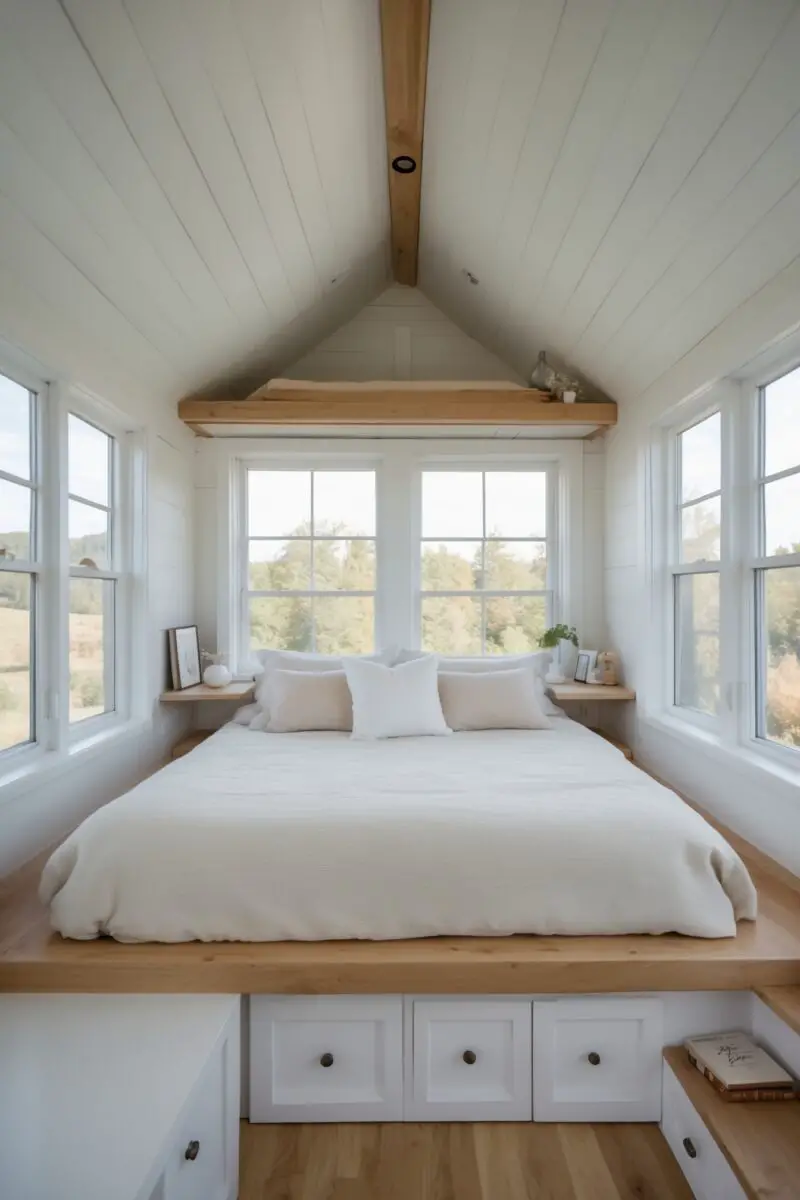
I used to worry that loft bedrooms would feel cramped and claustrophobic.
But modern tiny house lofts have completely changed my mind.
The secret is creating enough headroom—at least 3.5 feet—so you can sit up comfortably in bed without bumping your head every morning.
I love when designers add skylights directly above the bed because waking up to natural light makes the space feel twice as big.
Some of my favorite lofts include built-in reading nooks with soft cushions right by a window, so you have a cozy spot that doesn’t eat up floor space below.
Adding low-profile storage drawers along the sides of the loft platform is pure genius—you can tuck away seasonal clothes or extra bedding without sacrificing any living area.
If I had a tiny house, I’d paint the loft ceiling a soft white or pale blue to open up the space visually.
String lights or small wall sconces create the warmest ambiance without taking up precious surface area.
And here’s a hack I’m obsessed with: install a small fan near the loft because heat rises, and you’ll want that air circulation during warmer months.
Loft ladders can feel awkward, so consider installing stairs with built-in storage instead—each step becomes a drawer or cabinet.
It costs a bit more, but the functionality is absolutely worth it.
Madison’s Current Obsessions
My Mini Cabin Ideas Are Making People Rethink Small LivingMulti-Functional Furniture That Works Overtime
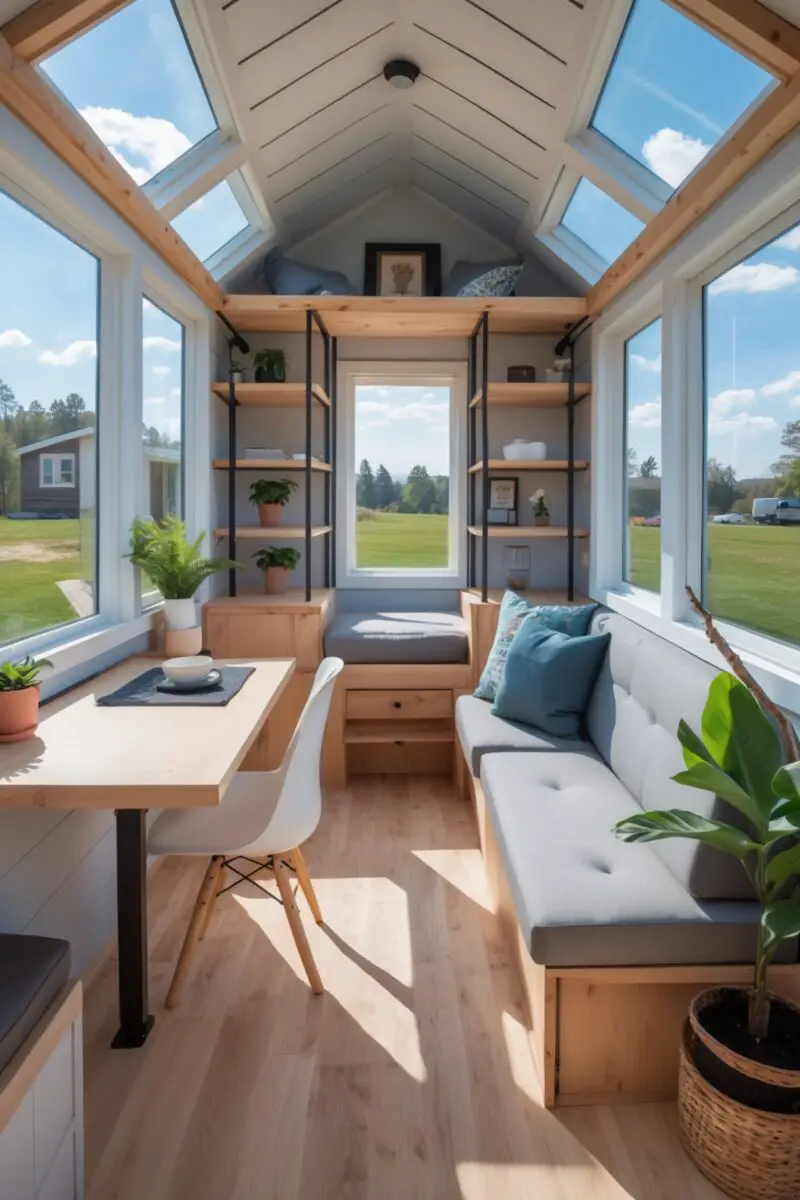
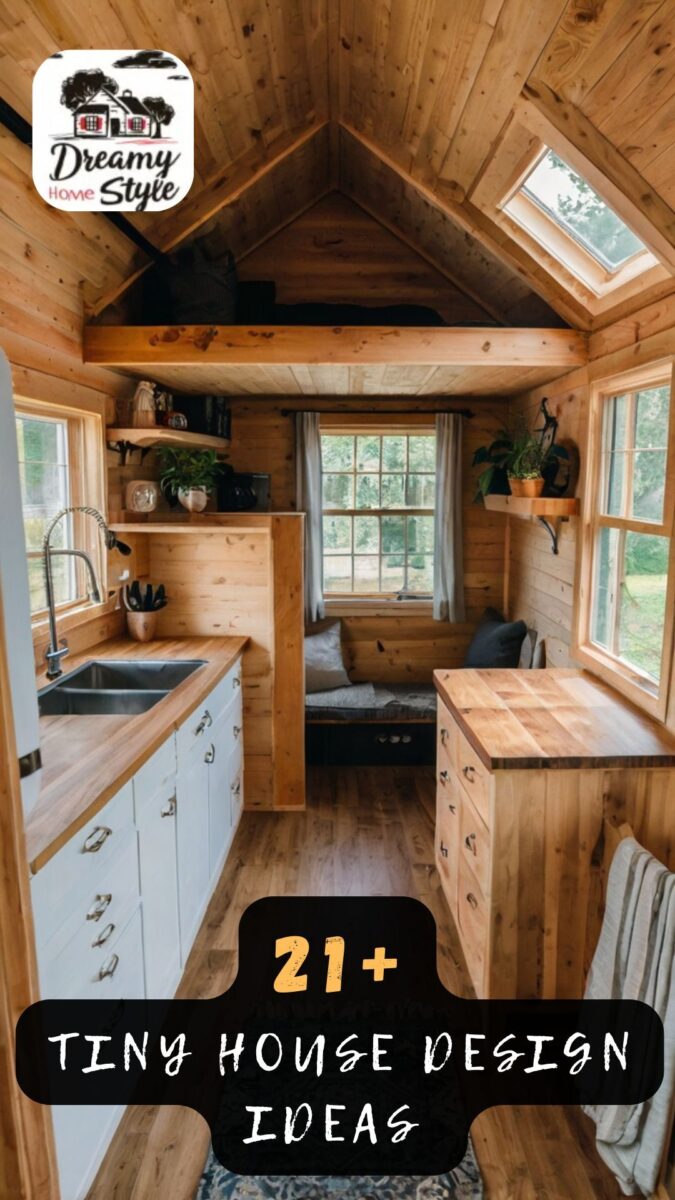
This is where tiny house living gets seriously clever.
I’m talking about furniture that transforms and adapts throughout your day.
A dining table that folds down from the wall when you need it, then disappears completely when you don’t—that’s the kind of magic I want in my life.
Murphy beds have gotten such a stylish upgrade lately, and some even include built-in shelving or a desk that folds out.
I love the idea of a sofa that converts into a guest bed with hidden storage underneath for extra pillows and blankets.
Ottoman storage is another tiny house essential—it serves as seating, a footrest, and a place to hide all those random items that don’t have a home.
If I were designing my tiny space, I’d invest in a coffee table that lifts up to become a work desk because working from the couch gets uncomfortable fast.
Nesting tables are perfect when you need extra surface space for entertaining, then they tuck away neatly when it’s just you.
Look for benches with lift-up seats along your dining area—instant storage for cookbooks, linens, or even shoes.
Wall-mounted drop-leaf tables in the kitchen create extra prep space without permanently stealing your floor area.
The key here is choosing pieces that earn their place by doing double or triple duty.
Everything should feel intentional, not cluttered.
Design Your Dream Room in Minutes! By DreamyHomeStyle
🏡 Start Creating FREE →Hidden Storage in Places You’d Never Expect
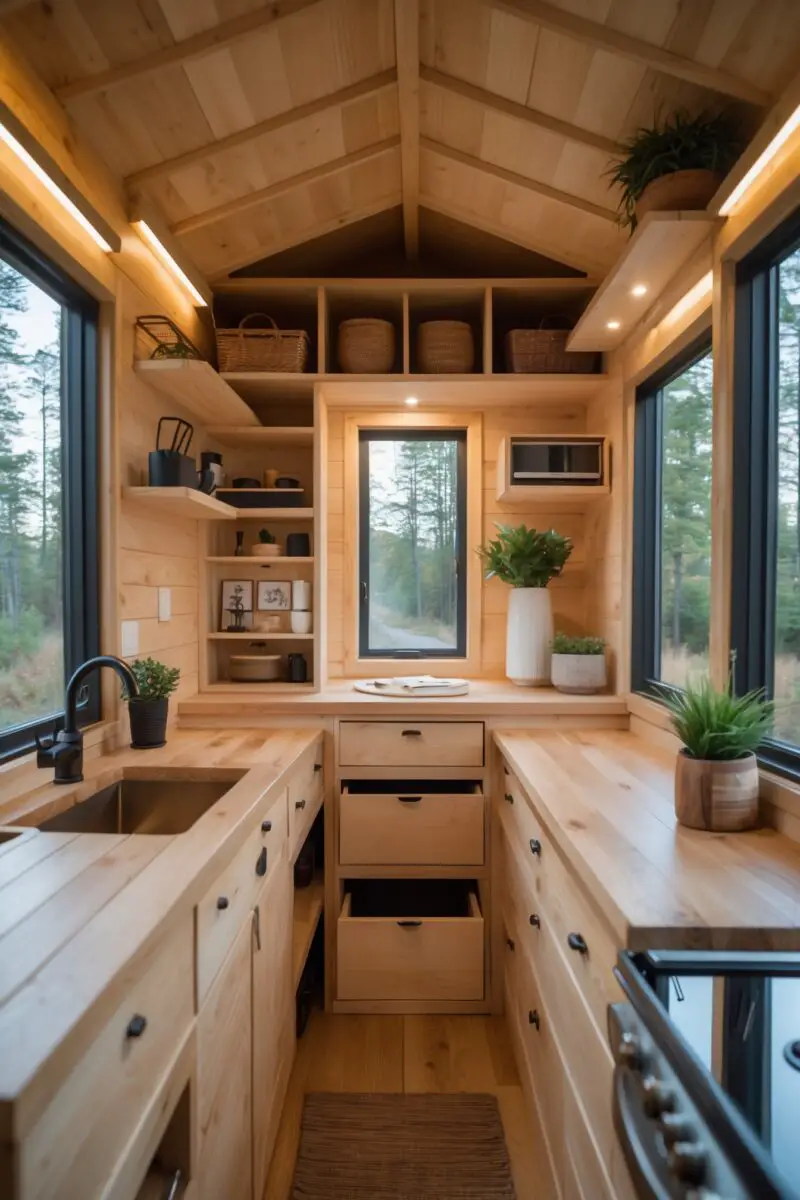
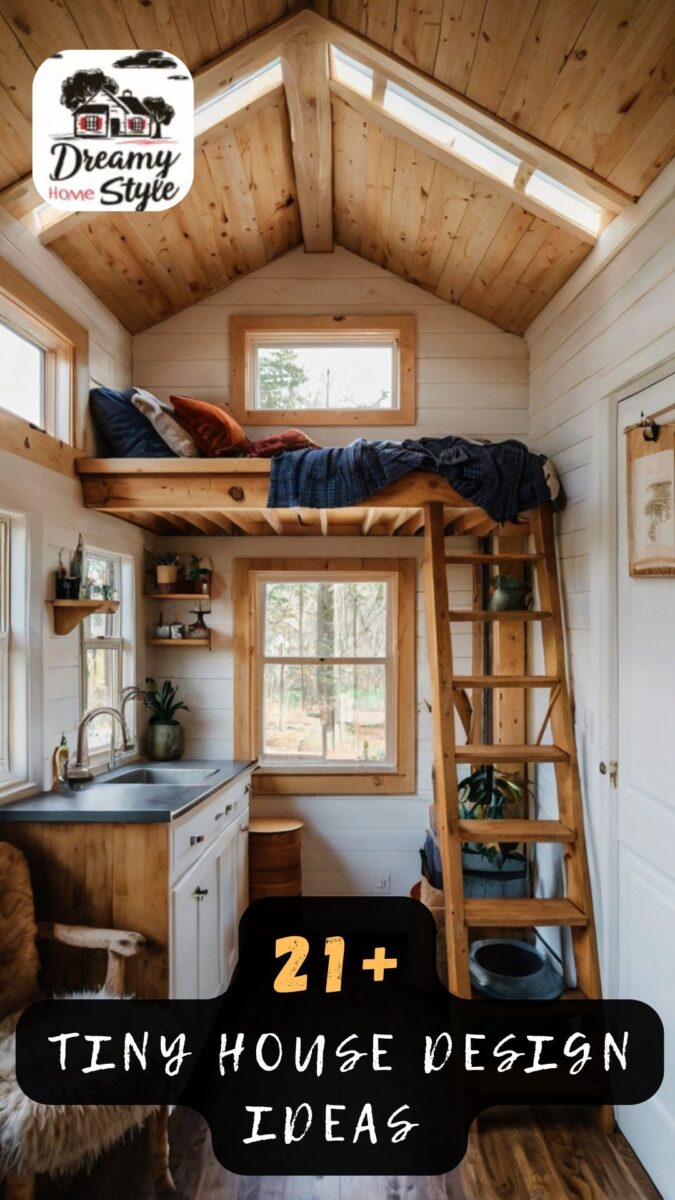
Storage is everything in a tiny house, and I’m constantly amazed by the creative spots people find.
Under-stair storage is probably my favorite—those awkward triangular spaces become pull-out drawers or cabinets for pantry items, cleaning supplies, or shoes.
I’ve seen tiny houses with storage built into the floor itself, with lift-up panels that reveal deep compartments perfect for tools or seasonal decorations.
Toe-kick drawers beneath kitchen cabinets are so smart—that’s typically wasted space, but it’s perfect for storing flat items like baking sheets or cutting boards.
Behind-the-door organizers aren’t just for college dorms anymore—use them in your bathroom for toiletries or in your closet for accessories.
I’m obsessed with beds that have hydraulic lift systems, so the entire mattress lifts up to reveal massive storage underneath.
Installing shelves above doorways and windows uses vertical space that would otherwise just sit empty.
If I had a tiny house, I’d definitely include a hidden storage bench along one wall—it provides seating and hides so much stuff.
Magnetic strips on walls can hold knives in the kitchen or makeup tools in the bathroom without requiring any drawer space.
Think about furniture with hollow interiors—side tables, bed frames, even staircases can be designed with storage compartments.
Hanging organizers inside cabinet doors maximize every inch.
The goal is making storage invisible so your space feels open and calm, not cluttered.
Vertical Gardens That Bring Life Indoors

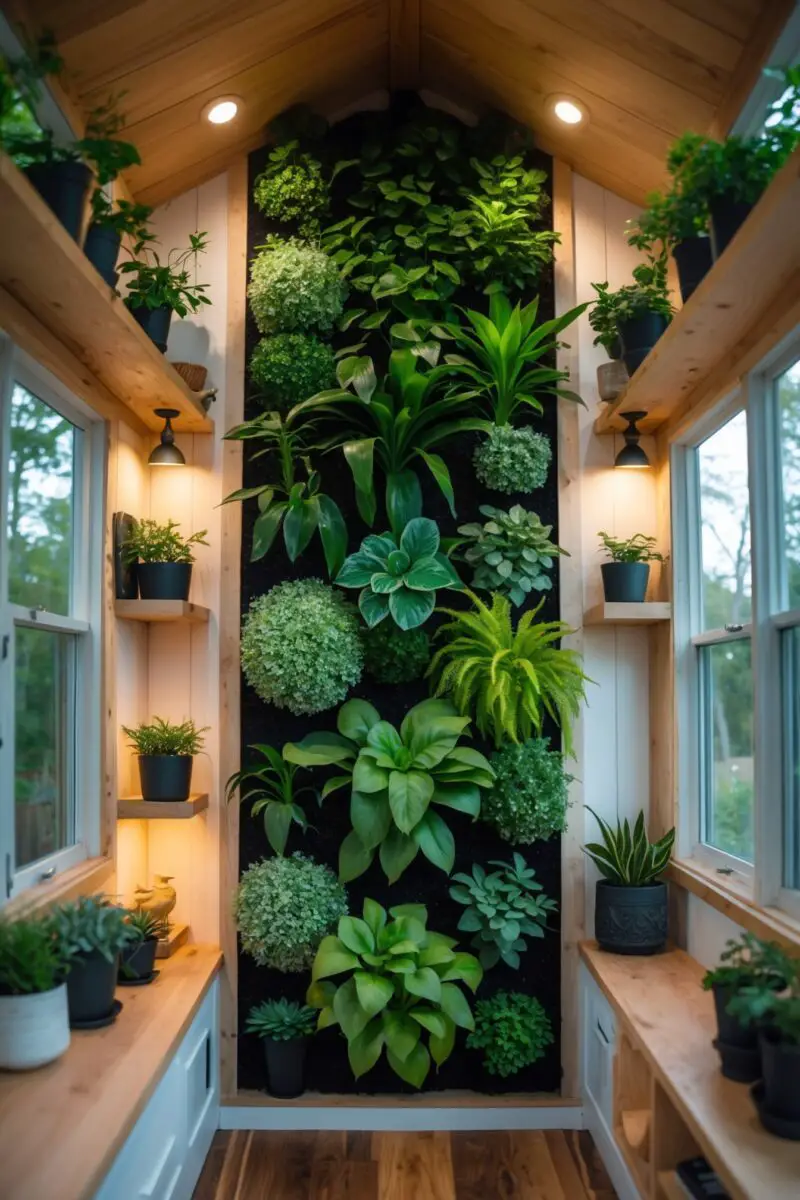
I genuinely believe every tiny house needs living plants, and vertical gardens make it possible without sacrificing floor space.
Wall-mounted planters create a gorgeous green focal point while keeping your counters and tables clear.
I love the look of ladder-style plant stands that lean against the wall—they’re affordable, easy to move, and hold multiple plants vertically.
Hanging planters from the ceiling near windows bring nature inside and draw your eye upward, making the space feel taller.
If I were setting up my tiny house, I’d install a living wall system with built-in irrigation for herbs in the kitchen.
Fresh basil and mint right where you cook?
Absolutely dreamy.
Magnetic planters that attach to metal surfaces are perfect for small succulents and add personality without drilling holes.
Window-mounted shelves specifically designed for plants maximize that precious natural light without blocking your view.
Macramé plant hangers bring texture and warmth while keeping greenery at eye level.
I’m also obsessed with tension rod plant hangers that fit inside window frames—so clever and completely removable.
Vertical gardens improve air quality, reduce stress, and make your tiny space feel like a sanctuary.
Choose low-maintenance plants like pothos, snake plants, or succulents if you’re not super experienced with gardening.
The emotional benefit of caring for living things in your home is real—it makes everything feel more alive and personal.
Floor-to-Ceiling Windows for Natural Light
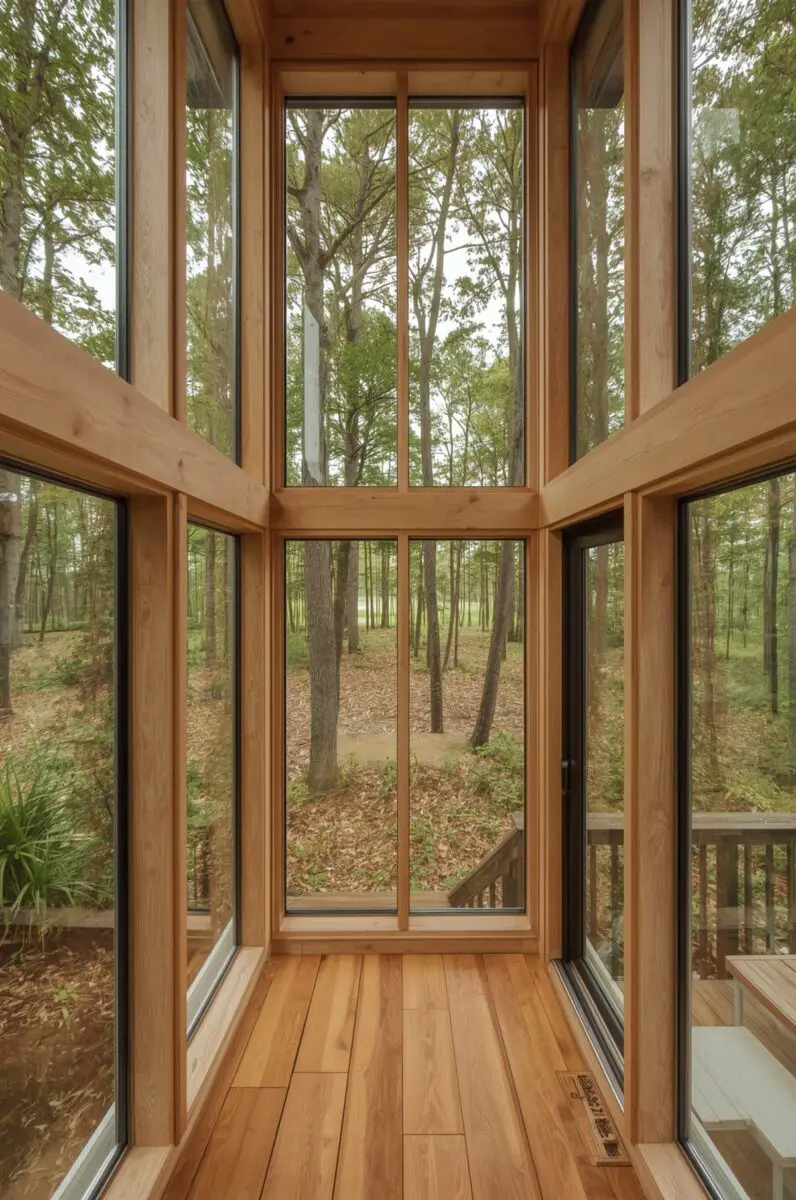
Natural light is honestly the most important design element in a tiny house.
It makes small spaces feel open, airy, and so much bigger than they actually are.
Floor-to-ceiling windows create that indoor-outdoor connection I’m completely in love with.
When you can see outside without obstruction, your tiny house suddenly feels like it extends into nature.
I’d position these big windows to face your best view—whether that’s trees, mountains, or even just a well-designed garden.
Privacy can be a concern, so consider installing windows higher up on walls in bedroom areas while keeping living spaces open.
Strategically placed skylights bring light from above and make you feel like you’re sleeping under the stars.
If I had a tiny house, I’d use sheer curtains that filter light beautifully while maintaining privacy during the day.
Large glass doors that open completely blur the line between inside and outside, especially if you have a small deck or patio.
South-facing windows maximize natural light throughout the day in most climates.
Reflective surfaces near windows—like mirrors or glossy finishes—bounce light around and amplify that bright, open feeling.
I love when designers use corner windows that meet without a post—it creates panoramic views and feels so luxurious.
Keep window treatments minimal and light-colored to maximize brightness.
Open Shelving Instead of Bulky Cabinets

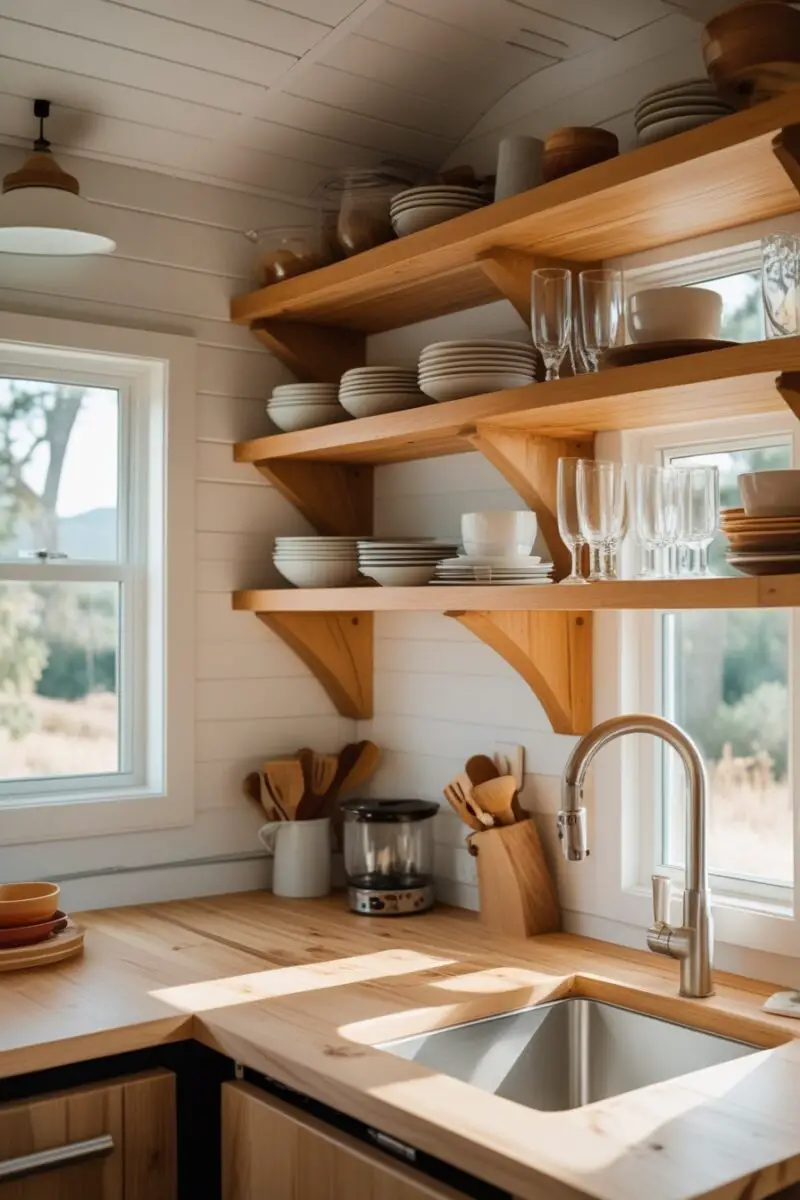
Open shelving has become one of my favorite tiny house solutions because it feels so much lighter than heavy cabinets.
Closed cabinets can make a small space feel boxy and confined, while open shelves create visual flow.
I love using floating shelves in the kitchen to display dishes, glasses, and pretty jars of pantry staples.
It forces you to be intentional about what you keep—everything on display should be functional or beautiful, preferably both.
If I were designing my tiny kitchen, I’d install open shelving on at least one wall and use matching containers to keep things cohesive.
Wood shelves bring warmth and texture, while metal brackets add an industrial edge that feels modern and clean.
In the bathroom, open shelving keeps towels and toiletries accessible without the visual weight of a medicine cabinet.
I’d roll towels and display them vertically to save space and create a spa-like vibe.
Living areas benefit from open shelving too—use them for books, plants, and personal treasures that make your space feel like home.
The trick is not overcrowding them; leave breathing room so each item stands out.
Adjustable shelving systems let you customize heights based on what you’re storing.
I’m obsessed with corner shelving units that use awkward spaces beautifully.
Keep frequently used items at eye level and decorative pieces higher up for visual interest.
Sliding Barn Doors to Save Space
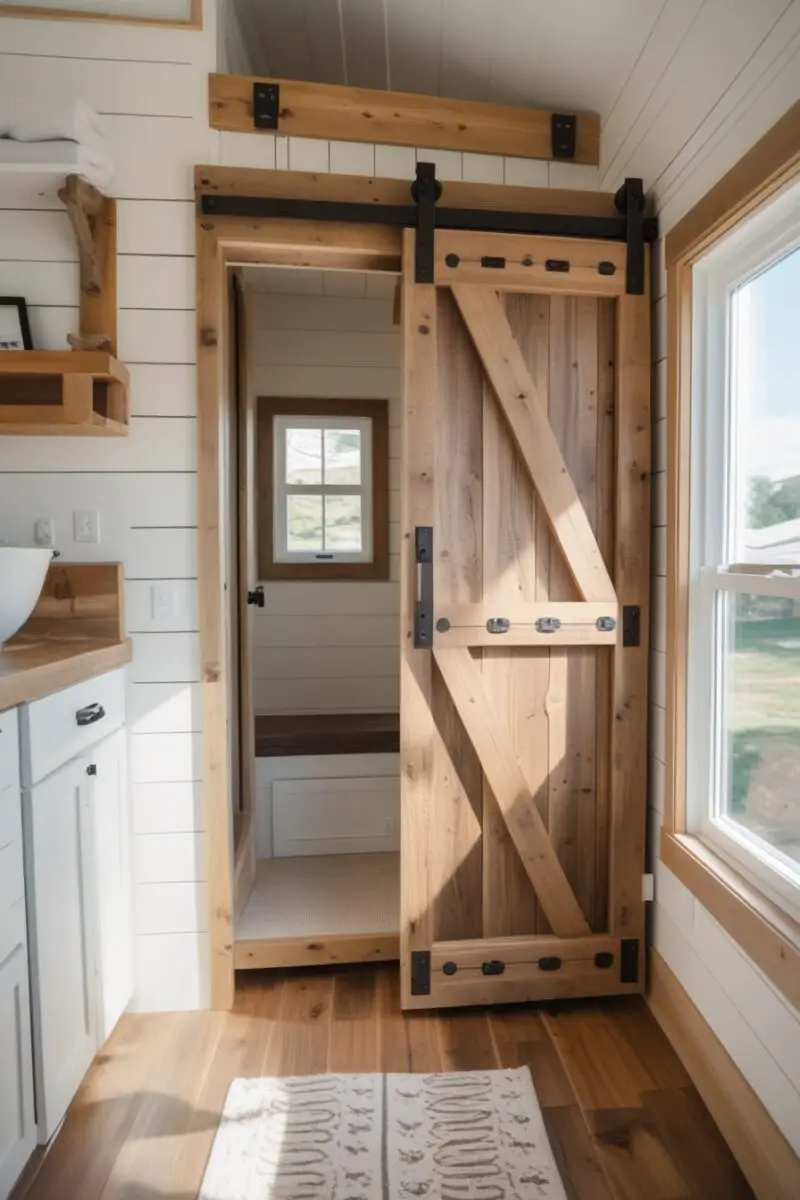
Traditional swinging doors eat up so much valuable floor space in a tiny house.
Sliding barn doors are the perfect solution, and they add so much character and style.
I love how they become a design feature rather than just a functional necessity.
You can find barn doors in every style—rustic wood, sleek modern glass, painted white for a farmhouse feel.
If I had a tiny house, I’d use a frosted glass sliding door for the bathroom to let light through while maintaining privacy.
The hardware is gorgeous too—black matte finishes feel contemporary, while brass or copper adds warmth.
Installing a barn door for your bedroom creates separation when you need it and opens up completely when you want that airy flow.
They’re also perfect for hiding closets, laundry areas, or storage spaces that you want to keep out of sight.
I’m obsessed with the compact track systems that mount inside the door frame—they save even more space.
Pocket doors are another brilliant option that disappear completely into the wall.
They’re a bit more complex to install, but the clean look is absolutely worth it.
Barn doors can also divide your living area from your workspace if you work from home.
Choose lightweight doors for easier sliding and less strain on the hardware.
Compact Kitchens With Full Functionality
I used to think tiny kitchens meant giving up cooking real meals, but that’s absolutely not true.
Smart layout and the right appliances make all the difference.
I’m in love with galley-style kitchens that maximize efficiency by keeping everything within arm’s reach.
Two-burner cooktops take up way less space than traditional ranges, and honestly, when do you really use all four burners anyway?
If I were outfitting my tiny kitchen, I’d invest in a combination convection oven and microwave—two appliances in one spot.
Under-counter fridges or drawer-style refrigerators free up so much space while still keeping food fresh and accessible.
Deep drawers instead of lower cabinets make it easier to access pots, pans, and storage containers without digging around.
I love fold-down cutting boards that fit over the sink or stove to create extra prep space when needed.
Magnetic knife strips and hanging pot racks use vertical wall space instead of precious drawers.
A single deep sink with a cutting board cover becomes a prep area, washing station, and drying rack all in one.
Install a pull-out pantry between appliances—those narrow vertical cabinets hold an incredible amount.
I’m obsessed with toe-kick step stools that slide out when you need to reach high shelves.
Keep only your most-used appliances on counters; store the rest until you actually need them.
Neutral Color Palettes That Expand Space
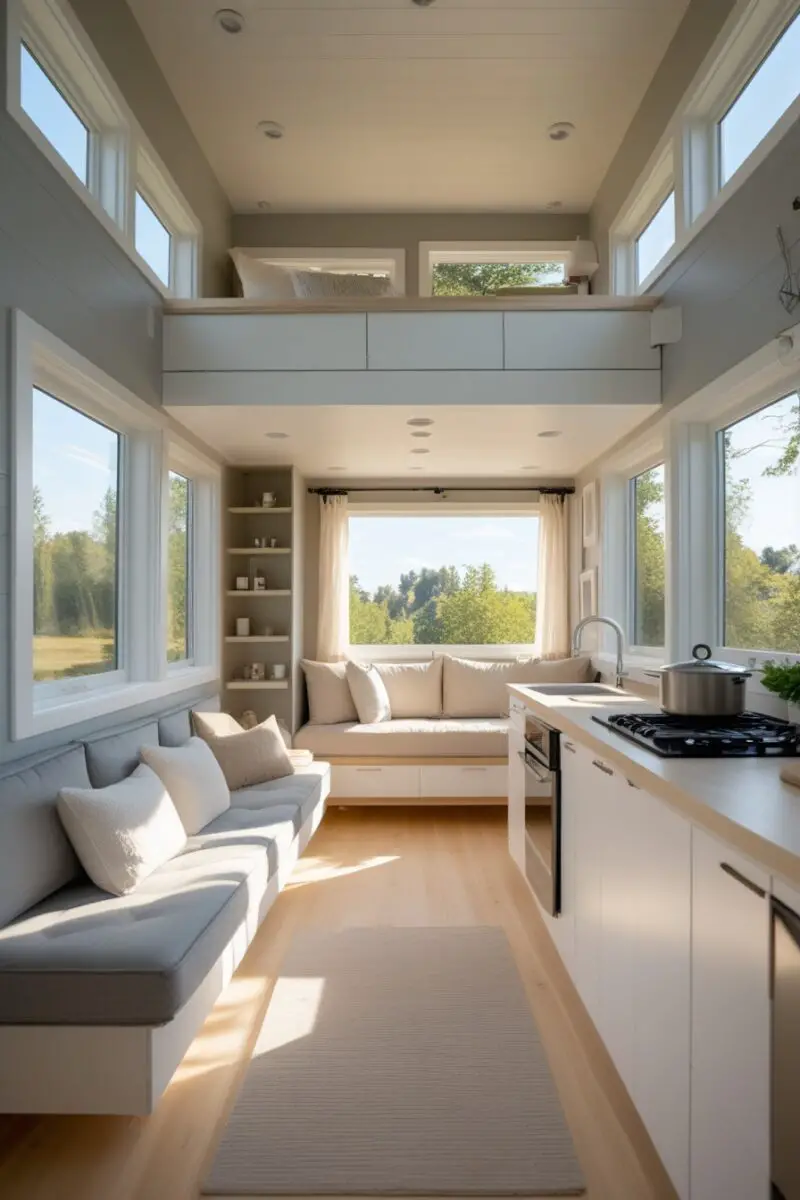
Color choices make such a massive difference in how spacious a tiny house feels.
I always gravitate toward soft, neutral palettes because they create a sense of calm and openness.
Whites, creams, soft grays, and warm beiges reflect light beautifully and make walls seem to recede.
If I were painting my tiny house, I’d use the same light color throughout to create seamless flow between spaces.
Different colors in different rooms can make a small house feel choppy and even smaller.
Wood tones bring warmth without adding visual weight—light oak, birch, or whitewashed finishes are gorgeous.
I love accenting with natural textures like linen, jute, and cotton in similar neutral tones.
You can definitely add personality with colorful accessories, pillows, and artwork that you can easily swap out.
But keeping the foundational palette neutral gives you flexibility and maintains that airy feeling.
Monochromatic schemes—different shades of the same color—create depth while staying cohesive.
I’m obsessed with soft sage greens and dusty blues as accent walls because they feel calm and sophisticated.
Glossy or satin finishes reflect more light than flat paint, making surfaces feel brighter.
If you love bold colors, use them sparingly in small doses—a colorful throw blanket or a vibrant piece of art.
The goal is making your tiny space feel like a peaceful retreat, not a cluttered rainbow.
Creative Room Dividers for Privacy
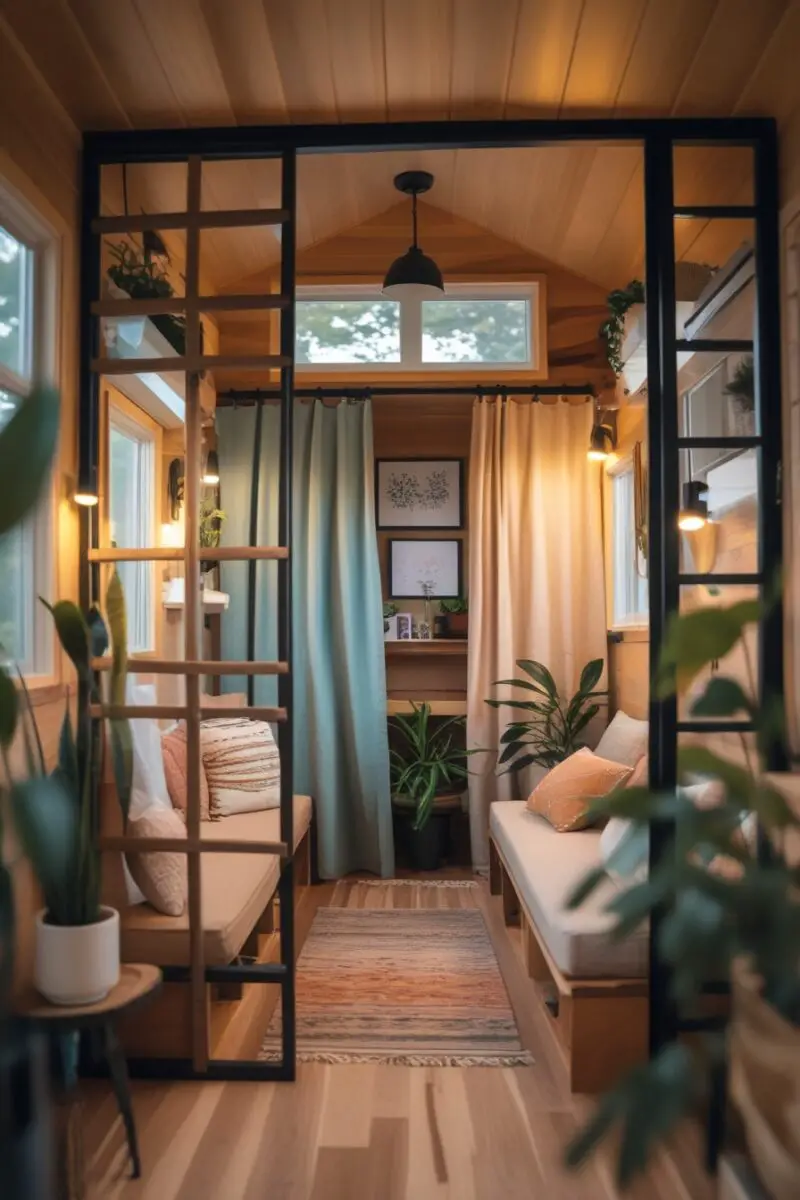
Creating defined spaces within your tiny house doesn’t mean building permanent walls.
I love creative room dividers that separate areas while maintaining that open, flowing feeling.
Curtains are the easiest solution—hang a beautiful fabric to close off your bedroom when you want privacy.
I’d choose a light, flowing material that doesn’t feel heavy or dark when it’s drawn.
Bookcases used as dividers are genius because they provide storage and separation simultaneously.
You can see through them partially, so they don’t block light completely.
If I were dividing my space, I’d use a tall plant stand with trailing greenery to create a natural, living partition.
Folding screens are portable and let you reconfigure your space whenever you want—completely flexible.
I’m obsessed with glass or acrylic dividers that define areas without blocking light at all.
Hanging panels made from macramé, beads, or wood create texture and visual interest.
A half-wall with a built-in desk or shelving serves double duty as workspace and divider.
Sliding panels on tracks can close off your bedroom at night and disappear during the day.
Different flooring materials—like a rug defining the living area—create psychological separation without physical barriers.
The goal is maintaining openness while giving yourself privacy when you need it.
Built-In Seating With Hidden Storage
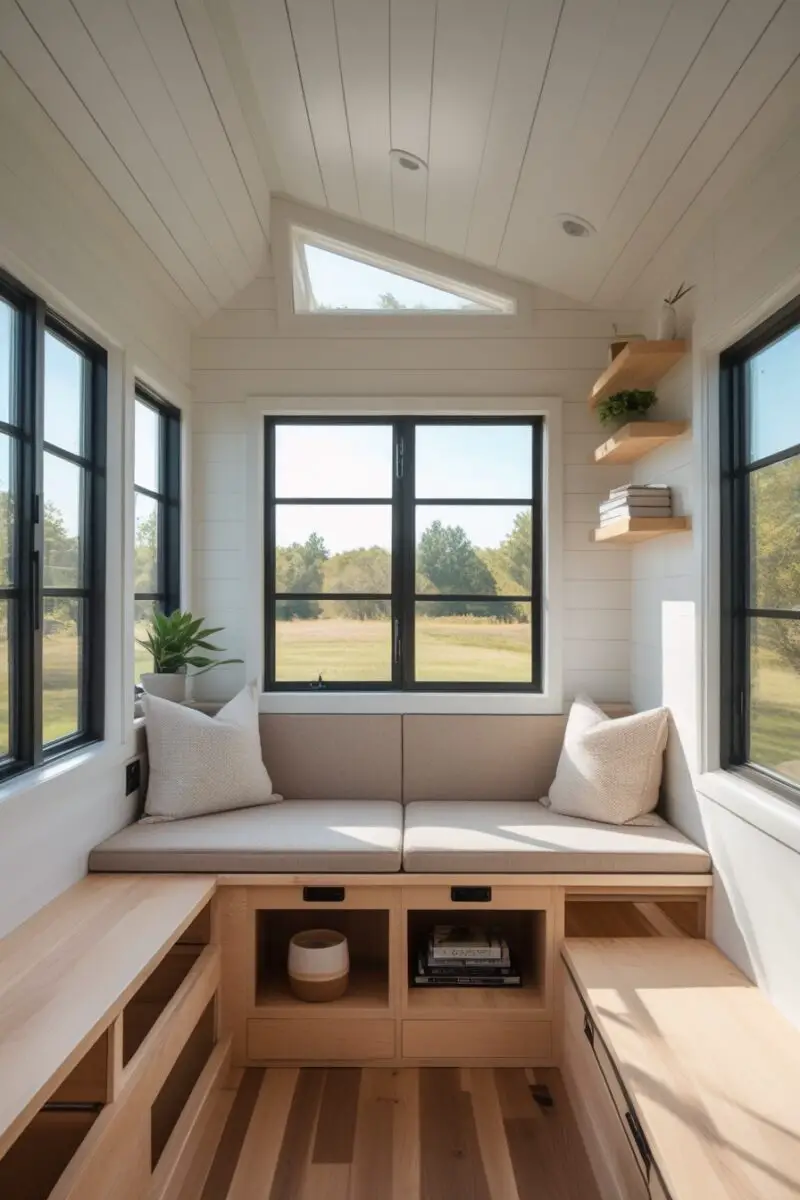
Built-in seating is one of those design choices that makes tiny houses feel custom and intentional.
Window seats are probably my favorite—they create the coziest reading nooks while hiding storage underneath.
I’d add cushions and throw pillows in soft fabrics to make it feel like a special retreat.
Bench seating along your dining table eliminates the need for chairs and usually includes storage beneath the seat.
If I were designing my tiny house, I’d build an L-shaped banquette in the kitchen area with lift-up seats.
It provides so much seating for guests without taking up the floor space that individual chairs require.
I love when the backrest of built-in seating includes shelving for books, plants, or decorative items.
Built-in couches with drawers underneath keep blankets, games, or off-season clothes completely hidden.
The upholstery should be durable and easy to clean—performance fabrics are worth the investment.
I’m obsessed with corner seating that wraps around two walls, maximizing every inch.
Adding a small table that slides or folds out from the wall creates a functional dining or work area.
Built-ins feel permanent and high-end, giving your tiny house that polished, designed look.
They also eliminate the need to shop for furniture that might not fit perfectly.